精读笔记
Problem Setting
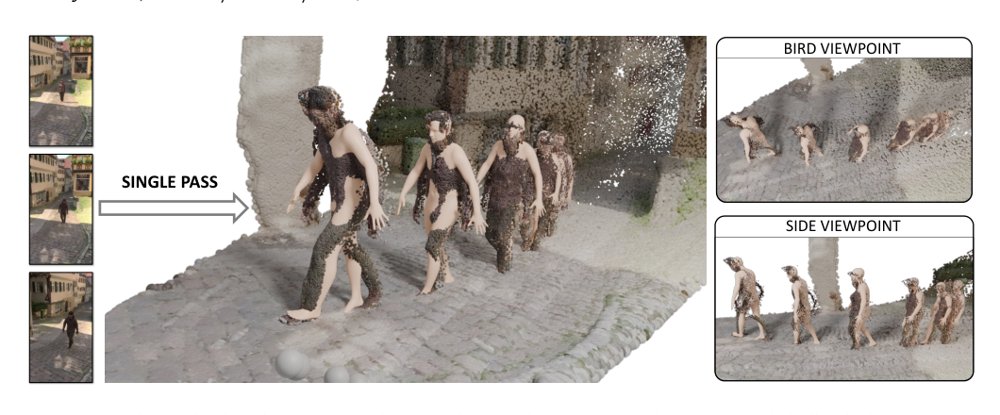
《Scene and Human in One World: Reconstruction in a Feedforward Pass》(arXiv preprint / 2026)处理的是 moving monocular camera 下的 human-scene joint reconstruction:输入是人中心视频,输出应同时包含 SMPL-X 人体、场景点图、相机/尺度和人体全局位置,并且这些量要落在同一个 metric world 中。
真正困难点不是 HMR 本身,也不是 point-map prediction 本身,而是二者的尺度规范不同。HMR 有人体尺寸 prior,但通常在 crop/camera frame 中工作;VGGT 类 geometry foundation model 能给场景几何,但 monocular point map 的 metric scale 并不自动和人体模型一致。以前 pipeline 的卡点在于:人和场景各自看起来合理,但放到一起会出现 scale drift、translation mismatch、bench/ground penetration、human-region point map 与 SMPL surface 不一致。
这个任务的关键矛盾是:monocular 场景几何需要人体尺度作为锚点,人体全局定位又需要场景几何作为空间上下文;如果二者分开估计,最后再对齐,信息已经丢失,alignment head 只能做补丁。
Motivation
已有路线不够的地方在于 coupling 太浅。Human3R / UniSH 已经把人和场景放进同一个 feed-forward pipeline,但更多是共享输出空间或做 scale/localization fusion;geometry backbone 仍主要是 generic 3D predictor,human model 主要提供 body estimate 或后处理尺度线索。
作者真正抓住的缺口是:human prior 没有进入 geometry representation 的形成过程,scene geometry 也没有深度进入 HMR 的 pose/translation/scale 解码过程。换句话说,prior work 是“同时预测人和场景”,而不是“让人和场景在 latent space 中互相塑形”。
这也是为什么论文强调 mask-promptable 和 DensePose supervision:不是因为 mask 或 DensePose 本身新,而是它们把人体语义作为 dense conditioning 注入到 visual geometry foundation model,使几何特征变得 human-aware,而不仅是多任务输出。
Core Idea
SHOW 的核心思想是把 human-scene alignment 从 output-level registration 前移到 representation-level alignment。它让 geometry branch 在预测 point map 时已经知道哪里是目标人体、人体表面结构是什么、人体尺度大概应如何约束场景;同时让 HMR branch 在预测 SMPL-X 和 global translation 时不只看人体 crop/instance feature,而是显式读取 scene geometry feature、ray encoding 和 point-map scale。
本质变化是信息流被重组了:人体不再只是 geometry 的一个 foreground object,场景也不再只是 HMR 的背景 context;二者通过共享尺度因子、mask-conditioned geometry feature、scene-aware decoder 和 SMPL-guided point-map loss 形成闭环。这引入的 inductive bias 是“人体作为 metric ruler + semantic surface anchor,场景作为 global placement frame”。
相比 prior,它的可扩展性潜力来自把对齐问题转化为可学习的 latent/scale convention,而不是依赖 heuristic anchor、head detector、bbox 或后处理优化。但这也意味着它的泛化上限强依赖训练数据覆盖和 backbone 的预训练几何能力。
Method
关键机制可以压缩为四个。
第一,mask-as-prompt 解决的是目标人体选择和遮挡/多人干扰。bbox 或 head cue 在拥挤、截断、头部遮挡时不可靠;mask 提供 dense spatial prompt,使 geometry feature 和 human feature 都聚焦在同一实例上。它的核心变化是把 target association 从稀疏检测点变成 dense conditioning。
第二,DensePose auxiliary supervision 解决的是 mask 只提供前景、不提供人体结构的问题。仅有 mask 时,geometry backbone 可能学到 foreground/background separation;DensePose 迫使 latent geometry feature 保留人体表面对应关系,从而让 human-region point map 更容易与 SMPL-X surface 对齐。
第三,geometry-aware SMPL-X decoding 解决的是 HMR 缺少场景坐标和相机尺度上下文的问题。SMPL token 看 human feature 和 geometry feature,scale token 更偏向 geometry feature,ray encoder 注入 camera intrinsic 信息;这等于让人体全局平移和尺度不再只由图像中人体大小隐式决定。
第四,joint fine-tuning / SMPL-guided point-map alignment 解决的是两阶段训练后仍可能存在的 scale convention mismatch。用可见 SMPL surface 作为 human-region point map 的 anchor,本质上是在训练时把两种 3D 表示拉到同一局部几何分布中。
Key Insight / Why It Works
最可能真正有效的原因是 representation alignment,而不是某个 decoder 结构。VGGT 这类模型已经有强 3D prior,PromptHMR 已经有强人体 prior;SHOW 的贡献在于让两套 prior 的坐标和尺度约定相互兼容。monocular scale ambiguity 不能凭空消失,但人体模型提供了一个统计稳定的 metric ruler,场景 point map 提供了一个空间放置 frame,两者联合训练后可以学到数据分布内的尺度映射。
最核心的部分大概率是 pretrain alignment + ray encoder + joint modeling。ablation 中去掉 pretraining alignment 或 ray encoder 后 HS-V 崩得很明显,说明问题主要是 scale/camera convention 对不齐,而不是 pose decoder 不够强。E2E tuning 显著改善 HS-CF,说明输出端 alignment loss 对局部 human-region point map 有直接约束。
mask prompting 是重要工程选择,但未必是最深的科学贡献。它提升 robustness 和 target disambiguation,尤其比 head detector/bbox 更合理;但如果 segmentation model 已经很强,这部分增益可能主要来自更好的 external prompt,而非重建模型本身的推理能力。
DensePose auxiliary 是一个有效 inductive bias,但也可能是 hidden supervision:它把人体表面 correspondence 直接注入 geometry latent,使任务更接近“让 point map 学会贴合 parametric body”。这对 alignment 有利,但不等价于模型理解真实物理接触或场景结构。
需要直接指出:这篇的“metric reconstruction”本质上仍是 learned metric convention,依赖 BEDLAM2.0 的 SMPL-X、depth、camera trajectory supervision 和人体尺度先验。它不是从单目视频中理论上恢复绝对尺度,而是在人体先验和训练分布覆盖下校准尺度。增益来源里有相当部分可能是 scaling / data / backbone adaptation,而不是新架构本身。
Relation To Prior Work
它最接近 Human3R、UniSH、JOSH3R 这一支:用 geometry foundation model 做 feed-forward human-scene / 4D reconstruction,再接 HMR 或 tracking head。和传统 world-grounded HMR(WHAM、GVHMR、TRAM)相比,SHOW 不只是恢复人体世界轨迹,而是把人体放进可见场景 point map 中;和优化式 human-scene reconstruction 相比,它牺牲 test-time optimization,换取单次前向和可规模化推理。
与 Human3R 的本质差异在于,Human3R 更像从 reconstruction latent 中解码人体,并用检测/提示解决 association;SHOW 试图让 geometry latent 本身 human-aware,并用 mask/DensePose/SMPL alignment 显式约束 human-region geometry。与 UniSH 的差异在于,UniSH 更偏冻结强分支后做 scale/localization fusion,SHOW 则 fine-tune geometry backbone 并做更深的 human-scene coupling。
看似新的部分中,mask prompt、DensePose auxiliary、Transformer token decoder、Chamfer alignment 都不是概念上全新;实质创新在于把这些已有思想组合成一个针对 metric human-scene consistency 的训练闭环。它属于“foundation geometry model + parametric human prior + representation alignment”的技术谱系,而不是一个从零提出的新重建范式。
Dataset / Evaluation
训练主要依赖 BEDLAM2.0 这类大规模 synthetic human-scene 数据,提供 SMPL-X、depth、camera trajectory 等强监督。这个选择合理,因为真实数据很难同时有 accurate human mesh、scene depth 和 metric camera,但也决定了方法的泛化风险:模型学到的尺度关系、人体占比、相机运动、场景类型都可能被 synthetic distribution 限制。
评估覆盖了 local HMR、world motion 和 human-scene consistency。3DPW / EMDB / RICH 可以验证一定真实域迁移,但核心 claim 是 human-scene alignment,因此最相关的是 HS-CF / HS-V。作者提出这两个指标是有价值的,因为常规 MPJPE 看不出人体和场景是否在同一空间。
但 HS-CF / HS-V 也有明显 limitation:它们主要比较 visible body surface 与 human-mask 内 point map 的距离/方差,评估的是人体区域点云与 SMPL 的一致性,不充分评估场景全局几何、接触物体关系、地面支持、物理可行性或长期时序一致性。换言之,benchmark 支持了“human-region geometric consistency improved”,但没有完全支持“shared physical world understanding”。
实验数字也显示 local HMR 并不是全面超过强人体方法,global motion 的优势相对温和。因此论文的实证贡献应定位为 alignment metric 上的改进,而不是 HMR 或 SLAM 级别的全面突破。
Limitation
最大的隐含前提是 reliable mask。SHOW 把 target selection 从 head/bbox 换成 segmentation mask,这是更强的 prompt,但也把部分困难转移给外部分割模型。多人遮挡、细粒度接触、错误 mask、人体只占极小区域时,整个 human-aware geometry encoding 会受到直接影响。
第二个前提是人体必须能作为有效 metric ruler。当人很小、姿态极端、被遮挡严重、非标准体型、相机视角异常,或者场景尺度远超人体局部可见范围时,人体 prior 对全局场景尺度的约束会变弱。文中也承认 extreme scale variation 和 small human case 是困难点。
第三,sim-to-real gap 是结构性问题,不是简单增加真实微调就完全解决。BEDLAM 提供干净监督,但真实视频里的 depth noise、motion blur、反射、动态物体、遮挡、接触复杂性都会破坏 point-map / SMPL surface alignment。
第四,增益归因不完全清楚。pretrain alignment 的 ablation 极其关键,说明模型可能主要在适配 VGGT 的 point-map scale distribution,而不完全是提出的 coupling 机制带来的普适能力。DensePose supervision 和 SMPL-guided Chamfer 也可能让模型在指标上更贴近人体表面,但这不保证场景几何更真实。
第五,方法没有真正建立长期状态或物理交互模型。temporal scale regularization 只约束同一人的尺度稳定,不等于建模长期 motion、contact、support、collision 或 scene dynamics。所谓 one world 更像 metric coordinate alignment,而不是完整的 physical world model。
Takeaway
- 1. 这篇最值得记住的是:human-scene reconstruction 的关键不只是 joint output,而是 shared representation / shared scale convention。
- 以后类似任务如果还停留在 late fusion,大概率会在 metric alignment 上遇到同样瓶颈。
- 2. 人体 parametric model 可以作为 monocular scene reconstruction 的尺度锚点,场景 point map 可以作为 HMR global placement 的空间锚点;这个双向 inductive bias 可以迁移到 human-object、robot-scene、animal-scene 等带有 canonical articulated prior 的重建问题。
- 3. 对 geometry foundation model 做 task-specific semantic adaptation 可能比单纯接 downstream head 更重要。
一句话总结
SHOW 是 human-scene feed-forward reconstruction 从“并行预测后对齐”走向“人体先验与场景几何在 latent/scale convention 中双向耦合”的一步,真正贡献在于 representation alignment,而不是单个模块的新颖性。