精读笔记
Problem Setting
这篇论文实际处理的是大规模人类操作数据如何转化为双臂夹爪机器人可执行技能的问题。关键矛盾在于:human data 便宜且覆盖广,但动作表达天然不适合直接控制机器人;robot data 可执行但昂贵且覆盖窄。以往把人手当作另一种 6DoF embodiment 的做法,在这里会卡在两个地方:手部姿态估计噪声不可避免,且人手通过手指自由度完成的接触调整,在平行夹爪上不能由同样的 wrist rotation 语义承载。因此困难点不是“有没有 human trajectory”,而是“哪些 human action signal 值得信、且能被机器人执行空间吸收”。
Motivation
已有 human-to-robot 路线倾向于保留更多手部几何信息:wrist pose、fingertips、hand mesh、finger joints,或者学习 latent action。但对于夹爪机器人,保留更多维度不一定更接近真实技能,反而可能把人手 embodiment-specific 的接触策略强行灌入 robot policy。作者的观察很直接:人类和机器人都从视觉中决定往哪里移动,二者共享的最低风险动作信号是 wrist translation,而不是完整 wrist pose。缺的不是更强 hand pose estimator,而是一个能在 noisy human data 和 executable robot action 之间稳定传递 manipulation intent 的中间表示。
Core Idea
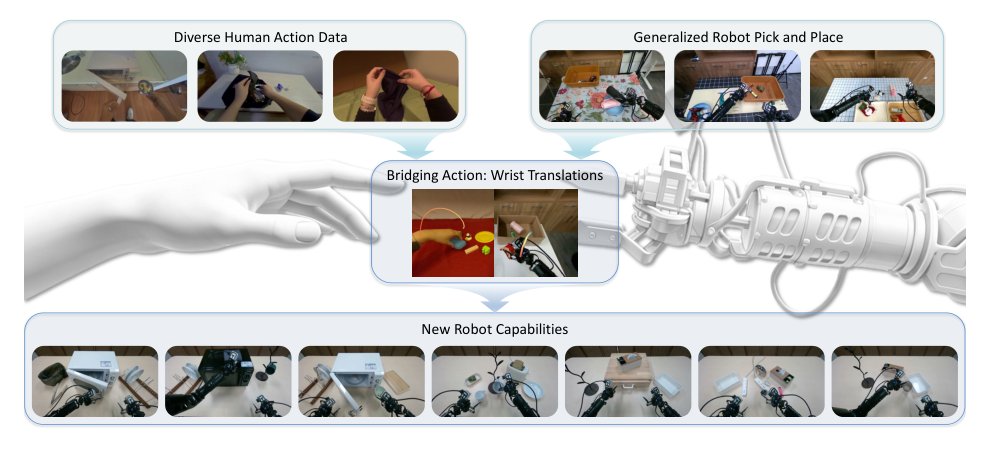
论文的核心不是提出一个新 VLA 架构,而是改变 human action 的建模目标:不再追求从人类数据恢复完整可执行动作,而是只抽取在视觉坐标系中相对稳定的双腕平移轨迹,把它作为 bridging action。这个表示把技能迁移中的信息瓶颈收窄到“手/腕相对物体和视角的运动意图”,主动丢弃 rotation/contact 细节。直觉上这成立,是因为很多 household manipulation 的早中期行为主要由 reach、approach、pull、push、place 等空间位移结构决定,而这些结构比手指接触和 wrist orientation 更跨 embodiment。
和 prior 的本质区别在于,它不是把 human embodiment 映射到 robot embodiment,而是引入一个第三方中间 action space:head-camera-relative wrist translation。这个 action space 既能从人类数据中大规模稳定抽取,又能从机器人数据中计算出来,再通过 co-training 绑定到 6DoF robot action。它的 inductive bias 很强:把跨 embodiment transfer 的主通道限制为 translation intent,从而提升 scalability,但代价是有意识地放弃精细姿态迁移。
Method
方法中真正必要的机制有三点。第一,bridging action 定义为初始 head-camera frame 下未来 k 步双腕相对平移,解决的是人类与机器人观测视角共享的问题;它把动作从 world/robot frame 拉回到 embodied perception frame,使 human trajectory 更像一种视觉条件下的 motion field。第二,robot 仍然使用 6DoF end-effector action 和 gripper signal 执行,因此 translation action 不是最终控制空间,而是 transfer supervision;这避免了用不可执行的人类动作直接控制机器人。
第三,interleaved action token 与 attention masking 的价值在于处理异构监督:野外人类数据只有 translation,in-lab human data 可有 gripper-like closure,robot data 有 translation、6DoF 和 gripper。它让模型在同一 action transformer 内看到不同 action components,而不是为每种 embodiment 单独建头或硬拼接缺失维度。最关键的是 robot data 上的 binding objective:随机加入或替换 translation action,让 6DoF action token 学会 attend 到 bridging signal。这个机制才是把 human-only translation pretraining 转化为 robot-executable policy 的桥。
Key Insight / Why It Works
最重要的 insight 是:human-to-robot transfer 中,去掉信息有时比恢复更多信息更有效。6DoF human wrist action 看似信息更完整,但其中 rotation 维度对夹爪机器人既 noisy 又语义错配;translation-only 表示降低了监督熵和 embodiment mismatch,使模型更容易学习到可复用的 manipulation trajectory prior。这里的有效性主要来自 better inductive bias + representation alignment,而不是单纯模型架构创新。
我认为核心贡献是 bridging action 与 robot-side binding objective 的组合。单独 translation pretraining 可能只得到一个“人手运动预测器”;单独 interleaved tokens 只是工程上处理缺失 action components;真正形成 transfer 的,是在 robot trajectories 上同时监督 translation 和 executable 6DoF,让模型把 human-learned motion prior 映射到 robot control manifold。文中 ablation 也支持这一点:去掉 robot-side bridging objective 性能大幅下降。
同时,不能忽略 scaling / data 的作用。600 小时 human data、72 小时 robot pick-and-place、task-specific in-lab human data、4B VLA、VL co-training,这些都会显著贡献收益。论文证明了 translation bridge 能吃到 scaling,但没有完全分离“representation 更好”和“数据覆盖更好”的贡献。部分所谓泛化可能是 human task data 对 evaluation tasks 的覆盖,而不是抽象技能推理。这里更像 retrieval / distributional interpolation over manipulation trajectories,加上一个更干净的 action bottleneck,而不是形成了长期规划或深层 causal manipulation model。
Relation To Prior Work
它最接近 EgoMimic、EgoBridge、GR-3、EgoScale 等从 egocentric human action 做 robot policy co-training 的路线,也和 π0 / π0.5 / OpenVLA 系列共享 VLA + action chunk + flow matching 的技术背景。不同点不在 backbone,而在对 human action 的判断:prior 多数默认“更完整的 hand/wrist pose 更好”,这篇反过来认为完整 pose 中有大量对夹爪有害的信息,应该只保留 translation。
从技术谱系看,它属于 cross-embodiment action representation alignment,而不是纯 imitation learning 或 video pretraining。interleaved action tokens、masking、multi-source co-training 本身并不新,更多是已有 VLA/cross-embodiment 训练技巧的重组;实质创新是把 head-camera-relative wrist translation 明确定义为 human/robot shared action,并通过 robot-side translation supervision 将其 grounding 到 executable 6DoF action。这个新增信息很明确:不是所有 action dimensions 都应该跨 embodiment 对齐,应该优先对齐低噪声、低 embodiment-specific、与任务进展强相关的动作子空间。
Dataset / Evaluation
评测是实机、双臂、15 个 household manipulation tasks,覆盖 microwave、drawer、mug/cup、toast、charger 等,比单一 pick-and-place 更能检验 human skill transfer。每个任务有不同测试布局和 distractors,报告 success 与 progress,能够部分缓解真实机器人评测中 success 过稀疏的问题。核心 claim——translation bridge 是否比 6DoF human action 更适合迁移——有对应 ablation;human-only pretraining 是否 scalable、robot-side bridging objective 是否必要,也都有较直接实验支撑。
但 evaluation 仍有明显边界。任务虽然多,但都在同一机器人平台、同一类双臂夹爪、同一实验室设置下;task-specific in-lab human data 与 evaluation task 高度对应,因此不能强证明开放世界泛化。每任务 trial 数不大,progress metric 有人工设计成分,可能放大“看起来有意图但未成功”的收益。upper-bound 实验很有价值,因为它说明 gap 主要来自 observation/embodiment/noise,而不是 translation representation 本身;但它也暴露了 default human transfer 仍离无 gap 条件有显著距离。
Limitation
最大限制是 translation-only 的表达上限。它适合传递 approach、pull、push、place、wipe 这类空间运动模式,但对精细 wrist orientation、接触法向、夹持姿态、插入角度、force closure 等信息天然不足。论文的失败案例并不是偶然,而是该表示的结构性代价:为了规模化利用 noisy human data,它把 contact-rich manipulation 中很关键的一部分信息丢掉了。
第二个限制是 transfer 依赖 robot-side grounding。bridging action 本身不可执行,必须靠 robot data 学会从 translation intent 到 6DoF/gripper action 的映射。因此它没有消除 robot data 需求,只是把昂贵 robot data 的角色从“覆盖所有技能”改成“学习执行映射 + 少量校正”。如果目标技能的 required contact mode 没出现在 robot data 中,translation prior 很可能只会产生正确接近但错误接触。
第三,增益归因不完全清楚。可能主要来自数据覆盖、human pretraining 的视觉-动作先验、VL co-training 的语义泛化、以及 action bottleneck 的共同作用。文中未充分说明不同 human data source 的边际贡献,也未清楚拆分 in-the-wild human data 与 task-specific in-lab human data 的作用。所谓泛化更可能是分布内技能组合和 trajectory retrieval,而非机器人真正学会了可组合的 manipulation reasoning。
Takeaway
- 第一,human action transfer 不应默认追求完整动作重建;对机器人学习而言,选择性丢弃 noisy / embodiment-specific 维度可能是更可扩展的路线。
- 第二,跨 embodiment 表示的关键不是共享所有控制维度,而是找到一个既稳定可抽取、又能通过少量 robot data grounding 的中间 action subspace。
- 第三,未来更有价值的方向不是回到全 6DoF human pose,而是加入少量可靠 rotation/contact cues,例如 affordance-conditioned orientation、contact phase、grasp type 或 learned residual,使 translation bridge 不在精细接触任务上过早触顶。
- 第四,这篇推动的是 human data scaling 的可用 action interface,而不是通用机器人推理能力;它的长期价值在于为大规模人类操作数据进入 VLA 训练提供了一个低噪声入口。
一句话总结
这篇论文在 human-to-robot skill transfer 中用 head-camera-relative wrist translation 替代 noisy 6DoF human action,实质贡献是提出一种可规模化的人类动作瓶颈表示,并通过 robot-side grounding 将其接到可执行控制空间。