精读笔记
Problem Setting
论文标题:Articulating then Matching: Zero-Shot Shape Matching for Uncurated Data(arXiv preprint / 2026-06-30)。
这篇论文真正处理的不是标准 clean benchmark 上的 shape matching,而是现实采集数据中的 dense correspondence:拓扑可能坏掉,mesh resolution 可能极高,输入表示可能不是 mesh,且没有时间或数据重新训练一个 category-specific matcher。关键困难在于,传统 dense matching 依赖的几何对象——LBO、mesh connectivity、局部 descriptor、spectral basis——在 uncurated scan 上恰好是不稳定的。
以前方法卡住的点很明确:functional map 在 clean near-isometry 下优雅,但 topology corruption 会直接污染 spectrum;template deformation 能给 canonical correspondence,但通常要 category training;semantic/VFM 特征路线更通用,但 dense precision 和计算成本不理想。这个任务的核心矛盾是:dense correspondence 需要稳定的细粒度结构,而真实 3D 输入本身提供的结构不稳定。ATM 的解法是不要从原始 3D topology 中抽主信号,而是先把 shape 解释成一个可控的 articulated parametric instance。
Motivation
作者的核心观察是:对于 human/animal 这类 articulated object,跨实例 correspondence 的难点不一定要在原始 surface 上解决;如果能可靠地把每个输入 lift 到同一个 parametric model,那么 correspondence 在 canonical topology 中几乎是“免费”的。也就是说,matching 的难题可以被重写为 robust articulation / reconstruction 的问题。
已有路线缺的不是又一个 local descriptor,而是一个能同时满足三件事的中间表示:对 topology noise 不敏感、跨输入表示统一、且带有强 category-level semantic/articulation prior。2D VFM 已经在图像空间中学到相当强的人体/动物结构先验,但单视角 3D 重建有 depth ambiguity 和 unseen-side hallucination;parametric model 有一致 topology,但不能直接解释任意 raw 3D observation。ATM 的动机就是把这两者用 multi-view test-time grounding 接起来。
Core Idea
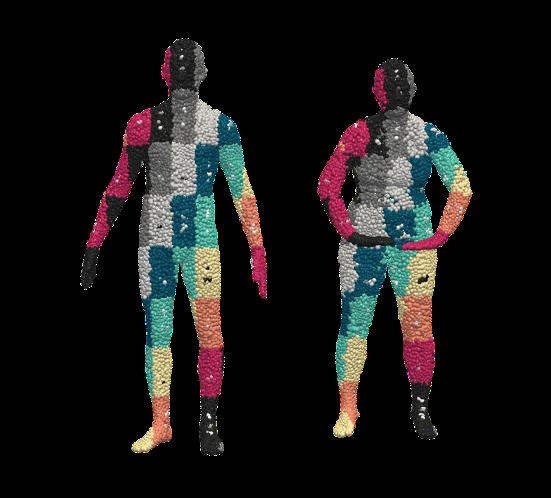
核心思想可以概括为:先 articulate,再 match。ATM 不直接优化两个 shapes 之间的 dense map,而是分别把每个输入通过多视角渲染、2D VFM、parametric fitting 映射到共享 canonical articulated space。只要这一步足够稳定,两个输入之间的粗对应关系就由 parametric template 的固定 vertex ordering 自动给出。
这和 prior 的本质差异在于信息流被重排了:传统方法是 3D geometry → descriptor/spectrum → correspondence;ATM 是 renderable 3D observation → 2D pretrained prior → category parametric latent → correspondence。它引入的 inductive bias 不是局部等距性,而是“对象属于某个可参数化 articulated category”。这使它在 topology corruption 和 representation heterogeneity 上更 scalable,因为主匹配信号不再依赖原始 mesh connectivity;但它的 generalization 也因此被 parametric prior 的覆盖范围限制。
Method
方法上真正必要的机制只有几层。
第一,多视角 rendering 把不同 3D 表示统一成图像证据。这一步解决的是 modality mismatch:mesh、point cloud、3DGS 只要能渲染,就可以进入同一 pipeline。核心变化是把 3D correspondence 问题部分转移到 image-based reconstruction prior 上。
第二,2D VFM 给出单视角 parametric proposal,但这些 proposal 不能直接信任。单视角预测在 2D overlay 上可能对齐,3D pose/shape 却有严重 depth bias,未观察区域还会 hallucinate。因而 view gating、cross-view alignment 和 keypoint triangulation 的作用不是锦上添花,而是把多个不一致的 2D-conditioned hypotheses 约束成一个 3D-consistent articulation。
第三,surface alignment 把 parametric model 从“语义合理”拉向“几何贴合”。它解决的是只靠 keypoints 会丢 surface-level deformation 的问题,但它仍然被 parametric space 限制,不是在重建任意几何细节。
第四,coarse map 来自 shared topology,spectral ICP 只做 refinement。这里最重要的是 coarse correspondence 的来源已经不是 LBO;LBO refinement 在 ATM 中更像 regularizer / denoiser,而不是主 matching engine。
Key Insight / Why It Works
这篇论文最重要的 insight 是:在 uncurated 形状上,最可靠的 correspondence signal 可能不是 intrinsic geometry,而是 category-level articulation prior。对于人体和动物,parametric model 的 canonical topology 相当于一个强 latent coordinate system;只要能把观测稳健地投进去,dense matching 就被降维为 reconstruction-to-template alignment。
真正有效的部分大概率是 representation alignment:把所有输入压到同一个 articulated latent/template space。multi-view grounding 是核心贡献,因为它把单视角 VFM 的 hallucination 变成可筛选、可三角化、可优化的 evidence。如果没有这一步,论文 ablation 显示性能明显掉下去,这也符合直觉:单视角 foundation model 的输出不是 3D-consistent correspondence source。
spectral refinement 看起来是辅助,不是主贡献。它提高 dense map regularity,但 ATM 的性能不会主要来自 spectral ICP;否则它也会遭遇传统方法在 topology noise 下的同样失败。论文补充材料也暗示 raw FAUST 上去掉 refinement 损失不大,这说明主匹配能力来自 parametric coarse map。
需要直接指出:这不是“无监督地发现 correspondence”的范式,而是用大规模预训练视觉模型和 parametric body prior 做 hidden supervision / prior transfer。所谓 zero-shot 指 no correspondence-specific training,不代表没有 category supervision。增益也有一部分来自 test-time compute:每个 shape 做 1–2 分钟优化,换取更稳的 articulation。高分辨率优势主要来自固定 parametric bottleneck 和 chunked map conversion,而不是在 200k vertices 上直接解决了 dense spectral matching。
Relation To Prior Work
ATM 最接近三条线的交汇:template/parametric correspondence、model-based reconstruction、以及 functional-map refinement。它不像传统 functional map 那样把 spectrum 当核心信号,也不像 3D-CODED/DIT/DeformShape 那样训练一个 category deformation network;它更像把 SMPLify-style fitting、multi-view consistency 和 canonical-template correspondence 重新组织成 zero-shot matching pipeline。
看似新的地方中,“shared template gives correspondence”并不新,parametric model fitting 也不新,spectral ICP refinement 更不是新东西。实质创新在于把 2D foundation model 的单视角重建能力系统性地 ground 到多视角 3D observation,并把它作为 correspondence 的主路径,而不是只作为初始化或辅助 feature。
和 ZSC/Diff3F 这类 semantic feature matching 相比,ATM 不依赖通用语义特征在 surface 上逐点匹配,而是显式引入 articulated latent structure;这更强但也更窄。和 DenseMatcher/UniMatch 这类 supervised category matcher 相比,ATM 不训练 correspondence network,但借用了更大的 pretrained reconstruction prior。因此它属于“prior-heavy test-time optimization”谱系,而不是纯 zero-shot geometric matching。
Dataset / Evaluation
evaluation 覆盖面比较完整:non-isometric、near-isometric、raw high-resolution、partial scan、point cloud、3DGS 都有涉及,基本围绕论文 claim 设计。最有说服力的是 raw high-resolution scan 和 partial scan:这些场景确实直接打击 intrinsic/spectral 方法的弱点,也能展示 ATM 绕开 topology 的价值。
不过,benchmark 的类别范围仍主要是 human/animal,也正是 parametric prior 最成熟的区域。因此实验支持的是“在已有强 articulated prior 的类别上,ATM 能把 uncurated correspondence 做得很稳”,而不是“开放世界 3D shape matching 已解决”。
多表示实验说明 pipeline 的 render-based interface 很有用,但 point cloud 实验没有 spectral refinement,3DGS 主要是 qualitative,验证强度不如 mesh benchmark。高分辨率实验中 baseline OOM 与 ATM near-constant runtime 的对比部分混合了算法思想和工程实现;补充材料承认 chunked nearest search 能缓解一些 OOM,只是 ZoomOut 精度仍差。这说明 claim 的方向成立,但部分 scalability superiority 来自 pipeline design 与工程路径共同作用。
Limitation
最大限制是 prior dependency。ATM 的泛化不是任意类别泛化,而是依赖 category-specific parametric model 与 compatible single-view estimator。没有 MHR/SMAL/SAM3D/AniMer 这类先验,方法核心链条就断了。它把 correspondence 难题转移成了“是否有足够好的 category prior 与 reconstruction model”。
第二,上限由 parametric space 决定。衣物、头发、尾巴细节、动物种间极端比例、非标准姿态、扫描缺失严重区域,都可能无法被 canonical model 表达。此时 coarse map 会系统性偏,而 spectral refinement 只能局部修,不能恢复不存在于 latent prior 中的结构。
第三,zero-shot 表述需要谨慎。它不是没有训练,而是没有为 correspondence 训练;核心能力可能主要来自大规模 2D reconstruction model 的数据覆盖。若 benchmark 中的人体/动物形态与预训练分布高度重合,泛化可能被高估。文中未充分说明 foundation model 训练数据与测试 benchmark 的 overlap。
第四,test-time optimization 带来实际部署成本。每个 shape 分钟级 articulation 对离线 scan matching 可以接受,但对实时机器人、交互式编辑、大规模数据库检索不一定可用。所谓 scalable 主要是对 vertex count scalable,不等于对 number of shapes / latency scalable。
第五,增益归因仍不完全干净。多视角 grounding、parametric prior、2D VFM、surface fitting、spectral refinement、工程化 chunking 都在贡献性能;论文 ablation 证明 grounding 重要,但没有完全拆出 foundation model scale、parametric model expressiveness 和 optimization budget 各自的影响。
Takeaway
- 1. 对 uncurated 3D correspondence,继续在 corrupted mesh 上榨 intrinsic descriptor 的收益可能有限;更有前途的是先把输入对齐到一个稳定 latent/canonical representation。
- 2. 强 prior + test-time grounding 是一个值得迁移的模式:foundation model 给 hypothesis,multi-view/geometry consistency 负责把 hypothesis 变成可靠 3D state。
- 这个思想可迁移到 registration、tracking、scan completion、robot manipulation 中。
- 3. ATM 真正推动的是把 dense matching 从 pairwise geometric optimization 变成 category-level articulated reconstruction problem。
一句话总结
ATM 是一篇把 uncurated 3D dense correspondence 从 intrinsic geometry matching 转向 prior-heavy articulated canonicalization 的论文,实质贡献在于用多视角 test-time grounding 把 2D foundation-model prior 转化为可用的 3D correspondence scaffold。