精读笔记
Problem Setting
论文提出并实作的是 Point-Supervised Online TAL:训练只给每个动作实例一个时间点,测试必须在流式视频中因果地产生动作类别和边界,并且动作结束后立即输出、不能事后修正。
真正困难点在于两个缺口叠加:point label 不提供动作长度和边界,online inference 又不能用未来帧判断动作是否结束。单独看,这两个问题各自已有解决路径;组合起来之后,PS-TAL 的 full-video context 不可用,OnTAL 的 full segment labels 又不可得。
所以这篇论文真正处理的不是“弱监督 TAL”或“在线 TAL”的常规版本,而是一个 supervision sparsity 与 causal inference 互相放大的 setting。边界信息既不能从标注直接得到,也不能在测试时从未来上下文推断,这就是 POTAL 的核心矛盾。
Motivation
已有路线的问题很清楚:offline TAL/PS-TAL 可以通过全视频上下文补齐边界,但部署时违反 causal constraint;online TAL 可以流式预测,但训练时默认有完整 segment annotation。这两条路线各自绕开了对方最难的部分。
作者的关键观察是,point-supervised offline model 虽然不能作为最终 online model,但它能在训练阶段把稀疏点标签转成更丰富的 latent temporal structure。这个结构包括伪 segment、CAS activation、以及对未来窗口动作分布的估计。
因此缺口不是“再设计一个在线 detector”,而是如何把 offline weak teacher 的 full-context knowledge 压缩到一个严格在线 student 中。OnPoint 的动机本质上是利用 offline training-time privilege 来弥补 online test-time information deficit。
Core Idea
核心思想是把 POTAL 从“直接用点标签训练在线定位器”改写成“先用 offline teacher 重建隐藏的时序结构,再把结构蒸馏给 online student”。这相当于把稀疏 supervision 的补全过程和在线 causal 模型的学习过程解耦:teacher 负责用全局上下文猜边界,student 负责学习在局部历史窗口中复现这些决策。
这个思路可能有效,因为 action boundary 并不是只由终点附近一帧决定,而通常存在可提前观察到的 temporal cues。offline teacher 在训练时看到完整视频,可以把这些 cues 体现在 CAS 和 pseudo segments 中;student 通过 CASS/anticipation/anchor supervision 学到这些 cues 的因果近似。
和 prior 的本质区别在于,OnPoint 没有把 point supervision 直接塞进 online TAL,也没有简单把 pseudo segment 当 full label 用。它重新组织了监督信息流:从 sparse points 到 offline latent structure,再到 causal student 的多层次约束。这是比单纯 pseudo-labeling 更强的 inductive bias。
Method
方法上应关注机制而不是模块数量。
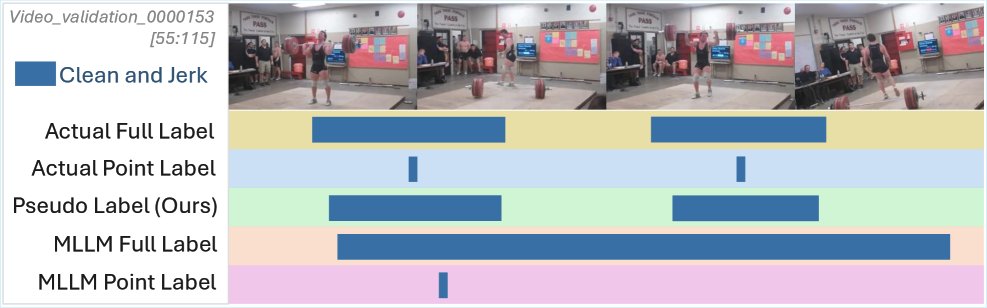
第一,instance-level pseudo segment distillation 解决尺度缺失。点标签只能告诉模型“这里属于某个动作”,无法告诉 anchor 应该覆盖多长。伪 segment 给了在线 detector 可学习的边界目标,是整个框架的主监督来源。
第二,CASS distillation 解决监督稀疏和 representation alignment。只用伪 segment 会把 teacher 的连续 activation 信息压成硬边界,损失大量时序结构;对齐 CAS subsequence 让 student 的窗口表示学习 teacher 的 dense temporal belief。
第三,window-level anticipation distillation 解决 future context 缺失。student 在当前窗口预测 teacher 在未来窗口中的动作出现情况,本质是训练一个短期未来预测先验,使模型在没有未来帧时更早形成边界/转场判断。
第四,point supervision 是防噪声锚点。teacher pseudo label 不可靠时,原始人工点标签提供低信息量但高可信度的约束,避免训练完全被 teacher 错误牵引。
第五,actionness-calibrated anchor decoding 把 CASS 的背景概率转成 attention bias,让 anchor query 更关注动作帧。它不是决定性结构,但把 dense activation supervision 和 proposal decoding 连接起来,减少 decoder 在背景区域浪费容量。
Key Insight / Why It Works
最重要的 insight 是:在弱监督在线定位里,真正缺的不是分类器容量,而是可训练的 temporal structure。OnPoint 有效的主要原因是把 teacher 的 full-video temporal structure 分层注入 student,而不是只给最终伪标签。
最核心贡献很可能是 CASS + anticipation 形成的 representation alignment,而不是 anchor decoder 本身。伪 segment distillation 是必要 baseline,但容易退化成 noisy full-supervision;CASS 保留 teacher 的软时序证据,anticipation 则把未来信息转成可因果学习的辅助任务。这两者让 student 学到的是“边界前后的动态模式”,而不只是拟合 anchor offset。
anchor-level point supervision也很关键,但它的作用更像 noise regularizer / trust anchor。它不会单独解决尺度问题,论文自己的 distillation-free baseline 也证明了这一点;没有 pseudo segment 时,点监督无法可靠估计动作长度。因此 point supervision 的价值不是替代 teacher,而是约束 teacher。
ASAC 的增益更像合理 engineering 加 inductive bias:用 actionness bias cross-attention 是自然的,能提高局部 proposal feature 质量,但它依赖 CASS 质量,且不是任务成立的根本。
从归因看,这篇更接近 representation alignment + latent structure distillation,而不是 scaling、retrieval、test-time compute 或长期 planning。所谓 anticipation 也不应过度解释为规划能力;它更像从 teacher CAS 中蒸馏出的短期 transition prior。
需要警惕的是,部分收益可能来自 teacher pseudo label 质量和后处理选择。ONMS 对 mAP 影响很大,teacher 在 THUMOS 上的伪标签质量也很高。若 teacher 的 pseudo segment 本身接近强监督标签,student 的提升就有一部分是 hidden supervision via offline inference,而不完全是在线模型结构创新。
Relation To Prior Work
它最接近三条线的交叉:PS-TAL 的 point-to-boundary 推断、OnTAL 的 streaming anchor detector、以及 privileged/offline-to-online distillation。
和 PS-TAL 的差异在于,PS-TAL 最终仍是 offline detector,利用全视频上下文进行预测;OnPoint 把 PS-TAL 降级为训练期 teacher,最终部署的是 causal student。这里新增的信息是:offline weak model 的 CAS 和 pseudo boundary 可以作为 online model 的结构监督。
和 OnTAL 的差异在于,OnTAL 通常从真实 segment label 学在线边界;OnPoint 用 point-supervised teacher 生成 substitute supervision,并额外加入 CAS/anticipation 来弥补伪标签的信息损失。
和普通 pseudo-labeling 的差异在于,OnPoint 不只蒸馏 hard pseudo segments,还蒸馏 dense activation 和 future-window cues。instance pseudo-labeling 本身并不新,CASS-based representation alignment 和 anticipation-style offline-to-online transfer 是更实质的新增部分。
整体上,它属于“privileged offline model teaches deployable online model”的技术谱系。真正的新意不是某个单独模块,而是把 point-supervised latent structure recovery 与 causal TAL 训练系统性接起来。
Dataset / Evaluation
评估覆盖了 sports、egocentric procedural、office interaction、fine-grained dense action 等多个场景,任务覆盖面比只在 THUMOS 上验证更强。五个数据集上的一致增益支持“框架可迁移”这一弱 claim。
但 evaluation 仍主要是标准 benchmark 的离线回放式 online protocol,不等于真实 deployment。真实 streaming 中的端到端延迟、在线 feature extraction、domain shift、持续长视频、open-world action、用户可接受的 promptness/accuracy trade-off 都没有被充分验证。
结果最能支持的是:在已有 benchmark 和预提取特征条件下,multi-level distillation 优于简单 teacher pseudo segment + online detector。它不能完全证明 point-supervised online TAL 在真实系统中已经可用,也不能证明 anticipation 学到的是跨域动作动态而不是数据集内 transition prior。
另一个评价限制是 mAP 仍占主导。对于 online TAL,promptness 与不可修正性同样重要;补充里显示 ONMS 提高 mAP 但牺牲 promptness,这说明单看 mAP 会偏向更保守、更晚的检测策略。
Limitation
最大限制是 teacher dependency。OnPoint 的上限基本受 point-supervised offline teacher 的伪边界质量控制;teacher 弱、跨域差、类别细粒度高或动作重叠复杂时,student 很可能只是继承错误。
第二,方法把困难从在线训练部分转移到了 offline pseudo-label generation。虽然最终部署在线模型,但训练阶段仍依赖全视频访问、dataset-specific teacher、后处理和伪标签质量筛选。这不是纯粹的低成本在线学习方案。
第三,point annotation 的中心先验未必普适。文中用小规模人工研究和已有工作支持“点靠近动作中心”,但在长尾动作、状态类动作、交互过程或动作边界模糊的任务里,该假设可能失效。
第四,anticipation 的语义容易被高估。它不是显式世界模型,也没有长期 memory 或 planning;更像短窗口多标签预测。若动作转移规律在训练/测试间变化,收益可能迅速下降。
第五,增益来源不完全清楚。teacher 选择、ONMS、anchor 配置、CASS、ASAC、point loss 都在影响最终 mAP;虽然有消融,但这些因素之间耦合较强,无法干净分离“offline-to-online distillation”本身的贡献。
第六,泛化可能依赖 benchmark overlap 和预提取特征分布。文中未充分说明在新域、新类别、新摄像头、实时特征提取条件下是否仍成立。
Takeaway
- 1. POTAL 的关键不是设计更复杂的 online detector,而是如何为 causal detector 构造可学习的 latent temporal structure。
- 2. Offline weak teacher 可以作为训练期结构生成器:即便最终不能在线部署,它仍能把 sparse points 转成边界、activation 和未来趋势三类可迁移监督。
- 3. 对弱监督在线任务,hard pseudo label 不够;dense representation alignment 和辅助未来预测通常比单纯伪标签更稳。
- 4. 未来真正值得做的是降低 teacher dependency:例如跨域 robust teacher、uncertainty-aware distillation、在线自适应、以及把 promptness 纳入核心优化目标,而不是只优化 mAP。
一句话总结
OnPoint 是把 point-supervised offline TAL 产生的隐藏时序结构蒸馏到 causal online detector 中的第一套系统化 POTAL 框架,真正贡献在于用 privileged offline context 重组弱监督在线定位的信息流,而不是单个 detector 模块的创新。