精读笔记
Problem Setting
《Open-Weather Robust 3D Detection via Dual-Critic Diffusion Alignment》(arXiv preprint / 2026-07-03)处理的不是普通 adverse-weather robustness,而是 LiDAR–4D radar fusion 在开放天气组合下的外推问题。真正困难点是:天气 type 与 severity 的组合空间近似开放,LiDAR 退化不是一个固定噪声模型;同样叫 fog/snow/rain,不同强度会造成完全不同的稀疏化、回波污染和几何缺失。过去方法通常默认训练/测试天气重叠,或者把天气当成可枚举 domain 来 gate/fuse/denoise,因此在 held-out type 或 held-out severity 上会暴露泛化缺口。关键矛盾是:检测器需要稳定几何语义,但输入 LiDAR feature 的统计分布随天气漂移;radar 相对稳定但语义/空间分辨率有限,直接依赖 radar 又可能带来负迁移。
Motivation
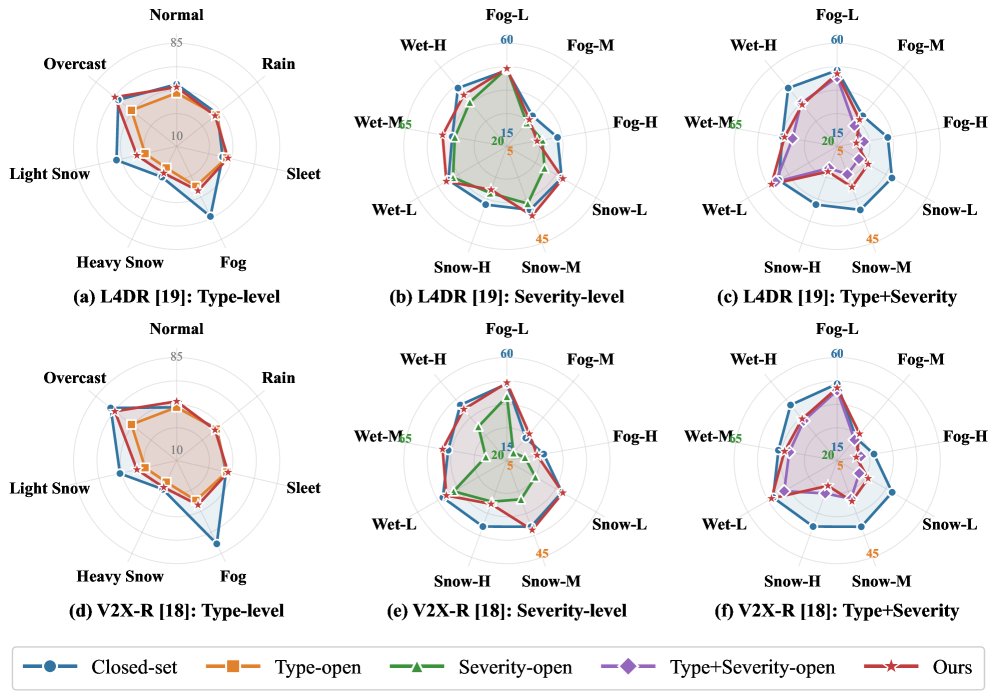
作者的动机不是再证明 adverse weather 会伤害 LiDAR,而是指出现有 LiDAR–radar fusion 的鲁棒性大多是 closed-world robustness:它们在已见天气或预定义 corruption family 上有效,但没有解决“未见天气组合下 feature manifold 怎么对齐”的问题。核心观察是 K-Radar 上强 baseline 在 type-open、severity-open、type+severity-open 下都有明显掉点,说明 fusion operator 本身并不会自动带来开放天气泛化。缺的是一种不需要 weather label、不需要 paired clean/adverse、不把天气建模成离散类别的恢复机制。于是作者把问题转向 clean-weather representation prior:与其预测天气是什么,不如直接约束退化 LiDAR feature 回到 clean detector 能解释的区域。
Core Idea
核心思想可以概括为:用 radar-conditioned diffusion 做局部 feature repair,用两个 frozen clean-domain critics 定义 repair 的方向。Diffusion 在这里不是为了生成新样本,而是作为一个可迭代、受约束的 feature refinement operator;它从退化 LiDAR feature 的加噪版本开始反推,保留输入几何布局,同时允许 feature 沿着 radar 条件和 critic 梯度向 clean manifold 移动。
和 prior 的本质区别在于,它不把 weather robustness 视为 weather-aware fusion 或 corruption-specific denoising,而是视为 representation alignment。新的 inductive bias 是:clean-weather detector 和 clean-vs-adverse discriminator 可以作为“正常几何语义流形”的代理;radar 则作为跨天气较稳定的条件信号。这个组织方式比枚举 weather type 更 scalable,因为它不需要为每种天气学习专门分支,但它的 generalization 上限取决于 clean manifold prior 是否真的覆盖 adverse 中可恢复的目标结构。
Method
方法上最重要的不是模块数量,而是三个约束如何互补。第一,radar-conditioned diffusion alignment 解决的是退化 LiDAR feature 的局部修复问题:它避免从纯噪声生成,减少 hallucination,把计算集中在输入附近的 feature correction。第二,detection-guided critic 解决的是语义漂移问题:仅做重建或分布对齐可能让 feature 看起来 clean 但不可检测,frozen Normal detector 迫使 refined feature 保持 object-level discriminability 和 localization consistency。第三,weather adversarial critic 解决的是全局 domain mismatch:检测 loss 只关注标注目标附近,discriminator 对整体 BEV feature 分布施加 clean-domain pressure。训练中的两阶段设计本质上是先学 identity-preserving refinement,再逐渐放松重建约束,让 critic 主导对齐;inference routing 则是用 discriminator 避免对 Normal frame 做不必要修复,但这更像效率工程,不是核心科学贡献。
Key Insight / Why It Works
这篇最有价值的 insight 是:开放天气泛化可以不依赖天气识别,而依赖 clean-task manifold 的可达性。只要 adverse LiDAR feature 没有完全丢失结构,radar 能提供相对稳定线索,diffusion refiner 就可以把 feature 拉回 clean detector 熟悉的区域。真正可能贡献最大的部分是 dual-critic,而不是 diffusion 本身:diffusion 提供平滑迭代 refinement 和额外 test-time compute;critic 决定 refinement 往哪里走。没有 detection critic,alignment 可能变成无任务感知的 style matching;没有 adversarial critic,模型可能只在 seen adverse 上学到局部补偿。
从归因看,它本质上是 representation alignment + better inductive bias + test-time compute 的组合,不是新的物理天气建模。增益不太像纯 scaling,因为 same-budget GAN refiner 被压过;但也不能排除一部分来自更强训练 pipeline、额外 Normal prior、以及 diffusion 多步推理带来的容量/计算优势。最值得警惕的是 discriminator 是否学到真正 clean-weather manifold:如果 K-Radar 中 Normal/non-Normal 还混有场景、时间、采样条件差异,那么 adversarial alignment 可能利用 dataset shortcut。文中未充分说明 critic 在跨场景、跨传感器、跨采集分布时是否仍稳定,因此“weather-agnostic”目前更准确地说是“不显式使用 weather label”,还不是强意义上的开放世界不变性。
Relation To Prior Work
最接近的谱系有三条:LiDAR–4D radar fusion robustness、diffusion-based feature denoising/restoration、domain/OOD representation alignment。相对 L4DR/V2X-R 这类 fusion/denoising方法,DCDA 的差异不是 radar 用法本身,而是把 radar 条件放进一个 clean-manifold refinement 框架,并用 frozen critics 约束输出。相对 weather-aware gating 或 corruption-specific augmentation,它减少了对天气类别与强度标签的依赖。相对 MonoWAD 或 paired clean/fog reference 类方法,它不要求 clean–adverse pairing。
看似新的部分中,diffusion refiner、adversarial domain alignment、teacher/frozen detector guidance 都不是新思想;实质创新在于把它们组合成一个面向 LiDAR–4D radar open-weather 的 feature-level alignment protocol,并配套提出 type/severity holdout benchmark。真正新增的信息是:在 4D radar fusion 场景里,clean detector prior + clean distribution critic 比单纯 fusion robustness 更能解释 unseen weather transfer。
Dataset / Evaluation
Evaluation 覆盖了三种开放天气轴:真实 weather type holdout、合成 severity holdout、type+severity joint holdout,并额外做 synthetic-to-real 与真实 LightSnow-to-HeavySnow。这个设计比常规 K-Radar split 更接近论文 claim,也确实能暴露 closed-world baseline 的问题。实验不是简单堆单表数字,ablation、routing、capacity-controlled GAN refiner 都在一定程度上支撑机制归因。
但验证仍有明显边界。首先,核心 benchmark 基本围绕 K-Radar,跨城市、跨传感器、跨采集协议泛化没有被验证。其次,severity-open 和 type+severity-open 很大部分依赖从 Normal 合成天气;这可以控制变量,但和真实 severity 分布仍有 gap。第三,主要报告 sedan detection,不能证明对多类别、长尾目标、tracking/occupancy 等任务同样成立。第四,Normal 作为唯一 clean reference 的假设在实际部署中可能过窄:不同地区/季节/传感器的“clean”本身也可能多模态。
Limitation
核心限制不是“推理慢”这么表面,而是方法把开放天气问题转移成 clean-manifold 可对齐问题。它默认 adverse feature 到 clean feature 存在可学习映射,且 radar 条件足以消除歧义;在 LiDAR 几何严重缺失、radar 分辨率不足或多目标密集遮挡时,这个前提会崩。极端 Snow/Fog 上增益缩小已经说明它更多是在修复残余结构,而不是恢复不可观测信息。
另一个上限是 critic 的可靠性。Frozen Normal detector 代表的是训练集 Normal detection prior,不一定代表真实 clean geometry;weather discriminator 可能学到天气以外的 domain bias。若部署域的 Normal 分布变化,router 和 adversarial guidance 都可能误判。文中未充分说明 threshold 校准、OOD Normal、跨传感器 radar noise 对系统的影响。增益来源也仍有不清楚之处:diffusion 多步 refinement、额外训练阶段、Normal-only detector prior、synthetic severity data 覆盖度分别贡献多少,还需要更严格拆解。
Takeaway
- 第一,开放天气鲁棒性值得从 closed-set corruption robustness 中单独拿出来定义;type 与 severity 的 joint holdout 比单一天气分类更能暴露真实问题。
- 第二,面向感知鲁棒性的生成模型不一定要生成点云/图像,feature-space local refinement 可能更稳、更容易和 detector prior 结合。
- 第三,clean-domain task critic 是可迁移 insight:在其他 sensor fusion 或 OOD detection 任务中,可以用 frozen task model 定义“可用表示”的方向,而不是只做无监督 domain alignment。
- 第四,未来更值得做的是跨数据集、多 clean manifold、可校准 critic、以及极端信息缺失下的 uncertainty-aware refinement,而不是继续堆更重的 diffusion refiner。
一句话总结
DCDA 是一篇把 LiDAR–4D radar 开放天气鲁棒性从 weather-specific fusion 推向 clean-manifold feature alignment 的工作,实质贡献在于用 frozen task/distribution critics 为 radar-conditioned diffusion refinement 定义可泛化的恢复方向。