精读笔记
Problem Setting
HyperVAttention: Efficient Sparse Attention with Spatio-Temporal Clustering for Video Diffusion(arXiv preprint / 2026)。这篇论文实际处理的是 VDiT 长视频生成中的 attention inference bottleneck,尤其是 training-free sparse attention 在真实 GPU 上无法兑现理论 sparsity 的问题。以前的 block-sparse 方法硬件友好但语义粒度粗,容易损伤质量;clustering-based 方法语义更细,但聚类本身昂贵,而且 cluster-induced blocks 尺寸不规则,和 CTA tile 不对齐。关键矛盾不是“稀疏多少”,而是“以多低的 routing 成本产生一种 GPU 真正能高效执行、同时误差可控的 sparse pattern”。
Motivation
已有路线不够的原因在于它们分别只优化了问题的一半。原始 layout 上做 block sparse,本质是在牺牲 token-level relevance 换硬件规则性;SVG2 类语义聚类方法把 relevance 找得更细,但把 token 当成无结构集合做全局聚类,开销和 token/centroid 数量直接挂钩,还制造了硬件不规则性。作者的核心观察是:video diffusion latent 不是任意点云,而是带有 3D spatio-temporal topology 的连续场;denoising 相邻 step 的 token assignment 大量不变;GPU 执行的真实单位是 tile 而不是 token。缺口在于 prior 没有同时利用 latent structure、step-level stability 和 hardware cost model。
Core Idea
论文的真正核心不是提出三个模块,而是把 clustering-based sparse attention 从“语义上找相似 token”推进到“在 video latent topology 和 GPU tile topology 之间做对齐”。它引入的 inductive bias 是:相关 token 大概率出现在 3D 局部邻域内,且这种相关结构在 denoising 过程中缓慢变化。因此 sparse routing 不必每一步全局重算,也不必追求无约束的最优聚类。
与 prior 的本质区别在于,HVA 不把 sparsity 看作抽象 mask density,而把 sparse attention 当作一个系统级 layout optimization 问题。local-window clustering 限制了信息搜索半径,hybrid update 复用跨 step 的 assignment,cluster merging 则将语义 cluster 重组为更适合 CTA 的执行块。它更 scalable 的原因不是 attention 公式更优,而是 routing cost、layout cost、kernel cost 三者同时被纳入设计目标。
Method
第一,3D local-window clustering 解决的是全局 k-means 在长视频 token 上过重的问题。它用规则 3D grid 初始化 centroid,并把每个 token 的 centroid search 限制在局部窗口内,使 assignment cost 与全局 centroid 数量弱解耦。机制上的变化是:聚类从全局最近邻搜索变成带 video topology prior 的局部匹配。
第二,hybrid clustering 解决的是 diffusion step 间重复路由的问题。anchor step 做全量 local clustering,中间 step 只更新 Lowe ratio 高、靠近 cluster boundary 的 ambiguous tokens。它的必要性在于 assignment stability 很高,全部重算是浪费;核心变化是把 sparse routing 变成 test-time memory reuse / incremental refinement。
第三,hardware-aware cluster merging 解决的是 cluster size 和 CTA tile 不对齐的问题。它不再只最小化 token density,而是用 CTA-aligned cost 评估合并收益,把若干 query cluster 合成一个执行 group,并用 key mask union 填充原本 idle 的 tile capacity。核心变化是将一部分“额外 attention”放进原本浪费的硬件空洞里,从而可能同时降低 tiled cost 和提高 approximation fidelity。
Key Insight / Why It Works
最关键的 insight 是:video diffusion sparse attention 的瓶颈不只是 attention matrix 太大,而是“找到并执行一个好 sparse pattern”的成本太高。HVA 有效主要来自三个结构性事实的叠加:video latent 有局部连续性,denoising trajectory 有短期稳定性,GPU attention kernel 有固定 tile 粒度。这三者让原本昂贵且不规则的 clustering sparse attention 变成一个局部、增量、硬件对齐的问题。
最可能的核心贡献是 hardware-aware framing:论文明确区分 theoretical density 和 CTA density,并直接优化后者。这比单纯提出 local clustering 更重要,因为很多 sparse attention 论文的失败点就在于 paper sparsity 不等于 runtime sparsity。3D local-window clustering 是有效的 inductive bias,但其本质更接近把 SLIC/superpixel 式局部聚类迁移到 video latent;hybrid clustering 则更像 diffusion caching 思想在 routing assignment 上的应用。二者很有用,但不完全是新的建模突破。
这里的能力来源不是 data scaling,也不是更强 representation learning,因为方法 training-free;更准确地说,它是 latent structure exploitation + memory reuse + hardware-aware layout optimization。增益中相当一部分可能是 engineering / systems optimization,尤其 Triton kernel、CTA-aware merging、FlashInfer tile cost 对最终 speedup 很关键。论文没有证明 local clustering 在所有视频语义结构下都近似全局聚类,只是经验上显示在当前 VDiT latent 上成立。
Relation To Prior Work
最近的是 SVG2 / semantic-aware permutation sparse attention:同样先聚类 Q/K,再按 cluster-level centroid score 做 Top-p sparse attention。HVA 的新增信息不是“用 cluster 做 sparse attention”,而是降低 cluster 生成成本并修正 cluster block 的硬件不可执行性。
相对 SpargeAttn、SVG、VORTA、sliding/block sparse 等原始 layout 稀疏方法,HVA 仍属于 training-free sparse attention,但站在 semantic clustering 这一侧:它牺牲原始 spatial block 的规则性,换取更细粒度 relevance,再通过 merging 把规则性补回来。
看似新的部分中,local-window clustering 借用了 over-segmentation / local search 的老思想,hybrid update 借用了 diffusion feature caching 的稳定性假设;真正实质创新在于把这两者嵌入 clustering-based sparse attention,并用 CTA cost 作为后处理目标。它属于“semantic sparse attention + systems-aware routing”的技术谱系,而不是 attention approximation 理论的新分支。
Dataset / Evaluation
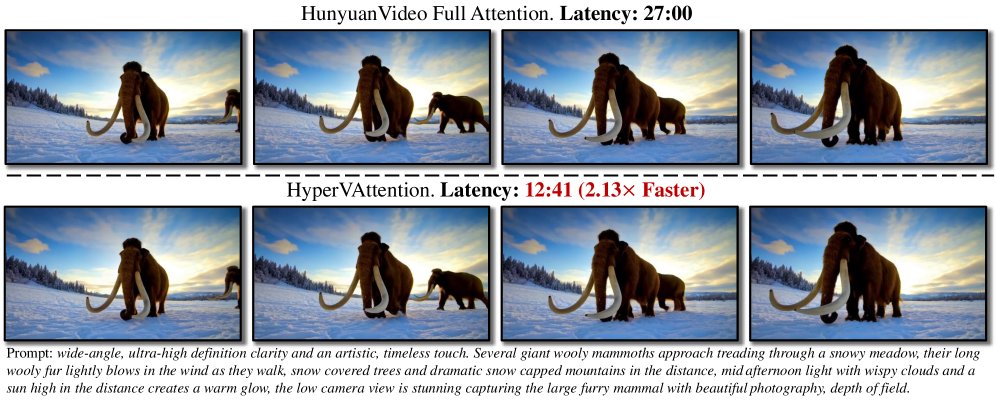
评估覆盖了 Wan2.2 和 HunyuanVideo 两个大规模 video diffusion 模型,包含 T2V/I2V、720p、长序列 token 设置,并在 H200 上报告真实端到端 latency,因此对 deployment claim 比只报 FLOPs/density 更有说服力。对核心 claim——降低 clustering overhead、提升 sparse attention 的真实硬件效率——实验是比较直接支持的,尤其 latency breakdown 和 CTA density 对比是有价值的。
但 evaluation 仍有明显边界:样本量较小,主要是 50 prompts 级别;硬件基本集中在 H200,缺少跨 GPU 架构验证;视频类型是否覆盖强运动、快速剪辑、复杂遮挡并不清楚。质量评估主要相对 full attention 输出做 fidelity,再辅以 VBench 和 LLM judge。LLM judge 可以补充感知维度,但不应被过度解读;它可能对细粒度 temporal artifacts、attention-induced semantic drift 不敏感。整体上,实验验证了 speed-quality Pareto,但没有充分证明泛化到任意 video diffusion backbone 和硬件环境。
Limitation
HVA 的上限由 locality assumption、assignment stability 和 tile alignment 三个前提共同决定。若 latent token 的语义关联跨越远距离空间区域,local-window clustering 会漏掉全局匹配;若 denoising step 间 representation 剧烈变化,hybrid update 会复用过期 assignment;若硬件 tile shape 或 sparse kernel packing 策略变化,cluster merging 的收益可能下降。
另一个限制是方法把一部分问题从 attention computation 转移到了 routing/layout optimization。虽然当前实现里 overhead 很低,但随着模型、head 数、动态分辨率、多尺度 token layout 变复杂,merging 和 cache policy 本身可能变成新的调参负担。增益来源不完全干净:算法层面的 sparsity、Triton kernel 优化、Flash-style sparse kernel、硬件 tile cost 对齐混在一起,难以判断每个思想在不同系统栈中的独立价值。
文中未充分说明失败案例,也没有系统分析 cluster merging 增加 key union 后的 attention error。所谓“更准确 approximation at no extra hardware cost”只在存在 idle tile capacity 时成立;当 tile 已经较满时,合并可能直接增加真实计算或引入过多无关 key。方法对短视频、低分辨率、image diffusion 的收益作者也承认会变小。
Takeaway
- 1. 对 video diffusion sparse attention,未来更重要的可能不是继续追求更低 theoretical density,而是直接优化 kernel-visible cost,例如 CTA density、packing efficiency、routing overhead。
- 2. Video latent 的 3D topology 和 denoising step stability 是非常可迁移的 inductive bias;它们不仅能用于 attention sparsification,也可用于 cache invalidation、token routing、KV reuse、adaptive computation。
- 3. Clustering-based sparse attention 的下一步应当从“更好的聚类算法”转向“routing-error-cost 三者联合建模”:哪些 token 需要全局 search,哪些可以局部复用,哪些额外 attention 可以塞进硬件空洞。
- 4. 这篇真正推动的是 training-free acceleration 的系统化:把 approximation quality、temporal reuse 和 hardware layout 放到同一个设计空间里,而不是单点优化某个 sparse mask。
一句话总结
HVA 是一篇把 clustering-based video diffusion sparse attention 从语义稀疏推进到时空结构复用与硬件对齐执行的工作,核心贡献在于让 sparse pattern 不仅“近似合理”,而且“生成得起、跑得动”。