精读笔记
Problem Setting
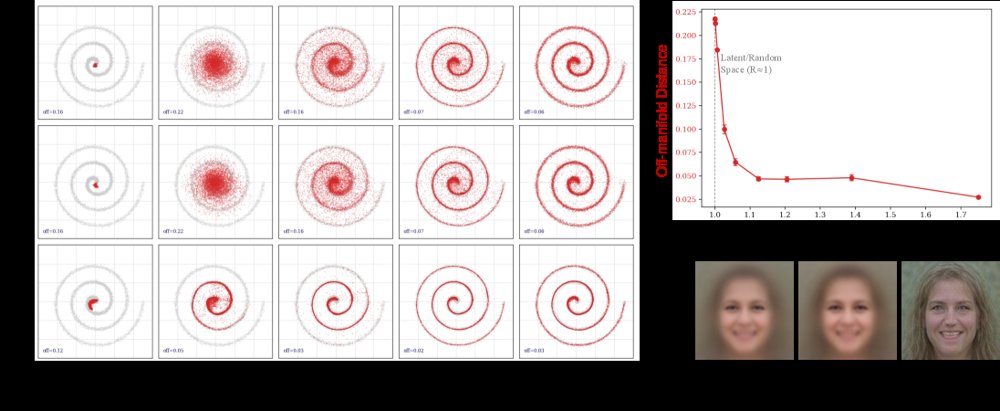
论文针对的是 flow matching 模型的 few-step inference,而不是一般意义上的生成质量提升。标准 FM 在 35–50 steps 下质量好,但 4–8 steps 时容易 blur、artifact、condition alignment 下降。真正困难点在于:训练时的 velocity MSE 在 VAE latent Euclidean space 中是一个 mean-seeking objective;当高噪声下 q(x0|xt) 多模态时,最优预测是 posterior mean,这个均值往往落在数据流形之间。多步采样可以逐步修正这种 off-manifold 预测,但 few-step 没有足够 corrective computation。以前方法通常通过 teacher distillation、consistency 或额外 score/critic 学一个压缩轨迹,本质是在补偿标准目标与粗步长推断之间的不匹配;PFM 则直接攻击这个不匹配。
Motivation
已有加速路线的问题不只是实现复杂,而是它们大多默认原始慢模型轨迹是正确对象,然后用蒸馏把轨迹压缩。这会带来 teacher 依赖、额外训练信号、模式坍缩和 synthetic artifact,也使得扩展到 image editing / video 等场景成本更高。作者的核心观察是:few-step 失败可能来自监督空间本身。latent/pixel L2 对模糊均值并不强惩罚,甚至把它当成合理折中;而预训练视觉表征已经编码了自然图像 manifold,对 blur 或不自然插值更敏感。关键缺口因此不是再设计一个 sampler,而是让模型在训练时看到一个更适合 coarse integration 的几何。
Core Idea
PFM 的真正核心是 representation-aware regression:仍然训练 flow matching 模型,仍然预测 velocity,但不在 latent velocity 上做 Euclidean MSE,而是把 velocity 转成 clean sample estimate,decode 到图像空间后,在冻结 perceptual model 的 feature space 中监督。这个改变把“学瞬时速度场”弱化为“在每个 noisy state 下预测一个感知上合理的 clean endpoint”。
本质区别在于它没有从 teacher 复制少步轨迹,也没有引入额外 score network,而是改变了回归目标的 inductive bias。perceptual feature space 重新组织了信息流:loss 不再逐 latent dimension 惩罚误差,而是按预训练视觉表征中的语义/结构距离惩罚预测。这样做更 scalable 的原因是它保留原始 FM pipeline,只替换 supervision geometry;更 generalizable 的原因则取决于 perceptual representation 是否跨任务有效,这一点在文中有 image、editing、video 的初步证据,但还不能完全证明。
Method
关键机制一:从 velocity prediction 反推出 x0 prediction。它解决的是把标准 FM 的速度回归目标转化为 clean endpoint 监督,因为 few-step 采样中真正决定质量的是每一步预测的 clean endpoint 是否在流形上,而不只是 instantaneous velocity 是否 MSE 最小。
关键机制二:decode 后做 perceptual loss。它的必要性在于 VAE latent 空间仍近似 Euclidean averaging,无法充分惩罚 blur;decoded image 经预训练 feature extractor 后,loss geometry 更接近自然图像感知结构。核心变化是回归最优解从 latent posterior mean 移向 feature-space barycenter / perceptual mode。
关键机制三:可选 CFG baking。它解决的是推断时 CFG 需要 conditional + unconditional 双 forward 的成本。prediction-side baking 看起来更有效,target-side 较弱。我的判断是 CFG baking 是工程增强,不是 PFM 成立的必要条件;论文自己的结果也显示纯 PFM 已显著降低对 inference-time CFG 的依赖。
关键机制四:perceptual backbone 选择。不同 backbone 对结果影响很大,随机 ViT 失败说明非线性本身不够,必须是 learned visual representation。深层特征更 mode-seeking,但过深会牺牲 appearance fidelity,因此多层/多模型组合更像是平衡语义不变性与细节保真。
Key Insight / Why It Works
这篇最有价值的 insight 是:few-step generative modeling 的瓶颈可以被看成 supervision geometry 问题,而不是单纯 solver/distillation 问题。标准 L2 regression 在多模态后验上天然给均值;均值在图像空间通常是 blur,在 latent 空间也未必是有效样本。few-step 采样放大了这个问题,因为每一步跨度大,任何 off-manifold endpoint 都很难被后续步骤修复。
PFM 有效的核心不是“用了 perceptual loss”这个老技巧,而是把 perceptual loss 放在 flow matching 的 clean prediction endpoint 上,使训练目标直接塑造粗步长采样时的 endpoint geometry。它本质上是 better inductive bias / representation alignment,不是 retrieval、不是 test-time compute、也不是 curriculum。它可能隐式替代了一部分 CFG 的作用:perceptual feature 对语义结构和自然图像 manifold 的偏置让 unconditional/low-guidance prediction 也更像有效样本。
最可能是核心贡献的部分:off-manifold penalty 解释和监督空间 ablation。随机 ViT 失败、浅层 feature 变 blur、深层 feature mode collapse,这些现象共同说明“学到的表征几何”才是关键。可能只是辅助的部分:CFG baking、不同任务上的工程迁移、具体 sampler 形式。可能来自 scaling/data 的部分:最终 benchmark 数字依赖 SD3-Medium、Qwen-Image-Edit、Wan2.1 这些强 base model 和 in-house training data;PFM 是否能在弱模型或开源可复现数据上同等成立,文中未充分说明。
Relation To Prior Work
最接近的技术谱系不是传统 perceptual loss for restoration,而是 few-step diffusion/flow acceleration。与 Progressive Distillation、LCM、DMD、consistency distillation 相比,PFM 不学习 teacher trajectory,也不显式做 distribution matching;它把 few-step 能力归因到训练目标几何,而不是学生-教师压缩。与 MeanFlow 等 average-velocity / flow-map 路线相比,PFM 不重新定义动力学对象,而是重新定义 endpoint regression 的度量空间。
看似新但其实是重组的部分:perceptual loss、feature regression、CFG baking 都不是新概念。实质创新在于把这些放到 flow matching few-step 失败机制里,并提出一个明确判断:latent Euclidean supervision 的 mean-seeking 是 coarse sampling 的主要病因。它属于 representation-aware generative objective 这条线,和 RAE、representation alignment for generation 有亲缘关系,但关注点从“提升训练/重建”转向“改变 few-step endpoint 的几何”。
Dataset / Evaluation
评估覆盖 text-to-image、image editing、text-to-video,说明方法不是只在单一图像生成 benchmark 上调参出来的;尤其迁移到 Qwen-Image-Edit 和 Wan2.1 有助于支持“替换监督空间即可接入现有 FM pipeline”的 claim。它确实验证了 few-step quality 改善,而不只是单一指标提升。
但 evaluation 的限制也明显。训练数据是 in-house,baseline 复现包括 LCM/DMD2 的实现细节不可完全审计,且所有实验都建立在强 pretrained foundation model 上。COCO、MagicBrush、VBench 能证明常规 benchmark 上的视觉质量和 alignment,但不足以证明长尾 prompt、真实 deployment latency-quality trade-off、可控编辑边界或视频长期一致性。论文没有充分隔离 data scale、training steps、perceptual backbone capacity 与 objective geometry 的贡献,因此“增益来源不清”的部分仍存在。
Limitation
PFM 成立依赖 perceptual representation 的 manifold prior。如果 feature extractor 的 invariance 与目标任务错配,模型可能学到感知上合理但条件不精确的 mode;这对精确编辑、文字渲染、细粒度布局和视频因果一致性可能有风险。深层 feature 的 mode collapse 现象已经暴露了这个问题:越语义化的空间越能避免 blur,但也越可能丢失低层约束。
它的 scalability 上限不清楚。训练时需要 decode 和 perceptual forward,虽然比 distillation 少 teacher,但并非没有额外成本;video 上使用 InternVideo2 也说明表征模型选择会变成新瓶颈。更重要的是,它没有真正解决 one-step generation:1–2 NFE 仍退化,说明 perceptual mode-seeking 只能缓解粗步长误差,不能替代完整 transport map 学习。
泛化性也不能过度解读。核心能力可能主要来自强 base model 和数据覆盖,PFM 更像是把已有模型的 latent knowledge 在 few-step 下释放出来,而不是从头学习新的生成能力。文中未充分说明在 domain shift、低数据、弱 VAE、非自然图像或高精度条件控制任务中的表现。所谓“mode-seeking”也可能带来 mode preference,而不是严格意义上的分布覆盖改善。
Takeaway
- 第一,few-step 生成不一定必须靠 teacher distillation;如果训练目标的几何足够好,标准 flow matching 本身可以产生可用的少步生成器。
- 第二,监督空间是 generative objective 的一等公民。
- latent space 方便训练,但未必适合 coarse endpoint regression;未来 few-step 方法很可能继续沿着 representation-aware objective 演化。
- 第三,perceptual feature 的作用不是简单提升视觉质量,而是改变多模态后验下回归最优解的位置。
一句话总结
PFM 是一类 representation-aware few-step flow matching 方法,它的实质贡献是把少步生成失败从 sampler/teacher 问题重新定位为监督空间几何问题,并用预训练感知表征把 mean-seeking 回归推向更接近数据流形的 mode-seeking 预测。