精读笔记
Problem Setting
《The Multipath Blind Spot: K-Agnostic Robust Calibration for Sparse-Anchor Metric Depth from Frozen Foundations》(arXiv preprint / 2026)。这篇论文处理的是 frozen relative-depth foundation 如何用少量 sparse metric anchors 做 metric calibration,且 anchors 可能被真实传感器 outlier 污染。真正困难点不是 scale recovery 本身;CFA / residual-on-CFA 已经能在 clean anchors 下工作。困难在于 wrong-valued anchors 会以“看起来合法”的形式进入校准过程,并直接污染全局 affine fit 或 learned scale/shift field。以前方法卡在一个隐含假设:anchor 是 clean 或最多 missing。任务的关键矛盾是,calibration 需要信任 anchors 来恢复 metric scale,但 deployment 中最危险的 anchors 恰恰是那些不能被直接信任的 anchors。
Motivation
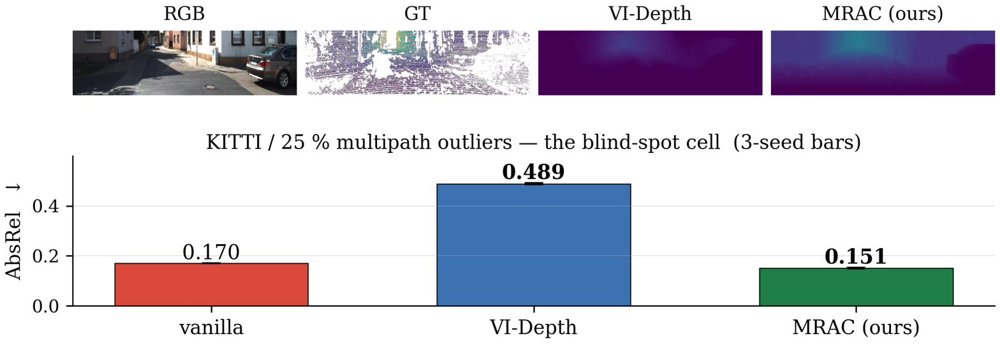
已有路线不够,是因为它们把 sparse cue 当作 ground-truth-like conditioning,而不是 noisy measurement。VI-Depth 的 robustness 主要来自对 anchor count / placement / dropout 的训练适应,这解决的是“少了多少观测”,不是“观测值是否错误”。作者最重要的观察是 multipath/specular/mixed-pixel 这类错误不是 missingness,而是 adversarially useful 的错误尺度证据:模型会主动利用它们。关键缺口因此不是更大的 head、更强的 backbone 或更多 K-specific checkpoint,而是缺少一个显式的 present-but-wrong rejection mechanism。
Core Idea
MRAC 的核心思想是用 foundation 自身的 relative geometry 反过来审计 sparse metric anchors。若 foundation 的 relative depth 在 anchor 位置上大体保持正确排序,那么所有 clean metric anchors 应该落在同一个 affine scale-shift relation 上;outlier anchors 则表现为相对该 relation 的异常 residual。这个假设把问题从“学习如何从 corrupted anchors 预测 dense metric depth”改写为“先在低维 anchor space 中识别哪些 anchors 可用于 calibration”。
这引入了一个很强但合理的 inductive bias:metric anchors 不是一等公民,foundation geometry 才是 consistency reference。和 prior 的本质区别在于信息流顺序被重排了:prior 是 foundation prediction + anchors 直接进入 calibration head;MRAC 是 foundation 先约束 anchors,再由清洗后的 anchors 校准 foundation。这种设计更 scalable 的原因是鲁棒性不依赖 K-specific 训练或 outlier augmentation,而依赖一个统计一致性检验;只要 relation 假设成立,K、数据集、outlier 类型都可以共享同一机制。
Method
方法层面真正重要的是 anchor gate,而不是 residual head。Theil–Sen fit 解决 OLS breakdown point 为零的问题:只要 inlier pair 仍占多数,它能给出不被少量 gross outliers 拉偏的 affine slope。MAD gate 解决“知道大致 affine relation 后如何判定 anchor 是否可信”的问题:它把 outlier detection 变成 robust residual thresholding,而不是让 neural head 自己隐式学会忽略错误输入。最后在 cleaned anchors 上重新运行原 residual-on-CFA substrate,核心变化是防止错误 anchor 进入 CFA base 和 learned residual correction。
几个细节不应被误读为主要贡献。0.47M U-Net、SILog/CWA/SSC/FMP loss、zero-init residual 主要是在复现和稳定已有 residual-on-CFA substrate;它们决定 clean calibration 的水平,但不是 multipath robustness 的来源。κ=2 的 MAD threshold 是 deployment knob,但论文显示其附近较平坦;它不是新的学习机制。K-agnostic 主要来自 gate 无参数以及 head 在多个 K 上训练,而不是某种新的 variable-set modeling。
Key Insight / Why It Works
这篇最值得记住的 insight 是:relative-depth foundation 不仅能被 metric anchors 校准,也能作为 anchor validity 的独立 witness。这个 witness 的价值来自 representation alignment:foundation 输出虽然没有绝对尺度,但保留了大部分 scene ordering;metric anchor 若真实,应当与这个 ordering 在低维 affine space 中一致。MRAC 有效的根因是把鲁棒性问题降维了——不是在 dense depth map 上学习复杂纠错,而是在 K 个 anchor 上做 robust affine consistency filtering。
最可能的核心贡献是“foundation-consistency gating”这个建模方式,而不是 Theil–Sen 或 MAD 本身。Theil–Sen/MAD 是成熟 robust statistics,创新在于把它们放在 frozen foundation calibration 的正确位置:head 之前、CFA 之前、单次 forward 之前。RANSAC patch 失败也说明问题不只是 robust estimator 名字,而是 outlier 结构与 estimator 假设是否匹配;correlated dropout 可形成伪 consensus,而 median slope 更不容易被同值 outlier cluster 欺骗。
这不是 scaling paper。增益主要来自 better inductive bias 和 test-time robust selection,不是模型更大、数据更多或训练更久。dropout augmentation 的弱效果也支持这个判断:小 head 没有自动学出 outlier rejection,显式统计机制更直接。可能辅助的部分是 B′ dropout-aug head 与 MRAC 的互补性,但这更像 substrate regularization,不是核心。需要警惕的是,所有 outlier 都是按作者定义的 synthetic corruption 注入;如果真实 multipath 与 foundation failure 高度共现,foundation-consistency 这个 witness 会变弱。
Relation To Prior Work
技术谱系上,它属于 frozen monocular foundation + sparse cue metric calibration,而不是传统 depth completion 或 fully supervised metric depth。最接近的是 VI-Depth、Marsal et al. 的 scale-shift / residual-on-CFA 路线,以及 robust regression 中的 Theil–Sen/RANSAC/M-estimator。看似新的 residual-on-CFA architecture 实际上不是新东西,论文也承认它是 substrate;真正新增的信息是把 robust inlier selection 放到 anchor-conditioned calibration 的入口处。
和 VI-Depth 的本质差异不是 backbone,也不是 head 大小,而是是否显式区分 missing anchor 与 wrong-valued anchor。VI-Depth 学到的是对 sparse/missing conditioning 的容忍;MRAC 加入的是 measurement validity test。和 RANSAC 类 robust CFA 的差异在于 MRAC 使用 foundation-relative affine residual 作为一致性标准,并且避免 correlated outlier 形成伪 consensus。和 depth completion 的差异更大:completion 学 dense predictor 并默认 sparse depth 可信,MRAC 不试图替代 foundation,只做校准前的可信观测选择。
Dataset / Evaluation
评估覆盖 NYUv2、KITTI、DIODE、SUN RGB-D,跨 indoor/outdoor,并构造 uniform、near/multipath、dropout、mixed-pixel 四类 outlier,基本能验证论文的核心 claim:present-but-wrong corruption 与 missing corruption 的行为不同,显式 gate 能修复 residual-on-CFA 的脆弱性。same-backbone same-architecture control 是这篇实验设计里最关键的部分,因为它把 MRAC 的增益和 DAv2 backbone / head recipe 分开了。
但 evaluation 仍有明显边界。主要 outlier 是模拟注入,不是真实 ToF/LiDAR 采集链路中的原生错误;这会低估真实 corruption 与图像材质、视角、foundation error 的耦合。SUN RGB-D 使用 stride-5 subset,ETH3D 被排除,VI-Depth official backbone 与 MRAC backbone 不一致,因此跨方法绝对排名不能过度解读。benchmark 支持“MRAC gate 对这些 outlier models 有效”,但还不能完全证明真实部署中 multipath blind spot 的规模。
Limitation
最深的限制是 MRAC 把可信性问题转移给了 foundation:如果 foundation 的 relative ordering 在 outlier-heavy 区域本身错了,gate 会保留坏 anchor 或删掉好 anchor。透明物体、镜面、多路径区域恰恰也可能是 monocular foundation 容易失败的区域,这种 error correlation 文中未充分说明。第二个限制是全局 affine consistency 假设:论文默认 clean anchors 与 relative depth 在全图共享单一 affine relation,但实际 foundation 的局部尺度失真、远近域偏差、动态物体或 domain shift 可能让 clean anchors 自身呈现多模型结构。
鲁棒上限由 Theil–Sen breakdown point 决定,40% outlier 已经出现不稳定,这不是小问题,而是方法保证的硬边界。K 很小时 pairwise slope 统计也会脆弱,K 很大时 O(K²) 仍可接受但不再完全无感。所谓 K-agnostic 的泛化主要在作者训练和测试的 K range 内成立,超出传感器分布的 anchor pattern 仍未验证。增益归因总体清楚,但 B′、loss、foundation backbone 对 clean performance 的贡献混在一起;clean-cell 上 VI-Depth 更强时,作者把它归因于 backbone是合理但未严格证明的判断。
Takeaway
- 第一,sparse-anchor metric depth 的下一步不只是更强 foundation 或更多 anchors,而是 measurement trust modeling;anchor validity 应成为 calibration pipeline 的一等对象。
- 第二,foundation 的 relative geometry 可以作为 cheap test-time prior,用来审计外部传感器输入,这个 insight 可迁移到 depth completion、visual-inertial scale recovery、甚至多模态 sensor fusion。
- 第三,missing-robustness 和 wrong-valued-robustness 必须分开评估;用 dropout augmentation 声称 sensor robustness 是不充分的。
- 第四,未来更值得做的是 learned consistency model 或 sensor-aware gate,而不是继续堆 residual head。
一句话总结
这篇论文在 frozen-foundation sparse-anchor metric depth 路线中补上了“错误观测拒绝”这一缺失环节,本质贡献是用 foundation-consistency 的 test-time robust filtering 替代对 anchors 的无条件信任,属于从更大校准头转向显式可信性建模的方法演化。