精读笔记
Problem Setting
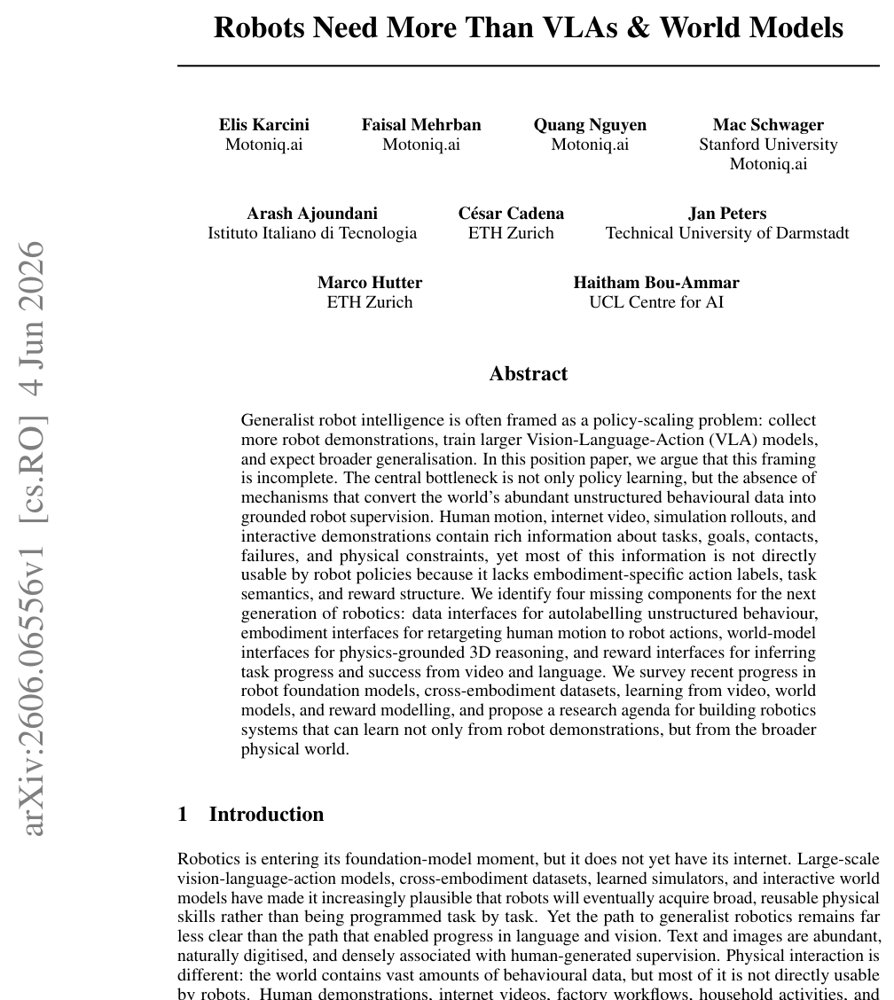
Robots Need More Than VLAs & World Models(arXiv preprint / 2026)讨论的是 generalist robotics 中一个被 VLA scaling 叙事遮蔽的问题:机器人缺的不是“更多观测数据”,而是把非机器人坐标系中的物理行为转成机器人监督的机制。
现有主流路径默认数据已经是 robot-native:observation-action pairs、task labels、success indicators、reward 或至少 embodiment-specific trajectories。RT-1/RT-2、Open X-Embodiment、OpenVLA、π0、Octo 等路线的有效性很大程度来自这一点:数据已经被采集过程强行放进机器人学习问题的坐标系。它们解决的是在已 grounded 数据上如何训练更强 policy,而不是如何从世界中自动获得 grounding。
真正困难点在于 physical behavior 与 executable robot action 之间存在多层缺口:人类视频有 affordance、contact、task progress,但没有 robot action;human motion 有意图和物理效果,但 morphology 不同;simulation 有状态和奖励,但真实性和接触动力学可疑;world model 能生成未来帧,但不一定保存控制相关变量。关键矛盾是:世界规模的物理经验极其丰富,但机器人可直接消费的监督极其稀缺。
Motivation
作者核心观察很准确:机器人领域还没有自己的“互联网”。文本/图像天然数字化且带人类监督,而物理交互不是。人类操作、工厂流程、家庭活动、网络视频、机器人失败轨迹都含有任务结构和物理因果信息,但这些信息多数不是 action-labelled supervision。
已有路线不够的原因不是 VLA 不强,而是 VLA 的训练目标仍依赖已经整理好的机器人轨迹。扩大 robot demo 数据集当然有效,但成本、风险、embodiment specificity 和任务定义成本使其无法像 web text 一样扩展。simulation 和 world model 看似缓解数据问题,但它们也隐含了 task state、action space、success condition、physical fidelity 已经被指定。
因此作者认为关键缺口不是“下一个更大的 policy architecture”,而是四类 interface:自动标注物理经验的数据接口、跨 embodiment 保持任务效果的动作接口、物理可控的世界模型接口、以及从视频/语言/部署反馈中恢复 reward 的接口。这个 framing 的价值在于把机器人 foundation model 的核心问题从 model scaling 改成 supervision grounding。
Core Idea
论文的核心思想是把机器人学习 pipeline 重新组织为 grounding-centric stack。传统 pipeline 是:收集机器人演示、附任务标签、训练 policy、真机评估。作者提出未来 pipeline 应该是:从异构物理经验出发,先推断出 object-centric state、contact event、task phase、latent physical action、goal、reward 和 outcome,再将这些结构化变量映射到具体机器人 embodiment、用于 world-model counterfactual reasoning,并在部署中持续更新。
这个建模方式的本质变化是:不再把 VLA 视为整个系统的中心,而把它视为一个 action interface。真正的核心 representation 不是 tokenized action,也不是 future frames,而是可跨数据源、跨 embodiment、跨任务复用的 physical event structure。它引入的 inductive bias 是物理事件分解:任务进展由对象状态变化、接触、约束、动作效果和目标解释共同决定。
相对 prior 的本质区别在于,prior 多数在某个局部上做 scale:更大 robot dataset、更强 VLA、更逼真 simulator、更好 video representation。本文把这些局部进展统一归因为同一个缺口:它们都需要 grounding,但 grounding 不是单一模块能解决,而是贯穿数据、embodiment、world model 和 reward 的系统级接口。
Method
这篇文章没有提出可复现实验方法,而是提出一个机制层面的系统架构。关键不是模块列表,而是每个接口在监督生成链条中的必要性。
第一,physical data engine 解决“原始物理经验不可直接训练”的问题。它把异步、多模态、弱标注 episode 映射为 latent physical events:对象状态、接触、任务阶段、latent transition code、reward/progress、goal 和 outcome。核心变化是把视频/传感日志从 raw data 变成 partially labelled interaction data。这里的 autolabelling 不是普通语义标注,而是控制相关标注。
第二,task-preserving retargeting 解决 embodiment gap。作者强调 retargeting 不应复制 human pose,而应保持 task-relevant physical effect。例如 opening drawer 的关键是 drawer displacement 和 handle contact,不是人手轨迹。这个机制把 imitation 的目标从 motion matching 提升到 effect matching。
第三,physics-grounded world model 解决 counterfactual consequence prediction。它不应只生成 plausible frames,而要预测 geometry、contact、force、stability、object state、material response 等控制变量。核心变化是 world model 的评价标准从 visual realism 转向 actionability。
第四,task-conditioned deployment loop 解决真实部署数据无法复用的问题。失败不只是 bad rollout,而应被解释成 contact miss、reward error、world-model error、retargeting failure 或 policy failure。这个机制的关键是组件级 credit assignment:知道失败发生在哪里,才能让闭环学习不是简单地把更多失败塞进 replay buffer。
Key Insight / Why It Works
这篇论文最有价值的 insight 是:当前 robotics scaling 的瓶颈不是 data amount,而是 data coordinate system。Robot-native data 稀缺并不是因为世界缺少行为,而是因为这些行为没有被表达成机器人可优化的变量。这个判断很关键,也基本正确。
如果这个方向成立,原因不会是某个更大的 VLA 或更大的 world model,而是 latent structure 和 representation alignment。人类视频、wearable sensing、robot logs、simulation rollout 之间真正可共享的不是动作,而是中间物理事件:接触、对象状态变化、任务阶段、目标相关进展、失败模式。这些变量比 raw pixels 更结构化,比 robot actions 更跨 embodiment,比 language captions 更接近控制。
最可能的核心贡献是“grounding interfaces”这一系统分解。它把很多看似分散的工作——latent action learning、video reward learning、3D world model、sim2real、retargeting、deployment feedback——统一成同一个监督转换问题。这种归因比单纯说“多模态大模型会解决机器人”更有技术含量。
但需要明确:文中没有证明这些接口可被可靠学习。很多所谓 latent action 可能只是 transition clustering;progress reward 可能强依赖视频时间顺序 bias;world model 的物理推理可能仍是 visual prior + retrieval;retargeting 的 success 很可能依赖强工程、强传感和任务模板。论文的 insight 很强,但目前更多是 research agenda,而不是 demonstrated mechanism。
此外,很多未来收益可能主要来自 scaling / data,而不是新算法本身:更丰富 wearable data、更密集 contact/tactile supervision、更好的 3D reconstruction、更大 deployment logs 都会显著提高 autolabelling。若没有这些隐式监督,纯视频到机器人监督的跳跃仍然非常难。
Relation To Prior Work
这篇文章最接近 robotics foundation model / learning from video / world model / reward learning 的交叉综述,但它不是简单 related work 汇总。它的不同点在于重新定义这些工作的共同瓶颈:不是 policy architecture,而是 physical grounding。
与 VLA 路线相比,它不否认 RT-2、OpenVLA、π0、Gemini Robotics、GR00T 等系统的重要性,但认为它们解决的是已 grounded 轨迹上的 action prediction。VLA 的本质局限是输入数据已经被整理成 robot-learning friendly form;它们并没有解决世界规模行为数据如何变成 action/reward/state supervision。
与 learning from video 相比,本文更强调 video signal 的不完备性。R3M/VIP/VC-1 提供 representation,LAPA/UniVLA 提供 latent action,TimeRewarder/ReWiND 等提供 progress reward,但这些都只是弱 grounding。本文的判断是:latent action 在没有 embodiment decoder 前不是 robot action;temporal progress 在没有 task grounding 前不是 reward。
与 simulation / world model 路线相比,本文把重点从“生成更多经验”移到“生成的经验是否保留控制相关物理变量”。这一区分很重要。很多 video world model 可能视觉上 plausible,但对 contact、friction、stability、deformation 完全不可靠,因此不能直接作为 robot supervision。
实质创新主要是概念架构和问题重定义,而不是算法。许多组件本身已有历史:model-based RL、physics priors、inverse RL、imitation from observation、retargeting、reward learning 都不是新东西。新信息在于作者把它们组织成一个从 world-scale physical experience 到 robot-usable supervision 的闭环系统。
Dataset / Evaluation
这篇论文没有自己的 dataset 或 empirical evaluation,因此不能说它实验证明了核心 claim。它的 evidence 是文献级归纳:robot-native datasets 显示 policy scaling 有效但昂贵;video-based methods 显示弱物理观察有用但 grounding 不充分;simulation/world models 显示生成经验有潜力但物理保真是瓶颈;reward models 显示 task progress 可从视频语言中学习但泛化仍不稳定。
从验证角度看,论文最需要但没有提供的是一种 benchmark:给系统弱标注物理经验,评估它能否自动产出可提升真机 policy 的 structured supervision。现有 benchmark 多数仍测最终 task success 或 policy generalization,无法区分收益来自 grounding、data coverage、policy capacity 还是 benchmark overlap。
因此 evaluation 对论文 claim 的支持是间接的。它能支持“现有工作都暴露 grounding bottleneck”,但不能支持“四个接口足以构成下一代 robotics stack”。后者仍是合理假设,而不是已验证结论。
Limitation
第一,论文把 policy bottleneck 转移成 grounding bottleneck,但没有说明后者为什么更容易 scale。自动恢复 contact、force-relevant events、task phase、latent action、reward 本身都非常难,尤其在遮挡、非刚体、细粒度接触和多对象交互中。
第二,physical data engine 的核心变量定义仍偏理想化。object-centric state、contact label、latent physical action、reward/progress 被写成可推断变量,但实际这些变量的可观测性和可验证性差异巨大。互联网视频通常缺少深度、触觉、力和多视角;wearable sensing 虽然强,但本质上又引入了昂贵传感和隐式标注。
第三,task-preserving retargeting 的不变量并不总是清楚。很多任务的“物理效果”等价类很大,且依赖 embodiment、环境约束和下游 controller。保持 object-state transition 不等于可稳定执行;保持 contact sequence 也不等于满足 force profile。
第四,world model 的 actionability 很难评估。视觉 plausible 的世界模型会系统性低估接触失败、摩擦、微小几何误差和材料不确定性;而 physics-grounded hybrid model 又可能需要大量建模工程。所谓 physical reasoning 很可能在短期内主要来自强 inductive bias + local interpolation,而不是真正开放世界物理泛化。
第五,deployment loop 的组件级 credit assignment 是最难但文中最少具体化的部分。一次失败到底该更新 policy、reward、retargeting、world model 还是 perception?如果没有可靠因果诊断,闭环可能只是把 noisy labels 反馈进系统,导致自我强化错误。
第六,增益归因会非常不清晰。未来系统若变好,可能主要来自更多机器人数据、更强传感器、更大视频模型、更密集人工纠正或更窄任务分布,而不一定来自论文提出的 grounding decomposition 本身。
Takeaway
- 1. 最值得记住的是“robotics does not have its internet”的技术含义:不是缺少视频,而是缺少把视频和物理行为转成 action/reward/contact/state supervision 的接口。
- 2. VLA 应被视为 physical-intelligence stack 中的 policy interface,而不是完整解决方案。
- 未来竞争点可能从“谁的 VLA 更大”转向“谁的数据引擎能把弱物理经验更可靠地 grounded”。
- 3. Learning from video 的关键不是 representation pretraining,而是从视频中恢复可迁移的 latent physical variables;否则视频只提供 semantic prior 或 retrieval prior。
一句话总结
这篇论文是一篇把 generalist robotics 从 VLA policy scaling 重新定位为 world-scale physical supervision grounding 的议程型论文,真正贡献是提出系统级 grounding interfaces,而不是新的机器人控制算法。