精读笔记
Problem Setting
这篇论文真正解决的是 sparse demonstrations 下 humanoid loco-manipulation 的 task-space coverage 问题,而不是单个技能模仿问题。给定少量 push/kick/hand-off/pick-and-place demonstrations,目标是自动扩展到连续目标空间中的大量可执行目标。困难点在于 loco-manipulation 的可行性同时依赖 whole-body motion、object state、contact timing 和环境 interaction,目标空间连续且组合复杂;靠 demonstrations 覆盖不可行,靠 RL exploration 又太稀疏且 reward 设计困难。
关键矛盾是:生成模型有外推能力但没有物理保证,物理 RL 有可执行性但探索目标空间低效。已有 tracking-based humanoid work 通常假设 reference motion 已经存在;retargeting work 解决的是把已有 motion 变成机器人轨迹;diffusion control work 多依赖较大数据或不解决 continuous object-goal coverage。Humanoid-DART 切入的是 reference trajectory distribution 本身如何在物理反馈下增长。
Motivation
已有路线缺的不是更强 tracker,而是一个能把少量 seed demonstrations 转化为更大 feasible behavior archive 的机制。人类数据或 teleoperation 数据贵,且 loco-manipulation 的变化维度远高于纯 locomotion:object pose、grasp/contact mode、transport path、timing 都会改变成功条件。直接扩 demo dataset 不 scalable。
作者的核心观察是:如果把 diffusion generator 当成 trajectory proposal model,而不是最终 controller,它可以在当前 demonstration manifold 附近提出多样候选;再用 physics-based tracker 和 simulator 做可行性筛选,就能把生成模型的“想象”转成经过验证的新数据。缺口因此变成:如何组织这个闭环,使 near-miss 不被浪费,并让目标采样沿着能力边界扩展。
Core Idea
核心思想是 trajectory-space self-augmentation:从少量 base demos 出发,训练 goal-conditioned diffusion motion generator;它在当前 elite archive 附近或边界外采样目标并生成 reference trajectories;RL tracker 在 simulation 中尝试执行;fitness function 筛出物理可行且任务合理的 rollouts;成功或 near-success 的轨迹按实际 achieved goal 重标注后进入 archive;然后重新训练 generator 与 tracker。这个循环把“policy learning”变成“可行轨迹分布的逐步扩张”。
本质区别在于信息流被重组了:prior tracking methods 是 demo → tracker;standard diffusion+RL 是 seed data → generator/tracker;Humanoid-DART 是 archive → generator proposal → physics projection → relabeled archive。它引入了一个强 inductive bias:loco-manipulation 的 feasible manifold 可以从已知点局部连续扩展,且 physics simulator 可以作为 oracle 过滤不可靠外推。scalability 来自把高维 action exploration 降到低维 goal-conditioned trajectory proposal,再用大规模并行 rollouts 做筛选。
Method
最关键的机制有四个。第一,elite archive 是整个方法的记忆与训练分布,保存的不是原始 demos,而是通过 tracker 执行且通过 fitness 验证的 goal-conditioned rollouts;这让数据分布逐步从 human seed 转向 robot-executable skill distribution。
第二,diffusion motion generator 的角色是提出 kinematic reference,而不是闭环控制。这样生成器不必学完整 dynamics,只需学 humanoid-object motion 的结构先验;动态一致性由 tracker 和 simulator 兜底。这是方法可扩展的核心分工。
第三,frontier curriculum 解决扩张顺序问题。它不随机扫全空间,而是在已有 elites 附近 refine、在中等距离 explore、偶尔采 frontier。这个设计避免一开始生成大量无意义目标,也防止只在 seed 周围过拟合。
第四,goal relabeling 解决早期 goal-conditioned generator 命中率低的问题。若 rollout 没到 sampled goal 但到达了另一个可定义 task metric,就把它作为 achieved-goal demo 使用。这不是细节,而是让自举循环不断粮的关键。
双分支 DiT 和 structured partial unmasking 主要服务于 sparse-data 下的 proposal quality:把 root/object global structure 与 local body pose 分开建模,并强迫 local pose 关注 object-relative features。它们可能提高生成质量,但不是 pipeline 成立的唯一原因。
Key Insight / Why It Works
最可能的核心贡献是“diffusion-guided archive expansion + physics filtering + relabeling”的闭环,而不是某个网络结构。方法有效的根本原因是它把 sparse demonstration 的泛化问题转化成局部可行区域的迭代覆盖问题:每一轮只需要比当前 archive 稍微走远一点,成功样本再成为下一轮训练数据。这个过程类似 evolutionary search、HER、curriculum RL 和 generative augmentation 的混合体。
这里的 diffusion 更像 structured proposal / prior sampler,而不是具备强 reasoning 的 planner。它提供的是在 demonstration manifold 附近的高概率轨迹候选;真正决定可执行性的,是 tracker rollout 和 fitness selection。换句话说,系统的“智能”很大一部分来自 test-time/iteration-time compute:每轮采 3000 条候选,通过 simulation 大规模筛选,把成功样本沉淀进 archive。这是 scaling + selection,而不是一次性模型泛化。
relabeling 是被低估的关键。没有 relabeling,sampled goal 与 achieved goal 的偏差会让早期 rollout 大量变成失败;有 relabeling 后,系统把偏差变成数据,等价于在目标空间中发现新的 reachable points。它让 generator 不必一开始准确命中目标,只要能产生稳定、物理可行、接近目标空间某处的行为即可。
双分支和 unmasking 的 insight 是 representation alignment:loco-manipulation 里 root/object motion 是慢变量和任务变量,joint pose/contact 是局部实现变量。把二者解耦再交互,比 flat token mixing 更适合 sparse demos。这个增益看起来合理,但是否是主贡献存疑;在更大数据规模下可能被 scaling 吞掉。
需要直接指出:所谓 generalization 主要是同一任务参数化空间内的 extrapolative coverage,未证明跨 object category、contact physics 或 scene layout 的泛化。它更像从 few demos 进行 simulator-in-the-loop data expansion,而不是学到了通用 humanoid manipulation planner。
Relation To Prior Work
它最接近三条谱系的交叉:DeepMimic/whole-body tracking,human/humanoid motion diffusion,以及 PARC 类 simulation-based augmentation。和 human-to-humanoid retargeting / OmniRetarget / DynaRetarget 的差异是,它不只生成初始 data,而是把 retargeted or dynamically feasible seeds 当作自举起点,继续扩展目标空间。和 BeyondMimic / DreamControl / SimGenHOI 等 diffusion+control 方法的差异是,DART 强调 iterative archive growth,而不是在固定数据上训练 generator/controller。
看似新的部分中,很多是已有思想的重组:goal relabeling 来自 HER,curriculum/frontier sampling 来自 coverage-driven RL,physics filtering 来自 evolutionary / elite archive methods,diffusion inpainting/CFG/auto-regressive stitching也是 motion diffusion 常规工具。实质创新在于把这些机制组织成一个针对 humanoid loco-manipulation continuous goal space 的闭环,并证明少量 demonstrations 下可以通过物理验证的生成式扩张获得大覆盖。
与 Parameterized Motion 的本质区别是,后者从少量 clip 学一个局部 skill family,覆盖往往集中在 seed 附近;DART 则不断生成新 verified examples,训练分布本身在变。与 policy-only curriculum 的区别是,探索发生在 trajectory proposal 层,低层 policy 主要承担 tracking 和 feasibility projection。
Dataset / Evaluation
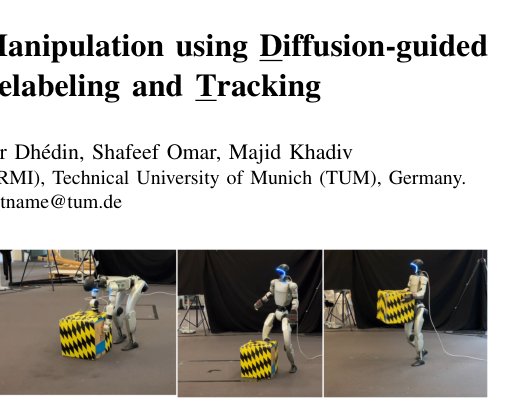
评价覆盖四个 loco-manipulation tasks:push、kick、hand-off、pick-and-place,任务类型包含不同 contact modes,且有 Unitree G1 真机展示。这足以说明 pipeline 不是只对单个 motion clip 工作,也说明轨迹至少具备一定 real-world executability。
但 evaluation 的核心 claim 是 sparse demos → broad goal-space coverage,而不是 universal manipulation。实验确实支持前者:从 2–4 条 seed demos 出发,目标空间覆盖显著扩大;seed 数量和 seed 动态质量影响覆盖速度与最终 coverage,也符合方法机制。baseline 设计也相对有针对性:一个是 sparse parameterized skill family,一个是 seed-only hierarchical diffusion+RL,用来隔离 iterative loop 的作用。
限制也明显:任务空间是低维人工参数化目标,物体是单一 box geometry,环境是平地,contact properties 只在有限范围 domain randomization。真机部分更像可行性展示,而不是系统性 real-world benchmark。benchmark 支持“在受控目标空间中通过 iterative augmentation 扩 coverage”,但不支持“开放场景 humanoid loco-manipulation generalist”。
Limitation
最大限制是方法把问题从 demonstration collection 转移到了 simulator-in-the-loop candidate generation、fitness design 和 archive management。它减少了人工 demos,但没有消除 supervision:fitness function 明确编码了 tracking fidelity、contact correctness、object pose error、fall termination 等任务知识。若任务无法定义低维 metric 或 reliable fitness,pipeline 很难直接工作。
第二,泛化依赖 seed distribution 的质量。论文自己的 KF vs DF ablation 已经说明,带物理 artifact 的 seeds 会被 diffusion 继承并放大。也就是说 archive expansion 不是从坏数据中自动发现好技能,它更像从高质量可行 seeds 做局部外推。
第三,scalability 上限取决于 feasible manifold 是否局部连通。如果新任务需要完全不同 grasp strategy、contact sequence、tool use 或环境交互,而不是现有 demos 的连续变形,frontier expansion 可能卡住。push/kick/pick-place 的目标外推不等价于跨 contact regime 的组合泛化。
第四,planner 的长期建模能力文中未充分说明。长距离 pick-and-place 可能来自 autoregressive stitching 和轨迹库扩张,而不是生成器具备稳定 long-horizon reasoning。若误差积累、物体遮挡、外部扰动或非平坦地形出现,当前表示和 tracker 能否维持闭环鲁棒性不清楚。
第五,增益归因仍不完全干净。coverage 提升可能主要来自大量 candidate sampling + physics selection + relabeling,而不是 dual-branch DiT 本身。网络结构 ablation 只在 20 novel goals 的 kinematic generation 上做,不能完全说明它对最终 policy coverage 的贡献。
Takeaway
- 最值得记住的第一点:对 contact-rich humanoid skills,少量 demos 的瓶颈不是 controller expressivity,而是 feasible reference distribution 的增长;archive-based self-augmentation 是比单纯 imitation 更自然的扩展路径。
- 第二点:diffusion 在这里最有价值的角色不是 end-to-end policy,而是高维轨迹空间中的 proposal distribution。
- 把生成模型放在 planner/reference 层,再用 physics rollout 做筛选,比让生成模型直接承担 dynamics 更稳。
- 第三点:goal relabeling + frontier curriculum 是可以迁移的 insight。
一句话总结
Humanoid-DART 是一篇把 humanoid loco-manipulation 从“少量示范跟踪”推进到“生成式候选轨迹经物理验证后自举扩展目标空间”的工作,真正贡献在 diffusion proposal、RL tracking、curriculum relabeling 和 elite archive 组成的闭环数据扩张范式。