精读笔记
Problem Setting
这篇论文实际在解决 deployable humanoid locomotion policy 的“数据可行性瓶颈”。不是问如何让 humanoid 在仿真里学会速度跟踪,而是问:在 motion prior 学习框架下,什么样的 expert motion 才能同时满足自然性、机器人形态兼容、动力学可执行和真机可迁移。真正困难点在 expert distribution 与 robot-feasible behavior distribution 之间存在系统错位:人类 motion 有 morphology mismatch,开源 clip 质量不均,仿真采集轨迹也可能只是 simulator-feasible 而非 hardware-feasible。以前方法常把 retargeting、RL training、deployment 分开处理,一旦真机失败,无法判断失败来自数据、动力学模型、reward 还是 policy robustness。关键矛盾是:AMP 需要丰富多样的 motion prior,但部署又要求 expert data 极其保守、物理可行、与硬件 actuator envelope 对齐。
Motivation
已有路线不够的地方不在于缺一个新的 policy optimizer,而在于 motion data 被当成固定输入。feature-based tracking 对时间对齐、retargeting 质量和 reward 权重很敏感;AMP/GAN-style imitation 对弱对齐数据更友好,但仍默认 expert clips 本身代表合理目标分布。对真机 humanoid 来说,这个假设经常不成立。作者的核心观察是:部署失败往往是数据问题和模型问题的复合效应,而不是单纯 policy 不够强。因此关键缺口是一个能把 data curation、real-to-sim calibration、AMP training、cross-sim validation 和 real deployment feedback 接起来的闭环。换句话说,论文的 motivation 是把“可部署性”前移到数据生成和筛选阶段,而不是等 policy 训练完后再靠 sim-to-real 技巧补救。
Core Idea
核心思想是把 expert motion database 从静态 demonstrations 改写成 learning-and-deployment loop 中的可优化状态变量。motion 的选择、修复、retarget、augmentation、feasibility filtering、deployment feedback 都成为训练系统的一部分;policy 学的不是原始人类动作,而是经过机器人形态、动力学和硬件约束投影后的 expert distribution。
这个建模方式引入的 inductive bias 很明确:自然运动不是直接来自 human mocap,而是来自“在机器人约束下仍保持人类风格的可行动作集合”。AMP 在这里的角色不是创新点,而是一个适合吸收 heterogeneous、非严格时间对齐 motion clips 的 distribution matching 接口。相比 prior work 的本质区别是:它不是追求更强 imitation objective,而是重新组织数据流,把 retargeting quality、dynamic feasibility 和 deployment feedback 作为一等对象。这使得方法更 scalable 的潜在原因也很直接:只要能持续扩大和筛选 robot-feasible expert support,policy 可以复用同一 AMP/RL 训练框架。
Method
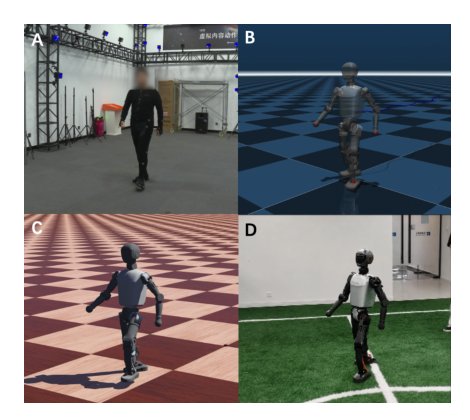
方法的关键机制可以压缩为三件事。第一,数据策展把异构 motion source 投影到 robot-compatible expert space:修复 mocap、对齐 heading、检查接触、用 GMR retarget 到 Booster T1,再通过 tracking / augmentation 生成更动态一致的 robot trajectories。这一步解决的是 expert support 不可信的问题,核心变化是从 imitation human motion 转为 imitation feasible robot motion。
第二,real-to-sim adaptation 把 actuator envelope 写进训练模型,包括 torque-speed knee point、velocity/torque limits 和 armature。它解决的是仿真策略利用不存在的执行能力的问题,尤其对 running 这类接近 actuator limit 的技能更关键。这里不是 domain randomization 的替代,而是先把 nominal simulator center 对准硬件,再在周围随机化。
第三,AMP-based RL 把 task commandability 和 motion naturalness 分开处理:task reward 保证速度跟踪和稳定性,AMP reward 约束 policy rollout 落在 curated expert distribution 附近。reference state initialization 则让 policy 和 discriminator 更早接触 expert support,降低 adversarial imitation 的冷启动难度。cross-simulator validation 和真机反馈主要是工程上的 safety gate,但在 pipeline 叙事里承担闭环诊断作用。
Key Insight / Why It Works
最可能真正有效的是 expert distribution 的重构,而不是 AMP 本身。AMP 的优势在于能对 heterogeneous clips 做分布级约束,不需要严格 frame-level tracking;但如果 expert clips 不可行动力学或与硬件不匹配,AMP 只会把 policy 拉向错误区域。因此本文的核心贡献是把“什么算 expert”这件事做成了系统工程:retargeting 负责 morphology alignment,tracking augmentation 负责把 kinematic artifact 推向 dynamic consistency,selection 负责删掉会污染 discriminator 的坏样本,real-to-sim adaptation 负责让 feasibility 在仿真中更接近硬件。
这本质上更像 data coverage + representation alignment + curriculum 的组合,而不是新的算法能力。data augmentation 可能扩展了 expert support,使 AMP 不再只覆盖窄的人类 retargeted trajectories;reference-state initialization 则是 curriculum,让 policy rollout 从 expert manifold 附近开始,减少 discriminator 学到 trivial boundary。domain randomization 和 push perturbation 是 robustness engineering,重要但不是概念创新。
需要直接指出:增益来源不清。论文没有把 retargeting、augmentation、selection、actuator calibration、randomization、reward shaping 分开做强 ablation。因此很可能主要收益来自 scaling / data cleaning / hardware-specific tuning,而不是某个可独立迁移的 learning principle。所谓 closed-loop data-centric pipeline 的价值更像可部署机器人系统里的组织原则,而非一个严格形式化的新方法。
Relation To Prior Work
技术谱系上,它属于 AMP-style humanoid imitation + sim-to-real locomotion framework + retargeting pipeline 的系统整合。和 DeepMimic/H2O/HumanPlus 这类 feature-based tracking 或 whole-body imitation 相比,它不强调逐帧跟踪精度,而强调 curated expert distribution 对 policy 的风格约束。和 AMP/ASE/CALM 相比,它没有在 adversarial objective 或 latent skill representation 上推进,真正新增的是 AMP 前后的数据闭环。
和 GMR、ProtoMotions、IKMR、SPARK、KDMR 等 retargeting/kinodynamic refinement 工作相比,本文不主张 retargeting 方法本身更强,而是把 retargeted motion 接入 deployment-oriented selection 与 augmentation。和 Humanoid-Gym、Booster Gym、Isaac Lab、TienKung-Lab 等 training framework 相比,它的差异是把 motion database 当作核心资产,而不是把 reward/domain randomization/deployment interface 当作主线。很多看似新的模块其实是已有思想重组:retargeting、AMP、domain randomization、sim-to-sim、actuator calibration 都不新;实质创新在于把这些模块围绕“robot-feasible expert data”重新组织,并明确把真机失败作为数据和模型更新信号。
Dataset / Evaluation
数据覆盖包括 human demonstrations、open-source clips、simulation-collected robot trajectories,以及 tracking augmentation 后的 generated clips;但文中没有充分说明数据库规模、clip 分布、各来源比例、筛选阈值和失败样本。这使得 data-centric claim 很难被外部复现或定量比较。
evaluation 的优点是真机成分较强:Booster T1 上展示 walking/running、push recovery、户外地形和 sim-real limit-cycle,一定程度支持 deployable locomotion 的 claim;K1 初步验证说明 workflow 不完全绑定 T1。但这些实验更像系统 demo,而不是严格 benchmark。数据增强 ablation 只比较 discriminator prediction,不能充分证明真机性能提升来自 augmentation。cross-platform 也只是相近产品线内的迁移,不足以证明 general humanoid platform portability。
因此 evaluation 支持“这个 pipeline 在 Booster 硬件上可工作”,但不充分支持“data-centric pipeline 的每个环节都是必要的”或“该方法可广泛泛化到不同 morphology / actuator / terrain / skill”。
Limitation
最大问题是归因混杂。policy 成功可能来自 curated data、更准 actuator model、domain randomization、reward tuning、真机调参、训练规模或硬件平台本身稳定性,论文没有给出足够消融来分离这些因素。增益来源不清,可能主要来自 scaling / data cleaning / hardware-specific engineering。
第二,方法强依赖 robot-feasible expert data。它没有消除 retargeting 和 feasibility checking 的难度,只是把难度前移并工程化。对于多接触、whole-body manipulation、非周期动态交互,motion selection 和 tracking augmentation 的成本会显著上升,AMP 的分布约束也可能不足以表达 contact-rich long-horizon structure。
第三,泛化证据有限。K1 验证只能说明同一公司硬件生态内的 robot-specific module replacement 可行,不能说明跨 morphology、跨 actuator bandwidth、跨 sensing stack 的迁移。所谓 closed-loop feedback 也没有被形式化;文中未充分说明真实失败如何自动或半自动地映射成数据选择、augmentation 或 simulator calibration 更新。
第四,AMP 学到的“自然性”可能更接近 expert retrieval / distribution matching,而非真正的运动理解。policy 在 expert support 外的行为上限仍受数据覆盖限制;如果 command、terrain 或 contact pattern 超出 curated database,泛化可能迅速退化。
Takeaway
- 最值得记住的是:对真机 humanoid locomotion,expert motion data 的质量和可行性可能比 imitation objective 的细节更决定部署上限。
- 第二,AMP 的实用价值在于给 heterogeneous robot-feasible clips 提供一个分布级接口;它适合做 motion prior glue,而不是单独解决 sim-to-real。
- 第三,未来这条线真正会演化成 motion data engine:自动发现失败模式、生成/修复/筛选 expert trajectories、更新 simulator 和训练分布,而不是手工堆 pipeline。
- 第四,可迁移 insight 是把 demonstration 从“监督信号”改成“可迭代的数据资产”。
一句话总结
Booster Lab 是一篇把 AMP humanoid locomotion 从算法问题推进到数据闭环与部署工程问题的系统论文,真正贡献在于围绕 robot-feasible expert motion 重组 retargeting、augmentation、real-to-sim 和 sim-to-real,而非提出新的 imitation learning 方法。