精读笔记
Problem Setting
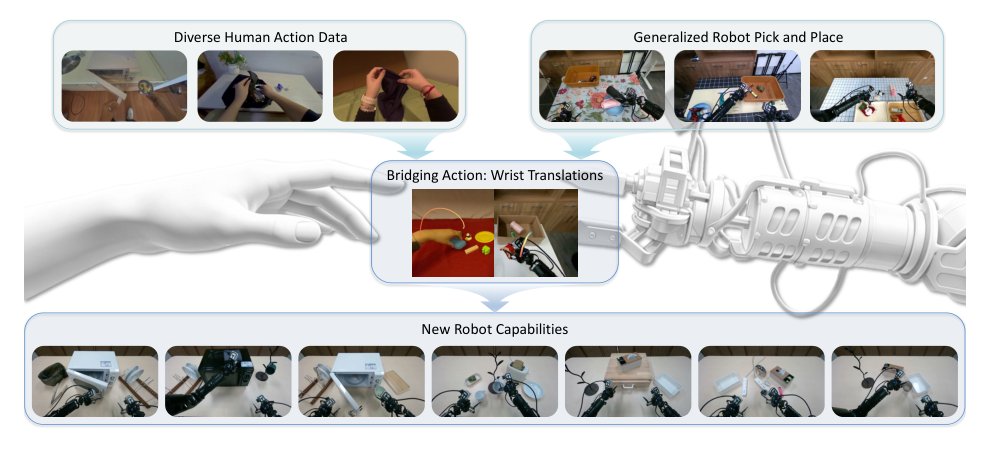
[Translation as a Bridging Action: Transferring Manipulation Skills from Humans to Robots](arXiv preprint / 2026-06-29)实际处理的是 human manipulation data 如何变成 robot manipulation skill 的 action alignment 问题,而不是单纯扩大 robot dataset。难点在于 human data 最丰富的部分恰恰不是 robot 最容易复用的部分:人手有复杂手指接触,机器人是平行夹爪;人手 wrist pose 来自估计器,rotation 噪声和语义偏移都很大。以前路线把人当作另一个 6DoF embodiment,本质上假设 wrist rotation 在 human 和 robot 间语义一致,但这个假设在接触丰富任务中经常不成立。关键矛盾是:越完整的人类动作表示越接近原始行为,但越难跨 embodiment 对齐;越粗的动作表示越可共享,但越可能丢失执行所需的接触细节。
Motivation
作者的出发点很明确:human data 便宜、规模大、任务多样,但现有方法没有找到足够稳健的 shared action abstraction。6DoF wrist action 看似信息完整,实际上混合了三类不稳定因素:手姿估计误差、人手接触策略、机器人夹爪控制需求。真正缺的是一个能承载 manipulation intent、但不过度绑定 human hand morphology 的动作信号。translation 被选中不是因为它充分,而是因为它在 human 和 robot 间最少撒谎:手腕往哪里移动,通常比手腕怎么转更稳定、更可观测、更容易被机器人重新解释。
Core Idea
论文的核心不是提出一个新 VLA 架构,而是改变 human action 的建模粒度:不要试图把人手动作完整 retarget 到机器人,而是把人类操作压缩成 head-camera frame 下的双腕相对平移轨迹。这个表示把 skill transfer 从“复制人手控制”改成“学习视觉条件下的空间运动意图”。
这个 inductive bias 很强:它默认很多 manipulation skill 的可迁移部分主要在 approach path、目标区域、双手协同位移和阶段性运动,而不是具体 wrist orientation 或 finger contact。与 prior 的本质区别在于,它不是追求 unified high-dimensional action space,而是主动舍弃不可共享维度,再用少量 robot data 学习从共享 translation 到可执行 6DoF/gripper action 的 grounding。可扩展性来自这里:大规模野外 human data 只需要提供相对可靠的 wrist translation,不需要高质量手部旋转或接触标注。
Method
关键机制可以压缩成三个。
第一,bridging action:把 human/robot wrist pose 投影到初始 head-camera frame,只取未来窗口内的相对 translation。它解决的是跨主体坐标和姿态估计不稳的问题,核心变化是把 action learning 从 full pose imitation 降维到 observation-centric motion intent learning。
第二,dual action space:robot 仍然用 6DoF end-effector 加 gripper 执行,但 human 主要监督 3D wrist translation。也就是说,translation 不是最终控制接口,而是中间桥。这个设计避免了把 non-executable human action 直接当 robot action。
第三,interleaved action tokens 与 masking:不同数据源有不同 action component,模型通过 token 级别组织和 mask 处理缺失项。它的作用不是架构创新本身,而是让 shared translation token 能在 attention 中被 6DoF token 显式读取,从而形成 representation binding。
最重要的训练机制是 robot 数据上也要训练 bridging objective,甚至用 translation 替换 6DoF target。否则 human pretraining 学到的 translation manifold 和 robot executable action manifold 之间没有足够强的耦合。
Key Insight / Why It Works
这篇最核心的 insight 是:跨 human/robot 迁移时,动作表示不应最大化信息量,而应最大化可共享且低噪的信息量。translation-only 的成功不是因为它表达能力更强,而是因为它过滤掉了错误归因源。对平行夹爪机器人来说,人手 wrist rotation 经常不是任务意图,而是手指接触策略的副产物;把它作为监督会让模型学习到不可执行甚至有害的姿态先验。
真正有效的部分大概率是 representation alignment,而不是 VLA backbone。human-only pretraining 只学 translation,却能降低后续 6DoF/gripper loss,说明 translation manifold 与 robot action manifold 在 reach-and-manipulate 阶段共享了相当多结构。但这个 alignment 不是自动发生的,必须通过 robot 数据上的 bridging supervision 绑定;Table 4 的 ablation 基本说明这是方法成败点。
哪些可能只是辅助:interleaved tokens、π0-like flow matching、VL co-training更像工程上合理的容器,不是论文的本质贡献。哪些可能来自 scaling/data:600 小时 human data、任务特定 in-lab human demonstrations、72 小时 robot pick-and-place 和 4B 模型都会显著贡献性能;文中没有完全拆开这些因素。因此不能把全部收益都归因于 translation abstraction。
我的判断是,这不是一个让机器人具备新 reasoning 能力的方法,更像是用更干净的 shared action bottleneck 做大规模 trajectory prior reuse。所谓泛化主要来自 data coverage 与 representation 去噪,而不是显式 planning 或长期状态建模。
Relation To Prior Work
它最接近 EgoMimic、EgoBridge、GR-3、EgoScale 这类 human/ego data 与 robot policy 共训路线,也属于 cross-embodiment robot learning 的一个分支。但它和多数 prior 的关键区别在于:prior 通常尝试统一或 retarget 更完整的动作空间,例如 6DoF wrist、hand pose、finger joints、latent action;本文反而主张删掉 rotation,把 shared action space 收缩到 translation。
看似新的 interleaved action sequence 其实是已有 multi-action-token、padding/masking、多 embodiment co-training 思路的重组;实质创新在于 action abstraction 的选择和 robot-side bridging objective 的绑定。它不追求更强的人手重建,也不追求更通用的 embodiment tokenizer,而是明确指出某些 action dimension 在跨 embodiment 学习中是负迁移源。这个判断比具体架构更有价值。
Dataset / Evaluation
评估是真机双臂平台,任务覆盖 microwave、drawer、mug/cup、stacking、straw、toaster、charger 等 15 个操作,明显超过简单 pick-and-place,能部分验证“human data 帮助 novel manipulation skill”的 claim。每个任务有不同测试布局和进度评分,成功率之外报告 progress 是合理的,因为零样本/少样本 robot transfer 很难只看 binary success。
但 evaluation 仍有明显边界。任务都是作者自建真机场景,训练中包含每任务约 3 小时 in-lab human data,且 human operators 被要求模仿 gripper 姿态,这已经不是完全 unconstrained in-the-wild human transfer。测试布局虽然变化,但是否足够排除 task template overlap 和 implicit trajectory retrieval,文中未充分说明。upper-bound 实验很有信息量:当把 task-specific robot demos 当成 translation-only 数据时性能明显更好,说明 representation 本身可行,但真实 human-to-robot gap 仍是主要瓶颈。
Limitation
第一,方法成立依赖一个强前提:目标任务的可迁移结构主要由 wrist translation 决定。对需要姿态、插入、对准、稳定抓取、接触法向控制的任务,这个前提很快失效。作者的 failure case 也正好落在这些区域。
第二,它把问题从“如何从 human 6DoF 学 robot 6DoF”转移成“如何把 translation prior ground 到 robot 6DoF”。这个转移是有价值的,但没有消灭 grounding 问题;仍然需要 robot pick-and-place、robot-side bridging supervision、few-shot robot post-training。
第三,scaling 上限不只由 human data 决定。更多野外 human data 如果没有更好的视觉对齐、动作去噪和少量可靠 contact/rotation supervision,可能主要增加 reach trajectory diversity,而不是解决 contact-rich manipulation。
第四,增益归因不完全干净。大模型、VL co-training、human-only pretraining、task-specific human data、robot post-training共同作用,representation 的纯贡献虽然通过 ablation 得到支持,但 scaling/data coverage 的贡献仍然很大。
第五,所谓泛化可能更接近视觉条件下的 motion prior retrieval,而不是抽象技能组合。论文没有证明模型具备长期 planning、状态记忆或系统性组合能力。
Takeaway
- 1. 对 human-to-robot transfer,动作表示的“少而准”可能比“全而噪”更重要;discarding bad dimensions 可以是核心建模策略。
- 2. Shared representation 必须在 robot 数据上被显式 grounded,否则 human pretraining 学到的 manifold 很难变成 executable control。
- 3. Translation 是一个有效的 coarse skill carrier,适合迁移 approach、transport、双手协同和目标区域选择,但不应被期待解决精细接触。
- 4. 未来更有价值的方向不是回到 full 6DoF imitation,而是引入少量可靠 rotation/contact cue,形成“translation as backbone + sparse contact/pose correction”的分层 action representation。
一句话总结
这篇论文在 human-to-robot manipulation 方向里的贡献,是把跨 embodiment 学习从高噪声 full-pose imitation 推向低噪声 shared-action bottleneck,并证明 translation-only bridge 加 robot grounding 是一条比直接 6DoF 人手共训更可扩展的技能迁移路径。