精读笔记
Problem Setting
J-LAW 解决的不是传统意义上的 SLAM,也不是单纯的 latent world model,而是二者之间的估计断裂:机器人需要一个既全局一致又能预测 action consequence 的状态表示。以前方法卡在两端:SLAM 可以通过 loop closure 修 pose,但 map 通常是几何/占据/点云,不直接告诉 planner 动作后 latent state 如何变化;JEPA/world model 有 action-conditioned latent transition,但 rollout 是局部递推,误差累积后没有 metric anchor 或 loop correction。关键矛盾是:可规划的 latent space 往往缺少全局坐标约束,而全局一致的 metric map 往往缺少可行动语义。论文实际试图把这个矛盾改写成一个 joint MAP inference 问题。
Motivation
已有路线不够的原因不是模块性能不足,而是建模假设分裂。SLAM 假设世界状态主要通过几何一致性来约束;JEPA 假设未来可由 latent dynamics 局部预测。前者强在全局 correction,弱在 actionability;后者强在 predictive abstraction,弱在 global consistency。作者的核心观察是:定位误差和 latent prediction drift 本质上都可以看成 trajectory-level posterior 中的残差,只是作用在不同变量空间。关键缺口因此是一个把 metric pose、latent state、action transition、loop closure 放在同一图优化里的机制,而不是再设计一个更大的 predictor。
Core Idea
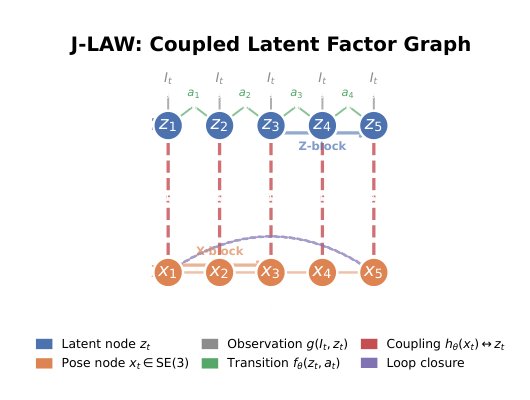
论文真正的核心思想是把 world model 的 latent rollout 从“神经网络一次性前向预测”改成“带全局约束的可优化轨迹”。这一步很重要:一旦 z_t 是图中的变量,而不是 Pθ(z_t,a_t) 的不可回头输出,latent drift 就可以像 SLAM drift 一样被 observation、loop 和 map factor 拉回。J-LAW 引入的 inductive bias 是:一个好的 latent trajectory 不仅要符合 action-conditioned dynamics,也要能被 metric pose 和 latent landmarks 解释。
和 prior 的本质区别在于信息流从 pipeline 变成 coupled inference。SLAM→world model 的 pipeline 只会把 pose 当输入;world model→planner 的 pipeline 只会把 latent 当内部状态。J-LAW 让 pose 与 latent 双向施压:pose 给 latent 提供全局锚点,latent observation / coupling 反过来约束 pose。这个想法理论上可扩展,因为它不要求 dense reconstruction,只要求 learned latent map 能提供足够稳定的几何-语义对齐;但这也是它的脆弱点。
Method
方法层面真正必要的机制只有几类。第一,latent observation factor 把 z_t 锚到 Eθ(o_t,x_t),解决 latent trajectory 完全被 dynamics 带跑的问题;其作用不是表征学习,而是给 test-time smoothing 提供观测残差。第二,action-conditioned prediction factor 保留 JEPA 的可行动性,使优化后的 latent 仍然尊重动作条件下的局部转移,而不是退化成普通 embedding smoothing。第三,metric motion / pose loop factor 把 SLAM 的全局一致性引入同一个后验,使 pose drift 可被非局部约束修正。
最关键的是 pose–latent coupling factor。它试图让 hθ(x_t,M) 预测当前 latent,从而把 metric pose 和 latent map 对齐。这个 factor 的价值在于 representation alignment:它让 latent 不只是视觉相似性空间,而是被 metric trajectory 组织过的空间。不过论文也清楚暴露了直接 joint optimization 的退化问题:如果 X 和 Z 同时自由,coupling 可以通过两边一起移动来降低 loss,而不一定改善真实估计。因此 alternating block coordinate descent 不是实现细节,而是方法成立的核心稳定化机制。
Key Insight / Why It Works
我认为真正有效的部分不是“联合建模”这个口号,而是把 open-loop neural rollout 转成 test-time graph smoothing。很多 world model 的长程失败来自误差单向累积;J-LAW 允许未来/回环/观测残差反向修正过去的 latent trajectory,本质上是在 latent space 里做 smoothing。这里的收益更接近 test-time compute + better inductive bias,而不是模型学到了更强的因果动力学。
最核心贡献是 pose–latent alignment 加 alternating inference。coupling factor 单独看并不新,像 learned measurement model;factor graph 也不新;JEPA latent dynamics 也不新。新意在于把它们组织成一个双空间后验,并意识到 naive joint optimization 会病态,必须分块让 coupling 在每一步成为单向约束。这一点比论文中“latent landmarks as actionable map”的表述更实。
哪些可能只是辅助:latent landmark observation 和 loop factors 在当前实验中更像约束工程,用来改善一致性;它们是否提供真正可迁移的 map memory 还不清楚。adaptive coupling 也是合理但偏工程的 IRLS weighting,说明 coupling reliability 不均匀;它改善 pose 但不改善 latent,反而指出核心瓶颈是 hθ 与 latent manifold 的对齐质量。
需要警惕的是,增益可能主要来自 smoothing / correction,而不是 planning intelligence。若 benchmark 轨迹、场景和 latent encoder 覆盖充分,graph correction 会显著降低 RMSE;但这不等价于模型在 novel compositional interaction 中形成长期状态建模。所谓 actionable map 目前更像 latent-space memory reuse,而不是已经证明能支持复杂策略搜索的 world model。
Relation To Prior Work
这篇论文最接近三条线的交叉:factor-graph SLAM、latent SLAM / learned measurement model、JEPA/action-conditioned world model。与传统 SLAM 的差异是 map 不只是 geometric reconstruction,而是 latent embeddings,并且 transition factor 显式 action-conditioned。与 JEPA 的差异是预测不再是纯 open-loop latent recursion,而是被全局图约束修正。与 LatentSLAM 一类方法相比,它更强调 actionability 和 learned dynamics,而不是仅用 latent 做 localization。
看似新的部分里,有相当一部分是已有思想重组:factor graph、robust loop closure、IRLS、自监督 latent dynamics 都不是新东西。实质创新在于把这些组件放到一个 pose-latent coupled MAP 中,并将“世界模型漂移”解释成可由 SLAM 式 smoothing 处理的估计误差。它属于 learned robotics inference 的谱系:不是端到端大模型路线,而是在 frozen representation / predictor 外面加结构化 test-time inference。
Dataset / Evaluation
PushT 和 WildGS 的选择能覆盖两个有用维度:一个偏 manipulation latent rollout,一个偏真实动态 SLAM / pose trajectory。实验足以支持“graph correction 能降低 open-loop latent drift”和“alternating 比 naive joint 更稳”这两个较窄 claim。WildGS 使用真实序列和 mocap/SLAM pose,使 pose-latent coupling 的问题更接近真实部署。
但 evaluation 没有完全支撑更强的 claim:map simultaneously metric and actionable for planning。论文主要报告 latent RMSE、endpoint drift、pose RMSE、loop consistency,这些是估计质量指标,不是闭环规划成功率。PushT 虽关联 LeWM / diffusion policy 场景,但没有充分展示 J-LAW map 在下游 planning 中带来稳定策略收益。跨场景泛化也有限,WildGS train/test scene 数量很小;coupling decoder train RMSE 很低反而让人担心 evaluation 主要测的是同分布 alignment + smoothing,而不是开放泛化。
Limitation
方法成立强依赖三个前提。第一,latent space 必须已经具备可预测、可度量、可被 pose 条件化解释的结构;否则 factor graph 只是优化一个不可靠 embedding。第二,hθ 必须足够好,且其误差可被简单 residual/confidence 建模;否则 coupling 会把 pose 和 latent 一起拉偏。第三,loop closure 必须相对可靠;false loop 在 latent space 中尤其危险,因为 perceptual similarity 不等于 state equivalence。
scalability 上限也明显。随着场景变大、对象交互更复杂、latent landmarks 增多,M 的关联、更新和长期维护会变成核心难题,文中未充分说明。当前 alternating L-BFGS 更像 batch/window smoothing,离实时 lifelong deployment 还有距离。所谓 actionable latent landmarks 是否能跨任务复用也未证明;它可能只是把 dense geometry reconstruction 的困难转移成 latent association 和 representation alignment 的困难。
增益归因不完全清晰。RMSE 改善可能来自 test-time compute、trajectory smoothing、teacher-forced observation anchoring,而不是模型学到了更强 world dynamics。pose-only 在部分 latent RMSE 上更好也说明 coupled formulation 并非无条件优越;J-LAW 的优势主要出现在长程 drift stability 和更平衡的估计,而不是单点精度。
Takeaway
- 第一,world model 的长程一致性问题可以被重新表述为 smoothing 问题,而不一定只能靠更大的 predictor 或更多数据解决。
- 第二,pose-latent coupling 的价值在于提供 representation alignment 的 inductive bias,但它必须配合稳定的推断策略;直接 joint loss 很容易病态。
- 第三,未来值得做的不是简单加更多 factor,而是学习更可靠的 coupling uncertainty、loop confidence 和跨场景 latent landmark association。
- 第四,这条路线提示 robotics world model 可能会走向 frozen neural dynamics + structured test-time inference 的混合范式,而不是纯端到端 rollout。
一句话总结
J-LAW 是把 JEPA 式 action-conditioned latent world model 纳入 SLAM 式 factor-graph smoothing 的一次结构化重组,真正贡献在于用 pose-latent coupled inference 缓解 open-loop drift,而不是提出一个全新的表示学习模型。