精读笔记
Problem Setting
[3D HAMSTER: Bridging Planning and Control in Hierarchical Vision Language Action Models through 3D Trajectory Guidance](arXiv preprint / 2026-07-01)
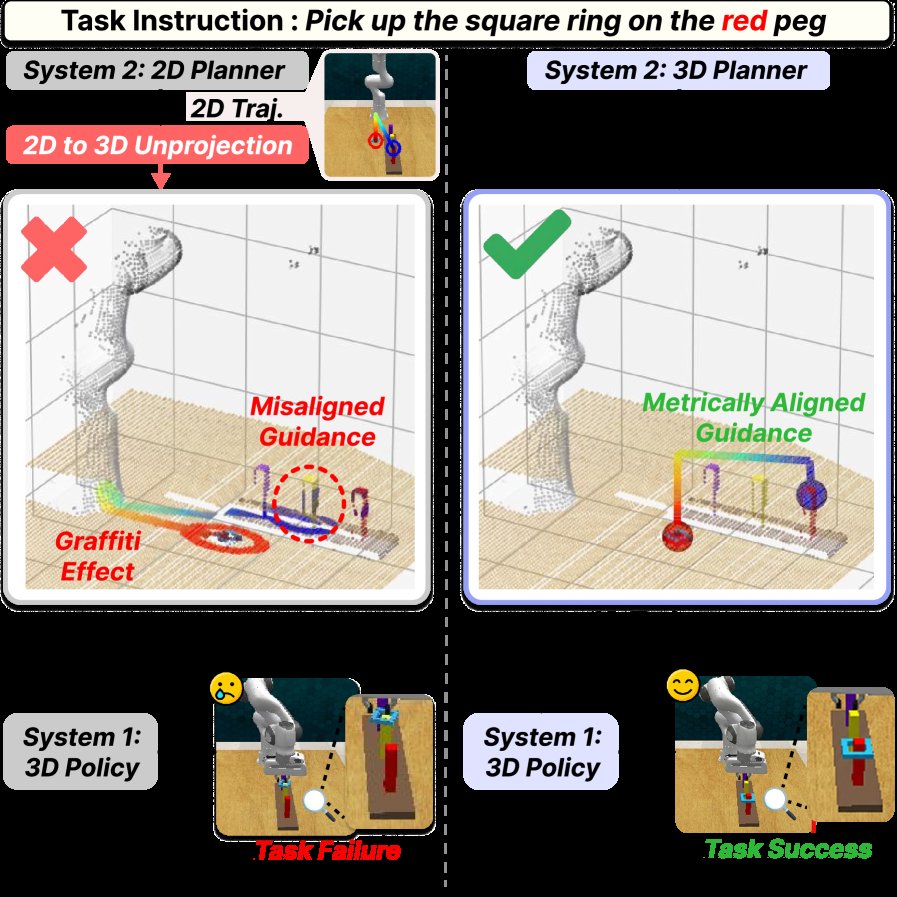
这篇论文不是在泛泛解决 VLA 的 generalization,而是在解决 hierarchical VLA 中一个很具体但致命的接口问题:高层 VLM planner 输出 2D 轨迹,低层 point-cloud policy 在 3D metric space 中控制,两者之间没有同构表示。以前方法把 2D waypoint 用深度图 lift 到 3D,本质上只是给 pixel 下方的 scene surface 赋值;这会把本应穿过自由空间的 end-effector trajectory 扭曲成贴着物体表面的轨迹。真正困难是 planner 的语义意图必须以 controller 可执行的几何形式表达,而不是让 controller 从失真的 2D hint 中反推意图。这个任务的核心矛盾是:VLM 最容易扩展的是 2D/语言/视觉 grounding supervision,但 manipulation success 最敏感的是 metric 3D geometry。
Motivation
已有 hierarchical VLA 的优势是 decoupling:VLM 负责语义规划,低层 policy 负责控制,因此可以避免 monolithic VLA 在小规模 robot data 上过拟合。但 2D intermediate representation 继承了 VLM 的便利性,也继承了它对深度和自由空间表达的缺失。作者真正抓住的缺口是:当前系统不是缺一个更强 controller,而是 high-level guidance 在 controller 坐标系里没有正确几何语义。
所谓 graffiti effect 是这篇论文最重要的动机:2D trajectory 看起来像 motion plan,但一旦 lift 到点云里,它只是 scene surface 上的一串点。这说明 2D guidance 在视觉上 plausible,不代表在控制空间中 executable。由此自然推出方向:不要让低层 policy 修补错误接口,而是让 planner 直接产生 metric 3D trajectory。
Core Idea
核心思想是把 hierarchical VLA 的中间表示从 2D visual trace 改成 3D metric trajectory。planner 仍然利用 VLM 的语言和视觉 grounding 能力,但输出不再是只在 image plane 上有意义的 waypoint,而是带 depth 的 `(u,v,d)` 序列;随后用相机参数 unproject 到 world frame,作为点云中的显式轨迹条件交给低层 3D policy。
本质区别在于它改变了规划-控制之间的 contract。HAMSTER 类方法的 contract 是“planner 给 controller 一个图像上的提示,controller 自己解释其 3D 含义”;3D HAMSTER 的 contract 是“planner 直接给出 controller 坐标系中的几何意图”。新的 inductive bias 是 metric-space alignment:如果低层 policy 在 3D 点云上做动作生成,那么 high-level guidance 也应该作为同一 3D representation 中的对象存在。这比 2D guidance 更 scalable 的地方不在模型更大,而在接口更少依赖隐式几何推断。
Method
方法可以压缩成三个机制,而不是模块堆叠。
第一,planner 接收 RGB-D 并预测 `(u,v,d)` trajectory,解决的是单 RGB 对 metric depth 不可辨识的问题。这里 depth encoder 的意义不是提供另一个视觉分支,而是把 metric geometry 作为 planner 输入的一等公民,否则 VLM 很容易学到语义上对、深度上错的 waypoint。
第二,dense depth reconstruction loss 解决 sparse trajectory supervision 的梯度太弱问题。轨迹点只覆盖少量空间位置,单靠 autoregressive token loss 很可能让 depth pathway 学成 task-specific shortcut;重建整张深度图等于强迫 depth token 保留 scene-level geometry。这个设计的核心变化是把“预测几个 3D 点”变成“在内部维持可用的几何场”。
第三,低层 policy 不是把轨迹编码成额外 token 或语言,而是把 3D waypoints 直接 append 到 scene point cloud,并加 temporal color/modality embedding。它解决的是 conditioning mismatch:trajectory 和 scene 在同一 metric representation 中交互,policy 可以把 guidance 当作空间对象来 follow,而不是把它当作外部指令解释。保留所有 trajectory points 的 subsampling 规则也很关键,因为否则 guidance 会在点云下采样中随机消失。
Key Insight / Why It Works
最核心的有效性来源是 representation alignment,而不是 VLM 变聪明了。低层 3D policy 的强项是 metric spatial control;如果 high-level guidance 仍是 2D,controller 需要同时做控制和几何 disambiguation。3D HAMSTER 把几何 disambiguation 前移到 planner,并用 depth input/reconstruction 显式约束,因此 controller 得到的是更接近 action manifold 的条件信号。
最可能的核心贡献是“3D trajectory as shared interface”。depth encoder 和 reconstruction loss 是让这个接口可用的必要支撑,但不是 conceptual novelty 的中心。训练数据 mixture 的增益需要谨慎看待:从 near-zero Qwen3-VL 到可用 trajectory prediction,很大一部分显然来自 task-specific data 和 instruction tuning;这更像把已有 VLM 的 spatial prior 通过大量监督重新定向,而不是证明 VLM 自发具备精确 3D planning。
这不是 test-time reasoning,也不是长期 planning。planner 输出的是短程 end-effector path,更多是 grounded trajectory retrieval / regression with geometric conditioning。所谓 3D reasoning 可能主要由 RGB-D sensing、MoGe-generated depth、robot trajectory supervision 和 RefSpatial-style spatial data 共同支撑。文中未充分说明不同数据源、不同 supervision variant 对最终真机性能的贡献,因此“VLM latent 3D capability 被激活”这个叙事有一定合理性,但增益来源不清,可能主要来自 scaling / data。
这篇论文值得重视的原因是它指出 2D intermediate representation 在 3D controller 面前不是信息少一点,而是会系统性制造错误几何。这个判断比具体模型选择更重要。
Relation To Prior Work
它最接近 HAMSTER / GeneralVLA / ThinkAct 这条 hierarchical VLA 路线,也和 RoboTracer、RoboBrain 2.5 的 depth-aware trajectory/keypoint planning 接近。与 monolithic VLA 相比,它不是试图让一个模型同时学 semantic grounding 和 continuous control,而是保持 planner-controller 分工;与 2D HAMSTER 相比,它的实质差异是中间表示从 image-space 升级为 metric-space。
看似新的部分里,depth encoder、auxiliary depth reconstruction、point-cloud conditioning 都不是单独新思想;它们分别来自 RGB-D perception、multi-task auxiliary loss 和 3D policy conditioning 的常规工具箱。真正新增的信息是把这些工具组织成一个闭环:VLM planner 预测 3D trajectory,trajectory 被无损放入 point-cloud controller 的表示空间,并在仿真/真机中验证 2D-to-3D lift 的系统性失败。
它属于 embodied VLA 中“interface engineering / representation alignment”谱系,而不是纯 foundation model scaling 谱系。实质创新在接口定义和归因实验,不在底层控制算法或语言模型结构。
Dataset / Evaluation
evaluation 设计总体是围绕核心 claim 展开的:先看 planner 是否能预测 metric 3D trajectory,再看同一个 3DFA controller 在无 guidance、2D guidance、3D guidance 下的差异,最后上真机验证。这个链条比只报 end-to-end success 更有说服力,因为它把“3D guidance 是否更适合 3D controller”这个问题单独拎了出来。
DroidSpatial-Bench 用 held-out DROID pick-and-place episode 测 grasp/place point 的 3D accuracy,适合验证 metric waypoint 能力,但范围偏窄,主要是 pick-and-place 风格的短程轨迹。Colosseum 覆盖多种 perturbation,能支持 robustness claim,尤其是 appearance shift 和 object geometry shift 下 3D guidance 更稳的结论。真机包含 button pressing、pouring、pick-and-place,任务数量不大但覆盖了不同 depth precision 需求,其中 pouring 对方法最有利也最能说明 3D trajectory 的价值。
明显 limitation 是 benchmark 仍主要是单臂 tabletop、单视角、短 horizon、目标可见的 setting。它验证了“在可见几何和可表达轨迹下,3D interface 优于 2D interface”,但还没有验证复杂长期任务、多视角遮挡、动态环境或 mobile manipulation 中的泛化。另一个问题是训练数据和 evaluation domain 的潜在 overlap 没有被充分拆解;泛化 claim 有支撑,但不能过度外推。
Limitation
第一,方法强依赖显式 RGB-D 和准确 calibration。没有 depth sensor 或 depth 噪声较大时,planner 的 metric reliability 未必成立;如果换成 monocular depth,问题可能只是从 planner 转移到 depth estimator。
第二,单视角 planner 的上限很明显。重遮挡、容器内部、目标被手或物体挡住时,单帧 RGB-D 无法提供完整几何,dense depth reconstruction 也只能重建可见表面。文中也承认 multi-view 是未来方向,但这不是小修小补,而是会改变 state representation。
第三,trajectory guidance 只适合能被短程 end-effector path 表达的任务。对于需要 force reasoning、contact mode switching、工具使用、长期子目标记忆或双臂协调的任务,一条 3D path 可能不是充分接口。planner 实际没有形成长期状态建模,更像每个 replanning step 输出局部几何 hint。
第四,增益归因不完全清楚。数据 mixture 很大,包含真实/仿真轨迹、生成深度、spatial QA、preservation data;最终效果可能 heavily rely on data coverage。文中 ablation 证明 depth encoder 和 reconstruction 有用,但没有充分回答哪些 gains 来自 representation alignment,哪些来自更多 supervised 3D data。
第五,所谓泛化可能部分依赖 benchmark 的结构相似性。DROID/RLBench/Colosseum/真机任务都偏 tabletop manipulation,空间关系和动作模式有限;这不足以证明方法具备 open-world 3D planning,只能证明它在当前 manipulation distribution 下比 2D interface 更稳。
Takeaway
- 1. hierarchical VLA 的关键不只是分层,而是中间表示必须和低层 policy 的 action geometry 对齐;否则 guidance 会成为结构性噪声。
- 2. 3D trajectory 是一个比 2D keypoint/trajectory 更合理的 control-facing interface,尤其当 controller 已经是 point-cloud native 时。
- 这个 insight 可迁移到 affordance prediction、tool use、navigation-manipulation coupling 等问题:planner 输出应尽量落在 executor 的原生状态空间。
- 3. dense geometric auxiliary loss 的价值在于防止 sparse action supervision 把几何表示学成 shortcut。
一句话总结
3D HAMSTER 是 hierarchical VLA 从 2D visual guidance 走向 metric 3D planning-control alignment 的一篇代表性工作,真正贡献在于把 VLM planner 的输出接口改造成 point-cloud controller 可直接执行的 3D 几何意图,而非单纯堆更大的模型或更强的低层 policy。