精读笔记
Problem Setting
这篇论文实际处理的是 tool-aware manipulator motion planning 的 data-efficient adaptation 问题:给定一个已经通过 expert trajectories 预训练的 neural motion planner,如何在新环境或新工具几何下避免重新收集大规模 planner demonstrations。
真正困难不在于定义 motion planning,而在于三个约束同时存在:需要低冷启动 latency,需要全链路包括工具的碰撞安全,又不能每次环境变化都调用 AIT*/CuRobo 生成大量监督数据。传统 planner 的问题是每个 query 从头求解,reactive latency 差;local controller 反应快但缺 long-horizon structure;BC-style NMP 推理快,但闭环 rollout 会累积误差,且对几何分布变化脆弱。
关键矛盾是:神经 planner 的速度来自 amortization,但 amortization 又需要覆盖足够多的 expert data;一旦环境或工具变化,原来的 amortized policy 不再可靠。ELMP 的目标就是降低这种重新 amortize 的成本。
Motivation
已有路线缺的不是又一个更大的 point-cloud encoder,而是一个不依赖 expert planner 的 adaptation signal。BC 只能告诉 policy “expert 当时怎么走”,但不能在 policy 自己偏离 expert manifold 后持续提供 dense correction;这正是长 horizon covariate shift 的根源。
作者的核心观察是:kinematic planning 中很多约束天然可微或近似可微。目标误差来自 FK,碰撞梯度来自 SDF,smoothness 来自 joint increments。既然这些信号可以直接计算,就没有必要在 adaptation 阶段继续把 expensive planner 当 teacher。
另一个动机是工具几何在 manipulation 中不是 minor detail。抓取物改变了 robot 的 effective geometry,bounding box 会丢失很多 fine-grained clearance 信息;而固定 embodiment 的 NMP 默认把这部分藏在训练分布里,遇到新工具时不具备显式条件化能力。
Core Idea
ELMP 的核心思想是把 neural planner 的学习目标从“拟合 expert action”转成“让 unrolled policy trajectory 满足可微规划代价”。BC 仍然需要,但它只是 initialization;真正的 adaptation 来自 APG:rollout policy 多步,通过 differentiable kinematic layer 将 final target error、trajectory collision、smoothness 反传到 policy parameters。
这改变了建模方式:以前 NMP 把 planning knowledge 压缩成 supervised mapping,错误只能通过更多 demonstrations 修正;ELMP 把环境几何作为可微约束重新接入训练回路,使 policy 能从失败轨迹本身获得梯度。这不是完整替代 planner,而是把 planner 的一部分 objective 直接写进 policy optimization。
第二个核心是 representation alignment:robot、tool、target、scene 都用 point cloud 表示,并用语义 channel 区分。这样 policy 看到的是同一个空间坐标系中的几何关系,而不是将工具形状压缩成低维 box feature。这个 inductive bias 对 cluttered / narrow-clearance tool use 尤其重要。
Method
1. BC pretraining:解决的是 APG 从随机 policy rollout 会完全不可用的问题。它把 policy 放到接近 feasible trajectory manifold 的区域,使后续 SDF/target gradients 有机会做局部修正,而不是从零学 planning。
2. Differentiable rollout + APG:解决的是 adaptation supervision 昂贵的问题。policy 输出 joint increment,FK 展开整条轨迹,loss 直接作用在最终 pose、全轨迹碰撞和 smoothness 上。核心变化是从 per-step imitation 变成 trajectory-level self-supervision。
3. SDF collision loss:解决的是 BC 监督稀疏且不告诉 policy 如何脱离碰撞的问题。SDF gradient 给出方向性 correction,结合 FK Jacobian 后能把 workspace collision pressure 传回 joint/action space。这是方法有效性的主要几何来源。
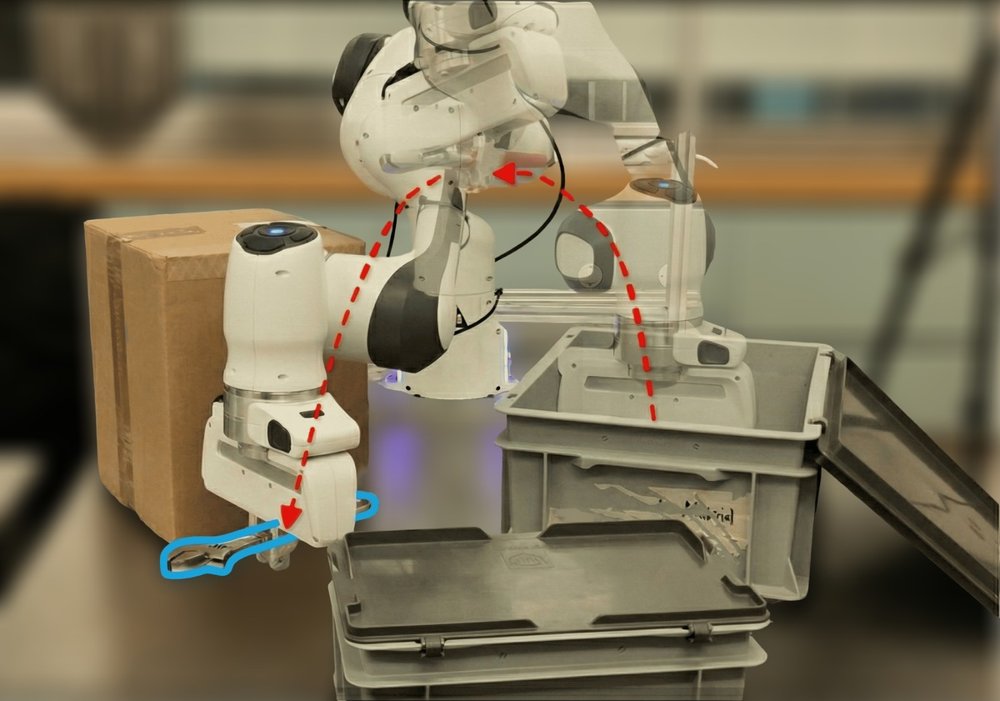
4. Tool-aware point-cloud conditioning:解决的是 variable tool geometry 无法被固定 robot representation 吸收的问题。工具点云进入 robot point set,并在 target pose 也生成虚拟工具几何,使 policy 同时知道当前工具占据和目标处工具占据。
5. Smoothness / path shaping losses:更多是把 motion quality 和 deployment feasibility 写入目标,可调但不是本质创新。ELMP-APG-Cartesian 表明这套框架可以换 objective,但这属于优化目标工程化扩展。
Key Insight / Why It Works
最关键的有效性来源是 dense analytic geometry gradient,而不是网络结构本身。对于 kinematic manipulator,碰撞和目标误差都能通过 FK/SDF 得到局部可解释梯度;只要 BC policy 生成的轨迹不是完全离谱,APG 就能把 residual collision 和 precision error 逐步修掉。这比继续收集 expert trajectories 更高效,因为它不需要求完整可行路径,只需要知道当前 rollout 哪里违反约束。
APG 的作用更像 policy-level trajectory optimization amortization:它把很多 sampled problems 上的 local optimization 结果吸收到参数里,而不是 test-time 对每个 query 单独优化。因此它兼有 offline adaptation compute 和 online feed-forward latency 的优势。这里的“learning”不是凭空学到规划,而是把可微优化信号蒸馏进 policy。
工具点云的贡献是 better inductive bias / representation alignment。hard problem 上 bbox 差距变大说明 coarse abstraction 在接近碰撞边界时确实不够;点云让 policy 有机会根据具体形状调整 clearance。但是否真正学到了 shape-level reasoning 仍不完全清楚,也可能部分依赖训练工具分布覆盖。
需要警惕的是,所谓泛化不是纯 zero-shot reasoning。ELMP 在 novel environments 上的高性能来自 APG fine-tuning;这是一种低成本 adaptation,而不是无需适配的 generalist planner。它的能力边界很可能由程序化数据覆盖、SDF 可微性、以及 BC 初始化质量共同决定。
哪些可能只是 engineering / scaling:PointNet++ backbone、sphere collision approximation、loss weights、mixed precision/DDP、horizon/gradient clipping等大多是使系统可跑的工程细节。真正可迁移 insight 是:用 differentiable task constraints 替代 expert demonstrations 做 adaptation,并把可变 embodiment 显式条件化。
Relation To Prior Work
ELMP 最接近 MπNets / Neural MP 这条 neural motion planning 谱系,但它的本质差异不是“换了网络”,而是从纯 imitation-heavy 转向 self-supervised differentiable objective fine-tuning。MπNets 主要 amortize expert planner;ELMP 仍然 amortize,但 adaptation 阶段不再需要 expert labels。
和 CuRobo/CHOMP/STOMP 类优化式 planner 的关系也很紧:ELMP 借用了 SDF collision + smoothness + target objective 的思想,只是把优化对象从单条 trajectory 变成 policy parameters。可以把它看成“把 trajectory optimizer 的 loss 反传进 NMP”。
和 differentiable physics/APG 的关系是方法论迁移:APG 在低层控制中已有,但这里把它限制在 kinematic rollout,从而避免复杂 contact dynamics,并利用 arm planning 中相对干净的 FK/SDF 结构。这是实质创新点之一,但理论上并不神秘。
tool-aware point cloud 本身也不是全新表示,PointNet++ 和语义点云都是成熟组件。新增的信息在于:把 robot/tool current geometry、target geometry、scene geometry 放进同一 policy conditioning,并证明它比 bounding box 在工具碰撞上更可靠。
Dataset / Evaluation
评估覆盖了程序化的 Tabletop/Cubby/Dresser,以及 novel Cabinet/Bin transfer,并包含真实 Franka 部署。整体上,实验设计是围绕核心 claim 展开的:APG 是否减少 expert data 需求、tool point cloud 是否比 bbox 更好、feed-forward policy 是否比 classical planner 冷启动更快。
证据较强的部分是 APG vs BC:同架构下 fine-tuning 后 collision 和 pose accuracy 明显改善,低数据 ablation 也支持“APG 降低 expert data 依赖”。工具表示的 hard-set 对比也比较有说服力,因为它专门放大了 fine-grained geometry 的必要性。
证据较弱的是泛化 claim。novel environments 仍是几何上可解析/程序化的场景,并且 APG fine-tuning 使用 analytic primitives;这验证了 low-cost adaptation,不等价于开放世界几何泛化。真实世界实验有价值,但成功率和碰撞率显示 sim-to-real gap 仍大,尤其 perception noise/occlusion 没有被 APG 训练机制真正解决。
和 SOTA 比较需要谨慎。CuRobo 在 constrained Cubby 中仍明显更强,说明 ELMP 的 long-horizon / narrow passage planning 能力没有全面超过 optimization-based methods。ELMP 的最大优势是 latency 和 adaptation cost,而不是绝对规划可靠性。
Limitation
1. 成立依赖可微几何。当前使用 primitive SDF 和 sphere approximation,适合程序化/解析场景;真实 clutter 或非规则物体需要 neural SDF、point-cloud collision loss 或其他近似,梯度质量会变成核心瓶颈。
2. APG 是局部优化,不保证逃出 bad basin。BC 初始化越差、场景越窄、horizon 越长,BPTT 越可能给出不稳定或局部无效梯度。论文用 gradient clipping 和 BC warm-start 稳住训练,但这不解决全局规划困难。
3. 泛化可能主要来自数据覆盖 + adaptation,而不是强 reasoning。policy 没有显式 search、topological reasoning 或 memory;它生成的是 autoregressive joint increments。长 horizon foresight 很可能是从 demonstrations 和 APG distribution 中 amortized 出来的,不应解读为形成了通用 planner。
4. 增益归因不完全清晰。ELMP 相比 MπNets 同时改变了输入表示、pose encoder、tool conditioning、APG fine-tuning 和评估设置。虽然 ablation 支持 APG 和 tool point cloud,但不同因素之间的交互仍未充分分离。
5. 真实部署鸿沟明显。仿真碰撞率和真机碰撞率差距说明 policy 对 perception artifacts 很敏感;APG 在干净 analytic scene 上优化出的几何安全性,不能直接转化为 noisy depth point cloud 下的安全保证。
6. 它把 expert data bottleneck 部分转移成 differentiable model bottleneck。少跑 AIT* 是好事,但需要可微 SDF、准确 FK、工具 mesh、可靠点云过滤和 procedural sampler。对非结构化环境,这些前提本身并不免费。
Takeaway
- 1. 最值得迁移的 insight:如果任务约束能写成可微 dense losses,就不应把 adaptation 完全交给 expert demonstrations;用 analytic gradients 做 policy-level fine-tuning 往往比重新生成 labels 更划算。
- 2. Neural planner 的有效方向可能不是纯 scaling expert trajectories,而是“BC 初始化 + differentiable objective correction + amortized deployment”。
- 这条路线在 robotics 中比单纯 imitation 更可持续。
- 3. 对可变 embodiment / tool use,显式几何 conditioning 很重要。
一句话总结
ELMP 是一篇把神经运动规划从 expert-imitation scaling 推向 differentiable-constraint self-supervised adaptation 的工作,真正贡献在于用 APG 和显式工具几何条件化降低 NMP 的数据适配成本,而不是提出一个全新的 planner。