精读笔记
Problem Setting
这篇论文实际在解决 direct 3DGS generation 的建模瓶颈:如何让生成模型直接输出高质量 Gaussian primitives,而不是先生成多视图图像、latent 3D code 或 reconstructor input。真正困难点在于 3DGS 参数空间不是普通连续向量空间:opacity、scale、rotation、depth 之间有强物理约束,小的属性误差会在渲染时放大成 floaters、模糊边界或不稳定几何。已有路线主要卡在两类瓶颈:multi-view-to-3D pipeline 的上限由 2D 视图一致性和 reconstructor 决定;latent structured splats 的上限由 VAE 压缩、decoder capacity 和级联误差决定。任务的关键矛盾是,3D 生成需要大规模 2D prior 才有语义和纹理泛化,但一旦通过 latent 或重建阶段接入这些 prior,又会把几何质量交给中间模块。
Motivation
作者的核心动机是去掉 latent/reconstruction bottleneck,而不是单纯加一个更强 3D 生成器。Structured Gaussian tensors 已经天然是 image-like container,每个 pixel 对应一个 Gaussian;这意味着可以把 2D pixel diffusion 的 inductive bias 直接迁移到 splat 属性空间,而不必先学一个 VAE。已有方法缺的是一种“预训练 2D prior 与 3D primitive supervision 同时存在”的训练路径:DiffSplat 有 2D prior 但被 latent 压缩限制,DiffusionGS 直接生成但从头训练,reconstruction-based 方法看似稳定但误差不可逆。PixGS 的观察是:pseudo-label 可以只作为 early alignment,最终质量应由 GT rendering supervision 约束,而不是由 reconstructor 决定。
Core Idea
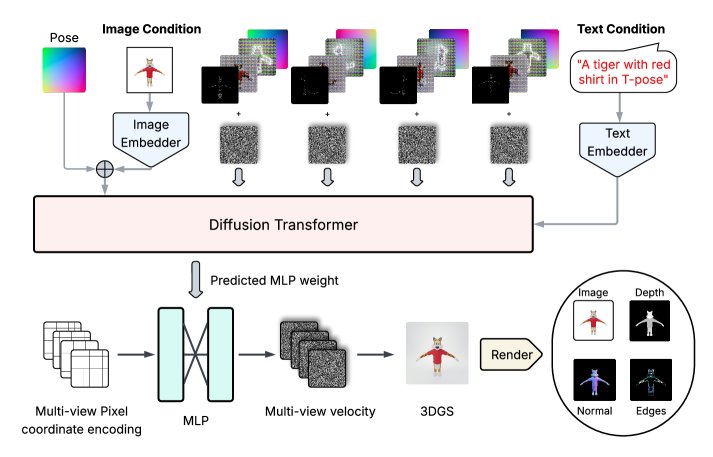
PixGS 的核心思想是把 3DGS 生成问题改写成 pixel-space flow matching:模型不是生成图像、mesh、voxel 或 latent,而是在多视角 Gaussian attribute grids 上直接 denoise。这个建模方式把 3D primitive distribution 对齐到 2D pixel diffusion 可处理的 token/patch 结构,从而复用大规模图像模型学到的纹理、局部结构和语义 prior。直觉上它可行,是因为 splatter-style representation 把无序 3D primitives 变成了规则 2D grids,降低了从 2D backbone 迁移到 3D 表示的结构错配。
它和 prior 的本质区别在信息流:DiffSplat 是 image-like 3DGS → VAE latent → latent diffusion → decoder → splats,质量受压缩和 decoder 约束;PixGS 是 noisy splat attributes → pixel diffusion → splat attributes,并在每个 denoising step 面向最终 3DGS 属性空间。它引入的 inductive bias 不是新的几何理论,而是 representation alignment + direct render supervision:让生成模型同时看到“像图像一样排列的 3D 参数”和“渲染后必须成立的几何/外观约束”。这比级联方法更 scalable 的原因在于少了必须逐级收敛的模块,但它是否能 scene-scale 仍未证明。
Method
关键机制可以压缩为四点。第一,Gaussian attribute tensor 作为扩散对象,解决 latent bottleneck:模型直接预测 color、scale、rotation、opacity、depth 等 splat 属性,因此细节不需要经过 VAE 解码恢复。第二,多视角 attention 和 camera-ray conditioning 解决图像化表示的几何缺口:普通 2D patch prior 只理解平面邻域,跨视角 attention 让不同 view 的 splat tokens 在生成过程中共享对象级几何信息。第三,rendering-based supervision 解决 pseudo-label 分布不等于可用 3DGS 的问题:appearance、mask、depth、normal loss 把预测结果拉回可渲染且几何合理的区域,而不是只拟合 reconstructor 输出。第四,三阶段 curriculum 解决数值稳定性:先用 pseudo-label/FM 把模型带到近似合法的 3DGS manifold,再逐步切换到 GT rendering supervision;rotation norm regularization 属于必要的稳定化约束,因为 quaternion/unit-norm 这类 manifold 约束不适合靠普通 L2 velocity loss 自发学好。LoG loss 的角色更窄,主要是减少过平滑、强化边界和纹理高频。
Key Insight / Why It Works
最核心的 insight 是:对 structured 3DGS 来说,latent compression 不是必要条件,反而可能是质量上限;只要表示足够 image-like,就可以把 pixel-space diffusion 的 prior 直接迁移到 3D primitive space。PixGS 真正有效的原因大概率不是某个单独模块,而是三件事叠加:预训练 pixel diffusion 提供强 2D appearance prior;structured splat grid 提供与 2D prior 对齐的载体;rendering supervision 把这个 prior 重新锚定到 3D 可渲染约束上。
最可能的核心贡献是 direct splat-level denoising + GT rendering curriculum,而不是 LoG 或 image-conditioning adapter。消融里 only FM 崩得很明显,说明“直接生成属性”如果没有渲染闭环并不自动产生几何;这也意味着 PixGS 的成功很大程度来自把 diffusion pretraining 和 differentiable rendering supervision 接到同一模型里。LoG、rotation regularizer、multi-view RoPE 更像让系统可训练、细节更好、稳定性更强的工程增强。数据和 scaling 的成分也很重:500K 到 1M 级 synthetic assets、多视角渲染、PixNerd 45M image prior、Qwen/DINO 等外部模型都在贡献能力。所谓 generalization 不能过度解读,它更像 data coverage + representation alignment 下的插值泛化,而不是模型学到了强 3D reasoning。
Relation To Prior Work
PixGS 最接近 DiffSplat/Zero-1-to-GT 这条 structured 3DGS generation 谱系,而不是传统 3D-native generative models。它沿用了“把 3DGS 排列成图像式 tensor”的思想,也沿用了 pseudo-label/reconstructor bootstrapping,因此不是从零发明表示。真正不同点是把 latent diffusion 改成 pixel-space direct diffusion,并把 reconstructor 从质量瓶颈降级为 early training guide。
相对 reconstruction-based text/image-to-3D,PixGS 不再依赖先生成一致多视图再重建,因此避免了 upstream view inconsistency 的不可逆误差。相对 3D-native diffusion,它不是完全从 3D 数据学习,而是强行把 2D foundation prior 迁移到 3DGS attribute manifold。相对 optimization/SDS 方法,它牺牲 per-instance optimization 的灵活性,换来 feed-forward speed 和数据驱动的稳定性。看似新的部分里,multi-view attention、view concatenation、rendering losses、LoG 都有明显已有思想来源;实质创新在于把这些组织成一个 single-stage pixel-space splat generator,并证明不经过 VAE 也能利用 2D diffusion prior。
Dataset / Evaluation
Evaluation 覆盖了 text-conditioned 和 image-conditioned object-level 3DGS generation,基本能验证论文最直接的 claim:在 object-centric synthetic asset setting 下,PixGS 比现有 3DGS 生成路线更快且质量更高。T3Bench、GSO、用户研究、ablation 和 data-scale study 组合起来,证据链比单纯定性图更完整。尤其是 image-conditioned GSO 上的重建式指标,更能检验几何/视角一致性;text-to-3D 的 CLIP/ImageReward 则更偏语义和审美,不能完全证明 3D 几何质量。
明显 limitation 是评估仍主要在 synthetic/object-level/turntable 场景中完成,没有真实世界 capture、复杂 scene、动态对象或开放照明条件。用户研究支持 perceptual preference,但无法分离 texture quality、view alignment、dataset familiarity 的贡献。benchmark 是否充分验证 scalability 也有限:1M assets 的扩展说明训练可放大,但不等于 scene-scale 或 real-world scale 可行。还需要注意潜在 benchmark/domain overlap:训练数据来自 Objaverse 系列,GSO 虽然 unseen,但仍是干净 object asset 分布;这和真实 deployment 的 camera、lighting、occlusion 差距很大。
Limitation
方法成立依赖 object-centric structured splat representation:固定少数视角、规则 grid、居中物体、可由多视角合成监督覆盖。一旦进入 scene-level,遮挡、长尾布局、尺度变化和非均匀可见性会破坏这种整齐的 pixel-aligned splat container;需要更多 views 或更高 resolution 时,attention 和 rendering supervision 的成本会快速上升。核心能力可能主要来自数据覆盖和强 2D prior,而不是 PixGS 自身学到通用 3D reasoning。
另一个限制是增益归因不清。相比 DiffSplat,PixGS 同时改变了 diffusion space、backbone、loss、training schedule、data scale 和 supervision;文中未充分说明每一项对最终结果的独立贡献。pseudo-label dependence 消融说明 final quality 不完全受 reconstructor 限制,但仍不能证明没有 hidden supervision transfer,因为 pseudo-label 初始化决定了早期 manifold 对齐。材质和光照没有解耦,image-conditioned setting 下 reference shading/specular 会被 bake into splats。更深层的问题是,它可能只是把 reconstruction bottleneck 转移成 data/render-supervision bottleneck:训练时需要大量高质量多视角渲染和稳定 3DGS supervision。
Takeaway
- 第一,structured 3D representation 如果能足够贴近 image grid,就可以直接吃 pixel-space diffusion prior,VAE latent 未必是 3D 生成的必要中介。
- 第二,3DGS generation 的关键不是让 diffusion loss 更低,而是让生成分布落在可渲染、数值合法、几何一致的 splat manifold 上;rendering supervision 和 curriculum 比表面架构更重要。
- 第三,未来这条线的演化大概率会从 object-level splat grids 走向更可扩展的 scene representations,例如 adaptive grids、hierarchical splats、view-dependent allocation,而不是继续堆固定视角 resolution。
- 第四,可迁移的 insight 是:当目标表示可以被规则化为 pixel-like tensor 时,直接 pixel-space foundation model adaptation 可能比 latent autoencoding 更少损失、更容易归因,但前提是有足够强的物理/渲染闭环来约束输出空间。
一句话总结
PixGS 是 structured 3DGS 生成从 latent/cascade pipeline 向 direct pixel-space primitive diffusion 演化的一步,真正贡献在于把 2D pixel diffusion prior、splat-level denoising 和渲染监督对齐到同一个 single-stage object-level 3DGS 生成框架中。