精读笔记
Problem Setting
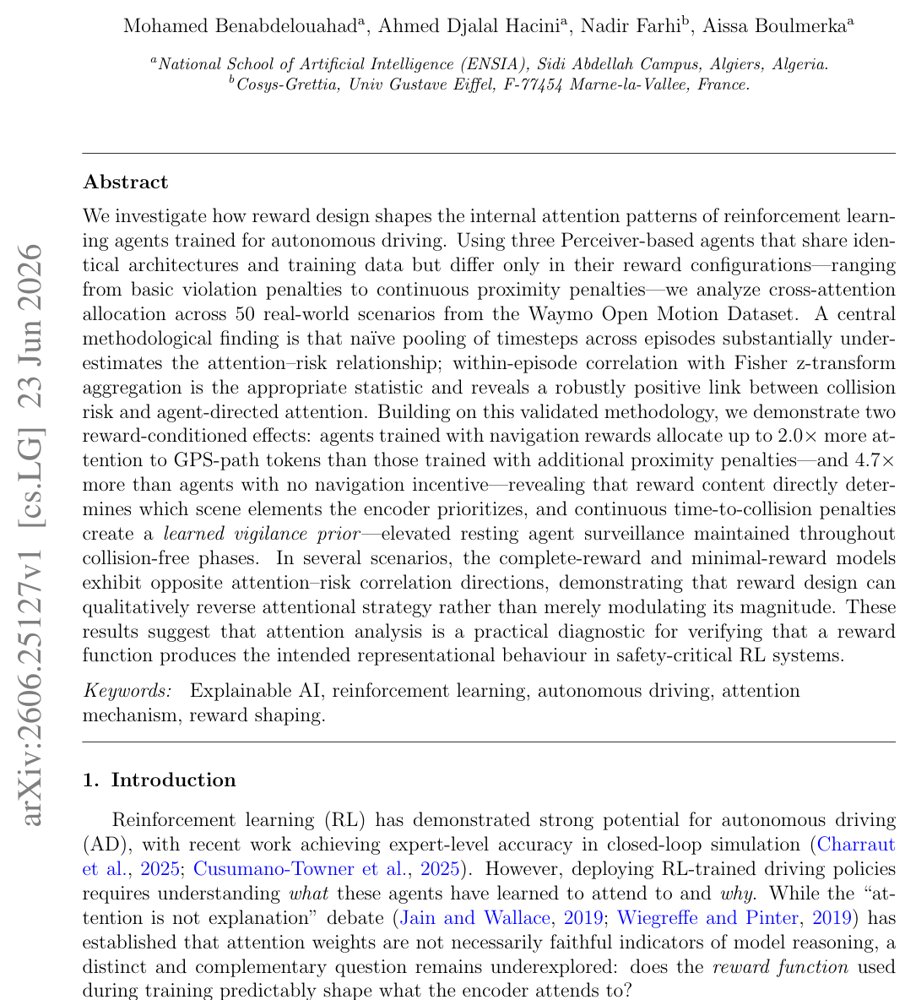
[Reward-Conditioned Attention: How Reward Design Shapes What Autonomous Driving Agents See](arXiv preprint / 2026)。这篇论文真正解决的是 RL 自动驾驶中 reward shaping 对内部表征的影响归因问题,而不是训练一个更强 planner。它关心的是:当 agent 的架构和训练数据固定时,不同 reward term 是否会把 encoder 的注意力预算推向不同语义对象。
关键矛盾在于,reward 的最终作用通常只通过 behavior metric 被观察到,但 behavior metric 太粗,无法告诉我们 reward 是否教会了模型监控正确的信息源。attention 提供了一个中间层观测窗口,但它又天然受 episode heterogeneity、token 数量不均、policy trajectory shift 影响。因此难点不是提取 attention,而是如何定义一个不会被场景基线差异淹没的统计对象。
以前路线卡在两个地方:RL driving 工作重 performance,少看 representation;XAI 工作争论 attention faithfulness,但这对 reward debugging 不一定是最重要的问题。本文的切入点更实际:不问 attention 是否解释 action,而问 reward 是否可预测地塑造 attention allocation。
Motivation
已有 reward engineering 很大程度仍是黑箱调参:加一个 TTC penalty、route progress reward 或 comfort term 后,最终看 collision/offroad/accuracy 是否变化。但如果多个 reward 配置 closed-loop accuracy 接近,就很难判断 reward 到底改变了什么。本文的动机正来自这种“行为指标不敏感,但内部表征可能已经显著不同”的观察。
作者的核心观察是,Perceiver cross-attention 天然形成一个归一化资源预算;如果 reward 真在塑造任务相关表征,那么 reward term 对应的语义对象应该在这个预算中留下系统性痕迹。navigation reward 应该让 GPS route tokens 变得重要,continuous proximity penalty 应该让 other-agent tokens 在非危险阶段也保持较高优先级。
缺口不是缺一个新 attention 模型,而是缺一种 reward-to-representation 的诊断方法。这个方向的价值在于,它把 reward design 从“只看结果”推进到“检查 reward 是否产生预期内部偏置”。
Core Idea
核心思想可以概括为:把 attention 当作 reward-conditioned representation 的测量仪,而不是 action explanation。论文利用三个 reward 配置形成一个近似 controlled intervention:basic 只有 violation penalty,minimal 加 navigation incentive,complete 再加 TTC、speed、comfort 等连续安全/舒适项。在其他条件尽量固定时,attention budget 的系统性变化就可以被解释为 reward content 对 encoder priority 的影响。
这个想法成立的直觉是,RL 的 reward 不只选择 action,也通过长期梯度塑造 state abstraction。对 Perceiver 这类 bottleneck encoder 来说,latent queries 必须在有限 attention budget 中选择哪些 token 更值得压缩进 latent state;reward term 越直接依赖某类场景因素,该类 token 越可能获得稳定预算。
和 prior 的本质区别是问题重心变了:不是“attention 是否 faithful 地解释某个动作”,而是“reward 是否在表征层产生可测的 inductive bias”。这使得 attention 分析从 post-hoc explanation 变成 reward verification。
Method
方法上真正必要的机制不多。
第一,reward hierarchy 提供了弱控制实验。basic、minimal、complete 是逐层增加 reward term 的配置,因此 GPS attention gradient 和 TTC vigilance 可以和 reward 内容做语义对齐。它解决的是 reward attribution 问题:如果只比较任意两个模型,很难知道差异来自哪里。
第二,使用 category-level attention,而不是 token-level 可视化。单个 token 的 attention 太噪,且不易跨场景比较;按 Ego、Agents、Road Graph、Traffic Lights、GPS Path 聚合后,关注的是语义资源分配。这一步的核心变化是把局部热力图转成 closed-budget representation statistics。
第三,within-episode correlation 是整篇最重要的方法修正。风险变化是 episode 内的动态变量;如果把所有 timestep pooling,不同场景的风险基线和 attention baseline 会形成混杂。先在每个 episode 内计算风险与 agent attention 的 Spearman 相关,再用 Fisher z 聚合,才是在估计“同一场景中风险升高时 attention 是否转向 agents”。
第四,token-normalized attention 是必要的 sanity check。Road graph token 占比极高,raw attention 天然大;小类别几个百分点的变化可能对应很大的 per-token density 变化。归一化不是核心贡献,但防止了对 attention fraction 的错误解读。
Key Insight / Why It Works
最核心的 insight 是 reward term 会变成 encoder 的长期注意力先验。navigation reward 不是只让策略沿 route 走,它还让 GPS path tokens 在表征预算中占据高 baseline;TTC penalty 不是只在危险时触发反应,它会让模型在安全阶段也保持对动态 agent 的 resting surveillance。这更像 representation alignment,而不是单纯 behavior shaping。
方法有效的关键不是 Perceiver 本身多强,而是 Perceiver cross-attention 提供了可审计的 bottleneck。因为 attention 是归一化预算,一个类别上升意味着另一个类别下降;这使得 reward-induced priority shift 更容易被观察到。closed budget 是这里的隐含实验设计优势。
最可能的核心贡献是 within-episode 统计框架,而不是三模型对比本身。后者的结论直觉上合理,但容易受 trajectory confound 影响;前者明确指出了 heterogeneous RL episodes 中 pooling 的统计错误,这个 insight 可以迁移到很多 RL/XAI 分析中。
哪些部分可能只是辅助:token normalization、entropy analysis、若干 scenario visualization 都主要是解释性支撑,不是决定性证据。basic model 的少量场景比较也更像 sanity reference,而不是强归因证据。
这不是 scaling paper,也不是 test-time compute 或 memory reuse。它的价值主要来自更好的 inductive-bias diagnosis:reward 通过训练信号对 state abstraction 施加选择压力,而 attention budget 暴露了这种选择压力。需要警惕的是,attention pattern 和 policy quality 的因果关系文中没有证明;更高 agent attention 不必然等于更安全的 planning。
Relation To Prior Work
它最接近三条线:RL autonomous driving reward shaping、attention/XAI、transformer-based driving representation。与 V-Max/Waymax 这类工作相比,它不是提出更强训练框架,而是拿现成框架做 reward-conditioned representation analysis。与 attention explanation 工作相比,它刻意避开 faithfulness 争论,把 attention 降格为内部资源分配指标。
看似新的地方中,有一部分其实是已有思想重组:reward shaping 改变策略、attention 可作为可视化信号、Fisher z 聚合相关系数都不是新东西。实质创新在于把它们组合成一个针对 heterogeneous RL trajectories 的诊断协议,并指出 pooled timestep correlation 会系统性低估 episode 内机制。
它属于“mechanistic diagnostics for learned policies”这条谱系,而不是“better planner”或“better XAI explanation”谱系。真正新增的信息是:在自动驾驶 RL 中,reward component 与 semantic token attention baseline 之间可以出现稳定、可解释、可统计检验的对应关系。
Dataset / Evaluation
评估使用 WOMD validation 场景和 V-Max/Waymax 风格 closed-loop simulation,覆盖真实世界记录场景但不是真实车辆部署。任务范围是结构化中端输入下的短时驾驶 rollout,不能直接外推到端到端感知、长时交互、多车博弈或开放世界 corner cases。
evaluation 对核心 claim 的支持是部分充分的。对于“pooled analysis 不合适、within-episode 更合理”,证据较强,因为它直接比较了两种统计口径并解释了 heterogeneity 来源。对于“navigation reward 提高 GPS attention”,证据也比较干净,因为 reward term 与 token 类别语义直接对应。
较弱的是“continuous TTC reward creates vigilance prior”的因果强度。complete 和 minimal 在同一 scenario 上会产生不同轨迹,因此 calm-phase attention gap 不是完全相同输入下的 controlled comparison。文中承认了这一点,但没有用 frozen replay、counterfactual intervention 或 off-policy identical observation evaluation 来消除混杂。
basic model 只在少量重叠场景上评估,这使三配置单调梯度的最弱端不够扎实。整体 benchmark 验证了 attention diagnostic 的 plausibility,但还没验证它能稳定预测真实 safety improvement。
Limitation
最大限制是因果归因不闭合。reward、policy、trajectory、state distribution、attention 都纠缠在一起;不同 reward model 在同一 WOMD scenario 下看到的状态序列并不完全相同。因此所谓 reward-conditioned attention 可能部分来自 reward 本身,也可能来自 policy 走到了不同风险区域。要做强结论,需要 identical observation replay 或 token-level causal intervention。
第二,attention 的可迁移性文中未充分说明。Perceiver LQ encoder 的 cross-attention 很适合做这种分析,但很多 driving transformer 的 attention 结构、query semantics、multi-stage fusion 都更复杂;attention budget 未必同样可解释。该方法可能依赖“输入 token 语义清晰 + attention bottleneck 显式归一化”这个前提。
第三,attention 不等于安全能力。complete model 的 agent vigilance 更高,不代表它一定形成了更好的 long-horizon planning;这可能只是 TTC penalty 诱导出的局部 threat retrieval habit。planner 是否形成长期状态建模,文中没有证明。
第四,样本规模和场景覆盖有限。50 个 validation scenarios 足以做 exploratory diagnostic,但不足以声称跨驾驶域泛化。attention reversal 很有意思,但目前更像 qualitative clue;其结构原因、稳定性和安全意义都还不清楚。
第五,增益来源不清。论文的主要结果不是性能增益,而是 attention pattern 差异;这些差异是否来自 reward term 的语义内容、训练动态、checkpoint variance、或 hidden differences in experienced states,需要更严格 ablation。
Takeaway
- 1. 最值得迁移的不是具体驾驶结论,而是统计原则:分析 RL trajectory 中的 representation-environment relationship 时,应优先做 within-episode analysis,再跨 episode 聚合。
- 2. reward design 可以被看作 representation alignment 工具。
- 好的 reward 不只优化 action,还应该在 encoder 中诱导正确的信息优先级;attention/activation diagnostics 可以成为 reward debugging 的一部分。
- 3. continuous safety shaping 可能产生 vigilance prior,这比 reactive attention 更重要:安全 reward 的作用不只是危险来临时响应,而是改变模型的默认感知姿态。
一句话总结
这篇论文不是提出新自动驾驶模型,而是把 reward shaping 重新解释为一种可诊断的 representation shaping,并给出了在异质 RL 场景中分析 reward-conditioned attention 的较有价值方法论。