精读笔记
Problem Setting
论文实际研究的是:在一维 location family 中,噪声分布未知,只知道 centered distribution 属于对称 moment ambiguity class C0={E X=0, Eϕ(X)≤B},如何估计位置 μ,并在 worst-case distribution 下控制 P(估计误差超过固定 Δ) 的最优指数衰减率。
真正困难点不在于构造一个有 concentration 的 robust estimator;Catoni、median-of-means、trimmed mean 都能做到 rate-optimal。困难在于 exact optimality:给定 Δ,所有 measurable estimator 的 best possible βn(Δ) 的 large-deviation exponent 是什么,以及一个可计算的 estimator 是否能达到它。
关键矛盾是:heavy-tailed class 太大,经验均值没有指数矩;但如果 estimator 非线性截断太强,又会损失常数。已有方法通常在 ψ 上人工施加 sandwich,再用 Chernoff bound 证明 upper bound;这解释不了 sandwich 为什么是对的,也不能直接给 minimax lower bound。本文的目标就是把 ψ 的设计和 lower bound 的 least favorable pair 放进同一个凸对偶框架。
Motivation
已有路线缺的是“合成原则”和“tightness 证据”。Catoni 的 bounded variance estimator 和 Lee/Bhatt 的 α-moment estimator 都展示了某类 log-sandwich estimating function 很有效,但这些 envelope 是先猜出来的,scale tuning 也服务于特定 regime。它们更像精巧构造,而不是从 minimax geometry 推出的必然形式。
作者的核心观察是:M-estimator 的尾概率证明本质上只需要两个指数矩约束;而这些约束面对 convex moment class 时天然可 dualize。另一方面,任何 estimator 的 fixed-margin 下界本质上是两个 shifted classes 之间的 testing problem。于是缺口变成:upper-bound 的 Chernoff-dual feasibility 和 lower-bound 的 Hellinger affinity 是否是同一个凸对偶问题。
这也是本文选择 fixed-margin regime 的原因。fixed-confidence regime 中 Δn→0,常数受局部渐近影响;fixed-margin 下 βn 指数衰减,正好和 Chernoff/Hellinger testing exponent 对齐,更容易得到 exact characterization。
Core Idea
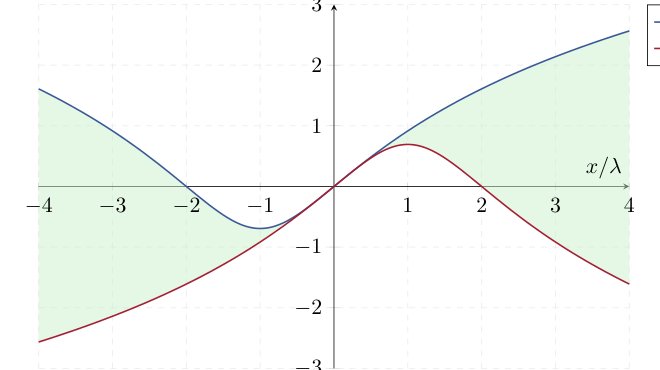
核心思想是把 robust mean estimation 从“找一个好 ψ”改成“解一个 convex dual certificate”。给定 margin Δ,非降 M-estimator 的右尾事件可由 E exp(ψ(X−Δ)) 控制,左尾由 E exp(−ψ(X+Δ)) 控制。对 moment class 的 worst-case expectation 做 Lagrangian duality 后,ψ 必须被夹在两个由 λ1,λ2 决定的 log-affine envelope 中。也就是说,Catoni-style sandwich 不是 inductive guess,而是 KKT 条件强制出现的结构。
更重要的是,论文没有停在“这个 M-estimator 很好”。它证明最优指数率等于 C_{−Δ} 和 C_Δ 之间最大 Hellinger affinity 的负对数。lower bound 来自二点 testing;upper bound 来自同一个对偶结构生成的 M-estimator。这样 estimating function、dual multipliers、least favorable distributions、Hellinger exponent 四者被组织成一个闭合的 primal-dual picture。
和 prior 的本质区别:prior 是在一个人为参数族中调 ψ;本文是把整个 monotone ψ 空间通过凸分析压缩到两个 multipliers,并证明压缩后没有 suboptimality gap。新增 inductive bias 不是某个新截断函数,而是“moment ambiguity set 的 convex geometry 决定 robust estimator 的 envelope”。
Method
1. Tail control via M-estimator feasibility:作者用 sign-change M-estimator,将 μn>μ+Δ 包含到 ∑ψ(Yi−Δ)≥0,再用 Chernoff/Markov 得到 e^{-nr} bound。这个机制解决的是重尾下没有原始 mgf 的问题:不要求 X 有指数矩,而是设计 ψ 使 exp(ψ) 在 moment class 上可控。
2. Infinite-dimensional ψ search → two-multiplier convex program:对 sup_{P∈C0} E exp(ψ(X−Δ)) 做 Lagrangian upper bound,moment constraint 只引入 mean multiplier λ1 和 moment multiplier λ2。于是 ψ 被限制在 ψ_l^λ+r ≤ ψ ≤ ψ_u^λ−r。必要性在于避免手工选择 Catoni envelope;核心变化是 estimating function synthesis 变成 λ-space 的 semi-infinite convex feasibility。
3. Monotone interpolation / sandwich geometry:给定上下 envelope,只要对所有 x≤y 有 g_l(x−Δ)g_u(y+Δ)≥e^{2r},就存在非降 ψ threading the band。这里 ψ 的具体插值并不重要;重要的是 envelope kissing points 决定 least favorable support。off-support 的 ψ 自由度是辅助,不是核心贡献。
4. Lower bound via two-point Hellinger exponent:任意 estimator 都可诱导一个在 P_{−Δ'} 和 P_{Δ'} 之间的 test,Bayes error 的 Chernoff exponent 给出下界。由于 class 反射对称,最坏 pair 可限制为 mirror pair,Chernoff 信息在 s=1/2 处退化为 Hellinger affinity。
5. Zero-gap primal-dual matching:作者引入 relaxed sub-probability problem,dualize mass、mean、moment constraints,利用 AM-GM 得到 g_-g_+≥1/4 的 dual feasibility。对称化 dual multipliers 后正好还原 synthesis envelope。这个步骤是整篇最关键的数学闭合:它证明 M-estimator 合成率等于所有 estimator 的 lower-bound rate。
Key Insight / Why It Works
最核心的 insight 是:robust mean estimation 的 sharp confidence exponent 不是由某个具体 truncation trick 决定,而是由两个 shifted ambiguity classes 的 Hellinger overlap 决定。估计问题被还原成 testing geometry 后,least favorable distributions 和 optimal estimating function 是同一对偶问题的两面。
方法有效的真正原因有三层。第一,moment class 是 convex 的,这让 worst-case expectation 和 Hellinger affinity 都有可用的强对偶结构;如果 class 非凸,这套 exact matching 很可能失效。第二,class 是 reflection-symmetric 的,这让两点 testing 的 Chernoff exponent 可干净地落在 Hellinger affinity,并允许 mirror pair reduction。第三,一维 location + monotone ψ 让 sign-change M-estimator 的 tail event 与 shifted samples 对齐;这是上界和下界能咬合的关键。
最可能的核心贡献是 zero suboptimality gap,而不是 bounded variance 的闭式公式,也不是重新得到 Catoni 常数。闭式公式和具体 α-moment 常数更像 framework 的验证案例。slowly varying class 的分析有价值,因为它展示 least favorable pair 的形态如何随 tail regime 退化,但它不是主机制。
哪些部分可能只是辅助:具体 ψ 插值不是核心,envelope 内任意 monotone interpolant 都最优;semi-infinite convex program 的“可计算性”也不是主要贡献,论文重点是解析 characterization。Catoni/Lee/Bhatt 常数的 recovery 是强证据,但并不是一个新的 empirical gain。
这不是 scaling、retrieval、data coverage 或 benchmark engineering 类型的工作;增益来自更好的 statistical convex duality / minimax geometry。它把 prior 中看似经验性的 sandwich inductive bias 解释为 moment-class dual certificate。这里没有 hidden supervision 或 benchmark leakage 问题,因为 claim 是数学 tightness,不是实验泛化。
Relation To Prior Work
最接近的是 Catoni 2012 的 bounded-variance M-estimator,以及 Lee et al. / Bhatt et al. 的 bounded α-moment Catoni-type estimator。它们都使用 log-sandwich ψ,并通过 Chernoff bound 得到 fixed-confidence upper bound。本文的不同点是:sandwich 由 KKT 推出,multipliers 联合优化;同时给出 matching lower bound,说明 rate/exponent 不是 estimator family 内最优,而是所有 measurable estimators 中最优。
与 median-of-means / trimmed mean 的关系也很清楚:那些方法 order-optimal、adaptive,不需要知道 σ 或 α,但 leading constant 通常不 sharp。本文站在相反端:已知 moment class,牺牲 adaptivity,换取 exact exponent / sharp constant。
与 Donoho-Liu modulus、Le Cam two-point、Juditsky-Nemirovski convex inference、Polyanskiy-Wu dualizing Le Cam 属于同一技术谱系:用 convex geometry 解释 minimax inference。但本文更窄也更强:固定 location functional 和 confidence criterion,得到 exact large-deviation exponent,而不是 universal-constant minimax rate。
看似新的 sandwich estimator 其实不是新函数族,而是已有 Catoni-style 结构的对偶重构。实质创新是把 upper-bound estimator synthesis 和 lower-bound Hellinger testing 统一起来,并证明对称 moment class 上没有 gap。
Dataset / Evaluation
这篇没有 dataset / empirical evaluation,评价完全是理论验证。对应的“benchmark”是几个 canonical distribution classes:bounded variance、bounded α-moment、slowly varying moment functions。它们覆盖了从 sub-Gaussian-sharp、polynomial heavy tail 到接近一阶矩临界的极重尾 regime。
这些 evaluation 支持核心 claim 的方式不是跑实验,而是构造 least favorable distributions 并反推 fixed-confidence lower bounds。bounded variance 有闭式 exponent 和 two-atom least favorable pair;α≥2 用 two-atom pair + CLT;α∈(1,2) 用 three-atom pair + Skellam/Bessel asymptotics;slowly varying 用 rare outlier pair + binomial testing。
这组验证是有说服力的,因为它不仅复现 upper bound,还解释 lower bound 常数从哪里来。不过它不是跨任务验证,也没有数值稳定性、实际求解 semi-infinite convex program、有限样本实现质量的系统评估。论文中的 numerical plots 主要是 rate comparison illustration,不承担核心证据功能。
Limitation
1. 对称凸 moment class 是硬前提。reflection symmetry 让 mirror pair 和 Hellinger s=1/2 成立;convexity 让 duality 无 gap。离开这两个条件,主定理的 exact matching 很可能不成立,至少文中未充分说明。
2. 一维 location 是硬结构。monotone M-estimator、sign-change、mirror support、low-dimensional least favorable pair 都强依赖一维顺序。多维 mean / regression 中作者只说 synthesis 可扩展,matching optimality 是开放问题。
3. estimator 需要知道 ϕ 和 B,并且通常要按 Δ 或 β 调参。这与 median-of-means 的 adaptive 优势相反。若 moment bound 或 exponent unknown,sharp constant 是否可保持文中未充分说明。
4. fixed-margin exact optimality 不自动推出 fixed-confidence exact optimality。论文只在具体类中逐一分析 leading order;一般 moment class 下两种 regime 的关系仍不清楚。
5. 可计算性仍有现实鸿沟。虽然问题被压缩到两个 multipliers,但仍是 semi-infinite constraints;在复杂 ϕ 下如何稳定求解、如何选择 ψ 插值、有限样本数值表现如何,文中不是重点,增益来源也主要是理论 characterization 而非可部署算法工程。
6. 具体类中的 least favorable distributions 很简单,这是优点也是边界信号:tightness 证明依赖这些低原子结构。一旦 ambiguity set 更复杂或非对称,least favorable support 是否仍可控并不明确。
Takeaway
- 1. Catoni-style sandwich 的正确理解不是“一个好截断函数”,而是 moment ambiguity set 的 Lagrange dual certificate。
- 这个视角可迁移到其他 robust inference 问题:先找 testing lower-bound geometry,再看 estimator synthesis 是否是其 dual。
- 2. fixed-margin regime 是理解 sharp robust estimation 的更自然入口。
- 它把 confidence tail 直接变成 Hellinger/Chernoff exponent,避免 fixed-confidence 中 Δn→0 带来的局部渐近混杂。
一句话总结
这篇论文把重尾均值估计中的 Catoni-type 构造从 ad-hoc sandwich 提升为 convex-duality/minimax-testing 的 exact characterization,证明在一维对称 moment class 上最优 M-estimator 的 fixed-margin 指数率等于二点 Hellinger 下界。