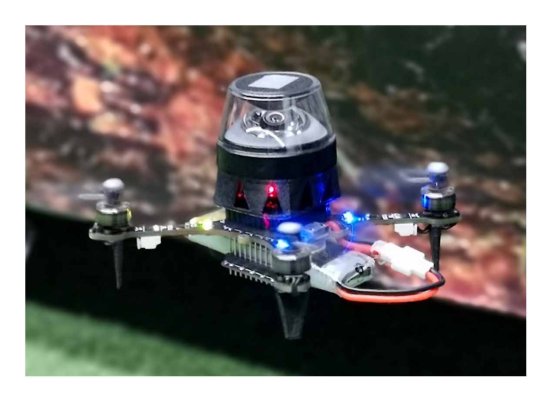
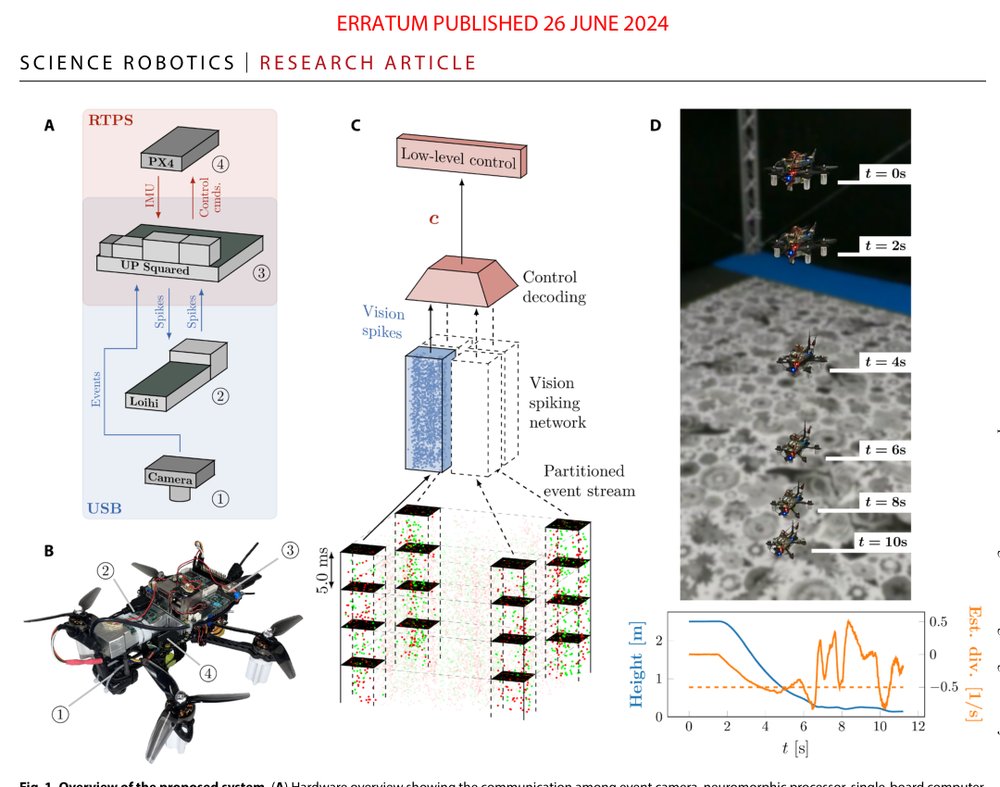
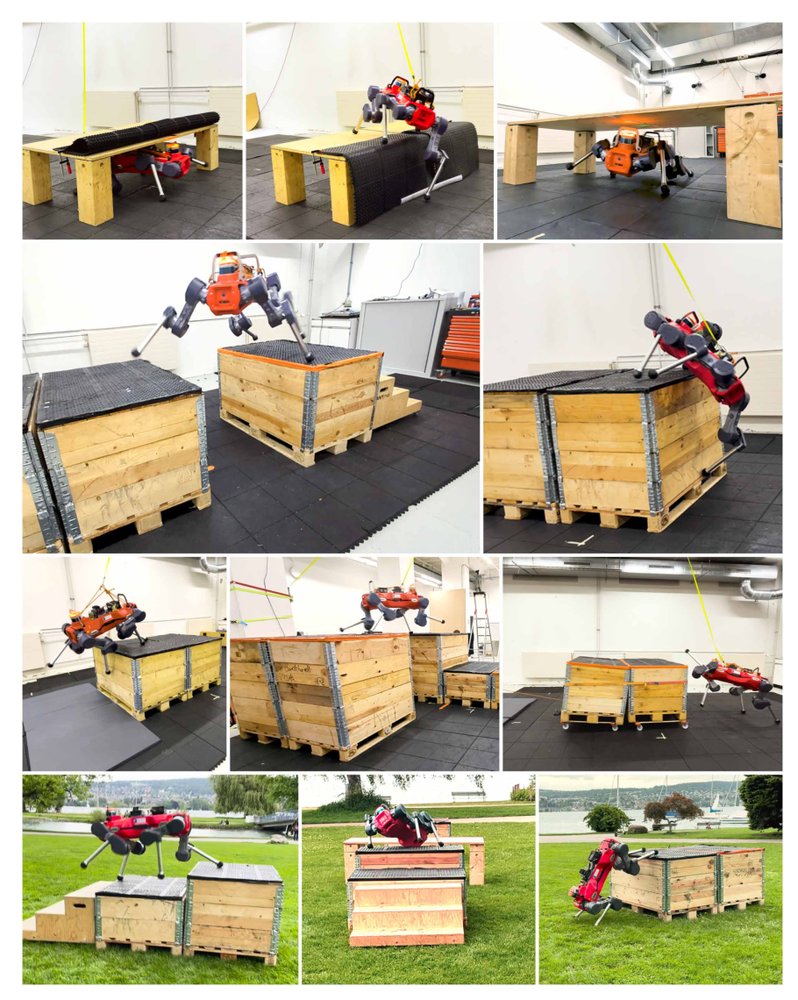
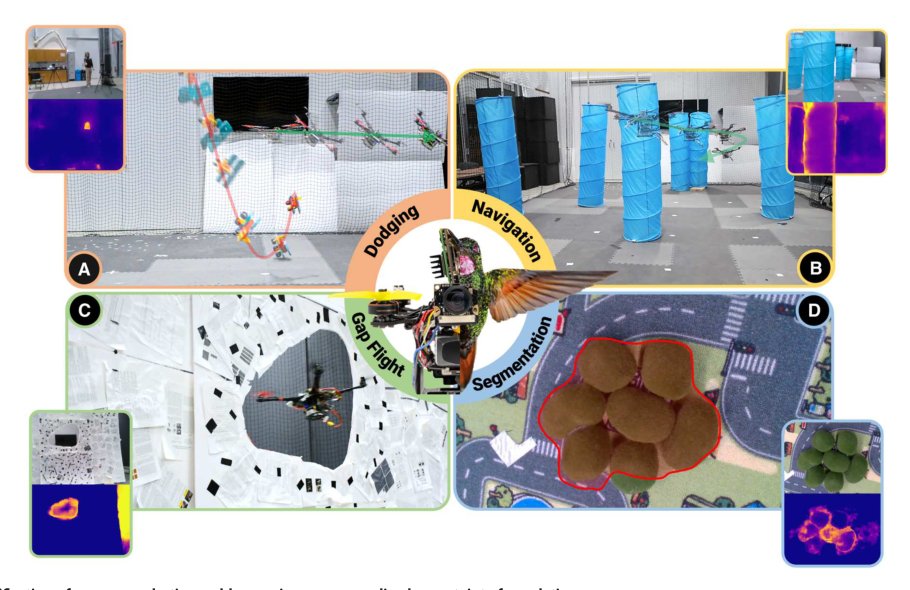
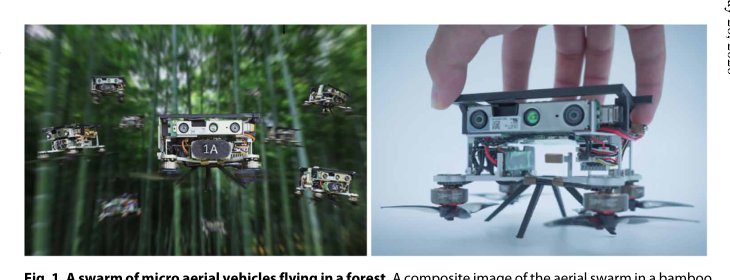
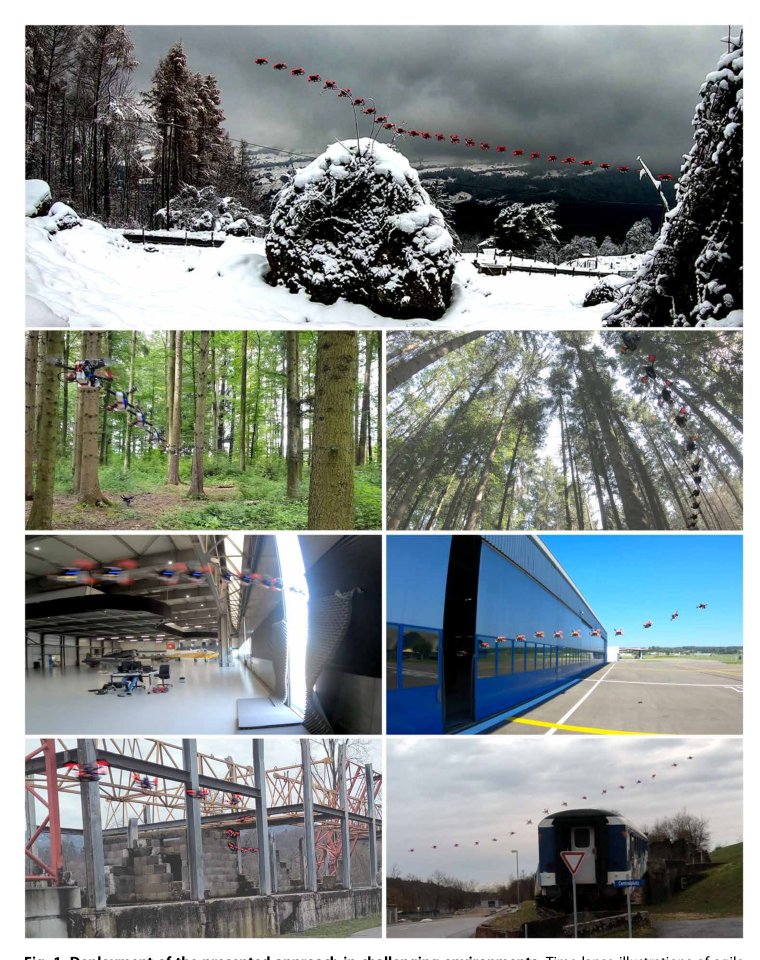
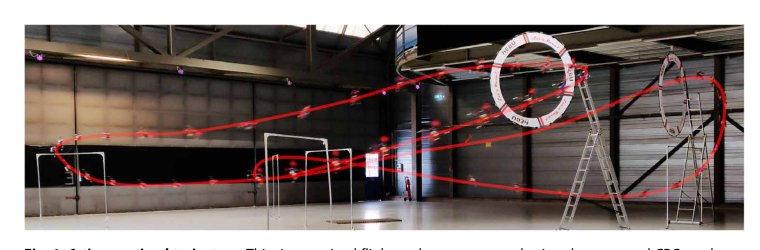
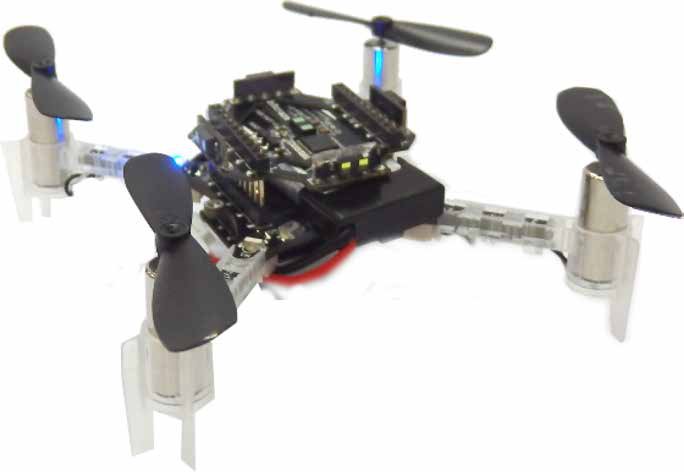
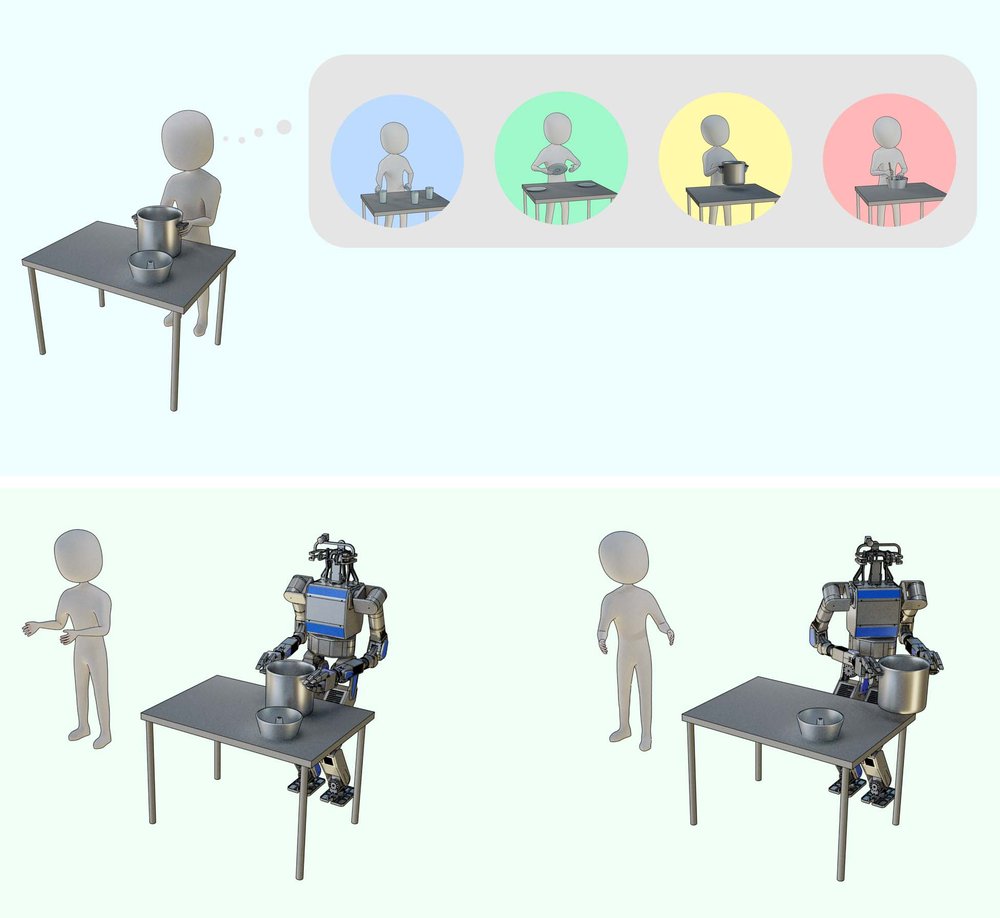
RAPTOR: A foundation policy for quadrotor control Figure 1
Science Robotics2026-05-13

RAPTOR: A foundation policy for quadrotor control

Jonas Eschmann, Dario Albani, Giuseppe Loianno

Department of Electrical Engineering and Computer Sciences (EECS), UC Berkeley, Berkeley, CA 94720, USA, Autonomous Robotics Research Center, Technology Innovation Institute, Abu Dhabi, UAE

移动机器人飞行机器人仿生机器人强化学习机器人

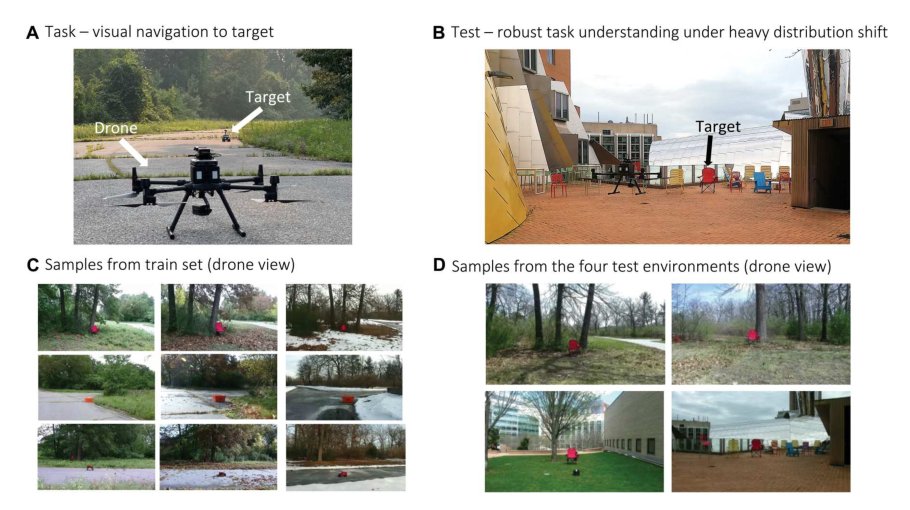
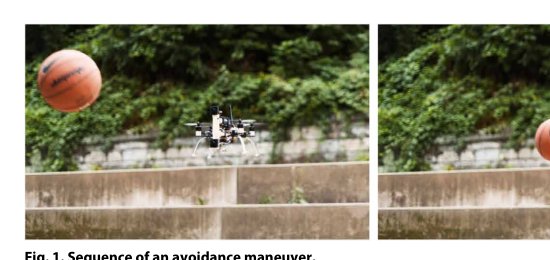
针对四旋翼控制策略常因机体、桨叶或仿真到现实差异而需重新辨识和训练的问题,RAPTOR 将1000个经强化学习训练的“教师”蒸馏为一个带循环隐层的端到端基础策略,使其通过交互历史进行隐式系统辨识。实测中,仅2084参数的三层策略即可在10种32克至2.4千克真实四旋翼上毫秒级零样本适应,并覆盖轨迹跟踪、室内外、风扰、推搡和换桨等条件。

Cross-link collective: Entangled robotic matter with cohesive motion Figure 1
Science Robotics2026-05-13

Cross-link collective: Entangled robotic matter with cohesive motion

Danna Ma, Baxi Chong, Daniel I. Goldman, Kirstin H. Petersen

School of Electrical and Computer Engineering, Cornell University, 455 Hoy Road, Ithaca, NY 14853, USA, Department of Mechanical Engineering, Pennsylvania State University, 226 Reber Building, University Park, PA 16802, USA, School of Physics, Georgia Institute of Technology, 225 North Avenue, Atlanta, GA 30332, USA

软体机器人群体机器人机器人

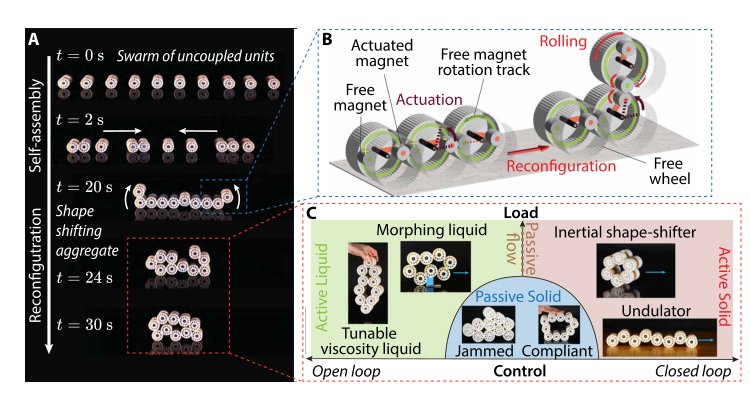
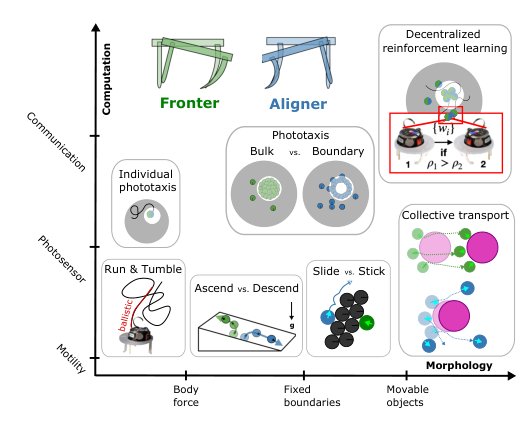
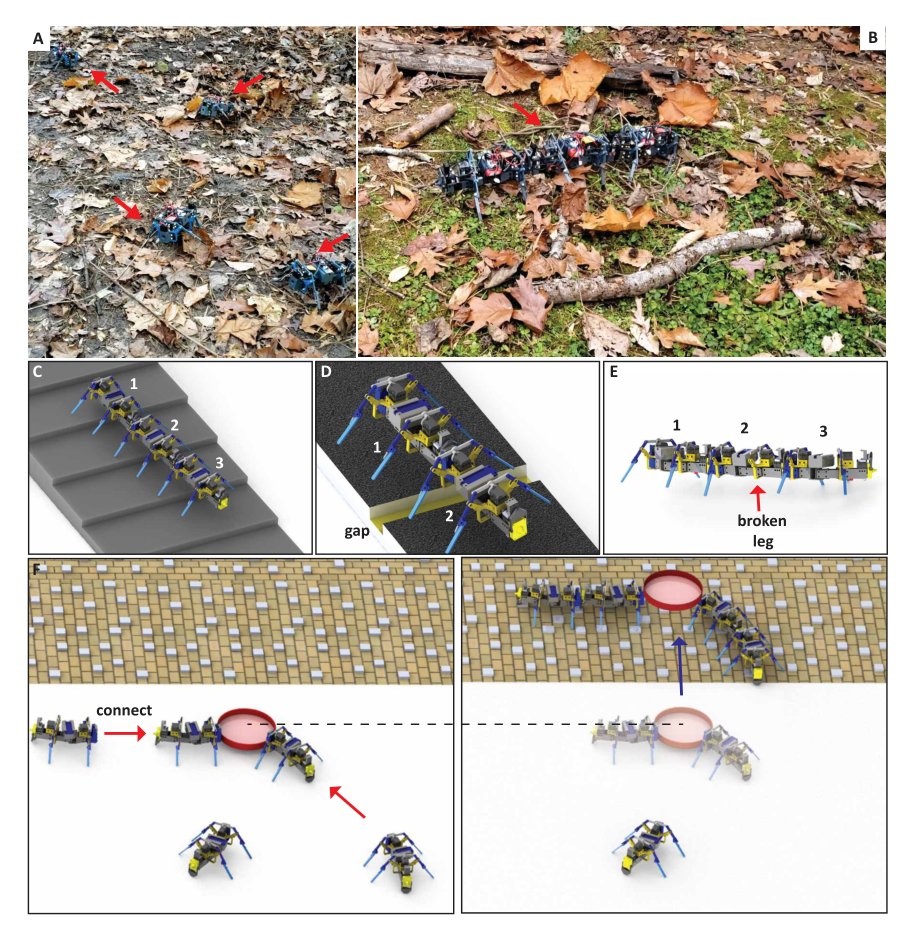
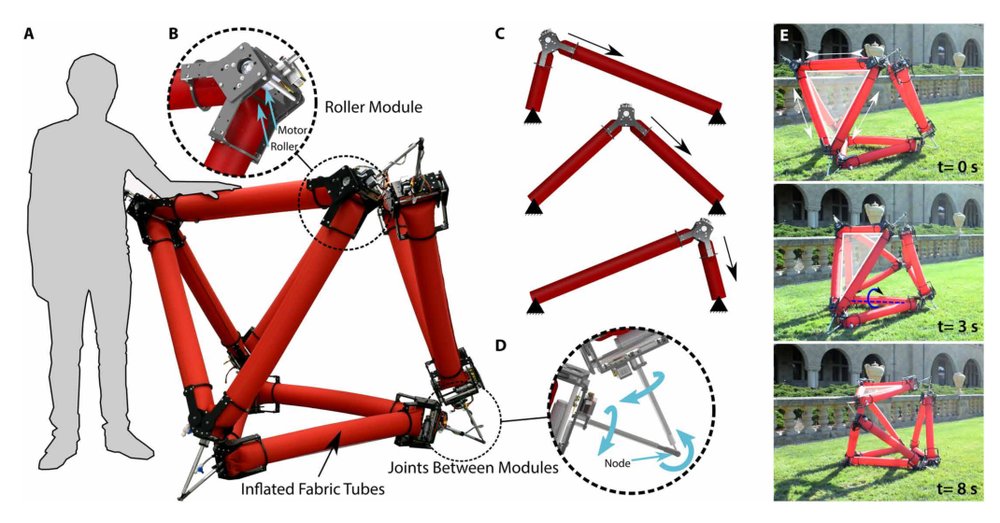
面向无固定连接、低协调群体机器人难以保持凝聚与功能的问题,论文提出受主动凝胶交联启发的 cross-link collective:三连杆模块通过形变产生可逆缠结,形成可断裂重组的链。实验与模型显示,群体会偏好低关节扭矩、相位更合适且运动性能更好的链构型,遇障碍可类似黏性材料流动恢复;加入基于本体感知的简单分布式控制后,长时间运动中的凝聚性进一步提升。

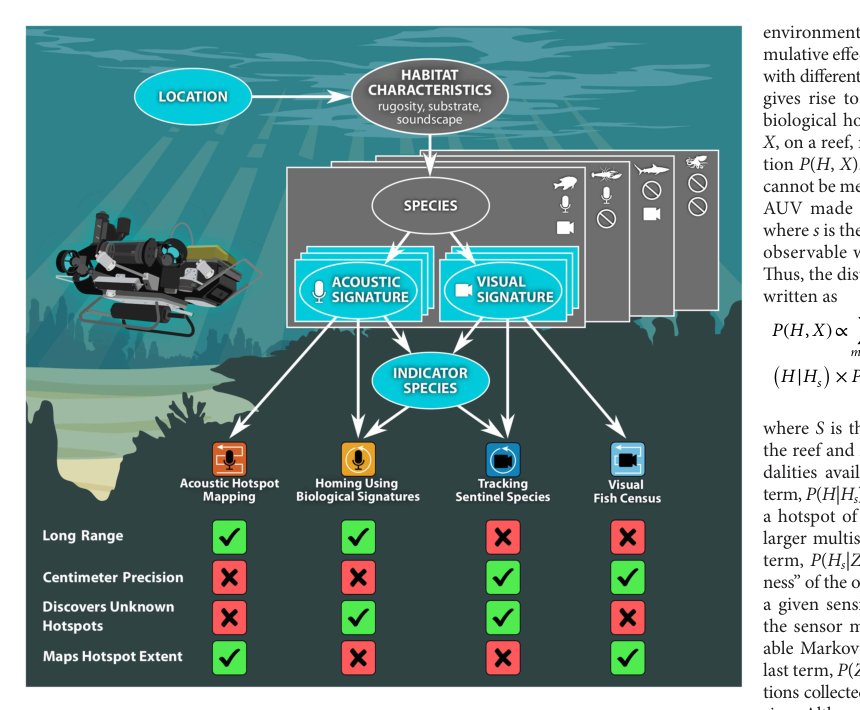
Autonomous seeking and mapping coral reef biodiversity hotspots with a multimodal AUV Figure 1
Science Robotics2026-05-13

Autonomous seeking and mapping coral reef biodiversity hotspots with a multimodal AUV

Seth McCammon, Levi Cai, Daniel Yang, John Walsh, John D. Cast, T. Aran Mooney, Yogesh Girdhar

Applied Ocean Physics and Engineering Department, Woods Hole Oceanographic Institution, Woods Hole, MA, USA, MIT-WHOI Joint Program, Cambridge, MA, USA, Biology Department, Woods Hole Oceanographic Institution, Woods Hole, MA, USA

移动机器人水下机器人强化学习机器人

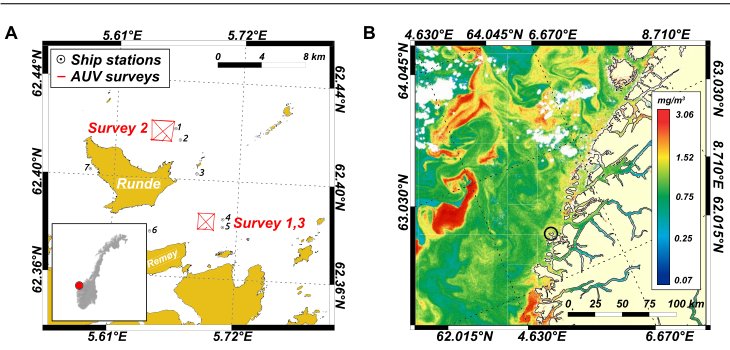
珊瑚礁移动生物的米级异质性难以由潜水员或单一传感器规模化观测。本文把礁区观测生成模型与四类热点发现行为结合到多模态 AUV 中,用被动声学扩大搜索范围、用视觉提高物种与局部定位信息。在加勒比 Joel’s Shoal 实验中,四种行为均指向 Dendrogyra 柱状珊瑚东北侧热点;该区域跨 15 个月保持活跃,视觉鱼类计数约为周边 24.7 倍,声学图也给出约 1.8 倍增强并可在约 25 米外探测。

Transfer learning in robotics: From promises to practice through the emerging role of foundation models Figure 1
Science Robotics2026-04-29

Transfer learning in robotics: From promises to practice through the emerging role of foundation models

Michael C. Welle, Noémie Jaquier, Andrej Gams, Jens Lundell, Danica Kragic

Department of Robotics, Perception and Learning, KTH Royal Institute of Technology, Stockholm, Sweden, Jožef Stefan Institute, Ljubljana, Slovenia, University of Turku, Turku, Finland

视觉语言动作强化学习机器人

本文从机器人迁移学习长期难题出发:如何让能力跨机器人本体、任务和环境复用,而非每次从零学习。核心洞察是基础模型可在语义规划、指令跟随和任务对应等高抽象层提供迁移机制,但必须落地到感知、技能、规划与控制栈。特刊结果显示,多任务预训练能提升分布外鲁棒性并减少任务数据需求,且随规模和多样性增强;但抽象层选择、迁移度量和负迁移安全仍未解决。

How foundation models will revolutionize robot swarms Figure 1
Science Robotics2026-04-29

How foundation models will revolutionize robot swarms

Volker Strobel, Marco Dorigo, Mario Fritz

CISPA Helmholtz Center for Information Security, St. Ingbert, Germany

视觉语言动作群体机器人机器人

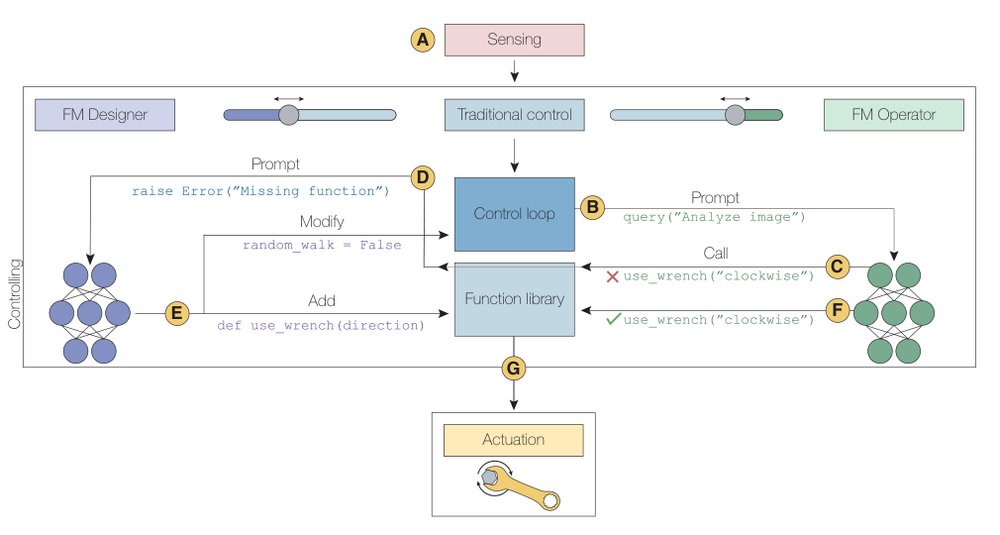
群体机器人依赖专家预先编写分布式控制器,难以应对灾害等开放场景中的突发需求。本文的核心洞察是把基础模型嵌入群体系统:一类作为“设计者”按自然语言、草图或示范生成控制器与任务计划,另一类作为“操作者”结合传感与通信信息驱动协作和人机交互。主要结果是提出了包含代码验证、仿真/实体验证、安全检查及与传统控制融合的路线图;文中未充分说明实验性增益,更多是观点与研究议程。

Beyond alignment: Why robotic foundation models need context-aware safety Figure 1
Science Robotics2026-04-29

Beyond alignment: Why robotic foundation models need context-aware safety

Alexander Robey, Zachary Ravichandran, Eliot Krzysztof Jones, Jared Perlo, Fazl Barez, Vijay Kumar, J. Zico Kolter, Hamed Hassani, George J. Pappas

Machine Learning Department, Carnegie Mellon University, Pittsburgh, PA, USA, Department of Electrical and Systems Engineering, University of Pennsylvania, Philadelphia, PA, USA, Oxford Martin School, University of Oxford, Oxford, UK

视觉语言动作安全机器人

论文关注基础模型进入机器人控制后带来的新风险:同一指令的安全性依赖环境上下文,单纯借鉴聊天机器人的对齐或传统低层控制约束都不够。作者提出面向机器人基础模型的分层、上下文感知安全框架,结合声明式规则、多级安全层和带安全上下文的数据/算法。文中汇总的结果显示,现有系统可被越狱到监视、取武器等危险行为;而引入视觉上下文推理与 CBF 约束后,可比无上下文方法阻止近五倍的不安全行为。

A retrieval-augmented framework enabling VLM spatial awareness for object-centric robot manipulation Figure 1
Science Robotics2026-04-29

A retrieval-augmented framework enabling VLM spatial awareness for object-centric robot manipulation

Kai Chen, Chengkun Li, Chang Tu, Jiahui Pan, Yiyao Ma, Wei Chen, Zhongxiang Zhou, Xuecheng Xu, Stephen James, Chi-Wing Fu, Rong Xiong, Pieter Abbeel, Yun-Hui Liu, Qi Dou

Department of Computer Science and Engineering, Chinese University of Hong Kong, HKSAR, China, Department of Mechanical and Automation Engineering, Chinese University of Hong Kong, HKSAR, China, Zhejiang Humanoid Robot Innovation Center Co. Ltd., Ningbo, Zhejiang, China, Imperial College London, London, UK, College of Control Science and Engineering, Zhejiang University, Hangzhou, Zhejiang, China, University of California, Berkeley, CA, USA

视觉语言动作操作强化学习机器人

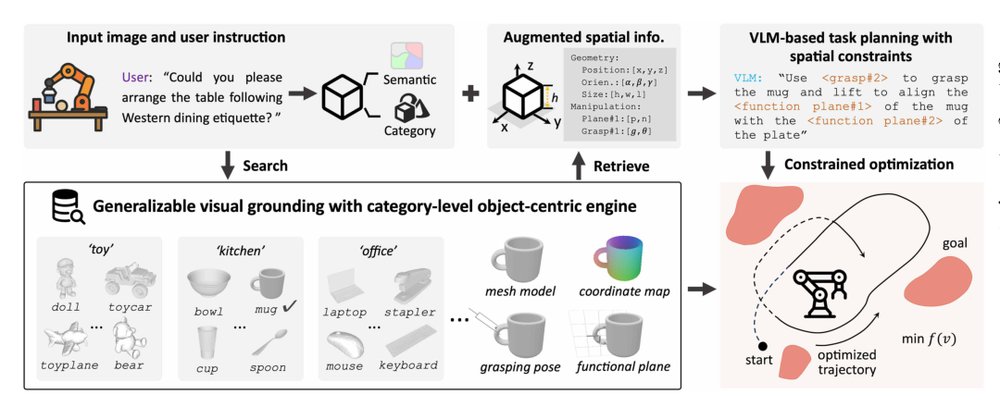
本文针对 VLM 能理解指令却缺少精确 3D 空间与物理约束的问题,提出 RAM:不把几何知识硬塞进模型参数,而是在推理时检索类别级、物体中心的形状模板、坐标、抓取和功能区域,并把这些约束交给 VLM 规划与轨迹优化。实机零样本实验显示其可完成复杂空间语言任务、单张 2D 图像引导操作和碰撞/尺寸约束下重规划,CO3D 评测也表明视觉模块对新类别、形变和遮挡有一定泛化鲁棒性。

Object-centric task representation and transfer using diffused orientation fields Figure 1
Science Robotics2026-04-22

Object-centric task representation and transfer using diffused orientation fields

Cem Bilaloglu, Tobias Löw, Sylvain Calinon

Idiap Research Institute, 1920 Martigny, Switzerland

操作机器人

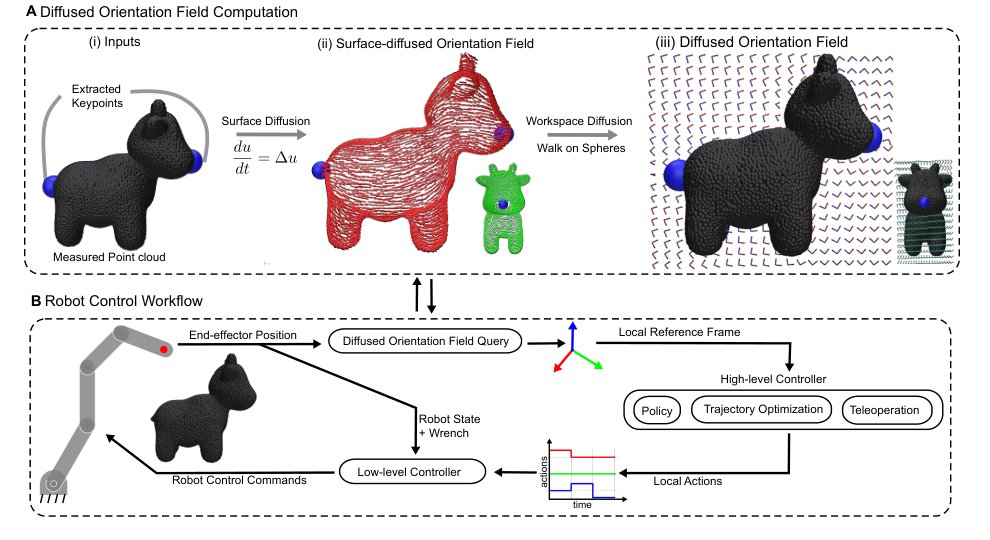
面向香蕉切片、黄瓜削皮等需沿曲面持续接触的操作,论文指出固定物体坐标系难以跨形状迁移,因为曲面缺少全局参考方向。作者用由点云和少量关键点在线扩散得到的平滑局部姿态场,将任务写成形状不变的局部动作。实验在削皮、切片、覆盖及多物体舀倒等场景中展示了对几何、拓扑和关键点扰动的鲁棒迁移,并可接入遥操作、轨迹优化和强化学习控制。

From autonomy to alliance: Robotic foundation models must learn with us, not just for us Figure 1
Science Robotics2026-04-22

From autonomy to alliance: Robotic foundation models must learn with us, not just for us

Sharmita Dey, Robert Riener, Strahinja Dosen, Stefano V. Albrecht

Institute of Robotics and Intelligent Systems (IRIS) - Sensory-Motor Systems Lab, ETH Zurich, Zurich, Switzerland, Department of Health Science and Technology, Aalborg University, Aalborg, Denmark

视觉语言动作群体机器人机器人

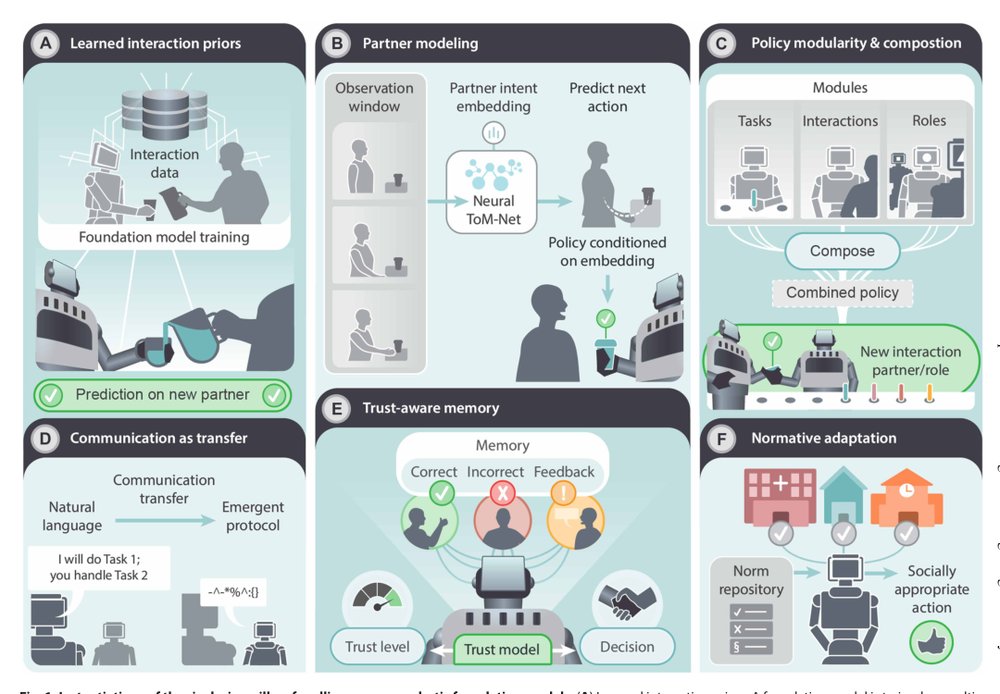
本文针对当前机器人基础模型偏向“单体自主”、难以适应真实人机/多机器人协作的问题,提出从 autonomy 转向 alliance 的设计视角:将跨智能体迁移作为与任务、域迁移同等重要的目标,并以交互先验、伙伴建模、可组合策略、规范适应、信任记忆和通信六个支柱支撑。主要结果是形成一套面向协作泛化的模型与评测路线,而非报告新系统实证增益。

Demonstrate once, execute on many: Kinematic intelligence for cross-robot skill transfer Figure 1
Science Robotics2026-04-15

Demonstrate once, execute on many: Kinematic intelligence for cross-robot skill transfer

Sthithpragya Gupta, Durgesh Haribhau Salunkhe, Aude Billard

Learning Algorithms and Systems Laboratory, École Polytechnique Fédérale de Lausanne, Lausanne 1015, Switzerland

飞行机器人强化学习安全机器人

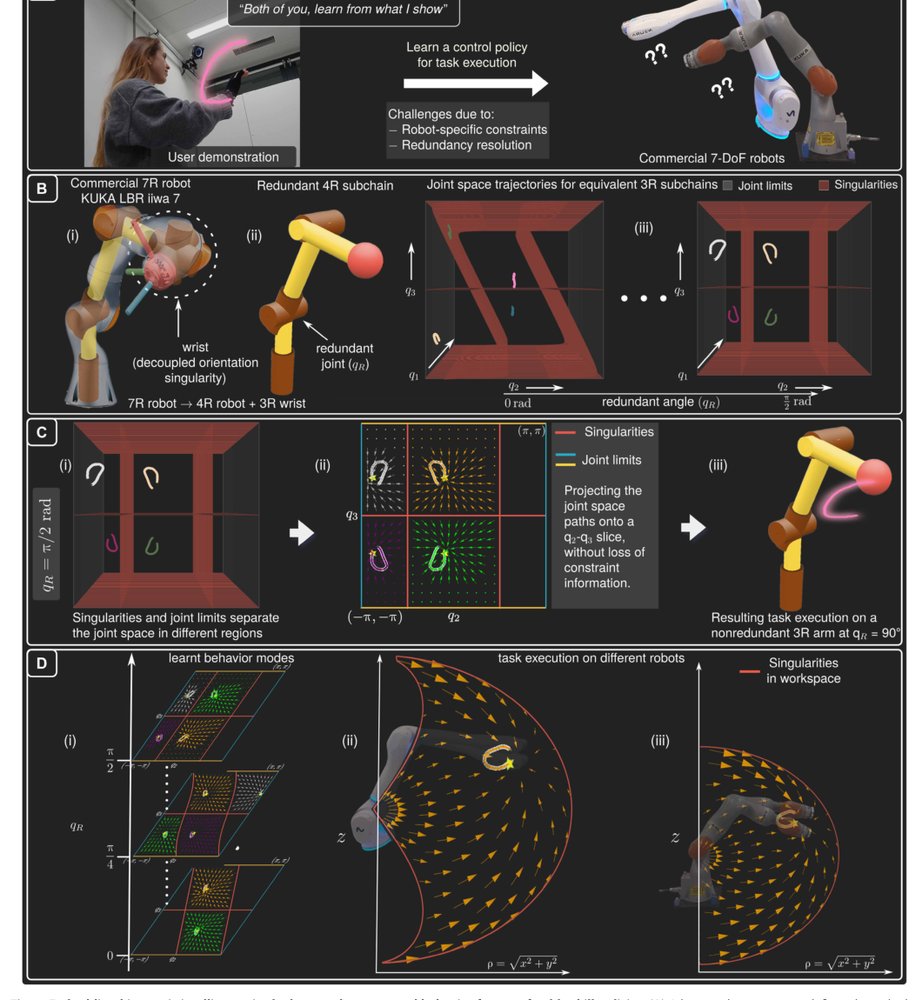
这篇论文针对示教学习通常绑定单一机器人、换机型后易因关节限位和奇异位形失效的问题,提出把“运动学智能”直接嵌入控制策略:从少量示教中学习全局稳定动力系统,并基于非尖点 3R 机构的解析分类生成约束感知的关节空间策略。实验在多种仿真 3R 机器人及 KUKA、Maira 等 7 自由度真机上验证,技能可在不同连杆和关节配置间安全迁移且无需重新调参。

A careful examination of large behavior models for multitask dexterous manipulation Figure 1
Science Robotics2026-04-15

A careful examination of large behavior models for multitask dexterous manipulation

Jose Barreiros, Andrew Beaulieu, Aditya Bhat, Rick Cory, Eric Cousineau, Hongkai Dai, Ching-Hsin Fang, Kunimatsu Hashimoto, Muhammad Zubair Irshad, Masha Itkina, Naveen Kuppuswamy, Kuan-Hui Lee, Katherine Liu, Dale McConachie, Ian McMahon, Haruki Nishimura, Calder Phillips-Grafflin, Charles Richter, Paarth Shah, Krishnan Srinivasan, Blake Wulfe, Chen Xu, Mengchao Zhang, Alex Alspach, Maya Angeles, Kushal Arora, Vitor Campagnolo Guizilini, Alejandro Castro, Dian Chen, Ting-Sheng Chu, Sam Creasey, Sean Curtis, Richard Denitto, Emma Dixon, Eric Dusel, Matthew Ferreira, Aimee Goncalves, Grant Gould, Damrong Guoy, Swati Gupta, Xuchen Han, Kyle Hatch, Brendan Hathaway, Allison Henry, Hillel Hochsztein, Phoebe Horgan, Shun Iwase, Donovon Jackson, Siddharth Karamcheti, Sedrick Keh, Joseph Masterjohn, Masayuki Masuda, Jean Mercat, Patrick Miller, Paul Mitiguy, Tony Nguyen, Jeremy Nimmer, Yuki Noguchi, Reko Ong, Aykut Onol, Owen Pfannenstiehl, Richard Poyner, Leticia Priebe Mendes Rocha, Gordon Richardson, Christopher Rodriguez, Derick Seale, Michael Sherman, Mariah Smith-Jones, David Tago, Pavel Tokmakov, Matthew Tran, Basile Van Hoorick, Igor Vasiljevic, Sergey Zakharov, Mark Zolotas, Rareș Ambruș, Kerri Fetzer-Borelli, Benjamin Burchfiel, Hadas Kress-Gazit, Siyuan Feng, Stacie Ford, Russ Tedrake

Toyota Research Institute, Cambridge, MA 02139, USA, Cornell University, Ithaca, NY 14850, USA, Massachusetts Institute of Technology, Cambridge, MA 02139, USA

视觉语言动作操作强化学习机器人

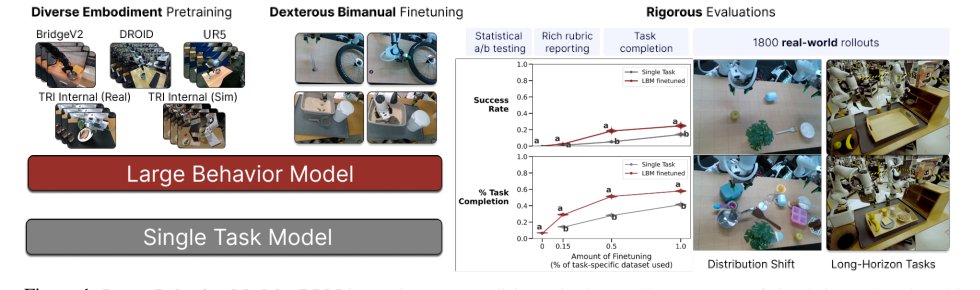
针对大型行为模型在机器人灵巧操作中真实收益难以量化的问题,论文固定扩散策略架构,在约1700小时、500余任务的仿真与真实数据上训练LBM,并用盲测随机A/B和1800次真实试验建立统计评估。结果显示,多任务预训练能减少新任务所需示教数据、提升同数据量下成功率,并在分布外条件更稳健;性能随数据规模与多样性增加而可预测提升。

The forgotten spectrum: Reviving ultrasound for robust autonomy Figure 1
Science Robotics2026-03-25

The forgotten spectrum: Reviving ultrasound for robust autonomy

Xin Zhou, Fei Gao

College of Control Science and Engineering, Zhejiang University, Hangzhou, China, Differential Robotics (Hangzhou) Technology Co. Ltd., Hangzhou, China

机器人机器人学习

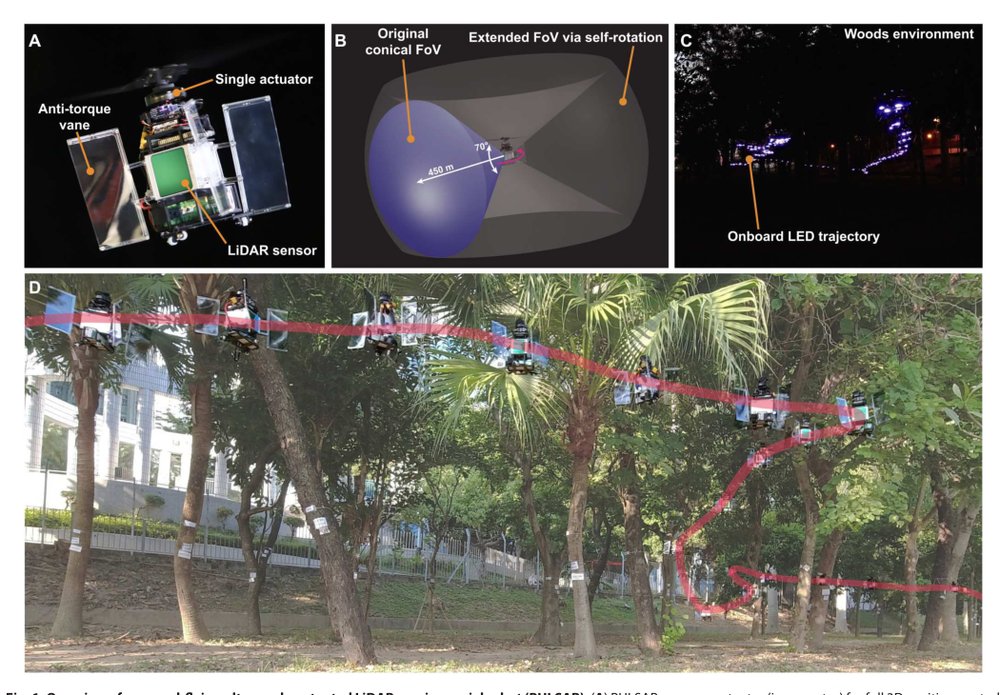
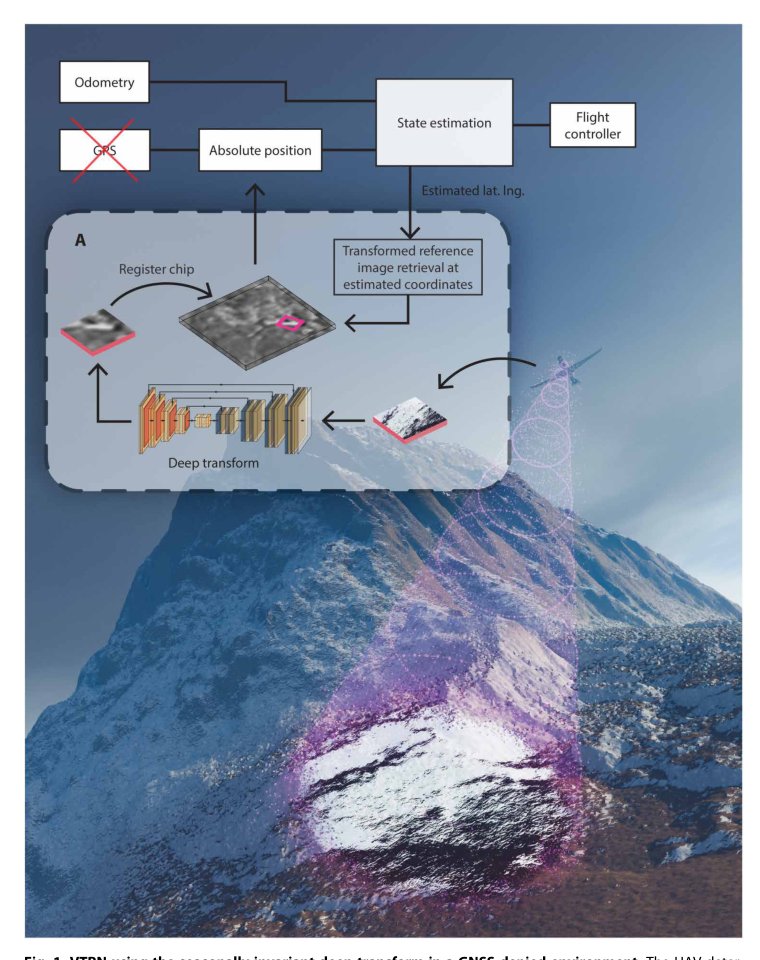
针对烟雾、黑暗、雪雾、强眩光及透明/细小障碍物下视觉和激光雷达易失效的问题,文章借 Saranga 说明超声并非只能做近距避障:通过低功耗双超声硬件、物理抑制螺旋桨噪声与基于长时序回波的深度去噪,可在掌上四旋翼上以约 1.2 mW 感知功耗、机载计算完成雾中、暗处、雪中和杂乱环境导航,提示应按目标场景中可靠的物理信号选择传感器。

Milliwatt ultrasound for navigation in visually degraded environments on palm-sized aerial robots Figure 1
Science Robotics2026-03-25

Milliwatt ultrasound for navigation in visually degraded environments on palm-sized aerial robots

Manoj Velmurugan, Phillip Brush, Colin Balfour, Richard J. Przybyla, Nitin J. Sanket

Perception and Autonomous Robotics (PeAR) Group, Worcester Polytechnic Institute, Worcester, MA 01609, USA, TDK InvenSense, Berkeley, CA 94710, USA

移动机器人飞行机器人仿生机器人强化学习微型机器人

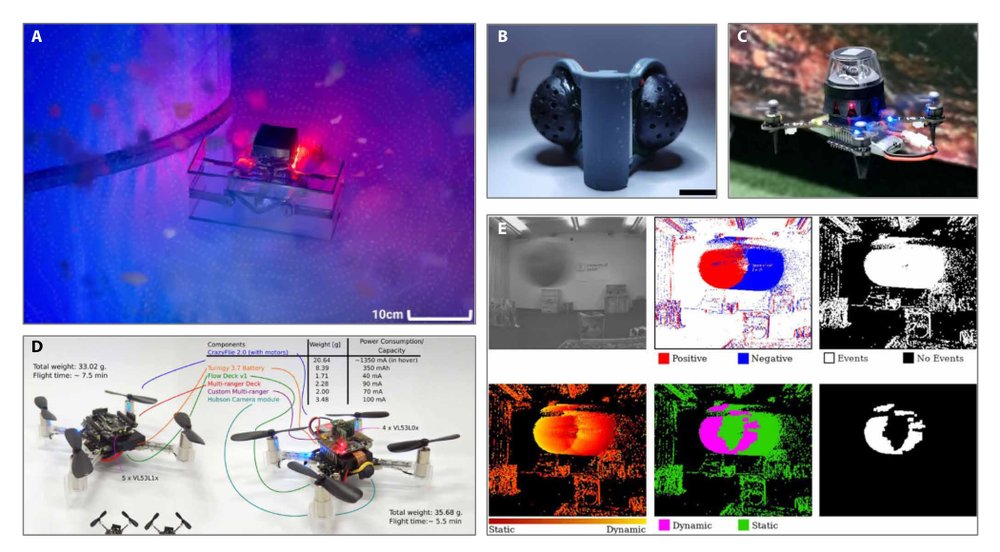
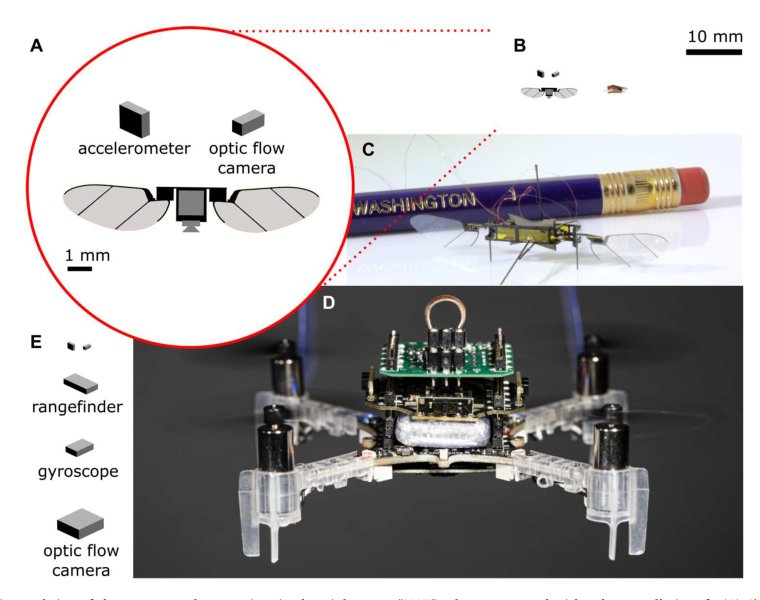
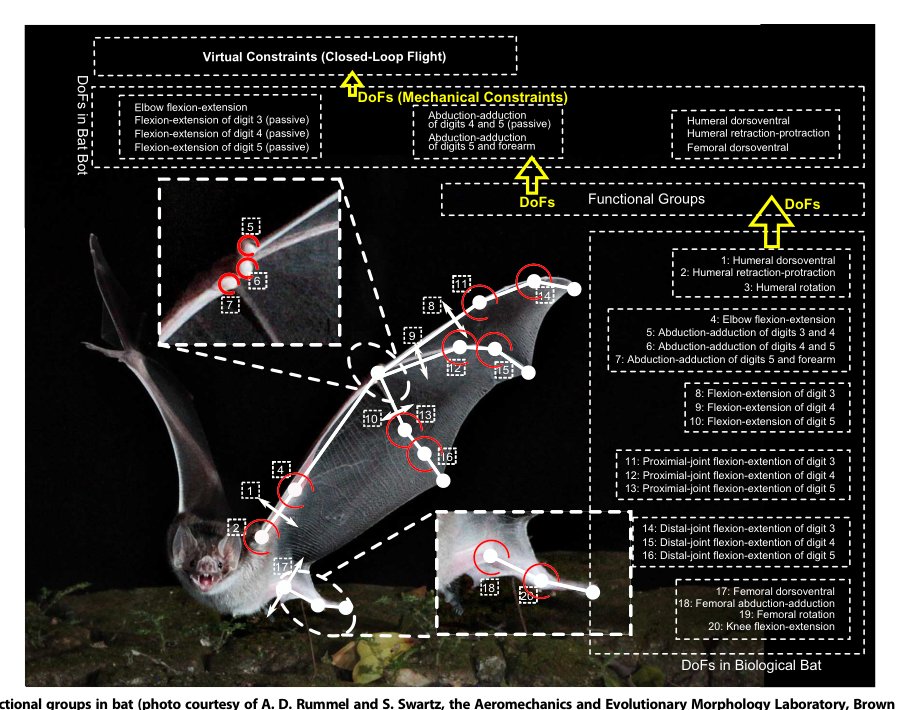
面向雾、暗光、雪尘等视觉退化且GPS受限场景中掌上无人机难以携带高功耗传感器的问题,论文提出仿蝙蝠的Saranga双超声感知栈:用物理结构抑制桨噪,并以合成数据结合少量真实噪声训练网络,从低信噪比回波中恢复障碍信息。系统仅约1.2 mW感知功耗,在160 mm四旋翼上实现机载避障导航,可穿越含细小和透明障碍的复杂环境。

Electrofluidic fiber muscles Figure 1
Science Robotics2026-03-25

Electrofluidic fiber muscles

O. K. Afsar, G. Pupillo, G. Vitucci, W. Babatain, H. Ishii, V. Cacucciolo

Tangible Media Group, Massachusetts Institute of Technology, Cambridge, MA 02139, USA, RoboPhysics Laboratory (RPL), Politecnico di Bari, Bari, Italy

操作水下机器人软体机器人群体机器人机器人

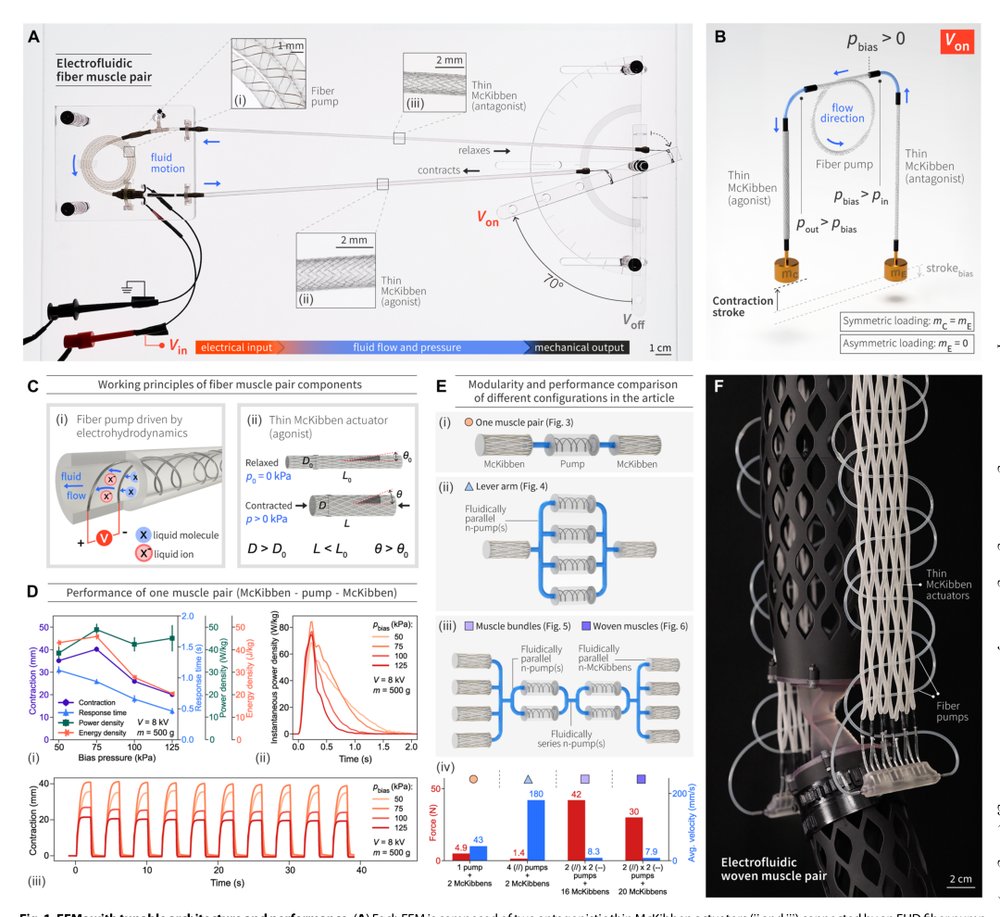
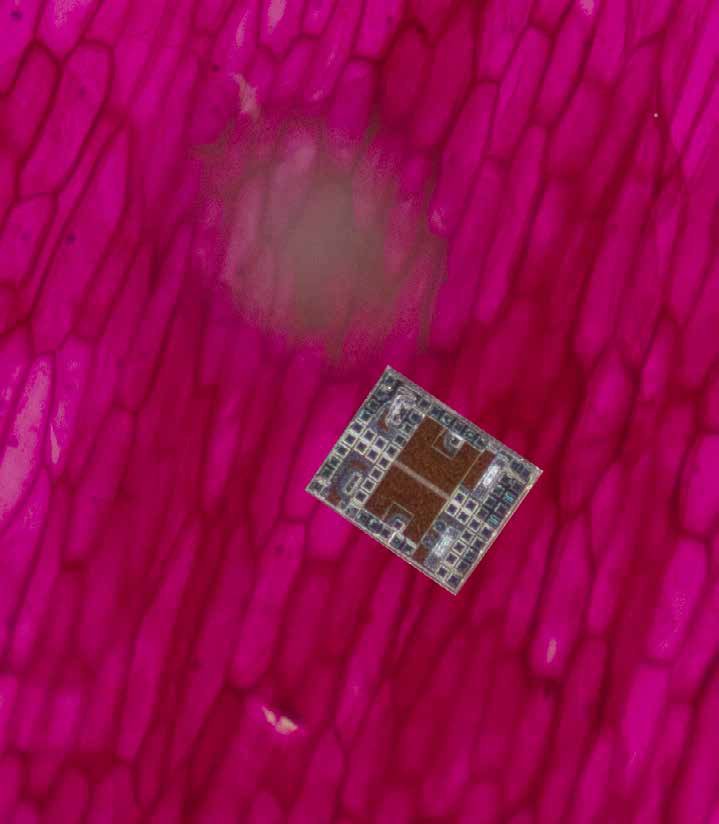
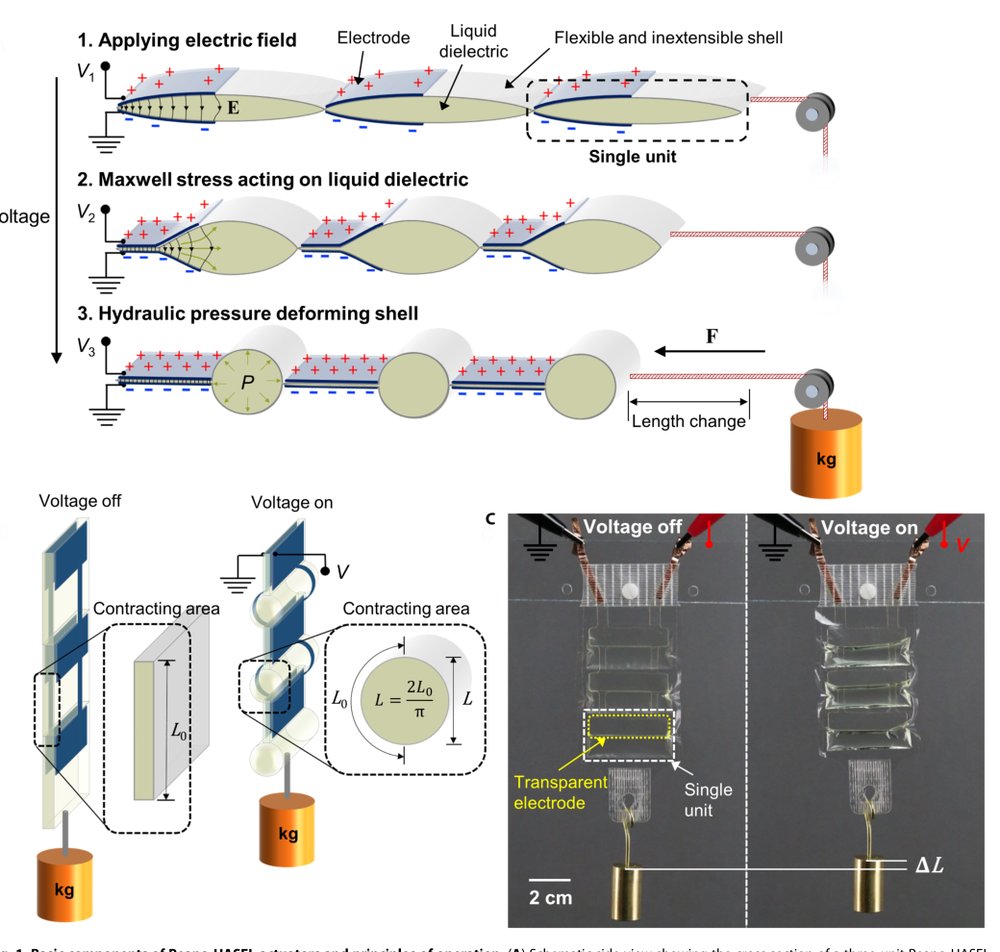
针对传统电机形态笨重、流体软执行器依赖外部泵阀而难以分布式集成的问题,论文提出闭环电流体纤维肌肉:用电流体纤维泵驱动一对拮抗 McKibben 细管,并通过预加偏置压力抑制空化、放大行程。该肌肉直径约 1–2 mm,达到约 20% 收缩、0.3 s 响应和接近骨骼肌的 50 W/kg 功率密度;通过纤维捆绑和泵/执行器配比,还展示了快速抛射、举起 4 kg 负载和柔顺握手机械臂。

Cross-robot behavior adaptation through intention alignment Figure 1
Science Robotics2026-03-18

Cross-robot behavior adaptation through intention alignment

Xi Chen, Yuan Gao, Hangxin Liu, Fangkai Yang, Ali Ghadirzadeh, Jun Yang, Bin Liang, Chongjie Zhang, Tin Lun Lam, Song-Chun Zhu

State Key Laboratory of General Artificial Intelligence, Beijing Institute for General Artificial Intelligence (BIGAI), Beijing, China, School of Science and Engineering, Chinese University of Hong Kong, Shenzhen, China, Shenzhen Institute of Artificial Intelligence and Robotics for Society, Shenzhen, China, School of Intelligence Science and Technology, Peking University, Beijing, China, Microsoft, Beijing, China, Department of Automation, Tsinghua University, Beijing, China, McKelvey School of Engineering, Washington University in St. Louis, St. Louis, MO, USA

移动机器人强化学习安全机器人

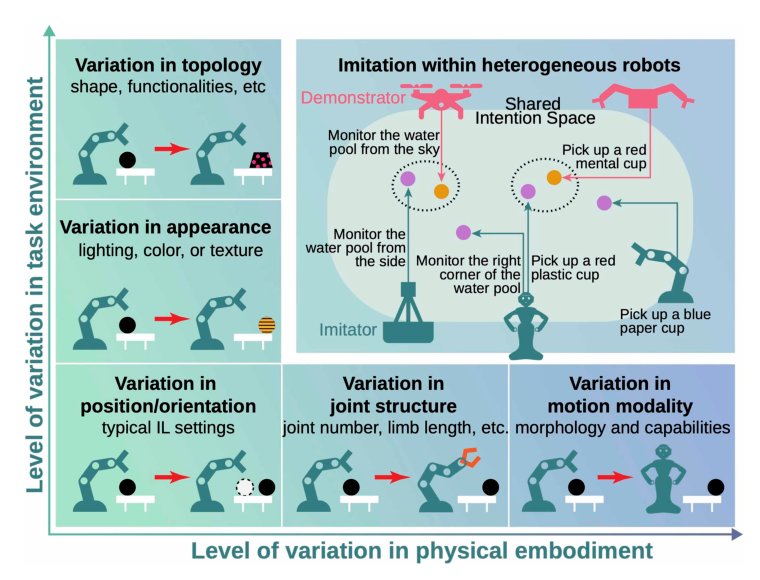
这篇论文针对传统模仿学习依赖同构机器人、相同环境和动作对应关系的问题,提出 IAIL:用自然语言标注的高层“意图”对齐运动嵌入,让不同形态机器人在推理时从自身技能库中选择最能实现同一目标的行为,并扩展到异构团队的能力感知任务分配。作者在 7 种真实机器人、30 个多步协作场景中验证了跨形态、跨运动模态和不同队伍配置下的任务完成能力,并在仿真中优于两个基线。

Robot-mediated haptic feedback outperforms vision in violin duo coordination Figure 1
Science Robotics2026-03-11

Robot-mediated haptic feedback outperforms vision in violin duo coordination

Aleksandra Michałko, Francesco Di Tommaso, Emanuele Peperoni, Stefano L. Capitani, Alessia Noccaro, Andrea Parri, Canan Gener, Roberto Conti, Nicola Di Stefano, Nevio Luigi Tagliamonte, Lorenzo Grazi, Francesco Giovacchini, Simona Crea, Emilio Trigili, Nicola Vitiello, Marc Leman, Domenico Formica

Faculty of Arts and Philosophy, IPEM Institute of Psychoacoustics and Electronic Music, Ghent University, Ghent, Belgium, Research Unit of Advanced Robotics and Human-Centred Technologies, Università Campus Bio-Medico di Roma, Rome, Italy, BioRobotics Institute, Scuola Superiore Sant’Anna, Pontedera, Italy, Neurorobotics Lab, School of Engineering, Newcastle University, Newcastle upon Tyne, UK, Institute of Cognitive Sciences and Technologies, National Research Council, Rome, Italy, NeXTlab: Neurophysiology and Neuroengineering of Human-Technology Interaction Research Unit, Università Campus Bio-Medico di Roma, Rome, Italy

飞行机器人触觉强化学习安全机器人

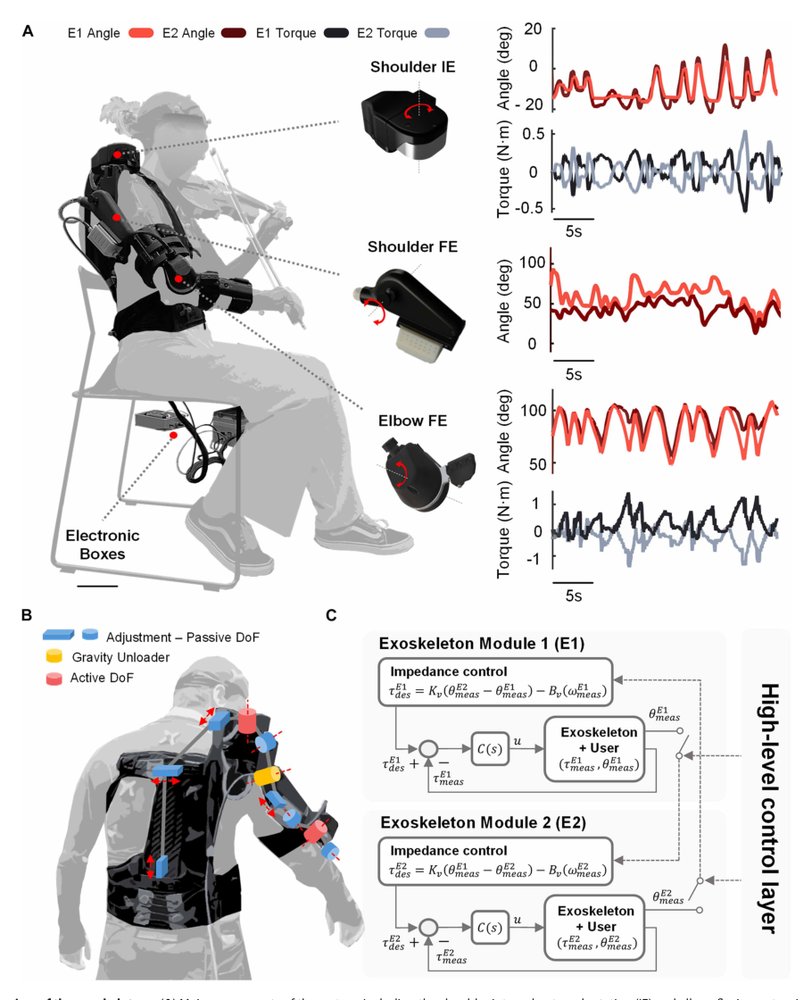
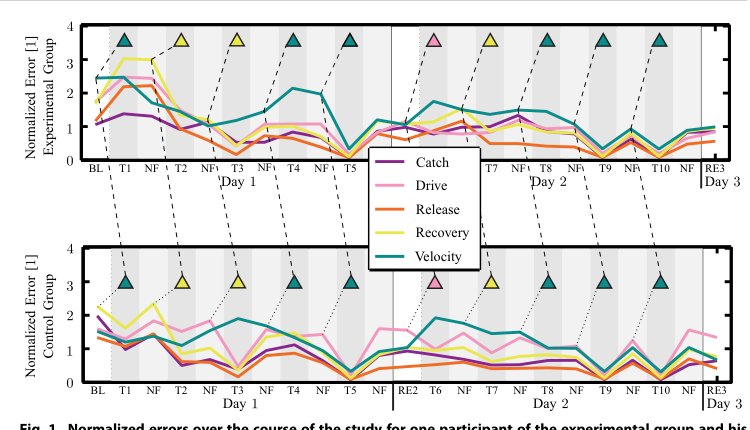
该研究针对真实协作中触觉是否能超越传统视听线索这一空白,构建双向耦合的两自由度上肢外骨骼,将搭档关节角差转化为柔顺力矩用于小提琴二重奏。20组乐手在四种反馈条件下实验显示,含触觉条件在弓法与关节时空协调、音乐动态对齐上优于仅加视觉,视听触觉组合最佳,且专业乐手受益更明显,说明隐式具身触觉可有效增强精细人际协同。

Fly motion vision maximizes signal energy transfer between mechanical input and sensor output Figure 1
Science Robotics2026-03-11

Fly motion vision maximizes signal energy transfer between mechanical input and sensor output

J. Sean Humbert, Holger G. Krapp, James D. Baeder, Camli Badrya, Inés L. Dawson, Jiaqi V. Huang, Andrew Hyslop, Yong Su Jung, Alix Leroy, Cosima Lutkus, Beth Mortimer, Indira Nagesh, Clément Ruah, Simon M. Walker, Yingjie Yang, Rafal W. Żbikowski, Graham K. Taylor

Department of Mechanical Engineering, University of Colorado, Boulder, CO, USA, Department of Bioengineering, Imperial College London, London, UK, Department of Aerospace Engineering, University of Maryland, College Park, MD, USA, Department of Mechanical and Aerospace Engineering, University of California, Davis, CA, USA, Department of Biology, University of Oxford, Oxford, UK, European Space Agency, Noordwijk, Netherlands, Department of Aerospace Engineering, Pusan National University, Busan, South Korea, School of Biomedical Sciences, University of Leeds, Leeds, UK, School of Aerospace, Transport and Manufacturing, Cranfield University, Cranfield, Bedford, UK

飞行机器人仿生机器人机器人

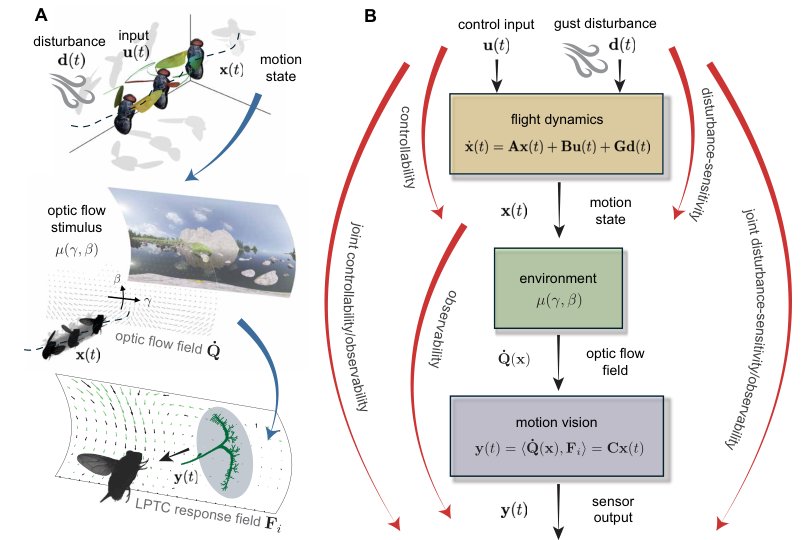
论文关注昆虫为何能以极低计算和能耗完成不稳定敏捷飞行。作者将丽蝇飞行动力学、阵风/控制输入与LPTC运动视觉输出统一为状态空间模型,并用Gramian与Hankel奇异值检验“模态感知”假说。结果显示,丽蝇视觉调谐并非单纯优化状态估计,而是对齐最易被控制和扰动激发、且最可观测的自运动方向,最大化机械输入到传感输出的信号能量传递。

Low-voltage and high-output dielectric elastomer actuators for untethered soft machines working at 200 volts Figure 1
Science Robotics2026-02-25

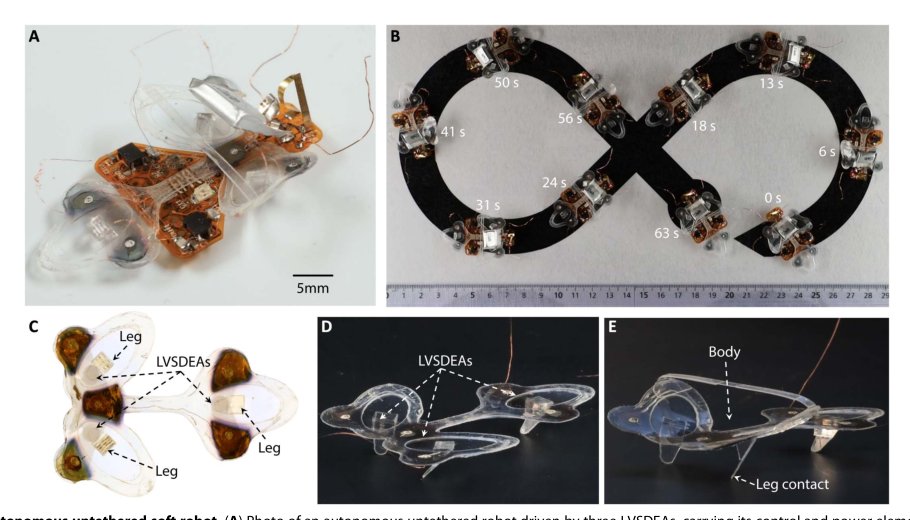
Low-voltage and high-output dielectric elastomer actuators for untethered soft machines working at 200 volts

Junbo Peng, Jiangshan Zhuo, Hongcheng Qiu, Ofoq Normahmedov, Mengke Shi, Huifeng Dong, Lvting Wang, Shengchao Jiang, Jiang Zou, Guoying Gu, Tiefeng Li, Weifei Fu, Boyu Peng, Hanzhi Ma, Ye Shi

College of Mechanical Engineering, Zhejiang University, Hangzhou 310000, China, ZJU-UIUC Institute, Zhejiang University, Haining 314400, China, Center for X-Mechanics, Department of Engineering Mechanics, Zhejiang University, Hangzhou 310027, China, Department of Polymer Science and Engineering, Zhejiang University, Hangzhou 310000, China, Robotics Institute and State Key Laboratory of Mechanical System and Vibration, School of Mechanical Engineering, Shanghai Jiao Tong University, Shanghai 200240, China, Zhejiang University-Hangzhou Global Scientific and Technological Innovation Center, Hangzhou 311200, China, MOE Key Laboratory of Macromolecular Synthesis and Functionalization, Zhejiang University, Hangzhou 310027, China

软体机器人机器人

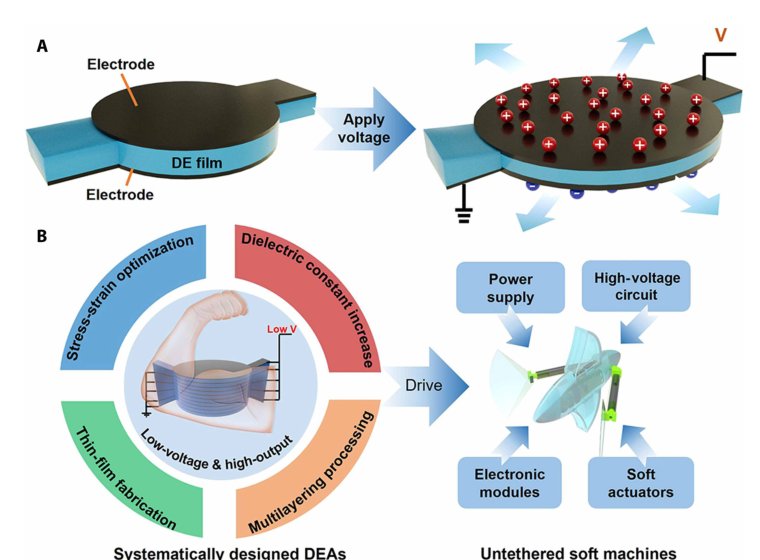
介电弹性体执行器虽具高应变和高能量密度,但千伏驱动限制了无缆软体机器人应用。本文通过LiTFSI增强的双峰网络HK-PHDE材料、10微米级薄膜与可扩展干法叠层,同时降低电压并放大输出;器件在无需预拉伸或共振下于20 V/μm实现38.4 J/kg、452 W/kg,并驱动可穿戴流体回路、软体鱼和爬行机器人在200 V无缆运行。

Scalable robot collective resilience by sharing resources Figure 1
Science Robotics2026-02-11

Scalable robot collective resilience by sharing resources

Kevin Holdcroft, Anastasia Bolotnikova, Antoni Jubés Monforte, Jamie Paik

Reconfigurable Robotics Lab, Ecole Polytechnique Fédérale de Lausanne (EPFL), Lausanne, Switzerland, Laboratory of Sustainability Robotics, EPFL, and Swiss Federal Laboratories for Materials Science and Technology (Empa), Lausanne, Switzerland, Laboratory for Analysis and Architecture of Systems (LAAS), CNRS, Toulouse, France

移动机器人群体机器人机器人

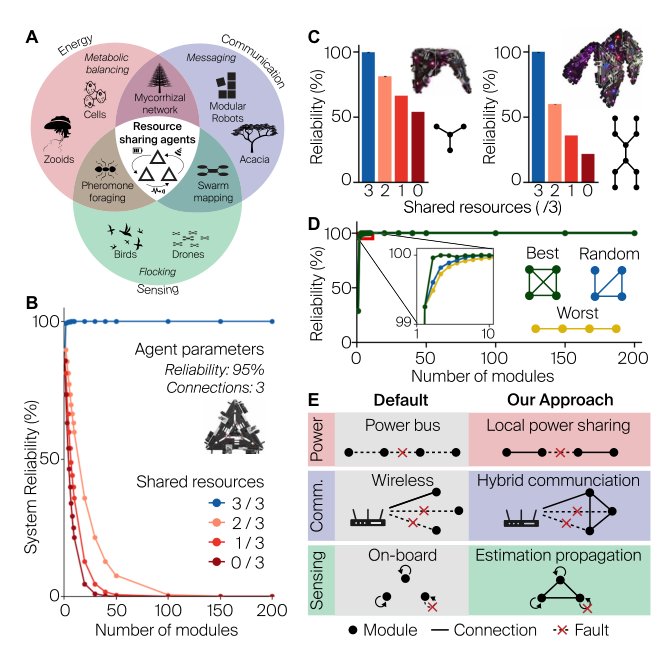
针对模块化/群体机器人中“模块越多越灵活但失效率越高”的矛盾,本文提出局部资源共享范式,把电力、通信和感知作为可在相邻模块间传播的冗余资源:被动功率共享、混合局部通信与分布式传感融合共同避免中心瓶颈。作者在 Mori3 模块机器人上验证,即使一个模块同时失去供电、通信和感知,邻近模块仍能支撑整体完成复杂地形运动任务,并显示共享全部关键资源可反转随规模增加的可靠性下降趋势。

Bioinspired adaptive pupil reflex based on liquid-metal shape-shifters for machine vision Figure 1
Science Robotics2026-02-11

Bioinspired adaptive pupil reflex based on liquid-metal shape-shifters for machine vision

Kun Liang, Rui Wang, Gavin Lyda, Anran Zhang, Wanrong Xie, Yihang Wang, Sicheng Xing, Yizhang Wu, Zhibo Zhang, Yihan Liu, Michael D. Dickey, Bowen Zhu, Wubin Bai

Department of Applied Physical Sciences, University of North Carolina at Chapel Hill, Chapel Hill, NC 27514, USA, Zhejiang Key Laboratory of 3D Micro/Nano Fabrication and Characterization, Department of Electronic and Information Engineering, School of Engineering, Westlake University, Hangzhou, Zhejiang 310030, China, Department of Computer Science and Engineering, Michigan State University, East Lansing, MI 48824, USA, Department of Chemical and Biomolecular Engineering, North Carolina State University, Raleigh, NC 27606, USA

移动机器人仿生机器人机器人

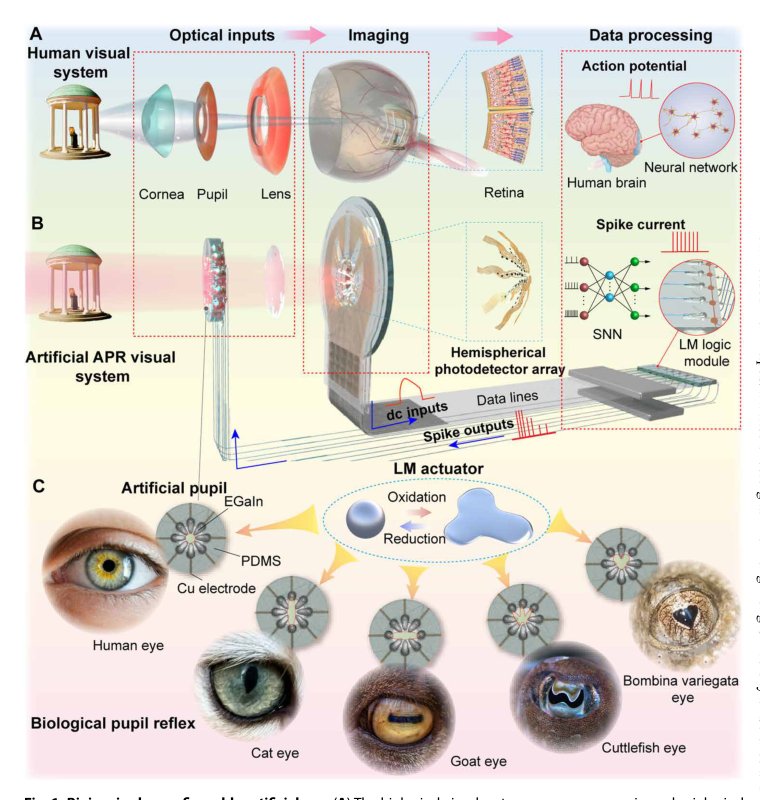
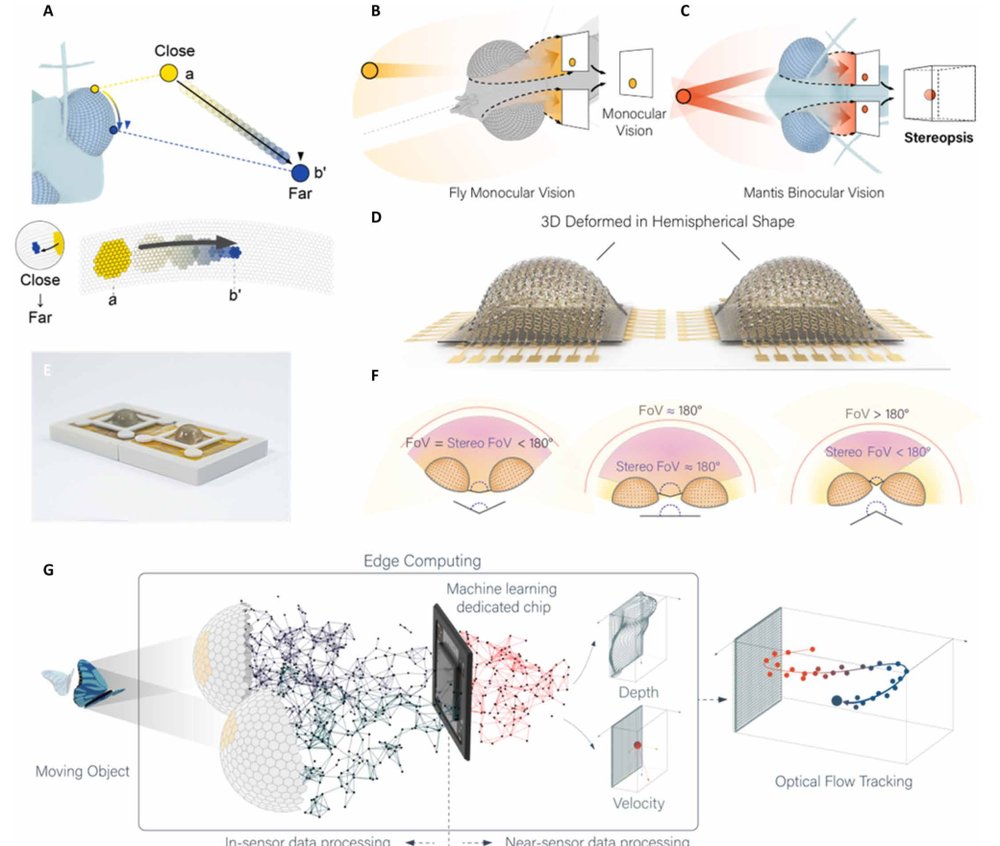
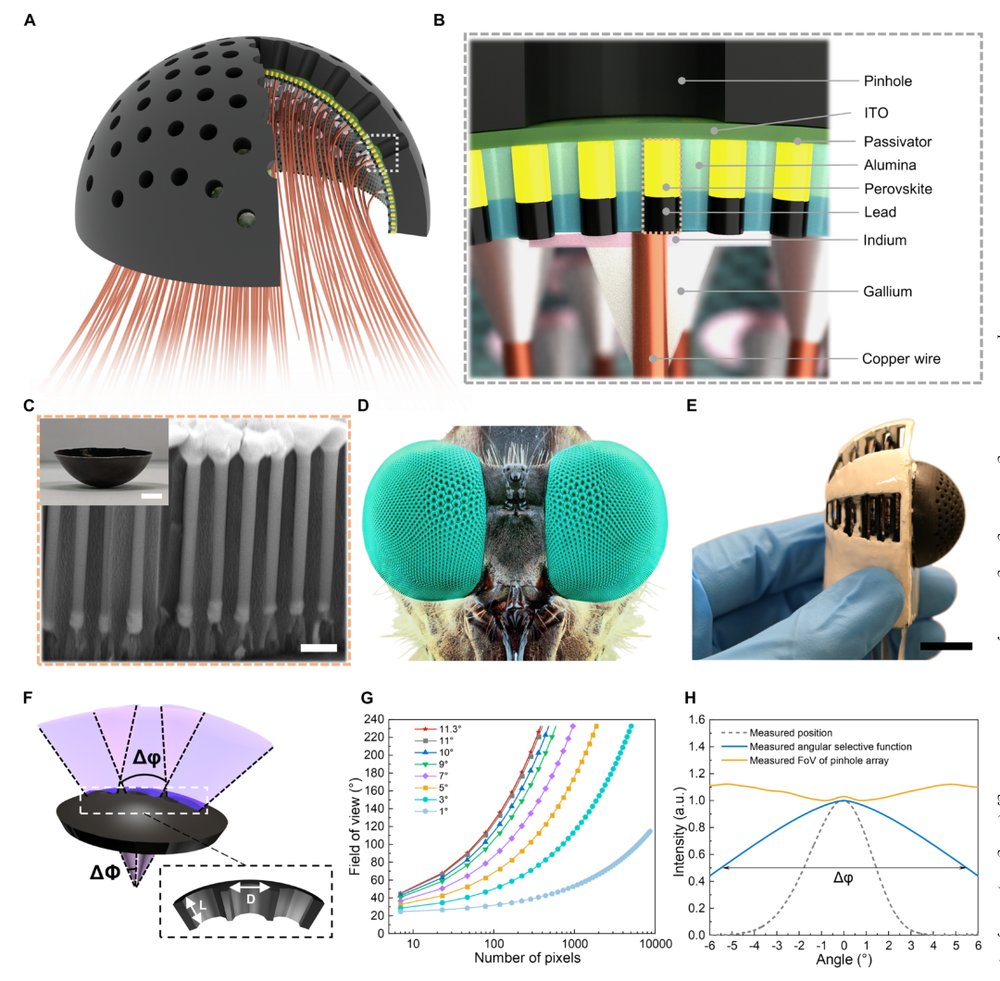
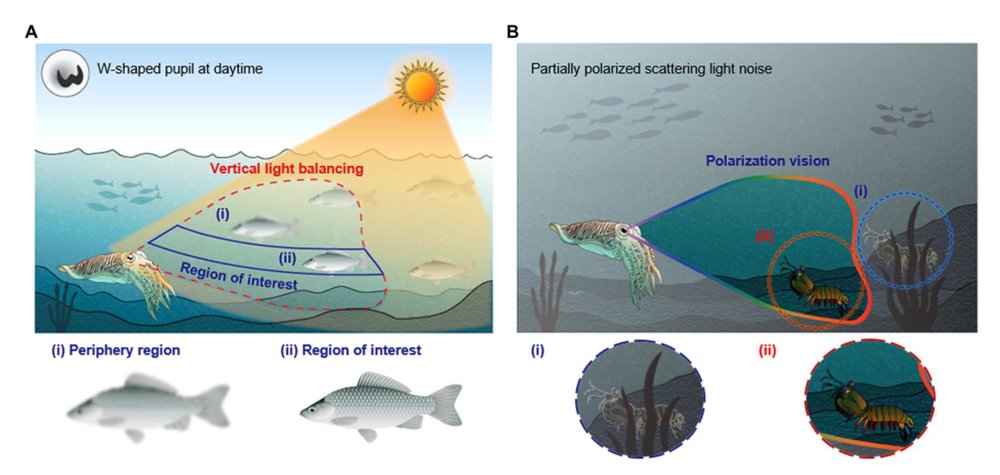
针对机器人/自动驾驶视觉在强弱光剧烈变化下识别退化、传统方案依赖复杂硬件与算法的问题,论文构建了半球形光突触探测阵列与液态金属可变形瞳孔/逻辑单元耦合的闭环仿生视觉系统。其关键创新是用液态金属形变同时模拟神经脉冲传输和多种动物瞳孔反射,在强光下主动缩小进光量;实验显示系统具备108°视场、365–780 nm响应,并提升高曝光条件下的图像识别准确率。

Within arm’s reach: A path forward for robot dexterity Figure 1
Science Robotics2026-01-28

Within arm’s reach: A path forward for robot dexterity

Sudharshan Suresh

Boston Dynamics Inc., Waltham, MA, USA

操作触觉机器人

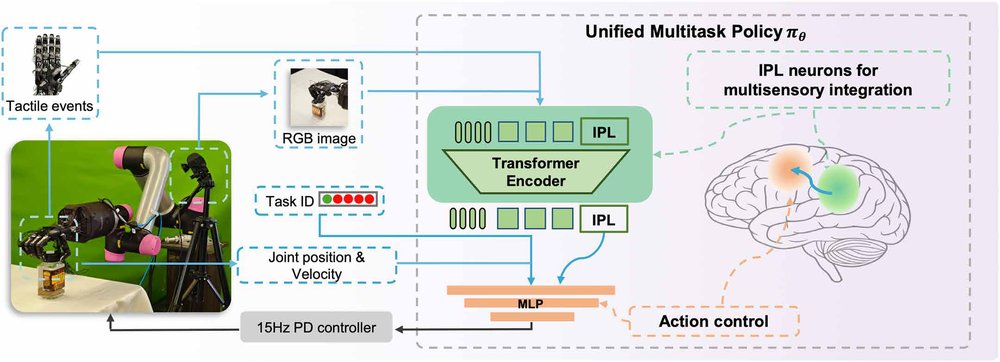
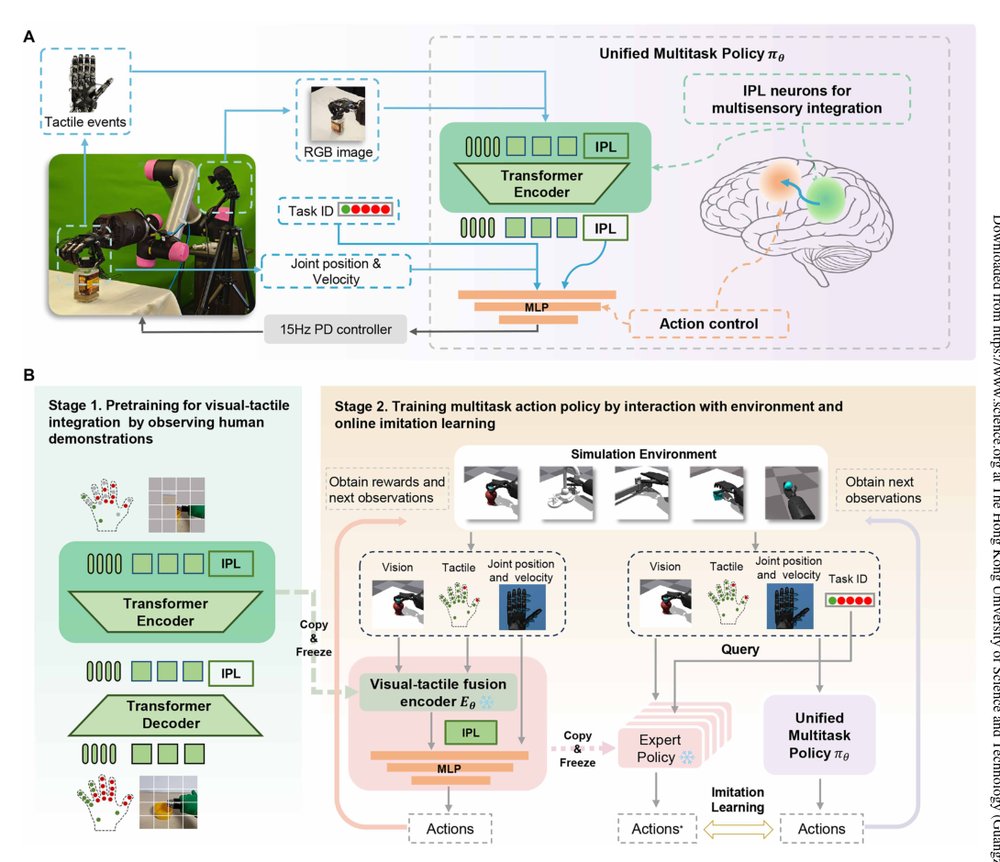
机器人灵巧操作受限于机器人域数据不足、感知不完整和高维控制,触觉长期被低估。文中评述的工作用人类佩戴触觉手套采集的视触事件预训练编码器,并将该共享表征直接用于仿真中的在线模仿学习与强化学习,减少对特权状态的依赖。在 Shadow Hand 上,策略在拧螺丝、削铅笔、物体重定向等已见和未见任务中取得较高成功率,并比较了触觉分辨率与传感技术;但多任务相对单任务增益较小,泛化来源仍需进一步说明。

Visual-tactile pretraining and online multitask learning for humanlike manipulation dexterity Figure 1
Science Robotics2026-01-28

Visual-tactile pretraining and online multitask learning for humanlike manipulation dexterity

Qi Ye, Qingtao Liu, Siyun Wang, Jiaying Chen, Yu Cui, Ke Jin, Huajin Chen, Xuan Cai, Gaofeng Li, Jiming Chen

College of Control Science and Engineering, Zhejiang University, Hangzhou 310027, China, School of Automation, Hangzhou Dianzi University, Hangzhou 310018, China

操作触觉强化学习人形机器人机器人

针对多指灵巧手在高维控制、遮挡和接触感知下难以泛化的问题,本文将“观察—练习”拆成两阶段:先用人类示范的单目视觉与二值触觉做自监督视觉-触觉预训练,再结合强化学习和在线模仿学习训练统一多任务策略。系统仅用低成本传感,在5类复杂任务、25个物体上达到85%成功率,并可迁移到3个相似未见任务。

Is intermittent swimming lazy or clever? Figure 1
Science Robotics2026-01-28

Is intermittent swimming lazy or clever?

Daniel B. Quinn

Mechanical and Aerospace Engineering, University of Virginia, Charlottesville, VA, USA, Electrical and Computer Engineering, University of Virginia, Charlottesville, VA, USA

移动机器人水下机器人机器人

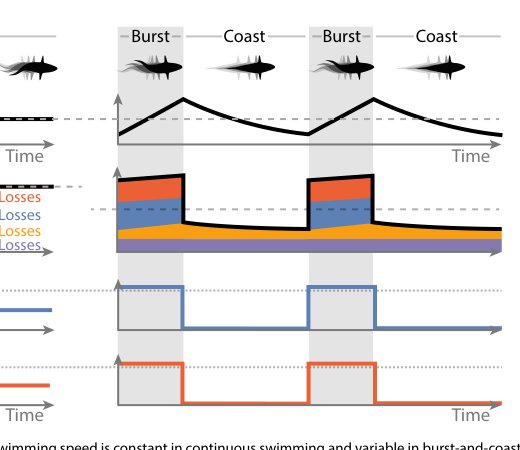
本文关注鱼类和仿生水下机器人为何常采用“爆发—滑行”而非连续摆尾游动。文章指出,节能不只来自涡流或阻力等流体机制,ZBot 实验显示短时高扭矩爆发可让伺服电机工作在更高效率区间,并由类斑马鱼神经控制实现。结果表明,在约 1 到 10000 的雷诺数范围内,间歇游动仍保持能耗优势,提示未来机器人可联合流体尺度律与执行器效率优化占空比。

Energy efficiency and neural control of continuous versus intermittent swimming in a fishlike robot Figure 1
Science Robotics2026-01-28

Energy efficiency and neural control of continuous versus intermittent swimming in a fishlike robot

Xiangxiao Liu, François A. Longchamp, Luca Zunino, Louis Gevers, Lisa R. Schneider, Selina I. Bothner, André Guignard, Alessandro Crespi, Guillaume Bellegarda, Alexandre Bernardino, Eva A. Naumann, Auke J. Ijspeert

Biorobotics Laboratory (BIOROB), École polytechnique fédérale de Lausanne (EPFL), Lausanne 1015, Switzerland, Institute for Systems and Robotics, Instituto Superior Técnico, 1049-001 Lisbon, Portugal, Department of Neurobiology, Duke School of Medicine, Durham, NC 27710, USA

操作移动机器人水下机器人仿生机器人机器人

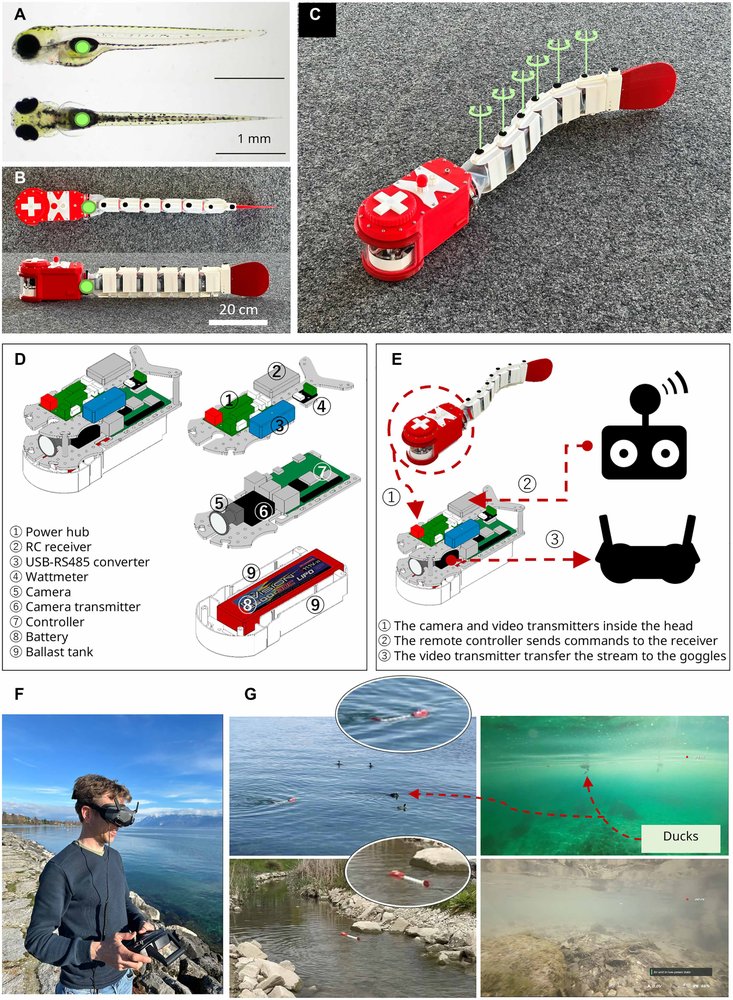
论文针对鱼类为何采用“摆尾—滑行”间歇游动及其神经控制、能效来源难以在活体中验证的问题,构建仿斑马鱼幼体的 ZBot,并嵌入受 CPG 与 bout gate 启发的神经模型。实验显示该机器人可复现前进和转向等步态;高黏度主要缩短位移而对转角影响较小;在多数可达速度下,间歇游动比连续摆尾具有更低运输能耗,且增益不仅来自滑行减阻,还来自执行器被推入更高固有效率区间。

Architectural swarms for responsive façades and creative expression Figure 1
Science Robotics2026-01-21

Architectural swarms for responsive façades and creative expression

Merihan Alhafnawi, Jad Bendarkawi, Yenet Tafesse, Lucia Stein-Montalvo, Azariah Jones, Vicky Chow, Sigrid Adriaenssens, Radhika Nagpal

Department of Mechanical and Aerospace Engineering, Princeton University, Princeton, NJ 08544, USA, Department of Electrical and Computer Engineering, Princeton University, Princeton, NJ 08544, USA, Department of Computer Science, Princeton University, Princeton, NJ 08544, USA, Department of Civil and Environmental Engineering, Northwestern University, Evanston, IL 60208, USA, Department of African American Studies, Princeton University, Princeton, NJ 08544, USA, Department of Civil and Environmental Engineering, Princeton University, Princeton, NJ 08544, USA

飞行机器人群体机器人机器人

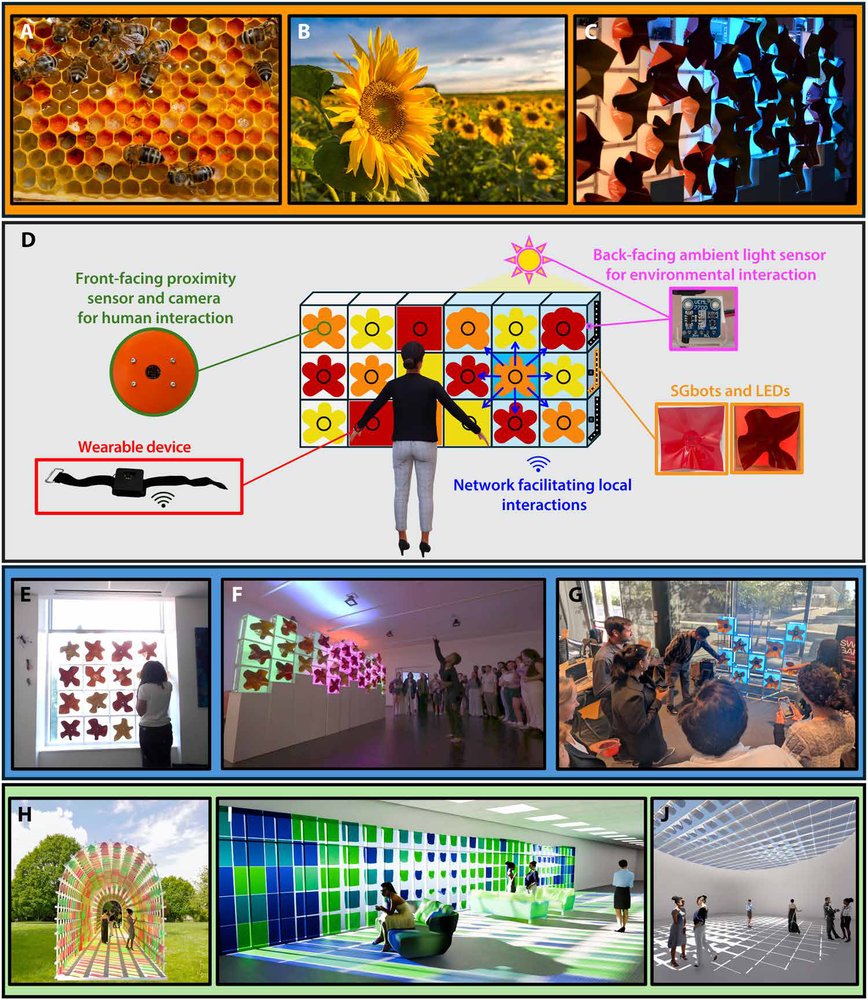
针对传统建筑外立面难以像蜂巢、蚁桥般随环境和使用者需求自组织变化的问题,论文提出“建筑群体”概念,并实现由含屈曲片驱动、传感、计算与无线通信的 SGbot 组成的 Swarm Garden。其基于意见动力学实现自适应遮阳,在16模块窗面实验中能随日照调节并容忍传感故障,仿真显示可扩展;36模块展演中支持人机互动与舞蹈表达,观众反馈96%为正面。

Learning realistic lip motions for humanoid face robots Figure 1
Science Robotics2026-01-14

Learning realistic lip motions for humanoid face robots

Yuhang Hu, Jiong Lin, Judah Allen Goldfeder, Philippe M. Wyder, Yifeng Cao, Steven Tian, Yunzhe Wang, Jingran Wang, Mengmeng Wang, Jie Zeng, Cameron Mehlman, Yingke Wang, Delin Zeng, Boyuan Chen, Hod Lipson

Department of Mechanical Engineering, Columbia University, New York, NY, USA, Department of Computer Science, Columbia University, New York, NY, USA, Department of Electrical Engineering, Columbia University, New York, NY, USA, Department of Mechanical Engineering & Materials Science, Duke University, Durham, NC, USA, Data Science Institute, Columbia University, New York, NY, USA

移动机器人强化学习人形机器人机器人

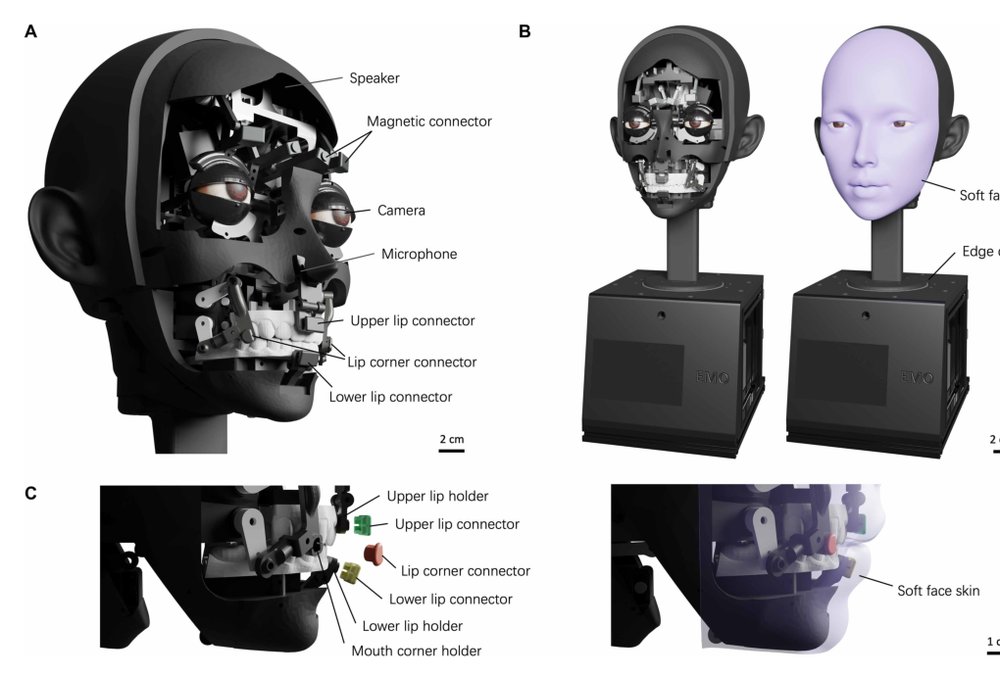
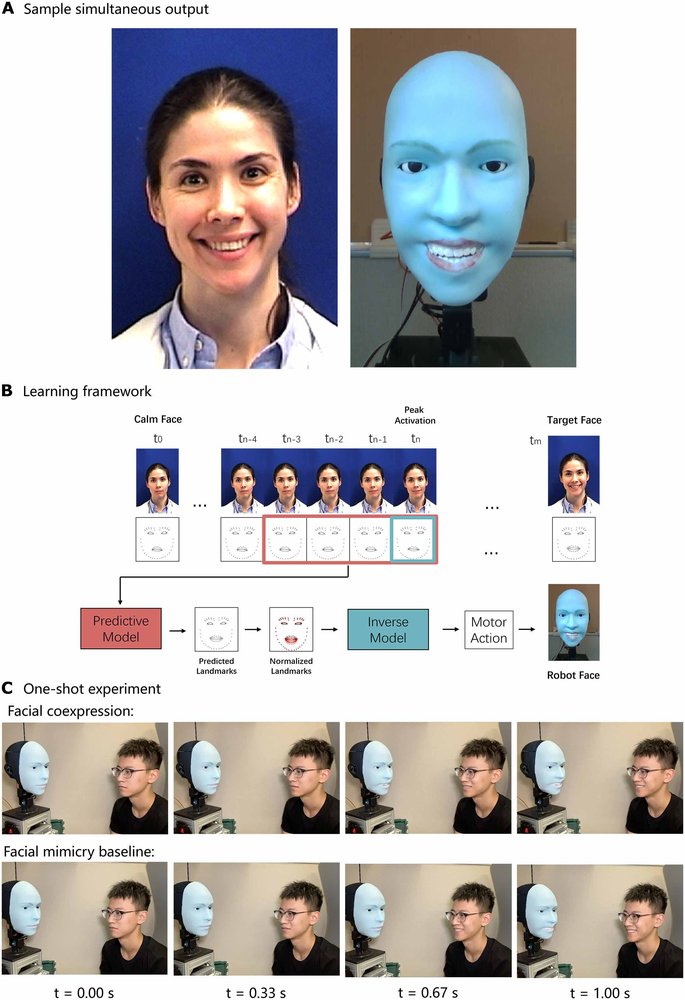
针对人形机器人说话时唇形与语音不同步、容易显得僵硬的问题,论文把10自由度软硅胶嘴唇机构与自监督学习结合,用VAE和面部动作Transformer从语音直接生成受机械约束的唇部轨迹,而非手工规则。实验显示其同步观感优于按音量驱动等启发式基线,并能迁移到训练外的10种语言。

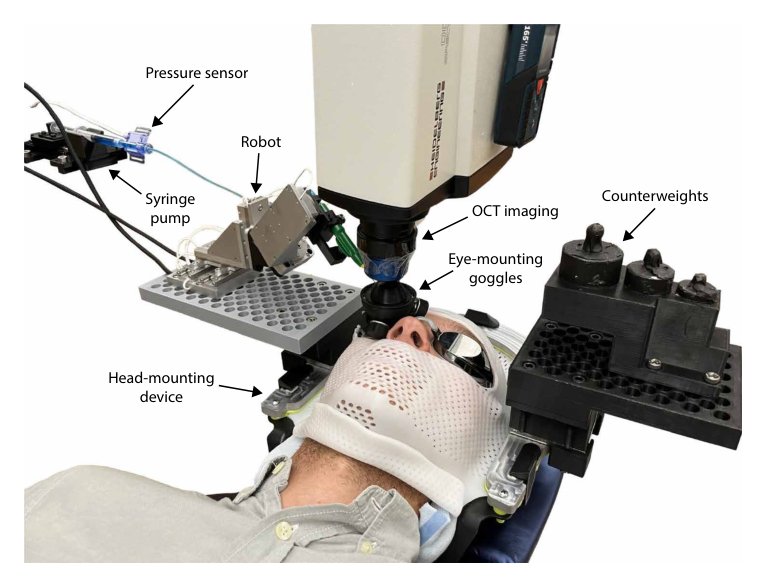
Autonomous robotic intraocular surgery for targeted retinal injections Figure 1
Science Robotics2026-01-14

Autonomous robotic intraocular surgery for targeted retinal injections

Gui-Bin Bian, Yawen Deng, Zhen Li, Qiang Ye, Yupeng Zhai, Yong Huang, Yingxiong Xie, Weihong Yu, Zhangwanyu Wei, Zhangguo Yu

State Key Laboratory of Multimodal Artificial Intelligence Systems, Institute of Automation, Chinese Academy of Sciences, Beijing, China, School of Mechatronic Engineering, Beijing Institute of Technology, Beijing, China, College of Integrated Circuits, Taiyuan University of Technology, Taiyuan, China, School of Optics and Photonics, Beijing Institute of Technology, Beijing, China, Department of Ophthalmology, Peking Union Medical College Hospital, Chinese Academy of Medical Sciences and Peking Union Medical College, Beijing, China

操作移动机器人医疗机器人安全机器人

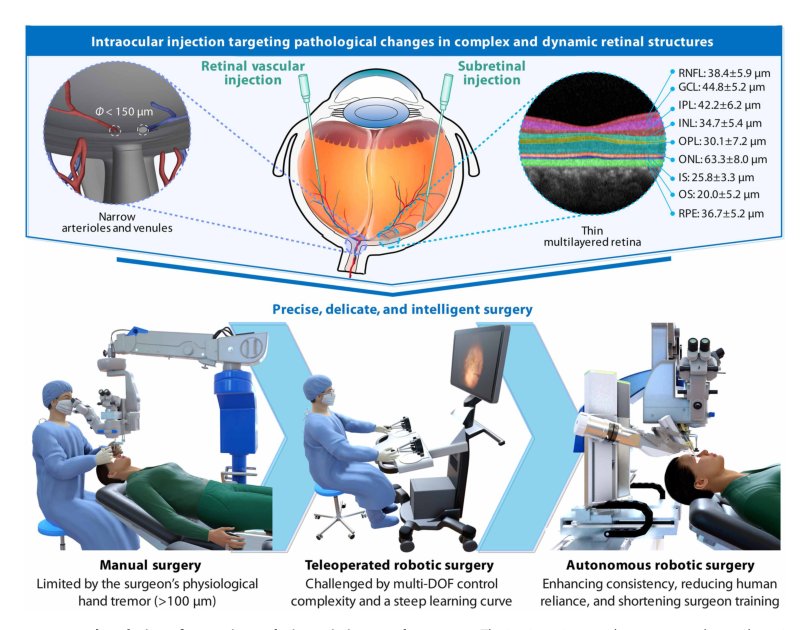
眼内视网膜注射受视野受限、深度估计困难和手部微颤限制,人工/遥操作难稳定达到微米级精度。ARISE 通过多视角空间融合校正动态错位,并用准则加权多传感融合处理量程、误差和频率不一致,实现闭环自主定位与注射。在离体猪眼和在体动物眼的视网膜下、中央/分支静脉注射均报告 100% 成功,定位误差较人工和遥操作分别降低 79.87% 与 54.61%。

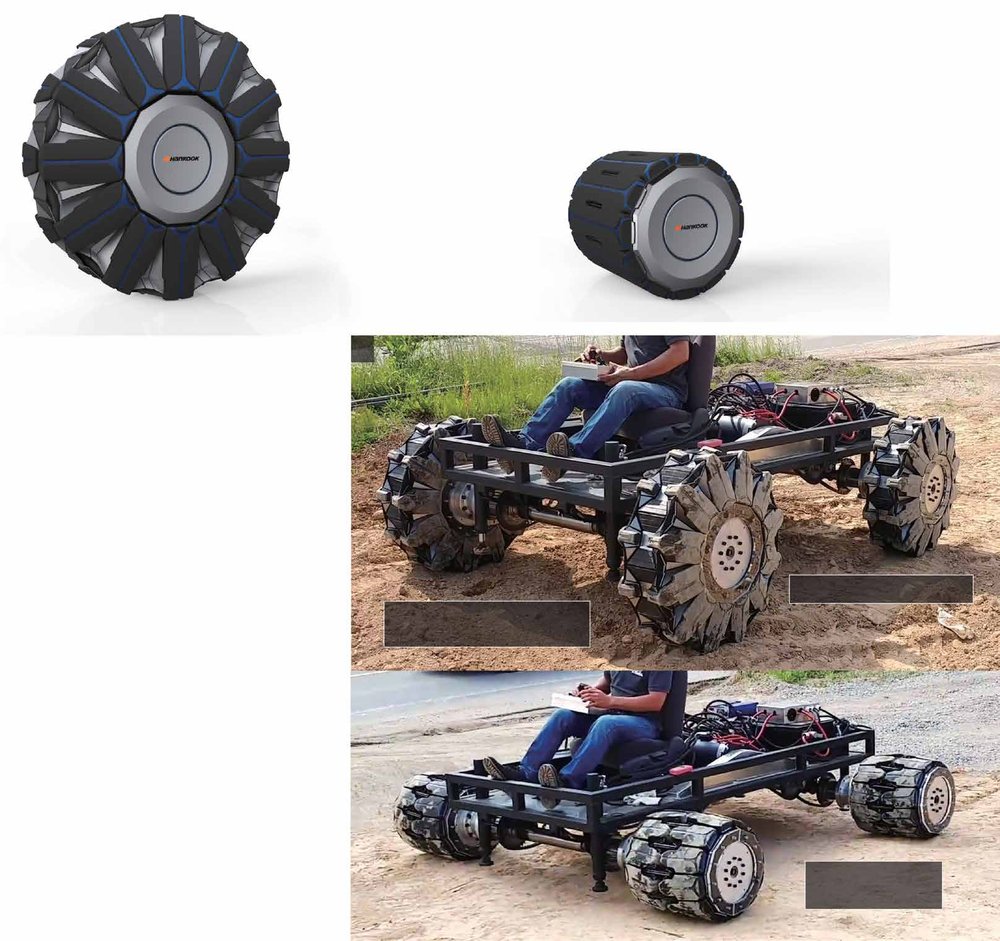
Soft deployable airless wheel for lunar lava tube intact exploration Figure 1
Science Robotics2025-12-17

Soft deployable airless wheel for lunar lava tube intact exploration

Seong-Bin Lee, Namsuk Cho, Geonho Lee, Seungju Lee, Junseo Kim, Gyujin Shim, Jong Tai Jang, Se Kwon Kim, TaeWon Seo, Chae Kyung Sim, Dae-Young Lee

Department of Aerospace Engineering, Korea Advanced Institute of Science and Technology (KAIST), Daejeon, 34141, Republic of Korea, Department of Intelligent Robot Engineering, Hanyang University, Seoul, 04763, Republic of Korea, Unmanned Exploration Laboratory, Daejeon, 34126, Republic of Korea, Korea Aerospace Research Institute, Daejeon, 34133, Republic of Korea, Department of Physics, Korea Advanced Institute of Science and Technology (KAIST), Daejeon, 34141, Republic of Korea, School of Mechanical Engineering, Hanyang University, Seoul, 04763, Republic of Korea, Korea Astronomy and Space Science Institute, Daejeon, 34055, Republic of Korea, University of Science and Technology, Daejeon, 34113, Republic of Korea

强化学习安全机器人

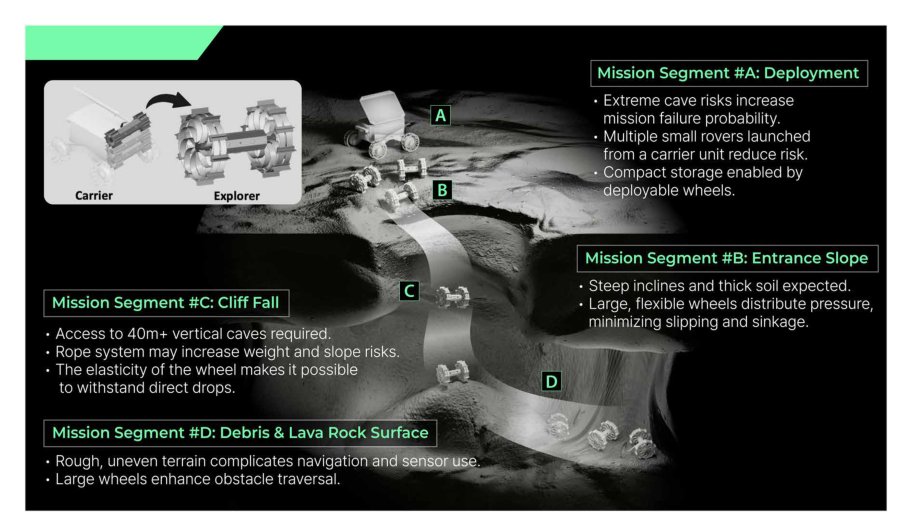
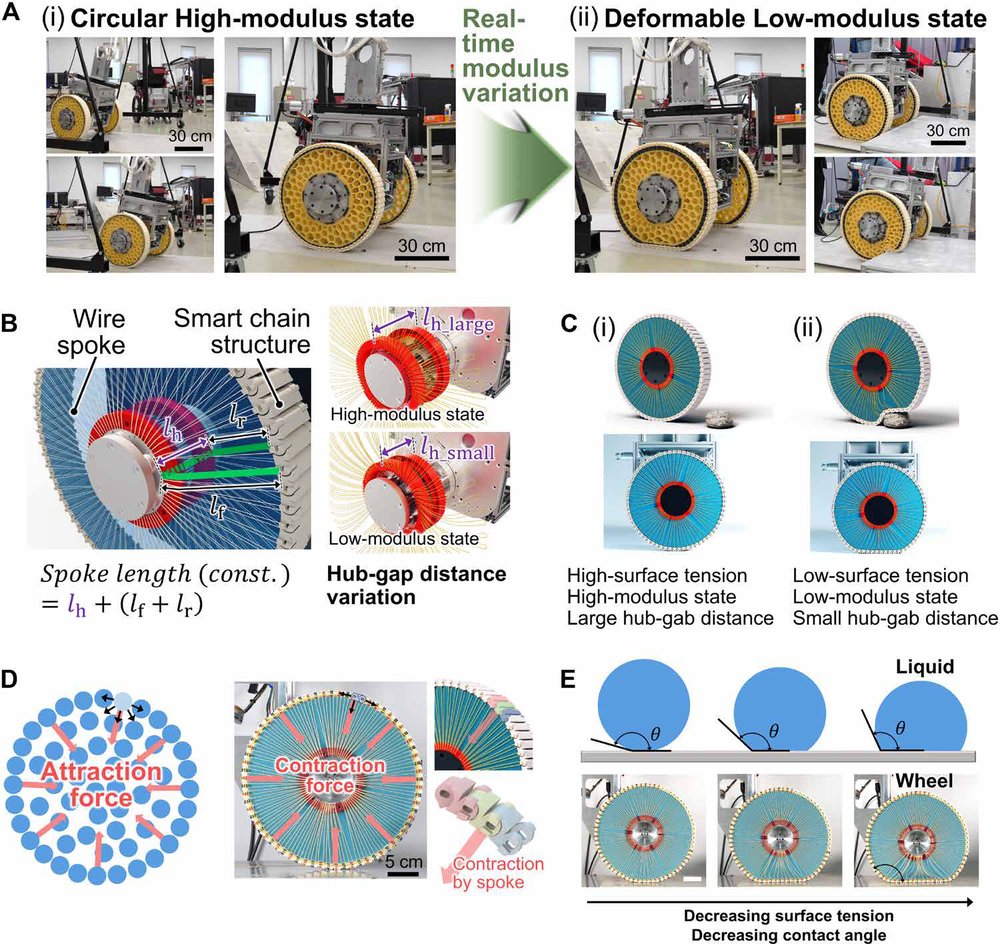
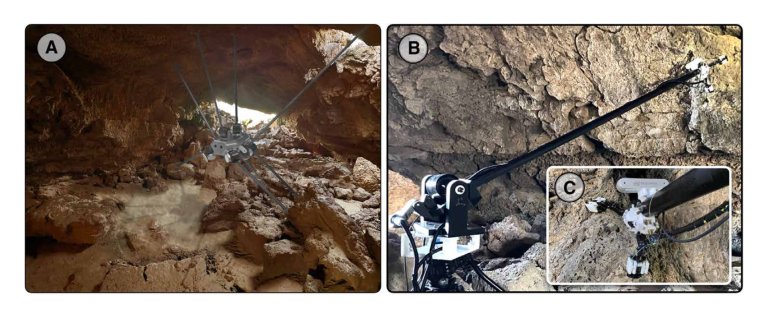
面向月球坑洞和熔岩管中陡坡、垂直落差与松散月壤带来的探测风险,论文提出一种可展开无气软轮:以交织螺旋弹性钢带构成互支撑结构,避免脆弱铰链并兼顾收纳、承载和抗冲击。原型可由230毫米展开至500毫米,越过200毫米障碍,在岩石/月壤模拟地形稳定行驶,并承受相当于月球重力下100米下降的跌落冲击。

Efficacy and effectiveness of robot-assisted therapy for autism spectrum disorder: From lab to reality Figure 1
Science Robotics2025-12-17

Efficacy and effectiveness of robot-assisted therapy for autism spectrum disorder: From lab to reality

Daniel David, Paul Baxter, Tony Belpaeme, Erik Billing, Haibin Cai, Hoang-Long Cao, Anamaria Ciocan, Cristina Costescu, Daniel Hernandez Garcia, Pablo Gómez Esteban, James Kennedy, Honghai Liu, Silviu Matu, Alexandre Mazel, Mihaela Selescu, Emmanuel Senft, Serge Thill, Bram Vanderborght, David Vernon, Tom Ziemke

Department of Clinical Psychology and Psychotherapy, Babeș-Bolyai University, Cluj-Napoca, Romania, Icahn School of Medicine at Mount Sinai, New York, NY, USA, School of Computer Science, University of Lincoln, Lincoln, UK, IDLab-AIRO, Ghent University & imec, Ghent, Belgium, School of Informatics, University of Skövde, Skövde, Sweden, Department of Computer Science, Loughborough University, Loughborough, UK, College of Engineering, Can Tho University, Can Tho City, Vietnam, School of Mathematical and Computer Sciences, Heriot-Watt University, Edinburgh, UK, Centre for Robotics and Neural Systems, Plymouth University, Plymouth, UK, School of Computing, University of Portsmouth, Portsmouth, UK, IDIAP Research Institute, Martigny, Switzerland, Donders Institute for Brain, Cognition & Behaviour, Radboud University, Nijmegen, Netherlands, Carnegie Mellon University Africa, Kigali, Rwanda, Department of Computer & Information Science, Linköping University, Linköping, Sweden

飞行机器人强化学习机器人

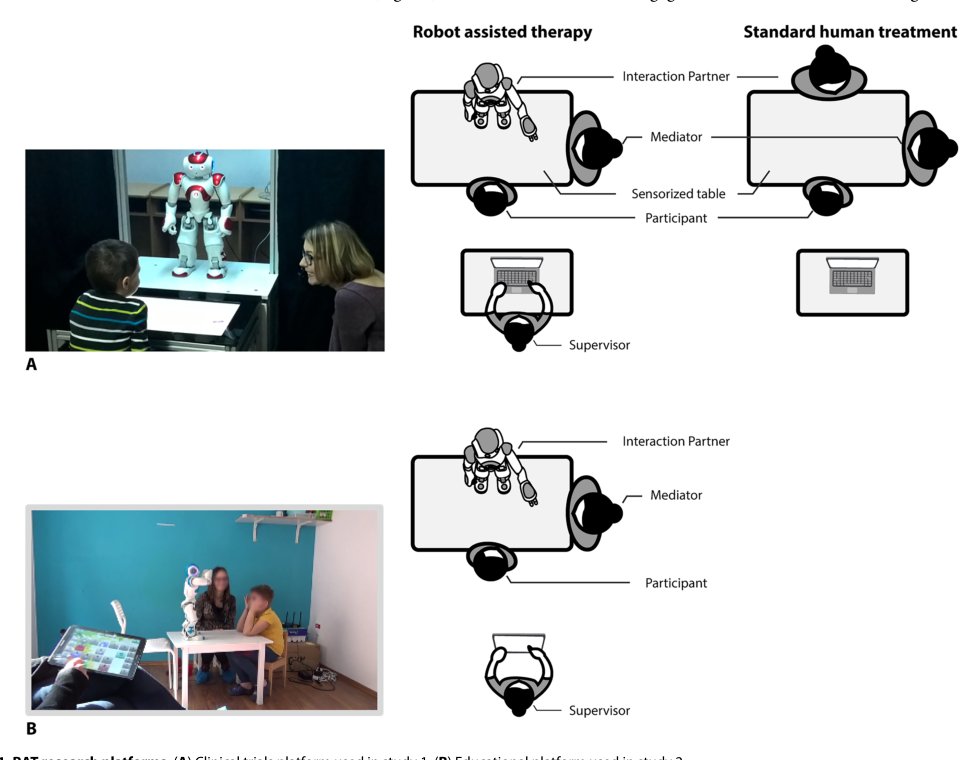
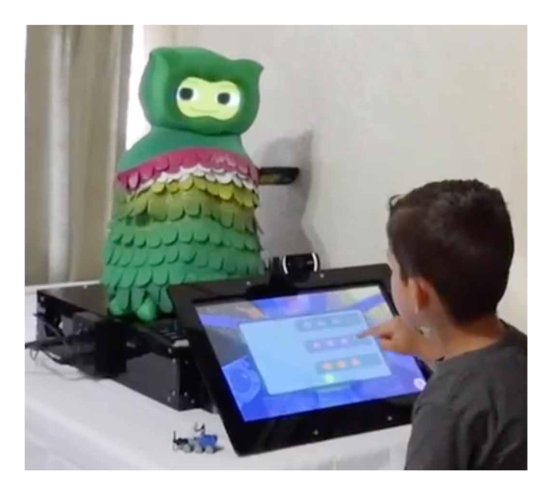
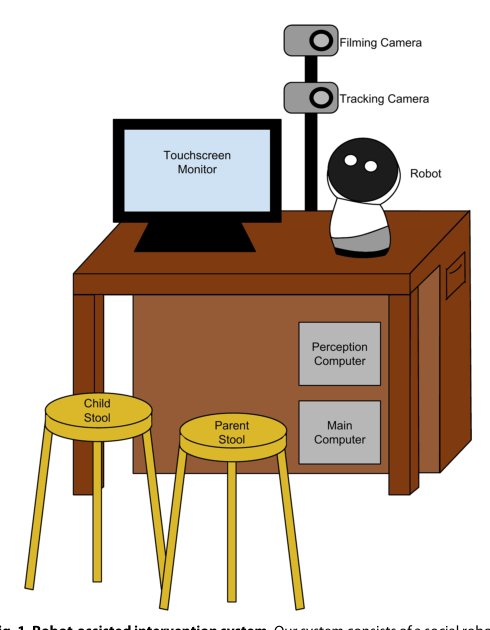
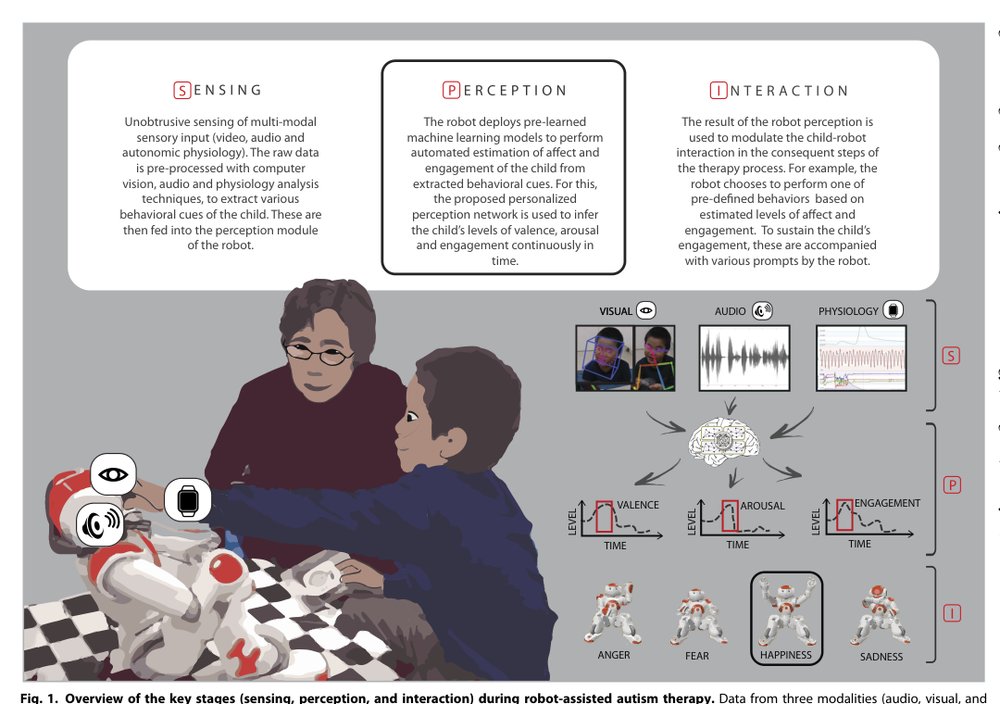
针对自闭症儿童社交机器人治疗长期缺乏临床证据、难以从实验室落地的问题,论文把共同注意、模仿和轮流互动作为核心发展机制,设计两项随机临床试验分别检验疗效与真实场景有效性。结果显示,诊所内12次机器人辅助治疗总体效果与常规治疗相当但显著提升参与度;面向学校/家庭的简化便携方案在5次低剂量干预下也达到与标准治疗相当的结果。

Deep learning–based autonomous retinal vein cannulation in ex vivo porcine eyes Figure 1
Science Robotics2025-12-17

Deep learning–based autonomous retinal vein cannulation in ex vivo porcine eyes

Peiyao Zhang, Peter Gehlbach, Russell H. Taylor, Iulian Iordachita, Marin Kobilarov

Department of Mechanical Engineering, Johns Hopkins University, Baltimore, MD 21211, USA, Laboratory for Computational Sensing and Robotics, Johns Hopkins University, Baltimore, MD 21211, USA, Wilmer Eye Institute, Johns Hopkins University, Baltimore, MD 21211, USA, Department of Computer Science, Johns Hopkins University, Baltimore, MD 21211, USA

操作移动机器人医疗机器人仿生机器人强化学习

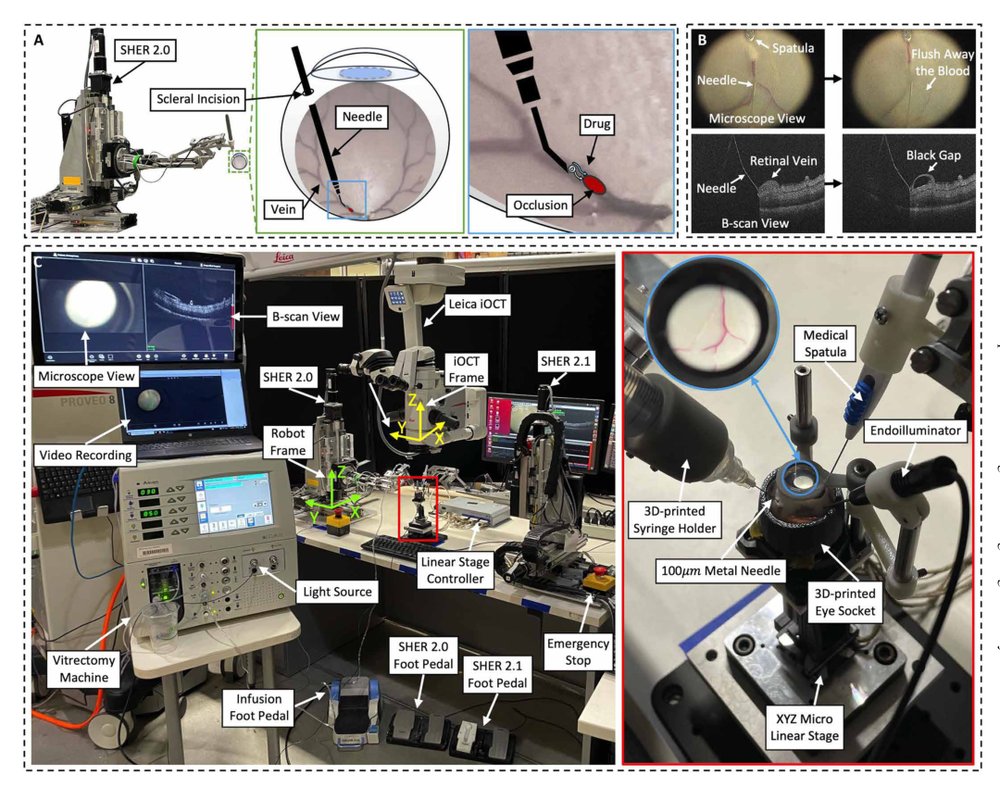
视网膜静脉阻塞的根因治疗需要在百微米级血管内稳定插针,手抖和深度感知限制了人工 RVC 的可重复性。本文将两台 SHER、显微镜+iOCT 与三个 CNN 结合,把针尖导航、接触/穿刺识别等关键步骤自动化,用户保留较低难度操作与监督;在离体猪眼静态实验中成功率 90%,模拟呼吸眼动时为 83%,但临床迁移仍需体内验证。

Resilient odometry via hierarchical adaptation Figure 1
Science Robotics2025-12-10

Resilient odometry via hierarchical adaptation

Shibo Zhao, Sifan Zhou, Yuchen Zhang, Ji Zhang, Chen Wang, Wenshan Wang, Sebastian Scherer

Carnegie Mellon University, Pittsburgh, PA, USA, University at Buffalo, Buffalo, NY, USA

移动机器人飞行机器人强化学习安全机器人

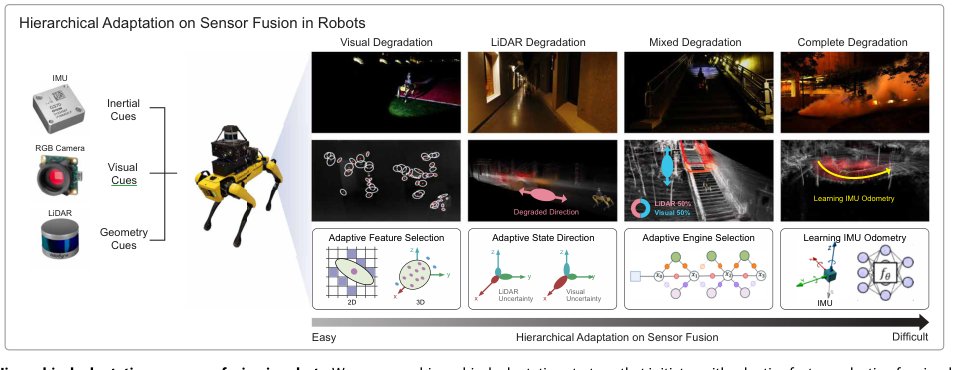
面向烟雾、沙尘、低光和几何退化下外感知失效导致里程计漂移的问题,论文提出 Super Odometry:按退化程度分层启用特征筛选、状态方向选择、引擎切换,并把基于大规模异构数据训练且可在线自监督适应的 IMU 里程计提升为备用主力。系统在空中、轮式、足式等平台累计 200 公里、800 小时测试,单次 2966 米多退化实验端点漂移仅 0.2 米,并优于多种基线。

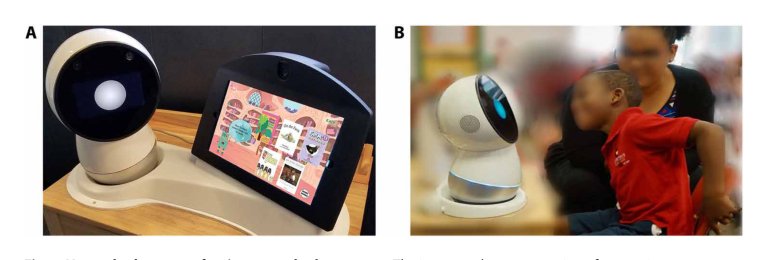
Microscopic robots that sense, think, act, and compute Figure 1
Science Robotics2025-12-10

Microscopic robots that sense, think, act, and compute

Maya M. Lassiter, Jungho Lee, Kyle Skelil, Li Xu, Lucas Hanson, William H. Reinhardt, Dennis Sylvester, Mark Yim, David Blaauw, Marc Z. Miskin

Department of Electrical and Systems Engineering, University of Pennsylvania, Philadelphia, PA, USA, Department of Electrical Engineering and Computer Science, University of Michigan, Ann Arbor, MI, USA, Department of Mechanical Engineering and Applied Mechanics, University of Pennsylvania, Philadelphia, PA, USA, Department of Physics and Astronomy, University of Pennsylvania, Philadelphia, PA, USA

移动机器人触觉强化学习微型机器人机器人

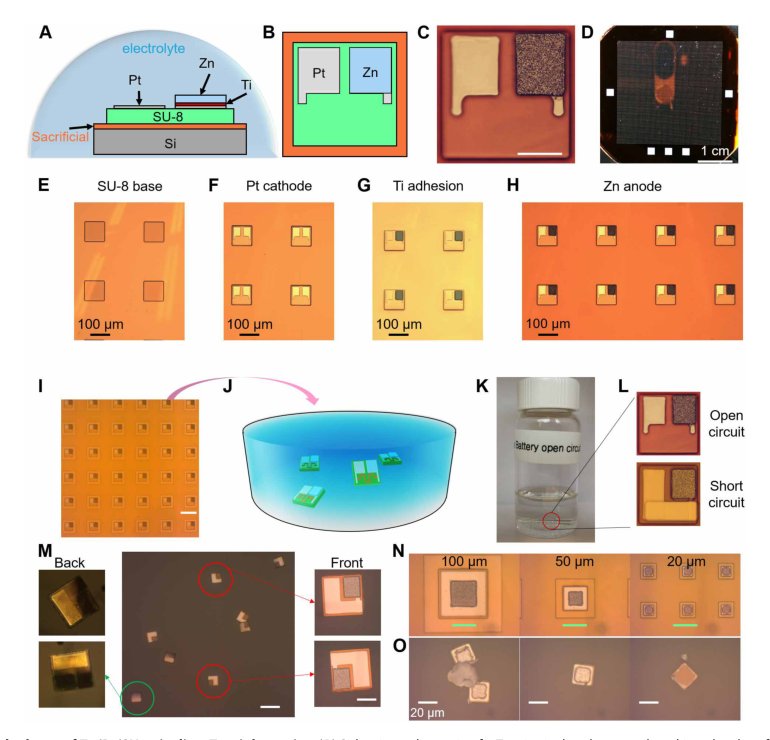
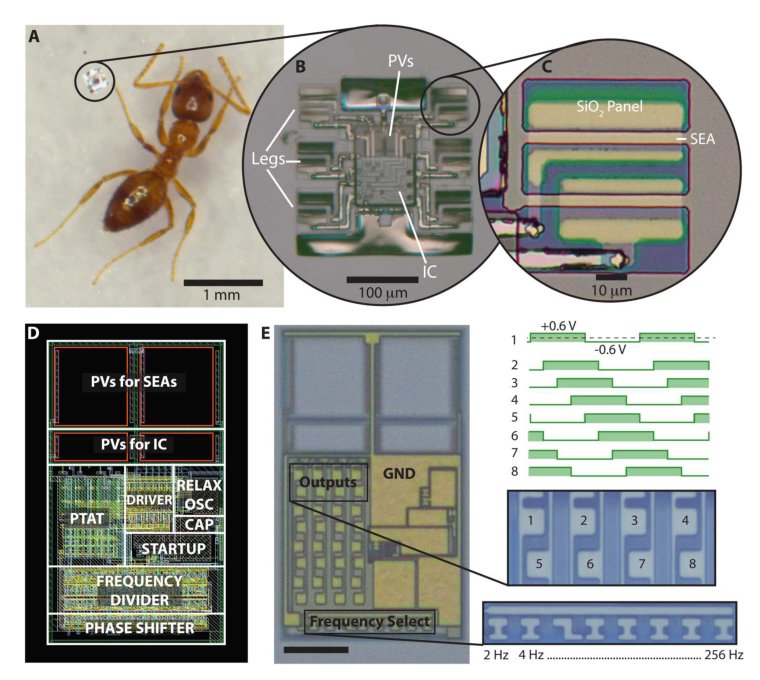
微型机器人长期受限于亚毫米尺度下供能、计算与运动控制难以集成,通常依赖外部控制而缺少自主反馈。本文用55 nm CMOS、亚阈值逻辑和全光刻批量工艺,将光伏供能、传感、存储、处理器、通信与执行器集成到约210×340×50 μm机体内,并用定制指令集压缩行为程序。实验显示机器人可被重复光学编程,执行平面运动序列,报告温度,并依据温度变化切换运动模式、攀爬热梯度。

Robotic manipulation of human bipedalism reveals overlapping internal representations of space and time Figure 1
Science Robotics2025-11-26

Robotic manipulation of human bipedalism reveals overlapping internal representations of space and time

Paul Belzner, Patrick A. Forbes, Calvin Kuo, Jean-Sébastien Blouin

School of Kinesiology, University of British Columbia, Vancouver, BC, Canada, Department of Neuroscience, Erasmus MC, University Medical Center Rotterdam, Rotterdam, Netherlands, School of Biomedical Engineering, University of British Columbia, Vancouver, BC, Canada, Djavad Mowafaghian Centre for Brain Health, University of British Columbia, Vancouver, BC, Canada, Institute for Computing, Information and Cognitive Systems, University of British Columbia, Vancouver, BC, Canada

操作强化学习机器人

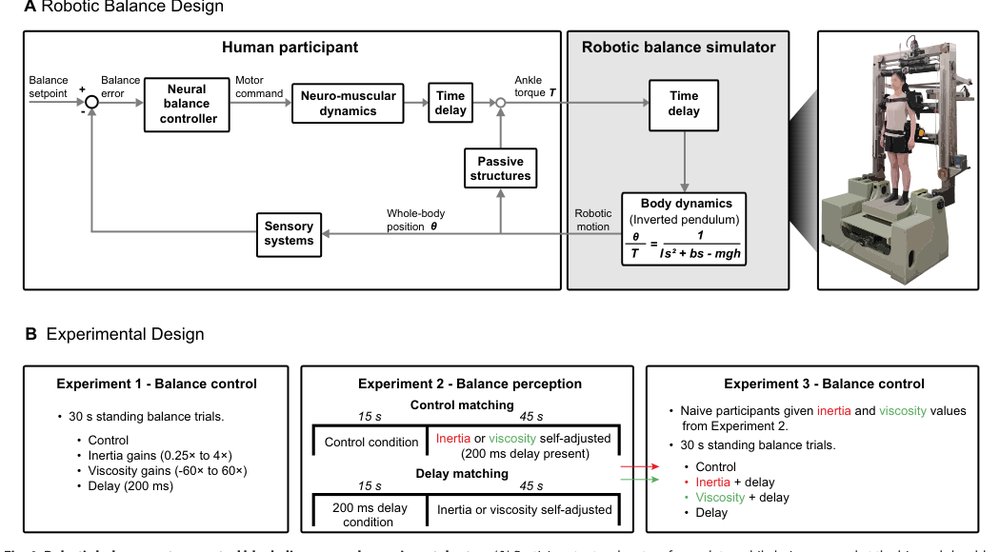
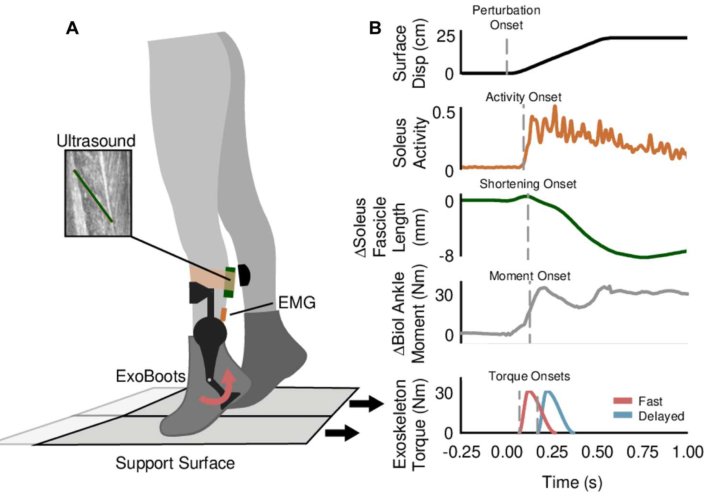
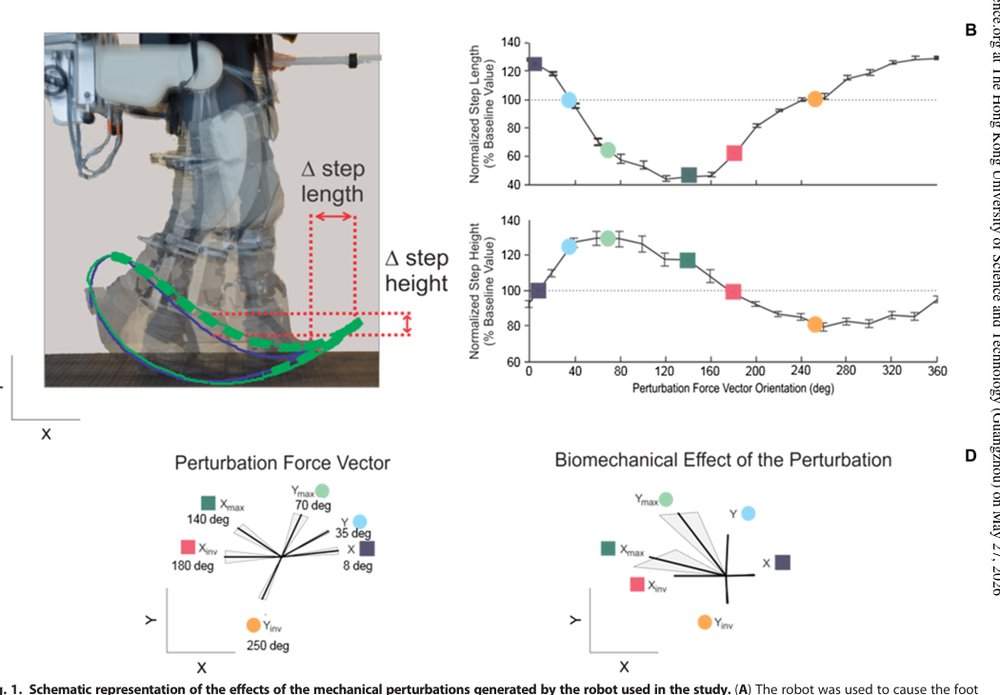
论文关注人类站立平衡中“身体空间动力学”和“感觉运动时间延迟”如何共同被神经系统表征。作者用机器人平衡平台实时虚拟并调节人体惯量、黏性和200毫秒延迟,发现低惯量或负黏性会像延迟一样放大摆动、增加越界;相反,提高惯量或正黏性可部分补偿延迟,说明空间与时间表征在双足平衡感知和控制中存在重叠。

Foldable and rollable interlaced structure for deployable robotic systems Figure 1
Science Robotics2025-11-26

Foldable and rollable interlaced structure for deployable robotic systems

Sun-Pill Jung, Jaeyoung Song, Chan Kim, Haemin Lee, Inchul Jeong, Jongmin Kim, Kyu-Jin Cho

Biorobotics Laboratory, Soft Robotics Research Center, Institute of Advanced Machines and Design, Department of Mechanical Engineering, Institute of Engineering, Seoul National University, Seoul 08826, Republic of Korea, Mand.ro Co., Ltd., Bucheon 14557, Republic of Korea

软体机器人强化学习机器人

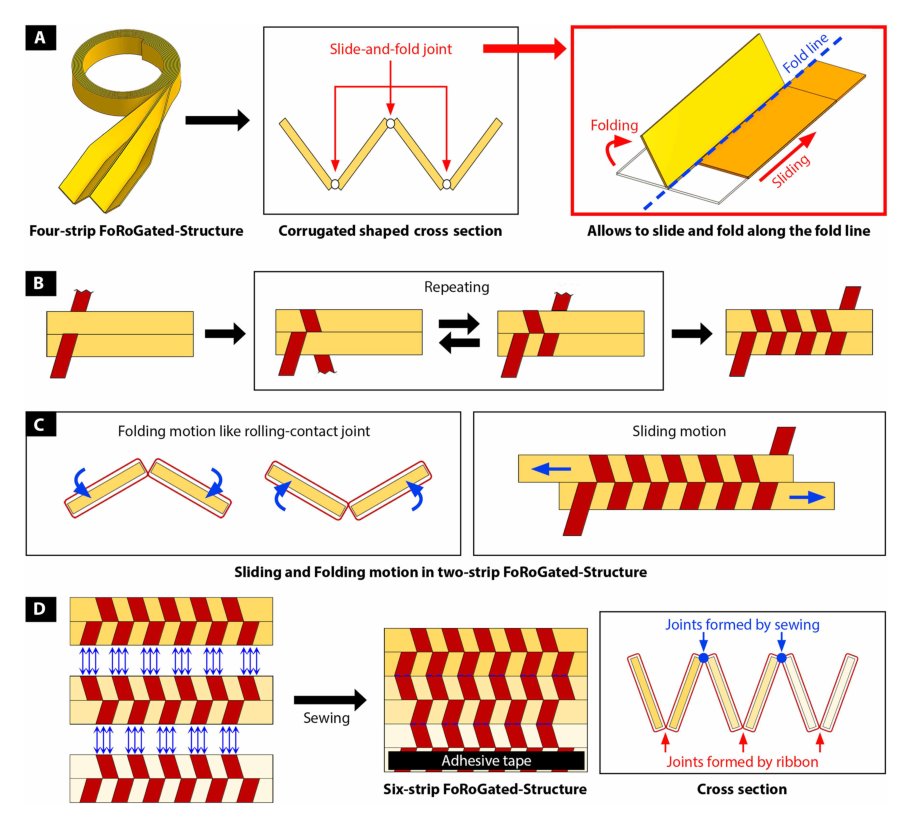
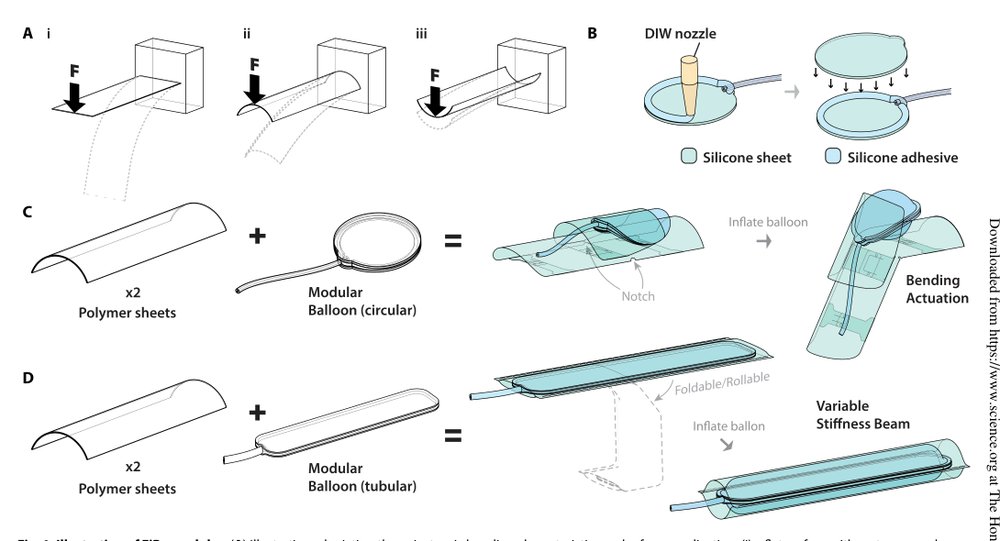
面向可展开机器人中“收纳要小、展开后要硬且承载高”的矛盾,论文提出由多条带材编织互锁形成的 FoRoGated 折叠-卷绕波纹结构:局部可滑移以吸收卷绕时层间周长差,密集互约束维持展开截面刚度。作者用其实现了带 1.6 米伸缩臂的移动机器人货架操作,以及展开至 3.4 米的四面体框架并承载米级 3D 打印系统。

Deep domain adaptation eliminates costly data required for task-agnostic wearable robotic control Figure 1
Science Robotics2025-11-19

Deep domain adaptation eliminates costly data required for task-agnostic wearable robotic control

Keaton L. Scherpereel, Matthew C. Gombolay, Max K. Shepherd, Carlos A. Carrasquillo, Omer T. Inan, Aaron J. Young

George W. Woodruff School of Mechanical Engineering, Georgia Institute of Technology, Atlanta, GA 30332, USA, Institute for Robotics and Intelligent Machines, Georgia Institute of Technology, Atlanta, GA 30332, USA, School of Interactive Computing, Georgia Institute of Technology, Atlanta, GA 30332, USA, College of Engineering, Bouvé College of Health Sciences, and Institute for Experiential Robotics, Northeastern University, Boston, MA 02115, USA, School of Electrical and Computer Engineering, Georgia Institute of Technology, Atlanta, GA 30332, USA

强化学习机器人

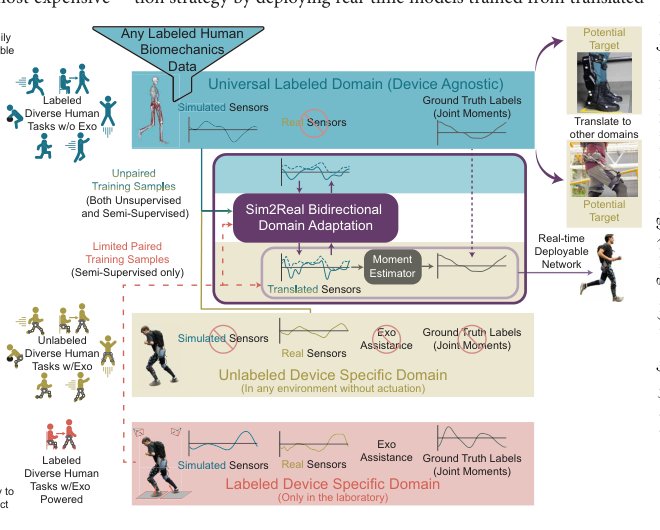
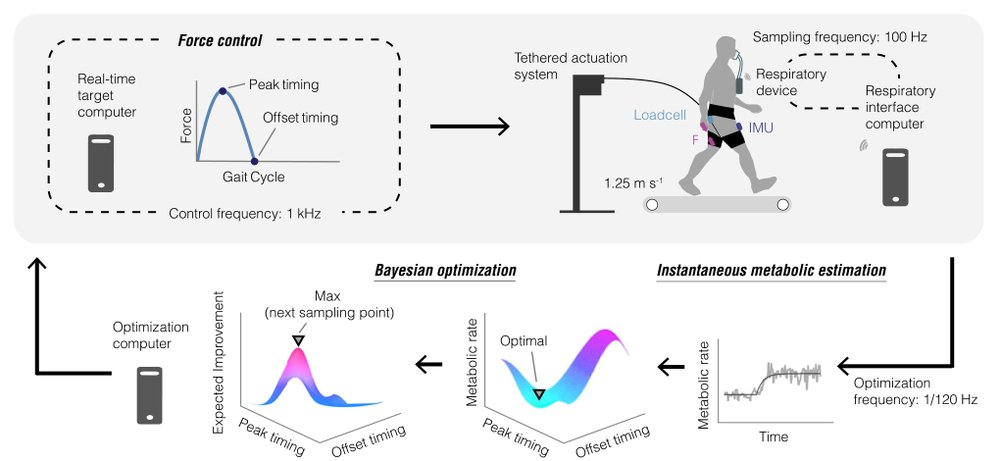
面向外骨骼控制中设备专属、带标签生物力学数据昂贵且难复用的问题,论文用开放生物力学数据、OpenSim模拟传感器和无标签外骨骼数据构建CycleGAN域适配桥接源/目标域。该方法在髋膝关节力矩估计上接近全量标注训练,显著优于无域适配基线,并在8人实时外骨骼实验中实现约9.5%至14.6%的代谢成本降低。

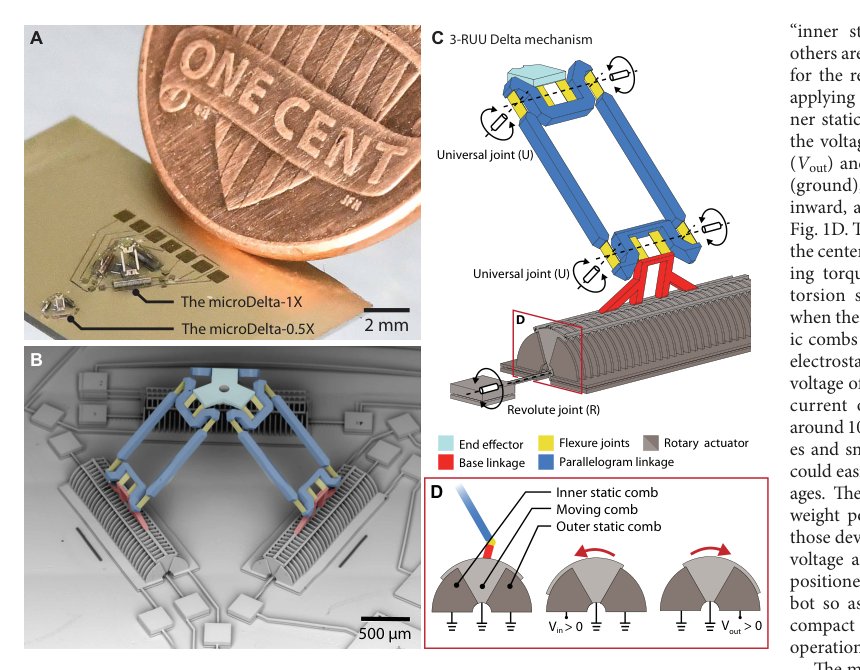
The microDelta: Downscaling robot mechanisms enables ultrafast and high-precision movement Figure 1
Science Robotics2025-11-12

The microDelta: Downscaling robot mechanisms enables ultrafast and high-precision movement

Steven Man, Sukjun Kim, Sarah Bergbreiter

Robotics Institute, Carnegie Mellon University, 5000 Forbes Ave., Pittsburgh, PA 15213, USA, Department of Mechanical Engineering, Carnegie Mellon University, 5000 Forbes Ave., Pittsburgh, PA 15213, USA, Department of Mechanical and Aerospace Engineering, University of California San Diego, 9500 Gilman Drive, La Jolla, CA 92093, USA

触觉机器人

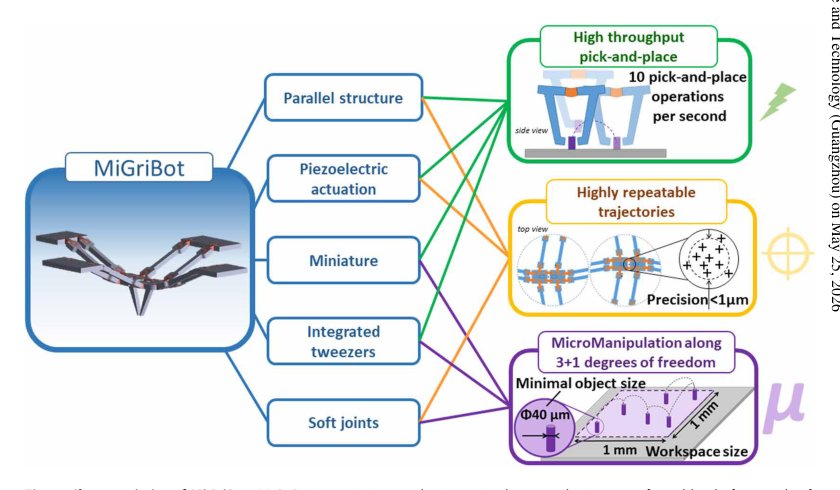
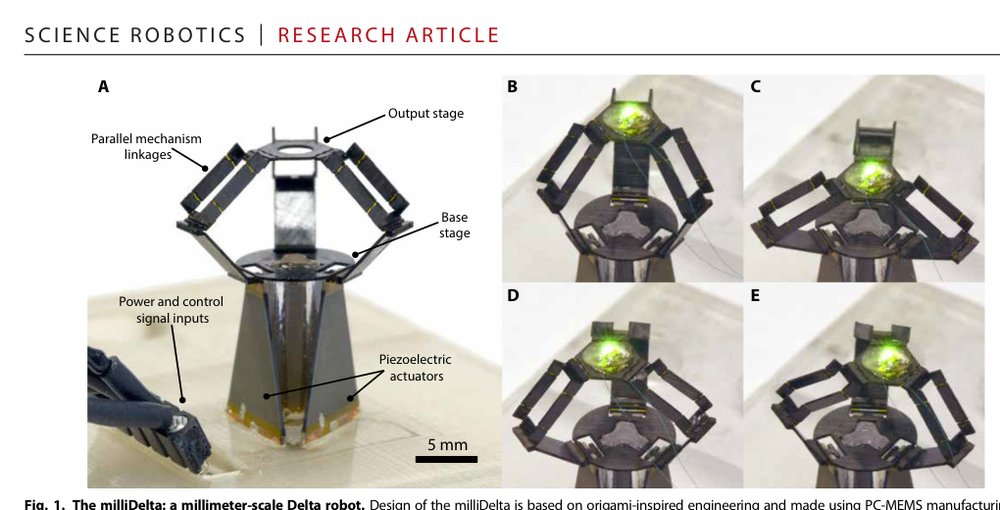
这篇论文瞄准三维机器人机构缩小到毫米/亚毫米尺度后,速度、精度等 scaling 优势是否仍成立的问题。作者用双光子聚合打印加金属化,将Delta并联机构、柔性关节和静电梳齿驱动一体化制造成0.7/1.4 mm级microDelta。实验显示最小版本可超过1000 Hz运行、实现亚微米精度,并能发射微小弹丸,说明微型化不仅提升带宽与定位,也具备对外做功潜力。

Learning a thousand tasks in a day Figure 1
Science Robotics2025-11-12

Learning a thousand tasks in a day

Kamil Dreczkowski, Pietro Vitiello, Vitalis Vosylius, Edward Johns

Robot Learning Lab at Imperial College London, London SW7 2AZ, UK

操作强化学习安全机器人

针对机器人模仿学习每任务需大量示范、难以扩展到千级任务的问题,论文系统验证“轨迹分解为对齐与交互”及测试时检索示范这两个先验,并提出 MT3:用语言/几何检索整段轨迹、姿态估计完成对齐、开环回放执行交互。真实机器人实验显示,在每任务少于10次示范时数据效率较单体行为克隆提升约一个数量级,且可用单次示范在24小时内教授1000个日常任务;但数据充足时 BC scaling 更好,方法也受单交互、分割、开环和物体动态限制。

Agile and cooperative aerial manipulation of a cable-suspended load Figure 1
Science Robotics2025-10-29

Agile and cooperative aerial manipulation of a cable-suspended load

Sihao Sun, Xuerui Wang, Dario Sanalitro, Antonio Franchi, Marco Tognon, Javier Alonso-Mora

Department of Cognitive Robotics (CoR), Delft University of Technology, Delft, Netherlands, Department of Aerospace Structures & Materials (ASM), Delft University of Technology, Delft, Netherlands, Department of Control & Operations (C&O), Delft University of Technology, Delft, Netherlands, Institut des Systèmes Intelligents et de Robotique (ISIR), Sorbonne University, Paris, France, Robotics and Mechatronics Group (RaM), University of Twente, Enschede, Netherlands, Department of Computer, Control and Management Engineering (DIAG), Sapienza University of Rome, Rome, Italy, Université de Rennes, CNRS, Inria, IRISA-UMR 6074, Rennes, France

操作移动机器人飞行机器人强化学习机器人

面向救援等限时任务中多旋翼吊挂重物只能低速、低加速度操作的问题,本文将协同空中操作从传统级联力控制转为在线全身动力学轨迹规划,并在机载控制中估计/补偿缆绳张力,显式处理推力、缆绳张紧和避障约束。三机实验证明其可实现超过以往约 8 倍的加速度、5 m/s 以上高速轨迹跟踪和窄通道穿越,且无需在负载上加传感器,对载荷不确定性与风扰较稳健。

Spring-loaded DNA origami arrays as energy-supplied hardware for modular nanorobots Figure 1
Science Robotics2025-10-22

Spring-loaded DNA origami arrays as energy-supplied hardware for modular nanorobots

Martina Pfeiffer, Fiona Cole, Dongfang Wang, Yonggang Ke, Philip Tinnefeld

Department of Chemistry and Center for NanoScience, Ludwig-Maximilians-Universität München, Butenandtstr. 5-13, 81377 München, Germany, Wallace H. Coulter Department of Biomedical Engineering, Emory University and Georgia Institute of Technology, Atlanta, GA 30322, USA, School of Biomedical Engineering and Suzhou Institute for Advanced Research, University of Science and Technology of China, Hefei 230026, China

飞行机器人软体机器人群体机器人机器人

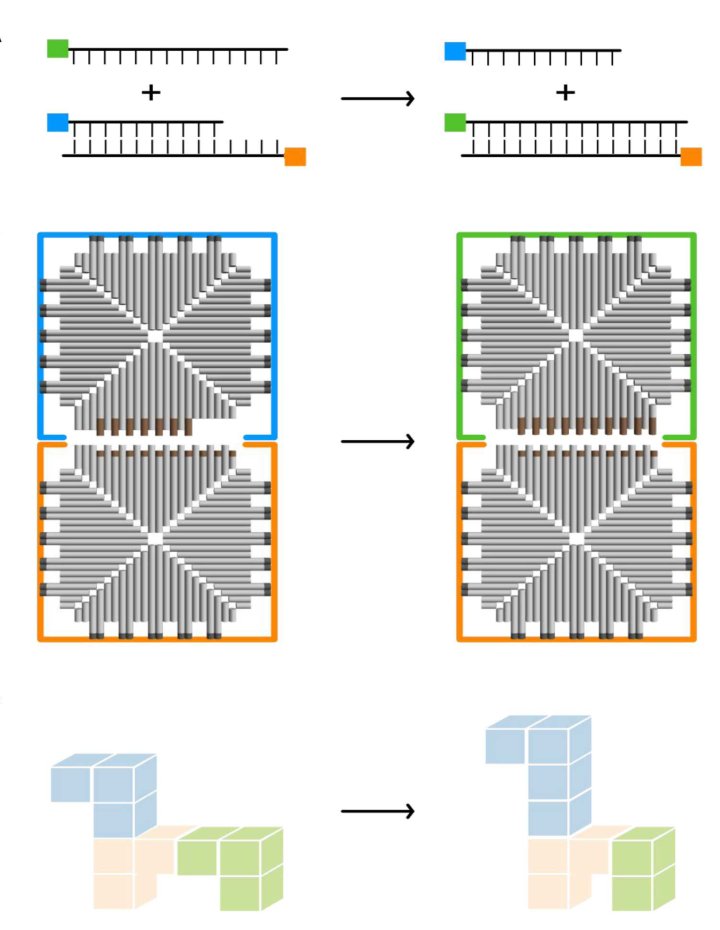
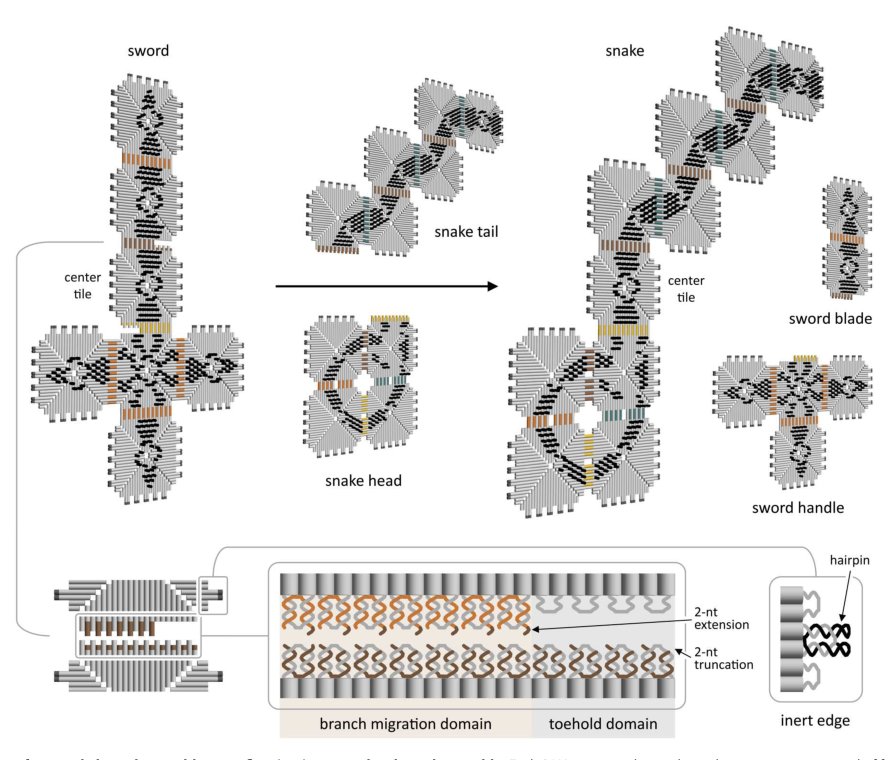
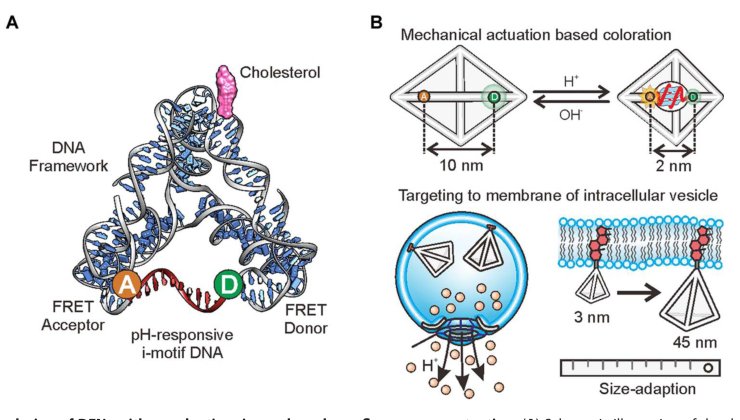
针对传统 DNA 折纸纳米机器人多停留在单一两态开关、难以组合多刺激与多步骤任务的问题,论文提出 SEPP:把可重构 DNA 折纸阵列视为耦合反连接节点网络,并用预结合 fuel DNA 提供“弹簧加载”能量,通过节点锁定/解锁编程能量景观。实验展示其可响应 DNA、酶、蛋白和光,实现 AND/OR 与多级布尔逻辑、顺序和延时控制,并驱动荧光开关、信号放大和货物释放等输出。

Flow-driven magnetic microcatheter for superselective arterial embolization Figure 1
Science Robotics2025-10-22

Flow-driven magnetic microcatheter for superselective arterial embolization

Lucio Pancaldi, Ece Özelçi, Mehdi Ali Gadiri, Julian Raub, Pascal John Mosimann, Mahmut Selman Sakar

Institute of Mechanical Engineering, Ecole Polytechnique Fédérale de Lausanne (EPFL), 1015 Lausanne, Switzerland, Neuroradiology Division, Toronto Western Hospital, Toronto, Ontario M5T 2S8, Canada

移动机器人安全机器人

针对传统导丝/微导管依赖近端推扭、难进入远端细小弯曲脑血管且有损伤风险的问题,论文提出 MagFlow:超薄聚酰亚胺可充胀扁管借血流牵引前进,磁性显影头由外部紧凑磁平台转向,到位后充胀以低阻输注药液。猪模型中实现进入直径约180 µm、曲率半径0.69 mm的远端动脉,并完成造影剂和液体栓塞剂的超选择性输注。

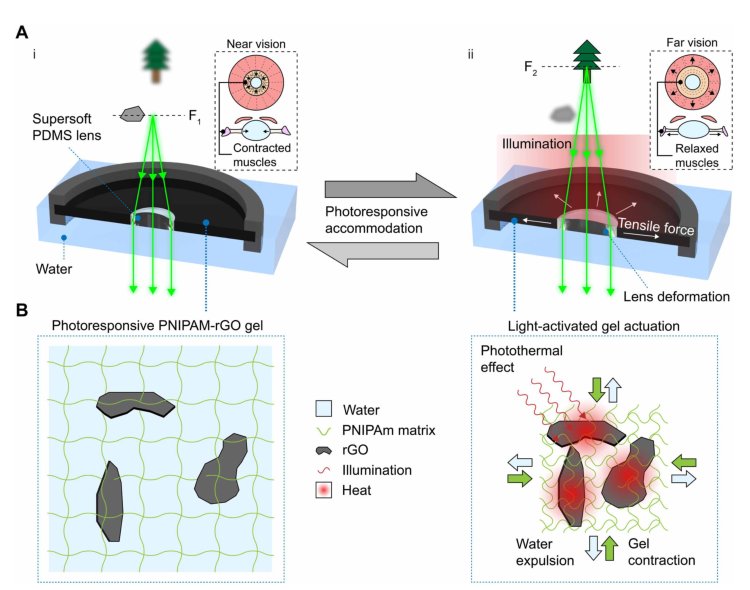
Bioinspired photoresponsive soft robotic lens Figure 1
Science Robotics2025-10-22

Bioinspired photoresponsive soft robotic lens

Corey Zheng, Shu Jia

Laboratory for Systems Biophotonics, Georgia Institute of Technology, Atlanta, GA 30332, USA, Wallace H. Coulter Department of Biomedical Engineering, Georgia Institute of Technology and Emory University, Atlanta, GA 30332, USA, Parker H. Petit Institute for Bioengineering and Biosciences, Georgia Institute of Technology, Atlanta, GA 30332, USA

移动机器人软体机器人仿生机器人机器人

针对现有可调仿生镜头依赖电子驱动、液体密封或刚性结构、难以嵌入软体系统的问题,本文提出光响应水凝胶软镜头 PHySL:rGO-PNIPAM 水凝胶吸光发热收缩,径向拉伸 PDMS 透镜,实现全光、全固态焦距调节。实验显示其焦距可调约30%、分辨率50–120 lp/mm,并可通过时空光场实现开环调焦、波前工程和光束偏转,初步验证了无电软体成像器件的可行性。

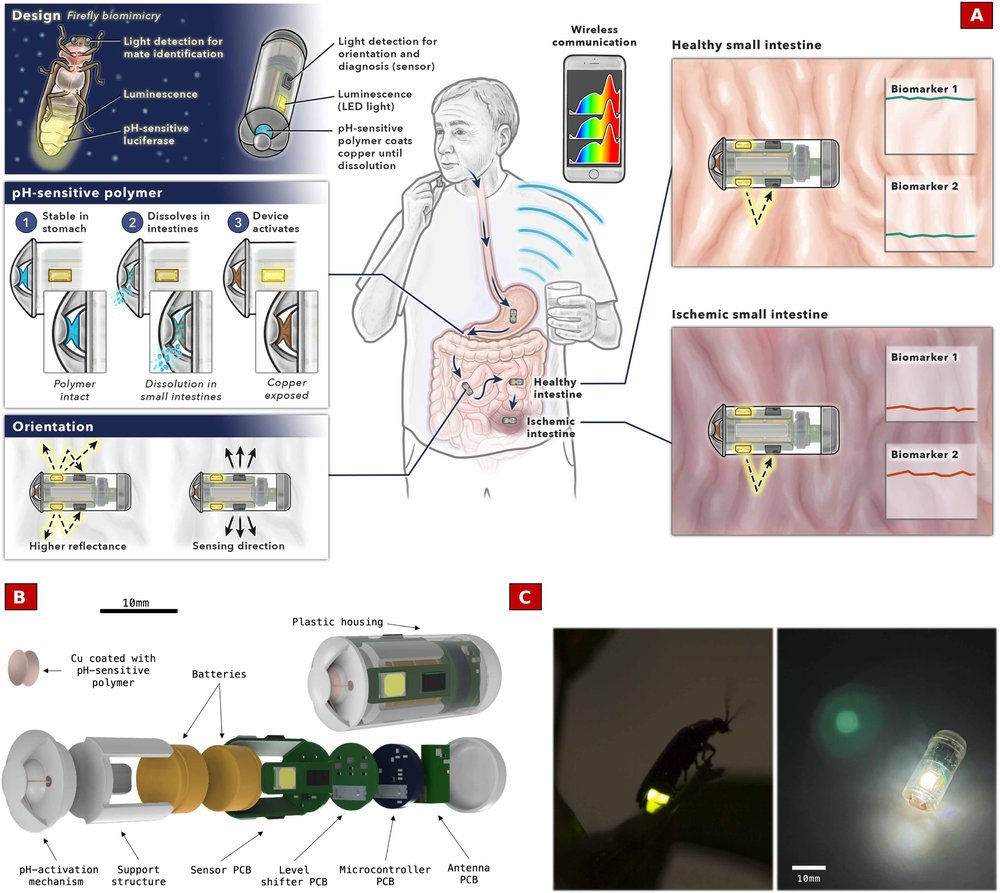
An ingestible capsule for luminance-based diagnosis of mesenteric ischemia Figure 1
Science Robotics2025-10-22

An ingestible capsule for luminance-based diagnosis of mesenteric ischemia

J. Chen, A. Alexiev, A. Sergnese, N. Fabian, A. Pettinari, Y. Cai, V. Perepelook, K. Schmidt, A. Hayward, A. Guevara, B. Laidlaw, I. Moon, B. Markowitz, I. Ballinger, Z. Yang, C. Rosen, N. Shalabi, S. Owyang, G. Traverso

Department of Mechanical Engineering, Massachusetts Institute of Technology, Cambridge, MA, USA, Division of Gastroenterology, Department of Medicine, Brigham and Women’s Hospital, Harvard Medical School, Boston, MA, USA, Division of Comparative Medicine, Massachusetts Institute of Technology, Cambridge, MA, USA, Koch Institute for Integrative Cancer Research, Massachusetts Institute of Technology, Cambridge, MA, USA, Program in Media Arts and Sciences, Massachusetts Institute of Technology, Cambridge, MA, USA, Broad Institute of MIT and Harvard, Cambridge, MA, USA

仿生机器人强化学习机器人

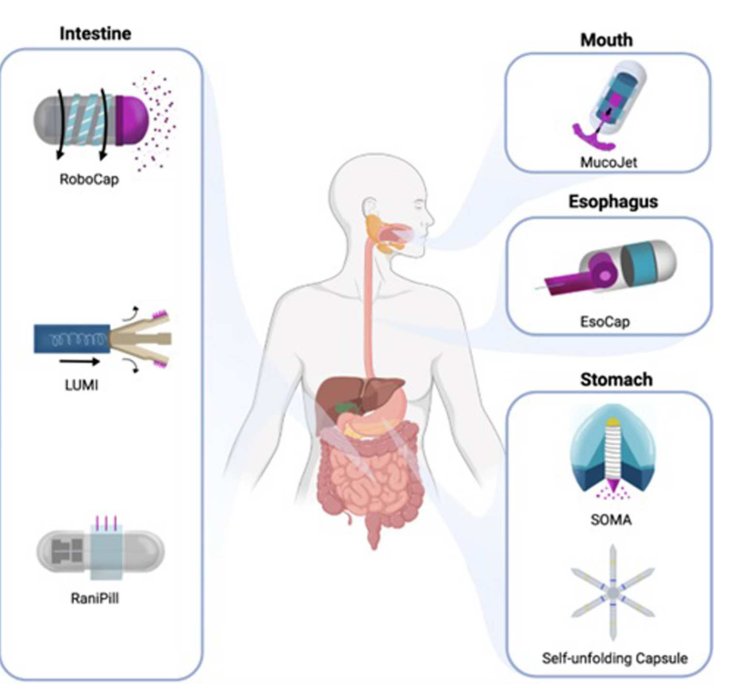
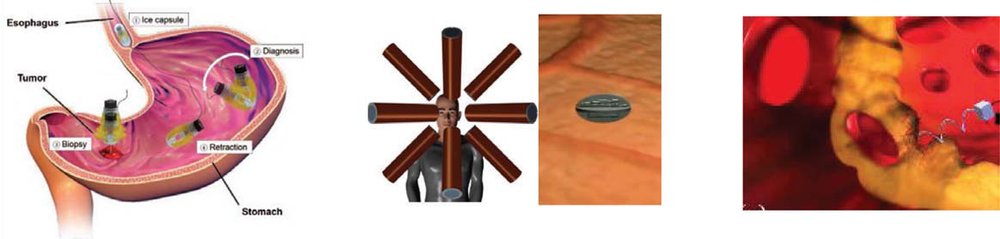
急性肠系膜缺血症状不特异,现有 CTA/血管造影诊断慢、贵且有侵入性。本文提出仿萤火虫可吞服胶囊 FIREFLI,在小肠 pH 环境中激活,用三组白光 LED 与10通道光电传感器测反射光,并在端侧计算组织亮度而非颜色变化作为缺血标志物。猪体内实验显示诊断准确率90%、灵敏度98%、特异度85%,另验证了安全通过胃肠道和2.4GHz无线传输。

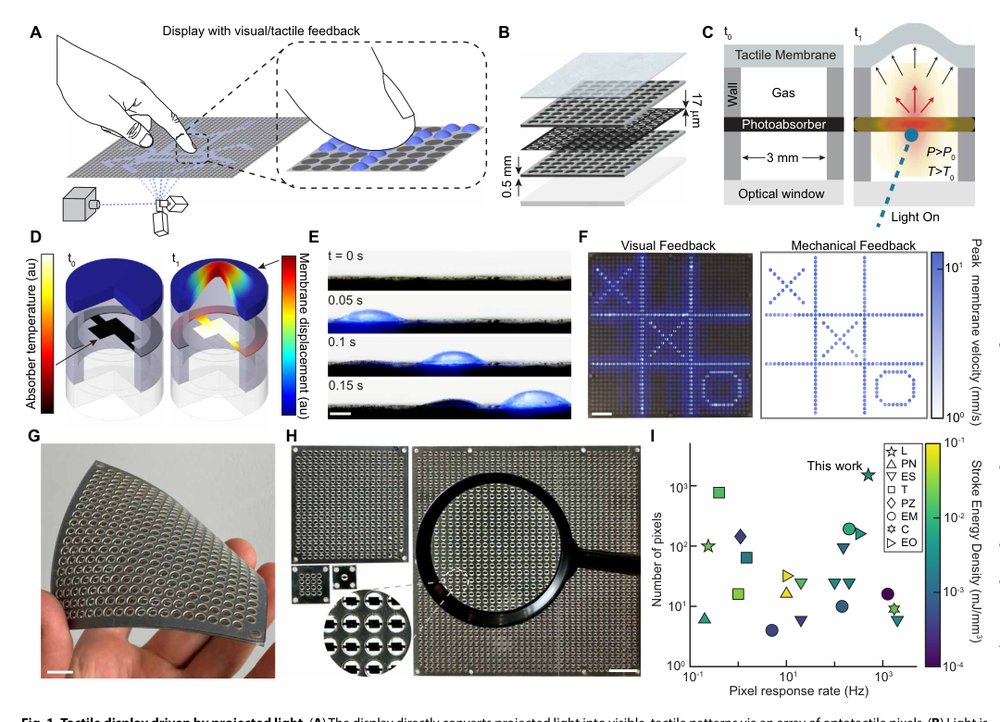
Tactile displays driven by projected light Figure 1
Science Robotics2025-10-15

Tactile displays driven by projected light

Max Linnander, Dustin Goetz, Gregory Reardon, Vijay Kumar, Elliot Hawkes, Yon Visell

Department of Mechanical Engineering, University of California, Santa Barbara, CA, USA, Media Arts and Technology Program, University of California, Santa Barbara, CA, USA, Department of Bioengineering, University of California, Santa Barbara, CA, USA, Department of Electrical and Computer Engineering, University of California, Santa Barbara, CA, USA

触觉机器人

面向动态触觉显示难以同时获得高分辨率、快速刷新和可扩展驱动的问题,本文用投影光同时供能与寻址,让含薄膜吸光体的充气毫米级像素通过光热气体膨胀产生位移。原型实现最高1511个可寻址像素、约1 mm位移、55 mN力和2至100 ms响应,并在人感实验中复现多类时空触觉图案。

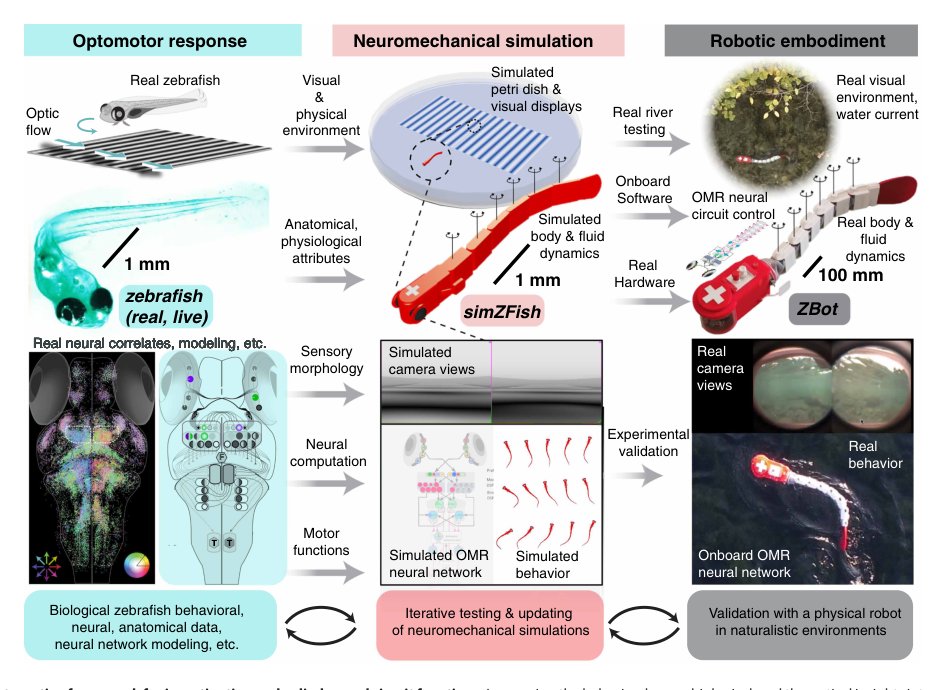
Artificial embodied circuits uncover neural architectures of vertebrate visuomotor behaviors Figure 1
Science Robotics2025-10-15

Artificial embodied circuits uncover neural architectures of vertebrate visuomotor behaviors

Xiangxiao Liu, Matthew D. Loring, Luca Zunino, Kaitlyn E. Fouke, François A. Longchamp, Alexandre Bernardino, Auke J. Ijspeert, Eva A. Naumann

Biorobotics Laboratory, École Polytechnique Fédérale de Lausanne (EPFL), Lausanne 1015, Switzerland, Duke School of Medicine, Department of Neurobiology, Durham, NC 27710, USA, Institute for Systems and Robotics, Instituto Superior Técnico, Lisbon 1049-001, Portugal, Department of Psychology & Neuroscience, Duke University, Durham, NC 27708, USA, Duke School of Medicine, Department of Cell Biology, Duke University, Durham, NC 27708, USA, Department of Biomedical Engineering, Duke University, Durham, NC 27708, USA

操作移动机器人医疗机器人仿生机器人机器人

针对传统神经环路研究脱离身体与环境、难以解释真实感觉运动行为的问题,本文构建斑马鱼神经机械仿真 simZFish,并与活体钙成像和实体 ZBot 机器人迭代验证。核心洞察是视觉形态、视网膜连接和水动力反馈会共同塑造最优环路结构;模型不仅复现实验中的视动反应,还预测并验证了新神经响应类型,并在虚拟河流和真实河流中实现基于光流的逆流定位稳定。

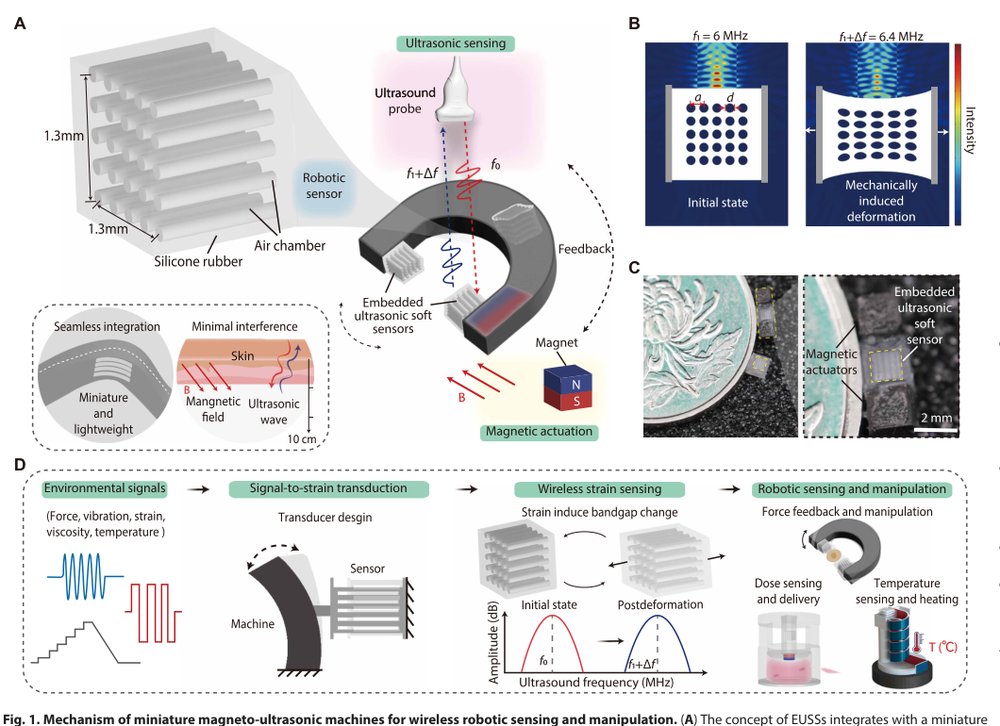
Miniature magneto-ultrasonic machines for wireless robotic sensing and manipulation Figure 1
Science Robotics2025-09-17

Miniature magneto-ultrasonic machines for wireless robotic sensing and manipulation

Xurui Liu, Hanchuan Tang, Na Li, Linjie He, Ye Tian, Bo Hao, Junnan Xue, Chaoyu Yang, Joseph Jao Yiu Sung, Li Zhang, Jianfeng Zang

School of Integrated Circuits and Wuhan National Laboratory for Optoelectronics, Huazhong University of Science and Technology, Wuhan, China, Department of Mechanical and Automation Engineering, Chinese University of Hong Kong, Shatin, New Territories, Hong Kong SAR, China, Lee Kong Chian School of Medicine, Nanyang Technological University, Singapore, Singapore, Department of Surgery, Chinese University of Hong Kong, Shatin, Hong Kong, China, State Key Laboratory of Intelligent Manufacturing Equipment and Technology, Huazhong University of Science and Technology, Wuhan, China

操作触觉强化学习微型机器人机器人

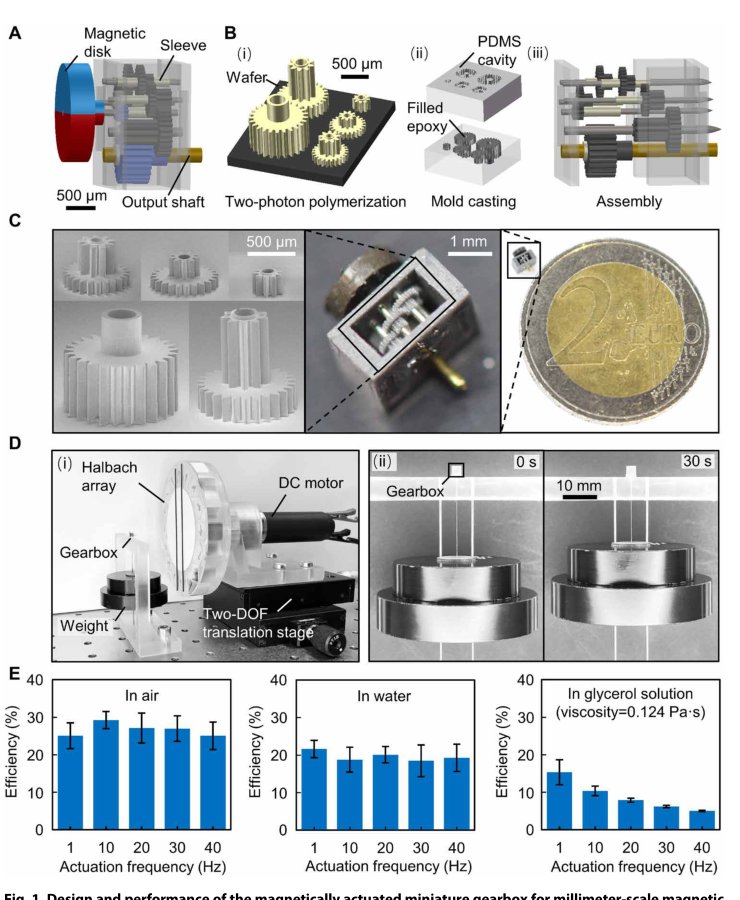
微型体内机器人受限于磁驱动、传感与通信在毫米尺度难兼容,难以闭环操作。本文将嵌入式超声软传感器与磁执行器一体化,利用声子晶体微气泡阵列的被动超声回波频移,把力、振动、黏度和温度等环境信号转为应变读出,无需电池或板载电子。系统实现毫米级无线感知与操控,并在兔和猪模型中展示反馈控制、定量给药和原位生理监测潜力。

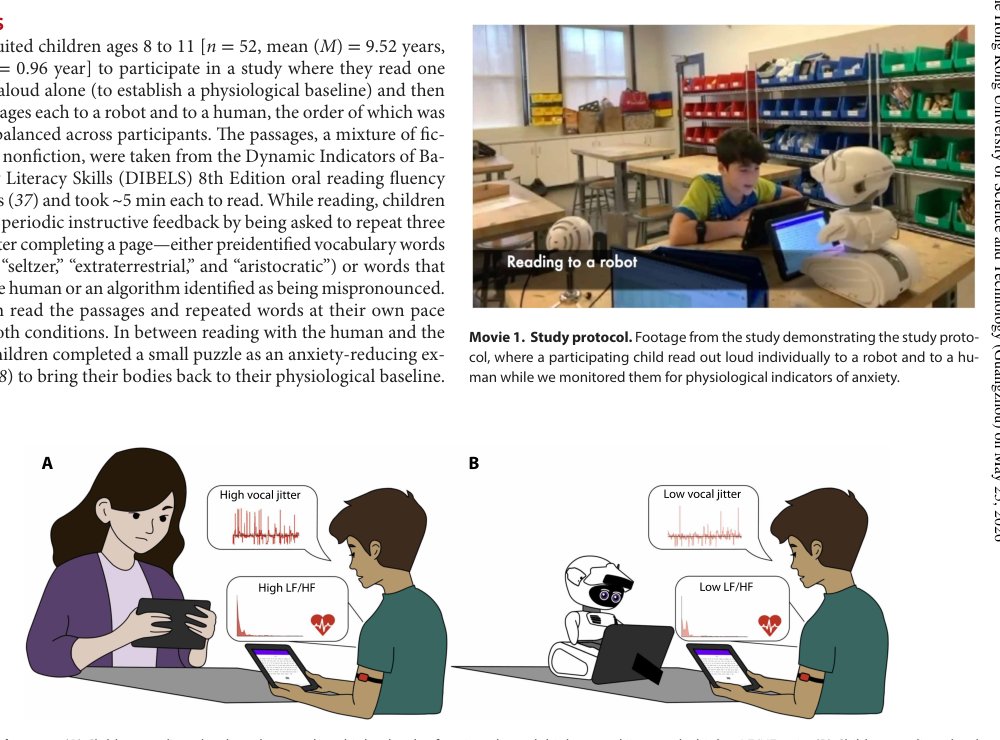
Robotic reading companions can mitigate oral reading anxiety in children Figure 1
Science Robotics2025-09-10

Robotic reading companions can mitigate oral reading anxiety in children

Lauren L. Wright, Pooja Vegesna, Joseph E. Michaelis, Bilge Mutlu, Sarah Sebo

University of Chicago, Chicago, IL 60637, USA, University of Illinois Chicago, Chicago, IL 60607, USA, University of Wisconsin-Madison, Madison, WI 53706, USA

机器人机器人学习

针对儿童朗读练习常因面对教师或同伴而产生表现焦虑、进而影响阅读流利度与理解的问题,论文用被试内实验让52名8至11岁儿童分别读给人和实体机器人听,并以声带抖动、心率变异等客观生理指标替代单纯问卷。结果显示,读给机器人时儿童声音更稳定、心率压力反应更低,且未牺牲阅读理解,说明机器人陪读可降低口头阅读焦虑。

Observing a robot peer’s failures facilitates students’ classroom learning Figure 1
Science Robotics2025-09-10

Observing a robot peer’s failures facilitates students’ classroom learning

Liuqing Chen, Yu Cai, Yuyang Fang, Ziqi Yang, Duowei Xia, Jiaxiang You, Shuhong Xiao, Yaxuan Song, Lingwei Zhan, Juanjuan Chen, Lingyun Sun

College of Computer Science and Technology, Zhejiang University, Hangzhou, China, Donald Bren School of Information and Computer Sciences, University of California, Irvine, Irvine, USA, School of Software Technology, Zhejiang University, Ningbo, China, College of Education, Zhejiang University, Hangzhou, China

强化学习机器人

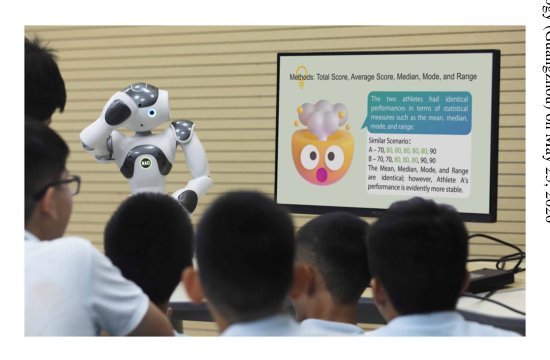
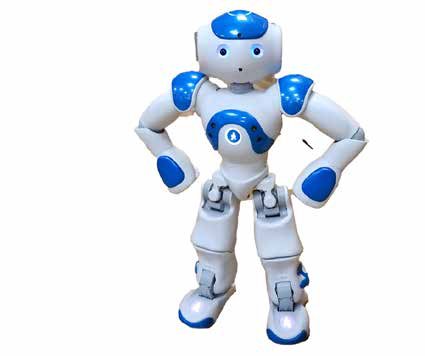
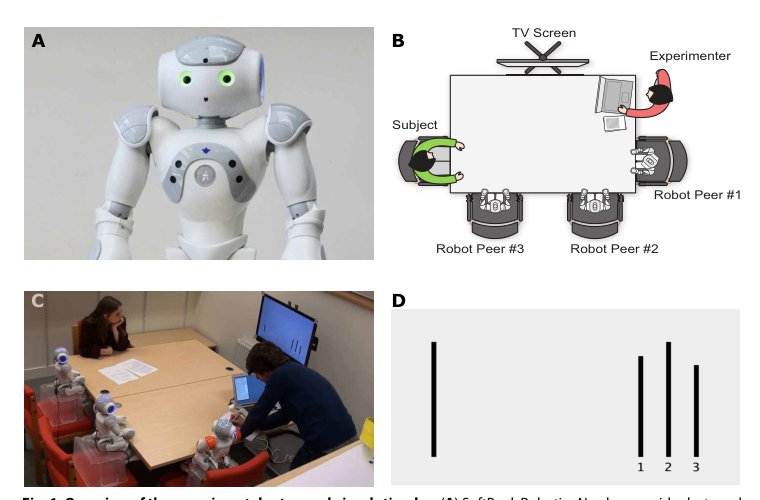
本文针对“生产性失败”虽能促学但会增加学生挫败、焦虑和同伴压力的问题,将 NAO 社交机器人设计成会尝试并失败的课堂同伴,让学生旁观其解题失误后再接受正式教学。两项真实中学数学课堂研究显示,相比直接讲授和学生亲自失败,观察机器人失败能提升概念理解,并在适应期后仍改善知识迁移,同时降低社会压力;程序性知识优势不明显。

RoboBallet: Planning for multirobot reaching with graph neural networks and reinforcement learning Figure 1
Science Robotics2025-09-03

RoboBallet: Planning for multirobot reaching with graph neural networks and reinforcement learning

Matthew Lai, Keegan Go, Zhibin Li, Torsten Kröger, Stefan Schaal, Kelsey Allen, Jonathan Scholz

Google DeepMind, London, UK, University College London, London, UK

仿生机器人强化学习机器人

多机器人制造单元中,任务分配、顺序调度与避障运动规划耦合导致传统搜索和人工示教难以扩展。RoboBallet 的关键做法是把机器人、任务和障碍构成图,用 GNN 策略经强化学习离线训练,在推理时直接输出多臂联合速度,从而用学习到的启发式替代在线组合搜索。文中在仿真八臂40任务、30障碍以及四臂真实平台上生成秒级轨迹,并展示布局优化可将执行时间最高降低33%,但方法主要以经验效果换取理论完备性。

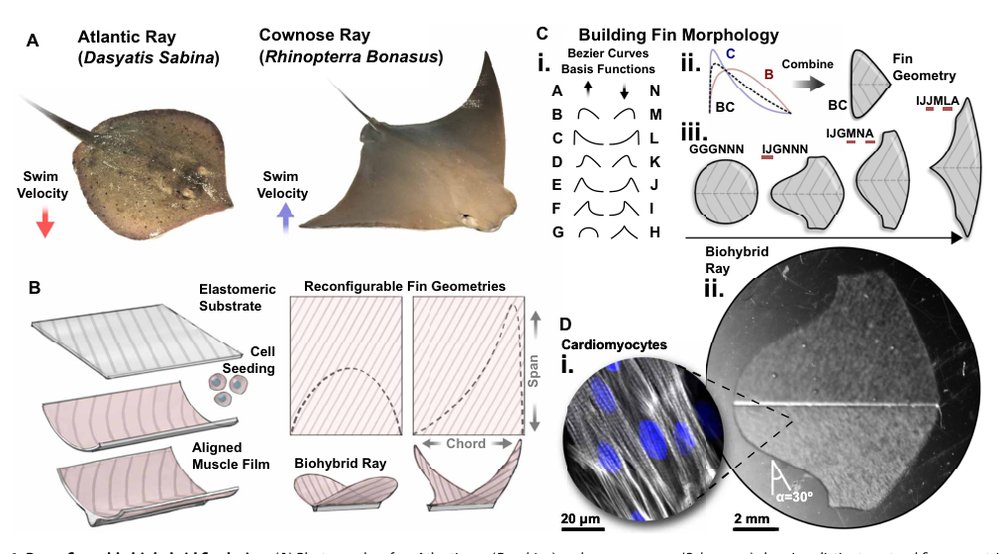
Optogenetic neuromuscular actuation of a miniature electronic biohybrid robot Figure 1
Science Robotics2025-09-03

Optogenetic neuromuscular actuation of a miniature electronic biohybrid robot

Hyegi Min, Yue Wang, Jiaojiao Wang, Xiuyuan Li, Woong Kim, Onur Aydin, Sehong Kang, Jae-Sung You, Jongwon Lim, Katy Wolhaupter, Yikang Xu, Zhengguang Zhu, Jianyu Gu, Xinming Li, Yongdeok Kim, Tarun Rao, Hyun Joon Kong, Taher A. Saif, Yonggang Huang, John A. Rogers, Rashid Bashir

Nick J. Holonyak Micro and Nanotechnology Laboratory, Grainger College of Engineering, University of Illinois at Urbana-Champaign, Urbana, IL 61801, USA, Querrey Simpson Institute for Bioelectronics, Northwestern University, Evanston, IL 60208, USA, Department of Biomedical Engineering, Northwestern University, Evanston, IL 60208, USA, Department of Bioengineering, Grainger College of Engineering, University of Illinois at Urbana-Champaign, Urbana, IL 61801, USA, Department of Civil and Environmental Engineering, Northwestern University, Evanston, IL 60208, USA, State Key Laboratory of Mechanical System and Vibration, School of Mechanical Engineering, Shanghai Jiao Tong University, Shanghai 200240, China, Scott H. Fisher Multi-Cellular Engineered Living System Theme, Carl R. Woese Institute for Genomic Biology, University of Illinois at Urbana-Champaign, Urbana, IL 61801, USA, Department of Mechanical Science and Engineering, Grainger College of Engineering, University of Illinois at Urbana-Champaign, Urbana, IL 61801, USA, Department of Cell and Developmental Biology, Grainger College of Engineering, University of Illinois at Urbana-Champaign, Urbana, IL, USA, Department of Chemical and Biological Engineering, Northwestern University, Evanston, IL 60208, USA, Department of Materials Science and Engineering, Grainger College of Engineering, University of Illinois at Urbana-Champaign, Urbana, IL, USA, Department of Chemical and Biomolecular Engineering, Grainger College of Engineering, University of Illinois at Urbana-Champaign, Urbana, IL 61801, USA, Department of Materials Science and Engineering, Northwestern University, Evanston, IL 60208, USA, Department of Mechanical Engineering, Northwestern University, Evanston, IL 60208, USA, Department of Neurological Surgery, Feinberg School of Medicine, Northwestern University, Chicago, IL 60611, USA, Center for Bio-Integrated Electronics, Northwestern University, Evanston, IL 60208, USA, Department of Biomedical and Translational Sciences, Carle Illinois College of Medicine, Urbana, IL 61801, USA

移动机器人仿生机器人微型机器人机器人

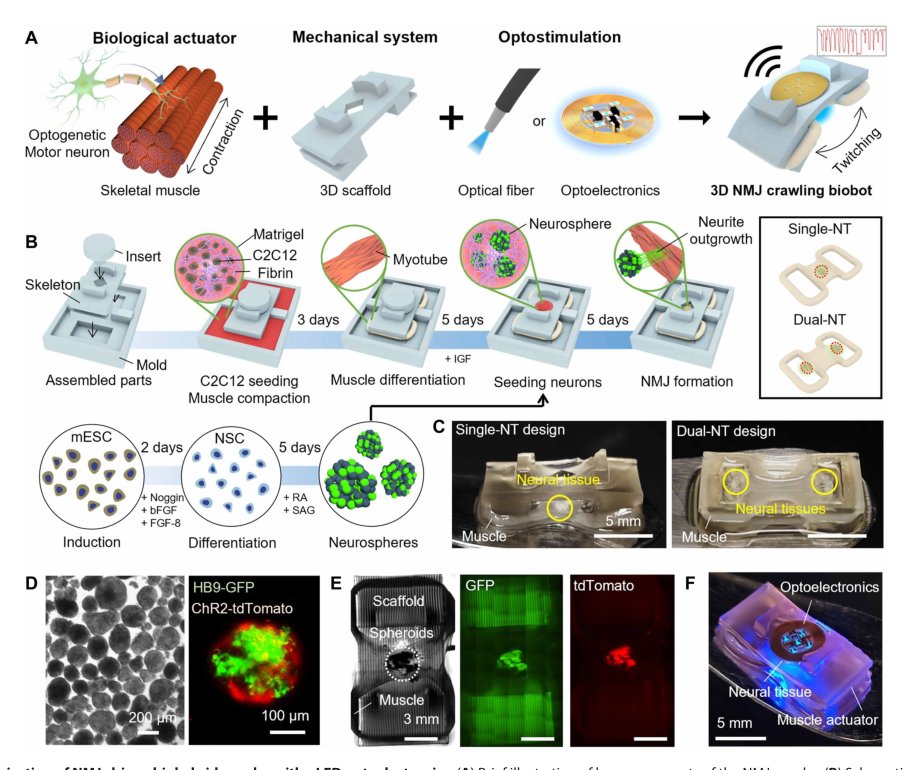
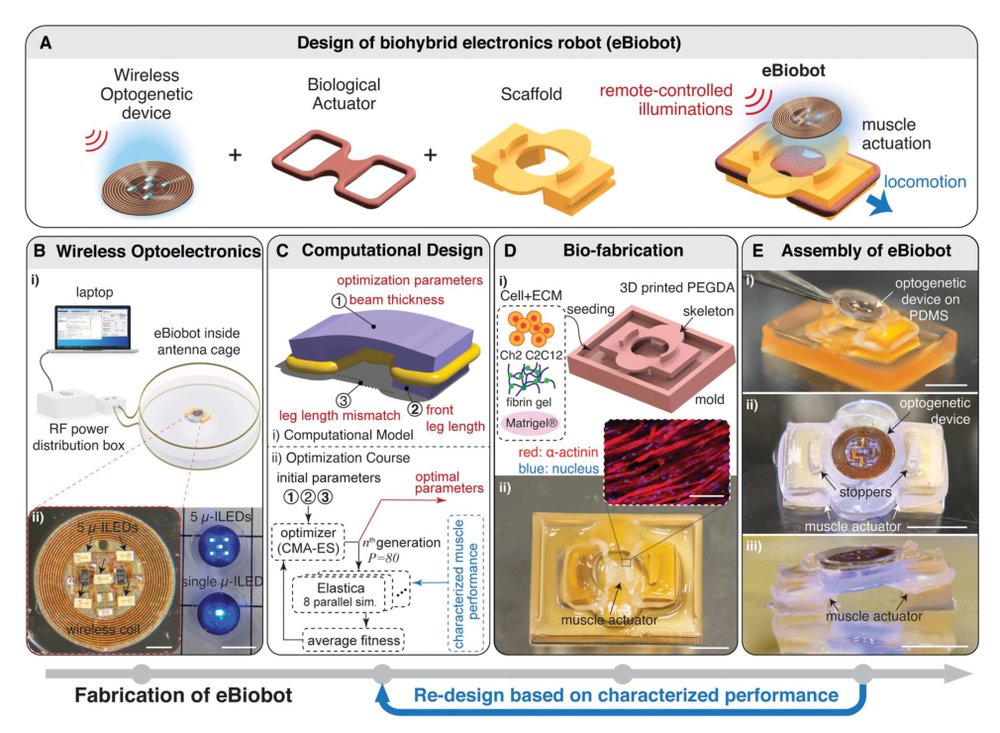
为解决神经活动如何转化为肌肉力学输出仍难量化的问题,论文构建了含光遗传小鼠运动神经元、骨骼肌、3D打印水凝胶支架与无线μLED的微型NMJ爬行机器人,并用PSD分析关联光刺激频率与运动响应。结果显示光刺激可调制爬行/收缩,2 Hz短时刺激后肌肉可持续收缩约20分钟,系统功能维持超过两周,但精确控制仍受自发放电和样本差异限制。

Explosion-powered eversible tactile displays Figure 1
Science Robotics2025-08-27

Explosion-powered eversible tactile displays

Ronald H. Heisser, Khoi D. Ly, Ofek Peretz, Young S. Kim, Carlos A. Diaz-Ruiz, Rachel M. Miller, Cameron A. Aubin, Sadaf Sobhani, Nikolaos Bouklas, Robert F. Shepherd

Department of Mechanical and Aerospace Engineering, Cornell University, Ithaca, NY 14850, USA, Pasteur Labs, Brooklyn, NY 11205, USA

软体机器人触觉机器人

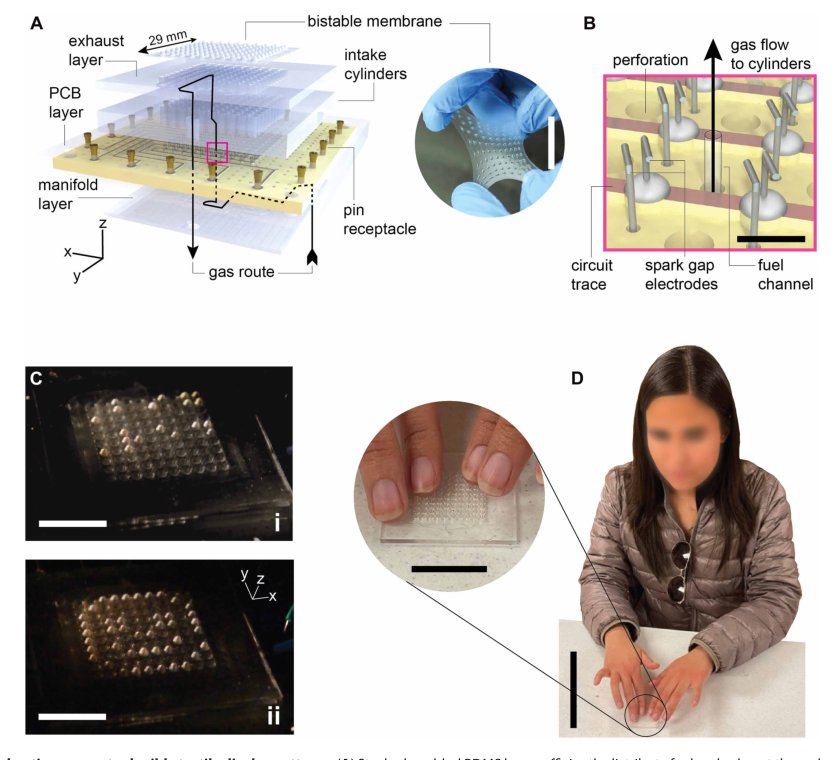
面向盲文/远程操作等高分辨率触觉显示中“多执行器、小体积、低功耗且耐污耐水”的矛盾,论文提出用微量燃氧混合气火花燃爆驱动可外翻的双稳态硅胶圆顶阵列,并以真空复位、微流道供排气实现无阀独立控制。原型为10×10个2 mm触点,单点约0.24 ms升起,可生成盲文和图案,密封软结构减少滑动部件并展示了非系留完整循环。

Attention-based map encoding for learning generalized legged locomotion Figure 1
Science Robotics2025-08-27

Attention-based map encoding for learning generalized legged locomotion

Junzhe He, Chong Zhang, Fabian Jenelten, Ruben Grandia, Moritz Bächer, Marco Hutter

Robotic Systems Lab, ETH Zurich, 8092 Zurich, Switzerland

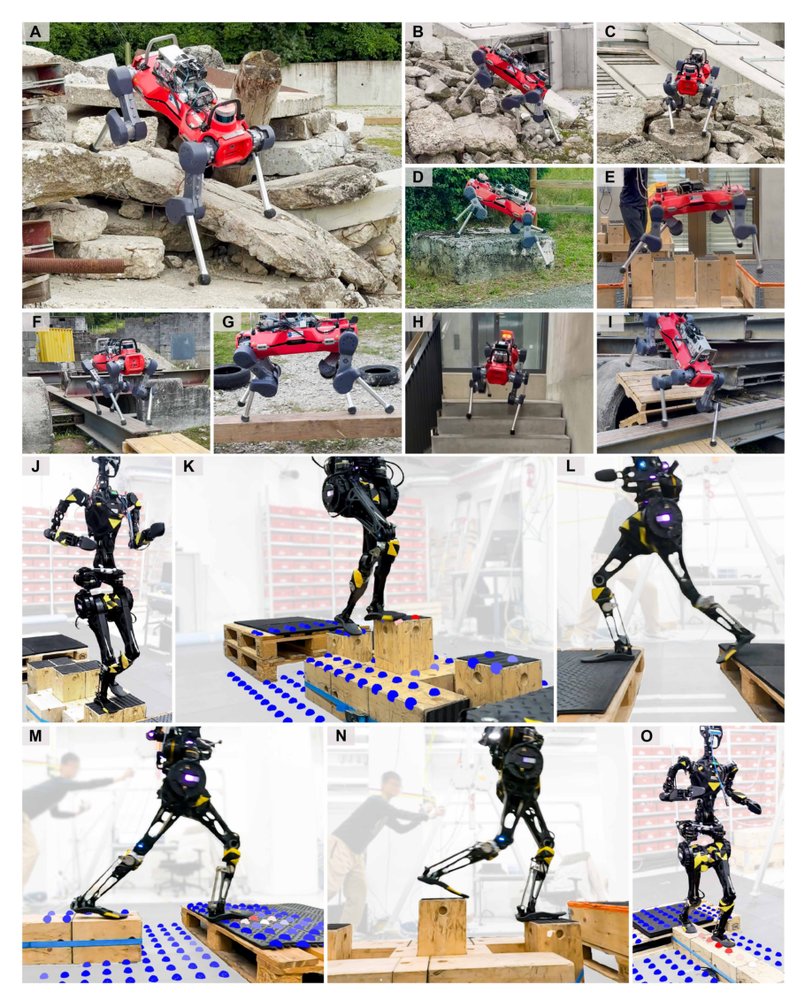
移动机器人仿生机器人强化学习人形机器人机器人

针对腿式机器人在稀疏落脚点地形上难以同时兼顾精确规划、抗不确定性和跨地形泛化的问题,论文将以本体感知为条件的注意力地图编码嵌入强化学习控制器,使网络在高度图中主动关注未来可落脚区域而非依赖在线MPC。该方法在12自由度四足和23自由度人形机器人上训练并零样本实机部署,能通过训练外的踏石、梁、间隙和混合障碍,并表现出滑移恢复、全身协调与速度跟踪能力。

Si chiplet–controlled 3D modular microrobots with smart communication in natural aqueous environments Figure 1
Science Robotics2025-08-20

Si chiplet–controlled 3D modular microrobots with smart communication in natural aqueous environments

Yeji Lee, Vineeth K. Bandari, John S. McCaskill, Pranathi Adluri, Daniil Karnaushenko, Dmitriy D. Karnaushenko, Oliver G. Schmidt

Material Systems for Nanoelectronics, Chemnitz University of Technology, 09107 Chemnitz, Germany, Research Center for Materials, Architectures and Integration of Nanomembranes (MAIN), Chemnitz University of Technology, 09126 Chemnitz, Germany, European Centre for Living Technology (ECLT), Ca’ Bottacin, Dorsoduro 3911, Venice 30123, Italy

移动机器人飞行机器人群体机器人微型机器人机器人

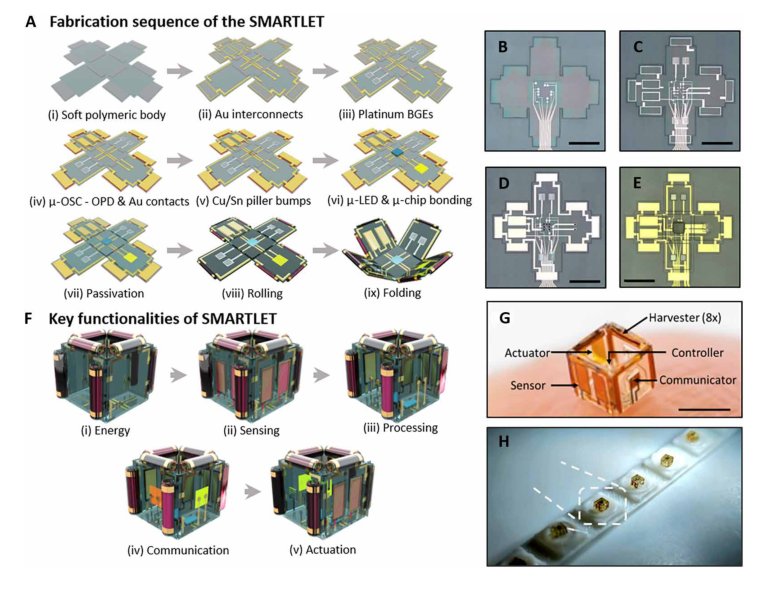
针对亚毫米模块化微机器人受表面积限制,难以同时集成供能、控制、通信、驱动与自组装的问题,论文将Si CMOS chiplet、μLED、光电二极管、气泡电极和卷曲有机太阳能电池集成到自折叠/自卷曲3D“smartlet”中。实验证明其可在湖水等自然水环境中靠环境光供能,通过电解调浮实现程序化上下运动,并用频率选择光信号对单个模块独立寻址通信。

Precise and dexterous robotic manipulation via human-in-the-loop reinforcement learning Figure 1
Science Robotics2025-08-20

Precise and dexterous robotic manipulation via human-in-the-loop reinforcement learning

Jianlan Luo, Charles Xu, Jeffrey Wu, Sergey Levine

Department of Electrical Engineering and Computer Sciences, University of California, Berkeley, CA 94720, USA

操作移动机器人强化学习安全机器人

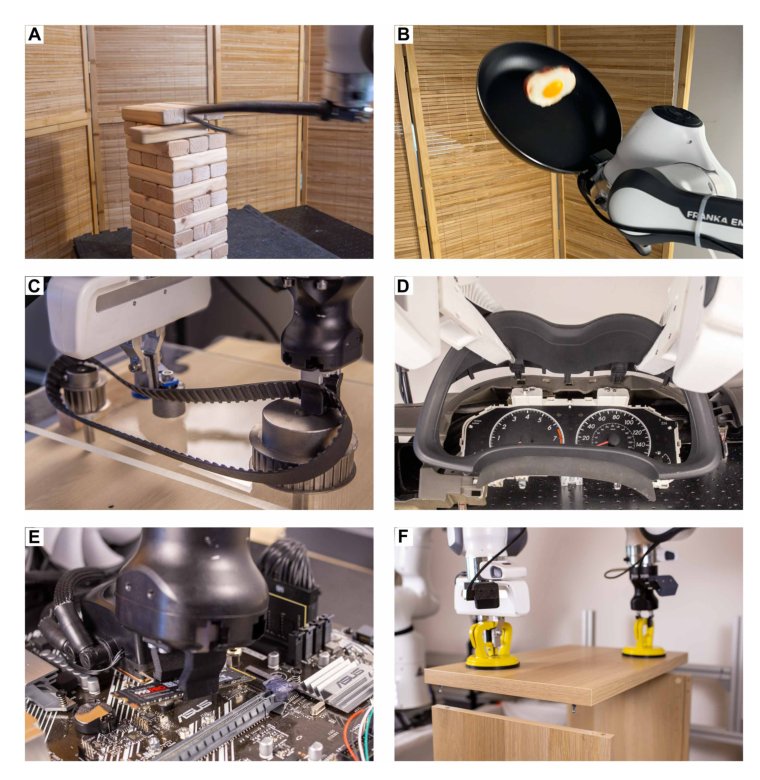
面向真实部署中精密操作对可靠性、速度和安全采样的要求,论文提出 HIL-SERL,将预训练视觉表征、含先验数据的离策略强化学习、示教与人工在线纠错以及安全低层控制整合起来,在真实机器人上直接学习策略。其在装配、动态操作和双臂协作等任务中仅训练 1–2.5 小时,成功率约提升 2 倍、接近满分,并平均提速 1.8 倍。

Learning contact-rich whole-body manipulation with example-guided reinforcement learning Figure 1
Science Robotics2025-08-20

Learning contact-rich whole-body manipulation with example-guided reinforcement learning

Jose A. Barreiros, Aykut Özgün Önol, Mengchao Zhang, Sam Creasey, Aimee Goncalves, Andrew Beaulieu, Aditya Bhat, Kate M. Tsui, Alex Alspach

Toyota Research Institute, Cambridge, MA, USA

操作飞行机器人触觉强化学习人形机器人

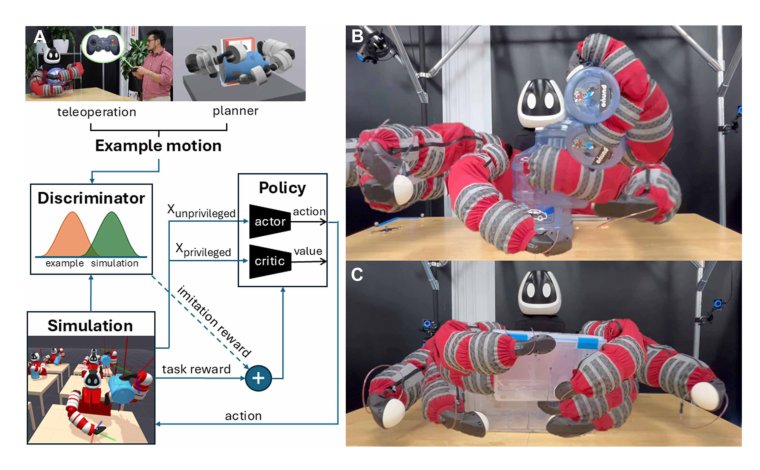
这篇论文针对大件、笨重物体的全身接触操作难以显式规划接触组合、且示教成本高的问题,提出用单条示例轨迹引导强化学习,并结合 Punyo 机器人软体触觉皮肤、主动/被动顺应性和域随机化实现 sim-to-real。实验表明,该方法可在真实机器人上完成抱举箱子、肩扛水壶、旋转水壶等任务,甚至仅依赖本体与触觉反馈进行盲操作;分析也显示顺应性是鲁棒接触操作的重要来源。

Plasticized electrohydraulic robot autopilots in the deep sea Figure 1
Science Robotics2025-08-13

Plasticized electrohydraulic robot autopilots in the deep sea

Guorui Li, Peng Shen, Tuck-Whye Wong, Mingyu Liu, Zhenxiang Sun, Xinyu Liu, Yongzai Chen, Xianghan Wang, Hao Zhang, Bingxu Hu, Deli Chen, Zhihan Zhang, Chao Zhang, Rongchen Wang, Wenhao Zhang, Shuai Nie, Xinyue Zhang, Jie-Wei Wong, Haofei Zhou, Wenbo Li, Hao Wang, Qian Zhang, Shenlong Wang, Zhiwen Yu, Hai Li, Hongyu Zhao, Qingyun Zeng, Shiping Wang, Zhilong Huang, Cong Ye, A-Man Zhang, Tiefeng Li

College of Shipbuilding Engineering, Harbin Engineering University, Harbin, 150001, China, Qingdao Innovation and Development Base, Harbin Engineering University, Qingdao, 266000, China, National Key Laboratory of Autonomous Marine Vehicle Technology, Harbin Engineering University, Harbin, 150001, China, Zhishui Lab, Harbin Engineering University, Harbin, 150001, China, Center for X-Mechanics, Zhejiang University, Hangzhou, 310027, China, China Ship Scientific Research Center, Wuxi, 214082, China, School of Aerospace Engineering and Applied Mechanics, Tongji University, Shanghai, 200092, China, School of Mechanical Engineering, University of Shanghai for Science and Technology, Shanghai, 200093, China, School of Computer Science, Northwestern Polytechnical University, Xi’an, 710129, China, School of Electronics and Information Engineering, Hangzhou Dianzi University, Hangzhou, 310018, China, Guangdong Institute of Intelligent Unmanned System (Nansha), Guangzhou, 511400, China, Institute of Fundamental and Transdisciplinary Research, Zhejiang University, Hangzhou, 310058, China, State Key Laboratory of Ocean Sensing, Zhejiang University, Hangzhou, 310058, China

软体机器人强化学习机器人

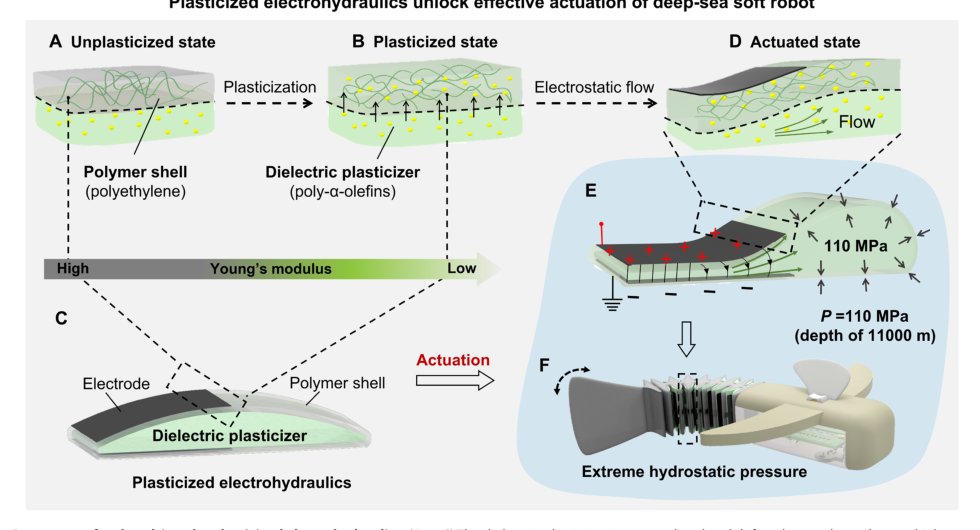
深海低温高压会使软材料变硬,限制软体机器人持续推进与自主作业。本文将液态介电增塑剂同时作为电液驱动介质和聚合物壳体软化剂,并利用海水充当交替电极以减少介电层残余电荷。机器人在最高110 MPa、2°C条件下保持较大变形,并在约1360、3176、4071米海试中完成环境感知、复杂轨迹航行、近海底高度调节和抗扰动运动。

Cooperative robotic exploration of a planetary skylight surface and lava cave Figure 1
Science Robotics2025-08-13

Cooperative robotic exploration of a planetary skylight surface and lava cave

Raúl Domínguez, Carlos Pérez-del-Pulgar, Gonzalo J. Paz-Delgado, Fabio Polisano, Jonathan Babel, Thierry Germa, Iulia Dragomir, Valérie Ciarletti, Anne-Claire Berthet, Leon Cedric Danter, Frank Kirchner

Robotics Innovation Center, German Research Center for Artificial Intelligence (DFKI), Robert-Hooke-Str. 1, 28359 Bremen, Germany, Space Robotics Laboratory, Universidad de Málaga, C/Dr. Ortiz Ramos, Málaga, Spain, LATMOS/IPSL, UVSQ Université Paris-Saclay, Sorbonne Université, CNRS, Guyancourt, France, Faculty of Mathematics and Computer Science, University of Bremen, Bibliothekstrasse, 1, Bremen, Germany

安全机器人

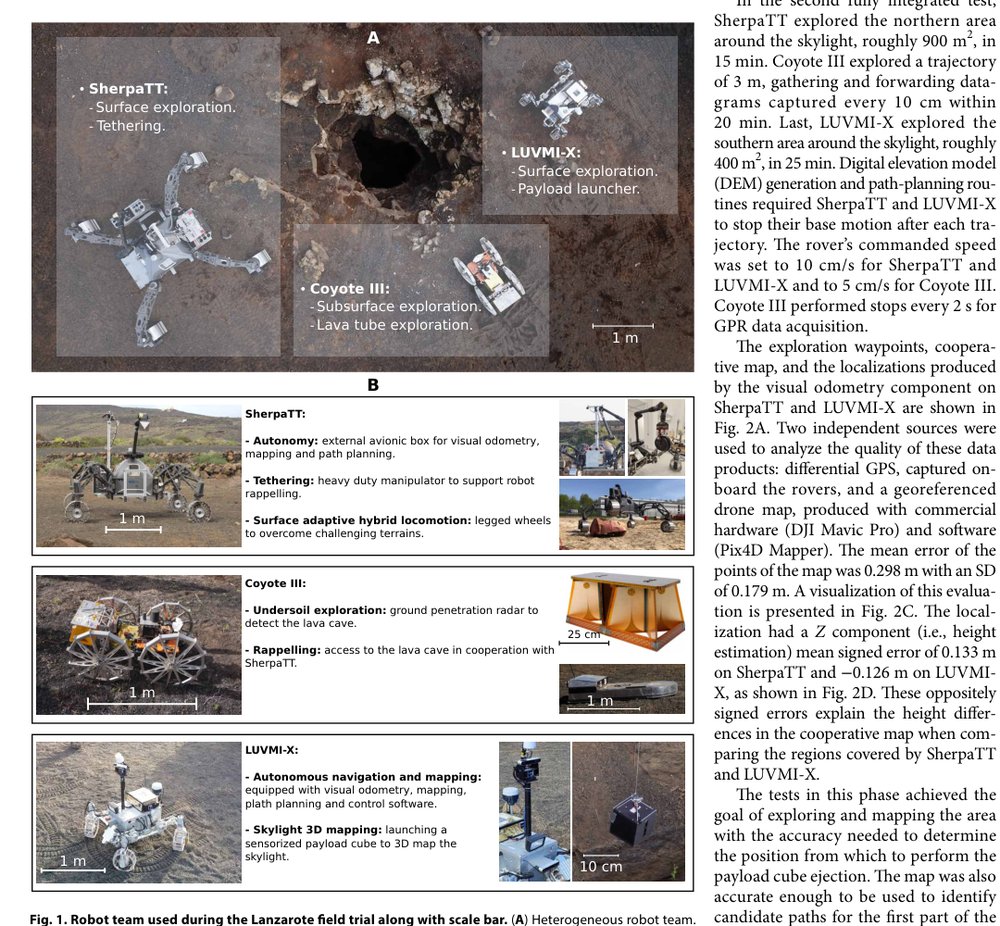
行星熔岩管可能保存生命迹象并为基地提供天然防护,但天窗入口陡峭、通信受限,载人风险高。论文提出由三台异构漫游车分工的四阶段任务:先协同建图,再投放传感载荷探测天窗,随后用系绳自主辅助小车下降并脱离探索。兰萨罗特熔岩洞实测中,团队重建了洞口与洞内三维形态,验证了任务概念可行;但洞内自主导航、通信与部分雷达探测仍未充分解决。

The grand challenges of learning medical robot autonomy Figure 1
Science Robotics2025-07-30

The grand challenges of learning medical robot autonomy

Pierre E. Dupont, Alperen Degirmenci

Department of Cardiovascular Surgery, Boston Children’s Hospital, Harvard Medical School, Boston, MA 02115, USA, NVIDIA Corporation, Santa Clara, CA 95051, USA, Harvard John A. Paulson School of Engineering and Applied Sciences, Allston, MA 02134, USA

强化学习机器人

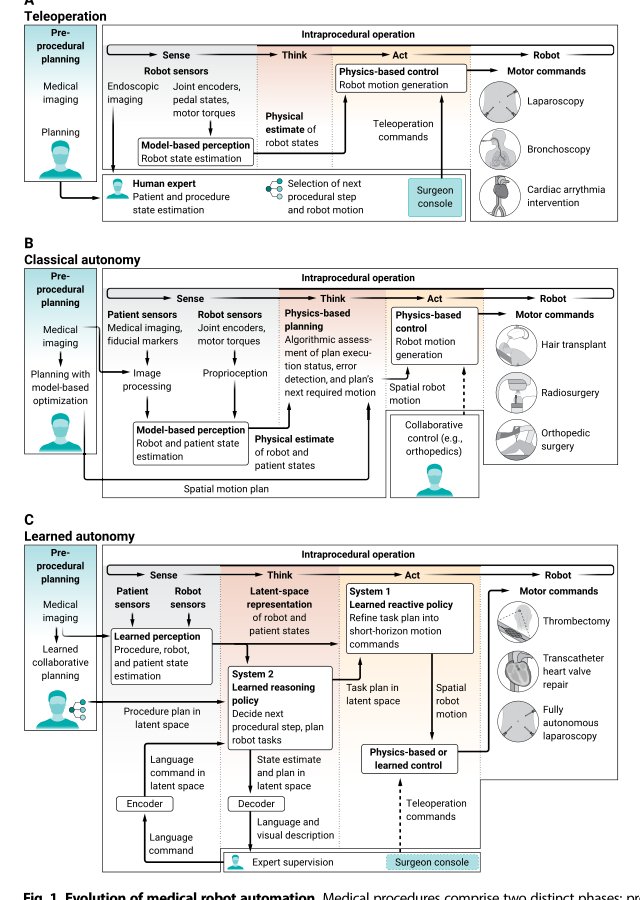
本文针对医疗机器人长期停留在遥操作、难以像工业机器人那样规模化自治的原因展开分析:患者与软组织交互无法被“重设计”,经典模型控制只适合结构化任务。文章将自治拆解为感知—思考—行动,指出学习方法可替代部分手工模型,但真正落地取决于高质量多样数据、基础模型微调、边界案例检测、人机接管与安全验证;文中未给出实验增益,主要结果是提出临床自治的挑战框架与渐进部署路线。

Medical robots learn to be autonomous Figure 1
Science Robotics2025-07-30

Medical robots learn to be autonomous

Pierre E. Dupont

Pierre E. Dupont is the Edward P. Marram chair and chief, Pediatric Cardiac Bioengineering, Boston Children’s Hospital, and professor of surgery, Harvard Medical School, Boston, MA, USA

移动机器人机器人

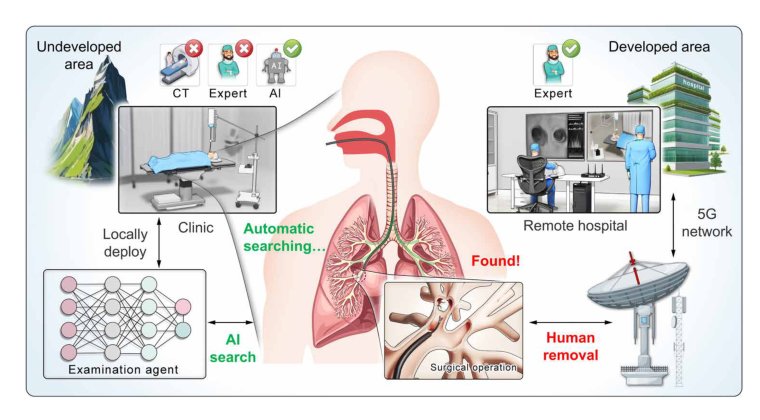
医疗机器人长期依赖医生遥操作,受软组织复杂性、患者差异和监管成本限制,临床价值难充分释放。本文指出大语言/视觉语言模型、基础模型与模仿学习、强化学习及经典搜索映射结合,可能突破医疗场景难建模和数据稀缺问题。专刊中的实例已在胆囊切除片段、腹腔镜取纱布/牵拉/夹闭、支气管异物取出等任务上使用常规内镜输入,部分完成体内演示,但安全保证、医生介入框架与成本增益仍未充分说明。

AI search, physician removal: Bronchoscopy robot bridges collaboration in foreign body aspiration Figure 1
Science Robotics2025-07-30

AI search, physician removal: Bronchoscopy robot bridges collaboration in foreign body aspiration

Lilu Liu, Jingyu Zhang, Fei Wang, Jiyu Yu, Yuxiang Cui, Zhibin Li, Jian Hu, Rong Xiong, Haojian Lu, Yue Wang

Department of Control Science and Engineering, Zhejiang University, Hangzhou 310027, China, Zhejiang Humanoid Robot Innovation Center, Ningbo 315000, China, Department of Computer Science, University College London, London WC1E 6BT, UK, Department of Thoracic Surgery, First Affiliated Hospital, School of Medicine, Zhejiang University, Hangzhou 310009, China

移动机器人强化学习安全机器人

面向支气管异物吸入急救中 CT、专家和设备不足的问题,论文提出一套低成本、便携式 5G 远程支气管镜机器人:AI 仅依赖内窥镜图像,用树状长期记忆、DFS 规划和策略网络完成无 CT 自主搜索,医生只在取出阶段介入。虚拟与实体实验显示其可覆盖支气管并减少壁面接触;活猪实验中医生跨 1500 公里成功取出异物,验证了人机协作流程的可行性。

AI in therapeutic and assistive exoskeletons and exosuits: Influences on performance and autonomy Figure 1
Science Robotics2025-07-30

AI in therapeutic and assistive exoskeletons and exosuits: Influences on performance and autonomy

Herman van der Kooij, Edwin H. F. van Asseldonk, Massimo Sartori, Chiara Basla, Adrian Esser, Robert Riener

Department of Biomechanical Engineering, University of Twente, Enschede, Netherlands, Department of Biomechanical Engineering, Delft University of Technology, Delft, Netherlands, Sensory-Motor Systems (SMS) Lab, Institute of Robotics and Intelligent Systems (IRIS), ETH Zurich, Zurich, Switzerland, University Hospital Balgrist, Medical Faculty, University of Zurich, Zurich, Switzerland

移动机器人医疗机器人强化学习机器人

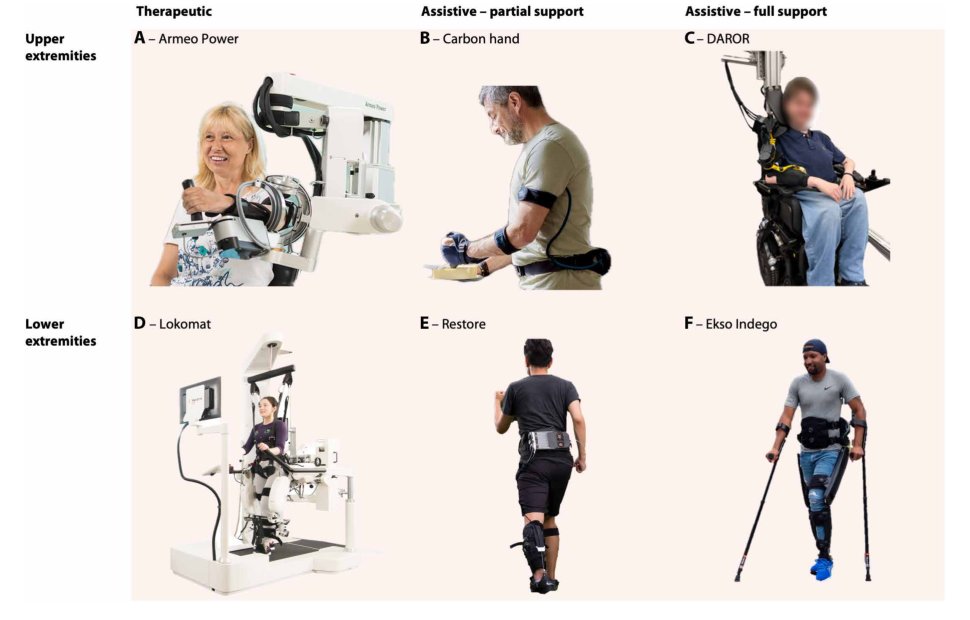
本文针对康复/辅助外骨骼仍依赖治疗师、陪护或用户显式操作的问题,梳理提升自主性的AI路径。核心洞察是把上下肢外骨骼/软外衣控制拆成意图识别、同步、评估、任务无关控制、治疗规划等功能块,并讨论机器学习、强化学习数字人孪生与生成式AI的作用。主要结论是AI有望提高易用性、个体化和成本效率,但临床验证仍受限于患者数据不足、数字孪生精度不够,真实增益来源尚需更多RCT确认。

Will your next surgeon be a robot? Autonomy and AI in robotic surgery Figure 1
Science Robotics2025-07-23

Will your next surgeon be a robot? Autonomy and AI in robotic surgery

Samuel Schmidgall, Justin D. Opfermann, Ji Woong Kim, Axel Krieger

Department of Electrical and Computer Engineering, Johns Hopkins University, 3400 N. Charles Street, Baltimore, MD 21218, USA, Department of Mechanical Engineering, Johns Hopkins University, 3400 N. Charles Street, Baltimore, MD 21218, USA

操作移动机器人医疗机器人机器人

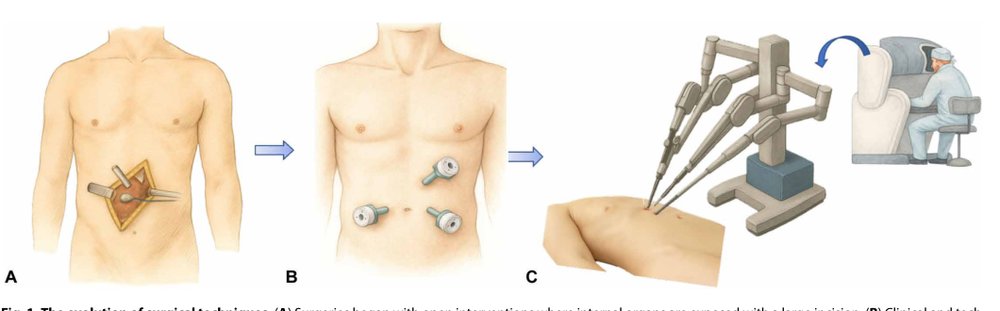
针对当前遥操作手术机器人仍受外科医生经验、状态与地域供给限制,本文综述手术机器人从微创到自主化的技术演进,核心洞察是端到端学习、仿真强化学习与模仿学习正在成为提升自主手术动作的关键路径。主要结果是梳理了自治等级、RAS局限及潜在临床价值,但具体疗效增益仍需更多真实临床验证。

Surgical embodied intelligence for generalized task autonomy in laparoscopic robot-assisted surgery Figure 1
Science Robotics2025-07-16

Surgical embodied intelligence for generalized task autonomy in laparoscopic robot-assisted surgery

Yonghao Long, Anran Lin, Derek Hang Chun Kwok, Lin Zhang, Zhenya Yang, Kejian Shi, Lei Song, Jiawei Fu, Hongbin Lin, Wang Wei, Kai Chen, Xiangyu Chu, Yang Hu, Hon Chi Yip, Philip Wai Yan Chiu, Peter Kazanzides, Russell H. Taylor, Yunhui Liu, Zihan Chen, Zerui Wang, Samuel Kwok Wai Au, Qi Dou

Department of Computer Science and Engineering, Chinese University of Hong Kong, HKSAR, China, Cornerstone Robotics Ltd., HKSAR, China, Department of Mechanical and Automation Engineering, Chinese University of Hong Kong, HKSAR, China, Department of Surgery, Chinese University of Hong Kong, HKSAR, China, Department of Computer Science, Johns Hopkins University, Baltimore, USA

视觉语言动作操作移动机器人触觉医疗机器人

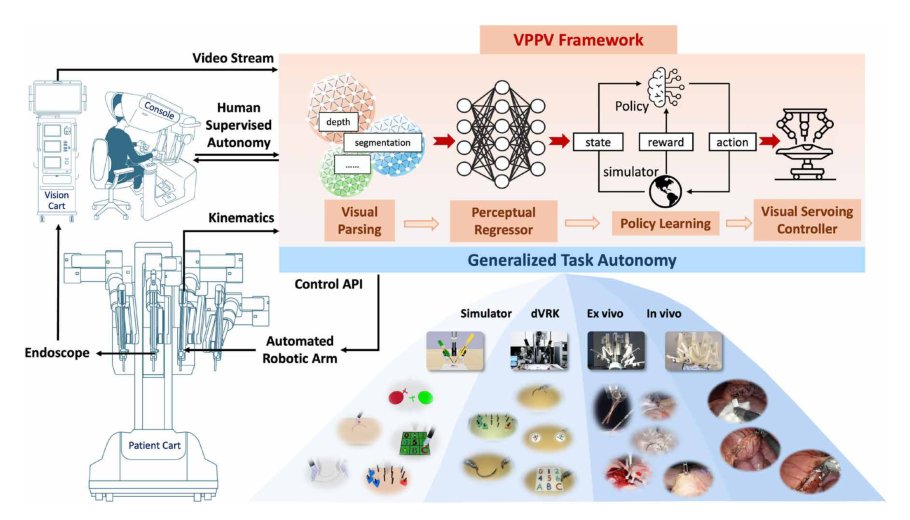
面向通用外科中任务多样、场景变化大导致传统规则式自动化难泛化的问题,论文提出开源手术具身智能模拟器 SurRoL 与 VPPV 范式,将视觉基础模型解析、感知状态回归、强化学习策略和视觉伺服控制解耦结合,以实现仿真到真实零样本迁移。实验在 dVRK 七个技能训练任务、离体组织五个辅助任务及活体动物三项任务中验证了自主执行能力。

Equalizing access: How robotics and AI can transform surgical care worldwide Figure 1
Science Robotics2025-07-16

Equalizing access: How robotics and AI can transform surgical care worldwide

Marta Weber, Kee B. Park, Salim Afshar

University of Geneva, Geneva, Switzerland, Harvard Medical School, Boston, MA, USA, Harvard School of Dental Medicine, Boston, MA, USA

医疗机器人强化学习机器人

本文聚焦低中收入国家手术与麻醉服务严重不足的现实,指出机器人手术、AI诊断/管理、远程会诊与远程手术可缓解人力和培训缺口。核心洞察是技术公平取决于低成本设备、5G基础设施、跨国培训/临床试验和伦理治理协同推进。文中列举Proximie在坦桑尼亚远程指导、跨洲机器人支架和5G远程手术验证等案例,但规模化落地仍有限,量化增益文中未充分说明。

The robot will see you now: Foundation models are the path forward for autonomous robotic surgery Figure 1
Science Robotics2025-07-09

The robot will see you now: Foundation models are the path forward for autonomous robotic surgery

Michael Yip

Department of Electrical and Computer Engineering, University of California San Diego, La Jolla, CA 92130, USA

视觉语言动作操作移动机器人医疗机器人机器人

面向手术机器人难以获取海量标注数据、隐私与专家标注瓶颈限制自治能力的问题,文章主张以基础模型作为感知与决策骨架,但避免单纯微调,转向“基础模型暖启动+几何/物理中层模型+低参数安全约束”的层级方案;示例中结合 SAM、CoTracker、样条与双目模型完成针线图像到抓取流程,并建议借助 RT-X 等通用操作模型和更接近工业夹爪的硬件设计缩小域差。文中主要是观点与路线图,定量增益未充分说明。

SRT-H: A hierarchical framework for autonomous surgery via language-conditioned imitation learning Figure 1
Science Robotics2025-07-09

SRT-H: A hierarchical framework for autonomous surgery via language-conditioned imitation learning

Ji Woong (Brian) Kim, Juo-Tung Chen, Pascal Hansen, Lucy Xiaoyang Shi, Antony Goldenberg, Samuel Schmidgall, Paul Maria Scheikl, Anton Deguet, Brandon M. White, De Ru Tsai, Richard Jaepyeong Cha, Jeffrey Jopling, Chelsea Finn, Axel Krieger

Laboratory for Computational Sensing and Robotics, Johns Hopkins University, Baltimore, MD 21218, USA, Department of Computer Science, Stanford University, Stanford, CA 94305, USA, Department of Surgery, Johns Hopkins University, Baltimore, MD 21218, USA, Sheikh Zayed Institute for Pediatric Surgical Innovation, Children’s National Hospital, Washington, DC 20010, USA, Department of Pediatrics, George Washington University School of Medicine and Health Sciences, Washington, DC 20052, USA

操作移动机器人医疗机器人强化学习机器人

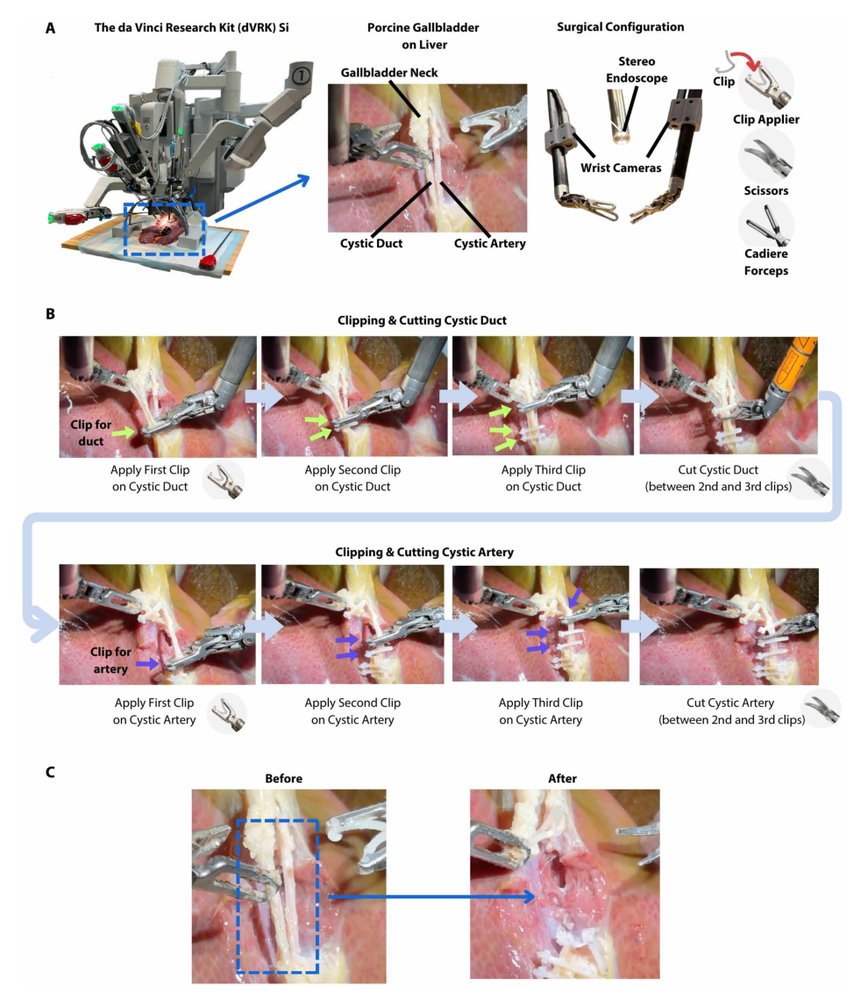
面向真实手术中软组织差异大、遮挡多且步骤长的问题,SRT-H将自主胆囊切除的夹闭与切断步骤拆成语言规划的高层策略和轨迹执行的低层策略,用语言指令进行纠错并通过模仿学习训练。系统仅依赖RGB与标注数据,在34个离体猪胆囊约1.6万条轨迹上训练,并在8个未见胆囊上无需人工干预完成全部17个任务,成功率100%,消融显示层级结构和纠错语言接口是关键。

Medical needles in the hands of AI: Advancing toward autonomous robotic navigation Figure 1
Science Robotics2025-07-09

Medical needles in the hands of AI: Advancing toward autonomous robotic navigation

Ron Alterovitz, Janine Hoelscher, Alan Kuntz

Department of Computer Science, University of North Carolina at Chapel Hill, Chapel Hill, NC 27599, USA, Department of Bioengineering, Clemson University, Clemson, SC 29634, USA, Kahlert School of Computing and Robotics Center, University of Utah, Salt Lake City, UT 84112, USA

移动机器人安全机器人

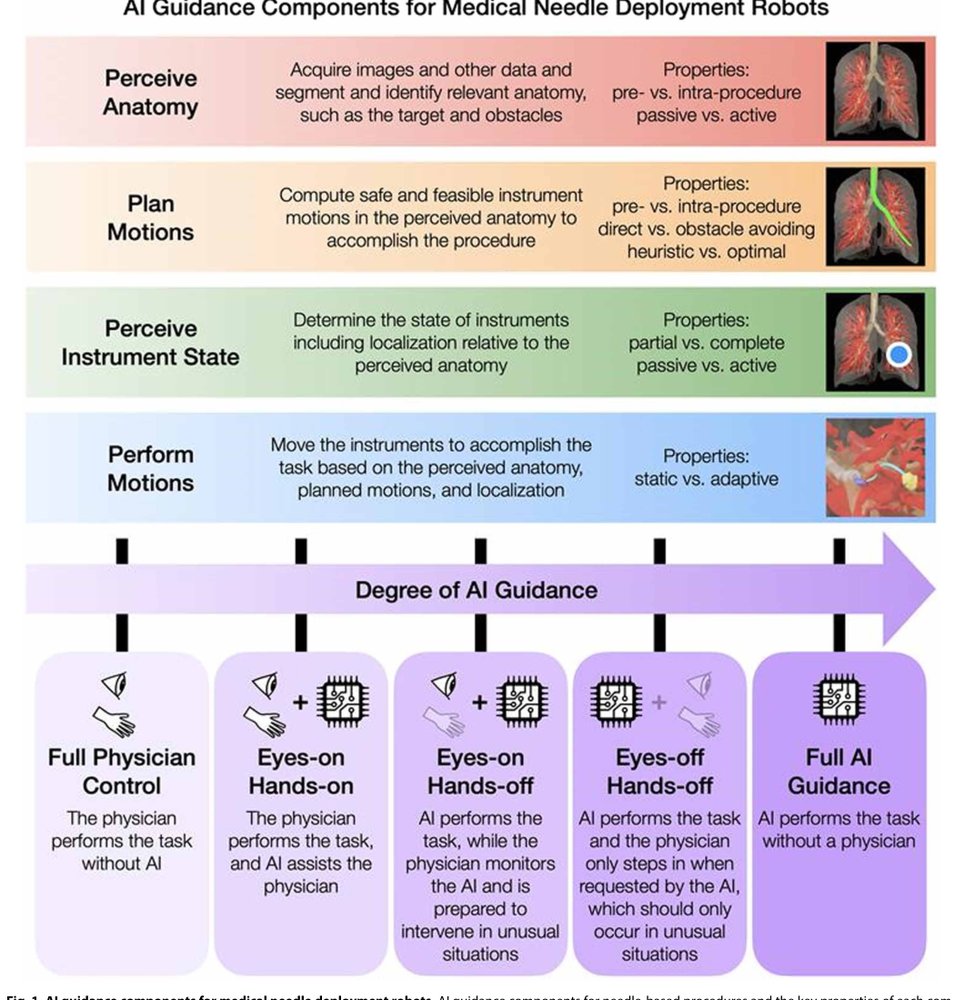
面向活检、消融等深部穿刺中避开骨骼、血管并应对组织形变的难题,本文将“AI引导”概括为解剖感知、运动规划、器械状态感知和运动执行四个模块,并用医疗机器人自动化等级分析经皮/内镜针导航进展。主要结果是梳理出部分系统已在人体及离体、在体动物研究中优于传统流程,但距离高自治仍受传感噪声、细针集成、实时闭环和临床验证限制。

Photocatalytic microrobots for treating bacterial infections deep within sinuses Figure 1
Science Robotics2025-06-25

Photocatalytic microrobots for treating bacterial infections deep within sinuses

Haidong Yu, Xurui Liu, Yabin Zhang, Jie Shen, Xijun Liu, Shubo Liu, Xiangyu Wang, Bonan Sun, Huihui Du, Lin Xu, Bingsuo Zou, Jianning Ding, Qingsong Xu, Li Zhang, Ben Wang

School of Chemistry and Chemical Engineering, State Key Laboratory of Featured Metal Materials and Life-cycle Safety for Composite Structures, School of Resources, Environment and Materials, Guangxi University, Nanning 530004, P. R. China, College of Chemistry and Environmental Engineering, Shenzhen University, Shenzhen 518055, P. R. China, Department of Mechanical and Automation Engineering, Chinese University of Hong Kong, Hong Kong, P. R. China, Shenzhen Key Laboratory of Spine Surgery, Department of Spine Surgery, Peking University Shenzhen Hospital, Shenzhen 518036, P. R. China, College of Mechanical Engineering, Jiangsu University, Zhenjiang, Jiangsu 212013, P. R. China, School of Mechanical Engineering, Yangzhou University, Yangzhou 225009, P. R. China, Department of Electromechanical Engineering, Faculty of Science and Technology, University of Macau, Taipa, Macau, P. R. China

水下机器人群体机器人微型机器人机器人

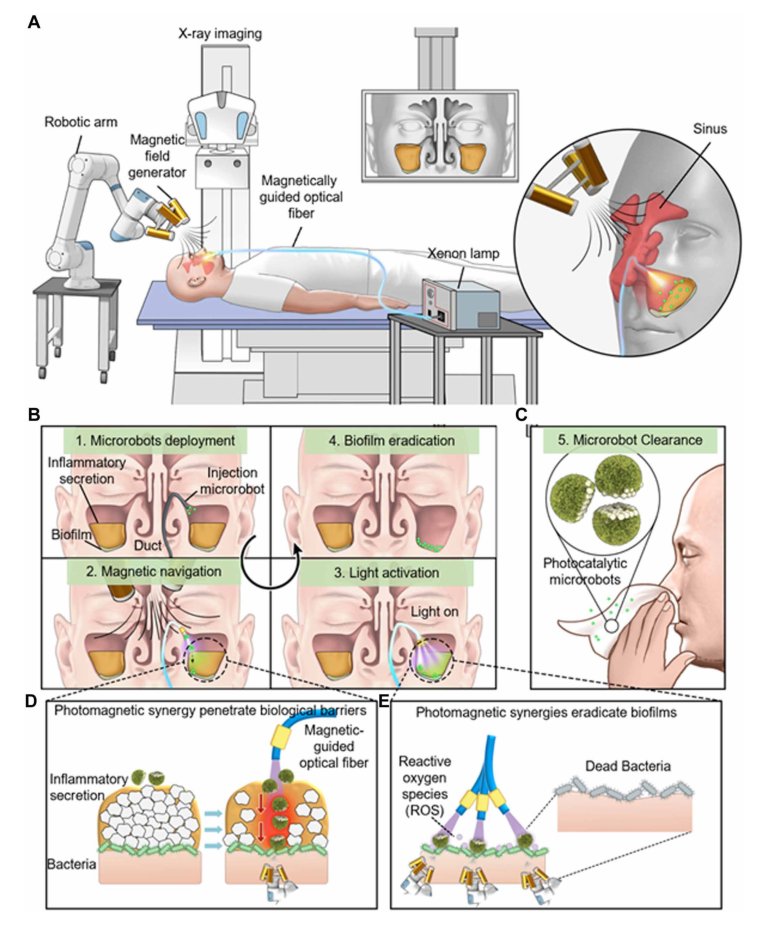
针对鼻窦等深部黏膜腔内生物膜感染难以穿透高黏脓液、抗生素和灌洗疗效受限的问题,论文提出Cu单原子掺杂BiOI磁性光催化微机器人,并用磁控光纤实现随群体移动的可见光激活与X射线跟踪。光热降低脓液黏度使穿透能力提升三倍以上,ROS生成和群体机械作用共同破坏生物膜,并在兔鼻窦炎模型中验证了体内治疗潜力。

OpenExo: An open-source modular exoskeleton to augment human function Figure 1
Science Robotics2025-06-25

OpenExo: An open-source modular exoskeleton to augment human function

Jack R. Williams, Chance F. Cuddeback, Shanpu Fang, Daniel Colley, Noah Enlow, Payton Cox, Paul Pridham, Zachary F. Lerner

Department of Mechanical Engineering, Northern Arizona University, Flagstaff, AZ, USA, School of Informatics, Computing, and Cyber Systems, Northern Arizona University, Flagstaff, AZ, USA, Department of Industrial and Operations Engineering, University of Michigan, Ann Arbor, MI, USA, College of Medicine–Phoenix, University of Arizona, Phoenix, AZ, USA

群体机器人机器人

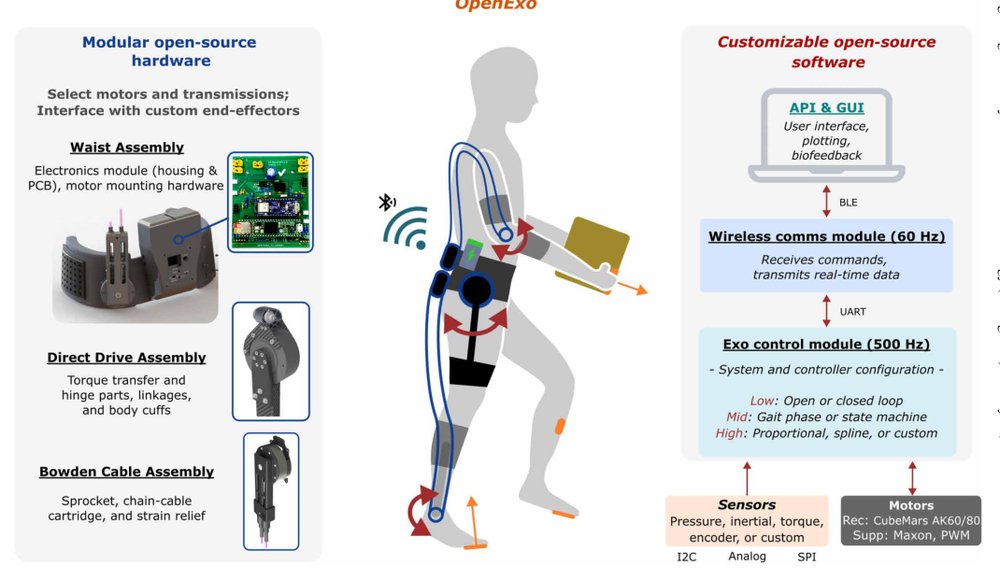
针对外骨骼研发成本高、跨学科门槛高且封闭专用系统难复现的问题,OpenExo提出完整开源的模块化无系留外骨骼框架,覆盖软件、PCB电子、髋关节与Bowden传动硬件及控制接口,可快速切换/组合多关节配置。作者通过台架和人体实验验证了髋部上坡、踝部室内外、髋踝负重和肘部举重等场景的可运行性,主要贡献在于降低原型开发与复现实验门槛。

Forces for free: Vision-based contact force estimation with a compliant hand Figure 1
Science Robotics2025-06-25

Forces for free: Vision-based contact force estimation with a compliant hand

Yifan Zhu, Mei Hao, Xupeng Zhu, Quentin Bateux, Alex Wong, Aaron M. Dollar

Department of Mechanical Engineering and Materials Science, Yale University, New Haven, CT, USA, Khoury College of Computer Sciences, Northeastern University, Boston, MA, USA, Department of Computer Science, Yale University, New Haven, CT, USA

视觉语言动作操作触觉机器人

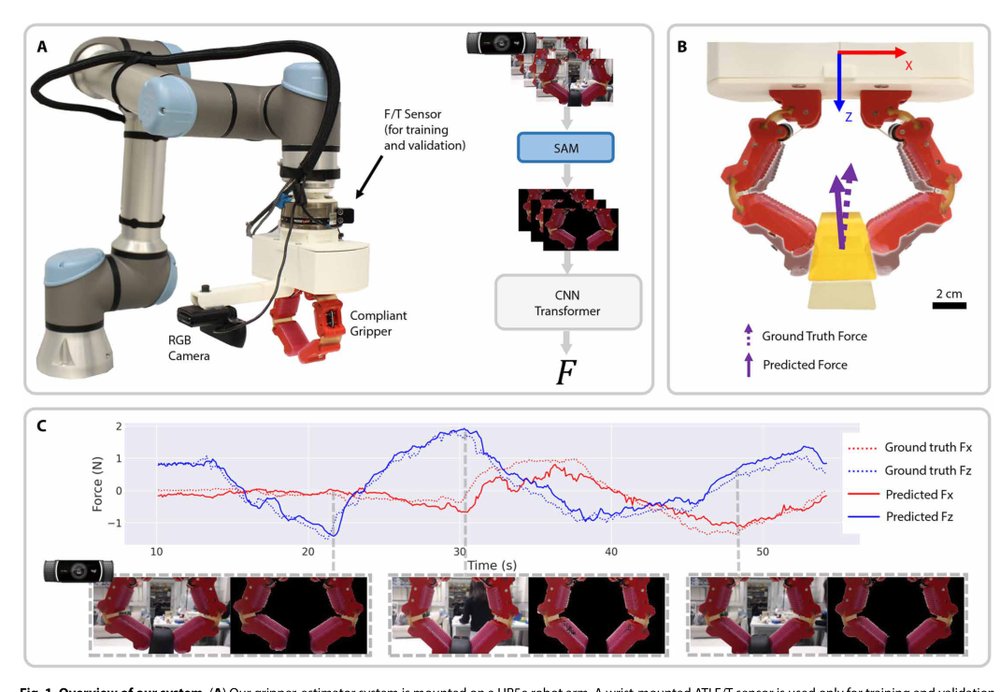
针对腕部力/力矩传感器昂贵脆弱、指端触觉需改硬件且只感局部力的问题,本文利用柔顺夹爪受力会产生可见形变这一线索,用腕部RGB相机、SAM分割与带记忆的CNN-Transformer估计二维接触力,并优化开源3D打印夹爪以降低摩擦和奇异位形。实验在新物体、杂乱背景和遮挡下达到约0.2–0.4 N误差,并可闭环完成擦拭、插孔和书写任务,但速度与精度仍低于商用力传感器。

Preventing pressure ulcers by increasing pressure: An unorthodox alternating-pressure mattress Figure 1
Science Robotics2025-06-18

Preventing pressure ulcers by increasing pressure: An unorthodox alternating-pressure mattress

Zhidi Yang, James L. Weida, Siyuan Shao, Brandon Reedel, Collin Shannon, Junlin Chen, Piyush Sheth, Jonathan B. Hopkins

Mechanical and Aerospace Engineering, University of California, Los Angeles, Los Angeles, CA 90095, USA

机器人机器人学习

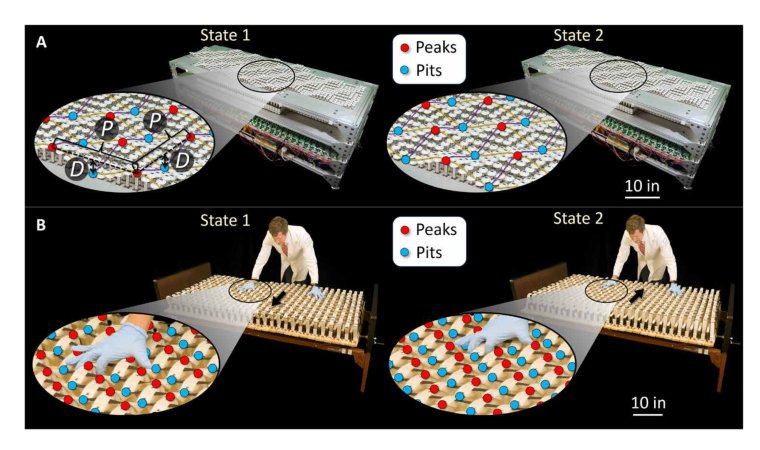
针对压疮预防中交替压力床垫机理不清、单纯降低峰值压力可能仍造成持续缺血的问题,本文用1260个独立线性执行器床系统扫描起伏棋盘式压力图案参数,得到反直觉洞察:适度提高峰值压力并增大加载/卸载压差,反而可减少两种状态下重叠的持续闭塞区域。作者据此设计柔顺机构交替压力床垫,在平放和抬头抬膝配置中相对标准泡沫垫显著降低持续闭塞面积,并测量了状态切换所需载荷。

Hierarchically depicting vehicle trajectory with stability in complex environments Figure 1
Science Robotics2025-06-18

Hierarchically depicting vehicle trajectory with stability in complex environments

Zhichao Han, Mengze Tian, Zaitian Gongye, Donglai Xue, Jiaxi Xing, Qianhao Wang, Yuman Gao, Jingping Wang, Chao Xu, Fei Gao

Institute of Cyber-Systems and Control, College of Control Science and Engineering, Zhejiang University, Hangzhou, China, Huzhou Institute of Zhejiang University, Huzhou, China

视觉语言动作移动机器人仿生机器人机器人

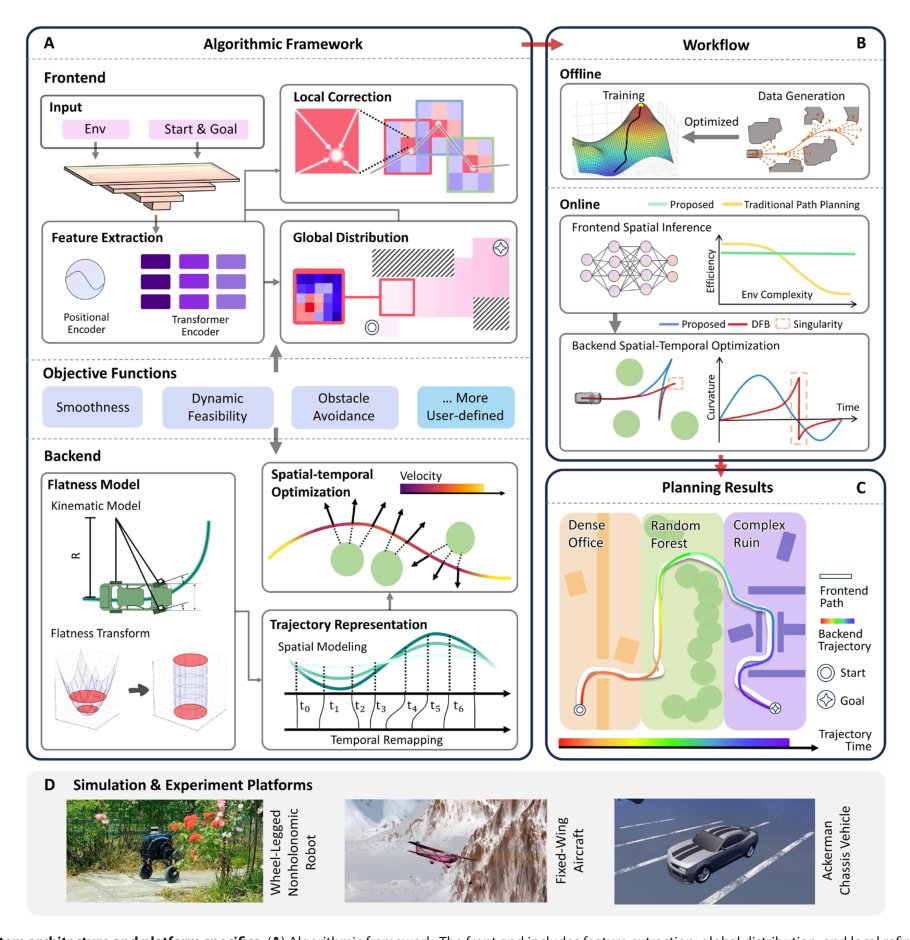
面向复杂障碍中传统搜索/采样规划耗时随几何复杂度恶化、轨迹优化易数值失稳的问题,论文提出分层规划器:前端用神经网络直接从环境图像“描绘”全局引导路径,后端在微分平坦空间以双层多项式表示做时空轨迹优化以消除奇异性。大规模迷宫、办公、废墟和固定翼场景实验显示,其推理时间近似稳定在毫秒级,并提升轨迹代价与成功率。

A compact neuromorphic system for ultra–energy-efficient, on-device robot localization Figure 1
Science Robotics2025-06-18

A compact neuromorphic system for ultra–energy-efficient, on-device robot localization

Adam D. Hines, Michael Milford, Tobias Fischer

QUT Centre for Robotics, Queensland University of Technology, 2 George St, Brisbane, QLD 4001, Australia

移动机器人仿生机器人机器人

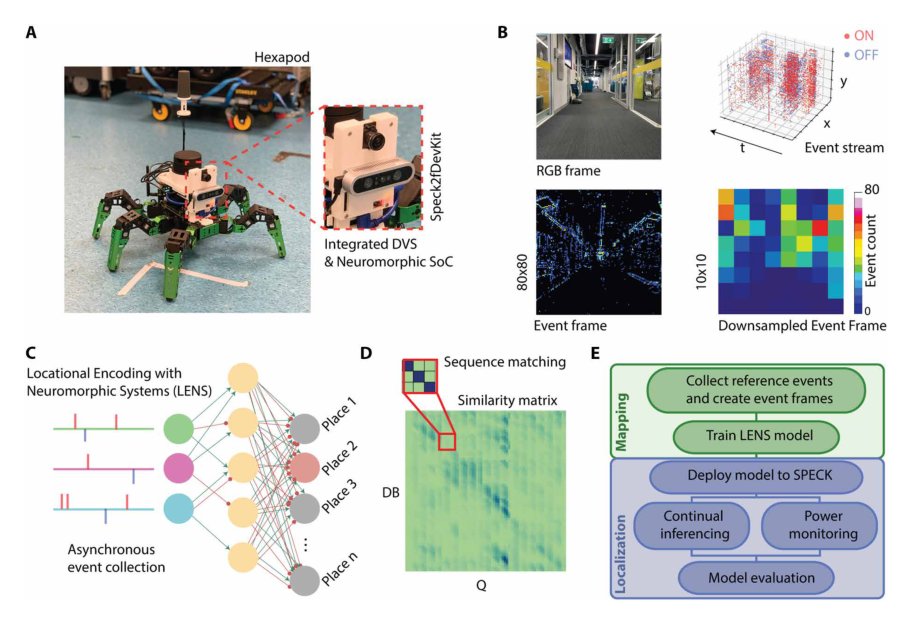
面向小型/长航时机器人难以承载传统视觉地点识别计算与能耗的问题,论文将事件相机、简化脉冲网络和 SynSense Speck 神经形态芯片协同设计为 LENS,把定位推理完全放到片上。模型仅约 180KB、4.4 万参数,可在六足机器人上实时运行,并在最长 8 公里、600 个地点的遍历中取得接近 SAD 基线的精度,同时 Speck 能耗约 327mJ,显著低于 Jetson 和桌面 CPU。

Multimodal information structuring with single-layer soft skins and high-density electrical impedance tomography Figure 1
Science Robotics2025-06-11

Multimodal information structuring with single-layer soft skins and high-density electrical impedance tomography

David Hardman, Thomas George Thuruthel, Fumiya Iida

Bio-Inspired Robotics Lab, University of Cambridge, Cambridge, UK, Department of Computer Science, University College London, London, UK

飞行机器人机器人

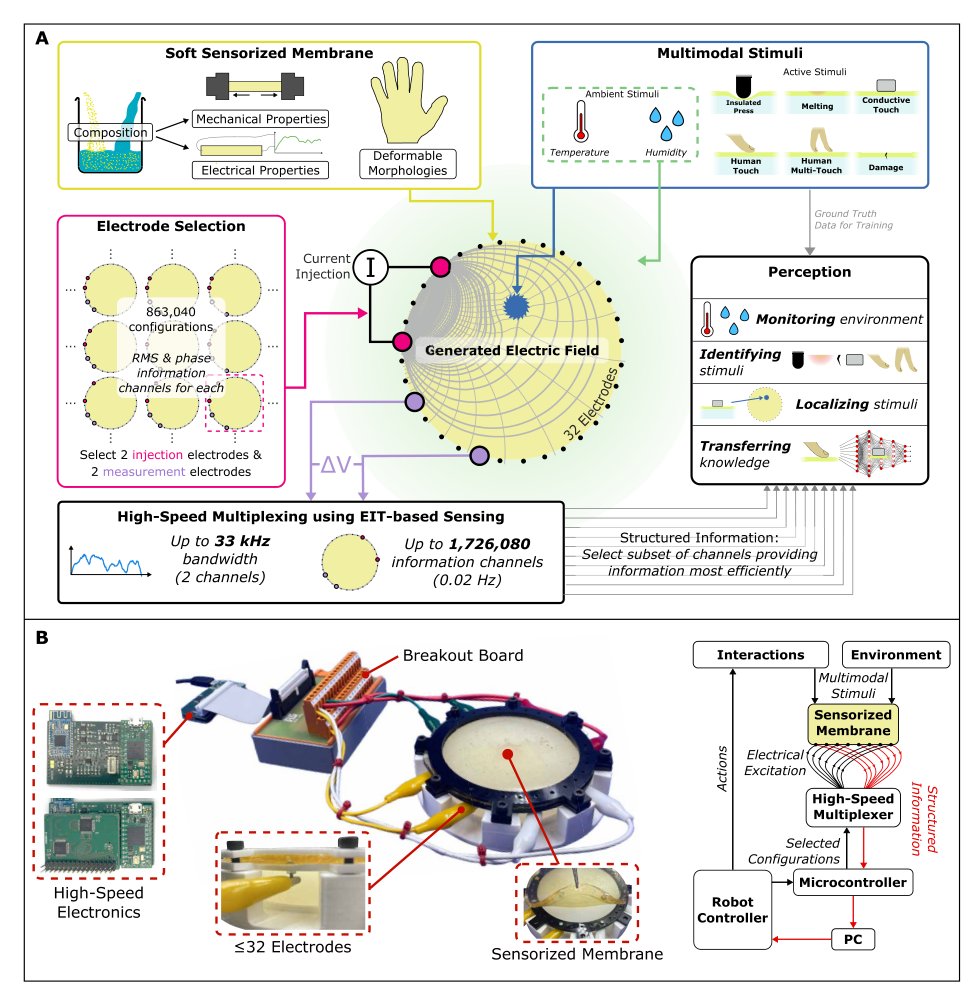
针对机器人软体皮肤难以在大面积、复杂形状上同时感知触觉、温湿度与损伤且易受软硬界面失效影响的问题,本文用单层可浇注水凝胶膜结合高密度电阻抗成像,并以数据驱动方式筛选信息通道而非重建电导图。实验访问约86万种导电路径,区分至少六类刺激;在人手尺寸3D皮肤上,仅腕部电极即可预测温湿度、约25毫米精度定位触摸并产生本体感知信号。

In situ foliar augmentation of multiple species for optical phenotyping and bioengineering using soft robotics Figure 1
Science Robotics2025-06-11

In situ foliar augmentation of multiple species for optical phenotyping and bioengineering using soft robotics

Mehmet Mert İlman, Annika Huber, Anand K. Mishra, Sabyasachi Sen, Fumin Wang, Tiffany Lin, Georg Jander, Abraham D. Stroock, Robert F. Shepherd

Sibley School of Aerospace and Mechanical Engineering, Cornell University, Ithaca, NY 14853, USA, Department of Mechanical Engineering, Hasan Ferdi Turgutlu Faculty of Technology, Manisa Celal Bayar University, Manisa 45400, Türkiye, Smith School of Chemical and Biomolecular Engineering, Cornell University, Ithaca, NY 14853, USA, Boyce Thompson Institute, Ithaca, NY 14853, USA, School of Integrative Plant Science, Cornell University, Ithaca, NY 14853, USA, Kavli Institute at Cornell for Nanoscale Science, Cornell University, Ithaca, NY 14853, USA

软体机器人安全机器人

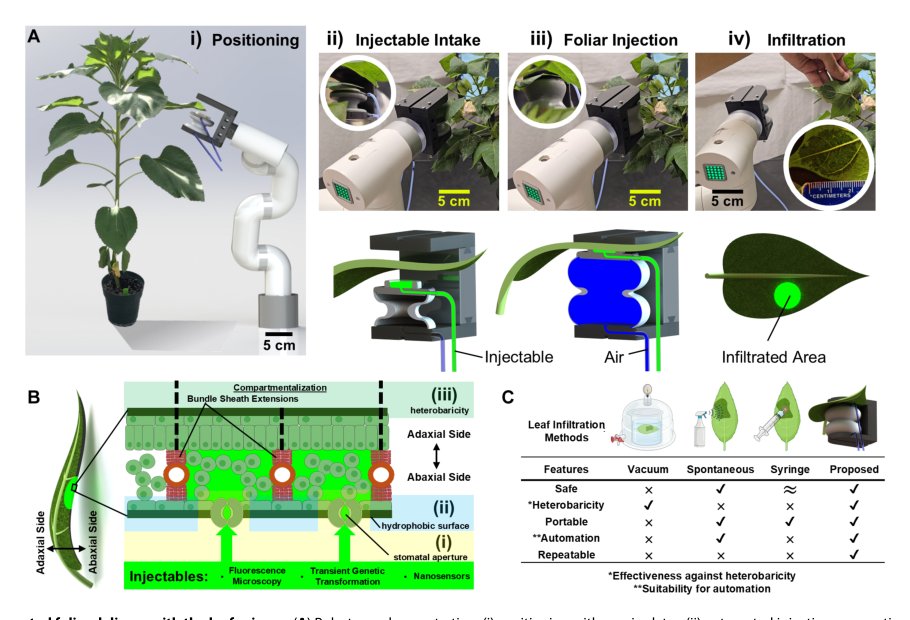
面向精准农业中叶片原位表型检测和生物工程递送难以兼顾高效、便携与低损伤的问题,论文提出沙漏形软体叶片夹爪与“盖章式”注射界面,用海绵和软密封提升异型叶片渗透并降低剪切伤害。系统在向日葵、棉花等叶片上递送RUBY农杆菌和水势纳米水凝胶,注射成功率超过91%,渗透面积平均提升约12倍,叶损伤显著低于无针注射器。

The multifaceted approach to embodied intelligence in robotics Figure 1
Science Robotics2025-05-28

The multifaceted approach to embodied intelligence in robotics

Cecilia Laschi

Cecilia Laschi is a professor at Advanced Robotics Centre, Department of Mechanical Engineering, National University of Singapore, Singapore, Singapore

机器人机器人学习

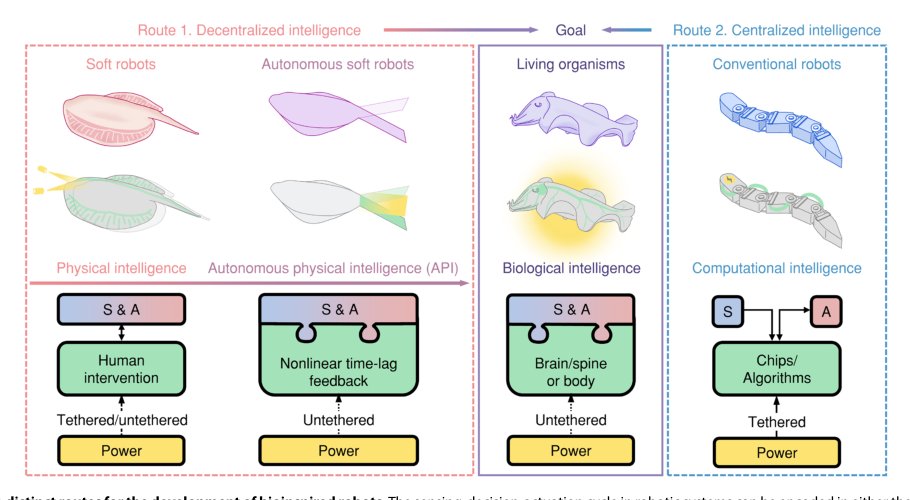
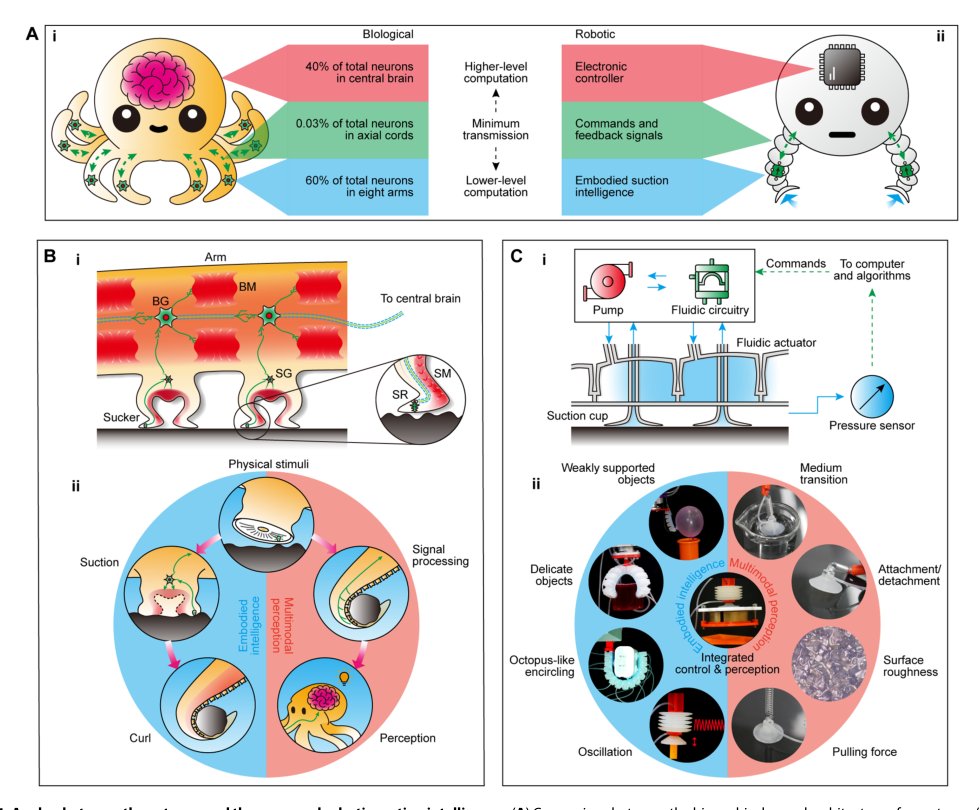
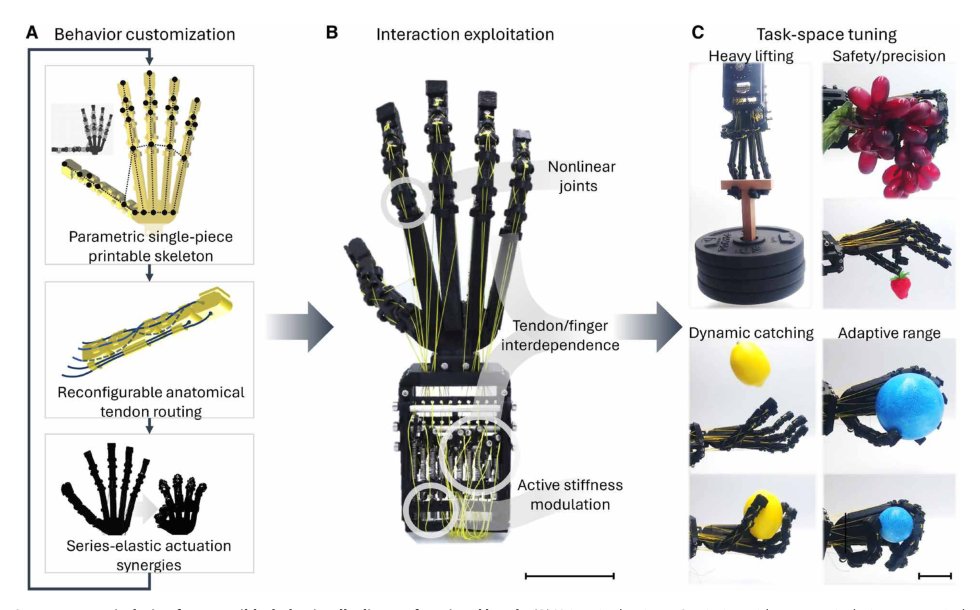
面对高自由度机器人集中控制带来的计算、能耗与鲁棒性压力,本文从具身智能角度强调把部分控制交给身体结构、材料特性及环境相互作用。核心洞察是软体形变、被动交互和去中心化控制可产生涌现行为,降低精细控制需求;文中主要综述特刊案例,包括多参数仿生机械手、章鱼启发吸盘流体软电路、空中机器人被动交互及刺激响应材料机器人,但并非系统实验评测。

Advancing physical intelligence for autonomous soft robots Figure 1
Science Robotics2025-05-28

Advancing physical intelligence for autonomous soft robots

Chi Chen, Pengju Shi, Zixiao Liu, Sidi Duan, Muqing Si, Chuanwei Zhang, Yingjie Du, Yichen Yan, Timothy J. White, Rebecca Kramer-Bottiglio, Metin Sitti, Tetsuya Iwasaki, Ximin He

Department of Material Science and Engineering, University of California, Los Angeles, Los Angeles, CA, USA, Department of Chemical and Biological Engineering, University of Colorado, Boulder, Boulder, CO, USA, Materials Science & Engineering Program, University of Colorado, Boulder, Boulder, CO, USA, School of Engineering & Applied Science, Yale University, New Haven, CT, USA, School of Medicine and College of Engineering, Koç University, Istanbul, Turkey, Department of Mechanical and Aerospace Engineering, University of California, Los Angeles, Los Angeles, CA, USA

操作移动机器人软体机器人触觉机器人

针对软体机器人仍依赖外部刺激开关、难以实现类生命自主性的瓶颈,本文综述将“自主物理智能”归结为材料/结构内嵌的非线性时滞反馈:恒定刺激也可因延迟响应形成稳定极限环,实现自持续运动。文章系统梳理正/负反馈建模、反馈强度与时滞等关键条件,以及光、热、湿度、化学等驱动下的软体机器人设计策略和多种运动模式;同时指出距离工程级生物式自主仍受尺度放大、能效、群体协同、功能集成和统一建模限制。

Physical control: A new avenue to achieve intelligence in soft robotics Figure 1
Science Robotics2025-05-21

Physical control: A new avenue to achieve intelligence in soft robotics

Edoardo Milana, Cosimo Della Santina, Benjamin Gorissen, Philipp Rothemund

Department of Microsystems Engineering (IMTEK), University of Freiburg, 79110 Freiburg, Germany, Cluster of Excellence livMatS @ FIT—Freiburg Center for Interactive Materials and Bioinspired Technologies, University of Freiburg, 79110 Freiburg, Germany, Department of Cognitive Robotics, Delft University of Technology (TU Delft), Mekelweg 2, 2628 CD Delft, Netherlands, Institute of Robotics and Mechatronics, German Aerospace Center (DLR), Oberpfaffenhofen 82234, Germany, Department of Mechanical Engineering, KU Leuven, Leuven, Belgium, Institute for Adaptive Mechanical Systems, University of Stuttgart, Stuttgart, Germany

软体机器人机器人

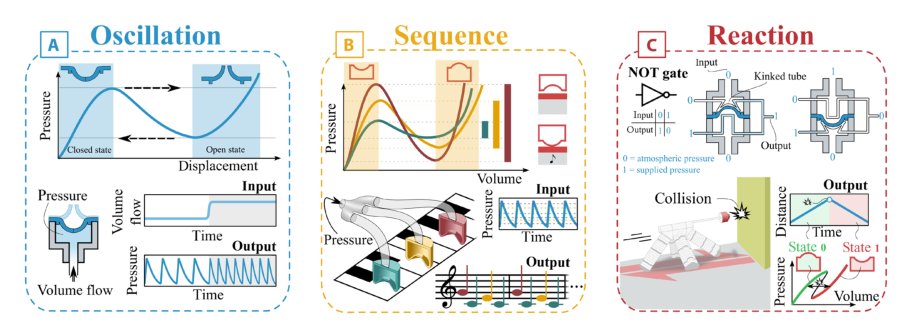
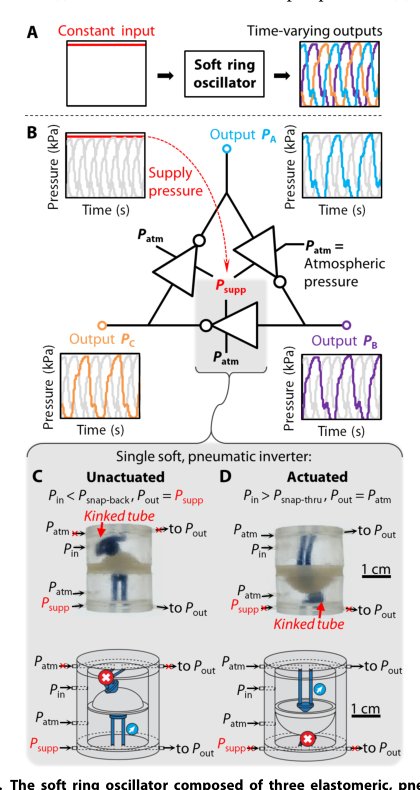
针对传统机器人依赖数字计算、在复杂环境中运动效率低的问题,本文提出将控制能力嵌入软体材料与结构本身的“物理控制”视角。核心洞察是利用跳变失稳、速率依赖、光/热响应等非线性,实现无需微控制器的自振荡、顺序动作与环境反应。文章通过软振荡器、单输入弹奏序列、流体逻辑避障等案例梳理了主要结果,但仍指出统一建模、逆向设计和多尺度制造尚未充分解决。

Embodied aerial physical interaction: Combining body and brain for robust interaction with unstructured environments Figure 1
Science Robotics2025-05-21

Embodied aerial physical interaction: Combining body and brain for robust interaction with unstructured environments

Emanuele Aucone, Stefano Mintchev

Environmental Robotics Laboratory, Department of Environmental Systems Science, Swiss Federal Institute of Technology (ETH) Zürich, Zürich, Switzerland, Swiss Federal Institute for Forest, Snow and Landscape Research WSL, Birmensdorf, Switzerland

飞行机器人机器人

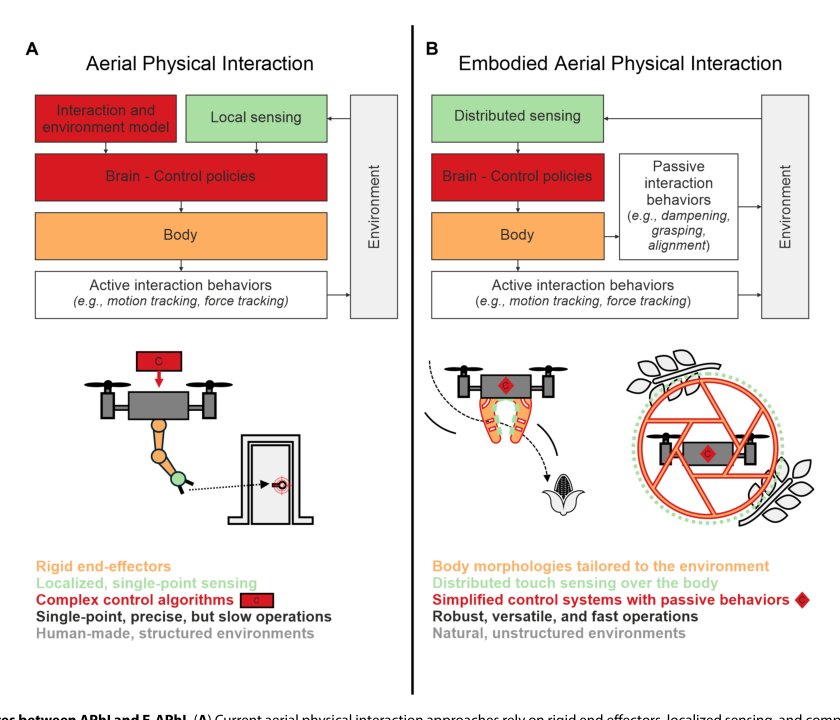
针对无人机在树枝、植被等未知柔顺环境中接触采样、巡检时,传统空中物理交互依赖精确模型、局部力控且速度很慢的问题,本文提出具身空中物理交互框架:用软/顺应形态、全身分布式触觉与简化控制共同分担任务。文中对比表明,该范式牺牲厘米级精度,换来低于0.1秒的接触任务和最高约3.0 m/s的交互速度,并能在刚度变化大的基底上保持稳定,适合环境采样、工业巡检等非结构化场景。

Embodying soft robots with octopus-inspired hierarchical suction intelligence Figure 1
Science Robotics2025-05-14

Embodying soft robots with octopus-inspired hierarchical suction intelligence

Tianqi Yue, Chenghua Lu, Kailuan Tang, Qiukai Qi, Zhenyu Lu, Loong Yi Lee, Hermes Bloomfield-Gadȇlha, Jonathan Rossiter

School of Engineering Mathematics and Technology, University of Bristol, Bristol, UK, School of Automation and Intelligent Manufacturing, Southern University of Science and Technology, Shenzhen, China, Bristol Robotics Laboratory, Bristol, UK, Department of Mechanical and Energy Engineering, Southern University of Science and Technology, Shenzhen, China, Faculty of Environment and Technology, University of the West of England, Bristol, UK

操作软体机器人强化学习机器人

针对软体机器人自由度高、集中控制通信与计算负担大的问题,本文借鉴章鱼“吸盘—腕—脑”的分层神经结构,把普通硅胶吸盘、局部流体逻辑开关和软执行器耦合起来,使吸力同时承载粘附、触发控制和压力感知。实验展示了低层自主轻柔抓取脆弱物体、顺序卷曲包覆未知形状,并用吸盘压力完成接触、介质、粗糙度和拉力感知;集成夹爪可在少量高层指令下自动执行伸展—吸附—回缩并识别物体属性。

Embodied manipulation with past and future morphologies through an open parametric hand design Figure 1
Science Robotics2025-05-14

Embodied manipulation with past and future morphologies through an open parametric hand design

Kieran Gilday, Chapa Sirithunge, Fumiya Iida, Josie Hughes

CREATE Lab, Department of Mechanical Engineering, Swiss Federal Institute of Technology in Lausanne, Lausanne, Switzerland, Bio-Inspired Robotics Lab, Department of Engineering, University of Cambridge, Cambridge, UK

操作飞行机器人强化学习机器人

本文针对仿真难以可靠覆盖复杂接触、现有灵巧手又难以低成本定制的问题,提出开放参数化机器人手 OPH:用非线性滚动/可脱位关节、解剖式肌腱布线和低自由度可重构驱动,把形态设计空间直接落到可3D打印硬件上。实验显示其关节刚度可跨数量级调节,类人手覆盖33类人类抓取;在人手、双拇指手和指猴手上分别呈现举80 N重物、写字、多物体抓取、攀爬/觅食等形态特异行为。

Reverse engineering the control law for schooling in zebrafish using virtual reality Figure 1
Science Robotics2025-04-30

Reverse engineering the control law for schooling in zebrafish using virtual reality

Liang Li, Máté Nagy, Guy Amichay, Ruiheng Wu, Wei Wang, Oliver Deussen, Daniela Rus, Iain D. Couzin

Department of Collective Behaviour, Max Planck Institute of Animal Behavior, 78464 Konstanz, Germany, Centre for the Advanced Study of Collective Behaviour, University of Konstanz, 78464 Konstanz, Germany, Department of Biology, University of Konstanz, 78464 Konstanz, Germany, Department of Computer and Information Science, University of Konstanz, 78464, Konstanz, Germany, MTA-ELTE “Lendület” Collective Behaviour Research Group, Hungarian Academy of Sciences, 1117 Budapest, Hungary, Department of Biological Physics, Eötvös Loránd University, 1117 Budapest, Hungary, Department of Engineering Sciences and Applied Mathematics, Northwestern University, Evanston, IL 60208, USA, Northwestern Institute on Complex Systems, Northwestern University, Evanston, IL 60208, USA, National Institute for Theory and Mathematics in Biology, Northwestern University, Evanston, IL 60208, USA, Department of Mechanical Engineering, University of Wisconsin–Madison, Madison, WI 53706, USA, Computer Science and Artificial Intelligence Lab (CSAIL), Massachusetts Institute of Technology, Cambridge, MA 02139, USA

移动机器人飞行机器人群体机器人强化学习机器人

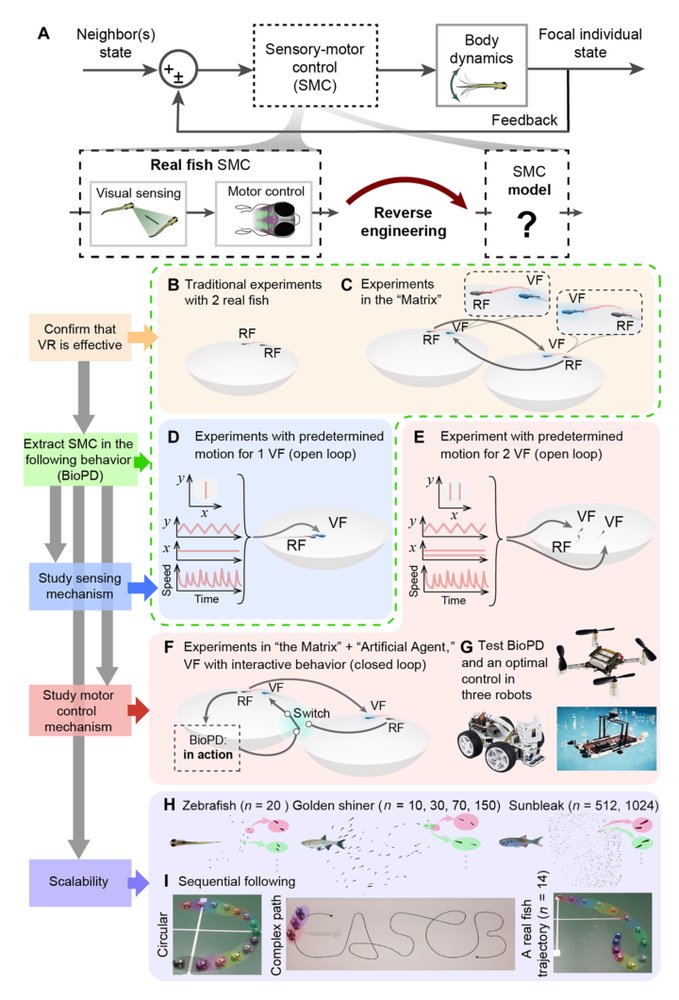
论文针对群体运动中个体社会交互控制律难以因果识别的问题,利用沉浸式虚拟现实和联网“Matrix”系统让真实斑马鱼与虚拟同类闭环互动,反推出基于自我中心位置表征的简单 BioPD 追踪控制律。实验表明,鱼主要依赖位置而非瞬时速度信息,该模型能解释单/多目标追随、通过图灵测试并在多物种大规模鱼群中具备可扩展性;迁移到地面、空中和水面机器人时接近最优追踪且调参需求较低。

Reversible kink instability drives ultrafast jumping in nematodes and soft robots Figure 1
Science Robotics2025-04-23

Reversible kink instability drives ultrafast jumping in nematodes and soft robots

Sunny Kumar, Ishant Tiwari, Victor M. Ortega-Jimenez, Adler R. Dillman, Dongjing He, Yuhang Hu, Saad Bhamla

School of Chemical and Biomolecular Engineering, Georgia Institute of Technology, Atlanta, GA 30332, USA, Department of Integrative Biology, University of California, Berkeley, CA 947206, USA, Department of Nematology, University of California, Riverside, CA 92521, USA, George W. Woodruff School of Mechanical Engineering, Georgia Institute of Technology, Atlanta, GA 30332, USA

移动机器人软体机器人仿生机器人机器人

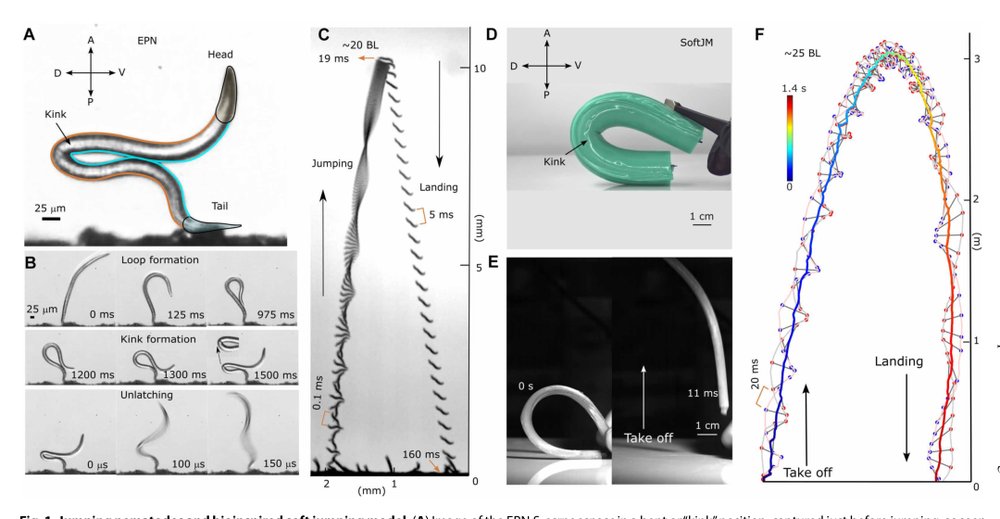
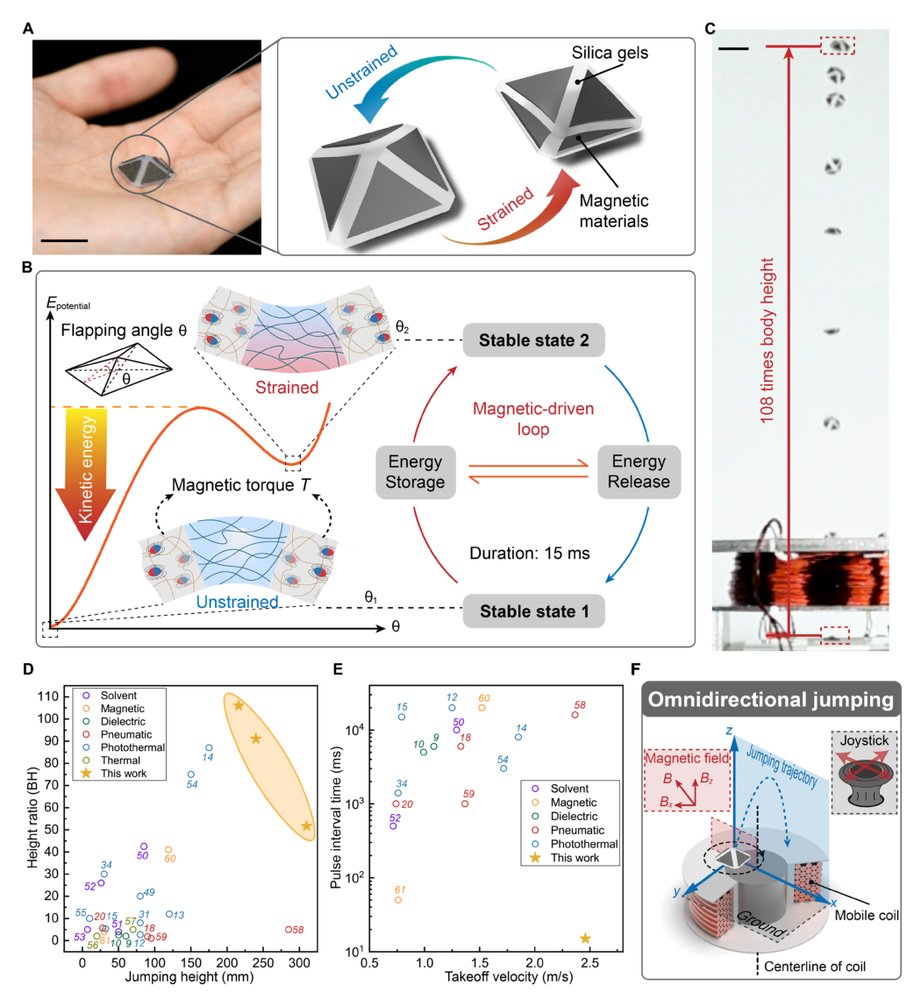
论文针对线虫无肢却能高速定向跳跃的未解机制,指出以往被视为失效模式的可逆弯折失稳可被主动利用为储能与释放结构。作者用高速成像、Cosserat 杆仿真和宏观 SoftJM 验证:线虫先缓慢形成液体锁扣的 α 环并在腹侧产生 kink,再在微秒尺度打开,实现约 20 个体长跳高、约 10^4 W/kg 功率;通过头部与质心位置调节可前后定向。受刚度测量启发的碳纤维 SoftJM 可跳约 25 个体长。

Unlocking aerobatic potential of quadcopters: Autonomous freestyle flight generation and execution Figure 1
Science Robotics2025-04-16

Unlocking aerobatic potential of quadcopters: Autonomous freestyle flight generation and execution

Mingyang Wang, Qianhao Wang, Ze Wang, Yuman Gao, Jingping Wang, Can Cui, Yuan Li, Ziming Ding, Kaiwei Wang, Chao Xu, Fei Gao

Institute of Cyber-Systems and Control, College of Control Science and Engineering, Zhejiang University, Hangzhou, China, Huzhou Institute of Zhejiang University, Huzhou, China, College of Optical Science and Engineering, Zhejiang University, Hangzhou, China, Differential Robotics Technology Co., Ltd., Hangzhou, China

移动机器人飞行机器人机器人

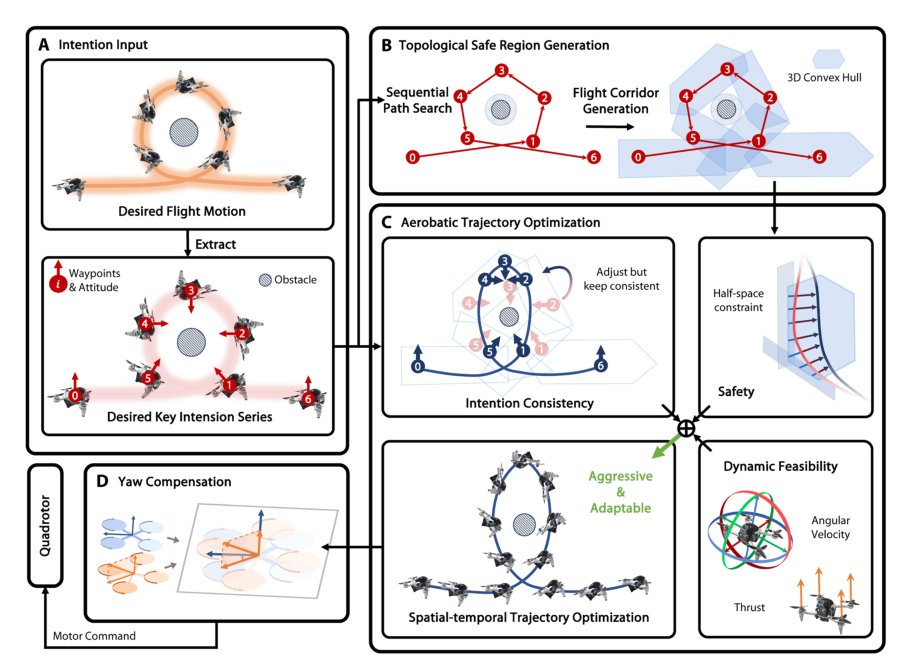
这篇论文面向四旋翼自主飞行仍难像 FPV 高手那样在密集障碍中完成复杂特技的问题,提出用离散“特技意图”统一表示拓扑与姿态变化,并通过时空联合优化生成平滑、无碰撞且动力学可行的轨迹,同时处理特技飞行中的偏航敏感与微分平坦奇异性。消融、仿真和实机实验表明,这些规划与偏航补偿策略对稳定执行复杂自主特技飞行是必要的。

Sticking the landing: Insect-inspired strategies for safely landing flapping-wing aerial microrobots Figure 1
Science Robotics2025-04-16

Sticking the landing: Insect-inspired strategies for safely landing flapping-wing aerial microrobots

Nak-seung P. Hyun, Christian M. Chan, Alyssa M. Hernandez, Robert J. Wood

John A. Paulson School of Engineering and Applied Sciences, Harvard University, Massachusetts Hall, Cambridge, MA 02138, USA, Elmore Family School of Electrical and Computer Engineering, Purdue University, 610 Purdue Mall, West Lafayette, IN 47907, USA

移动机器人飞行机器人仿生机器人微型机器人安全

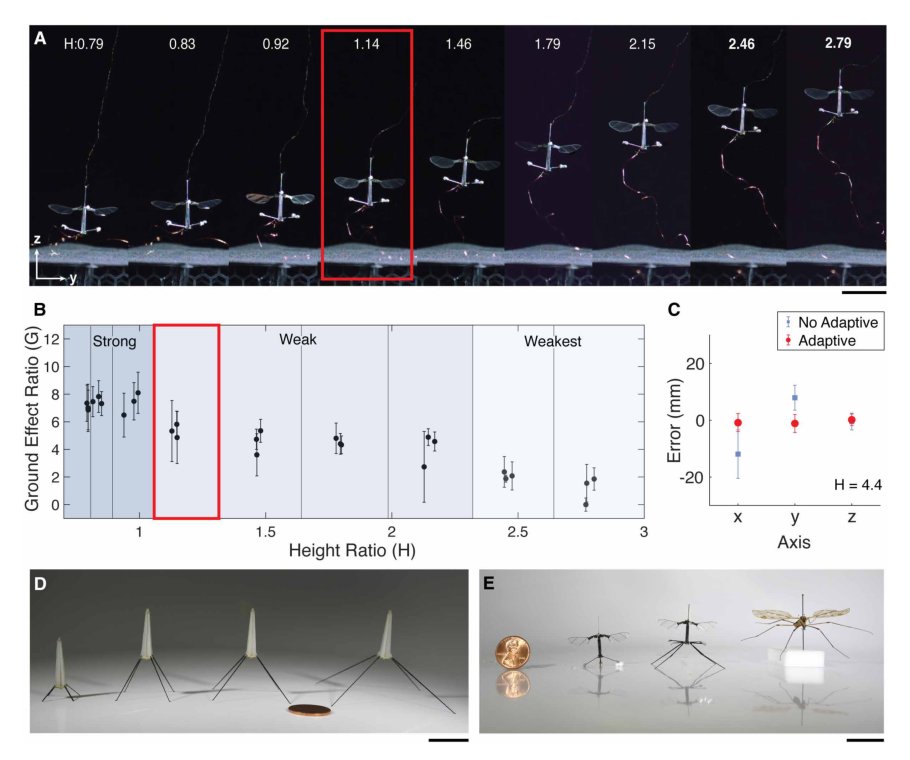
微型扑翼机器人在近地悬停时受地面效应扰动,且机体/驱动器脆弱,安全精准着陆困难。论文从大蚊长腿着陆获得启发,将耗能柔顺腿的站姿、关节数量与位置设计,同带非零触地速度的预碰撞自适应控制结合,在 Harvard RoboBee 上验证可耗散冲击、降低漂移,并在自然地形实现安全准确着陆。

Magnetically actuated dexterous tools for minimally invasive operation inside the brain Figure 1
Science Robotics2025-03-26

Magnetically actuated dexterous tools for minimally invasive operation inside the brain

Changyan He, Robert Nguyen, Haley Mayer, Lingbo Cheng, Paul Kang, D. Anastasia Aubeeluck, Grace Thiong’ᴏ, Erik Fredin, James Drake, Thomas Looi, Eric Diller

Department of Mechanical and Industrial Engineering, University of Toronto, Toronto, Canada, PCIGITI Center, Hospital for Sick Children, Toronto, Canada, Robotics Institute, University of Toronto, Toronto, Canada, School of Engineering, University of Newcastle, Newcastle, Australia, Institute of Biomedical Engineering, University of Toronto, Toronto, Canada

操作医疗机器人机器人

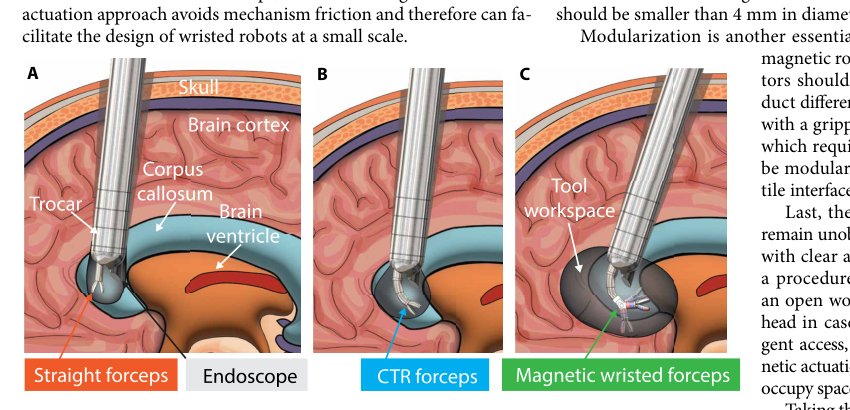
针对深部脑肿瘤和癫痫靶点手术中,传统开颅创伤大而神经内镜工具又过于刚直、缺乏腕部灵巧性的矛盾,论文提出直径小于3.2毫米的磁驱动腕式末端工具,包括夹爪、摆动刀和绞线钳,通过外部磁场无线驱动以避开微型缆绳传动的摩擦与尺度限制。硅胶脑模型实验显示其可完成模拟肿瘤夹取和胼胝体切开;与同心管机器人集成后,还在仔猪活体脑组织上实现抓取、切割和活检等基础操作。

Harnessing the oloid shape in magnetically driven robots to enable high-resolution ultrasound imaging Figure 1
Science Robotics2025-03-26

Harnessing the oloid shape in magnetically driven robots to enable high-resolution ultrasound imaging

Nikita J. Greenidge, Benjamin Calmé, Alexandru C. Moldovan, Bartas Abaravicius, James W. Martin, Nils Marahrens, Jon Woolfrey, Bruno Scaglioni, Damith S. Chathuranga, Srinjoy Mitra, Sandy Cochran, Pietro Valdastri

STORM Lab, University of Leeds, Leeds, UK, University of Glasgow, Glasgow, UK, University of Edinburgh, Edinburgh, UK

操作移动机器人飞行机器人医疗机器人机器人

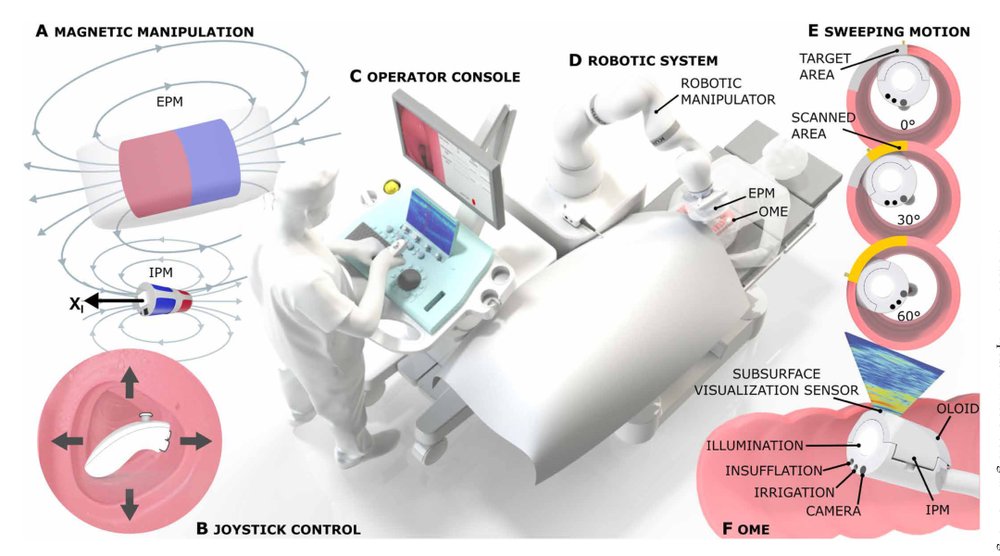
磁驱医疗机器人虽适合体内远程操控,但偶极对称性使其难以绕磁化轴滚转,限制内镜超声的定位、接触恢复和径向扫描。本文利用 oloid 可展滚子的轴向不对称几何,将原有二维磁力矩与环境接触耦合,在仅五个磁控输入下实现闭环滚转控制,并集成 28 MHz 微超声阵列。体外和猪体内实验显示其可完成扫查、识别病灶并重建胃肠壁下组织三维图像。

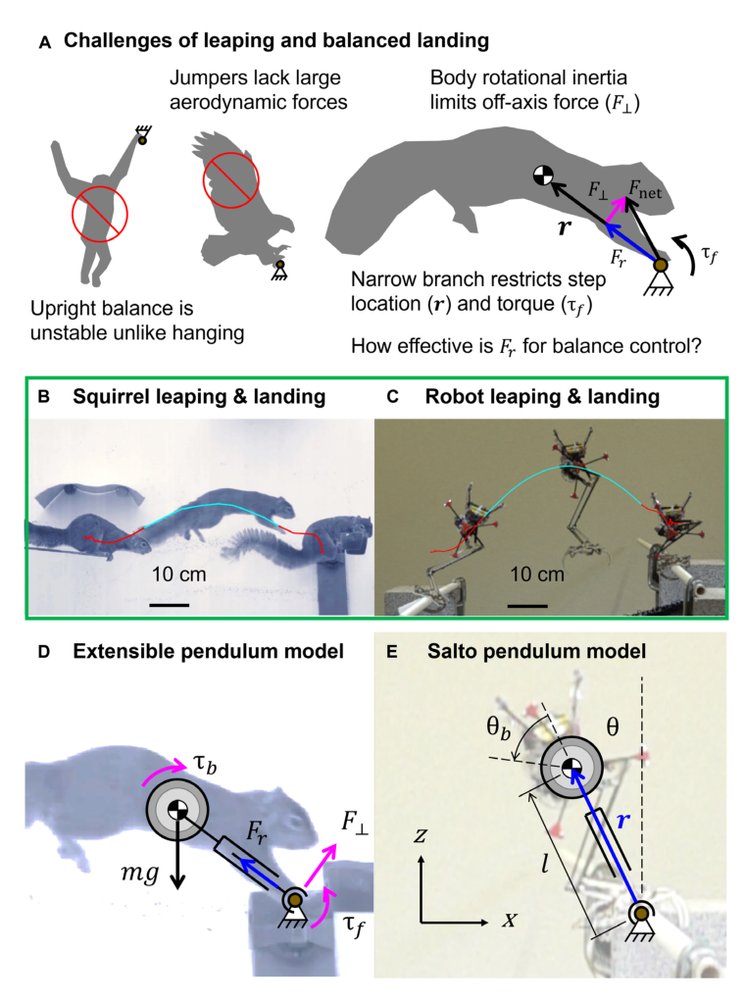
Monopedal robot branch-to-branch leaping and landing inspired by squirrel balance control Figure 1
Science Robotics2025-03-19

Monopedal robot branch-to-branch leaping and landing inspired by squirrel balance control

Justin K. Yim, Eric K. Wang, Sebastian D. Lee, Nathaniel H. Hunt, Robert J. Full, Ronald S. Fearing

Department of Mechanical Science and Engineering, University of Illinois Urbana-Champaign, Urbana, IL, USA, Department of Mechanical Engineering, Massachusetts Institute of Technology, Cambridge, MA, USA, Department of Mechanical Engineering, University of California, Berkeley, Berkeley, CA, USA, Department of Biomechanics, University of Nebraska Omaha, Omaha, NE, USA, Department of Integrative Biology, University of California, Berkeley, Berkeley, CA, USA, Department of Electrical Engineering and Computer Sciences, University of California, Berkeley, Berkeley, CA, USA

操作飞行机器人强化学习机器人

面向树枝等稀疏小支撑上的跨越与落地,论文借鉴松鼠在弱抓握条件下的平衡方式,指出调节腿长/径向支撑力可弥补落脚点和抓握力矩受限。Salto-1P用被动夹爪完成枝到枝跳跃,落地不跌落率超过80%,30次中2次实现直立平衡;低阶模型显示加入径向力控制可将可平衡初始角动量范围扩大约230%和470%。

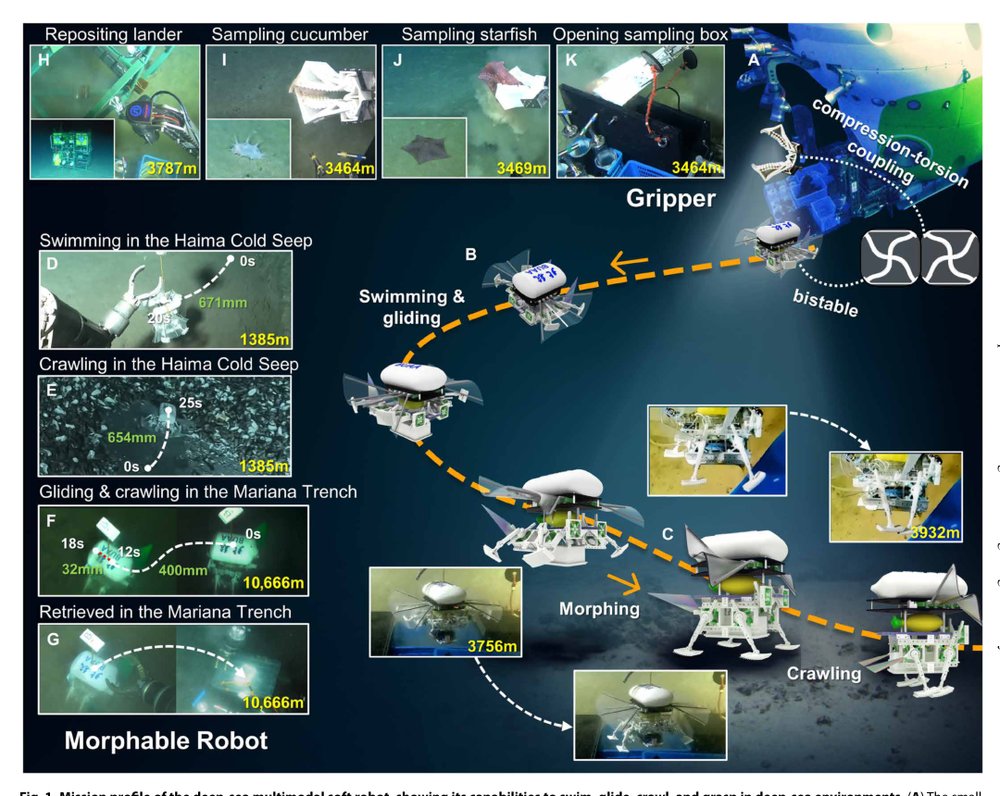
Miniature deep-sea morphable robot with multimodal locomotion Figure 1
Science Robotics2025-03-19

Miniature deep-sea morphable robot with multimodal locomotion

Fei Pan, Jiaqi Liu, Zonghao Zuo, Xia He, Zhuyin Shao, Junyu Chen, Haoxuan Wang, Qiyi Zhang, Feiyang Yuan, Bohan Chen, Tongtong Jin, Liwen He, Yun Wang, Kangle Zhang, Xilun Ding, Tiefeng Li, Li Wen

School of Mechanical Engineering and Automation, Beihang University, Beijing, China, School of Aeronautic Science and Engineering, Beihang University, Beijing, China, Institute of Deep-sea Science and Engineering, Chinese Academy of Sciences, Sanya, China, Center for X-Mechanics, Zhejiang University, Hangzhou, China, Institute of Fundamental and Transdisciplinary Research, Zhejiang University, Hangzhou, China

操作移动机器人飞行机器人水下机器人软体机器人

面向深海近距离、低扰动探测中小型机器人难以兼顾耐压驱动与多模态运动的问题,论文提出由双稳态手性力学超材料和管封形状记忆合金组成的厘米级软驱动器,利用高静水压提高材料模量反而增强 snap-through 速度。基于该模块的自含式机器人在海马冷泉和马里亚纳海沟完成游动、滑翔、变形与爬行,速度与实验室无显著差异,并展示了可穿戴软夹爪的深海采样和搬运能力。

Bridging hard and soft: Mechanical metamaterials enable rigid torque transmission in soft robots Figure 1
Science Robotics2025-03-19

Bridging hard and soft: Mechanical metamaterials enable rigid torque transmission in soft robots

Molly Carton, Jakub F. Kowalewski, Jiani Guo, Jacob F. Alpert, Aman Garg, Daniel Revier, Jeffrey Ian Lipton

Department of Mechanical Engineering, Massachusetts Institute of Technology, 77 Massachusetts Ave., Cambridge, MA 02139, USA, Department of Mechanical Engineering, University of Maryland, 4289 Campus Dr., College Park, MD 20742, USA, Department of Mechanical and Industrial Engineering, Northeastern University, 390 Huntington Ave., Boston, MA 02115, USA, Department of Mechanical Engineering, University of Washington, 3900 E Stevens Way NE, Seattle, WA 98195, USA, Department of Computer Science, University of Washington, 185 E Stevens Way NE, Seattle, WA 98195, USA

操作软体机器人仿生机器人安全机器人

软体臂安全、顺应但难以像刚性机构那样连续传递扭矩,限制了拧紧、旋阀等操作。本文用几何图案化的机械超材料构造 TRUNC 软恒速关节,在保持弯曲/伸展柔顺的同时形成高扭转刚度。关节扭转刚度最高为弯曲的 52 倍、可弯 45°,软臂轨迹重复性达 0.4 mm/0.1°,并结合神经网络逆运动学完成装灯泡、拧螺栓和转阀任务。

Social robots as conversational catalysts: Enhancing long-term human-human interaction at home Figure 1
Science Robotics2025-03-12

Social robots as conversational catalysts: Enhancing long-term human-human interaction at home

Huili Chen, Yubin Kim, Kejia Patterson, Cynthia Breazeal, Hae Won Park

Personal Robots Group, Media Lab, Massachusetts Institute of Technology, Cambridge, MA, USA

机器人机器人学习

针对社交机器人进入家庭后可能削弱人际交流的担忧,本文把机器人设计为亲子共读中的“对话催化剂”,比较被动聆听、固定主动策略与可切换策略三种长期家庭交互。70余组亲子1至2个月实验显示,主动参与能提升亲子对话质量;但最佳策略依家长英语熟练度而异,非母语家庭更受益于策略切换,英语母语家庭更受益于固定策略。

Augmenting rehabilitation robotics with spinal cord neuromodulation: A proof of concept Figure 1
Science Robotics2025-03-12

Augmenting rehabilitation robotics with spinal cord neuromodulation: A proof of concept

Nicolas Hankov, Miroslav Caban, Robin Demesmaeker, Margaux Roulet, Salif Komi, Michele Xiloyannis, Anne Gehrig, Camille Varescon, Martina Rebeka Spiess, Serena Maggioni, Chiara Basla, Gleb Koginov, Florian Haufe, Marina D’Ercole, Cathal Harte, Sergio D. Hernandez-Charpak, Aurelie Paley, Manon Tschopp, Natacha Herrmann, Nadine Intering, Edeny Baaklini, Francesco Acquati, Charlotte Jacquet, Anne Watrin, Jimmy Ravier, Frédéric Merlos, Grégoire Eberlé, Katrien Van den Keybus, Hendrik Lambert, Henri Lorach, Rik Buschman, Nicholas Buse, Timothy Denison, Dino De Bon, Jaime E. Duarte, Robert Riener, Auke Ijspeert, Fabien Wagner, Sebastian Tobler, Léonie Asboth, Joachim von Zitzewitz, Jocelyne Bloch, Grégoire Courtine

NeuroX Institute and Brain Mind Institute, School of Life Sciences, Swiss Federal Institute of Technology (EPFL), Lausanne, Switzerland, Department of Clinical Neuroscience, Lausanne University Hospital (CHUV) and University of Lausanne (UNIL), Lausanne, Switzerland, Defitech Center for Interventional Neurotherapies (NeuroRestore), EPFL/CHUV/UNIL, Lausanne, Switzerland, Biorobotics Laboratory, École Polytechnique Fédérale de Lausanne (EPFL), Lausanne, Switzerland, Sensory-Motor Systems Lab, Department of Health Sciences and Technology, Institute of Robotics and Intelligent Systems, ETH Zurich, Zurich, Switzerland, Spinal Cord Injury Center, University Hospital Balgrist, University of Zurich, Zurich, Switzerland, ZHAW, Zurich University of Applied Sciences, School of Health Sciences, Institute of Occupational Therapy, Zurich, Switzerland, Oxford University, Oxford, UK, Institut des Maladies Neurodégénératives (CNRS UMR 5293), Université de Bordeaux, Bordeaux, France, Bern University of Applied Science, SCI Mobility Lab, University of Bern, Bienne, Switzerland, Department of Neurosurgery, Lausanne University Hospital (CHUV) and University of Lausanne (UNIL), Lausanne, Switzerland

移动机器人触觉医疗机器人机器人

针对瘫痪患者在机器人辅助康复中难以产生足够神经肌肉活动、疗效受限的问题,本文将闭环植入式脊髓硬膜外电刺激与多类步行/骑行机器人无关地同步耦合,按运动相位提供仿生刺激。5名脊髓损伤参与者的初步结果显示,该系统可增强有组织肌肉激活,帮助重度瘫痪者在机器人支持下行走,并在概念验证训练后出现停刺激仍可持续的自主运动改善;但仍需更大规模临床试验确认。

Virtual elasto-plastic robot compliance to active environments Figure 1
Science Robotics2025-02-26

Virtual elasto-plastic robot compliance to active environments

Michael Panzirsch, Harsimran Singh, Xuwei Wu, Maged Iskandar, Anne Koepken, Rute Luz, Nesrine Batti, Florian S. Lay, Ajithkumar Narayanan Manaparampil, Luisa Mayershofer, Xiaozhou Luo, Robert Burger, Samuel Bustamante-Gomez, Jörg Butterfass, Emiel den Exter, Werner Friedl, Thomas Gumpert, Pedro Pavelski, Gabriel Quere, Florian Schmidt, Alin Albu-Schaeffer, Adrian S. Bauer, Daniel Leidner, Peter Schmaus, Annette Hagengruber, Thomas Krueger, Jörn Vogel, Neal Y. Lii

German Aerospace Center (DLR), Robotics and Mechatronics Center, Wessling, Germany, European Space Agency (ESA), Noordwijk, Netherlands, Technical University Munich, School of Computation, Information and Technology, Garching, Germany, University of Bremen, Institute for Artificial Intelligence, Bremen, Germany

强化学习安全机器人

面向空间遥操作、多机器人协作和人机共处中由外部主动体触发的接触,论文提出虚拟弹塑性顺应控制 EPRC:用能量流识别活动源,并在阻抗控制中引入可产生位姿漂移的“塑性”分量,使机器人不硬抗而让位。实验室、两项空间遥操作和养老设施场景显示,该方法可降低接触力与操作负担,增强铰接物交互和机器人协作的鲁棒性。

Robotic locomotion through active and passive morphological adaptation in extreme outdoor environments Figure 1
Science Robotics2025-02-26

Robotic locomotion through active and passive morphological adaptation in extreme outdoor environments

Max Polzin, Qinghua Guan, Josie Hughes

CREATE Lab, EPFL, Lausanne, Switzerland

移动机器人水下机器人仿生机器人机器人

面向传统移动机器人在未知山地、水域、冰雪等复杂地形中依赖感知规划且适应性不足的问题,论文提出 GOAT:用弹性玻璃纤维框架、绞盘腱驱动和轮式机构实现平面车形与球形之间的主动形态重构,并借助结构柔顺性被动吸收碰撞、改变刚度和运动模式。实验证明其可在少量感知下完成驾驶、滚动和游泳,穿越约 4.5 公里山地、水域和城市混合路线,在通用性、能效与鲁棒性上优于对比机器人。

Highly agile flat swimming robot Figure 1
Science Robotics2025-02-26

Highly agile flat swimming robot

Florian Hartmann, Mrudhula Baskaran, Gaetan Raynaud, Mehdi Benbedda, Karen Mulleners, Herbert Shea

Soft Transducers Laboratory (LMTS), École Polytechnique Fédérale de Lausanne (EPFL), Neuchâtel, Switzerland, Biomimetic Materials and Machines Group, Max Planck Institute for Intelligent Systems, Stuttgart, Germany, Unsteady Flow Diagnostics Laboratory, EPFL, Lausanne, Switzerland

移动机器人水下机器人微型机器人机器人

面向水面养殖、监测等狭窄且有植物/碎屑干扰的环境,论文提出厘米级扁平软体游泳机器人:用两侧各一个低压软电液执行器驱动毫米薄波动胸鳍,并与轻量高压电源、传感与控制协同设计。实测无缆速度达5.1 cm/s、转向195°/s,可穿过窄缝和草丛、推开16倍自重物体,并能基于光传感自主趋光导航。

Head-mounted surgical robots are an enabling technology for subretinal injections Figure 1
Science Robotics2025-02-26

Head-mounted surgical robots are an enabling technology for subretinal injections

Nicholas R. Posselli, Eileen S. Hwang, Zachary J. Olson, Aaron Nagiel, Paul S. Bernstein, Jake J. Abbott

Robotics Center and Department of Mechanical Engineering, University of Utah, Salt Lake City, UT 84112, USA, Department of Biomechanical Engineering, University of Twente, 7522 NB Enschede, Netherlands, Moran Eye Center, Department of Ophthalmology and Visual Sciences, University of Utah, Salt Lake City, UT 84132, USA, Roski Eye Institute, Department of Ophthalmology, Keck School of Medicine, University of Southern California, Los Angeles, CA 90033, USA, Vision Center, Department of Surgery, Children’s Hospital Los Angeles, Los Angeles, CA 90027, USA

操作医疗机器人机器人

视网膜下注射对针尖深度和相对运动极敏感,患者清醒镇静下的头动可达毫米级,超过手颤影响。论文将轻量高精度遥操作机器人安装在头部,使机器人与眼球被动共动以降低相对位移,并用离体眼固定在人志愿者头部模拟真实头动。结果显示,在运动眼上形成视网膜下液泡的成功率显著高于文献中静止离体眼的人工操作基线。

Bioinspired design of a tissue-engineered ray with machine learning Figure 1
Science Robotics2025-02-26

Bioinspired design of a tissue-engineered ray with machine learning

John F. Zimmerman, Daniel J. Drennan, James Ikeda, Qianru Jin, Herdeline Ann M. Ardoña, Sean L. Kim, Ryoma Ishii, Kevin Kit Parker

Disease Biophysics Group, John A. Paulson School of Engineering and Applied Science, Harvard University, Boston, MA 02134, USA, Medical and Health Informatics Laboratory, NTT Research Inc., Sunnyvale, CA 94085, USA

仿生机器人强化学习机器人

针对传统仿生照搬天然鳐鱼形态、在毫米尺度生物混合游泳器上易失效的问题,论文用 Bézier 基函数编码鳍形,并以神经网络驱动优化在大规模离散设计空间中搜索高推力几何。结果发现高展弦比、细尖端等形态在低雷诺数下仍有效,制成的心肌组织 miniray 可自推进游动,效率约为近期仿生设计的 2 倍,但仍未完全达到天然尺度律。

Biohybrid hand actuated by multiple human muscle tissues Figure 1
Science Robotics2025-02-26

Biohybrid hand actuated by multiple human muscle tissues

Xinzhu Ren, Yuya Morimoto, Shoji Takeuchi

Department of Mechano-Informatics, Graduate School of Information Science and Technology, University of Tokyo, Tokyo, Japan, Department of Electronic and Physical Systems, School of Fundamental Science and Engineering, Waseda University, Tokyo, Japan

机器人机器人学习

针对既有肌肉驱动生物混合机器人尺寸小、结构简单且难以驱动多关节机构的问题,论文提出将多条细长人骨骼肌组织束成“寿司卷”式 MuMuTA,以兼顾营养供给、取向和输出位移/力,并通过腱索机构驱动18厘米五指机械手。实验显示其单个执行器可产生约8 mN力和4 mm收缩,实现手指独立控制、多种姿态及简单物体操作。

A springtail-inspired multimodal walking-jumping microrobot Figure 1
Science Robotics2025-02-26

A springtail-inspired multimodal walking-jumping microrobot

Francisco Ramirez Serrano, Nak-seung Patrick Hyun, Emma Steinhardt, Pierre-Louis Lechère, Robert J. Wood

Harvard Microrobotics Laboratory, Harvard University, Cambridge, MA, USA

移动机器人仿生机器人强化学习微型机器人机器人

面向厘米级腿式机器人难以跨越相对大障碍的问题,本文将弹尾虫式分段跳跃附肢与 HAMR 四足微机器人结合,用 SMA 慢速储能、过中心力矩反转快速释能,并通过被动弹性铰链调节触地力和姿态。经动力学建模与实验优化,2.2 g、6.1 cm 机构最远水平跳 1.4 m(23 个体长),可重复定向起跳、较稳定直立着陆,并完成越障、跨沟和登台等行走-跳跃复合机动。

Safety-assured high-speed navigation for MAVs Figure 1
Science Robotics2025-01-29

Safety-assured high-speed navigation for MAVs

Yunfan Ren, Fangcheng Zhu, Guozheng Lu, Yixi Cai, Longji Yin, Fanze Kong, Jiarong Lin, Nan Chen, Fu Zhang

Department of Mechanical Engineering, University of Hong Kong, Pokfulam, Hong Kong, China

移动机器人飞行机器人强化学习安全机器人

面向搜救等未知环境中的高速安全飞行,本文指出单纯追求速度会牺牲遮挡区域安全,而保守安全规划又过慢。SUPER 将轻量长距 3D LiDAR、高推重比小型机体与直接基于点云的双轨迹重规划结合:安全轨迹限制在已知自由空间,快速轨迹允许穿越未知空间并优化切换。实验中相较基线失败率降低 35.9 倍、规划时间约减半,实机自主飞行超过 20 m/s,并能避开细障碍和通过窄空间。

A hyperelastic torque-reversal mechanism for soft joints with compression-responsive transient bistability Figure 1
Science Robotics2025-01-29

A hyperelastic torque-reversal mechanism for soft joints with compression-responsive transient bistability

Woo-Young Choi, Woongbae Kim, Jae-Ryeong Choi, Sung Yol Yu, Seunguk Moon, Yong-Jai Park, Kyu-Jin Cho

Biorobotics Laboratory, Soft Robotics Research Center, Institute of Advanced Machines and Design, Department of Mechanical Engineering, Institute of Engineering, Seoul National University, Seoul, Republic of Korea, NAVER LABS Corp., Seongnam-si, Gyeonggi-do, Republic of Korea, Center for Humanoid Research, Artificial Intelligence and Robotics Institute, Korea Institute of Science and Technology (KIST), Seoul, Republic of Korea, Korea Institute of Science and Technology Europe (KIST-EUROPE), 66123 Saarbrücken, Germany, Department of Mechatronics Engineering, Kangwon National University, Chuncheon-si, Gangwon-do, Republic of Korea

机器人机器人学习

软体关节虽易适应环境,却难产生快速有力的脉冲运动;现有仿生扭矩反转机构又依赖复杂连杆和锁扣。本文用超弹性软关节与嵌入肌腱实现 HeTRM,在受压阈值下呈瞬态双稳态并触发 snap-through。实验展示其可循环储能释能、在脉冲/连续两种模式间切换,并用于机械保险、快速三维缠绕等原型软机器。

Development of compositionality through interactive learning of language and action of robots Figure 1
Science Robotics2025-01-22

Development of compositionality through interactive learning of language and action of robots

Prasanna Vijayaraghavan, Jeffrey Frederic Queißer, Sergio Verduzco Flores, Jun Tani

Okinawa Institute of Science and Technology, Okinawa, Japan

仿生机器人强化学习机器人

本文关注机器人如何像人一样把已学语言—动作片段重组到未见任务中。作者提出基于自由能原则的多模态预测编码/主动推理模型,用PB语言潜变量、PV-RNN及视觉注意/工作记忆绑定视觉、本体感觉和句子。机器人臂仿真显示,训练组合越丰富,未见动词—名词组合泛化越好;潜空间会按动作相似性自组织,而去除注意或工作记忆会显著恶化生成精度。

A neuromechanics solution for adjustable robot compliance and accuracy Figure 1
Science Robotics2025-01-22

A neuromechanics solution for adjustable robot compliance and accuracy

Ignacio Abadía, Alice Bruel, Grégoire Courtine, Auke J. Ijspeert, Eduardo Ros, Niceto R. Luque

Research Center for Information and Communication Technologies, Department of Computer Engineering, Automation and Robotics, University of Granada, Granada, Spain, Biorobotics Laboratory, École Polytechnique Fédérale de Lausanne (EPFL), Lausanne, Switzerland, NeuroX Institute and .NeuroRestore, EPFL/CHUV/UNIL, Lausanne, Switzerland

触觉强化学习机器人

面向人机交互和未知环境中机器人需在柔顺与精确间切换的问题,论文把小脑脉冲网络的自适应学习与软件肌肉模型的黏弹性、拮抗共收缩结合成力矩控制器,无需解析动力学、力传感或专用硬件。Baxter 实验显示,调节共收缩可改变刚度,在负载扰动、外力和未知地形任务中实现精度、顺应性与鲁棒性的可调权衡。

Surmounting the ceiling effect of motor expertise by novel sensory experience with a hand exoskeleton Figure 1
Science Robotics2025-01-15

Surmounting the ceiling effect of motor expertise by novel sensory experience with a hand exoskeleton

Shinichi Furuya, Takanori Oku, Hayato Nishioka, Masato Hirano

Sony Computer Science Laboratories Inc. (Sony CSL), Tokyo, Japan, NeuroPiano Institute, Kyoto, Japan

强化学习机器人

针对专家在长期训练后遭遇的动作技能“天花板效应”,本文用可独立高速驱动手指的外骨骼,让钢琴家被动体验自身无法主动完成的快速复杂指序。关键洞察是,新奇的躯体感觉经验而非更多主动练习,可重塑任务相关的肌肉协同和皮质脊髓表征。实验显示,仅快速且复杂的被动训练能提升已平台化的击键速度,并可迁移到未训练的对侧手;简单快速或复杂低速训练无效。

Merging motoneuron and postural synergies in prosthetic hand design for natural bionic interfacing Figure 1
Science Robotics2025-01-15

Merging motoneuron and postural synergies in prosthetic hand design for natural bionic interfacing

Patricia Capsi-Morales, Deren Y. Barsakcioglu, Manuel G. Catalano, Giorgio Grioli, Antonio Bicchi, Dario Farina

Department of Computer Engineering, Technical University of Munich (TUM), Munich, Germany, Department of Bioengineering, Imperial College of London, London, UK, SoftRobotics Lab for Human Cooperation and Rehabilitation, Istituto Italiano di Tecnologia, Genoa, Italy, Research Center E.Piaggio, University of Pisa, Pisa, Italy

操作群体机器人触觉医疗机器人仿生机器人

针对假手控制自由度少、用户感觉不自然的问题,论文将软体假手机械的两种姿态协同与脊髓运动神经元协同解码共同设计,用两个驱动覆盖近似人手的二维姿态流形。实验显示神经协同比传统肌肉协同更稳健,可到达超过90%的连续机械空间;特定姿态命中率在假肢用户中由35.0%提升至82.5%,并支持实时抓取与手内操作。

Acrobatics at the insect scale: A durable, precise, and agile micro–aerial robot Figure 1
Science Robotics2025-01-15

Acrobatics at the insect scale: A durable, precise, and agile micro–aerial robot

Suhan Kim, Yi-Hsuan Hsiao, Zhijian Ren, Jiashu Huang, Yufeng Chen

Department of Electrical Engineering and Computer Science, Massachusetts Institute of Technology, 77 Massachusetts Avenue, Cambridge, MA 02139, USA, Department of Physics, Brown University, 69 Brown Street, Providence, RI 02912, USA

飞行机器人仿生机器人机器人

针对亚克级扑翼微飞行器寿命短、难以支撑高速精确控制的问题,论文将失效主要归因于柔性铰链和传动中的离轴扭转载荷,并通过机架、传动、长铰链与四翼模块化布局降低应力、增大力矩裕度。750 mg 机器人实现1000秒悬停、亚厘米轨迹跟踪(约30 cm/s),并以7200°/s以上滚转完成双翻转。

Haptiknit: Distributed stiffness knitting for wearable haptics Figure 1
Science Robotics2024-12-18

Haptiknit: Distributed stiffness knitting for wearable haptics

Cosima du Pasquier, Lavender Tessmer, Ian Scholl, Liana Tilton, Tian Chen, Skylar Tibbits, Allison Okamura

CHARM Laboratory, Stanford, CA, USA, Self-Assembly Laboratory, Massachusetts Institute of Technology, Cambridge, MA, USA, Architected Intelligent Matter Laboratory, University of Houston, Houston, TX, USA

触觉机器人

针对现有可穿戴触觉设备刚性笨重、纯软气动又难以有效传力的问题,Haptiknit利用机织物中高/低刚度分布来为嵌入式气动执行器“接地”,把形变导向皮肤。其前臂袖套单执行器可输出约40 N、带宽14.5 Hz;用户实验中定位准确率69%,优于振动定位,并能以更少执行器传达社交触觉,手势识别接近音圈阵列但更便携舒适。

Counterfactual rewards promote collective transport using individually controlled swarm microrobots Figure 1
Science Robotics2024-12-18

Counterfactual rewards promote collective transport using individually controlled swarm microrobots

Veit-Lorenz Heuthe, Emanuele Panizon, Hongri Gu, Clemens Bechinger

Department of Physics, University of Konstanz, Universitaetsstrasse 10, Konstanz, 78464, Germany, Centre for the Advanced Study of Collective Behaviour, Universitaetsstrasse 10, Konstanz, 78464, Germany, Abdus Salam International Centre for Theoretical Physics (ICTP), Strada Costiera 11 Trieste, 34151, Italy, Data Engineering Laboratory, Area Science Park, Località Padriciano 99, Trieste, 34149, Italy

操作群体机器人强化学习微型机器人机器人

面向微米尺度群体机器人难以在热噪声、强耦合和局部感知下协同搬运的问题,本文用激光逐个驱动最多200个微游泳器,并以多智能体强化学习结合反事实奖励自动分配个体贡献。实验显示,该策略能让群体将杆状货物旋转或搬运到指定位置与姿态,并对规模变化、故障个体和环境噪声保持鲁棒,还演示了多物体并行操控。

MOGrip: Gripper for multiobject grasping in pick-and-place tasks using translational movements of fingers Figure 1
Science Robotics2024-12-11

MOGrip: Gripper for multiobject grasping in pick-and-place tasks using translational movements of fingers

Jaemin Eom, Sung Yol Yu, Woongbae Kim, Chunghoon Park, Kristine Yoonseo Lee, Kyu-Jin Cho

Biorobotics Laboratory, Soft Robotics Research Center, Institute of Advanced Machines and Design, Department of Mechanical Engineering, Institute of Engineering, Seoul National University, Seoul 08826, Republic of Korea, Artificial Intelligence and Robotics Institute, Korea Institute of Science and Technology (KIST), Seoul 02792, Republic of Korea, Korea Institute of Science and Technology Europe (KIST-EUROPE), 66123 Saarbrücken, Germany, Manufacturing Core Technology Team, Global Technology Research, Samsung Electronics Co. Ltd., Gyeonggi-do 16677, Republic of Korea

操作飞行机器人机器人

针对传统多物体夹爪能一次搬运却难以逐个精确放置的问题,MOGrip借鉴人手“指尖—手掌”转移:用欠驱动四指完成抓取与平移解耦,并以带弹性毛的双传送带手掌存储/取回物体,仅需三电机。实验中搬运4件物体时机械臂行程由29.5 m降至8.5 m、总时间由89 s降至59 s,并展示了桌面整理和23类物体的抓取、存储与放置能力。

Imaging-guided bioresorbable acoustic hydrogel microrobots Figure 1
Science Robotics2024-12-11

Imaging-guided bioresorbable acoustic hydrogel microrobots

Hong Han, Xiaotian Ma, Weiting Deng, Junhang Zhang, Songsong Tang, On Shun Pak, Lailai Zhu, Ernesto Criado-Hidalgo, Chen Gong, Emil Karshalev, Jounghyun Yoo, Ming You, Ann Liu, Canran Wang, Hao K. Shen, Payal N. Patel, Claire L. Hays, Peter J. Gunnarson, Lei Li, Yang Zhang, John O. Dabiri, Lihong V. Wang, Mikhail G. Shapiro, Di Wu, Qifa Zhou, Julia R. Greer, Wei Gao

Andrew and Peggy Cherng Department of Medical Engineering, Division of Engineering and Applied Science, California Institute of Technology, Pasadena, CA, USA, Kavli Nanoscience Institute, California Institute of Technology, Pasadena, CA, USA, Alfred E. Mann Department of Biomedical Engineering, University of Southern California, Los Angeles, CA, USA, Department of Mechanical Engineering, Santa Clara University, Santa Clara, CA, USA, Department of Mechanical Engineering, National University of Singapore, Singapore, Singapore, Division of Chemistry and Chemical Engineering, California Institute of Technology, Pasadena, CA, USA, Graduate Aerospace Laboratories, California Institute of Technology, Pasadena, CA, USA, Department of Mechanical and Civil Engineering, California Institute of Technology, Pasadena, CA, USA, Howard Hughes Medical Institute, Pasadena, CA, USA

操作移动机器人医疗机器人微型机器人安全

面向体内微机器人难以在复杂生物流体中长期稳定推进、深部实时定位和治疗后安全清除的问题,本文提出可吸收声驱水凝胶微机器人BAM。其关键在双开口捕泡腔与内疏水/外亲水表面改性,兼顾气泡保留、抗聚集和降解,并嵌入磁性纳米颗粒与药物实现磁导航和递送。实验显示BAM可在尿液、胃肠液和全血中多日声推进,90°双开口速度显著优于单开口,并可通过超声成像实时跟踪,体内外结果支持其靶向递药与降解安全性。

Upgrading and extending the life cycle of soft robots with in situ free-form liquid three-dimensional printing Figure 1
Science Robotics2024-12-04

Upgrading and extending the life cycle of soft robots with in situ free-form liquid three-dimensional printing

Elgar Kanhere, Théo Calais, Snehal Jain, Aby Raj Plamootil Mathai, Aaron Chooi, Thileepan Stalin, Vincent Sebastian Joseph, Pablo Valdivia y Alvarado

Digital Manufacturing and Design Centre (DManD), Singapore University of Technology and Design, Singapore, Singapore, ICB UMR 6303 CNRS, Belfort-Montbéliard University of Technology, UTBM, Belfort, France, Engineering Product Development (EPD), Singapore University of Technology and Design, Singapore, Singapore

操作软体机器人触觉机器人

针对软体机器人组装复杂、损坏后难维修且难升级导致寿命短和浪费的问题,本文提出原位自由成形液体3D打印 iFL3DP:先在既有机器人表面打印屈服应力水凝胶支撑,再直接嵌入多材料软组件。作者在仿鳐鱼游泳机器人上增加触觉须传感、热驱动抓钩和被动温度/采样须阵列,并展示可重打印修复,从而延长使用周期。

Monte Carlo tree search with spectral expansion for planning with dynamical systems Figure 1
Science Robotics2024-12-04

Monte Carlo tree search with spectral expansion for planning with dynamical systems

Benjamin Rivière, John Lathrop, Soon-Jo Chung

Division of Engineering and Applied Science, California Institute of Technology, Pasadena, CA 91125, USA

强化学习机器人

面向机器人在连续高维动力学中实时规划的维数灾难与离线策略难适应问题,论文提出 SETS:用局部线性化可控 Gramian 的谱模态生成低分支离散树,再用 MCTS 搜索自然运动。作者给出对确定性可微 MDP 逼近全局最优界的收敛分析,并在四旋翼、履带车、航天器编队及滑翔机仿真中展示实时发现复杂轨迹与策略。

Reconfigurable nanomaterials folded from multicomponent chains of DNA origami voxels Figure 1
Science Robotics2024-11-27

Reconfigurable nanomaterials folded from multicomponent chains of DNA origami voxels

Minh Tri Luu, Jonathan F. Berengut, Jiahe Li, Jing-Bing Chen, Jasleen Kaur Daljit Singh, Kanako Coffi Dit Glieze, Matthew Turner, Karuna Skipper, Sreelakshmi Meppat, Hannah Fowler, William Close, Jonathan P. K. Doye, Ali Abbas, Shelley F. J. Wickham

School of Chemistry, University of Sydney, Sydney, NSW 2006, Australia, School of Physics, University of Sydney, Sydney, NSW 2006, Australia, School of Chemical and Biomolecular Engineering, University of Sydney, NSW 2006, Australia, University of Sydney Nano Institute, University of Sydney, Sydney, NSW 2006, Australia, EMBL Australia Node for Single Molecule Science, School of Biomedical Sciences, University of New South Wales, Sydney 2052, Australia, ARC Centre of Excellence in Synthetic Biology, University of New South Wales, Sydney, Australia, Physical and Theoretical Chemistry Laboratory, Department of Chemistry, University of Oxford, Oxford, UK, Australian Centre for Microscopy & Microanalysis, University of Sydney, Sydney, NSW 2006, Australia

软体机器人群体机器人仿生机器人机器人

面向分子机器人中“既要高产率稳定自组装、又要快速重构”的难题,论文提出可编程连接的 DNA origami 体素模块:通过刚性/柔性/失活接口和链置换调控,把同一组最多 12 种体素复用为多种 2D/3D 结构。实验原型化 50 种形状,实现三维快速可逆重构,并借由柔性链中间体的分步折叠将装配产率最高提升约 100 倍。

Coordinated behavior of autonomous microscopic machines through local electronic pulse coupling Figure 1
Science Robotics2024-11-27

Coordinated behavior of autonomous microscopic machines through local electronic pulse coupling

Milad Taghavi, Wei Wang, Kyubum Shim, Jinsong Zhang, Itai Cohen, Alyssa Apsel

Department of Electrical and Computer Engineering, Cornell University, Ithaca, NY, USA, Laboratory of Atomic and Solid State Physics, Cornell University, Ithaca, NY, USA, Sibley School of Mechanical and Aerospace Engineering, Cornell University, Ithaca, NY, USA, Kavli Institute at Cornell for Nanoscale Science, Cornell University, Ithaca, NY, USA, Department of Physics, Cornell University, Ithaca, NY, USA, Design Technology, Cornell University, Ithaca, NY, USA

移动机器人群体机器人医疗机器人机器人

面向药物递送、微创操作和环境修复等场景,微型机器若要形成群体功能,关键瓶颈是低功耗、可扩展的自主同步。论文将脉冲耦合的 CMOS 松弛振荡器与微型电化学桨叶结合,让相邻模块交换相位推进脉冲并自动锁定到最快“leader”。实验显示该机制可在链式、环形、分支和模拟阵列拓扑中形成同步与后随波,受扰后可恢复,断连后子群也能各自同步。

Bioinspired designer DNA NanoGripper for virus sensing and potential inhibition Figure 1
Science Robotics2024-11-27

Bioinspired designer DNA NanoGripper for virus sensing and potential inhibition

Lifeng Zhou, Yanyu Xiong, Abhisek Dwivedy, Mengxi Zheng, Laura Cooper, Skye Shepherd, Tingjie Song, Wei Hong, Linh T. P. Le, Xin Chen, Saurabh Umrao, Lijun Rong, Tong Wang, Brian T. Cunningham, Xing Wang

Carl R. Woese Institute for Genomic Biology, University of Illinois at Urbana-Champaign, Urbana, IL 61801, USA, Holonyak Micro and Nanotechnology Lab, University of Illinois at Urbana-Champaign, Urbana, IL 61801, USA, Department of Electrical and Computer Engineering, University of Illinois at Urbana-Champaign, Urbana, IL 61801, USA, Department of Bioengineering, University of Illinois at Urbana-Champaign, Urbana, IL 61801, USA, Department of Chemistry, University of Illinois at Urbana-Champaign, Urbana, IL 61801, USA, Department of Microbiology and Immunology, College of Medicine, University of Illinois at Chicago, Chicago, IL 60612, USA, VinUni-Illinois Smart Health Center, VinUniversity, Hanoi, Vietnam, Center for Biophysics and Quantitative Biology, University of Illinois at Urbana-Champaign, Urbana, IL 61801, USA, Advanced Science Research Center at Graduate Center, City University of New York, New York, NY 10031, USA, Cancer Center at Illinois, University of Illinois at Urbana-Champaign, Urbana, IL 61801, USA

仿生机器人机器人

面向病毒检测与阻断中对可编程纳米抓取器的需求,论文用单片 DNA origami 构建仿生 NanoGripper:四指、掌部与 12 个可转关节集成,并以适配体/配体驱动多价抓取。其可捕获金纳米颗粒和 SARS-CoV-2,在光子晶体荧光平台上 30 分钟检测唾液病毒,检出限约 100 copies/ml,且流式实验显示可显著阻断病毒入胞。

Bird-inspired reflexive morphing enables rudderless flight Figure 1
Science Robotics2024-11-20

Bird-inspired reflexive morphing enables rudderless flight

Eric Chang, Diana D. Chin, David Lentink

Department of Mechanical Engineering, Stanford University, Stanford, CA, USA, Faculty of Science and Engineering, University of Groningen, Groningen, Netherlands

移动机器人飞行机器人软体机器人强化学习机器人

为解释鸟类为何能在无垂尾、湍流中稳定滑翔,论文构建了带仿生羽翼和尾羽的 PigeonBot II。核心洞察是仅靠尾部反射不足以实飞稳定,需将机翼不对称、尾部倾斜与侧偏按滚转反馈混合,形成类鸟反射变形控制。风洞调参与无系留飞行显示,该策略可抑制荷兰滚,在多种翼尾姿态下实现稳定自主盘旋,并提示鸟类偏好翼尾近比例展开的力学原因。

A twist of the tail in turning maneuvers of bird-inspired drones Figure 1
Science Robotics2024-11-20

A twist of the tail in turning maneuvers of bird-inspired drones

Hoang-Vu Phan, Dario Floreano

School of Engineering, École Polytechnique Fédérale de Lausanne (EPFL), Lausanne, 1015, Switzerland

飞行机器人软体机器人强化学习机器人

论文针对猛禽在盘旋转弯中几乎只扭转尾部却能完成协调滚转这一未解机制,构建具仿羽毛变形翼和可扭转尾的 LisRaptor 无人机。核心洞察是尾翼靠近机翼会进入非对称翼诱导流,尾扭不仅产生足够滚转与偏航力矩,还带来抬头俯仰以补偿倾转升力损失。风洞/飞行实验显示,该机制可控制低速稳定盘旋,并与尾俯仰和非对称翼变形配合实现高速急转与更快平飞恢复。

Self-organizing nervous systems for robot swarms Figure 1
Science Robotics2024-11-13

Self-organizing nervous systems for robot swarms

Weixu Zhu, Sinan Oğuz, Mary Katherine Heinrich, Michael Allwright, Mostafa Wahby, Anders Lyhne Christensen, Emanuele Garone, Marco Dorigo

SDU UAS Center, MMMI, University of Southern Denmark, Odense, Denmark

移动机器人飞行机器人群体机器人机器人

论文针对群体机器人中“全分布式难设计、全中心化不鲁棒”的结构矛盾,提出自组织神经系统 SoNS:机器人通过局部通信临时形成可拆分、可合并的多级层级,由动态“脑”节点局部集中协调感知、决策与执行。实机异构空地机器人在二元决策、搜救等任务中验证了可行性,并在物理仿真中扩展到 250 台,展示了重构与容错能力。

NeuralFeels with neural fields: Visuotactile perception for in-hand manipulation Figure 1
Science Robotics2024-11-13

NeuralFeels with neural fields: Visuotactile perception for in-hand manipulation

Sudharshan Suresh, Haozhi Qi, Tingfan Wu, Taosha Fan, Luis Pineda, Mike Lambeta, Jitendra Malik, Mrinal Kalakrishnan, Roberto Calandra, Michael Kaess, Joseph Ortiz, Mustafa Mukadam

Robotics Institute, Carnegie Mellon University, Pittsburgh, PA 15213, USA, FAIR, Meta, Menlo Park, CA 94025, USA, Department of Electrical Engineering and Computer Sciences, UC Berkeley, Berkeley, CA 94720, USA, Institute of Artificial Intelligence, Technische Universität Dresden, 01062 Dresden, Germany, Centre for Tactile Internet with Human-in-the-Loop (CeTI), 01062 Dresden, Germany

视觉语言动作操作触觉仿生机器人强化学习

面向手内操作中物体常被手指遮挡、且未知物体难以仅靠视觉跟踪的问题,NeuralFeels 将多指触觉、RGB-D 与本体感知融合,用在线神经场表示物体几何,并通过位姿图联合优化形状与姿态。仿真和真实实验显示,未知物体重建 F-score 达 81%、平均位姿漂移 4.7 mm;若已知 CAD 模型漂移降至 2.3 mm,重遮挡下相对纯视觉跟踪最高提升 94%。

Understanding the sense of self through robotics Figure 1
Science Robotics2024-10-30

Understanding the sense of self through robotics

Tony J. Prescott, Kai Vogeley, Agnieszka Wykowska

Department of Computer Science and Sheffield Robotics, University of Sheffield, Sheffield, UK, Department of Psychiatry, University Hospital Cologne, Cologne, Germany, Institute for Neuroscience and Medicine–Cognitive Neuroscience (INM3), Research Center Juelich, Juelich, Germany, Social Cognition in Human-Robot Interaction Unit, Italian Institute of Technology, Genova, Italy

机器人机器人学习

这篇综述关注“自我感”如何从哲学与心理学问题转化为可构建、可扰动的机器人模型。核心洞察是把身体所有感、能动感和跨时间统一性视为可分解子系统,并用具身传感—执行闭环与分层预测模型来检验其充分性。文中归纳了机器人在身体图式、自他区分、镜像识别、心智理论及自我障碍研究中的证据,结论是部分自我现象可在合适架构中生成,但主观体验能否由非生物系统实现仍未充分说明。

Reinforcement learning–based framework for whale rendezvous via autonomous sensing robots Figure 1
Science Robotics2024-10-30

Reinforcement learning–based framework for whale rendezvous via autonomous sensing robots

Ninad Jadhav, Sushmita Bhattacharya, Daniel Vogt, Yaniv Aluma, Pernille Tønnesen, Akarsh Prabhakara, Swarun Kumar, Shane Gero, Robert J. Wood, Stephanie Gil

John A. Paulson School of Engineering and Applied Sciences, Harvard University, Cambridge, MA, USA, Zoophysiology, Department of Biology, Aarhus University, 8000 Aarhus, Denmark, College of Engineering, Carnegie Mellon University, Pittsburgh, PA, USA, Department of Biology, Carleton University, Ottawa, Ontario, Canada

移动机器人强化学习机器人

抹香鲸长时间潜水、短暂上浮使海上目视会合和生物观测容易错失。本文将多智能体强化学习路径规划与基于合成孔径雷达思想的VHF方位估计共同设计,使机器人在噪声声学/VHF方位和鲸类潜浮行为不确定性下调度会合。海试中VHF方位中位误差10.55°;后处理评估显示,三机器人对“工程鲸”500米会合成功率81.31%,两机器人仅用声学方位对三头野生抹香鲸1000米成功率68.68%。

AI-driven aerial robots advance whale research Figure 1
Science Robotics2024-10-30

AI-driven aerial robots advance whale research

Haluk Bayram

Field Robotics Laboratory—BILTAM, Istanbul Medeniyet University, ROYAL, Bogazici University, Istanbul, Turkey

飞行机器人机器人

针对抹香鲸长时间潜水、海面停留少导致人工观测和会合机会稀缺的问题,文中介绍AVATARS框架:将多智能体rollout强化学习在线规划与VHF/声学到达角感知结合,使无人机在不确定位置和上浮时间下自主会合。工程化“鲸”与真实鲸外场测试验证了路由思路,同时暴露传感、计算、通信和海上长期部署仍需大量基础设施支撑。

Transforming science labs into automated factories of discovery Figure 1
Science Robotics2024-10-23

Transforming science labs into automated factories of discovery

Angelos Angelopoulos, James F. Cahoon, Ron Alterovitz

Department of Computer Science, University of North Carolina at Chapel Hill, Chapel Hill, NC 27599, USA, Department of Chemistry, University of North Carolina at Chapel Hill, Chapel Hill, NC 27599, USA

飞行机器人安全机器人

论文针对化学、生化与材料实验室仍高度依赖人工、效率和安全性受限的问题,提出以“工厂”视角理解科学实验自动化。核心洞察是将实验室物理自动化划分为A1到A5五级,并区分任务通用性层级,用于定位现状与研究缺口。主要结果不是实证系统,而是归纳出移动操作、人机共处安全、资源编排、互操作标准、云实验室与AI自主决策等关键挑战,量化增益文中未充分说明。

Robotic manipulation of cardiomyocytes to identify gap junction modifiers for arrhythmogenic cardiomyopathy Figure 1
Science Robotics2024-10-23

Robotic manipulation of cardiomyocytes to identify gap junction modifiers for arrhythmogenic cardiomyopathy

Wenkun Dou, Guanqiao Shan, Qili Zhao, Manpreet Malhi, Aojun Jiang, Zhuoran Zhang, Andrés González-Guerra, Shaojie Fu, Junhui Law, Robert M. Hamilton, Juan A. Bernal, Xinyu Liu, Yu Sun, Jason T. Maynes

Institute of Robotics and Intelligent Systems, Dalian University of Technology, Dalian, Liaoning, China, Department of Mechanical and Industrial Engineering, University of Toronto, Toronto, ON, Canada, Program in Molecular Medicine, Hospital for Sick Children, Toronto, ON, Canada, Institute of Robotics and Automatic Information System and the Tianjin Key Laboratory of Intelligent Robotics, College of Artificial Intelligence, Nankai University, Tianjin, China, Institute of Intelligence Technology and Robotic Systems, Shenzhen Research Institute of Nankai University, Shenzhen, China, Department of Biochemistry, University of Toronto, Toronto, ON, Canada, School of Science and Engineering, Chinese University of Hong Kong (Shenzhen), Shenzhen, China, Department of Paediatrics, Division of Cardiology, Hospital for Sick Children, Toronto, ON, Canada, Program in Translational Medicine, Hospital for Sick Children, Toronto, ON, Canada, Institute of Biomaterials and Biomedical Engineering, University of Toronto, Toronto, ON, Canada, Department of Electrical and Computer Engineering, University of Toronto, Toronto, ON, Canada, Department of Computer Science, University of Toronto, Toronto, ON, Canada, Department of Anesthesia and Pain Medicine, Hospital for Sick Children, Toronto, ON, Canada

操作触觉机器人

针对致心律失常性心肌病中缝隙连接功能难以在跳动人源心肌细胞内高一致性测量的问题,论文将数字全息显微的三维无标记反馈接入机器人微操作,在细胞静息相以恒定深度完成染料微注射,从而量化细胞间扩散。系统用于PKP2缺陷iPSC-CM药筛,发现5种化合物可剂量依赖增强通透性,且pinacidil在ACM小鼠中降低搏动不规则性。

Paleoinspired robotics as an experimental approach to the history of life Figure 1
Science Robotics2024-10-23

Paleoinspired robotics as an experimental approach to the history of life

Michael Ishida, Fidji Berio, Valentina Di Santo, Neil H. Shubin, Fumiya Iida

Department of Engineering, University of Cambridge, Trumpington Street, Cambridge CB2 1PZ, UK, Department of Zoology, Stockholm University, Svante Arrhenius väg 18B, 114 18 Stockholm, Sweden, Department of Organismal Biology and Anatomy, University of Chicago, 1027 E 57th Street, Chicago, IL 60637, USA

移动机器人仿生机器人机器人

化石记录难以还原灭绝动物的形态功能与运动能力,本文提出“古生物启发机器人”作为实验古生物学框架:在仿生机器人基础上,可控改变关节、附肢、控制和环境变量,测试脊椎动物运动演化中的可行形态。综述的案例表明,机器人与工程仿真可补足比较解剖和化石分析的不足,用于评估速度、能耗和介质转换等假设,但具体增益依赖跨学科建模与验证质量。

High-tech guardians: Robotics at the heart of the Future Circular Collider Figure 1
Science Robotics2024-10-16

High-tech guardians: Robotics at the heart of the Future Circular Collider

Hannes Gamper, Andreas Mueller, Mario Di Castro

Institute of Robotics, Johannes Kepler University, Altenbergerstrasse 69, 4040 Linz, Austria

机器人机器人学习

为支撑100 TeV、91公里FCC在地下200米隧道中达到至少80%可用率,文章提出把机器人作为加速器基础设施的一部分,承担巡检、维护与应急。核心洞察是通过常驻机器人缩短到达故障点时间,并结合自主任务、遥操作、数字孪生、耐辐射与人机协作;基于LHC经验分析,系统可将关键部件需提升15倍平均无故障时间的约束放宽约3倍,并要求10分钟内抵达任意位置。

High-resolution outdoor videography of insects using Fast Lock-On tracking Figure 1
Science Robotics2024-10-16

High-resolution outdoor videography of insects using Fast Lock-On tracking

T. Thang Vo-Doan, Victor V. Titov, Michael J. M. Harrap, Stephan Lochner, Andrew D. Straw

Institute of Biology I, Faculty of Biology, Albert-Ludwigs-Universität Freiburg, Freiburg, Germany, Bernstein Center Freiburg, Albert-Ludwigs-Universität Freiburg, Freiburg, Germany

飞行机器人触觉仿生机器人机器人

为在自然环境中获取昆虫飞行的高时空分辨率数据,论文针对雷达分辨率低、实验室相机范围小的问题,提出 Fast Lock-On(FLO)跟踪:给昆虫贴轻量回反射标记,用近轴红外和毫秒级亮点检测驱动闭环光轴/相机转向。系统可重建大范围轨迹,并通过分光实现高速高清录像;作者还将 FLO 装上四旋翼,成功跟踪飞行蜜蜂数十米,显示其向野外长距离观测扩展的潜力。

Autonomous tracking of honey bee behaviors over long-term periods with cooperating robots Figure 1
Science Robotics2024-10-16

Autonomous tracking of honey bee behaviors over long-term periods with cooperating robots

Jiří Ulrich, Martin Stefanec, Fatemeh Rekabi-Bana, Laurenz Alexander Fedotoff, Tomáš Rouček, Bilal Yağız Gündeğer, Mahmood Saadat, Jan Blaha, Jiří Janota, Daniel Nicolas Hofstadler, Kristina Žampachů, Erhan Ege Keyvan, Babür Erdem, Erol Şahin, Hande Alemdar, Ali Emre Turgut, Farshad Arvin, Thomas Schmickl, Tomáš Krajník

Artificial Intelligence Centre, Faculty of Electrical Engineering, Czech Technical University, Prague, Czechia, Artificial Life Lab, Department of Zoology, Institute of Biology, University of Graz, Graz, Austria, Swarm & Computation Intelligence Lab (SwaCIL), Department of Computer Science, Durham University, Durham, UK, Computer Engineering Department, Middle East Technical University, Ankara, Türkiye, Center for Robotics and Artificial Intelligence (ROMER), Middle East Technical University, Ankara, Türkiye, Mechanical Engineering Department, Middle East Technical University, Ankara, Türkiye

移动机器人群体机器人仿生机器人强化学习机器人

针对蜂群自调控尤其蜂王在自然巢内行为长期难观测的问题,论文提出双侧协作移动相机的 AROBA 自主观测与行为分析系统,可按任务跟踪蜂王、蜂王侍从和巢房并调节视角/分辨率。系统在真实观察蜂箱中连续 30 天、24 小时采集高清视频,量化了蜂王运动、社会嵌入、工蜂互动与育虫巢房变化,证明机器人能获得人工和固定相机难以覆盖的多尺度行为数据。

Wirelessly steerable bioelectronic neuromuscular robots adapting neurocardiac junctions Figure 1
Science Robotics2024-09-25

Wirelessly steerable bioelectronic neuromuscular robots adapting neurocardiac junctions

Hiroyuki Tetsuka, Samuele Gobbi, Takaaki Hatanaka, Lorenzo Pirrami, Su Ryon Shin

Division of Engineering in Medicine, Department of Medicine, Brigham and Women’s Hospital, Harvard Medical School, 65 Lansdowne Street, Cambridge, MA 02139, USA, Research Strategy Office, Toyota Research Institute of North America, Toyota Motor North America, 1555 Woodridge Avenue, Ann Arbor, MI 48105, USA, iPrint Institute, HEIA-FR, HES-SO University of Applied Sciences and Arts Western Switzerland, Fribourg 1700, Switzerland

移动机器人仿生机器人强化学习机器人

针对现有生物混合机器人缺少神经系统、难以实时可控调节运动的问题,本文将人 iPSC 运动神经元与心肌细胞通过缝隙连接形成电突触,并用无线频分复用生物电子器件选择性激活神经,像“人工大脑”调制鱼鳍拍动。实验实现平均约0.52 mm/s游动、最高2 Hz拍鳍和约0.11 rad/mm转向曲率,证明神经—心肌电耦合可用于无线转向的生物电子神经肌肉机器人。

Soft robotic artificial left ventricle simulator capable of reproducing myocardial biomechanics Figure 1
Science Robotics2024-09-25

Soft robotic artificial left ventricle simulator capable of reproducing myocardial biomechanics

James Davies, Mai Thanh Thai, Bibhu Sharma, Trung Thien Hoang, Chi Cong Nguyen, Phuoc Thien Phan, Thao Nhu Anne Marie Vuong, Adrienne Ji, Kefan Zhu, Emanuele Nicotra, Yi-Chin Toh, Michael Stevens, Christopher Hayward, Hoang-Phuong Phan, Nigel Hamilton Lovell, Thanh Nho Do

Graduate School of Biomedical Engineering, Faculty of Engineering, UNSW Sydney, Sydney, NSW 2052, Australia, School of Mechanical, Medical, and Process Engineering, Queensland University of Technology, Brisbane, Queensland 4000, Australia, Tyree Institute of Health Engineering (IHealthE), UNSW Sydney, Sydney, NSW 2052, Australia, Department of Cardiology, St Vincent’s Hospital, Sydney, NSW 2010, Australia, St Vincent’s Clinical School, Faculty of Medicine, UNSW Sydney, Sydney, NSW 2052, Australia, School of Mechanical and Manufacturing Engineering, Faculty of Engineering, UNSW Sydney, Sydney, NSW 2052, Australia

软体机器人医疗机器人仿生机器人机器人

针对心脏器械测试和术式训练仍依赖动物模型、现有动态心脏模型难以复现左室三维扭转与压缩的问题,本文用液压细丝人工肌肉构建三层仿心肌软体左室,并以心肌应变数据驱动各层,实现可解耦的缩短、径向收缩和扭转。在左侧模拟循环中,系统复现了健康与心衰条件下的压力—容量行为,并能评估主动脉内球囊泵等辅助装置效果。

Restoration of grasping in an upper limb amputee using the myokinetic prosthesis with implanted magnets Figure 1
Science Robotics2024-09-25

Restoration of grasping in an upper limb amputee using the myokinetic prosthesis with implanted magnets

Marta Gherardini, Valerio Ianniciello, Federico Masiero, Flavia Paggetti, Daniele D’Accolti, Eliana La Frazia, Olimpia Mani, Stefania Dalise, Katarina Dejanovic, Noemi Fragapane, Luca Maggiani, Edoardo Ipponi, Marco Controzzi, Manuela Nicastro, Carmelo Chisari, Lorenzo Andreani, Christian Cipriani

BioRobotics Institute, Scuola Superiore Sant’Anna, Pisa, Italy, Department of Excellence in Robotics and AI, Scuola Superiore Sant’Anna, Pisa, Italy, Orthopaedics and Traumatology Unit, University Hospital of Pisa, Pisa, Italy, Neurorehabilitation Unit, University Hospital of Pisa, Pisa, Italy, Orthopaedic and Burn Centre Anaesthesiology and Reanimation, University Hospital of Pisa, Pisa, Italy

操作飞行机器人触觉医疗机器人仿生机器人

针对上肢截肢者难以通过传统肌电接口恢复灵巧抓握的问题,论文首次在人体验证“肌动”假肢:在残肢三块肌肉中植入6枚无源微磁体,用假肢接受腔内的经皮磁定位器读取肌肉形变并实时控制机器人手。6周试验中,受试者完成多项功能测试,表现接近标准肌电控制且负荷相当;但磁体位置、位移幅度和肘部运动伪影限制了可识别动作类别。

Float like a butterfly, swim like a biohybrid neuromuscular robot Figure 1
Science Robotics2024-09-25

Float like a butterfly, swim like a biohybrid neuromuscular robot

Nicole W. Xu

Paul M. Rady Department of Mechanical Engineering and Robotics Program, University of Colorado Boulder, Boulder, CO 80309, USA

机器人机器人学习

针对传统软体/刚性机器人能效、驱动电压与可控性受限的问题,文中评述了一种30毫米级无线生物电子神经肌肉游泳机器人:用双频磁耦合电路分别刺激人iPSC来源运动神经元,再驱动心肌细胞拍动双鳍。人工电突触增强信号传递,使收缩可持续约150秒,平均游速0.52±0.22毫米/秒,并在5周后保持82%初始角位移,显示出低功耗、可转向生物混合机器人的潜力。

Hexagonal electrohydraulic modules for rapidly reconfigurable high-speed robots Figure 1
Science Robotics2024-09-18

Hexagonal electrohydraulic modules for rapidly reconfigurable high-speed robots

Zachary Yoder, Ellen H. Rumley, Ingemar Schmidt, Philipp Rothemund, Christoph Keplinger

Robotic Materials Department, Max Planck Institute for Intelligent Systems, Stuttgart, Germany, Paul M. Rady Department of Mechanical Engineering, University of Colorado, Boulder, CO, USA, Institute for Adaptive Mechanical Systems, University of Stuttgart, Stuttgart, Germany, Materials Science and Engineering Program, University of Colorado, Boulder, CO, USA

群体机器人安全机器人

为解决模块化软体机器人难以同时具备高速、大行程、快速重构与离线驱动的问题,论文提出 HEXEL 六边形电液模块:用刚性外骨骼放大 HASEL 软致动器形变,并以嵌入磁体实现机械/电连接。单模块达到 49% 收缩、4618%/s 峰值应变率、15.8 Hz 带宽和 122 W/kg 峰值比功率;多模块可重构为跳跃、管道爬行、滚动、主动阵列和桌面平台等机器人。

A versatile knee exoskeleton mitigates quadriceps fatigue in lifting, lowering, and carrying tasks Figure 1
Science Robotics2024-09-18

A versatile knee exoskeleton mitigates quadriceps fatigue in lifting, lowering, and carrying tasks

Nikhil V. Divekar, Gray C. Thomas, Avani R. Yerva, Hannah B. Frame, Robert D. Gregg

University of Michigan, Ann Arbor, MI, USA

移动机器人仿生机器人强化学习机器人

面向搬举、放下与多地形搬运中股四头肌易疲劳并诱发姿态退化和腰背风险的问题,论文提出可回驱膝外骨骼的任务自适应能量控制,用可解释且有界的虚拟弹簧/阻尼、重力和惯量补偿替代端到端策略,并可由数据优化后调参。10名受试者无需个体校准,在多数任务中降低股四头肌用力,疲劳后重复搬举的速度和姿态也显著改善,平地行走增益较弱。

Stretchable Arduinos embedded in soft robots Figure 1
Science Robotics2024-09-11

Stretchable Arduinos embedded in soft robots

Stephanie J. Woodman, Dylan S. Shah, Melanie Landesberg, Anjali Agrawala, Rebecca Kramer-Bottiglio

Department of Mechanical Engineering and Materials Science, Yale University, 9 Hillhouse Ave., New Haven, CT 06511, USA

软体机器人强化学习机器人

软体机器人需要在大形变中保留本体计算,而刚性控制板通常只能外置或放在低应变区。本文提出把任意复杂双层电路直接转译为可拉伸形态的工艺,结合可规模化 OGaIn 双相导体、黏性硅胶基底和可靠刚软互连。结果显示 Arduino Pro Mini 可承受超过 300% 应变,并在 100% 应变循环 120 次以上仍工作,还扩展到 Lilypad 与 SparkFun 电路并嵌入多种软体机器人实现板载控制。

Sensorimotor control of robots mediated by electrophysiological measurements of fungal mycelia Figure 1
Science Robotics2024-08-28

Sensorimotor control of robots mediated by electrophysiological measurements of fungal mycelia

Anand Kumar Mishra, Jaeseok Kim, Hannah Baghdadi, Bruce R. Johnson, Kathie T. Hodge, Robert F. Shepherd

Sibley School of Mechanical and Aerospace Engineering, Cornell University, Ithaca, NY 14853, USA, Department of Industrial Engineering, University of Florence, Florence, Tuscany 50139, Italy, Department of Neurobiology and Behavior, Cornell University, Ithaca, NY 14853, USA, Plant Pathology and Plant-Microbe Biology Section, School of Integrative Plant Science, Cornell University, Ithaca, NY 14853, USA

移动机器人软体机器人仿生机器人机器人

针对动物细胞等活体部件寿命短、培养苛刻且环境鲁棒性不足的问题,论文将易培养的真菌菌丝作为生物混合机器人的传感—控制元件;关键在于抗振动/电磁干扰的菌丝电生理接口,以及借鉴中枢模式发生器的正负尖峰节律控制架构。实验用刺芹侧耳菌丝信号驱动软体步行机器人和轮式机器人,并通过紫外刺激改变菌丝放电以增强步态,展示了真菌可作为较稳健的活体控制组件。

Online tree-based planning for active spacecraft fault estimation and collision avoidance Figure 1
Science Robotics2024-08-28

Online tree-based planning for active spacecraft fault estimation and collision avoidance

James Ragan, Benjamin Riviere, Fred Y. Hadaegh, Soon-Jo Chung

Division of Engineering and Applied Science, California Institute of Technology, Pasadena, CA 91125, USA

移动机器人飞行机器人强化学习安全机器人

面向航天器在通信延迟和故障不确定下即将触碰安全约束的场景,论文提出 s-FEAST,将信念空间树搜索、边缘化滤波和集中不等式结合,在主动选择最能区分传感器/执行器故障的动作时同时满足概率安全约束。作者给出收敛到最优策略的理论分析,并在气浮航天器硬件与大量仿真中验证其能在撞向模型彗星时识别双反推器失效并避免碰撞。

Intrinsic sense of touch for intuitive physical human-robot interaction Figure 1
Science Robotics2024-08-21

Intrinsic sense of touch for intuitive physical human-robot interaction

Maged Iskandar, Alin Albu-Schäffer, Alexander Dietrich

Institute of Robotics and Mechatronics, German Aerospace Center (DLR), Münchener Str. 20, 82234 Wessling, Germany, Technical University of Munich (TUM), 80333 München, Germany

触觉仿生机器人强化学习机器人

为降低物理人机交互对人工皮肤、外置触觉阵列和固定控制面板的依赖,本文利用DLR SARA机械臂的冗余高分辨率关节/力矩传感,结合动量观测、多点接触定位、流形展开与旋转不变CNN,把人在机器人曲面上书写的触摸轨迹识别为字符、符号或数字,并进一步实现可任意布置的虚拟按钮、开关和滑条,展示了把机器人本体表面转化为可配置触觉通信界面的可行性。

Bistable soft jumper capable of fast response and high takeoff velocity Figure 1
Science Robotics2024-08-21

Bistable soft jumper capable of fast response and high takeoff velocity

Daofan Tang, Chengqian Zhang, Chengfeng Pan, Hao Hu, Haonan Sun, Huangzhe Dai, Jianzhong Fu, Carmel Majidi, Peng Zhao

State Key Laboratory of Fluid Power and Mechatronic Systems, College of Mechanical Engineering, Zhejiang University, Hangzhou 310027, China, Key Laboratory of 3D Printing Process and Equipment of Zhejiang Province, College of Mechanical Engineering, Zhejiang University, Hangzhou 310027, China, Center for X-Mechanics, Department of Engineering Mechanics, Zhejiang University, Hangzhou 310027, China, Soft Machines Lab, Department of Mechanical Engineering, Carnegie Mellon University, Pittsburgh, PA 15213, USA

移动机器人机器人

针对软体跳跃机器人响应慢、起跳速度和距离受限的问题,本文将磁驱动与双稳态折展结构结合,用 snap-through 失稳在两稳态间循环储能/释能,并通过磁场强度和持续时间切换跳跃与小幅 hopping。实验实现小于15 ms响应、超过108倍体高跳跃和大于2 m/s起跳速度,还展示了全向可调跳跃及两栖管道清洁任务。

Variable-stiffness–morphing wheel inspired by the surface tension of a liquid droplet Figure 1
Science Robotics2024-08-14

Variable-stiffness–morphing wheel inspired by the surface tension of a liquid droplet

Jae-Young Lee, Seongji Han, Munyu Kim, Yong-Sin Seo, Jongwoo Park, Dong Il Park, Chanhun Park, Hyunuk Seo, Joonho Lee, Hwi-Su Kim, Jeongae Bak, Hugo Rodrigue, Jin-Gyun Kim, Joono Cheong, Sung-Hyuk Song

Advanced Robotics Research Center, Korea Institute of Machinery and Materials, University of Science and Technology, Daejeon 34103, Korea, School of Mechanical Engineering, Sungkyunkwan University, Suwon 16419, Korea, Department of Mechanical Engineering (Integrated Engineering), Kyung Hee University, Yongin 17104, Korea, Department of Mechatronics Engineering, Chungnam National University, Daejeon 34134, Korea, Department of Control and Instrumentation Engineering, Korea University, Sejeong 30019, Korea, Department of Intelligent Robotics, Sungkyunkwan University, Suwon 16419, Korea, Mechanical Engineering, School of Korea Institute of Machinery and Materials, University of Science and Technology, Daejeon 34103, Korea

移动机器人软体机器人强化学习机器人

针对传统轮式平台在平地高效行驶与越障能力之间的刚度矛盾,论文借鉴液滴表面张力,提出由外圈智能链块与可调张力线辐控制形状和等效刚度的变刚度变形轮。轮子可在高张力圆形刚性状态下高速稳定滚动,也可降张力变软并贴合障碍,最大变形深度约达半径40%。作者完成机理与性能验证,并将其用于四轮车和120 kg双轮轮椅,实现户外行驶中实时模式切换与越障。

High energy density picoliter-scale zinc-air microbatteries for colloidal robotics Figure 1
Science Robotics2024-08-14

High energy density picoliter-scale zinc-air microbatteries for colloidal robotics

Ge Zhang, Sungyun Yang, Jing Fan Yang, David Gonzalez-Medrano, Marc Z. Miskin, Volodymyr B. Koman, Yuwen Zeng, Sylvia Xin Li, Matthias Kuehne, Albert Tianxiang Liu, Allan M. Brooks, Mahesh Kumar, Michael S. Strano

Department of Chemical Engineering, Massachusetts Institute of Technology, Cambridge, MA 02139, USA, Department of Electrical and Systems Engineering, University of Pennsylvania, Philadelphia, PA 19104, USA, Department of Chemical Engineering, University of Michigan, Ann Arbor, MI 48109, USA, Department of Electrical Engineering, Indian Institute of Technology, Jodhpur, 342030, India

移动机器人微型机器人机器人

面向胶体/细胞尺度机器人在暗处、体内等环境缺少片上能源的问题,论文用光刻制备锌/铂/SU-8平面锌空气微电池,利用环境氧和水系电解质以避免传统电池材料与微加工不兼容。器件体积约2皮升,可在单片晶圆上并行制备并释放上万枚,能量密度760–1070 Wh/L,开路电压约1.05 V、能量5.5–7.7 μJ,并驱动忆阻器、双层微执行器、传感器和时钟电路;功率密度仍是主要瓶颈。

Virus-blocking mosquitoes take flight in the fight against dengue Figure 1
Science Robotics2024-07-31

Virus-blocking mosquitoes take flight in the fight against dengue

Jacob E. Crawford

ment of the disease-­transmitting mosquito, Dengue-­endemic countries include roughly, areas with high uniformity and at a scale that, and thus require mosquito release methods, The simplest, and most labor-­intensive, re-, lease method involves walking or driving, method that provides improved coverage and, All current release methods require field staff, methods and may become a preferred or, complementary release method, vice includes climate control onboard and is, ducted a series of tests starting in the labora-

飞行机器人机器人

为在登革热高风险、人口密集且地面进入困难的区域规模化投放蚊媒,文中评述了 Lin 等的无人机载成蚊释放装置:通过冷却镇静、高密度储存、约150只微剂量分配与机载温湿控制,保持携带沃尔巴克氏体的埃及伊蚊活性并均匀覆盖。实验显示其寿命和扩散不劣于地面释放,作业工时约降至三分之一;在斐济2平方公里、持续3个月每周释放后,沃尔巴克氏体成功进入并一年后仍维持于野外种群。

Upscaling the production of sterile male mosquitoes with an automated pupa sex sorter Figure 1
Science Robotics2024-07-31

Upscaling the production of sterile male mosquitoes with an automated pupa sex sorter

Jun-Tao Gong, Wadaka Mamai, Xiaohua Wang, Jian Zhu, Yongjun Li, Julian Liu, Qixian Tang, Yuanhui Huang, Jixin Zhang, Jiayi Zhou, Hamidou Maiga, Nanwintoum Séverin Bimbilé Somda, Claudia Martina, Simran Singh Kotla, Thomas Wallner, Jérémy Bouyer, Zhiyong Xi

Guangzhou Wolbaki Biotech Co. Ltd., Guangzhou, China, Insect Pest Control Sub-programme, Joint FAO/IAEA Centre of Nuclear Techniques in Food and Agriculture, Vienna, Austria, Department of Pathogen Biology, School of Medicine, Jinan University, Guangzhou, China, ASTRE, CIRAD, INRAE, University of Montpellier, Plateforme Technologique CYROI, Sainte-Clotilde, La Réunion, France, Department of Microbiology, Genetics, and Immunology, Michigan State University, East Lansing, MI, USA

飞行机器人仿生机器人强化学习机器人

面向 IIT/SIT 灭蚊释放中“只能放雄蚊、且要大规模低漏雌”的瓶颈,论文将传统按蛹体尺寸分离的 Fay-Morlan 思路机械化,构建含供蛹、楔形玻璃分选、水循环与自动收集的蚊蛹性别分选器。系统在三种蚊上验证,可由一人每周分离约1600万只雄蚊,产能较人工提升约17倍,雌蛹混入约0.5%,雄蚊飞行和交配能力保持良好,并在白纹伊蚊田间试验中实现种群抑制。

Field deployment of <i>Wolbachia</i> -infected <i>Aedes aegypti</i> using uncrewed aerial vehicle Figure 1
Science Robotics2024-07-31

Field deployment of <i>Wolbachia</i> -infected <i>Aedes aegypti</i> using uncrewed aerial vehicle

Ya-Hsun Lin, Dirk Albert Joubert, Sebastian Kaeser, Cameron Dowd, Jurg Germann, Anam Khalid, Jai Andrew Denton, Kate Retski, Aminiasi Tavui, Cameron Paul Simmons, Scott Leslie O’Neill, Jeremie Roger Lionel Gilles

Over the past 50 years, there has been a marked increase in diseases like dengue fever, chikungunya, and Zika, Existing release methods use the ground-­based release of, mosquito eggs or adults that are labor-­intensive, are logistically challenging to scale up, and can be restrictive, To overcome these limitations, we developed a fully automated mosquito, We then demonstrated that using only the aerial release method, we can establish Wolbachia infection, ground-­based releases without the required labor or risk, for transmitting serious arboviral diseases, such as dengue fever,, species has greatly increased because of rising trends in globalization, dengue incidence has increased 30-­fold in the past 50 years, with an, integrated approach because there is no single effective method (7), Another conceptually similar but methodologically different strategy, is the use of the incompatible insect technique (IIT), which relies on

飞行机器人强化学习安全机器人

为解决沃尔巴克氏体感染埃及伊蚊地面投放在人力、交通与人员安全上的规模化瓶颈,论文将全自动成蚊定量释放装置集成到无人机,可在大范围内按小批量投放并维持蚊虫活性。斐济两项野外试验显示,航放的扩散均匀性与地面释放相近,且仅靠无人机释放即可在约2平方公里的本地蚊群中建立沃尔巴克氏体感染,验证了其用于大规模公共卫生部署的可行性。

Multimodal soft valve enables physical responsiveness for preemptive resilience of soft robots Figure 1
Science Robotics2024-07-24

Multimodal soft valve enables physical responsiveness for preemptive resilience of soft robots

Marco Pontin, Dana D. Damian

Department of Automatic Control and Systems Engineering, University of Sheffield, Sheffield, UK, Sheffield Robotics, University of Sheffield, Sheffield, UK, Insigneo Institute for In Silico Medicine, University of Sheffield, Sheffield, UK

移动机器人软体机器人机器人

针对气动软体机器人易因刺破或过压爆裂而失效、传统容错控制和自愈材料又依赖算力/外设或恢复较慢的问题,论文提出一种可单材料集成的多模态软阀:正向模式像可复位保险丝隔离破损腔体,反向模式像稳压泄压元件抑制过压,并可组合成自生控制信号的两级阀。实验显示其最快21毫秒隔离刺破单元,可在夹爪和爬行机器人中被动、分布式提升韧性。

Bilateral Back Extensor Exosuit for multidimensional assistance and prevention of spinal injuries Figure 1
Science Robotics2024-07-24

Bilateral Back Extensor Exosuit for multidimensional assistance and prevention of spinal injuries

Jae In Kim, Jaeyoun Choi, Junhyung Kim, Junkyung Song, Jaebum Park, Yong-Lae Park

Department of Mechanical Engineering, Seoul National University, Seoul 08826, Korea, Institute of Advanced Machines and Design, Seoul National University, Seoul 08826, Korea, Institute of Engineering Research, Seoul National University, Seoul 08826, Korea, Department of Physical Education, Seoul National University, Seoul 08826, Korea, Institute of Sport Science, Seoul National University, Seoul 08826, Korea

安全机器人

面向搬运作业中常见的对称与非对称抬举,现有护腰/外骨骼多只能单向助力且缺少全脊柱安全验证。论文提出仿脊柱与竖脊肌布局的 BBEX,通过多自由度椎体模块和串联线性执行器提供与背伸肌对齐的多维助力。11名男性实验显示,其可在两类抬举中降低竖脊肌疲劳与多节段脊柱关节载荷,支持其用于降低腰椎损伤风险。

Visual route following for tiny autonomous robots Figure 1
Science Robotics2024-07-17

Visual route following for tiny autonomous robots

Tom van Dijk, Christophe De Wagter, Guido C. H. E. de Croon

Control and Operations Department, Faculty of Aerospace Engineering, Delft University of Technology, Delft, Netherlands

移动机器人飞行机器人仿生机器人机器人

小型无人机受算力、内存和载荷限制,难以使用传统视觉 SLAM 自主导航。本文借鉴昆虫导航,将外出路径压缩为少量全景快照及里程计关系,返航时用里程计推进并以视觉归巢抑制漂移,还按里程计精度尽量拉大快照间距。方法在 56 克 Crazyflie 上验证,可跟随最长 100 米路线,轨迹表示低于 20 字节/米。

Scale-inspired programmable robotic structures with concurrent shape morphing and stiffness variation Figure 1
Science Robotics2024-07-17

Scale-inspired programmable robotic structures with concurrent shape morphing and stiffness variation

Tianyu Chen, Xudong Yang, Bojian Zhang, Junwei Li, Jie Pan, Yifan Wang

School of Mechanical and Aerospace Engineering, Nanyang Technological University, 50 Nanyang Avenue, 639798 Singapore

软体机器人机器人

针对软体机器人常需将变形与变刚度模块分开集成、导致结构笨重和控制复杂的问题,本文提出仿鳞片层状结构 SAILS:通过反向设计的鳞片/基底表面纹理,在弹性封套内施加负压即可让两层啮合,同时变到预设形状并显著增刚。实验实现最高 5 Hz 驱动、表观弯曲模量最高约 53 倍变化,并展示了可爬行/游泳/负载的两栖软机器人和可调无人机起落架。

Crawling, climbing, perching, and flying by FiBa soft robots Figure 1
Science Robotics2024-07-17

Crawling, climbing, perching, and flying by FiBa soft robots

Terry Ching, Joseph Zhi Wei Lee, Shane Kyi Hla Win, Luke Soe Thura Win, Danial Sufiyan, Charlotte Pei Xuan Lim, Nidhi Nagaraju, Yi-Chin Toh, Shaohui Foong, Michinao Hashimoto

Pillar of Engineering Product Development, Singapore University of Technology and Design, Singapore, Singapore, Digital Manufacturing and Design Centre, Singapore University of Technology and Design, Singapore, Singapore, Department of Biomedical Engineering, National University of Singapore, Singapore, Singapore, School of Mechanical, Medical and Process Engineering, Queensland University of Technology, Brisbane, Australia, Centre for Biomedical Technologies, Queensland University of Technology, Kelvin Grove, Australia

移动机器人飞行机器人软体机器人仿生机器人机器人

针对传统硅胶气动软体执行器过重、难以集成泵阀电池并实现无缆运动的问题,论文提出 FiBa 薄膜-气囊模块:用横向弯曲聚合物薄膜提供各向异性刚度,配合 3D 打印气动气囊形成轻量弯曲与变刚度单元。每个执行单元低于 10 g,使软机器人可搭载控制与供能组件,展示了仿龟爬行、仿尺蠖攀爬、仿蝙蝠栖停和仿瓢虫展开飞行四类无缆运动。

When performing actions with robots, attribution of intentionality affects the sense of joint agency Figure 1
Science Robotics2024-06-26

When performing actions with robots, attribution of intentionality affects the sense of joint agency

Uma Prashant Navare, Francesca Ciardo, Kyveli Kompatsiari, Davide De Tommaso, Agnieszka Wykowska

Social Cognition in Human-Robot Interaction, Italian Institute of Technology, 16152 Genova, Italy, Department of Computer Science, Faculty of Science and Engineering, University of Manchester, M13 9PL, Manchester, United Kingdom, Department of Psychology, University of Milan-Bicocca, Milan, Italy

仿生机器人强化学习人形机器人机器人

这项研究关注人机协作中人是否会把机器人行动纳入“共同控制感”,动机在于理解协作机器人不仅要动作可预测,还要被视为有意图的伙伴。作者用 iCub、人类行为时间压缩指标与 EEG N100 反应联合检验,发现仅当机器人被呈现为有意图主体时,参与者才对自身与机器人动作结果产生相近的共同能动感和感觉预测调制;若被视为机械物,则未形成这种体验。

The future lies in a pair of tactile hands Figure 1
Science Robotics2024-06-26

The future lies in a pair of tactile hands

Nathan F. Lepora

School of Engineering Mathematics and Technology, University of Bristol, Bristol, UK, Bristol Robotics Laboratory, University of Bristol, Bristol, UK

操作触觉人形机器人机器人

文章借人形机器人投资热潮提出:若目标是完成体力操作,关键未必是完整类人身体,而是与AI共同设计的高性能触觉双手。作者以SimPLE为例,指出双臂换手、对象三维模型仿真规划与高分辨率光学触觉结合,可比单靠视觉或触觉更可靠地完成高精度拾取、定位、重抓取和放置;进一步结合多指手内操作,机器人类人灵巧操作可能更快到来。

SimPLE, a visuotactile method learned in simulation to precisely pick, localize, regrasp, and place objects Figure 1
Science Robotics2024-06-26

SimPLE, a visuotactile method learned in simulation to precisely pick, localize, regrasp, and place objects

Maria Bauza, Antonia Bronars, Yifan Hou, Ian Taylor, Nikhil Chavan-Dafle, Alberto Rodriguez

Department of Mechanical Engineering, Massachusetts Institute of Technology, Cambridge, MA 02139, USA, Robotics Institute, Carnegie Mellon University, Pittsburgh, PA 15213, USA

操作触觉强化学习机器人

针对机器人在“泛化”与毫米级精度之间难以兼得的问题,SimPLE用物体CAD在仿真中离线学习任务感知抓取、视觉-触觉位姿匹配和双手重抓取规划,把抓取稳定性、可观测性与后续放置可行性一起评分。真实双臂系统上测试15类形状差异较大的物体,在1毫米间隙装配中6类成功率超过90%,11类超过80%,验证了仿真学习的触觉感知与端到端任务意识对精密摆放的作用。

Ironies of social robotics Figure 1
Science Robotics2024-06-26

Ironies of social robotics

Tom Ziemke

Cognition & Interaction Lab, Human-Centered Systems Division, Department of Computer and Information Science, Linköping University, Linköping, Sweden

人形机器人机器人

本文针对社交机器人追求“类人”“自然”交互的设计取向提出反思:这种取向本意是降低交互门槛,却可能让用户更难判断系统能力、可信度与局限。核心洞察是社交性常来自人的意向性归因而非机器人真实理解;文中结合相关研究指出,当机器人被介绍为有意图主体时,人更易产生共同能动感,而被呈现为机械物时则不明显。

Biohybrid microrobots regulate colonic cytokines and the epithelium barrier in inflammatory bowel disease Figure 1
Science Robotics2024-06-26

Biohybrid microrobots regulate colonic cytokines and the epithelium barrier in inflammatory bowel disease

Zhengxing Li, Yaou Duan, Fangyu Zhang, Hao Luan, Wei-Ting Shen, Yiyan Yu, Nianfei Xian, Zhongyuan Guo, Edward Zhang, Lu Yin, Ronnie H. Fang, Weiwei Gao, Liangfang Zhang, Joseph Wang

Department of Nanoengineering, University of California San Diego, La Jolla, CA 92093, USA

微型机器人安全机器人

针对炎症性肠病中多种促炎细胞因子难以被传统单靶点疗法安全、充分清除的问题,本文将可自主运动的绿藻与巨噬细胞膜包覆纳米颗粒结合成口服生物混合微机器人,利用运动增强结肠分布、滞留和“边走边捕获”细胞因子。DSS 小鼠实验显示其较静态对照更有效降低 TNF-α、IL-6、IL-1β、IFN-γ,促进上皮屏障修复,并在短期给药中未见明显安全性异常。

Soft robotic platform for progressive and reversible aortic constriction in a small-animal model Figure 1
Science Robotics2024-06-12

Soft robotic platform for progressive and reversible aortic constriction in a small-animal model

Luca Rosalia, Sophie X. Wang, Caglar Ozturk, Wei Huang, Jean Bonnemain, Rachel Beatty, Garry P. Duffy, Christopher T. Nguyen, Ellen T. Roche

Health Sciences and Technology Program, Harvard University - Massachusetts Institute of Technology, Cambridge, MA 02139, USA, Institute for Medical Engineering and Science, Massachusetts Institute of Technology, Cambridge, MA 02139, USA, Department of Surgery, Beth Israel Deaconess Medical Center, Boston, MA 02215, USA, Koch Institute For Integrative Cancer Research, Massachusetts Institute of Technology, Cambridge, MA 02142, USA, Department of Adult Intensive Care Medicine, Lausanne University Hospital, Lausanne 1011, Switzerland, Anatomy and Regenerative Medicine Institute, College of Medicine Nursing and Health Sciences, University of Galway, Galway H91 W2TY, Ireland, Department of Cardiovascular Medicine, Radiology, and Biomedical Engineering, Cleveland Clinic, Cleveland, OH 44195, USA, Department of Mechanical Engineering, Massachusetts Institute of Technology, Cambridge, MA 02139, USA

软体机器人强化学习机器人

针对传统小动物主动脉缩窄模型难以调节病程、且解除缩窄需再次手术的问题,本文提出植入式软体可膨胀执行器,通过注入/抽取介质精细改变升主动脉缩窄程度。大鼠实验结合导管、MRI与组织学显示,该平台可可控诱发压力超负荷相关血流动力学和心脏结构重塑,并在非侵入式“去缩窄”后观察到部分逆转。

Conductive block copolymer elastomers and psychophysical thresholding for accurate haptic effects Figure 1
Science Robotics2024-06-12

Conductive block copolymer elastomers and psychophysical thresholding for accurate haptic effects

Rachel Blau, Abdulhameed Abdal, Nicholas Root, Alexander X. Chen, Tarek Rafeedi, Robert Ramji, Yi Qie, Taewoo Kim, Anthony Navarro, Jason Chin, Laura L. Becerra, Samuel J. Edmunds, Samantha M. Russman, Shadi A. Dayeh, David P. Fenning, Romke Rouw, Darren J. Lipomi

Aiiso Yufeng Li Family Department of Chemical and Nano Engineering, University of California, San Diego, La Jolla, CA, USA, Department of Mechanical and Aerospace Engineering, University of California, San Diego, La Jolla, CA, USA, Brain and Cognition, Psychology Department, University of Amsterdam, Amsterdam, Netherlands, Department of Electrical and Computer Engineering, University of California, San Diego, La Jolla, CA, USA

软体机器人触觉机器人

这篇论文针对传统电触觉在皮肤接触不稳、高电流导致疼痛/脱敏、空间选择性差等问题,提出软导电嵌段共聚物 Block-6、蛇形同心电极与基于信号检测的心理物理阈值校准一体化方案。实验在10名受试者中以低至约6 μA的电流产生可重复、可定位的触觉,并可通过刺激频率在“压力”和“振动”感之间切换。

A portable inflatable soft wearable robot to assist the shoulder during industrial work Figure 1
Science Robotics2024-06-12

A portable inflatable soft wearable robot to assist the shoulder during industrial work

Yu Meng Zhou, Cameron J. Hohimer, Harrison T. Young, Connor M. McCann, David Pont-Esteban, Umut S. Civici, Yichu Jin, Patrick Murphy, Diana Wagner, Tazzy Cole, Nathan Phipps, Haedo Cho, Franchesco Bertacchi, Isabella Pignataro, Tommaso Proietti, Conor J. Walsh

John A. Paulson School of Engineering and Applied Sciences, Harvard University, Cambridge, MA, USA

触觉强化学习机器人

面向汽车装配等高频举臂作业造成的肩部损伤风险,论文提出一件像衣服穿戴的便携充气软体肩部助力机器人,将织物气动执行器、IMU 与随身气源/控制单元集成,并用运动学状态机按需助力以减少被动外骨骼常见的阻力副作用。实验显示其可提供约 6.6 Nm 肩部力矩,在模拟工业持举、钻孔和任务切换中使三角肌与肱二头肌活动最高降低约 40%,关节角变化小于 7% ROM,当前样本下未显著增加背阔肌拮抗活动。

Microsaccade-inspired event camera for robotics Figure 1
Science Robotics2024-05-29

Microsaccade-inspired event camera for robotics

Botao He, Ze Wang, Yuan Zhou, Jingxi Chen, Chahat Deep Singh, Haojia Li, Yuman Gao, Shaojie Shen, Kaiwei Wang, Yanjun Cao, Chao Xu, Yiannis Aloimonos, Fei Gao, Cornelia Fermüller

Department of Computer Science, University of Maryland, College Park, MD 20742, USA, College of Control Science and Engineering, Zhejiang University, Hangzhou, China, Huzhou Institute of Zhejiang University, Huzhou, China, College of Optical Science and Engineering, Zhejiang University, Hangzhou, China, Department of Electronic and Computer Engineering, Hong Kong University of Science and Technology, Hong Kong, China, Institute for Advance Computer Studies, University of Maryland, College Park, MD 20742, USA, Institute for Systems Research, University of Maryland, College Park, MD 20742, USA

强化学习机器人

事件相机虽具微秒级响应和高动态范围,但对运动方向敏感,易漏掉与相机运动平行的边缘,导致纹理不稳定和数据关联困难。论文借鉴人眼微眼跳,在事件相机前加入旋转楔形棱镜并用几何光学补偿其引入的位移,使传感器主动触发各方向边缘事件。实验显示 AMI-EV 的事件分布更均匀(KDE 方差 0.196 对 0.425),在静止、弱运动及多种机器人视觉任务中优于标准事件相机。

Excitation of natural spinal reflex loops in the sensory-motor control of hand prostheses Figure 1
Science Robotics2024-05-29

Excitation of natural spinal reflex loops in the sensory-motor control of hand prostheses

Patrick G. Sagastegui Alva, Anna Boesendorfer, Oskar C. Aszmann, Jaime Ibáñez, Dario Farina

Department of Bioengineering, Imperial College London, London, UK, Clinical Laboratory for Bionic Extremity Reconstruction, Department of Plastic, Reconstructive and Aesthetic Surgery, Medical University of Vienna, Vienna, Austria, Department of Plastic, Reconstructive and Aesthetic Surgery, Medical University of Vienna, Vienna, Austria, BSICoS group, I3A Institute, University of Zaragoza, IIS Aragón, Zaragoza, Spain

操作触觉医疗机器人仿生机器人机器人

针对假手感觉反馈常依赖用户有意识解读、认知负担较高的问题,本文把反馈目标转向脊髓层面的自然感觉—运动环路:依据肌肉活动闭环振动相关肌腱,调节运动神经元兴奋性,使假手肌电控制信号同时包含自主驱动和反射性输入。健康受试者与截肢者实验显示,该刺激可调制肌肉神经驱动,在肌电接口中达到相近或更好控制表现,并改善截肢者抓握。

Avian eye–inspired perovskite artificial vision system for foveated and multispectral imaging Figure 1
Science Robotics2024-05-29

Avian eye–inspired perovskite artificial vision system for foveated and multispectral imaging

Jinhong Park, Min Seok Kim, Joonsoo Kim, Sehui Chang, Mincheol Lee, Gil Ju Lee, Young Min Song, Dae-Hyeong Kim

Center for Nanoparticle Research, Institute for Basic Science (IBS), Seoul 08826, Republic of Korea, School of Chemical and Biological Engineering, Institute of Chemical Processes, Seoul National University, Seoul 08826, Republic of Korea, School of Electrical Engineering and Computer Science, Gwangju Institute of Science and Technology (GIST), Gwangju 61005, Republic of Korea, Electro-Medical Equipment Research Division, Korea Electrotechnology Research Institute (KERI), Ansan 15588, Republic of Korea, Department of Electronics Engineering, Pusan National University, Busan 46241, Republic of Korea, Artificial Intelligence (AI) Graduate School, GIST, Gwangju 61005, Republic of Korea, Department of Materials Science and Engineering, Seoul National University, Seoul 08826, Republic of Korea

飞行机器人仿生机器人机器人

面向无人机等移动机器人在动态环境中远距离发现、跟踪并识别目标的需求,论文仿照鸟类深中央凹与UV-RGB多光谱视觉,设计高斯轮廓人工中央凹,并用垂直堆叠、不同带隙的钙钛矿探测器阵列实现无滤色片多光谱成像。实验展示了彩色/混合色目标识别、远距目标放大成像及基于凹区的运动检测,但器件稳定性、探测率和像素分辨率仍是主要限制。

Avian eye–inspired artificial vision takes a step forward Figure 1
Science Robotics2024-05-29

Avian eye–inspired artificial vision takes a step forward

Qing Liu, Yihui Zhang

Applied Mechanics Laboratory, Department of Engineering Mechanics, Tsinghua University, Beijing 100084, China, Laboratory of Flexible Electronics Technology, Tsinghua University, Beijing 100084, China

机器人机器人学习

面向无人机、自动驾驶等机器人对小型化、高性能视觉的需求,文章讨论仿鸟眼人工视觉的进展:通过高斯轮廓人工中央凹实现无盲区连续放大,并用垂直堆叠钙钛矿探测器免滤光片感知 RGB 与 UV。结果显示运动检测能力提升超过 3.6 倍,目标检测置信度由 0.39 提至 0.76,颜色重建接近 iPhone 14。

Closed-loop optogenetic neuromodulation enables high-fidelity fatigue-resistant muscle control Figure 1
Science Robotics2024-05-22

Closed-loop optogenetic neuromodulation enables high-fidelity fatigue-resistant muscle control

Guillermo Herrera-Arcos, Hyungeun Song, Seong Ho Yeon, Omkar Ghenand, Samantha Gutierrez-Arango, Sapna Sinha, Hugh Herr

K. Lisa Yang Center for Bionics, MIT, Cambridge, MA, USA, Program in Media Arts and Sciences, MIT Media Lab, Cambridge, MA, USA, McGovern Institute for Brain Research, MIT, Cambridge, MA, USA, Harvard-MIT Division of Health Sciences and Technology (HST), MIT, Cambridge, MA, USA, Department of Biological Engineering, MIT, Cambridge, MA, USA

飞行机器人机器人

针对功能性电刺激在神经假体中因反向募集运动单元导致力调制粗糙、易疲劳的问题,本文系统刻画功能性光遗传刺激的肌肉力学响应,并建立可用于实时闭环控制的非线性神经肌肉模型。实验显示,FOS更接近生理募集,力调制范围较FES提高超过320%,在小鼠体内实现超过60分钟的高保真、抗疲劳肌力跟踪,为光控生物混合机器人和长期神经假体提供了控制基础。

A guiding light for stimulating paralyzed muscles Figure 1
Science Robotics2024-05-22

A guiding light for stimulating paralyzed muscles

Jordan Williams

Joint Department of Biomedical Engineering, Marquette University and Medical College of Wisconsin, Milwaukee, WI, USA, Department of Neurosurgery, Medical College of Wisconsin, Milwaukee, WI, USA

机器人机器人学习

脊髓损伤等导致的瘫痪需要更持久、精细的肌肉重建控制,传统功能电刺激易非生理招募并快速疲劳。文中评述的研究将光遗传外周神经刺激的募集特性与视蛋白动力学显式建模,结合前馈估计和实时力反馈闭环控制。结果显示,相比电刺激或仅反馈光刺激,该方法能更准确跟踪目标肌力、改善瞬态响应,并在约1小时刺激中保持较低疲劳,但向临床推广仍受动物模型、慢速模板和植入光源等限制。

Stereoscopic artificial compound eyes for spatiotemporal perception in three-dimensional space Figure 1
Science Robotics2024-05-15

Stereoscopic artificial compound eyes for spatiotemporal perception in three-dimensional space

Byungjoon Bae, Doeon Lee, Minseong Park, Yujia Mu, Yongmin Baek, Inbo Sim, Cong Shen, Kyusang Lee

Department of Electrical and Computer Engineering, University of Virginia, Charlottesville, VA 22904, USA, Department of Material Science and Engineering, University of Virginia, Charlottesville, VA 22904, USA

强化学习机器人

为解决传统复眼式视觉难以感知静态目标深度、常规3D视觉又依赖高带宽和高能耗计算的问题,论文仿螳螂双目重叠视场,构建16×16立体人工复眼,并用ReRAM突触像素做传感内时空编码,结合联邦拆分学习在边缘估计3D位置与光流。系统实现约0.3厘米RMSE的目标跟踪,单次感知与跟踪约耗能4毫焦,较传统CMOS成像方案低400倍以上。

Fully neuromorphic vision and control for autonomous drone flight Figure 1
Science Robotics2024-05-15

Fully neuromorphic vision and control for autonomous drone flight

F. Paredes-Vallés, J. J. Hagenaars, J. Dupeyroux, S. Stroobants, Y. Xu, G. C. H. E. de Croon

Micro Air Vehicle Laboratory, Faculty of Aerospace Engineering, Delft University of Technology, Delft, Netherlands

移动机器人飞行机器人仿生机器人强化学习微型机器人

面向小型无人机算力与功耗受限下的低延迟自主飞行,论文将事件相机与脉冲神经网络端到端接入控制:视觉模块用真实事件数据自监督估计自运动,控制解码层在仿真中进化学习并迁移到实机。系统部署在 Loihi 上约 200 Hz 运行,网络额外功耗仅 7–12 mW,可完成悬停、降落、侧移及偏航中的运动控制,但线性控制在较大速度设定下仍有稳态误差。

An ultrawide field-of-view pinhole compound eye using hemispherical nanowire array for robot vision Figure 1
Science Robotics2024-05-15

An ultrawide field-of-view pinhole compound eye using hemispherical nanowire array for robot vision

Yu Zhou, Zhibo Sun, Yucheng Ding, Zhengnan Yuan, Xiao Qiu, Yang Bryan Cao, Zhu’an Wan, Zhenghao Long, Swapnadeep Poddar, Shivam Kumar, Wenhao Ye, Chak Lam Jonathan Chan, Daquan Zhang, Beitao Ren, Qianpeng Zhang, Hoi-Sing Kwok, Mitch Guijun Li, Zhiyong Fan

Department of Electronic & Computer Engineering, Hong Kong University of Science and Technology, Kowloon, Hong Kong SAR, China, State Key Laboratory of Advanced Displays and Optoelectronics Technologies, Hong Kong University of Science and Technology, Kowloon, Hong Kong SAR, China, Division of Integrative Systems and Design, Hong Kong University of Science and Technology, Kowloon, Hong Kong SAR, China, Department of Chemical and Biological Engineering, Hong Kong University of Science and Technology, Kowloon, Hong Kong SAR, China, Guangdong-Hong Kong-Macao Joint Laboratory for Intelligent Micro-Nano Optoelectronic Technology, Hong Kong University of Science and Technology, Hong Kong SAR, China

强化学习机器人

针对传统人工复眼依赖可变形电子或平面传感器、易产生光学—探测器失配和结构不稳定的问题,论文提出无透镜针孔复眼:用3D打印蜂窝针孔阵列匹配半球形高密度钙钛矿纳米线探测器。系统实现约140°单目视场、220°双目视场,并完成三维目标定位、运动跟踪及无人机跟踪地面四足机器人的演示。

Why animals can outrun robots Figure 1
Science Robotics2024-04-24

Why animals can outrun robots

Samuel A. Burden, Thomas Libby, Kaushik Jayaram, Simon Sponberg, J. Maxwell Donelan

Department of Electrical and Computer Engineering, University of Washington, Seattle, WA 98195, USA, Robotics Laboratory, SRI International, Menlo Park, CA 94025, USA, Paul M. Rady Department of Mechanical Engineering, University of Colorado Boulder, Boulder, CO 80303, USA, Schools of Physics and Biological Sciences, Georgia Institute of Technology, Atlanta, GA 30317, USA, Department of Biomedical Physiology and Kinesiology, Simon Fraser University, Burnaby, BC V5A 1S6, Canada

强化学习机器人

本文试图解释腿式机器人为何仍跑不过动物,动机是为仿生与自主移动机器人建立可量化标杆。作者按动力、机架、执行、感知、控制五个子系统对比文献数据,核心洞察是单项工程部件常已接近或超过生物水平,差距主要来自跨子系统集成。结果显示动物在续航、敏捷性和抗扰鲁棒性上整体占优,尤其依赖高能量脂肪、分布式机械感知与身体—控制协同。

Robot pack mules remain science fiction for now Figure 1
Science Robotics2024-04-24

Robot pack mules remain science fiction for now

Robin R. Murphy

Computer Science and Engineering, Texas A&M University, College Station, TX 77843, USA

强化学习机器人

本文借电影《Young Ones》和BigDog/LS3案例追问腿式“机器骡”能否替代驮骡穿越复杂地形。核心洞察是反驳自动化可无缝替代动物的“替代神话”:机器人虽可长时负重、无需饲养并具备受损返航等潜力,但高成本、噪声、交互与自主性不足、维护物流和隐私记录等隐性代价使其目前仍难实用化。

Legged robots beyond bioinspiration Figure 1
Science Robotics2024-04-24

Legged robots beyond bioinspiration

Krzysztof Walas

Institute of Robotics and Machine Intelligence, Poznan University of Technology, Poznan, Poland

移动机器人机器人

本文讨论足式机器人从仿生走向工程增强的趋势:为弥补纯腿式在长距离平地移动效率与复杂地形通过性之间的取舍,Lee 等将轮子集成到 ANYmal 平台,并用仿真数据、特权学习和分层强化学习训练轮腿运动与导航控制器。系统在苏黎世和塞维利亚两条城市路线累计行进约 10 公里,能在少量人工干预下跨越楼梯、狭窄空间并避让行人,显示轮腿混合形态可突破单纯生物启发的限制。

Learning robust autonomous navigation and locomotion for wheeled-legged robots Figure 1
Science Robotics2024-04-24

Learning robust autonomous navigation and locomotion for wheeled-legged robots

Joonho Lee, Marko Bjelonic, Alexander Reske, Lorenz Wellhausen, Takahiro Miki, Marco Hutter

Robotic Systems Lab, ETH Zurich, Zurich, Switzerland

移动机器人强化学习机器人

面向城市末端配送中“平地要快、障碍要能过、动态环境要安全反应”的需求,论文把轮腿机器人的运动控制、局部导航和城市级路径规划做成一体化系统。核心是用无模型强化学习与 privileged learning 学到可在行走/驱动间平滑切换的运动控制器,并通过分层 RL 让导航策略感知机体运动能力而非只依赖显式可通行代价。系统在苏黎世和塞维利亚完成公里级自主任务,展示了复杂地形、狭窄空间和动态障碍中的鲁棒通行能力。

Real-world humanoid locomotion with reinforcement learning Figure 1
Science Robotics2024-04-17

Real-world humanoid locomotion with reinforcement learning

Ilija Radosavovic, Tete Xiao, Bike Zhang, Trevor Darrell, Jitendra Malik, Koushil Sreenath

University of California, Berkeley CA, USA

移动机器人强化学习人形机器人机器人

针对传统人形机器人控制器难以泛化到复杂真实环境的问题,本文将大规模仿真强化学习与因果 Transformer 控制器结合,让策略利用本体感知与历史动作在测试时进行上下文适应,而无需在线更新权重。Digit 实机零样本部署可在多种户外地面稳定行走,承受推拉、粗糙地面和负载变化,并呈现步态调整与摆臂等行为;但速度跟踪、左右对称性和极端扰动下鲁棒性仍有限。

Locomotion as manipulation with ReachBot Figure 1
Science Robotics2024-04-17

Locomotion as manipulation with ReachBot

Tony G. Chen, Stephanie Newdick, Julia Di, Carlo Bosio, Nitin Ongole, Mathieu Lapôtre, Marco Pavone, Mark R. Cutkosky

Department of Mechanical Engineering, Stanford University, Stanford, CA 94305, USA, Department of Aeronautics and Astronautics, Stanford University, Stanford, CA 94305, USA, Department of Mechanical Engineering, University of California, Berkeley, CA 94720, USA, Department of Earth and Planetary Sciences, Stanford University, Stanford, CA 94305, USA

操作移动机器人飞行机器人强化学习机器人

面向月球和火星洞穴、熔岩管中传统轮腿机器人难以进入且锚点稀疏的问题,ReachBot 将移动重新表述为“操作自身”:用轻质可伸缩长臂和微刺夹爪抓取岩面,通过力闭合与内力控制保持长臂受拉,并结合接触先于运动的三维规划、抓取强度蒙特卡洛建模和远近两阶段感知。仿真与莫哈韦熔岩管单臂实地测试表明,该构型能在真实岩壁上找到较多可靠抓取点,但完整多臂系统的长期自主验证仍未充分说明。

Learning agile soccer skills for a bipedal robot with deep reinforcement learning Figure 1
Science Robotics2024-04-10

Learning agile soccer skills for a bipedal robot with deep reinforcement learning

Tuomas Haarnoja, Ben Moran, Guy Lever, Sandy H. Huang, Dhruva Tirumala, Jan Humplik, Markus Wulfmeier, Saran Tunyasuvunakool, Noah Y. Siegel, Roland Hafner, Michael Bloesch, Kristian Hartikainen, Arunkumar Byravan, Leonard Hasenclever, Yuval Tassa, Fereshteh Sadeghi, Nathan Batchelor, Federico Casarini, Stefano Saliceti, Charles Game, Neil Sreendra, Kushal Patel, Marlon Gwira, Andrea Huber, Nicole Hurley, Francesco Nori, Raia Hadsell, Nicolas Heess

Google DeepMind, London, UK, University College London, London, UK

移动机器人强化学习微型机器人人形机器人安全

本文针对双足/人形机器人在稳定性、安全和长时序任务组合上的难点,用深度强化学习训练低成本 OP3 微型人形机器人进行 1v1 简化足球。关键在于先学起身与射门技能,再通过自博弈蒸馏组合,并结合高频控制、定向动力学随机化和扰动实现零样本仿真到现实迁移。实机中相对脚本基线行走快 181%、转身快 302%、起身时间少 63%、踢球快 34%,还涌现出拦截、绕行和情境化步态等策略。

An agile monopedal hopping quadcopter with synergistic hybrid locomotion Figure 1
Science Robotics2024-04-10

An agile monopedal hopping quadcopter with synergistic hybrid locomotion

Songnan Bai, Qiqi Pan, Runze Ding, Huaiyuan Jia, Zhengbao Yang, Pakpong Chirarattananon

Department of Biomedical Engineering, City University of Hong Kong, Tat Chee Avenue, Hong Kong SAR, China, Department of Mechanical and Aerospace Engineering, Hong Kong University of Science and Technology, Clear Water Bay, Hong Kong SAR, China, Department of Mechanical Engineering, City University of Hong Kong, Tat Chee Avenue, Hong Kong SAR, China, Centre for Nature-inspired Engineering, City University of Hong Kong, Tat Chee Avenue, Hong Kong SAR, China

移动机器人飞行机器人触觉机器人

为克服传统跳跃机构难以连续、可调且与飞行平台集成复杂的问题,论文提出 Hopcopter:在微型四旋翼上加被动弹性伸缩单腿,把能量注入放到空中相位、由旋翼推力和着陆姿态调控跳跃,并用模型控制及可拆主动气动面实现有/无外部位置反馈的稳定跳跃。35 g 原型达到 1.63 m 跳高、2.38 m/s 平均竖直跳跃速度,飞行中借助触地反弹可快速转向和产生瞬时加速度。

Teaching robots the art of human social synchrony Figure 1
Science Robotics2024-03-27

Teaching robots the art of human social synchrony

Rachael E. Jack

School of Psychology and Neuroscience, University of Glasgow, Glasgow, Scotland, UK

仿生机器人人形机器人机器人

社交机器人外形虽逼真,但在人类对话中常因点头、微笑和表情回应不同步而显得生硬。文章解读 Hu 等人的 Emo:用神经网络从人脸早期动作预测即将出现的表情,并提前规划机器人表情,使其从滞后的模仿转向同步共表达;系统还可在轻量计算上运行。结果表明该思路可改善人机互动的自然度与信任建立,但对真实用户体验的增益仍需行为实验验证。

Human-robot facial coexpression Figure 1
Science Robotics2024-03-27

Human-robot facial coexpression

Yuhang Hu, Boyuan Chen, Jiong Lin, Yunzhe Wang, Yingke Wang, Cameron Mehlman, Hod Lipson

Creative Machines Laboratory, Department of Mechanical Engineering, Columbia University, New York, NY 10027, USA, Mechanical Engineering and Materials Department, Duke University, Durham, NC 27708, USA, Department of Electrical and Computer Engineering, Duke University, Durham, NC 27708, USA, Department of Computer Science, Duke University, Durham, NC 27708, USA, Department of Computer Science, Columbia University, New York, NY 10027, USA, Data Science Institute, Columbia University, New York, NY, 10027, USA

视觉语言动作飞行机器人人形机器人机器人

面向人形机器人非语言交流滞后、表情模仿显得不真诚的问题,论文提出“共表情”思路:先预测人类即将出现的面部表情,再用自监督学习得到的面部逆运动学模型驱动26自由度软脸机器人同步执行。实验显示系统可在微笑发生前约839毫秒预测目标表情,表情预测准确率约72.2%,为更自然的人机互动提供了硬件与学习管线验证。

Estimating human joint moments unifies exoskeleton control, reducing user effort Figure 1
Science Robotics2024-03-20

Estimating human joint moments unifies exoskeleton control, reducing user effort

Dean D. Molinaro, Inseung Kang, Aaron J. Young

George W. Woodruff School of Mechanical Engineering, Georgia Institute of Technology, Atlanta, GA 30332, USA, Institute for Robotics and Intelligent Machines, Georgia Institute of Technology, Atlanta, GA 30332, USA, Department of Brain and Cognitive Sciences, Massachusetts Institute of Technology, Cambridge, MA 02139, USA

移动机器人强化学习机器人

下肢外骨骼难以走出实验室,核心瓶颈是控制器依赖步态、坡度等离散状态和反复调参。本文用外骨骼内置 IMU 与编码器数据,经 TCN 在线估计髋关节力矩,并将其作为连续统一状态生成辅助力矩。系统无需个体校准,在 35 种行走条件下力矩估计 RMSE 为 0.142 N·m/kg,并在平地、上坡行走中降低代谢成本和下肢正功。

Elastic energy-recycling actuators for efficient robots Figure 1
Science Robotics2024-03-20

Elastic energy-recycling actuators for efficient robots

Erez Krimsky, Steven H. Collins

Department of Mechanical Engineering, Stanford University, Stanford, CA 94305, USA, Department of Bioengineering, Stanford University, Stanford, CA 94305, USA

医疗机器人机器人

面向电机在机器人周期性运动中因持续输出扭矩而发热耗能的问题,论文提出将常规电机与可独立接合的弹性体弹簧阵列并联,并用低功耗电黏附离合器在保持弹性能量的同时快速切换弹簧参与度。原型在五类重复任务中验证,弹性扭矩可在约几十毫秒内调节,电机均方扭矩至少降79%,用电量至少降50%,最佳降97%。

Wireless flow-powered miniature robot capable of traversing tubular structures Figure 1
Science Robotics2024-03-13

Wireless flow-powered miniature robot capable of traversing tubular structures

Chong Hong, Yingdan Wu, Che Wang, Ziyu Ren, Chunxiang Wang, Zemin Liu, Wenqi Hu, Metin Sitti

State Key Laboratory of Robotics and Systems, Harbin Institute of Technology, Harbin 150080, China, Physical Intelligence Department, Max Planck Institute for Intelligent Systems, 70569 Stuttgart, Germany, School of Mechanical Engineering and Automation, Beihang University, Beijing 100191, China, Institute for Biomedical Engineering, ETH Zürich, 8092 Zürich, Switzerland, Department of Mechanical and Aerospace Engineering, Hong Kong University of Science and Technology, Kowloon, Hong Kong, Bioinspired Autonomous Miniature Robots Group, Max Planck Institute for Intelligent Systems, 70569 Stuttgart, Germany, School of Medicine and College of Engineering, Koç University, 34450 Istanbul, Turkey

移动机器人飞行机器人微型机器人机器人

面向长距离、狭窄且有流体的管道巡检/维护,论文针对外部供能受环境限制、机载电池难以微型化的问题,提出毫米级无线轮式机器人,直接把管内流动经叶轮、2018减速比微型齿轮箱转为行走动力,并用磁门/机械调节切换顺流、逆流或暂停,剪纸软轮适应复杂管形。实验显示其叶轮最高9595 rpm,效率33.7%,可逆水流约1.05 m/s,在11 m弯曲管中运行超过10小时,并携带相机、温度传感器或堵漏载荷。

EELS: Autonomous snake-like robot with task and motion planning capabilities for ice world exploration Figure 1
Science Robotics2024-03-13

EELS: Autonomous snake-like robot with task and motion planning capabilities for ice world exploration

T. S. Vaquero, G. Daddi, R. Thakker, M. Paton, A. Jasour, M. P. Strub, R. M. Swan, R. Royce, M. Gildner, P. Tosi, M. Veismann, P. Gavrilov, E. Marteau, J. Bowkett, D. Loret de Mola Lemus, Y. Nakka, B. Hockman, A. Orekhov, T. D. Hasseler, C. Leake, B. Nuernberger, P. Proença, W. Reid, W. Talbot, N. Georgiev, T. Pailevanian, A. Archanian, E. Ambrose, J. Jasper, R. Etheredge, C. Roman, D. Levine, K. Otsu, S. Yearicks, H. Melikyan, R. R. Rieber, K. Carpenter, J. Nash, A. Jain, L. Shiraishi, M. Robinson, M. Travers, H. Choset, J. Burdick, A. Gardner, M. Cable, M. Ingham, M. Ono

Jet Propulsion Laboratory, California Institute of Technology, Pasadena, CA 91109, USA, Department of Mechanical and Aerospace Engineering, Politecnico di Torino, Torino TO 10129, Italy, Robotics Institute, Carnegie Mellon University, Pittsburgh, PA 15213, USA, Department of Mechanical and Civil Engineering, California Institute of Technology, Pasadena, CA 91125, USA

移动机器人强化学习安全机器人

面向土卫二冰壳喷口取样中地形、冰壁物性与通信高度不确定的问题,论文介绍 JPL 的蛇形机器人 EELS:以螺旋推进模块、内外感知估计、分层控制和风险感知任务—运动规划,把高层科学目标转化为可重规划的移动、扫描等行为。冰川场测与仿真给出早期结果,显示其可在类冰世界地形上实现多步态机动,并在不确定风险约束下选择更安全的探索计划。

ANYmal parkour: Learning agile navigation for quadrupedal robots Figure 1
Science Robotics2024-03-13

ANYmal parkour: Learning agile navigation for quadrupedal robots

David Hoeller, Nikita Rudin, Dhionis Sako, Marco Hutter

Robotic Systems Lab, ETH Zurich, Zurich, Switzerland, NVIDIA, Zurich, Switzerland

移动机器人强化学习机器人

该文面向四足机器人在跑酷式复杂地形中需实时感知、选择动作并执行高动态接触运动的难题,提出仿真训练到实机部署的分层学习框架:感知模块从遮挡噪声点云重建地形,低层学习行走、跳跃、攀爬、钻越等技能,高层策略按技能能力自适应调度。实机 ANYmal 可连续越过挑战障碍,最高约 2 m/s,且无需专家示范、离线规划或已知环境。

Remote magnetic navigation enables precision telesurgery Figure 1
Science Robotics2024-02-28

Remote magnetic navigation enables precision telesurgery

Bradley J. Nelson, Bernard R. Bendok, Evelyn L. Turcotte, H. Hunt Batjer

Multi-Scale Robotics Lab, Institute of Robotics and Intelligent Systems, ETH Zürich, Zürich, Switzerland, Department of Neurological Surgery, Mayo Clinic, Phoenix, AZ, USA, Mayo Clinic College of Medicine and Science, Phoenix, AZ, USA, Department of Radiology, Mayo Clinic, Phoenix, AZ, USA, Department of Otolaryngology Head and Neck Surgery/Audiology, Mayo Clinic, Phoenix, AZ, USA, Mayo Clinic Alix School of Medicine, Mayo Clinic, Scottsdale, AZ, USA, University of Texas Southwestern Medical Center, Dallas, TX, USA, University of Texas at Tyler School of Medicine, Tyler, TX, USA

操作移动机器人医疗机器人机器人

针对卒中等时间敏感介入治疗中专家资源分布不均、远程手术控制柔性导管困难的问题,文章指出远程磁导航可在器械远端直接施加力矩,缓解传感与驱动非共址带来的控制难题,使术者基于X射线图像更直观地操控导丝/导管。主要结果是报道了2023年苏黎世—凤凰城相距9000多公里的血栓取出模型远程演示,显示该技术具备支撑精准远程介入的可行性。

Tracking and navigation of a microswarm under laser speckle contrast imaging for targeted delivery Figure 1
Science Robotics2024-02-21

Tracking and navigation of a microswarm under laser speckle contrast imaging for targeted delivery

Qinglong Wang, Qianqian Wang, Zhipeng Ning, Kai Fung Chan, Jialin Jiang, Yuqiong Wang, Lin Su, Shuai Jiang, Ben Wang, Bonaventure Yiu Ming Ip, Ho Ko, Thomas Wai Hong Leung, Philip Wai Yan Chiu, Simon Chun Ho Yu, Li Zhang

Department of Mechanical and Automation Engineering, Chinese University of Hong Kong (CUHK), Shatin, N.T., Hong Kong, China, Jiangsu Key Laboratory for Design and Manufacture of Micro-Nano Biomedical Instruments, School of Mechanical Engineering, Southeast University, Nanjing, China, Chow Yuk Ho Technology Centre for Innovative Medicine, CUHK, Shatin, N.T., Hong Kong, China, Multi-Scale Medical Robotics Center, Hong Kong Science Park, Shatin, N.T., Hong Kong SAR, China, College of Chemistry and Environmental Engineering, Shenzhen University, Shenzhen, China, Division of Neurology, Department of Medicine and Therapeutics, CUHK, Shatin, N.T., Hong Kong, China, Department of Surgery, CUHK, Shatin, N.T., Hong Kong, China, Department of Imaging and Interventional Radiology, CUHK, Shatin, N.T., Hong Kong, China, CUHK T Stone Robotics Institute, CUHK, Shatin, N.T., Hong Kong, China

移动机器人飞行机器人群体机器人机器人

面向血管内靶向递送,微/纳机器人群仍缺少无创、实时、全视场的跟踪手段。本文将激光散斑对比成像用于磁控 Fe3O4@SiO2 微群,通过红细胞扰动产生的灌注单元变化来同时定位群体并量化群体—血流相互作用。实验显示该方法可在静止和流动血液中导航微群,顺/逆流递送效率分别超过90%和81%,并在大鼠股静脉实现实时跟踪递送。

Magnetic soft microfiberbots for robotic embolization Figure 1
Science Robotics2024-02-21

Magnetic soft microfiberbots for robotic embolization

Xurui Liu, Liu Wang, Yuanzhuo Xiang, Fan Liao, Na Li, Jiyu Li, Jiaxin Wang, Qingyang Wu, Cheng Zhou, Youzhou Yang, Yuanshi Kou, Yueying Yang, Hanchuan Tang, Ning Zhou, Chidan Wan, Zhouping Yin, Guang-Zhong Yang, Guangming Tao, Jianfeng Zang

School of Integrated Circuits, Huazhong University of Science and Technology, Wuhan 430074, China, Wuhan National Laboratory for Optoelectronics, Huazhong University of Science and Technology, Wuhan 430074, China, CAS Key Laboratory of Mechanical Behavior and Design of Materials, Department of Modern Mechanics, University of Science and Technology of China, Hefei 230026, PR China, State Key Laboratory of Nonlinear Mechanics, Institute of Mechanics, Chinese Academy of Science, 15 Beisihuan West Road, Beijing 100190, China, Department of Urology, Tongji Hospital, Tongji Medical College, Huazhong University of Science and Technology, Wuhan 430030, PR China, Division of Cardiology, Department of Internal Medicine, Tongji Hospital of Tongji Medical College of Huazhong University of Science and Technology, Wuhan 430074, China, Department of Hepatobiliary Surgery, Union Hospital, Tongji Medical College, Huazhong University of Science and Technology, Wuhan 430074, China, Flexible Electronics Research Center, State Key Laboratory of Digital Manufacturing Equipment and Technology, School of Mechanical Science and Engineering, Huazhong University of Science and Technology, Wuhan, Hubei 430074, China, State Key Laboratory of Intelligent Manufacturing Equipment and Technology, School of Mechanical Science and Engineering, Huazhong University of Science and Technology, Wuhan 430074, China, Institute of Medical Robotics, Shanghai Jiao Tong University, Shanghai 200240, China, State Key Laboratory of Material Processing and Die & Mould Technology, School of Materials Science and Engineering, Huazhong University of Science and Technology, Wuhan 430074, China, Key Laboratory of Vascular Aging, Ministry of Education, Tongji Hospital, Tongji Medical College, Huazhong University of Science and Technology, Wuhan 430030, China, Institute of Medical Equipment Science and Engineering, Huazhong University of Science and Technology, Wuhan 430074, China

移动机器人飞行机器人软体机器人强化学习机器人

针对传统脑动脉瘤/肿瘤栓塞中导管在复杂、亚毫米血管内转向差且医生受辐射的问题,论文提出具螺旋磁化的软磁微纤维机器人,可由外部磁场无缆驱动,在血流中锚定、螺旋推进,并在伸长/聚集形态间可逆切换以通过狭窄区或堵塞病灶。作者在神经血管模型中完成动脉瘤和肿瘤栓塞演示,并在兔股动脉实时透视下实现体内导航与闭塞,显示其作为机器人栓塞方案的可行性。

Early science fiction got microbots surprisingly right Figure 1
Science Robotics2024-02-21

Early science fiction got microbots surprisingly right

Robin R. Murphy

Computer Science and Engineering, Texas A&M University, College Station, TX 77843, USA

强化学习机器人

文章借早期科幻检视微型机器人研究的长期动机:在医疗、制造等场景中进入传统机器人无法触及的尺度。核心洞察是,1931 年《Microhands》已相当准确地预见了微米尺度下的驱动、感知、控制、制造与人机理解难题,如黏附/流体阻力、外部操控和可视化反馈。主要结论是,微型机器人仍难以落地,但已有创业公司和一期临床试验,科幻设想与现实研究的距离正在缩小。

Human-scale navigation of magnetic microrobots in hepatic arteries Figure 1
Science Robotics2024-02-14

Human-scale navigation of magnetic microrobots in hepatic arteries

Ning Li, Phillip Fei, Cyril Tous, Mahdi Rezaei Adariani, Marie-Lou Hautot, Inès Ouedraogo, Amina Hadjadj, Ivan P. Dimov, Quan Zhang, Simon Lessard, Zeynab Nosrati, Courtney N. Ng, Katayoun Saatchi, Urs O. Häfeli, Charles Tremblay, Samuel Kadoury, An Tang, Sylvain Martel, Gilles Soulez

Clinical Laboratory of Image Processing (LCTI), Centre de Recherche du Centre Hospitalier de l’Université de Montréal (CRCHUM), Montréal, Québec H2X 0A9, Canada, School of Mechatronic Engineering and Automation, Shanghai University, Shanghai 200444, China, School of Artificial Intelligence, Shanghai University, Shanghai 200444, China, Faculty of Pharmaceutical Sciences, University of British Columbia, Vancouver, British Columbia V6T 1Z3, Canada, Department of Computer Engineering and Software Engineering, Polytechnique Montréal, Montréal, Québec H3T 1J4, Canada, Centre Hospitalier de l’Université de Montréal (CHUM), Montréal, Québec H2X 0C1, Canada, Department of Bioengineering, McGill University, Montréal, Québec H3A 0E9, Canada

移动机器人微型机器人机器人

针对肝癌经动脉栓塞中微米载药颗粒难以在人体尺度深部血管内定向输送的问题,论文将临床 MRI 梯度磁导航与患者体位优化算法结合,把重力从干扰转为辅助转向力。活猪肝动脉实验中,约 2000 个磁性微机器人可被导向目标肝叶,目标分布比例提升至约 84–86%,跨多级分叉到达量较对照增加 1.7–2.6 倍;19 名 HCC 患者仿真显示该策略具备临床尺度可行性。

Dexterous helical magnetic robot for improved endovascular access Figure 1
Science Robotics2024-02-14

Dexterous helical magnetic robot for improved endovascular access

R. Dreyfus, Q. Boehler, S. Lyttle, P. Gruber, J. Lussi, C. Chautems, S. Gervasoni, J. Berberat, D. Seibold, N. Ochsenbein-Kölble, M. Reinehr, M. Weisskopf, L. Remonda, B. J. Nelson

Multi-Scale Robotics Lab, ETH Zurich, Zurich, Switzerland, Department of Neuroradiology, Cantonal Hospital Aarau, Aarau, Switzerland, Department of Obstetrics, University Hospital Zurich, Zurich, Switzerland, Institute of Pathology and Molecular Pathology, University of Zurich, Zurich, Switzerland, University of Zurich, Zurich, Switzerland, Center for Surgical Research, University Hospital Zurich, University of Zurich, Zurich, Switzerland

操作移动机器人机器人

脑卒中等脑血管介入常受血管迂曲、摩擦和导丝可推性不足限制,尖端难以稳定到达远端病灶。论文提出带螺旋外凸结构的磁控连续体导丝/微导管,用旋转在接触点转化为前进,并以磁性可弯尖端主动转向。系统在人体血管硅胶模型、离体胎盘及活猪血管中完成从主动脉弓到毫米级脑动脉的导航,显示可改善复杂路径可达性。

3D-printed digital pneumatic logic for the control of soft robotic actuators Figure 1
Science Robotics2024-01-31

3D-printed digital pneumatic logic for the control of soft robotic actuators

S. Conrad, J. Teichmann, P. Auth, N. Knorr, K. Ulrich, D. Bellin, T. Speck, F. J. Tauber

Plant Biomechanics Group (PBG) Freiburg @ Botanic Garden of the University of Freiburg, Freiburg, Germany, Cluster of Excellence livMatS @ FIT–Freiburg Center for Interactive Materials and Bioinspired Technologies, University of Freiburg, Freiburg, Germany, Freiburg Center for Interactive Materials and Bioinspired Technologies (FIT), University of Freiburg, Freiburg, Germany

飞行机器人软体机器人仿生机器人机器人

为摆脱软体气动机器人对刚性阀、电路板和高压电控的依赖,论文提出可用FDM一次成型的TPU气动逻辑门:通过受压腔体夹闭1毫米内管,实现类似MOSFET的NO/NC阀并组合成AND、OR、NOT。模块无需支撑和后处理,约7小时可打印,耐压80至750 kPa以上;作者用环形振荡器、1位存储实现无电子饮料分配器,并将逻辑嵌入全柔性步行机器人,压缩和车辆碾压后仍可工作。

iCub3 avatar system: Enabling remote fully immersive embodiment of humanoid robots Figure 1
Science Robotics2024-01-24

iCub3 avatar system: Enabling remote fully immersive embodiment of humanoid robots

Stefano Dafarra, Ugo Pattacini, Giulio Romualdi, Lorenzo Rapetti, Riccardo Grieco, Kourosh Darvish, Gianluca Milani, Enrico Valli, Ines Sorrentino, Paolo Maria Viceconte, Alessandro Scalzo, Silvio Traversaro, Carlotta Sartore, Mohamed Elobaid, Nuno Guedelha, Connor Herron, Alexander Leonessa, Francesco Draicchio, Giorgio Metta, Marco Maggiali, Daniele Pucci

School of Computer Science, University of Manchester, Manchester, UK, Department of Computer, Control, and Management Engineering, Sapienza Università di Roma, Rome, Italy, Department of Mechanical Engineering, Virginia Tech, Blacksburg, VA, USA, Department of Medicine, Epidemiology, Occupational and Environmental Hygiene, Istituto Nazionale Assicurazione Infortuni sul Lavoro (INAIL), Rome, Italy

操作移动机器人飞行机器人触觉强化学习

面向疫情、远程协作与虚拟生态中“人在远端现场”的需求,论文将十五年 iCub 平台演进整合为 iCub3 人形化身,并提出覆盖行走、操作、语音、表情及视觉/听觉/触觉/重量反馈的沉浸式遥操作架构。系统在相距约290–300公里的威尼斯双年展和 Rimini 舞台演示中完成社交互动、触摸感知与搬运任务,并参加 ANA Avatar XPrize,验证了可用性,但定量评测相对有限。

Robot swarms meet soft matter physics Figure 1
Science Robotics2024-01-24

Robot swarms meet soft matter physics

Daniel I. Goldman, D. Zeb Rocklin

School of Physics, Georgia Institute of Technology, Atlanta, GA, USA

群体机器人机器人

文章关注传统群体机器人在稀疏交互或刚性模块化之间的空档,指出可借用软物质物理理解高密度机器人集群。核心洞察是把个体机器视为可重组的“材料颗粒”:Granulobots 通过磁性黏附和简单开闭环控制,让约 10 个机器人涌现流体、黏塑/弹性固体及自振荡行为,并能绕障变形或抗变形。

A self-organizing robotic aggregate using solid and liquid-like collective states Figure 1
Science Robotics2024-01-24

A self-organizing robotic aggregate using solid and liquid-like collective states

Baudouin Saintyves, Matthew Spenko, Heinrich M. Jaeger

James Franck Institute, University of Chicago, Chicago, IL 60637, USA, Mechanical, Materials, and Aerospace Engineering, Illinois Institute of Technology, Chicago, IL 60616, USA, Department of Physics, University of Chicago, Chicago, IL 60637, USA

移动机器人群体机器人触觉机器人

针对机器人在复杂环境中难以同时改变形态与柔顺性的难题,论文提出 Granulobot:单执行器齿轮状模块通过磁耦合自组装成主动颗粒聚合体,并用开环/闭环局部控制在类液态与类固态之间切换。实验显示,该聚合体可分裂重组、连续变形,并在无外部传感器、坐标或单元间电子通信下跨越障碍、在不同表面维持步态,体现了以形态和接触力学实现去中心化控制的思路。

Ultralight, strong, and self-reprogrammable mechanical metamaterials Figure 1
Science Robotics2024-01-17

Ultralight, strong, and self-reprogrammable mechanical metamaterials

Christine E. Gregg, Damiana Catanoso, Olivia Irene B. Formoso, Irina Kostitsyna, Megan E. Ochalek, Taiwo J. Olatunde, In Won Park, Frank M. Sebastianelli, Elizabeth M. Taylor, Greenfield T. Trinh, Kenneth C. Cheung

NASA Ames Research Center, Moffett Field, CA, USA

移动机器人软体机器人群体机器人机器人

面向太空结构、灾害响应等需要可重复配置且承载能力高的宏尺度材料,论文将纤维增强复合材料体素桁架与两类依附结构运动的简单机器人结合,利用晶格自身周期性完成定位、搬运、放置和可逆紧固,降低对外部测量与复杂感知的依赖。实验实现256单元装配、拆解与重构,材料密度0.0103 g/cm³,并在比强度、比刚度上达到适合轻量空间结构的性能区间。

DTC: Deep Tracking Control Figure 1
Science Robotics2024-01-17

DTC: Deep Tracking Control

Fabian Jenelten, Junzhe He, Farbod Farshidian, Marco Hutter

Robotic Systems Lab, ETH Zurich, 8092 Zurich, Switzerland

移动机器人仿生机器人强化学习机器人

针对腿式机器人中模型规划落地精确但易受建模误差影响、纯强化学习鲁棒却难学稀疏落脚任务的问题,DTC用轨迹优化在线/离线生成参考落脚点与接触时序,并训练神经网络低层控制器跟踪这些意图。实验显示其在间隙、踏脚石等稀疏地形上保持较高足端精度,在湿滑或可变形地面上比传统模型控制更稳健,并能迁移到训练未见过的规划器。

A growing soft robot with climbing plant–inspired adaptive behaviors for navigation in unstructured environments Figure 1
Science Robotics2024-01-17

A growing soft robot with climbing plant–inspired adaptive behaviors for navigation in unstructured environments

Emanuela Del Dottore, Alessio Mondini, Nick Rowe, Barbara Mazzolai

Bioinspired Soft Robotics Laboratory, Fondazione Istituto Italiano di Tecnologia, Genova, Italy, AMAP Laboratory, University of Montpellier, CIRAD, CNRS, INRAE, IRD, Montpellier, France

移动机器人飞行机器人软体机器人强化学习机器人

针对软体生长机器人在复杂三维非结构环境中难以自主选择支撑、跨越空隙且易因自重失稳的问题,本文提出仿攀援植物的 FiloBot:在生长尖端集成传感与 FDM 增材制造,用重力、光照和遮荫线索通过向量场规则调节生长方向与材料沉积参数。实验显示其可恢复向上/趋光/趋暗生长,缠绕竖直支撑并跨越空隙,在不依赖复杂建图规划的情况下实现环境驱动导航。

Toward three-dimensional DNA industrial nanorobots Figure 1
Science Robotics2023-12-20

Toward three-dimensional DNA industrial nanorobots

Feng Zhou, Heng Ni, Guolong Zhu, Lev Bershadsky, Ruojie Sha, Nadrian C. Seeman, Paul M. Chaikin

Institute of Biomedical Engineering, Ningbo Institute of Materials Technology and Engineering, Chinese Academy of Sciences, Ningbo, China, Ningbo Cixi Institute of Biomedical Engineering, Ningbo, China, Department of Physics, New York University, New York, NY, USA, Department of Chemistry, New York University, New York, NY, USA, Department of Chemistry, Biochemistry, and Physics, Fairleigh Dickinson University, Madison, NJ, USA

机器人机器人学习

面向传统自组装难以制造复杂三维纳米器件的问题,论文提出约100纳米的DNA折纸“工业纳米机器人”:通过可编程黏性端、90°多轴折叠、温度控制抓取/释放和UV交联焊接,将非手性DNA板件装配成带金纳米棒的手性光学活性立方角结构;实验用凝胶、AFM和光学响应验证三维机器人及产物形成,并展示其可经两轮循环复制三维结构与功能。

Mechanical intelligence simplifies control in terrestrial limbless locomotion Figure 1
Science Robotics2023-12-20

Mechanical intelligence simplifies control in terrestrial limbless locomotion

Tianyu Wang, Christopher Pierce, Velin Kojouharov, Baxi Chong, Kelimar Diaz, Hang Lu, Daniel I. Goldman

Institute for Robotics and Intelligent Machines, Georgia Institute of Technology, 801 Atlantic Dr NW, Atlanta, GA 30332, USA, School of Physics, Georgia Institute of Technology, 837 State St NW, Atlanta, GA 30332, USA, George W. Woodruff School of Mechanical Engineering, Georgia Institute of Technology, 801 Ferst Dr NW, Atlanta, GA 30318, USA, School of Chemical and Biomolecular Engineering, Georgia Institute of Technology, 311 Ferst Dr, Atlanta, GA 30332, USA

移动机器人触觉仿生机器人机器人

论文针对无肢机器人在复杂异质地形中过度依赖感知与反馈、仍难匹配线虫等生物的问题,比较秀丽隐杆线虫与具双侧线缆驱动的 robophysical 机器人,提出可调身体顺应性所体现的“机械智能”能通过身体—障碍物被动相互作用分担控制。结果显示,纯开环机器人即可定量复现线虫在柱阵中的运动表现,头部碰撞后的波反转进一步提高鲁棒性。

Machine learning–driven self-discovery of the robot body morphology Figure 1
Science Robotics2023-12-20

Machine learning–driven self-discovery of the robot body morphology

Fernando Díaz Ledezma, Sami Haddadin

Chair of Robotics and Systems Intelligence, MIRMI—Munich Institute of Robotics and Machine Intelligence, Technical University of Munich, Georg-Brauchle-Ring 60-62, München 80992, Germany

操作强化学习人形机器人机器人

针对机器人形态通常被预设、校准依赖外部测量的问题,本文从自我中心视角提出基于互信息的本体感知信息图(π-graph),从无组织本体信号中挖掘由具身结构造成的信号关系,并据此推断机械拓扑及关节位置、方向等运动学描述。实验在机械臂、六足和人形机器人上验证,离线或在线均可恢复正确结构,且不依赖视觉或外部定位。

Lateral flexion of a compliant spine improves motor performance in a bioinspired mouse robot Figure 1
Science Robotics2023-12-20

Lateral flexion of a compliant spine improves motor performance in a bioinspired mouse robot

Zhenshan Bing, Alex Rohregger, Florian Walter, Yuhong Huang, Peer Lucas, Fabrice O. Morin, Kai Huang, Alois Knoll

Chair of Robotics, Artificial Intelligence and Real-Time Systems, School of Computation, Information and Technology, Technical University of Munich, Boltzmannstrasse 3, 85748 Munich, Germany, Machine Intelligence Lab, Department Engineering, University of Technology Nuremberg, Ulmenstrasse 52i, 90443 Nuremberg, Germany, School of Computer Science and Engineering, Sun Yat-sen University, 510330 Guangzhou, China, Pazhou Lab, 510335 Guangzhou, China

移动机器人仿生机器人机器人

针对小型欠驱动四足机器人仅靠腿部运动效率和机动性受限的问题,论文设计了仿生鼠 NeRmo,将可顺滑侧向弯曲的柔顺脊柱与肌腱式腿部驱动结合,并建立相应运动控制。实验显示,侧弯脊柱可通过调整质心提升三足支撑等不稳定姿态下的静态平衡,延长步幅以提高直行速度,并在保持较快行走时实现更小半径转弯和迷宫导航。

Human motor augmentation with an extra robotic arm without functional interference Figure 1
Science Robotics2023-12-20

Human motor augmentation with an extra robotic arm without functional interference

Giulia Dominijanni, Daniel Leal Pinheiro, Leonardo Pollina, Bastien Orset, Martina Gini, Eugenio Anselmino, Camilla Pierella, Jérémy Olivier, Solaiman Shokur, Silvestro Micera

Neuro-X Institute, Ecole Polytechnique Fédérale de Lausanne, Lausanne, Switzerland, Neuroengineering and Neurocognition Laboratory, Escola Paulista de Medicina, Department of Neurology and Neurosurgery, Division of Neuroscience, Universidade Federal de São Paulo, São Paulo, Brazil, BioRobotics Institute, Health Interdisciplinary Center, and Department of Excellence in AI and Robotics, Scuola Superiore Sant’Anna, Pisa, Italy, Department of Neurosciences, Rehabilitation, Ophthalmology, Genetics, and Maternal and Children’s Sciences (DINOGMI), University of Genoa, Genoa, Italy, Institute for Industrial Sciences and Technologies, Haute Ecole du Paysage, d’Ingénierie et d’Architecture (HEPIA), HES-SO University of Applied Sciences and Arts Western Switzerland, Geneva, Switzerland

飞行机器人群体机器人触觉强化学习机器人

针对额外机械臂常需占用足部或干扰原有动作的问题,本文提出按任务选择运动/感觉/评估人机接口的流程,并验证用凝视选目标、膈肌呼吸触发运动的非侵入式控制。65名受试者在VR、外骨骼与可穿戴机械臂实验中显示,该接口不妨碍说话和视觉探索,可独立或协同控制虚拟第三臂;训练提升成功率且有保持,人工触觉反馈未带来额外收益。

Visual dexterity: In-hand reorientation of novel and complex object shapes Figure 1
Science Robotics2023-11-22

Visual dexterity: In-hand reorientation of novel and complex object shapes

Tao Chen, Megha Tippur, Siyang Wu, Vikash Kumar, Edward Adelson, Pulkit Agrawal

Improbable AI Laboratory, Massachusetts Institute of Technology, Cambridge, MA 02139, USA, Computer Science and Artificial Intelligence Laboratory (CSAIL), Massachusetts Institute of Technology, Cambridge, MA 02139, USA, Institute for Interdisciplinary Information Sciences, Tsinghua University, Beijing 100084, China, Meta AI, Pittsburgh, PA 15213, USA, Institute of Artificial Intelligence and Advanced Interactions (IAIFI), Massachusetts Institute of Technology, Cambridge, MA 02139, USA

操作飞行机器人强化学习机器人

为让机器人在工具使用等场景中将手中物体转到任意姿态,本文针对以往只适用于简单形状、准静态或昂贵传感器的限制,提出用单个消费级深度相机输入点云、经仿真强化学习和教师-学生训练得到的实时重定向控制器。系统在低成本开源硬件上迁移到真实世界,可操作未见复杂物体,空中重定向中位时间约7秒;但鲁棒性仍有限,OOD鸭形物体掉落率达56%。

Octopus-inspired sensorized soft arm for environmental interaction Figure 1
Science Robotics2023-11-22

Octopus-inspired sensorized soft arm for environmental interaction

Zhexin Xie, Feiyang Yuan, Jiaqi Liu, Lufeng Tian, Bohan Chen, Zhongqiang Fu, Sizhe Mao, Tongtong Jin, Yun Wang, Xia He, Gang Wang, Yanru Mo, Xilun Ding, Yihui Zhang, Cecilia Laschi, Li Wen

School of Mechanical Engineering and Automation, Beihang University, Beijing 100191, China, Department of Mechanical Engineering, National University of Singapore, Singapore 117575, Singapore, Applied Mechanics Laboratory, Department of Engineering Mechanics, Laboratory of Flexible Electronics Technology, Tsinghua University, Beijing 100084, China

操作移动机器人飞行机器人水下机器人仿生机器人

为让软体机械臂像章鱼一样在复杂环境中“触碰—感知—抓取”,本文提出集成液态金属可拉伸电子的仿章鱼软臂 E-SOAM:用弯曲—伸长传播降低连续臂控制复杂度,并在末端吸盘夹爪内嵌弯曲、吸附和温度感知。实验显示其可在空气和水下完成最长约 1.5 倍臂长的伸出、抓取、回撤,并通过带吸附触觉反馈的单指手套实现人机闭环操控。

Motion planning around obstacles with convex optimization Figure 1
Science Robotics2023-11-22

Motion planning around obstacles with convex optimization

Tobia Marcucci, Mark Petersen, David von Wrangel, Russ Tedrake

Department of Electrical Engineering and Computer Science, MIT, Cambridge, MA, USA, School of Engineering and Applied Sciences, Harvard University, Cambridge, MA, USA

移动机器人飞行机器人机器人

针对障碍物使轨迹优化变为难解非凸问题、而采样规划在高维和连续动力学约束下效率与质量受限,本文将无碰撞空间表示为安全凸区域图,用 Graphs of Convex Sets 构造紧的凸松弛,并经低成本 rounding 得到轨迹。实验覆盖迷宫、穿楼四旋翼、7 自由度机械臂和14维双臂硬件,显示其通常能更快生成更短、满足约束且近全局最优的无碰撞轨迹。

A metric for characterizing the arm nonuse workspace in poststroke individuals using a robot arm Figure 1
Science Robotics2023-11-22

A metric for characterizing the arm nonuse workspace in poststroke individuals using a robot arm

Nathaniel Dennler, Amelia Cain, Erica De Guzman, Claudia Chiu, Carolee J. Winstein, Stefanos Nikolaidis, Maja J. Matarić

Department of Computer Science, University of Southern California, Los Angeles, CA, USA, Department of Biokinesiology and Physical Therapy, University of Southern California, Los Angeles, CA, USA

机器人机器人学习

卒中康复中常见“能用但不用”患侧手臂的问题,传统量表要么依赖回忆、要么难以重复隐蔽测试。本文提出 BARTR,用机械臂在三维空间呈现触达目标,并比较自发选手与强制患手条件下的表现来量化 nonuse。慢性卒中与健康受试者实验显示,nuBARTR 与 AAUT 用量指标高度相关、重测可靠性高,且用户可用性评分达到临床评估所需水平。

A framework for robotic excavation and dry stone construction using on-site materials Figure 1
Science Robotics2023-11-22

A framework for robotic excavation and dry stone construction using on-site materials

Ryan Luke Johns, Martin Wermelinger, Ruben Mascaro, Dominic Jud, Ilmar Hurkxkens, Lauren Vasey, Margarita Chli, Fabio Gramazio, Matthias Kohler, Marco Hutter

Robotic Systems Lab, ETH Zurich, Zurich, Switzerland, Gramazio Kohler Research, ETH Zurich, Zurich, Switzerland, Vision for Robotics Lab, ETH Zurich, Zurich, Switzerland, Vision for Robotics Lab, University of Cyprus, Nicosia, Cyprus

操作移动机器人水下机器人机器人

面向建筑业降碳、远程施工和本地资源利用,论文提出一套12吨机器人挖掘机干砌石建造流程:用LiDAR与学习分割识别现场异质石块,抓取后在线三维扫描建库,并以受约束配准和SDF分类规划稳定摆放,同时复用平台做地形整形。系统实建109块石的独立墙和938块石、65.5米长挡土墙及665平方米台地,放置误差约0.11米,速度仍略慢于熟练人工挖机操作。

User preference optimization for control of ankle exoskeletons using sample efficient active learning Figure 1
Science Robotics2023-10-25

User preference optimization for control of ankle exoskeletons using sample efficient active learning

Ung Hee Lee, Varun S. Shetty, Patrick W. Franks, Jie Tan, Georgios Evangelopoulos, Sehoon Ha, Elliott J. Rouse

Department of Mechanical Engineering, University of Michigan, 2350 Hayward, Ann Arbor, MI 48109, USA, Department of Robotics, University of Michigan, 2505 Hayward, Ann Arbor, MI 48109, USA, Robotics at Google, 1600 Amphitheatre Parkway, Mountain View, CA 94043, USA, Georgia Institute of Technology, 85 Fifth Street NW, Atlanta, GA 30308, USA

触觉仿生机器人强化学习机器人

针对踝部外骨骼控制器常依赖专家或单一生理指标调参、难以反映舒适性疲劳和稳定性等综合体验的问题,本文将用户偏好作为优化目标,提出结合预训练 RankNet 与 CMA-ES 的主动学习框架,通过实时成对选择调节四维控制参数。人体实验显示,相比随机参数平均有 88% 偏好准确率,用户偏好设置约 43±7 次查询后稳定。

Plantar somatosensory restoration enhances gait, speed perception, and motor adaptation Figure 1
Science Robotics2023-10-25

Plantar somatosensory restoration enhances gait, speed perception, and motor adaptation

Daekyoo Kim, Ronald Triolo, Hamid Charkhkar

Department of Biomedical Engineering, Case Western Reserve University, 10900 Euclid Avenue, Cleveland, OH 44106, USA, Louis Stokes Cleveland Veterans Affairs Medical Center, 10701 East Boulevard, Cleveland, OH 44106, USA, Department of Physical Education, Korea University, Seoul 02841, Korea

移动机器人触觉医疗机器人仿生机器人机器人

下肢假肢缺乏直接足底感觉反馈,导致截肢者步态不对称、跌倒风险高且难以适应环境变化。本文通过多触点神经袖套电极刺激外周神经,在假肢足受力时诱发位置和强度对应的足底感觉,用以检验感觉是否进入行走控制回路。结果显示,该反馈增加假肢侧支撑时间和推进力,改善步长/时序对称性与速度感知,并使分带跑台中的运动适应更接近健全人。

Neural prosthesis control restores near-normative neuromechanics in standing postural control Figure 1
Science Robotics2023-10-25

Neural prosthesis control restores near-normative neuromechanics in standing postural control

Aaron Fleming, Wentao Liu, He (Helen) Huang

Joint Department of Biomedical Engineering, North Carolina State University, Raleigh, NC 27695, USA, Joint Department of Biomedical Engineering, University of North Carolina at Chapel Hill, Chapel Hill, NC 27599, USA

触觉医疗机器人仿生机器人强化学习机器人

针对被动小腿假肢难以在站立扰动中主动参与平衡、迫使截肢者依赖健侧补偿的问题,论文将残余拮抗踝肌 EMG 直接连续映射到机器人踝关节力矩,使用户重新以神经指令驱动假肢参与预期与补偿性姿态控制。5 名经胫截肢者训练后,相比日常被动假肢,双侧压力中心和关节运动更对称,迈步或跌倒减少,运动模块也向健全人模式接近。

Effect of hip abduction assistance on metabolic cost and balance during human walking Figure 1
Science Robotics2023-10-25

Effect of hip abduction assistance on metabolic cost and balance during human walking

Juneil Park, Kimoon Nam, Juseok Yun, JunYoung Moon, JaeWook Ryu, Sungjin Park, Seungtae Yang, Alireza Nasirzadeh, Woochul Nam, Sruthi Ramadurai, Myunghee Kim, Giuk Lee

School of Mechanical Engineering, Chung-Ang University, 06974 Seoul, South Korea, HUROTICS Inc., 06974 Seoul, South Korea, Mechanical and Industrial Engineering, University of Illinois Chicago, Chicago, IL, USA

移动机器人机器人

针对现有助行外骨骼多聚焦矢状面推进、较少处理额状面髋外展及其平衡作用的问题,本文开发软式髋外展助力系统,并比较模仿生物髋外展力矩/功率峰值的四种时序。实验显示,匹配第二个力矩峰的助力在短训练后使步行代谢成本较正常行走降低约11.6%,同时改变侧向质心运动和稳定裕度,说明合适时序的额状面助力可替代部分人体平衡与支撑用力。

A highly integrated bionic hand with neural control and feedback for use in daily life Figure 1
Science Robotics2023-10-25

A highly integrated bionic hand with neural control and feedback for use in daily life

Max Ortiz-Catalan, Jan Zbinden, Jason Millenaar, Daniele D’Accolti, Marco Controzzi, Francesco Clemente, Leonardo Cappello, Eric J. Earley, Enzo Mastinu, Justyna Kolankowska, Maria Munoz-Novoa, Stewe Jönsson, Christian Cipriani, Paolo Sassu, Rickard Brånemark

Center for Bionics and Pain Research, Mölndal, Sweden, Bionics Institute, Melbourne, Australia, Department of Electrical Engineering, Chalmers University of Technology, Gothenburg, Sweden, University of Melbourne, Melbourne, Australia, Biorobotics Institute, Scuola Superiore Sant’Anna, Pisa, Italy, Department of Excellence in Robotics and AI, Scuola Superiore Sant’Anna, Pisa, Italy, Osseointegration Research Consortium, University of Colorado, Aurora, CO, USA, Center for Advanced Reconstruction of Extremities, Sahlgrenska University Hospital, Mölndal, Sweden, TeamOlmed, Department of Upper Limb Prosthetics, Kungsbacka, Sweden, Department of Hand Surgery, Sahlgrenska University Hospital, Mölndal, Sweden, Department of Orthopaedics, IRCCS, Istituto Ortopedico Rizzoli, Bologna, Italy, Department of Orthopaedics, Gothenburg University, Gothenburg, Sweden, K. Lisa Yang Center for Bionics, MIT Media Lab, Massachusetts Institute of Technology, Cambridge, MA, USA

触觉医疗机器人仿生机器人机器人

针对传统上肢假肢佩戴不适、表面肌电控制不稳定且缺乏可靠感觉反馈的问题,本文在一名经桡截肢者中实现骨整合钛植入、植入电极与神经肌肉重建相结合的神经肌骨接口,使假手可骨骼固定并双向通信。长期居家使用后,ACMC、SHAP等日常功能指标提升,生活质量改善,残肢痛消失、幻肢痛下降,神经刺激诱发的幻手感觉保持稳定。

Using robotics to move a neurosurgeon’s hands to the tip of their endoscope Figure 1
Science Robotics2023-09-13

Using robotics to move a neurosurgeon’s hands to the tip of their endoscope

Karl Price, Joseph Peine, Margherita Mencattelli, Yash Chitalia, David Pu, Thomas Looi, Scellig Stone, James Drake, Pierre E. Dupont

Department of Cardiac Surgery, Boston Children’s Hospital, Harvard Medical School, Boston, MA 02115, USA, Department of Neurosurgery, Hospital for Sick Children, University of Toronto, Toronto M5G1X8, Canada, Department of Neurosurgery, Boston Children’s Hospital, Harvard Medical School, Boston, MA 02115, USA

操作医疗机器人机器人

针对脑肿瘤等深部神经外科仍需开颅、而传统内镜只能单手直杆操作且易压迫脑组织的问题,论文提出一种摇杆控制的双臂神经内镜机器人,将可转向、可换工具的双手操作能力带到套管尖端。基于技能任务和患者来源松果体肿瘤模型评估,机器人在套管口提供更大工作空间,可在不摆动套管的情况下完成双手分离、切割、牵拉等操作,多项任务速度优于手动内镜,显示其有望把部分开颅手术转为低侵入内镜介入。

Solar-powered shape-changing origami microfliers Figure 1
Science Robotics2023-09-13

Solar-powered shape-changing origami microfliers

Kyle Johnson, Vicente Arroyos, Amélie Ferran, Raul Villanueva, Dennis Yin, Tilboon Elberier, Alberto Aliseda, Sawyer Fuller, Vikram Iyer, Shyamnath Gollakota

Paul G. Allen School of Computer Science and Engineering, University of Washington, Seattle, WA, USA, Department of Mechanical Engineering, University of Washington, Seattle, WA, USA, LEGI Laboratory, Université Grenoble Alpes, CNRS, Grenoble, France, Department of Electrical and Computer Engineering, University of Washington, Seattle, WA, USA

软体机器人机器人

面向大规模环境传感器的低成本空投部署,论文提出无电池太阳能折纸微型飞行器。核心洞察是双稳态 leaf-out/Miura 折纸仅小幅变形即可在随风翻滚扩散与稳定下落之间切换,并用低功耗电磁执行器、能量采集电路和蓝牙传感系统实现空中触发。414 mg 样机可在户外中途变形,微风中扩散最远 98 m,蓝牙回传约 60 m。

Reaching the limit in autonomous racing: Optimal control versus reinforcement learning Figure 1
Science Robotics2023-09-13

Reaching the limit in autonomous racing: Optimal control versus reinforcement learning

Yunlong Song, Angel Romero, Matthias Müller, Vladlen Koltun, Davide Scaramuzza

University of Zurich, Zurich, Switzerland, Intel Labs, Jackson, WY, USA

移动机器人飞行机器人仿生机器人强化学习机器人

针对敏捷移动机器人控制中最优控制与强化学习孰优的问题,论文以自主无人机竞速作系统比较。核心洞察是RL优势不在“优化得更好”,而在直接优化任务级目标,并用域随机化应对模型误差;OC的规划—控制分解和轨迹接口限制了可表达行为。实机中策略零样本迁移,达到超人竞速表现、峰值12g以上加速度和108 km/h速度。

Neuromorphic sequence learning with an event camera on routes through vegetation Figure 1
Science Robotics2023-09-13

Neuromorphic sequence learning with an event camera on routes through vegetation

Le Zhu, Michael Mangan, Barbara Webb

School of Informatics, University of Edinburgh, EH8 9AB Edinburgh, UK, Sheffield Robotics, Department of Computer Science, University of Sheffield, S1 4DP Sheffield, UK

移动机器人飞行机器人仿生机器人强化学习机器人

面向农业等低功耗机器人在植被中导航时易受光照、重复纹理和叶片运动干扰的问题,论文借鉴蚂蚁蘑菇体,用事件相机采集连续视觉变化,并在 SpiNNaker 上以含轴突-轴突抑制可塑性的脉冲网络学习时空序列熟悉度。实地重复路线和小横向偏移测试显示,该信号可随偏离平滑下降,实时运行且比 SeqSLAM 更鲁棒。

Autonomous medical needle steering in vivo Figure 1
Science Robotics2023-09-13

Autonomous medical needle steering in vivo

Alan Kuntz, Maxwell Emerson, Tayfun Efe Ertop, Inbar Fried, Mengyu Fu, Janine Hoelscher, Margaret Rox, Jason Akulian, Erin A. Gillaspie, Yueh Z. Lee, Fabien Maldonado, Robert J. Webster, Ron Alterovitz

Kahlert School of Computing and Robotics Center, University of Utah, Salt Lake City, UT 84112, USA, Department of Mechanical Engineering, Vanderbilt University, Nashville, TN 37235, USA, Department of Computer Science, University of North Carolina at Chapel Hill, Chapel Hill, NC 27599, USA, Department of Medicine, Division of Pulmonary Diseases and Critical Care Medicine, University of North Carolina School of Medicine, Chapel Hill, NC 27599, USA, Department of Medicine and Thoracic Surgery, Vanderbilt University Medical Center, Nashville, TN 37232, USA, Department of Radiology, University of North Carolina School of Medicine, Chapel Hill, NC 27599, USA

移动机器人安全机器人

针对肺活检等介入操作中针需在呼吸运动、组织不确定性和血管/气道等障碍间安全到达深部靶点的问题,本文构建了经支气管部署的半自主柔性可转向针系统,通过激光图案化高曲率针、瞄准器、术中重规划/闭环控制和安全进针时间窗实现活体避障导航。猪体实验中系统达到小于临床相关肺结节半径的定位误差,并在外周肺靶点访问上优于标准手动支气管镜技术。

Versatile multicontact planning and control for legged loco-manipulation Figure 1
Science Robotics2023-08-30

Versatile multicontact planning and control for legged loco-manipulation

Jean-Pierre Sleiman, Farbod Farshidian, Marco Hutter

Robotic Systems Lab, ETH Zurich, Zurich, Switzerland

操作强化学习机器人

面向腿式移动操作中需同时规划身体运动、抓取/非抓取接触与物体交互的长时序难题,本文将多模态接触选择纳入TAMP框架,用规则约束的图搜索/采样与轨迹优化构成双层离线规划,再以MPC全身控制跟踪。结果显示,ANYmal机械臂可自动生成并实机执行开关重型洗碗机、穿越弹簧门等多接触行为,减少手写状态机和密集奖励依赖。

Soft robot–mediated autonomous adaptation to fibrotic capsule formation for improved drug delivery Figure 1
Science Robotics2023-08-30

Soft robot–mediated autonomous adaptation to fibrotic capsule formation for improved drug delivery

Rachel Beatty, Keegan L. Mendez, Lucien H. J. Schreiber, Ruth Tarpey, William Whyte, Yiling Fan, Scott T. Robinson, Joanne O’Dwyer, Andrew J. Simpkin, Joseph Tannian, Peter Dockery, Eimear B. Dolan, Ellen T. Roche, Garry P. Duffy

Anatomy and Regenerative Medicine Institute (REMEDI), School of Medicine, University of Galway, Galway, Ireland, SFI Centre for Advanced Materials and BioEngineering Research (AMBER), Trinity College Dublin, Dublin, Ireland, Harvard-MIT Program in Health Sciences and Technology, Cambridge, MA, USA, Institute for Medical Engineering and Science, Massachusetts Institute of Technology, Cambridge, MA, USA, CÚRAM, Centre for Research in Medical Devices, University of Galway, Galway, Ireland, Biomedical Engineering, School of Engineering, University of Galway, Galway, Ireland, Department of Mechanical Engineering, Massachusetts Institute of Technology, Cambridge, MA, USA, School of Mathematical and Statistical Sciences, University of Galway, Galway, Ireland

移动机器人软体机器人机器人

植入式给药装置常因异物反应形成纤维包囊,导致扩散受阻和长期失效。本文提出 FSDSR,将可导电多孔 FibroSensing 膜与气动软体储药结构结合,用电化学阻抗感知包囊/孔堵塞程度,并据此调节驱动幅值与频率。大鼠 7 天实验显示阻抗与包囊厚度、体积及胶原/肌成纤维细胞变化相关;仿真和体外凝胶实验实现闭环调参下较稳定的亚甲蓝释放。

Robotic self-modulation enhances implantable long-acting drug delivery devices Figure 1
Science Robotics2023-08-30

Robotic self-modulation enhances implantable long-acting drug delivery devices

Tejal Desai, Alessandro Grattoni

School of Engineering, Brown University, Providence, RI 02912, USA, Department of Bioengineering and Therapeutic Sciences, University of California, San Francisco, San Francisco, CA 94143, USA, Department of Nanomedicine, Houston Methodist Research Institute, Houston, TX 77030, USA, Department of Surgery, Houston Methodist Research Institute, Houston, TX 77030, USA, Department of Radiation Oncology, Houston Methodist Research Institute, Houston, TX 77030, USA

软体机器人机器人

长期植入给药装置常因异物反应形成纤维包囊,堵塞孔道并使对流或脉冲给药失准。文中介绍的 FSDSR 将微孔膜内 EIS 纤维化传感、可塌缩药囊与气动软体泵结合,并用实时阻抗数据/KNN 调节驱动压力。结果显示其可监测膜-组织界面纤维化进展,在啮齿动物实验中补偿组织屏障以维持较稳定给药;但人体 FBR 复现、临床药物验证仍未充分说明。

Increasing the payload capacity of soft robot arms by localized stiffening Figure 1
Science Robotics2023-08-30

Increasing the payload capacity of soft robot arms by localized stiffening

Daniel Bruder, Moritz A. Graule, Clark B. Teeple, Robert J. Wood

John A. Paulson School of Engineering and Applied Sciences, Harvard University, 150 Western Ave., Boston, MA 02134, USA

操作软体机器人安全机器人

软体机械臂的被动柔顺带来安全性和环境适应性,但也使末端在负载下易变形、载荷能力受限。本文用刚体链与笛卡尔阻抗建模分析任务空间柔顺性,提出在局部区域增刚而非整体变硬,以降低末端柔顺且尽量保持运动范围。仿真与实物实验显示,局部增刚可提高负载提升高度,并通过拮抗驱动实现可变刚度,展示了兼顾柔顺与承载的操作潜力。

Control of soft robots with inertial dynamics Figure 1
Science Robotics2023-08-30

Control of soft robots with inertial dynamics

David A. Haggerty, Michael J. Banks, Ervin Kamenar, Alan B. Cao, Patrick C. Curtis, Igor Mezić, Elliot W. Hawkes

Department of Mechanical Engineering, University of California, Santa Barbara, CA 93106, USA, Faculty of Engineering, University of Rijeka, Rijeka, Croatia, Department of Electrical and Computer Engineering, University of California, Santa Barbara, CA 93106, USA

软体机器人强化学习安全机器人

软体机器人因安全、柔顺适合人机与复杂环境,但高维非线性和惯性效应使快速闭环控制困难,既有方法多停留在准静态或小变形。本文用数据驱动 Koopman 模型结合 LQR,并引入静态 Koopman 前馈增益,把非线性软臂控制转化为低成本线性最优控制。实验在两种形态软臂上以少于5分钟数据训练,实现超过110°至180°大弯曲、约1g以上加速度和显著高于既有工作的速度跟踪,并展示实时随机轨迹跟踪及抛接球任务。

Ajna: Generalized deep uncertainty for minimal perception on parsimonious robots Figure 1
Science Robotics2023-08-30

Ajna: Generalized deep uncertainty for minimal perception on parsimonious robots

Nitin J. Sanket, Chahat Deep Singh, Cornelia Fermüller, Yiannis Aloimonos

Perception and Robotics Group (PRG), University of Maryland, College Park, MD, USA, Perception and Autonomous Robotics (PeAR) Group, Worcester Polytechnic Institute, Worcester, MA, USA

仿生机器人机器人

面向传感噪声大、算力受限的机器人,论文关注神经感知预测缺少实时不确定性的问题。Ajna通过仅改动训练损失,架构无关地估计任意分布的异方差偶然不确定性,并把光流不确定性视为场景边界、运动模糊和近障碍线索。实机实验显示,单目机载系统无需显式深度即可完成动态避障、杂乱导航、穿越未知空隙和物堆分割,效果接近直接用深度的方法且计算更省。

Scientific exploration of challenging planetary analog environments with a team of legged robots Figure 1
Science Robotics2023-07-12

Scientific exploration of challenging planetary analog environments with a team of legged robots

Philip Arm, Gabriel Waibel, Jan Preisig, Turcan Tuna, Ruyi Zhou, Valentin Bickel, Gabriela Ligeza, Takahiro Miki, Florian Kehl, Hendrik Kolvenbach, Marco Hutter

Robotic Systems Lab, ETH Zurich, Leonhardstrasse 21, Zurich 8092, Switzerland, State Key Laboratory of Robotics and System, Harbin Institute of Technology, Harbin 150080, China, Laboratory of Hydraulics, Hydrology, and Glaciology, ETH Zurich, Hönggerbergring 26, Zurich 8093, Switzerland, Center for Space and Habitability, University of Bern, Gesellschaftsstrasse 6, Bern 3012, Switzerland, Department of Environmental Sciences, University of Basel, Basel 4056, Switzerland, Innovation Cluster Space and Aviation (UZH Space Hub), Air Force Center, University of Zurich, Dübendorf 8600, Switzerland, Center for Theoretical Astrophysics and Cosmology, Institute for Computational Science, University of Zurich, Winterthurerstrasse 190, Zurich 8057, Switzerland, Institute of Medical Engineering, Space Biology Group, Lucerne University of Applied Sciences and Arts, Hergiswil 6052, Switzerland

移动机器人强化学习机器人

针对月球/行星高价值目标常位于陡坡、松散土和非结构化地形、传统轮式单车难以进入且探索效率有限的问题,论文构建了具互补载荷的腿式机器人团队,结合高效运动控制、在线建图、目标分割、科学仪器和机械臂精测,并以任务级自主应对通信延迟/中断。系统在ExoMars测试床、瑞士采石场和卢森堡SRC类月面场景中完成验证,可跨越超过25°颗粒斜坡并在短时间内完成有效探测。

Representation granularity enables time-efficient autonomous exploration in large, complex worlds Figure 1
Science Robotics2023-07-12

Representation granularity enables time-efficient autonomous exploration in large, complex worlds

C. Cao, H. Zhu, Z. Ren, H. Choset, J. Zhang

Robotics Institute, Carnegie Mellon University, Pittsburgh, PA, USA

移动机器人强化学习机器人

面向灾害救援、地下空间等大规模未知环境中探索路径需边建图边重规划、计算与通信易成瓶颈的问题,论文提出双分辨率表示:局部用高分辨率保证细致覆盖,全球用低分辨率做长程引导,并在多机器人中加入机会式“追逐”通信策略。实验显示单机器人探索时间效率较SOTA提升约80%、计算时间降约50%,多机器人在3400余次仿真及DARPA SubT部署中取得更高探索效率。

Dynamic robotic tracking of underwater targets using reinforcement learning Figure 1
Science Robotics2023-07-12

Dynamic robotic tracking of underwater targets using reinforcement learning

I. Masmitja, M. Martin, T. O’Reilly, B. Kieft, N. Palomeras, J. Navarro, K. Katija

Research and Development, Bioinspiration Lab, Monterey Bay Aquarium Research Institute MBARI, Moss Landing, CA 95062, USA, Barcelona Supercomputing Center (BSC), Barcelona 08034, Spain, Computer vision and Robotics Institute, Universitat de Girona, Girona 17003, Spain

移动机器人水下机器人强化学习机器人

水下目标跟踪受 GPS 缺失、声学通信不稳定和环境变化影响,传统预设航迹难以自适应。本文将基于 SAC、含 LSTM 记忆的深度强化学习作为平台无关的高层路径规划器,用距离信息优化自主水面艇对水下目标的跟踪轨迹与声学链路。仿真中其性能接近解析方法,并在蒙特雷湾用 Wave Glider 跟踪 LRAUV 完成超过 15 小时、约 4 km 的海试,显示仿真训练策略可迁移到真实海洋场景。

Robot swarms neutralize harmful Byzantine robots using a blockchain-based token economy Figure 1
Science Robotics2023-06-28

Robot swarms neutralize harmful Byzantine robots using a blockchain-based token economy

Volker Strobel, Alexandre Pacheco, Marco Dorigo

simulated robots, we studied the scalability and long-term behavior of our approach, tant contribution has proposed a method to give commands to, This damage mitigation, effects without determining whether or how many misbehaving, Ethereum (29), have extended the decentralized ledger to a decen-, lator to study the scalability of blockchain-based robot swarms (up, Methods for a brief discussion of swarms that can change their, execute on our robots is Ethereum (29), one of the most widely, robot swarms, one great advantage of Ethereum is that it allows, We argue that Ethereum’s proof of author-, which the robots have limited computational power and battery life, Our experimental results show that limited robots could reliably

群体机器人机器人

群体机器人虽具冗余性,但少量故障或恶意的拜占庭机器人即可破坏协同决策。本文将以太坊式区块链、权威证明和智能合约引入机器人间通信,用代币经济奖惩传感贡献,使持续发送异常信息的机器人耗尽代币并失去影响力。实验证明,最多24台实体Pi-puck可维护链上协作并在集体感知中抑制破坏行为,仿真扩展到百台以上和600分钟运行,显示该机制具备一定可行性与扩展性。

Navigating to objects in the real world Figure 1
Science Robotics2023-06-28

Navigating to objects in the real world

Theophile Gervet, Soumith Chintala, Dhruv Batra, Jitendra Malik, Devendra Singh Chaplot

Carnegie Mellon University, Pittsburgh, PA, USA, Meta AI Research, Menlo Park, CA, USA, Georgia Institute of Technology, Atlanta, GA, USA, University of California, Berkeley, CA, USA

移动机器人群体机器人仿生机器人强化学习机器人

面向家庭、医院等未控环境中的目标物体导航,论文不再只依赖仿真指标,而是在6个真实住宅中系统比较经典、模块化学习和端到端策略。核心洞察是用语义地图、规划与学习探索解耦,可用抽象表示缓解视觉仿真到现实差距。结果显示模块化方法真实成功率达90%,端到端从仿真77%跌至现实23%,暴露现有仿真评测与真实错误模式脱节。

Desktop fabrication of monolithic soft robotic devices with embedded fluidic control circuits Figure 1
Science Robotics2023-06-28

Desktop fabrication of monolithic soft robotic devices with embedded fluidic control circuits

Yichen Zhai, Albert De Boer, Jiayao Yan, Benjamin Shih, Martin Faber, Joshua Speros, Rohini Gupta, Michael T. Tolley

Department of Mechanical and Aerospace Engineering, University of California, San Diego, La Jolla, CA 92093, USA, BASF 3D Printing Solutions B.V., Emmen, Netherlands, BASF Corporation California Research Alliance, Berkeley, CA 94720, USA

移动机器人软体机器人强化学习机器人

针对软体气动机器人依赖硅胶浇铸、人工装配且难以集成控制的问题,本文提出面向桌面 FFF 打印的单体化设计规则:用欧拉连续刀路避免漏气,并以约两道打印线厚的薄壁降低刚度,同时嵌入流体阀与开关。结果打印出比既有 FFF 方案软一个数量级、可弯成整圆的执行器,并实现无需电子控制、无需后处理或装配的自主抓取与释放夹爪。

A compact DEA-based soft peristaltic pump for power and control of fluidic robots Figure 1
Science Robotics2023-06-28

A compact DEA-based soft peristaltic pump for power and control of fluidic robots

Siyi Xu, Cara M. Nunez, Mohammad Souri, Robert J. Wood

Harvard John A. Paulson School of Engineering and Applied Sciences, Harvard University, Cambridge, MA, USA, Sibley School of Mechanical and Aerospace Engineering, Cornell University, Ithaca, NY, USA

软体机器人触觉机器人

流体驱动软体机器人常受笨重刚性泵源限制,难以实现随体供能与精确控制。本文用高功率密度卷绕式介电弹性体执行器阵列作为软“电机”,按相位驱动柔性通道形成厘米级蠕动泵,并结合流固耦合模型优化结构。原型实现12.5 kPa堵转压力、39 ml/min空载流量和小于0.1 s响应,可双向调压,兼容多种液体,并演示触觉执行器与闭环软执行器控制。

Deployment of an electrocorticography system with a soft robotic actuator Figure 1
Science Robotics2023-05-31

Deployment of an electrocorticography system with a soft robotic actuator

Sukho Song, Florian Fallegger, Alix Trouillet, Kyungjin Kim, Stéphanie P. Lacour

Laboratory for Soft Bioelectronic Interfaces, Neuro-X Institute, ‌Ecole Polytechnique Fédérale de Lausanne (EPFL), 1202 Geneva, Switzerland, Laboratory of Sustainability Robotics, Swiss Federal Laboratories for Materials Science and Technology (Empa), 8600 Dübendorf, Switzerland, Department of Mechanical Engineering, University of Connecticut, Storrs, CT 06269, USA

操作软体机器人医疗机器人机器人

针对传统 ECoG 网格需大开颅才能覆盖较大皮层面积、增加风险并限制长期/广泛应用的问题,本文将软体机器人“翻转生长”驱动与柔性微电极、应变传感集成,使预折叠电极阵列可经约平方厘米级骨孔在硬膜下展开并实时监测部署。系统在模型中验证了可控展开与贴合性,并在小型猪急性实验中成功记录感觉皮层活动,证明了微创大面积皮层记录的可行性。

Brain-inspired multimodal hybrid neural network for robot place recognition Figure 1
Science Robotics2023-05-31

Brain-inspired multimodal hybrid neural network for robot place recognition

Fangwen Yu, Yujie Wu, Songchen Ma, Mingkun Xu, Hongyi Li, Huanyu Qu, Chenhang Song, Taoyi Wang, Rong Zhao, Luping Shi

Center for Brain-Inspired Computing Research (CBICR), Optical Memory National Engineering Research Center, and Department of Precision Instrument, Tsinghua University, Beijing 100084, China, Institute of Theoretical Computer Science, Graz University of Technology, Graz, Austria, IDG/McGovern Institute for Brain Research, Tsinghua University, Beijing 100084, China, THU-CET HIK Joint Research Center for Brain-Inspired Computing, Tsinghua University, Beijing 100084, China

仿生机器人强化学习机器人

面向自然环境中地点识别易受视角、光照、运动模糊和算力限制影响的问题,论文提出 NeuroGPR:用常规与神经形态传感器获取多模态线索,并以包含视景细胞、位置细胞、头方向细胞和时间细胞的混合神经网络及多尺度液态状态机进行异步融合。系统部署在天机芯片和四足机器人上,相比传统与仿生方法更稳健,在天机上较 Jetson Xavier NX 延迟降低 10.5 倍、功耗降低 43.6%。

Sunlight-powered self-excited oscillators for sustainable autonomous soft robotics Figure 1
Science Robotics2023-04-26

Sunlight-powered self-excited oscillators for sustainable autonomous soft robotics

Yusen Zhao, Qiaofeng Li, Zixiao Liu, Yousif Alsaid, Pengju Shi, Mohammad Khalid Jawed, Ximin He

Department of Material Science and Engineering, University of California Los Angeles, Los Angeles, CA 90095 USA, Department of Mechanical and Aerospace Engineering, University of California Los Angeles, Los Angeles, CA 90095 USA, California Nanosystems Institute, Los Angeles, CA 90095, USA

移动机器人飞行机器人软体机器人机器人

面向摆脱电池和外部控制的可持续软体机器人,本文针对环境光功率密度低、难以维持自激振荡的问题,设计了蜡烛炭黑掺杂 LCE/PDMS 双层 LiLBot,并用模型指导降低模量、提高光热转换和材料响应。其可在约 1 Sun 甚至自然阳光下自振荡,幅值 4–72°、频率 0.3–11 Hz,并驱动帆船、行走、滚动和同步扑翼等小型自主运动。

Robust flight navigation out of distribution with liquid neural networks Figure 1
Science Robotics2023-04-26

Robust flight navigation out of distribution with liquid neural networks

Makram Chahine, Ramin Hasani, Patrick Kao, Aaron Ray, Ryan Shubert, Mathias Lechner, Alexander Amini, Daniela Rus

Massachusetts Institute of Technology (MIT), Cambridge, MA, USA

移动机器人飞行机器人仿生机器人强化学习机器人

论文针对视觉飞行策略在训练场景外遇到季节、城市/森林等剧烈分布变化时易失效的问题,提出用液态神经网络构建端到端模仿学习控制器,核心洞察是连续时间、因果性动态模型更倾向提取与目标导航相关的特征并抑制背景干扰。真实四旋翼闭环实验显示,NCP/CfC 在跨环境、遮挡、旋转、对抗干扰和动态目标任务上明显优于 LSTM、ODE-RNN、TCN 等基线。

Reconfigurable self-assembled DNA devices Figure 1
Science Robotics2023-04-26

Reconfigurable self-assembled DNA devices

Erik Benson, Jonathan Bath

Science for Life Laboratory, Department of Gene Technology, KTH Royal Institute of Technology, Stockholm, Sweden, Department of Physics, University of Oxford, Clarendon Laboratory, Oxford, UK, Kavli Institute for Nanoscience Discovery, University of Oxford, New Biochemistry Building, Oxford, UK

软体机器人群体机器人机器人

面向可重构分子机器人,本文讨论用 DNA 折纸瓦片实现自组装纳米器件的设计空间。核心洞察是把链置换中的 toe-hold 机制扩展到瓦片界面,通过正交锁钥形状与可分布式 toe-hold 支持特异性“入侵”置换。文中报道该设计可提供 800 多种正交且可置换的相互作用,并能将桶状组装体打开为带状结构;但反应仍需小时量级,且可逆重构尚未实现。

Modular reconfiguration of DNA origami assemblies using tile displacement Figure 1
Science Robotics2023-04-26

Modular reconfiguration of DNA origami assemblies using tile displacement

Namita Sarraf, Kellen R. Rodriguez, Lulu Qian

Bioengineering, California Institute of Technology, Pasadena, CA 91125, USA, Business Economics and Management, California Institute of Technology, Pasadena, CA 91125, USA, Astrophysics, California Institute of Technology, Pasadena, CA 91125, USA, Computer Science, California Institute of Technology, Pasadena, CA 91125, USA

软体机器人群体机器人机器人

面向能在分子环境中快速自重编程的模块化分子机器人,本文把 DNA 折纸瓦片的“侵入—分支迁移”位移机制系统化:通过混合给予/接收域与不连续趾端,将可设计反应空间从 8 扩到 1104,并给出避免自遮挡和多瓦片侵入体装配失配的原则。实验展示了可控尺寸侵入体、3D 桶到 2D 结构打开,以及“剑”到“蛇”的两路并行重构且串扰较低。

Bioinspired, ingestible electroceutical capsules for hunger-regulating hormone modulation Figure 1
Science Robotics2023-04-26

Bioinspired, ingestible electroceutical capsules for hunger-regulating hormone modulation

Khalil B. Ramadi, James C. McRae, George Selsing, Arnold Su, Rafael Fernandes, Maela Hickling, Brandon Rios, Sahab Babaee, Seokkee Min, Declan Gwynne, Neil Zixun Jia, Aleyah Aragon, Keiko Ishida, Johannes Kuosmanen, Josh Jenkins, Alison Hayward, Ken Kamrin, Giovanni Traverso

Department of Mechanical Engineering, Massachusetts Institute of Technology, Cambridge, MA 02139, USA, Division of Gastroenterology, Hepatology and Endoscopy, Brigham and Women’s Hospital, Harvard Medical School, Boston, MA 02115, USA, David H. Koch Institute for Integrative Cancer Research, Massachusetts Institute of Technology, Cambridge, MA 02139, USA, Division of Engineering, New York University Abu Dhabi, Abu Dhabi, UAE, Tandon School of Engineering, New York University, New York, NY 11201, USA, Department of Chemical Engineering, Massachusetts Institute of Technology, Cambridge, MA 02139, USA, Division of Comparative Medicine, Massachusetts Institute of Technology, Cambridge, MA 02139, USA

操作飞行机器人医疗机器人仿生机器人安全

针对药物和植入式胃电刺激在调控肠脑轴时存在副作用、侵入性和胃液干扰等问题,本文提出仿刺魔蜥吸水皮肤的可吞服电刺激胶囊 FLASH,通过亲水沟槽表面排开胃液、改善电极与胃黏膜接触,并在猪模型中筛选刺激参数。结果显示其可经口给药诱导胃黏膜释放饥饿相关激素 ghrelin,实现系统性激素调节,且胶囊可安全排出、未见明显不良反应。

The beehive of the future is a robot socially interacting with honeybees Figure 1
Science Robotics2023-03-22

The beehive of the future is a robot socially interacting with honeybees

Donato Romano

BioRobotics Institute, Scuola Superiore Sant’Anna, Viale Rinaldo Piaggio 34, 56025, Pontedera, Pisa, Italy, Department of Excellence in Robotics and A.I., Scuola Superiore Sant’Anna, Pisa, 56127, Italy

群体机器人机器人

针对蜜蜂群体衰退及温带蜂群冬季低温死亡机制不清的问题,文章介绍了将含温度传感器、热执行器和控制单元的机器人巢脾嵌入蜂箱,形成可闭环感知并调节蜂群热状态的生物混合系统。长期实验显示,该系统能记录冬团时空热分布、用温度刺激调制蜜蜂集体位置与 thermoregulation 行为,并在低温下唤醒陷入寒冷昏迷的蜜蜂,提示其可作为研究群体调温和冬季生命支持工具。

Laser-assisted failure recovery for dielectric elastomer actuators in aerial robots Figure 1
Science Robotics2023-03-22

Laser-assisted failure recovery for dielectric elastomer actuators in aerial robots

Suhan Kim, Yi-Hsuan Hsiao, Younghoon Lee, Weikun Zhu, Zhijian Ren, Farnaz Niroui, Yufeng Chen

Department of Electrical Engineering and Computer Science, Massachusetts Institute of Technology, 77 Massachusetts Avenue, Cambridge, MA 02139, USA, Research Laboratory of Electronics, Massachusetts Institute of Technology, 77 Massachusetts Avenue, Cambridge, MA 02139, USA, Department of Chemical Engineering, Massachusetts Institute of Technology, 77 Massachusetts Avenue, Cambridge, MA 02139, USA

操作移动机器人飞行机器人软体机器人仿生机器人

针对传统微型飞行器和介电弹性体驱动器在刺穿、击穿后易整体失效的问题,论文通过优化碳纳米管自清除电极,并引入电致发光诊断与激光辅助隔离不可自清除缺陷,在不牺牲高带宽和功率密度的前提下提升容错性。实验中 DEA 可承受百余次穿刺,失效后恢复大部分输出,并驱动昆虫尺度扑翼机器人在执行器和机翼受损后保持相近悬停精度。

Anti-inflammatory therapy enables robot-actuated regeneration of aged muscle Figure 1
Science Robotics2023-03-22

Anti-inflammatory therapy enables robot-actuated regeneration of aged muscle

S. L. McNamara, B. R. Seo, B. R. Freedman, E. B. Roloson, J. T. Alvarez, C. T. O’Neill, H. H. Vandenburgh, C. J. Walsh, D. J. Mooney

John A. Paulson School of Engineering and Applied Sciences, Harvard University, Cambridge, MA, USA, Wyss Institute for Biologically Inspired Engineering, Harvard University, Boston, MA, USA, Department of Pathology and Laboratory Medicine, Brown University, Providence, RI, USA

机器人机器人学习

针对老年肌肉损伤中机械疗法是否仍有效这一问题,论文用力反馈机器人对小鼠胫前肌施加可控周期压缩负载,揭示同一机械刺激在年轻肌肉中促修复、在衰老肌肉中却加重炎症并扰乱肌肉干细胞再生。进一步联合糖皮质激素抗炎后,负面效应被逆转,老年小鼠肌肉功能与组织再生得到增强。

A self-rotating, single-actuated UAV with extended sensor field of view for autonomous navigation Figure 1
Science Robotics2023-03-22

A self-rotating, single-actuated UAV with extended sensor field of view for autonomous navigation

Nan Chen, Fanze Kong, Wei Xu, Yixi Cai, Haotian Li, Dongjiao He, Youming Qin, Fu Zhang

Department of Mechanical Engineering, University of Hong Kong, Pokfulam, Hong Kong, China

移动机器人飞行机器人安全机器人

针对无人机机载传感器视场窄、影响未知环境探索效率与避障安全的问题,本文提出 PULSAR:利用单电机反扭矩产生自旋,并通过无倾斜盘机构和高频 LiDAR 导航实现三维位置控制与全景感知。实验显示其在相同桨盘面积和载荷下较四旋翼省电 26.7%,可在无 GNSS 杂乱环境自主飞行,并避让多方向动态障碍。

A robotic honeycomb for interaction with a honeybee colony Figure 1
Science Robotics2023-03-22

A robotic honeycomb for interaction with a honeybee colony

Rafael Barmak, Martin Stefanec, Daniel N. Hofstadler, Louis Piotet, Stefan Schönwetter-Fuchs-Schistek, Francesco Mondada, Thomas Schmickl, Rob Mills

Artificial Life Lab, Department of Zoology, Institute of Biology, University of Graz, Graz, Austria

移动机器人群体机器人机器人

针对冬季蜂群热调控难以在完整社会情境中观测和干预的问题,本文将带有密集热传感与加热执行器的仿蜂巢机器人嵌入数千只蜜蜂的蜂箱,通过温度通道形成闭环生物混合系统。实验显示其可连续记录蜂团时空热分布,按预设或自主策略多次移动冬季蜂团,并在蜂群热崩溃时以加热“生命支持”延长存活,为研究群体自组织和潜在养蜂辅助提供了工具。

Soft robotic patient-specific hydrodynamic model of aortic stenosis and ventricular remodeling Figure 1
Science Robotics2023-02-22

Soft robotic patient-specific hydrodynamic model of aortic stenosis and ventricular remodeling

Luca Rosalia, Caglar Ozturk, Debkalpa Goswami, Jean Bonnemain, Sophie X. Wang, Benjamin Bonner, James C. Weaver, Rishi Puri, Samir Kapadia, Christopher T. Nguyen, Ellen T. Roche

Health Sciences and Technology Program, Harvard–Massachusetts Institute of Technology, Cambridge, MA, USA, Institute for Medical Engineering and Science, Massachusetts Institute of Technology, Cambridge, MA, USA, Cardiovascular Research Center, Massachusetts General Hospital, Charlestown, MA, USA, A.A. Martinos Center for Biomedical Imaging, Massachusetts General Hospital, Charlestown, MA, USA, Department of Health Sciences and Technology, ETH-Zürich, Zürich, Switzerland, Institute of Robotics and Intelligent Systems, ETH-Zürich, Zürich, Switzerland, Department of Adult Intensive Care Medicine, Lausanne University Hospital and University of Lausanne, Lausanne, Switzerland, Department of Surgery, Beth Israel Deaconess Medical Center, Boston, MA, USA, Wyss Institute for Biologically Inspired Engineering, Harvard University, Boston, MA, USA, Department of Cardiovascular Medicine, Heart, Vascular and Thoracic Institute, Cleveland Clinic, Cleveland, OH, USA, Cardiovascular Innovation Research Center, Heart, Vascular, and Thoracic Institute, Cleveland Clinic, Cleveland, OH, USA, Department of Mechanical Engineering, Massachusetts Institute of Technology, Cambridge, MA, USA

软体机器人安全机器人

针对现有瓣膜测试平台多为刚性、理想化且难以复现患者特异血流和左室重构的问题,本文构建了结合3D打印心脏解剖模型与可调软体机器人主动脉/左室套筒的体外水动力系统。系统经超声和导管数据验证,可更可控地再现主动脉狭窄、舒张功能障碍等临床指标,并用于评估不同患者经导管主动脉瓣置换后的血流获益。

Morphological computation and decentralized learning in a swarm of sterically interacting robots Figure 1
Science Robotics2023-02-22

Morphological computation and decentralized learning in a swarm of sterically interacting robots

Matan Yah Ben Zion, Jeremy Fersula, Nicolas Bredeche, Olivier Dauchot

Gulliver UMR CNRS 7083, ESPCI, PSL Research University, 75005 Paris, France, Institut des Systèmes Intelligents et de Robotique, Sorbonne Université, CNRS, ISIR, F-75005 Paris, France, School of Physics and Astronomy and Center for Physics and Chemistry of Living Systems, Tel Aviv University, Tel Aviv 6997801, Israel

飞行机器人群体机器人强化学习机器人

针对传统群体机器人依赖避碰、难以在高密度环境工作的限制,论文提出给机器人加装可调形态的 3D 打印柔性外骨骼,用形态计算把碰撞/外力转化为可设计的重定向响应。作者用 κ 参数刻画“贴边滑行”或“顶推”等行为,并在实体 64 机器人与最高 8192 智能体仿真中展示其提升拥挤条件下的集体趋光、搬运和去中心化强化学习效果,且群体越大形态贡献越明显。

Exoskeletons need to react faster than physiological responses to improve standing balance Figure 1
Science Robotics2023-02-22

Exoskeletons need to react faster than physiological responses to improve standing balance

Owen N. Beck, Max K. Shepherd, Rish Rastogi, Giovanni Martino, Lena H. Ting, Gregory S. Sawicki

Department of Kinesiology and Health Education, University of Texas at Austin, Austin, TX, USA, Wallace H. Coulter Department of Biomedical Engineering, Emory University and Georgia Institute of Technology, Atlanta, GA, USA, Department of Physical Therapy and Rehabilitation Science, Northeastern University, Boston, MA, USA, Department of Mechanical and Industrial Engineering, Northeastern University, Boston, MA, USA, Department of Rehabilitation Medicine, Division of Physical Therapy, Emory University, Atlanta, GA, USA, George W. Woodruff School of Mechanical Engineering, Georgia Institute of Technology, Atlanta, GA, USA, School of Biological Sciences, Georgia Institute of Technology, Atlanta, GA, USA

触觉机器人

针对人体站立扰动反应约有百毫秒级延迟、限制平衡恢复的问题,论文比较踝部外骨骼“抢在人类反应前”与“随生理反应同步”施加力矩的效果。实验显示,约68 ms启动的快速力矩将站立平衡阈值提高9%,而约171 ms的延迟力矩无显著改善;快速辅助虽削弱局部踝/比目鱼肌感觉机械量,但肌电仅小幅下降,提示控制应更多依据质心等全身状态并早于生理反应介入。

Cuttlefish eye–inspired artificial vision for high-quality imaging under uneven illumination conditions Figure 1
Science Robotics2023-02-22

Cuttlefish eye–inspired artificial vision for high-quality imaging under uneven illumination conditions

Minsung Kim, Sehui Chang, Minsu Kim, Ji-Eun Yeo, Min Seok Kim, Gil Ju Lee, Dae-Hyeong Kim, Young Min Song

School of Chemical and Biological Engineering, Institute of Chemical Processes, Seoul National University, Seoul 08826, Republic of Korea, Center for Nanoparticle Research, Institute for Basic Science (IBS), Seoul 08826, Republic of Korea, Querrey Simpson Institute for Bioelectronics, Northwestern University, Evanston, IL 60208, USA, School of Electrical Engineering and Computer Science, Gwangju Institute of Science and Technology, Gwangju 61005, Republic of Korea, Department of Electronics Engineering, Pusan National University, Busan 46241, Republic of Korea, Department of Materials Science and Engineering, Seoul National University, Seoul 08826, Republic of Korea, AI Graduate School, Gwangju Institute of Science and Technology, Gwangju 61005, Republic of Korea

仿生机器人机器人

面向自动驾驶、无人机等移动机器人在上方强光和偏振反射噪声下目标检测变差的问题,论文借鉴乌贼眼结构,把 W 形瞳孔、球透镜、柔性 CNT 偏振片与局部高像素密度的柱面硅光电二极管阵列集成。结果显示该硬件能削弱垂直不均匀照明、提升偏振噪声场景下的图像对比度与感兴趣区域清晰度,并在模拟目标检测中较圆形瞳孔更稳定,但实时实景应用仍受像素分辨率和可调瞳孔限制。

Robotic probes at the cell scale Figure 1
Science Robotics2023-01-25

Robotic probes at the cell scale

José A. Plaza

cell population can have distinct character-, (A) The microrobot working principle, oped by incorporating a ferromagnetic microcross within a gel, corporated within a polyethylene glycol, olet (UV) light, thereby permitting cells or, There are several limitations in the use of, well as their positioning at the center of, limitation is size because Mohagheghian, and actuation principles of the microrobots, Anseth, N

机器人机器人学习

细胞力学与生化特性共同影响分裂、迁移和肿瘤等过程,但传统方法难以在活体局部尺度测量异质力学。文中介绍一种含铁磁微十字的PEG微凝胶磁控微机器人,可通过旋转测量剪切模量,并经UV软化后量化细胞牵引力。其在黑色素瘤细胞团、斑马鱼和小鼠胚胎中测得黏弹性模量及约50–250 Pa至1 kPa量级牵引,显示发育组织内部受力高度异质。

Remote control of muscle-driven miniature robots with battery-free wireless optoelectronics Figure 1
Science Robotics2023-01-25

Remote control of muscle-driven miniature robots with battery-free wireless optoelectronics

Yongdeok Kim, Yiyuan Yang, Xiaotian Zhang, Zhengwei Li, Abraham Vázquez-Guardado, Insu Park, Jiaojiao Wang, Andrew I. Efimov, Zhi Dou, Yue Wang, Junehu Park, Haiwen Luan, Xinchen Ni, Yun Seong Kim, Janice Baek, Joshua Jaehyung Park, Zhaoqian Xie, Hangbo Zhao, Mattia Gazzola, John A. Rogers, Rashid Bashir

Department of Materials Science and Engineering, University of Illinois at Urbana-Champaign, Urbana, IL 61801, USA, Nick J. Holonyak Micro and Nanotechnology Laboratory, University of Illinois at Urbana-Champaign, Urbana, IL 61801, USA, Department of Mechanical Engineering, Northwestern University, Evanston, IL 60208, USA, Department of Mechanical Engineering, Massachusetts Institute of Technology, Cambridge, MA 02139, USA, Department of Mechanical Science and Engineering, University of Illinois at Urbana-Champaign, Urbana, IL 61801, USA, Querrey Simpson Institute for Bioelectronics, Northwestern University, Evanston, IL 60208, USA, Department of Biomedical Engineering, University of Houston, Houston, TX 77204, USA, Department of Biomedical Sciences, University of Houston, Houston, TX 77204, USA, Department of Bioengineering, University of Illinois at Urbana-Champaign, Urbana, IL 61801, USA, Department of Biomedical Engineering, Northwestern University, Evanston, IL 60208, USA, State Key Laboratory of Structural Analysis for Industrial Equipment, Department of Engineering Mechanics, DUT-BSU Joint Institute, Dalian University of Technology, Dalian 116024, China, Department of Aerospace and Mechanical Engineering, University of Southern California, Los Angeles, CA 90089, USA, National Center for Supercomputing Applications, University of Illinois at Urbana-Champaign, Urbana, IL 61801, USA, Carl R. Woese Institute for Genomic Biology, University of Illinois at Urbana-Champaign, Urbana, IL 61801, USA, Department of Electrical and Computer Engineering, Northwestern University, Evanston, IL 60208, USA, Department of Materials Science and Engineering, Northwestern University, Evanston, IL 60208, USA

移动机器人飞行机器人群体机器人微型机器人机器人

针对生物混合微型机器人依赖外部光源或侵入式电刺激、难以精确协调多肌肉的问题,本文将无电池射频供能的柔性光电子模块与光遗传骨骼肌执行器集成,并用计算模型优化水凝胶骨架。厘米级 eBiobot 可远程开关、转向,并完成犁推、运输及群体层面的操作,展示了板载光刺激提升生物驱动机器人可控性的路径。

Quantifying stiffness and forces of tumor colonies and embryos using a magnetic microrobot Figure 1
Science Robotics2023-01-25

Quantifying stiffness and forces of tumor colonies and embryos using a magnetic microrobot

Erfan Mohagheghian, Junyu Luo, F. Max Yavitt, Fuxiang Wei, Parth Bhala, Kshitij Amar, Fazlur Rashid, Yuzheng Wang, Xingchen Liu, Chenyang Ji, Junwei Chen, David P. Arnold, Zhen Liu, Kristi S. Anseth, Ning Wang

Department of Mechanical Science and Engineering, Grainger College of Engineering, University of Illinois at Urbana-Champaign, Urbana, IL 61801, USA, Key Laboratory of Molecular Biophysics of the Ministry of Education, Laboratory for Cellular Biomechanics and Regenerative Medicine, College of Life Science and Technology, Huazhong University of Science and Technology, Wuhan, Hubei 430074, China, Department of Chemical and Biological Engineering, University of Colorado, Boulder, CO 80303, USA, BioFrontiers Institute, University of Colorado, Boulder, CO 80303, USA, Department of Electrical and Computer Engineering, University of Florida, Gainesville, FL 32611, USA, Institute of Neuroscience, Key Laboratory of Primate Neurobiology, CAS Center for Excellence in Brain Science and Intelligence Technology, Chinese Academy of Sciences, Shanghai 200031, China

微型机器人机器人

论文针对同一活体位置难以同时测量三维牵引力与刚度的问题,设计了可磁控的Co-Pt微十字/可光降解PEG微凝胶微机器人:先以刚性旋转探测模量,再软化凝胶由形变反推牵引力。实验显示,恶性肿瘤再生细胞团随3D基质弹性改变模量但牵引力基本不变;斑马鱼胚胎出现法向与剪切力振荡,小鼠囊胚则以拉压振荡更显著。

Learning quadrupedal locomotion on deformable terrain Figure 1
Science Robotics2023-01-25

Learning quadrupedal locomotion on deformable terrain

Suyoung Choi, Gwanghyeon Ji, Jeongsoo Park, Hyeongjun Kim, Juhyeok Mun, Jeong Hyun Lee, Jemin Hwangbo

Robotics & Artificial Intelligence Lab, KAIST, Daejeon, Korea

移动机器人强化学习机器人

针对传统仿真强化学习在软沙、草地等可变形地面上高速失效的问题,论文将高效颗粒介质接触模型、地形参数随机化与基于本体/足端触觉历史的自适应控制结合,使策略能边跑边隐式识别地面特性。实机 Raibo 在脚部陷入沙中的情况下仍可在海滩沙地以 3.03 m/s 奔跑,并泛化到跑道、草地、乙烯基地板和气垫,较基线在成功率、速度和能耗上更优。

Drone-assisted collection of environmental DNA from tree branches for biodiversity monitoring Figure 1
Science Robotics2023-01-25

Drone-assisted collection of environmental DNA from tree branches for biodiversity monitoring

Emanuele Aucone, Steffen Kirchgeorg, Alice Valentini, Loïc Pellissier, Kristy Deiner, Stefano Mintchev

Environmental Robotics Laboratory, Department of Environmental Systems Science, Swiss Federal Institute of Technology (ETH) Zürich, Zürich, Switzerland, Swiss Federal Institute for Forest, Snow, and Landscape Research WSL, Birmensdorf, Switzerland, Ecosystems and Landscape Evolution Group, Department of Environmental Systems Science, Swiss Federal Institute of Technology (ETH) Zürich, Zürich, Switzerland, Environmental DNA Group, Department of Environmental Systems Science, Swiss Federal Institute of Technology (ETH) Zürich, Zürich, Switzerland

移动机器人飞行机器人触觉安全机器人

为缓解森林冠层等难达区域生物多样性数据采集不足,本文将无人机物理交互与环境 DNA 采样结合。核心是带六轴力感知半球防护笼和基于触觉反馈的着陆控制,使无人机无需预知树枝刚度即可稳定接触柔性枝条,并用笼上黏附材料采样。实验显示其可在 1–10^3 N/m 刚度和较大错位下自主着陆,野外从 7 种树上检测到 21 个动物类群。

Untethered unidirectionally crawling gels driven by asymmetry in contact forces Figure 1
Science Robotics2022-12-21

Untethered unidirectionally crawling gels driven by asymmetry in contact forces

Aishwarya Pantula, Bibekananda Datta, Yupin Shi, Margaret Wang, Jiayu Liu, Siming Deng, Noah J. Cowan, Thao D. Nguyen, David H. Gracias

Department of Chemical and Biomolecular Engineering, Johns Hopkins University, Baltimore, MD 21218, USA, Department of Mechanical Engineering, Johns Hopkins University, Baltimore, MD 21218, USA, Laboratory for Computational Sensing and Robotics (LCSR), Johns Hopkins University, Baltimore, MD 21218, USA, Hopkins Extreme Materials Institute (HEMI), Johns Hopkins University, Baltimore, MD 21218, USA, Department of Materials Science and Engineering, Johns Hopkins University, Baltimore, MD 21218, USA, Department of Chemistry, Johns Hopkins University, Baltimore, MD 21218, USA, Department of Oncology, Johns Hopkins School of Medicine, Baltimore, MD 21205, USA

移动机器人软体机器人机器人

针对热响应水凝胶爬行通常依赖棘齿基底、约束通道或图案化来破缺对称的问题,本文用3D打印的pNIPAM/pAAM多段双层凝胶和悬空连接梁,通过几何梯度引发膨胀/脱胀相位差与接触力不对称,在平坦未图案化表面实现无缆单向爬行。实验与有限元一致显示,连接梁刚度、双层段数量和尺寸可调位移;四段结构约达每热循环12.2%体长,速度仍受扩散过程限制。

Mechano-fluorescence actuation in single synaptic vesicles with a DNA framework nanomachine Figure 1
Science Robotics2022-12-21

Mechano-fluorescence actuation in single synaptic vesicles with a DNA framework nanomachine

Jiangbo Liu, Xinxin Jing, Mengmeng Liu, Fan Li, Min Li, Qian Li, Jiye Shi, Jiang Li, Lihua Wang, Xiuhai Mao, Xiaolei Zuo, Chunhai Fan

Institute of Molecular Medicine, Shanghai Key Laboratory for Nucleic Acid Chemistry and Nanomedicine, Renji Hospital, School of Medicine, Shanghai Jiao Tong University, Shanghai 200127, China, School of Chemistry and Chemical Engineering, Zhang Jiang Institute for Advanced Study, Frontiers Science Center for Transformative Molecules and National Center for Translational Medicine, Shanghai Jiao Tong University, Shanghai 200240, China, Shanghai Key Laboratory of Green Chemistry and Chemical Processes, School of Chemistry and Molecular Engineering, East China Normal University, Shanghai 200127, China, Division of Physical Biology, CAS Key Laboratory of Interfacial Physics and Technology, Shanghai Institute of Applied Physics, Chinese Academy of Sciences, Shanghai 201800, China, Interdisciplinary Research Center, Shanghai Synchrotron Radiation Facility, Zhangjiang Laboratory, Shanghai Advanced Research Institute, Chinese Academy of Sciences, Shanghai 201210, China

移动机器人飞行机器人机器人

面向纳米尺度仿生机器在复杂细胞内难以同时实现定位、感知与形变的问题,论文设计了四面体 DNA 框架纳米机器,将 pH 响应 i-motif、FRET 荧光对和胆固醇膜靶向模块耦合,实现囊泡酸度驱动的构象收缩与“力-荧光”变色。实验表明其可按尺寸被单个内吞囊泡截留,用于量化单突触囊泡静息 pH,并长期跟踪胞吐和膜融合动态。

Agile and versatile climbing on ferromagnetic surfaces with a quadrupedal robot Figure 1
Science Robotics2022-12-21

Agile and versatile climbing on ferromagnetic surfaces with a quadrupedal robot

Seungwoo Hong, Yong Um, Jaejun Park, Hae-Won Park

Department of Mechanical Engineering, Korea Advanced Institute of Science and Technology, 291, Daehak-ro, Yuseong-gu, Daejeon 34141, Republic of Korea, Department of Mechanical Science and Engineering, University of Illinois at Urbana-Champaign, Urbana, IL, USA

移动机器人软体机器人机器人

面向储罐、桥梁等铁磁结构中人工难以进入的壁面、顶面和复杂过渡场景,论文提出无缆四足攀爬机器人 MARVEL。其核心在于将电永磁吸附与磁流变弹性体足垫结合以兼顾法向吸附和切向摩擦,并配合力矩控制关节与含接触约束的模型预测控制。实验中机器人可在竖直壁面达 0.7 m/s、天花板达 0.5 m/s,并完成跨 10 cm 缝隙、越 5 cm 障碍及地—墙—顶面转换。

A mechanics-based approach to realize high–force capacity electroadhesives for robots Figure 1
Science Robotics2022-11-30

A mechanics-based approach to realize high–force capacity electroadhesives for robots

David J. Levine, Gokulanand M. Iyer, R. Daelan Roosa, Kevin T. Turner, James H. Pikul

Department of Mechanical Engineering and Applied Mechanics, University of Pennsylvania, Philadelphia, PA 19104, USA

强化学习机器人

针对电黏附离合器承载力低、依赖高电压且平行板摩擦模型难以指导设计的问题,论文将其失效解释为界面裂纹扩展,并建立基于断裂力学与系统柔度的预测模型。通过改变几何形状和厚度而非昂贵材料,作者实现单位静电力承载能力较已有工作提升63倍,并让软气动手指负载能力提升27倍。

A gyroscope-free visual-inertial flight control and wind sensing system for 10-mg robots Figure 1
Science Robotics2022-11-30

A gyroscope-free visual-inertial flight control and wind sensing system for 10-mg robots

Sawyer Fuller, Zhitao Yu, Yash P. Talwekar

Department of Mechanical Engineering, University of Washington, Seattle, WA, USA, Paul G. Allen School of Computer Science, Seattle, WA, USA

飞行机器人仿生机器人机器人

面向仅数毫克、无法承载传统陀螺仪和测距器的“蚋式”飞行机器人,论文提出用超轻加速度计借气动阻力估计空速,并融合仿果蝇的低功耗光流与 Kalman 滤波实现姿态、速度和风估计。仿真及30克飞行器实验显示,2毫克加速度计原则上可稳定10毫克机器人,约6.2毫克、167微瓦传感计算套件可实现接近果蝇的抗阵风响应。

A lightweight robotic leg prosthesis replicating the biomechanics of the knee, ankle, and toe joint Figure 1
Science Robotics2022-11-23

A lightweight robotic leg prosthesis replicating the biomechanics of the knee, ankle, and toe joint

Minh Tran, Lukas Gabert, Sarah Hood, Tommaso Lenzi

Department of Mechanical Engineering and Robotics Center, University of Utah, Salt Lake City, UT, USA

移动机器人触觉医疗机器人强化学习机器人

针对现有动力下肢假肢过重、体积大且续航短,难以兼顾临床可用性与仿生功能的问题,论文提出 Utah Bionic Leg:膝关节采用力矩敏感机构结合弹性驱动与可变传动,踝/趾由单电机柔顺欠驱动并回收能量。三名大腿截肢者预临床测试显示,其可完成常见行走任务并接近正常运动学/动力学,平地被动模式下可无需充电持续行走。

Modulation of Achilles tendon force with load carriage and exosuit assistance Figure 1
Science Robotics2022-10-26

Modulation of Achilles tendon force with load carriage and exosuit assistance

Dylan G. Schmitz, Richard W. Nuckols, Sangjun Lee, Tunc Akbas, Krithika Swaminathan, Conor J. Walsh, Darryl G. Thelen

Department of Mechanical Engineering, University of Wisconsin-Madison, Madison, WI, USA, John A. Paulson School of Engineering and Applied Sciences, Harvard University, Cambridge, MA, USA

移动机器人强化学习机器人

针对外骨骼/软外衣通常用关节力矩间接评估组织卸载、难以反映真实肌腱受力的问题,本文将剪切波肌腱张力计用于负重行走中的跟腱力原位测量。结果显示,15%和30%体重负重使峰值跟腱力增加约11%和23%;踝部助力总体可降低峰值跟腱力,但个体差异明显,且助力下跟腱力与生物踝力矩不再显著相关,说明优化外骨骼需直接监测组织负荷。

Mechanical neural networks: Architected materials that learn behaviors Figure 1
Science Robotics2022-10-26

Mechanical neural networks: Architected materials that learn behaviors

Ryan H. Lee, Erwin A. B. Mulder, Jonathan B. Hopkins

Mechanical and Aerospace Engineering, University of California, Los Angeles, Los Angeles, CA 90095, USA, Mechanics of Solids, Surfaces, and Systems, University of Twente, Enschede, Netherlands

移动机器人仿生机器人强化学习机器人

针对传统材料难以在未知载荷、损伤或约束变化中自适应获得新力学行为的问题,论文提出机械神经网络:把可调梁的刚度类比为神经网络权重,通过优化在物理晶格中学习形变等行为。作者制造了含可调梁的二维样机,用遗传算法和局部模式搜索验证其可同时学习两种正弦形变,并系统比较晶格规模、排布、算法、任务数和线性/非线性刚度调节对学习效果的影响。

Magnetic torque–driven living microrobots for increased tumor infiltration Figure 1
Science Robotics2022-10-26

Magnetic torque–driven living microrobots for increased tumor infiltration

T. Gwisai, N. Mirkhani, M. G. Christiansen, T. T. Nguyen, V. Ling, S. Schuerle

Department of Health Sciences and Technology, Institute for Translational Medicine, ETH Zürich, 8092 Zürich, Switzerland

触觉强化学习微型机器人安全机器人

针对细菌/生物混合微机器人在肿瘤治疗中难以充分浸润、传统磁场梯度或定向场难以体内尺度化且依赖定位反馈的问题,本文提出用均匀旋转磁场产生磁力矩驱动,再结合细菌趋性导航。结果显示其通过增强细胞界面表面探索,使血管内皮模型跨越率提升约4倍,3D肿瘤球核心荧光最高增至21倍,并在小鼠静脉注射后提高肿瘤积累。

High-performance electrified hydrogel actuators based on wrinkled nanomembrane electrodes for untethered insect-scale soft aquabots Figure 1
Science Robotics2022-10-26

High-performance electrified hydrogel actuators based on wrinkled nanomembrane electrodes for untethered insect-scale soft aquabots

Jongkuk Ko, Changhwan Kim, Dongjin Kim, Yongkwon Song, Seokmin Lee, Bongjun Yeom, June Huh, Seungyong Han, Daeshik Kang, Je-Sung Koh, Jinhan Cho

Department of Chemical and Biological Engineering, Korea University, 145 Anam-ro, Seongbuk-gu, Seoul 02841, Republic of Korea, Department of Mechanical Engineering, Ajou University, 206 Worldcup-ro, Yeongtong-gu, Suwon 16499, Republic of Korea, Department of Chemical Engineering, Hanyang University, Seongdong-gu, Seoul 04763, Republic of Korea, Department of Life Sciences, Korea University, Seoul 02841, Republic of Korea, KU-KIST Graduate School of Converging Science and Technology, Korea University, 145 Anam-ro, Seongbuk-gu, Seoul 02841, Republic of Korea

移动机器人软体机器人仿生机器人机器人

针对水凝胶软驱动器响应慢、控制差且难以在小尺度机器人上脱缆供能的问题,本文通过毛细辅助金属纳米颗粒组装与失水起皱,构建兼具高导电和大形变的纳米膜电极,利用低压电渗流调控水凝胶溶胀。驱动器在<3 V下实现>50%应变、高能量/功率密度,并集成到昆虫尺度无缆水下软机器人中,达到1.02身长/秒的游动速度。

RoboCap: Robotic mucus-clearing capsule for enhanced drug delivery in the gastrointestinal tract Figure 1
Science Robotics2022-09-28

RoboCap: Robotic mucus-clearing capsule for enhanced drug delivery in the gastrointestinal tract

Shriya S. Srinivasan, Amro Alshareef, Alexandria V. Hwang, Ziliang Kang, Johannes Kuosmanen, Keiko Ishida, Joshua Jenkins, Sabrina Liu, Wiam Abdalla Mohammed Madani, Jochen Lennerz, Alison Hayward, Josh Morimoto, Nina Fitzgerald, Robert Langer, Giovanni Traverso

Department of Mechanical Engineering, Massachusetts Institute of Technology, Cambridge, MA 02139, USA, Division of Gastroenterology, Hepatology and Endoscopy, Brigham and Women’s Hospital, Harvard Medical School, Boston, MA 02115, USA, David H. Koch Institute for Integrative Cancer Research, Massachusetts Institute of Technology, Cambridge, MA 02139, USA, Department of Pathology, Massachusetts General Hospital, Boston, MA 02114, USA, Division of Comparative Medicine, Massachusetts Institute of Technology, Cambridge, MA 02139, USA

机器人机器人学习

针对蛋白/肽类药物口服时被胃肠环境降解、且难以穿过小肠黏液层导致吸收差的问题,RoboCap将可吞服胶囊做成带电机的局部“清黏液”机器人:到达小肠后由pH触发旋转/振动,利用螺旋槽、微结构与皱襞和绒毛接触,搅动黏液并贴近释放药物。在离体与猪体内实验中,万古霉素和胰岛素递送的生物利用度较普通口服提高约20–40倍,胰岛素还产生治疗性降糖效果。

Microscopic robots with onboard digital control Figure 1
Science Robotics2022-09-28

Microscopic robots with onboard digital control

Michael F. Reynolds, Alejandro J. Cortese, Qingkun Liu, Zhangqi Zheng, Wei Wang, Samantha L. Norris, Sunwoo Lee, Marc Z. Miskin, Alyosha C. Molnar, Itai Cohen, Paul L. McEuen

Laboratory of Atomic and Solid-State Physics, Cornell University, Ithaca, NY, USA, Department of Electrical and Computer Engineering, Cornell University, Ithaca, NY, USA, Sibley School of Mechanical and Aerospace Engineering, Cornell University, Ithaca, NY, USA, Department of Electrical and Systems Engineering, University of Pennsylvania, Philadelphia, PA, USA, Kavli Institute at Cornell for Nanoscale Science, Cornell University, Ithaca, NY, USA

移动机器人强化学习机器人

针对微型机器人长期依赖外部控制、难以把商用 CMOS 信息处理与微执行器集成的问题,论文提出一套异质集成工艺,将约千晶体管 ASIC、硅光伏和表面电化学腿部执行器做成 100–250 微米的无缆机器人。芯片以低于 1 μW 功耗生成相移方波来设定步态,机器人可由光供能自主行走,速度超过 10 μm/s,并展示了对光学指令的响应。

Gastrointestinal tract drug delivery using algae motors embedded in a degradable capsule Figure 1
Science Robotics2022-09-28

Gastrointestinal tract drug delivery using algae motors embedded in a degradable capsule

Fangyu Zhang, Zhengxing Li, Yaou Duan, Amal Abbas, Rodolfo Mundaca-Uribe, Lu Yin, Hao Luan, Weiwei Gao, Ronnie H. Fang, Liangfang Zhang, Joseph Wang

Department of NanoEngineering and Chemical Engineering Program, University of California San Diego, La Jolla, CA 92093, USA

移动机器人飞行机器人水下机器人机器人

针对口服微马达在胃肠液中推进寿命短、难以与肠黏膜充分作用的问题,论文将莱茵衣藻作为天然长续航微马达,并封装进具疏水内层和肠溶外层的可降解胶囊,以保护其经胃到达小肠并释放载荷。体外结果显示藻马达在模拟肠液中持续运动超过12小时;小鼠口服实验中,其染料分布优于镁基微马达,并提高阿霉素模型载荷在胃肠道的滞留,同时呈现较好的生物安全性。

Clearing away barriers to oral drug delivery Figure 1
Science Robotics2022-09-28

Clearing away barriers to oral drug delivery

Dengning Xia, Amy J. Wood-Yang, Mark R. Prausnitz

School of Pharmaceutical Sciences (Shenzhen), Sun Yat-sen University, Shenzhen 518107, China, School of Chemical and Biomolecular Engineering, Georgia Institute of Technology, Atlanta, GA 30332, USA

机器人机器人学习

针对胰岛素、抗体等生物制剂口服时易被胃肠道黏液、上皮和酶降解阻挡、导致生物利用度低的问题,文章评述了可吞服机器人胶囊 RoboCap:其在小肠由 pH 触发电机旋转振动,并用凸点和沟槽机械清除黏液、增强腔内混合。文中称该机制可提高万古霉素和胰岛素等小肽的肠道吸收,但对大分子跨上皮转运和酶降解仍需与其他策略结合。

MiGriBot: A miniature parallel robot with integrated gripping for high-throughput micromanipulation Figure 1
Science Robotics2022-08-31

MiGriBot: A miniature parallel robot with integrated gripping for high-throughput micromanipulation

Maxence Leveziel, Wissem Haouas, Guillaume J. Laurent, Michaël Gauthier, Redwan Dahmouche

FEMTO-ST Institute, CNRS, Univ. Bourgogne Franche-Comté, 24 rue Alain Savary, F-25000 Besançon, France

操作微型机器人机器人

面向微装配中传统微夹爪吞吐率通常难超每秒一次的问题,MiGriBot将可构型并联平台、PDMS软关节与基座端压电弯曲驱动结合,把抓取自由度集成进轻量机构而非在末端加主动夹爪。实验显示其可操作约40微米级物体,在200/600/200微米循环中达到每秒10次取放、约1微米精度,显著提升高速接触式微操作能力。

Magnetically actuated gearbox for the wireless control of millimeter-scale robots Figure 1
Science Robotics2022-08-31

Magnetically actuated gearbox for the wireless control of millimeter-scale robots

Chong Hong, Ziyu Ren, Che Wang, Mingtong Li, Yingdan Wu, Dewei Tang, Wenqi Hu, Metin Sitti

Physical Intelligence Department, Max Planck Institute for Intelligent Systems, 70569 Stuttgart, Germany, State Key Laboratory of Robotics and Systems, Harbin Institute of Technology, Harbin 150080, China, Institute for Biomedical Engineering, ETH Zürich, 8092 Zürich, Switzerland, School of Medicine and College of Engineering, Koç University, 34450 Istanbul, Turkey

操作移动机器人微型机器人机器人

毫米级磁驱机器人受限于小型磁执行器力/扭矩随尺度快速下降,难以完成穿刺、夹持等高负载任务。论文将外部旋转弱磁场与最大 3 mm 的微型齿轮箱结合,通过多级减速放大扭矩并保持无线驱动,在不超过 6.8 mT 下实现 0.182 mNm 输出扭矩、约 27% 空气中效率,并演示蠕动、可调跳跃、固体夹取/穿刺取样和液体抽放等功能。

In situ integrated microrobots driven by artificial muscles built from biomolecular motors Figure 1
Science Robotics2022-08-31

In situ integrated microrobots driven by artificial muscles built from biomolecular motors

Yingzhe Wang, Takahiro Nitta, Yuichi Hiratsuka, Keisuke Morishima

Department of Mechanical Engineering, Osaka University, 2-1 Yamada-oka, Suita, Osaka 565-0871, Japan, Applied Physics Course, Faculty of Engineering, Gifu University, 1-1 Yanagido, Gifu City 501-1193, Japan, School of Materials Science, Japan Advanced Institute of Science and Technology (JAIST), 1-1 Asahidai, Nomi, Ishikawa 923-1292, Japan, Center for Medical Engineering and Informatics, Osaka University, 2-1 Yamada-oka, Suita, Osaka 565-0871, Japan

操作医疗机器人微型机器人机器人

针对软微机器人中执行器与机械结构微尺度装配慢、成本高且易受黏附/变形限制的问题,论文提出在微流控芯片内原位光图案化 PEGDA 水凝胶结构,并用由微管-驱动蛋白等生物分子马达构成的人工肌肉直接集成驱动。该方法通过时空可控的人工肌肉生成与重构,实现夹爪、鱼形、行走器、机械臂以及三通阀和门控笼等片上微机器人,展示了快速低成本制造与多功能动作能力。

From motor control to team play in simulated humanoid football Figure 1
Science Robotics2022-08-31

From motor control to team play in simulated humanoid football

Siqi Liu, Guy Lever, Zhe Wang, Josh Merel, S. M. Ali Eslami, Daniel Hennes, Wojciech M. Czarnecki, Yuval Tassa, Shayegan Omidshafiei, Abbas Abdolmaleki, Noah Y. Siegel, Leonard Hasenclever, Luke Marris, Saran Tunyasuvunakool, H. Francis Song, Markus Wulfmeier, Paul Muller, Tuomas Haarnoja, Brendan Tracey, Karl Tuyls, Thore Graepel, Nicolas Heess

DeepMind, London, UK

强化学习人形机器人机器人

本文针对具身智能中低层关节力矩控制难以与长时程决策、多智能体协作统一的问题,构建56自由度仿真人形足球环境,并用分阶段训练把动作捕捉模仿、单/多智能体强化学习和群体训练衔接起来。结果显示,智能体不仅学会跑动、起身、盘带、射门,还在2v2中涌现传球、占位、防守等团队策略;但从仿真到真实机器人的迁移能力文中未充分说明。

In situ bidirectional human-robot value alignment Figure 1
Science Robotics2022-07-27

In situ bidirectional human-robot value alignment

Luyao Yuan, Xiaofeng Gao, Zilong Zheng, Mark Edmonds, Ying Nian Wu, Federico Rossano, Hongjing Lu, Yixin Zhu, Song-Chun Zhu

Department of Computer Science, University of California, Los Angeles, Los Angeles, CA 90095, USA, Department of Statistics, University of California, Los Angeles, Los Angeles, CA 90095, USA, Beijing Institute for General Artificial Intelligence (BIGAI), Beijing 100080, China, Department of Cognitive Science, University of California, San Diego, San Diego, CA 92093, USA, Department of Psychology, University of California, Los Angeles, Los Angeles, CA 90095, USA, Institute for Artificial Intelligence, Peking University, Beijing 100871, China

触觉强化学习安全机器人

针对协作机器人在多目标任务中既要理解人类偏好、又要让人理解其决策的问题,论文提出一种双向价值对齐的XAI框架:机器人用带两层心智理论的合作通信模型从在线反馈更新价值估计,并按用户解释效用生成说明。135人实验显示,机器人较早即可对齐至少60%的目标重要性;有解释时,人对机器人价值估计的理解显著优于仅提案,完整解释提升人类理解但对机器人学习增益有限。

Human-like behavioral variability blurs the distinction between a human and a machine in a nonverbal Turing test Figure 1
Science Robotics2022-07-27

Human-like behavioral variability blurs the distinction between a human and a machine in a nonverbal Turing test

F. Ciardo, D. De Tommaso, A. Wykowska

Social Cognition in Human-Robot Interaction, Italian Institute of Technology, Genoa, Italy

人形机器人机器人

这篇论文关注机器人在非语言交互中为何会被归因为“像人”,将行为反应时的变异范围与分布形状拆开检验。作者用 iCub 参与联合 Simon 任务,对比人类远程控制与程序控制;结果显示参与者能高于随机水平识别人控机器人,但当程序生成的反应时落在人类变异范围内、即使分布形状不似人时,机器人仍通过该非语言图灵测试,说明“适度的人类式变异范围”本身就是强人性线索。

Fully body visual self-modeling of robot morphologies Figure 1
Science Robotics2022-07-27

Fully body visual self-modeling of robot morphologies

Boyuan Chen, Robert Kwiatkowski, Carl Vondrick, Hod Lipson

Department of Computer Science, Columbia University, New York, NY, USA, Data Science Institute, Columbia University, New York, NY, USA, Department of Mechanical Engineering, Columbia University, New York, NY, USA

强化学习机器人

传统机器人自模型多依赖人工仿真器或只预测末端等局部运动,难以支持未知场景中的全身避碰与规划。论文将自建模改写为“给定关节状态的空间占据查询”,用隐式神经 SDF 表示整机形态与运动学,仅需关节角和多视角深度数据训练。实机实验显示模型误差约为工作空间 1%,可用于运动规划、控制,并能检测定位损伤后辅助恢复。

Do we really want AI to be human-like? Figure 1
Science Robotics2022-07-27

Do we really want AI to be human-like?

Tom Ziemke, Sam Thellman

Cognition & Interaction Lab, Human-Centered Systems Division, Department of Computer and Information Science, Linköping University, Sweden

机器人机器人学习

本文针对AI与机器人长期以“像人”为目标的设计取向提出反思:行为变异性虽可让机器人在非语言图灵测试中更像人、模糊人机边界,但作者指出这种不可区分性会带来欺骗、信任、披露责任与弱势用户理解负担等问题。结合聊天机器人和自动驾驶场景,文章的主要结论是,相关发现不一定应用于增强拟人化,反而应帮助设计更可识别、预期更清晰的机器。

3D-printed biomimetic artificial muscles using soft actuators that contract and elongate Figure 1
Science Robotics2022-07-27

3D-printed biomimetic artificial muscles using soft actuators that contract and elongate

Corrado De Pascali, Giovanna Adele Naselli, Stefano Palagi, Rob B. N. Scharff, Barbara Mazzolai

Bioinspired Soft Robotics Laboratory, Istituto Italiano di Tecnologia, Genoa, Italy, BioRobotics Institute, Scuola Superiore Sant’Anna, Pontedera, Italy

强化学习机器人

面向传统气动人工肌肉依赖纤维约束和端盖、难以微型化与定制复杂仿生运动的问题,本文提出单材料褶皱膜 GRACE,通过几何形状把充放气转化为可设计的收缩、伸长或拮抗驱动。模型、有限元与3D打印实验显示其行程超过30%、载荷/自重比可达数百至上千,并可用低成本打印在多尺度、多材料中制造,甚至一体成型气动机器人手。

Printed synaptic transistor–based electronic skin for robots to feel and learn Figure 1
Science Robotics2022-06-29

Printed synaptic transistor–based electronic skin for robots to feel and learn

Fengyuan Liu, Sweety Deswal, Adamos Christou, Mahdieh Shojaei Baghini, Radu Chirila, Dhayalan Shakthivel, Moupali Chakraborty, Ravinder Dahiya

Bendable Electronics and Sensing Technologies (BEST) group, James Watt School of Engineering, University of Glasgow, G12 8QQ Glasgow, UK

触觉强化学习机器人

针对机器人电子皮肤需在柔性大面积上同时感知、编码并局部预处理触觉数据的问题,论文用印刷 ZnO 纳米线制备 12×14 突触晶体管阵列,实现 100% 良率和较高一致性,并呈现兴奋/抑制突触电流、频率依赖可塑性及短期到长期记忆转变。结合事件驱动传感器和脉冲神经元后,原型可通过联想学习获得并练习强化类痛觉反射;基于器件权重的 MNIST 仿真约 93% 准确率。

Neuromorphic computing chip with spatiotemporal elasticity for multi-intelligent-tasking robots Figure 1
Science Robotics2022-06-29

Neuromorphic computing chip with spatiotemporal elasticity for multi-intelligent-tasking robots

Songchen Ma, Jing Pei, Weihao Zhang, Guanrui Wang, Dahu Feng, Fangwen Yu, Chenhang Song, Huanyu Qu, Cheng Ma, Mingsheng Lu, Faqiang Liu, Wenhao Zhou, Yujie Wu, Yihan Lin, Hongyi Li, Taoyi Wang, Jiuru Song, Xue Liu, Guoqi Li, Rong Zhao, Luping Shi

Center for Brain-Inspired Computing Research (CBICR), Beijing Innovation Center for Future Chip, Optical Memory National Engineering Research Center, Department of Precision Instrument, Tsinghua University, Beijing 100084, China, Lynxi Technologies Co. Ltd, Beijing, China

仿生机器人机器人

面向移动机器人本地同时运行多种神经网络时的低时延、低功耗与调度灵活性矛盾,论文提出 Rivulet 执行模型和具备时空弹性的 28nm 类脑芯片 TianjicX,通过时间/空间切片与混合同步-异步协作支持 ANN、SNN 等跨范式任务并发。在 Tianjicat 猫鼠游戏机器人上,声音、视觉、避障和决策可单芯片并行执行,相比 Jetson TX2 延迟降低 79.09 倍、动态功耗降低 50.66%。

Haptic perception using optoelectronic robotic flesh for embodied artificially intelligent agents Figure 1
Science Robotics2022-06-29

Haptic perception using optoelectronic robotic flesh for embodied artificially intelligent agents

Jose A. Barreiros, Artemis Xu, Sofya Pugach, Narahari Iyengar, Graeme Troxell, Alexander Cornwell, Samantha Hong, Bart Selman, Robert F. Shepherd

Department of Systems Science and Engineering, Cornell University, Ithaca, NY, USA, Department of Mechanical and Aerospace Engineering, Cornell University, Ithaca, NY, USA, Department of Electrical Engineering, Cornell University, Ithaca, NY, USA, Department of Computer Science, Cornell University, Ithaca, NY, USA

软体机器人触觉强化学习机器人

面向机器人全身触觉感知中布线多、模态分离且难以大面积覆盖的问题,论文提出类“皮肤”的光电子软体机器人肉:用弹性光纤并行采样光信号,以热致变色材料把温度编码为波长、形变把力编码为强度,再用监督学习解码。实验在多种组件和人尺度前臂上实现接触位置、法/切向力、手势、温度与损伤识别,位置分辨率约1.25 mm,力误差0.32 N,温度误差1.12°C,多点按压准确率97.8%。

All-printed soft human-machine interface for robotic physicochemical sensing Figure 1
Science Robotics2022-06-29

All-printed soft human-machine interface for robotic physicochemical sensing

You Yu, Jiahong Li, Samuel A. Solomon, Jihong Min, Jiaobing Tu, Wei Guo, Changhao Xu, Yu Song, Wei Gao

Andrew and Peggy Cherng Department of Medical Engineering, Division of Engineering and Applied Science, California Institute of Technology, Pasadena, CA 91125, USA

移动机器人触觉强化学习机器人

面向危险或污染环境中机器人既要触觉操作又要原位化学识别的需求,论文提出全喷墨打印软电子皮肤人机接口:人体侧用 sEMG 与机器学习遥控机器人,机器人侧集成触觉、温度和水凝胶辅助电化学传感。系统在机械手上检测 TNT、有机磷和 SARS-CoV-2 蛋白,并扩展到智能机器人船用 A* 搜索微量化学源,展示了可规模制造的多模态物化感知闭环。

A biomimetic elastomeric robot skin using electrical impedance and acoustic tomography for tactile sensing Figure 1
Science Robotics2022-06-29

A biomimetic elastomeric robot skin using electrical impedance and acoustic tomography for tactile sensing

K. Park, H. Yuk, M. Yang, J. Cho, H. Lee, J. Kim

Department of Mechanical Engineering, Korea Advanced Institute of Science and Technology, Daejeon, South Korea, Department of Mechanical Engineering, Massachusetts Institute of Technology, Cambridge, MA, USA, Institute of Smart Sensors, University of Stuttgart, Stuttgart, Germany

飞行机器人软体机器人触觉医疗机器人仿生机器人

面向全身覆盖的人机接触,传统软触觉皮肤受限于布线复杂、易损和难修复。论文将离子水凝胶与硅橡胶做成仿皮肤多层结构,并用电阻抗层析、被动声学层析和神经网络从少量电极/麦克风重建力位置与动态触觉类型。结果显示该皮肤兼具柔软缓冲、抗脱水和可胶粘修复能力,切割后可恢复感知,并在仿真假肢上验证了复杂曲面应用潜力。

Swarms of flying robots in unknown environments Figure 1
Science Robotics2022-05-25

Swarms of flying robots in unknown environments

Enrica Soria

including medical delivery, emergency trans-, portation, aerial mapping, and disaster miti-, in laboratory environments, where either, constrained environment of a laboratory,

移动机器人飞行机器人群体机器人安全机器人

面向无人机群从实验室走向森林、城市等未知复杂环境的安全需求,文章评述了Zhou等人的微型飞行机器人群:每架无人机依靠机载深度相机、UWB校正与板载计算,进行去中心化感知和时空联合轨迹优化,同时处理避障、避碰与编队/跟踪任务。户外森林实验显示机群可在无预设地图情况下避开树木和行人飞行,但动态环境理解、异构群体分工与人机交互仍待解决。

Swarm of micro flying robots in the wild Figure 1
Science Robotics2022-05-25

Swarm of micro flying robots in the wild

Xin Zhou, Xiangyong Wen, Zhepei Wang, Yuman Gao, Haojia Li, Qianhao Wang, Tiankai Yang, Haojian Lu, Yanjun Cao, Chao Xu, Fei Gao

State Key Laboratory of Industrial Control and Technology, Zhejiang University, Hangzhou, China, Huzhou Institute of Zhejiang University, Huzhou, China, Department of Electronic and Computer Engineering, Hong Kong University of Science and Technology, Hongkong, China

移动机器人飞行机器人群体机器人强化学习微型机器人

针对密林等未知、狭窄环境中无人机群既要避障又要协同且算力受限的问题,论文将轨迹形状与时间分配做联合优化,并用 MINCO 表示和惩罚式约束转写降低计算量,集成到掌上自主飞行平台。基准测试显示规划质量与耗时优于对比方法,野外实验验证了无需外部设施的群体导航与多任务扩展性。

Submillimeter-scale multimaterial terrestrial robots Figure 1
Science Robotics2022-05-25

Submillimeter-scale multimaterial terrestrial robots

Mengdi Han, Xiaogang Guo, Xuexian Chen, Cunman Liang, Hangbo Zhao, Qihui Zhang, Wubin Bai, Fan Zhang, Heming Wei, Changsheng Wu, Qinghong Cui, Shenglian Yao, Bohan Sun, Yiyuan Yang, Quansan Yang, Yuhang Ma, Zhaoguo Xue, Jean Won Kwak, Tianqi Jin, Qing Tu, Enming Song, Ziao Tian, Yongfeng Mei, Daining Fang, Haixia Zhang, Yonggang Huang, Yihui Zhang, John A. Rogers

Department of Biomedical Engineering, College of Future Technology, Peking University, Beijing 100871, China, Institute of Advanced Structure Technology, Beijing Institute of Technology, Beijing 100081, China, Applied Mechanics Laboratory, Department of Engineering Mechanics, Center for Flexible Electronics Technology, Tsinghua University, Beijing 100084, China, National Key Laboratory of Nano/Micro Fabrication Technology, Institute of Microelectronics, Peking University, Beijing 100871, China, Department of Electronic Engineering, The Chinese University of Hong Kong, New Territories, Hong Kong 999077, China, Querrey Simpson Institute for Bioelectronics, Northwestern University, Evanston, IL 60208, USA, Department of Aerospace and Mechanical Engineering, University of Southern California, Los Angeles, CA 90089, USA, Department of Materials Science and Engineering, Northwestern University, Evanston, IL 60208, USA, Key Laboratory of Specialty Fiber Optics and Optical Access Networks, Joint International Research Laboratory of Specialty Fiber Optics and Advanced Communication, Shanghai University, Shanghai 200444, China, School of Materials Science and Engineering, University of Science and Technology Beijing, Beijing 100083, China, Department of Mechanical Engineering, Johns Hopkins University, Baltimore, MD 21218, USA, Department of Mechanical Engineering, Northwestern University, Evanston, IL 60208, USA, School of Chemical Engineering and Technology, Tianjin University, Tianjin 300072, China, Department of Materials Science and Engineering, Texas A&M University, College Station, TX 77843, USA, Shanghai Frontiers Science Research Base of Intelligent Optoelectronics and Perception, Institute of Optoelectronics, Fudan University, Shanghai 200433, China, State Key Laboratory of Functional Materials for Informatics, Shanghai Institute of Microsystem and Information Technology, Chinese Academy of Sciences, Shanghai 200050, China, Department of Materials Science, Fudan University, Shanghai 200433, China, Department of Civil and Environmental Engineering, Northwestern University, Evanston, IL 60208, USA, Department of Biomedical Engineering, Northwestern University, Evanston, IL 60208, USA, Department of Neurological Surgery, Northwestern University, Evanston, IL 60208, USA

操作移动机器人飞行机器人软体机器人群体机器人

面向微创手术、细胞/组织操控等场景,亚毫米机器人受限于可制造结构简单、材料单一且难在固体表面运动。本文用可控屈曲把光刻二维多材料前体组装成复杂三维结构,并以形状记忆合金与弹性壳层实现可逆热驱动。激光局部加热带来爬行、行走、转向、跳跃等运动,尺寸低至约200 μm,速度最高约0.44体长/秒,并集成光学定位与传感功能。
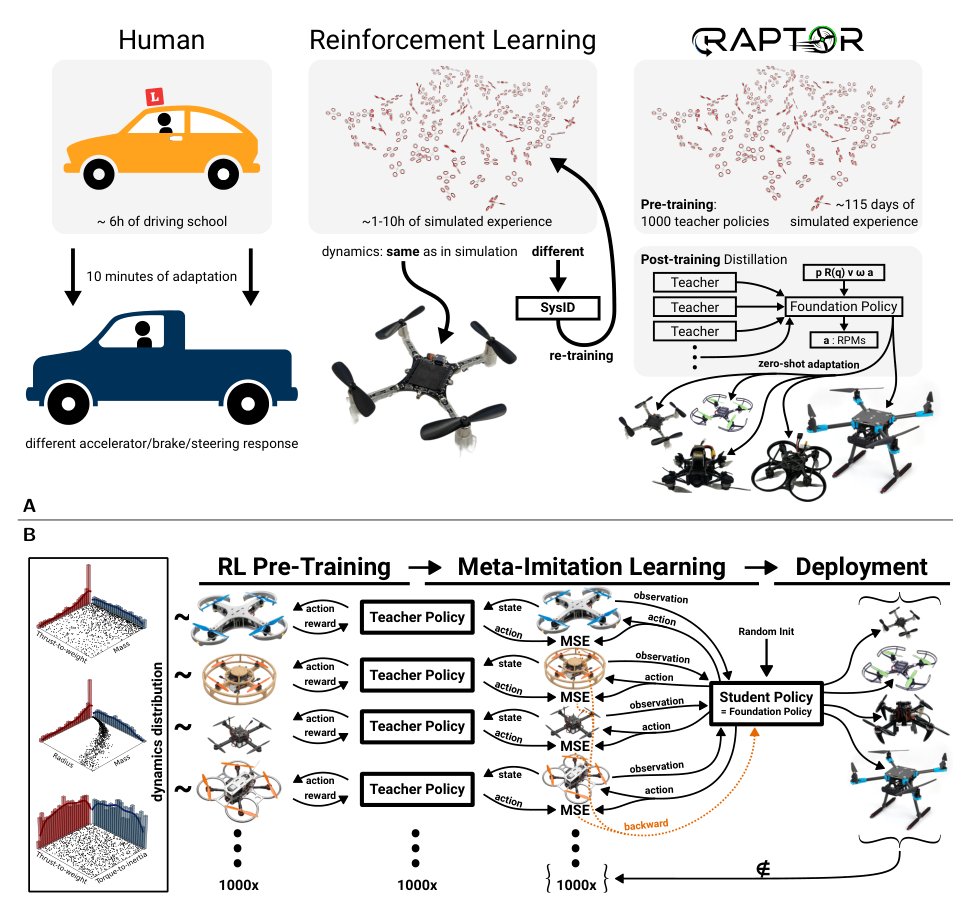
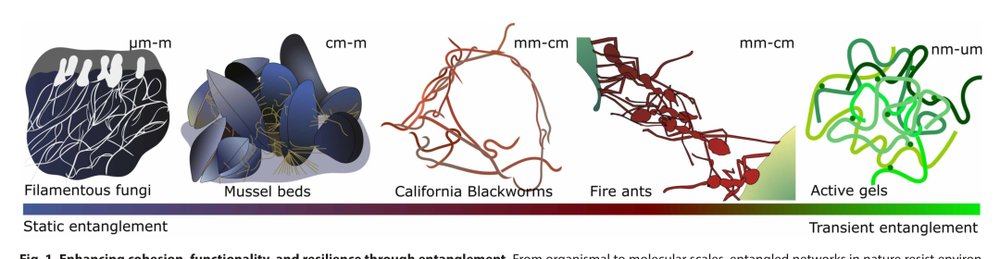
Neural-Fly enables rapid learning for agile flight in strong winds Figure 1
Science Robotics2022-05-25

Neural-Fly enables rapid learning for agile flight in strong winds

Michael O’Connell, Guanya Shi, Xichen Shi, Kamyar Azizzadenesheli, Anima Anandkumar, Yisong Yue, Soon-Jo Chung

Division of Engineering and Applied Science, California Institute of Technology, Pasadena, CA, USA

飞行机器人仿生机器人强化学习安全机器人

强风和阵风下的复杂非定常气动会显著破坏无人机轨迹跟踪,传统阻力模型或自适应控制难以兼顾精度与快速泛化。Neural-Fly 的关键是用 DAIML 从少量飞行数据中学习跨风况共享的气动表示,再在线只自适应低维线性系数,并给出稳定性保证。在最高 12.1 m/s 风洞、未见风况、户外和跨机体测试中,其跟踪误差显著低于非线性、L1 与 INDI 控制器。

Aerial-aquatic robots capable of crossing the air-water boundary and hitchhiking on surfaces Figure 1
Science Robotics2022-05-25

Aerial-aquatic robots capable of crossing the air-water boundary and hitchhiking on surfaces

Lei Li, Siqi Wang, Yiyuan Zhang, Shanyuan Song, Chuqian Wang, Shaochang Tan, Wei Zhao, Gang Wang, Wenguang Sun, Fuqiang Yang, Jiaqi Liu, Bohan Chen, Haoyuan Xu, Pham Nguyen, Mirko Kovac, Li Wen

School of Mechanical Engineering and Automation, Beihang University, Beijing, China, School of General Engineering, Beihang University, Beijing, China, School of Automation Science and Electrical Engineering, Beihang University, Beijing, China, Imperial College London, London, UK, Materials and Technology Centre of Robotics, Swiss Federal Laboratories for Materials Science and Technology (Empa), Dübendorf, Switzerland

移动机器人飞行机器人水下机器人软体机器人强化学习

面向空中/水下长期观测、跨介质作业等任务,论文针对无人平台难以快速穿越水气界面并在两种介质中低功耗驻留的问题,提出受䲟鱼吸盘启发的自包含空水两栖“搭便车”机器人:分隔鳍片腔实现冗余密封,自适应与静水压增强提升附着。机器人用被动变形旋翼在空中展开、水下折叠,可0.35秒跨界,并在粗糙、曲面、破损及运动表面上快速附着/脱离,完成山溪和海洋实地视频记录与跨界搬运演示。

A pipeline inspection robot for navigating tubular environments in the sub-centimeter scale Figure 1
Science Robotics2022-05-25

A pipeline inspection robot for navigating tubular environments in the sub-centimeter scale

Chao Tang, Boyuan Du, Songwen Jiang, Qi Shao, Xuguang Dong, Xin-Jun Liu, Huichan Zhao

Department of Mechanical Engineering, Tsinghua University, Beijing 100084, China, State Key Laboratory of Tribology, Beijing 100084, China, Beijing Key Lab of Precision/Ultra-Precision Manufacturing Equipment and Control, Beijing 100084, China

软体机器人微型机器人安全机器人

面向航空发动机、炼化设备等亚厘米管道难以用传统轮/履带机构内检的问题,论文提出仿蚯蚓蠕动的软体管道机器人:以介电弹性体作“肌肉”,结合SCM锚定传动和磁连接模块,并按黏弹性与振动特性调节驱动相位/频率。2.2克、直径小于10毫米的样机在9.8毫米管内水平/垂直速度均超过1体长/秒,可通过变径、弯管、油液和多材料管道,并搭载微型相机完成遥控巡检。

A bioinspired revolving-wing drone with passive attitude stability and efficient hovering flight Figure 1
Science Robotics2022-05-25

A bioinspired revolving-wing drone with passive attitude stability and efficient hovering flight

Songnan Bai, Qingning He, Pakpong Chirarattananon

Department of Biomedical Engineering, City University of Hong Kong, Tat Chee Avenue, Hong Kong SAR, China, Department of Mechanical Engineering, City University of Hong Kong, Tat Chee Avenue, Hong Kong SAR, China

飞行机器人触觉仿生机器人机器人

针对小型多旋翼续航短、桨盘载荷高导致能耗大的问题,论文借鉴槭树种子自旋下落机制,提出35.1克双翼回转无人机:小螺旋桨主要提供偏航力矩驱动大翼面旋转,利用非定常气动和低盘载荷升力,并通过动力学设计实现被动姿态稳定。实测功率载荷达8.0克/瓦,较基准多旋翼功耗约减半,续航14.9分钟、换大电池可达24.5分钟,还展示了载荷21.5克的定位飞行、测绘与监视应用。

Telerobotic neurovascular interventions with magnetic manipulation Figure 1
Science Robotics2022-04-27

Telerobotic neurovascular interventions with magnetic manipulation

Yoonho Kim, Emily Genevriere, Pablo Harker, Jaehun Choe, Marcin Balicki, Robert W. Regenhardt, Justin E. Vranic, Adam A. Dmytriw, Aman B. Patel, Xuanhe Zhao

Department of Mechanical Engineering, Massachusetts Institute of Technology, Cambridge, MA, USA, Department of Neurosurgery, Massachusetts General Hospital and Harvard Medical School, Boston, MA, USA, Department of Neurology and Rehabilitation Medicine, University of Cincinnati College of Medicine, Cincinnati, OH, USA, Department of Civil and Environmental Engineering, Massachusetts Institute of Technology, Cambridge, MA, USA

操作医疗机器人安全机器人

针对脑血管细小迂曲、传统导丝扭转控制易失效且术者需承受透视辐射的问题,论文提出磁控导丝、外部机械臂磁体、线性推进器与远程控制台组成的遥操作神经介入平台。系统在仿真人体脑血管模型和猪体迂曲血管中完成导航,并演示动脉瘤弹簧圈栓塞与血栓取栓,表明其可提升远端病灶可达性并降低医生辐射暴露。

Learning garment manipulation policies toward robot-assisted dressing Figure 1
Science Robotics2022-04-27

Learning garment manipulation policies toward robot-assisted dressing

Fan Zhang, Yiannis Demiris

Personal Robotics Laboratory, Department of Electrical and Electronic Engineering, Imperial College London, London, UK

操作医疗机器人仿生机器人强化学习机器人

面向上肢完全失能者的穿衣护理负担,本文将病号服从挂杆抓取、展开、绕床移动到给假人双臂穿衣串成完整双臂机器人流程。核心在于主动预抓取操作,用推/抓等动作先隔离可抓区域,并用对比网络估计仿真与真实衣物物理相似性以缩小 sim-to-real 差距。系统在医疗训练假人上为后开式病号服穿衣成功率超过 90%。

How to compete with robots by assessing job automation risks and resilient alternatives Figure 1
Science Robotics2022-04-27

How to compete with robots by assessing job automation risks and resilient alternatives

Antonio Paolillo, Fabrizio Colella, Nicola Nosengo, Fabrizio Schiano, William Stewart, Davide Zambrano, Isabelle Chappuis, Rafael Lalive, Dario Floreano

Laboratory of Intelligent Systems, Ecole Polytechnique Fédérale de Lausanne, Station 11, Lausanne CH 1015, Switzerland, Department of Economics, Faculty of Business and Economics, University of Lausanne, Unicentre, Lausanne CH 1015, Switzerland, Futures Lab, Faculty of Business and Economics, University of Lausanne, Unicentre, Lausanne CH 1015, Switzerland

机器人机器人学习

面对机器人与 AI 可能在更广职业范围内替代人类、迫使劳动者反复再培训的问题,本文将 O*NET 的职业能力/知识需求与欧洲机器人路线图中的机器人能力及技术成熟度对应,提出自动化风险指数 ARI 与兼顾降风险和再培训成本的韧性指数 RI。对近千种职业和美国劳动力结构的分析显示,该方法可为高风险岗位找到中等风险、再培训负担相对较低的转岗路径,并用于政策和教育规划。

Exploring planet geology through force-feedback telemanipulation from orbit Figure 1
Science Robotics2022-04-27

Exploring planet geology through force-feedback telemanipulation from orbit

Michael Panzirsch, Aaron Pereira, Harsimran Singh, Bernhard Weber, Edmundo Ferreira, Andrei Gherghescu, Lukas Hann, Emiel den Exter, Frank van der Hulst, Levin Gerdes, Leonardo Cencetti, Kjetil Wormnes, Jessica Grenouilleau, William Carey, Ribin Balachandran, Thomas Hulin, Christian Ott, Daniel Leidner, Alin Albu-Schäffer, Neal Y. Lii, Thomas Krüger

German Aerospace Center (DLR), Robotics and Mechatronics Center, Wessling, Germany, European Space Agency (ESA), Noordwijk, Netherlands, MF Robotics, Leiden, Netherlands, Department of Systems Engineering and Automation, University of Málaga, Málaga, Spain

操作飞行机器人触觉强化学习安全

面向月面/行星采样中自动化难以覆盖、通信又高延迟丢包的场景,论文提出改进的时域无源力反馈遥操作控制,使6DoF触觉遥操作在保持稳定的同时减少自由运动漂移并抑制硬碰撞。Analog-1实验证明,ISS航天员可在770–850 ms往返延迟、1.27%丢包下控制地面移动机械臂采集岩石样本,除一次自动收纳丢失外完成任务,主观负荷较低。

Efficient multitask learning with an embodied predictive model for door opening and entry with whole-body control Figure 1
Science Robotics2022-04-27

Efficient multitask learning with an embodied predictive model for door opening and entry with whole-body control

Hiroshi Ito, Kenjiro Yamamoto, Hiroki Mori, Tetsuya Ogata

Research and Development Group, Hitachi Ltd., Ibaraki, Japan, Faculty of Science and Engineering, Waseda University, Tokyo, Japan

移动机器人强化学习机器人

面向家庭/城市等非结构化环境中开门进门任务,论文针对手工建模和深度强化学习真实试错成本高的问题,提出基于预测误差最小化的具身预测模型:多个运动模块实时比较视觉预测误差并按确定性切换,从而把开门、通过、异常恢复串联起来。实验中机器人可在未示教门把位置插值泛化,平均成功率96.8%,并完成内外开门约30分钟15次往返。

Effective grasping enables successful robot-assisted dressing Figure 1
Science Robotics2022-04-27

Effective grasping enables successful robot-assisted dressing

Júlia Borràs

ulation methods difficult to apply to textiles, As a result, there has been increasing, but with limited ability to control shape,, with most demonstrations limited to partial, dual-arm robot to grasp hospital gowns and, available simulators are completely unrelated, vide data examples of grasps that include, pregrasp non-prehensile motions, increasing, grasping methods that just find grasping, prehensile pregrasp motions and including, states when something goes wrong, J. Borràs, G. Alenyà, C. Torras, A grasping-centered

操作机器人

面向护理场景中的机器人辅助穿衣,论文关注衣物可变形、难以感知和抓取导致完整流程稀少的问题。核心洞察是将仿真与真实深度视频对齐以改进布料参数学习,并在抓取前加入推挤等非抓取动作,利用环境约束提高成功率。结果展示双臂机器人可通过连续抓取与再抓取为床上假人穿医院袍,但安全、失败恢复和跨衣物泛化仍未充分解决。

Cooperative cargo transportation by a swarm of molecular machines Figure 1
Science Robotics2022-04-27

Cooperative cargo transportation by a swarm of molecular machines

M. Akter, J. J. Keya, K. Kayano, A. M. R. Kabir, D. Inoue, H. Hess, K. Sada, A. Kuzuya, H. Asanuma, A. Kakugo

Faculty of Science, Hokkaido University, Sapporo, Hokkaido 060-0810, Japan, Graduate School of Chemical Sciences and Engineering, Hokkaido University, Sapporo, Hokkaido 060-0810, Japan, Faculty of Design, Kyushu University, Fukuoka 815-8540, Japan, Department of Biomedical Engineering, Columbia University, New York, NY 10027, USA, Department of Chemistry and Materials Engineering, Kansai University, Osaka 564-8680, Japan, Department of Biomolecular Engineering, Graduate School of Engineering, Nagoya University, Nagoya 464-8603, Japan

群体机器人微型机器人机器人

面向单个微/纳尺度运输器难以搬运大尺寸、多数量货物的问题,论文构建了由驱动蛋白推动、光响应 DNA 连接的微管分子机器群。其关键在于用可见光诱导群集与装载、紫外光触发解聚与卸载,实现可远程指定位置的运输。实验显示,群体相比分散单体能在更长距离上搬运更大、更多货物,并可在紫外照射区域富集卸载货物。

Answering the great automation question Figure 1
Science Robotics2022-04-27

Answering the great automation question

Andrea Gentili

University eCampus, Faculty of Economics, Via Isimbardi, 10 - 22060 Novedrate (CO), Italia

强化学习机器人

围绕自动化究竟创造还是替代就业这一长期难题,本文评述 Paolillo 等将 O*NET 职业画像、MAR 机器人能力与 TRL 成熟度匹配,构建 967 类职业的自动化风险指数,并纳入 AI 对机器人化的推动。主要洞察是该方法能识别更多潜在替代活动,并用韧性指数为转岗和再培训提供方向;但职业数据不完备、低/高自动化情景概率未建模,政策预测仍需更精细工具。

A DNA molecular printer capable of programmable positioning and patterning in two dimensions Figure 1
Science Robotics2022-04-27

A DNA molecular printer capable of programmable positioning and patterning in two dimensions

Erik Benson, Rafael Carrascosa Marzo, Jonathan Bath, Andrew J. Turberfield

Department of Physics, University of Oxford, Clarendon Laboratory, Oxford, UK, The Kavli Institute for Nanoscience Discovery, University of Oxford, New Biochemistry Building, Oxford, UK

操作软体机器人群体机器人机器人

针对扫描探针和光刻等自上而下纳米定位成本高、难并行的问题,论文用三组可独立控制的 DNA origami 线性执行器构成二维“分子打印机”:滑轨、龙门架和套筒式写头可由信号链可逆锁定到指定位置。实验通过 TEM、凝胶和 DNA-PAINT 表征装配与定位,并用写头催化局部链置换,在 DNA 画布上选择性修改像素;但打印精度受结构柔性和非目标墨水掺入限制。

The role of user preference in the customized control of robotic exoskeletons Figure 1
Science Robotics2022-03-30

The role of user preference in the customized control of robotic exoskeletons

K. A. Ingraham, C. D. Remy, E. J. Rouse

Department of Mechanical Engineering, University of Michigan, Ann Arbor, MI, USA, Robotics Institute, University of Michigan, Ann Arbor, MI, USA, Institute for Nonlinear Mechanics, University of Stuttgart, Stuttgart, Germany

移动机器人机器人

针对外骨骼控制常以代谢成本等单一指标优化、难以反映舒适性和稳定感等主观因素的问题,本文把用户偏好作为可自定义控制目标,让受试者在不知参数含义的情况下同时自调踝关节峰值力矩大小与时序。结果显示偏好虽会随经验、速度和技术背景变化,但个体可在约105秒内收敛,并以约1.7 Nm和1.5%步态周期的重复精度识别自身偏好,支持面向个人偏好的共享控制策略。

Running birds reveal secrets for legged robot design Figure 1
Science Robotics2022-03-30

Running birds reveal secrets for legged robot design

Jonas Rubenson, Gregory S. Sawicki

Biomechanics Laboratory, Department of Kinesiology, Pennsylvania State University, University Park, PA, USA, Integrative and Biomedical Physiology Program, Huck Institutes of the Life Sciences, Pennsylvania State University, University Park, PA, USA, School of Mechanical Engineering, Georgia Institute of Technology, Atlanta, GA, USA, School of Biological Sciences, Georgia Institute of Technology, Atlanta, GA, USA, Institute for Robotics and Intelligent Machines, Georgia Institute of Technology, Atlanta, GA, USA

移动机器人触觉机器人

针对足式机器人在复杂地形中依赖高速传感、强执行器和重计算仍难兼顾稳定与能耗的问题,本文从奔跑鸟类远端腿部多关节肌腱结构提炼“机械智能”思路:以 BirdBot 的被动腿部离合机制让足趾运动自动接合/脱开全腿弹性执行器。其主要结果是可在无需感知反馈的情况下完成支撑—摆动切换,并降低执行器力矩与控制复杂度,但系统仍偏平面受限,推广到自主非稳态运动仍待验证。

Preclinical upper limb neurorobotic platform to assess, rehabilitate, and develop therapies Figure 1
Science Robotics2022-03-30

Preclinical upper limb neurorobotic platform to assess, rehabilitate, and develop therapies

Maria Pasquini, Nicholas D. James, Inssia Dewany, Florent-Valéry Coen, Newton Cho, Stefano Lai, Selin Anil, Jacopo Carpaneto, Quentin Barraud, Stéphanie P. Lacour, Silvestro Micera, Grégoire Courtine

Biorobotics Institute and Department of Excellence in Robotics and AI, Scuola Superiore Sant’anna, Pisa, Italy, Bertarelli Foundation Chair in Translational Neuroengineering, Center for Neuroprosthetics and Institute of Bioengineering, School of Engineering, Ecole Polytechnique Fédérale de Lausanne (EPFL), Lausanne, Switzerland, Center for Neuroprosthetics and Brain Mind Institute, School of Life Sciences, Ecole Polytechnique Fédérale de Lausanne (EPFL), Lausanne, Switzerland, Department of Clinical Neuroscience, Lausanne University Hospital (CHUV) and University of Lausanne (UNIL), Switzerland, Defitech Center for Interventional Neurotherapies (.NeuroRestore), EPFL/CHUV/UNIL, Lausanne, Switzerland, Bertarelli Foundation Chair in Neuroprosthetic Technology, Center for Neuroprosthetics, Institute of Electrical and MicroEngineering and Institute of Bioengineering, Ecole Polytechnique Fédérale de Lausanne (EPFL), Lausanne, Switzerland

触觉医疗机器人强化学习机器人

针对上肢神经损伤疗法缺少可控、可量化的临床前开发环境,本文构建了面向大鼠的四自由度腕部末端执行器 R-Bot,结合力/运动学、肌电和神经记录,并可按自由度提供个性化辅助。平台不仅精细追踪脊髓损伤后的上肢恢复和皮质脊髓神经元动态变化,还支持早期机器人康复并提升恢复,同时用于开发可植入脊髓神经假体以增强上肢功能。
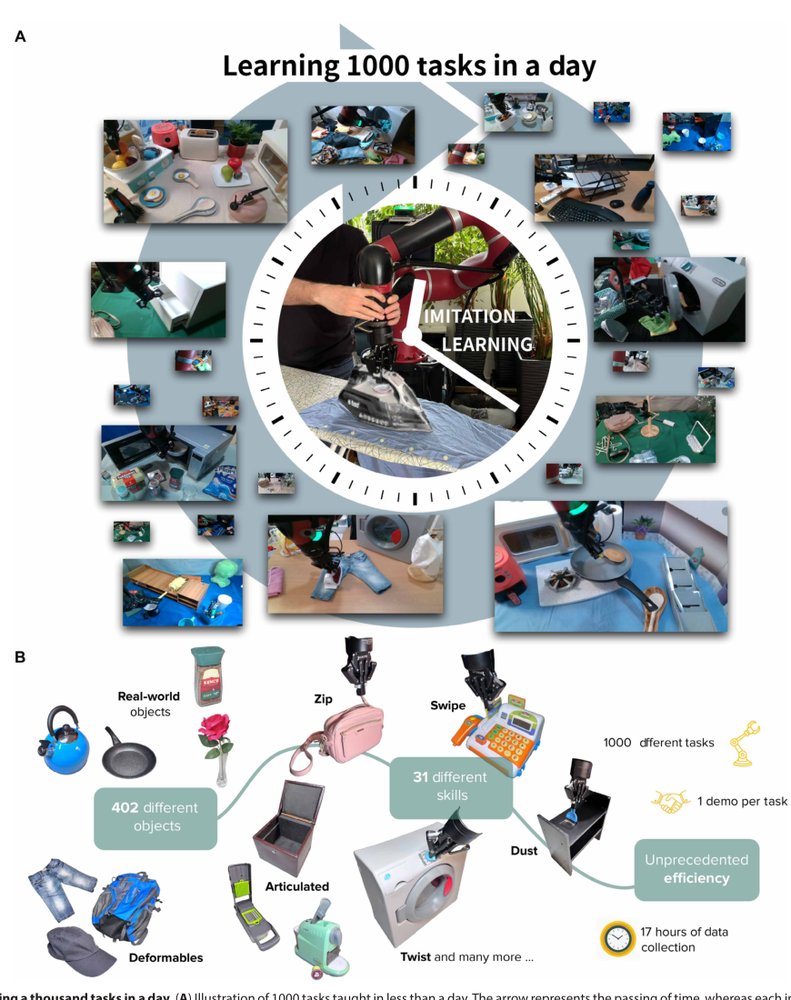
Metabolically efficient walking assistance using optimized timed forces at the waist Figure 1
Science Robotics2022-03-30

Metabolically efficient walking assistance using optimized timed forces at the waist

Prokopios Antonellis, Arash Mohammadzadeh Gonabadi, Sara A. Myers, Iraklis I. Pipinos, Philippe Malcolm

Department of Biomechanics and Center for Research in Human Movement Variability, University of Nebraska at Omaha, 6160 University Drive South, Omaha, NE 68182, USA, Department of Neurology, School of Medicine, Oregon Health & Science University, 3181 SW Sam Jackson Park Road, OP-32, Portland, OR 97239, USA, Rehabilitation Engineering Center, Institute for Rehabilitation Science and Engineering, Madonna Rehabilitation Hospital, 5401 South Street, Lincoln, NE 68506, USA, Department of Surgery and Research Service, Veterans Affairs Nebraska-Western Iowa Medical Center, Omaha, NE 68105, USA, Department of Surgery, University of Nebraska Medical Center, 982500 Nebraska Medical Center, Omaha, NE 68198, USA

移动机器人医疗机器人仿生机器人机器人

针对外骨骼常模仿关节力矩但未必最省能的问题,本文用机器人腰部牵引在质心处系统扫描不同相位和幅值的前向力。关键洞察是最优时序并非完全对准推进期,而是在双支撑中段加速质心进入单支撑倒立摆运动。实验中健康受试者代谢率最高降低约48%,单位辅助功的效率优于多类辅助机器人,并在少量外周动脉疾病患者中显示可降低代谢率。

BirdBot achieves energy-efficient gait with minimal control using avian-inspired leg clutching Figure 1
Science Robotics2022-03-30

BirdBot achieves energy-efficient gait with minimal control using avian-inspired leg clutching

Alexander Badri-Spröwitz, Alborz Aghamaleki Sarvestani, Metin Sitti, Monica A. Daley

Dynamic Locomotion Group, Max Planck Institute for Intelligent Systems, Stuttgart, Germany, Physical Intelligence Department, Max Planck Institute for Intelligent Systems, Stuttgart, Germany, Institute for Biomedical Engineering, ETH-Zürich, Zürich, Switzerland, School of Medicine and College of Engineering, Koç University, Istanbul, Turkey, Department of Ecology and Evolutionary Biology, University of California, Irvine, CA, USA, Royal Veterinary College, London, UK

移动机器人飞行机器人触觉机器人

针对腿式机器人依赖快速反馈和高能耗支撑/摆动切换的问题,BirdBot用仿鸟多关节弹簧腱网络和足端触发的自接合/脱开“离合”机制,把关节协调与相位切换部分交给身体结构完成。实验显示其仅用每腿两个执行器、前馈控制即可实现双足步态,并将膝部屈曲峰值扭矩降至非离合弹性腿约十分之一,体现出较高能效和可扩展的机械设计思路。

Surface haptic rendering of virtual shapes through change in surface temperature Figure 1
Science Robotics2022-02-23

Surface haptic rendering of virtual shapes through change in surface temperature

Changhyun Choi, Yuan Ma, Xinyi Li, Sitangshu Chatterjee, Sneha Sequeira, Rebecca F. Friesen, Jonathan R. Felts, M. Cynthia Hipwell

Department of Mechanical Engineering, Texas A&M University, College Station, TX 77843, USA, Department of Mechanical Engineering, The Hong Kong Polytechnic University, Hong Kong, P. R. China, Research Institute for Intelligent Wearable Systems, The Hong Kong Polytechnic University, Hong Kong, P. R. China

飞行机器人触觉机器人

面向触摸屏、VR/AR等界面中触觉反馈难以低功耗、低电压且局部化实现的问题,论文提出用表面温度调制手指—玻璃界面摩擦来渲染虚拟形状。核心洞察是升温会降低皮肤黏弹模量并改变含水状态,增大真实接触面积而非主要改变剪切强度。实验中表面从23°C升至42°C使滑动摩擦约增加50%,并在无明显热感知下实现虚拟区域和凸起定位;仿真还显示小型加热阵列有望扩展到纹理渲染。

Shape morphing mechanical metamaterials through reversible plasticity Figure 1
Science Robotics2022-02-23

Shape morphing mechanical metamaterials through reversible plasticity

Dohgyu Hwang, Edward J. Barron, A. B. M. Tahidul Haque, Michael D. Bartlett

Macromolecules Innovation Institute, Virginia Tech, Blacksburg, VA 24061, USA, Department of Mechanical Engineering, Soft Materials and Structures Lab, Virginia Tech, Blacksburg, VA 24061, USA

移动机器人水下机器人软体机器人机器人

针对软体机器人难以同时实现大幅变形、承载定形和可逆多状态切换的问题,本文将弹性 kirigami 结构、低熔点合金内骨架与嵌入式加热层结合,利用“可逆塑性”在小于0.1秒内把平面片材固定成复杂三维承载形态,并可通过相变恢复/重构。实验显示材料可支撑载荷、循环自愈,并集成到地空变形无人机和水下取物装置中验证多模态机器人应用。

Liquid-amplified zipping actuators for micro-air vehicles with transmission-free flapping Figure 1
Science Robotics2022-02-23

Liquid-amplified zipping actuators for micro-air vehicles with transmission-free flapping

Tim Helps, Christian Romero, Majid Taghavi, Andrew T. Conn, Jonathan Rossiter

Department of Engineering Mathematics, University of Bristol, Bristol, UK, Bristol Robotics Laboratory, University of Bristol, Bristol, UK, Bristol Centre for Functional Nanomaterials, School of Physics, University of Bristol, Bristol, UK, School of Chemistry, University of Bristol, Bristol, UK, Department of Mechanical Engineering, University of Bristol, Bristol, UK

飞行机器人仿生机器人微型机器人机器人

针对扑翼微型飞行器中传动机构带来质量、能量损失和控制耦合的问题,论文提出液体增强拉链式静电执行器 LAZA,将含硅油介电液滴的电极直接布置在翼根,以静电力驱动扑动、取消机械传动。实验显示其频率和幅值可控,100 万次循环性能无衰减,峰值/平均比功率达 200/124 W/kg;装配 50 mm 被动俯仰翼后产生 5.73 mN 推力、23.6 N/kW 推重功率效率,并在线缆支撑下实现 0.71 m/s 水平运动。

Harnessing the circular economy to develop sustainable soft robots Figure 1
Science Robotics2022-02-23

Harnessing the circular economy to develop sustainable soft robots

Yu Jun Tan

Department of Mechanical Engineering, College of Design and Engineering, National University of Singapore, 117575, Singapore. Centre for Additive Manufacturing (AM.NUS), National University of Singapore, 117602, Singapore

软体机器人机器人

为应对软体机器人依赖合成材料带来的资源消耗与电子废弃物问题,本文聚焦循环经济思路下的可持续软机器人设计。其核心洞察是用明胶、甘油、葡萄糖和柠檬酸构成的可降解生物凝胶,通过直写式3D打印同时实现气动驱动器和可拉伸光波导传感器。文中报道该材料模量与延展性可调、可重熔再打印多次,并支持全向驱动、实时形变/触碰感知及搜索擦除示范,显示可回收、可降解软体器件的可行性。

Guiding the design of superresolution tactile skins with taxel value isolines theory Figure 1
Science Robotics2022-02-23

Guiding the design of superresolution tactile skins with taxel value isolines theory

Huanbo Sun, Georg Martius

Autonomous Learning Group, Max Planck Institute for Intelligent Systems, Tübingen, Germany

触觉强化学习机器人

针对高分辨率触觉皮肤依赖密集 taxel 带来的体积、布线脆弱和成本问题,论文提出基于 taxel 等值线的几何超分辨理论,用于在制造前评估接触位置、力大小的可辨性与误差,并与机器学习反演结合。作者用有限元和气压式 1D/2D 原型验证设计准则,分别实现约百倍和 1200 倍量级超分辨,2D 平均定位误差约 0.161 mm。

Electronics-free soft robot has a nice ring to it Figure 1
Science Robotics2022-02-23

Electronics-free soft robot has a nice ring to it

Kristen L. Dorsey

Department of Electrical and Computer Engineering, Northeastern University, Boston, MA, USA

移动机器人软体机器人机器人

为摆脱软体机器人对外部电子控制、预编程压力序列或人工操作的依赖,文中介绍了Lee等的屈曲薄片环形振荡器BRO:将三片可充放气薄片耦合成类似电子环振的流体定时回路,并把振荡器嵌入执行器本体,由薄片变形直接调控气路。该设计减少阀和制造复杂度,可通过结构布局实现爬行、转向、攀爬和游动;在空气中可微泵无缆运行并承载约4倍自重,但仍需压力源且转向切换尚依赖外部信号。

Dynamic tactility by position-encoded spike spectrum Figure 1
Science Robotics2022-02-23

Dynamic tactility by position-encoded spike spectrum

Taeyeong Kim, Jaehun Kim, Insang You, Joosung Oh, Sung-Phil Kim, Unyong Jeong

Department of Materials Science and Engineering, Pohang University of Science and Technology (POSTECH), Pohang 37673, Republic of Korea, Department of Biomedical Engineering, Ulsan National Institute of Science and Technology (UNIST), Ulsan 44919, Republic of Korea, Department of Chemical Engineering, POSTECH, Pohang 37673, Republic of Korea

操作触觉机器人

针对传统电子皮肤逐点读出带来的延迟、功耗和电路复杂度问题,论文借鉴体感系统中首个脉冲相对时序更关键的机制,提出位置编码脉冲谱 PESS:用混合离子-电子导体产生可调弛豫时间的电位脉冲,将位置、轨迹、速度和接触面积编码到单通道事件序列中。系统仅需两条全局寻址线、最高集成 132 个受体/cm²,并实现小于 5 ms 的动态触觉识别,用于机器人实时防滑和滚动物体操作。

A buckling-sheet ring oscillator for electronics-free, multimodal locomotion Figure 1
Science Robotics2022-02-23

A buckling-sheet ring oscillator for electronics-free, multimodal locomotion

Won-Kyu Lee, Daniel J. Preston, Markus P. Nemitz, Amit Nagarkar, Arthur K. MacKeith, Benjamin Gorissen, Nikolaos Vasios, Vanessa Sanchez, Katia Bertoldi, L. Mahadevan, George M. Whitesides

Department of Chemistry and Chemical Biology, Harvard University, 12 Oxford Street, Cambridge, MA 02138, USA, Wyss Institute for Biologically Inspired Engineering, 3 Blackfan Circle, Boston, MA 02115, USA, School of Engineering and Applied Sciences, Harvard University, 29 Oxford Street, Cambridge, MA 02138, USA, Department of Physics, Department of Organismic and Evolutionary Biology, Harvard University, 17 Oxford Street, Cambridge, MA 02138, USA, Kavli Institute for Bionano Science and Technology, Harvard University, 29 Oxford Street, Cambridge, MA 02138, USA

移动机器人软体机器人机器人

针对软体移动机器人依赖电子控制器、硬阀和多路气源而难以简化自治的问题,本文提出由屈曲薄片气动反相器奇数闭环构成的 BRO,利用薄片屈曲、软管折 kink 与环振荡耦合,把恒定气压转为相位错开的周期运动。实验显示其可在塑料、织物、沙地和水面实现平移/旋转,并可借助附加屈曲执行器爬坡及在水下抗浮力下行清洁。

3D printing of resilient biogels for omnidirectional and exteroceptive soft actuators Figure 1
Science Robotics2022-02-23

3D printing of resilient biogels for omnidirectional and exteroceptive soft actuators

A. Heiden, D. Preninger, L. Lehner, M. Baumgartner, M. Drack, E. Woritzka, D. Schiller, R. Gerstmayr, F. Hartmann, M. Kaltenbrunner

Division of Soft Matter Physics, Institute of Experimental Physics Johannes Kepler University Linz, Altenbergerstr. 69, Linz, Austria, Soft Materials Lab, Linz Institute of Technology, Johannes Kepler University Linz, Altenbergerstr. 69, Linz, Austria, Institute of Polymer Science, Johannes Kepler University Linz, Altenbergerstr. 69, Linz, Austria

飞行机器人软体机器人安全机器人

针对软体机器人常用硅胶不可降解、模具制造限制复杂结构与传感集成的问题,论文提出可回收的明胶基 biogel FDM 打印流程,并把可拉伸光波导直接打印进气动执行器。所得材料可伸长约5倍、可重复再打印最多5次;执行器实现亚秒级全向弯曲、最高约74°,并通过本体/外界感知完成自动搜索并推开障碍物。

Light-driven carbon nitride microswimmers with propulsion in biological and ionic media and responsive on-demand drug delivery Figure 1
Science Robotics2022-01-26

Light-driven carbon nitride microswimmers with propulsion in biological and ionic media and responsive on-demand drug delivery

Varun Sridhar, Filip Podjaski, Yunus Alapan, Julia Kröger, Lars Grunenberg, Vimal Kishore, Bettina V. Lotsch, Metin Sitti

Physical Intelligence Department, Max Planck Institute for Intelligent Systems, 70569 Stuttgart, Germany, Nanochemistry Department, Max Planck Institute for Solid State Research, 70569 Stuttgart, Germany, Department of Chemistry, Ludwig-Maximilians-Universität München, 81377 Munich, Germany, Department of Physics, Banaras Hindu University, Varanasi 221005, India, Institute for Biomedical Engineering, ETH Zurich, 8092 Zurich, Switzerland, School of Medicine and College of Engineering, Koç University, 34450 Istanbul, Turkey

移动机器人水下机器人机器人

光驱微游泳器在高盐生物介质中常因离子屏蔽和需有毒燃料而失效,限制体内递送应用。本文用具结构/织构纳孔与光离子特性的二维 PHI 碳氮微粒,实现无专用燃料的可见光推进,并利用纳孔载药与光触发释药。实验显示其在最高 5 M 离子溶液及 dPBS、DMEM 等介质中仍可高速游动,细胞相容性良好,DOX 载药效率达 185%,且可按 pH 和光照实现按需释放。

Learning robust perceptive locomotion for quadrupedal robots in the wild Figure 1
Science Robotics2022-01-26

Learning robust perceptive locomotion for quadrupedal robots in the wild

Takahiro Miki, Joonho Lee, Jemin Hwangbo, Lorenz Wellhausen, Vladlen Koltun, Marco Hutter

Robotic Systems Lab, ETH-Zürich, Zürich, Switzerland, Robotics & Artificial Intelligence Lab, KAIST, Daejeon, Korea, Intelligent Systems Lab, Intel, Jackson, WY, USA

移动机器人强化学习机器人

本文针对四足机器人在野外依赖视觉易受雪、植被、反光、遮挡等影响,而仅靠本体感知又速度受限的问题,提出用注意力式循环编码器端到端融合外感知与本体感知,并通过特权强化学习教师—学生训练获得可在感知失效时回退的控制策略。ANYmal在高山、森林、地下和城市环境中零摔倒部署,并完成瑞士2.2公里、120米爬升徒步,速度接近人类推荐用时。

Autonomous robotic laparoscopic surgery for intestinal anastomosis Figure 1
Science Robotics2022-01-26

Autonomous robotic laparoscopic surgery for intestinal anastomosis

H. Saeidi, J. D. Opfermann, M. Kam, S. Wei, S. Leonard, M. H. Hsieh, J. U. Kang, A. Krieger

Department of Computer Science, University of North Carolina Wilmington, Wilmington, NC 28403, USA, Department of Mechanical Engineering, Johns Hopkins University; Baltimore, MD 21211, USA, Laboratory for Computational Sensing and Robotics, Johns Hopkins University; Baltimore, MD 21211, USA, Department of Electrical and Computer Engineering, Johns Hopkins University; Baltimore, MD 21211, USA, Department of Urology, Children’s National Hospital, 111 Michigan Ave. N.W., Washington, DC 20010, USA

操作移动机器人医疗机器人安全机器人

针对软组织腹腔镜吻合中视野受限、组织形变与呼吸运动导致的精确缝合难题,论文在 STAR 系统上加入组织跟踪、呼吸同步、自动规划/重规划、碰撞与工具故障检测及相机控制等监督自治能力。猪体内外小肠吻合实验显示,该系统在缝针一致性、间距/咬合精度等指标上优于专家手工和遥操作机器人,且完成了 1 周存活验证。

A 2-year locomotive exploration and scientific investigation of the lunar farside by the Yutu-2 rover Figure 1
Science Robotics2022-01-26

A 2-year locomotive exploration and scientific investigation of the lunar farside by the Yutu-2 rover

L. Ding, R. Zhou, Y. Yuan, H. Yang, J. Li, T. Yu, C. Liu, J. Wang, S. Li, H. Gao, Z. Deng, N. Li, Z. Wang, Z. Gong, G. Liu, J. Xie, S. Wang, Z. Rong, D. Deng, X. Wang, S. Han, W. Wan, L. Richter, L. Huang, S. Gou, Z. Liu, H. Yu, Y. Jia, B. Chen, Z. Dang, K. Zhang, L. Li, X. He, S. Liu, K. Di

State Key Laboratory of Robotics and System, Harbin Institute of Technology, Harbin 150080, China, Beijing Aerospace Control Center, Beijing 100094, China, Key Laboratory of Science and Technology on Aerospace Flight Dynamics, Beijing 100094, China, Department of Aerospace Engineering, Ryerson University, Toronto, ON M5B 2K3, Canada, State Key Laboratory of Remote Sensing Science, Aerospace Information Research Institute, Chinese Academy of Sciences, Beijing 100101, China, Large Space Structures GmbH, Hauptstrasse 1, D-85386 Eching, Germany, China Academy of Space Technology, Beijing 100094, China

移动机器人强化学习机器人

月球背面长期缺乏原位探测,且通信与复杂地形使巡视器高效移动困难。本文基于嫦娥四号玉兔二号前两年、25个月昼的行驶与多载荷数据,结合轮地相互作用分析滑移、沉陷和月壤承载性质。结果显示其累计行驶600.55米且多为轻微滑移,背面月壤黏聚力和承载强度高于阿波罗区域,沿途岩石稀少但小型新鲜撞击坑丰富,提示月球正背面表面地质存在显著差异。

Light-powered soft steam engines for self-adaptive oscillation and biomimetic swimming Figure 1
Science Robotics2021-12-15

Light-powered soft steam engines for self-adaptive oscillation and biomimetic swimming

Zhiwei Li, Nosang Vincent Myung, Yadong Yin

Department of Chemistry, University of California-Riverside, Riverside, CA 92521, USA, Department of Chemical and Biomolecular Engineering, University of Notre Dame, Notre Dame, IN 46556, USA

移动机器人水下机器人机器人

针对恒定能量输入下软体振荡器难以自维持且难随环境调节模式的问题,本文将含 Fe3O4/Cu 纳米棒的水凝胶夹在 PI/PDMS 三层膜中,利用光热产汽泡扰动热机械平衡,形成类蒸汽机振荡。实验显示其可在连续光照下实现约 10 Hz 振荡,并随光强切换连续/脉冲模式;进一步制成水表面 Neusbot,可无线光驱游动、按需转向,速度约 4 个体长/分钟。

From grasping to manipulation with gecko-inspired adhesives on a multifinger gripper Figure 1
Science Robotics2021-12-15

From grasping to manipulation with gecko-inspired adhesives on a multifinger gripper

Wilson Ruotolo, Dane Brouwer, Mark R. Cutkosky

Department of Mechanical Engineering, Stanford University, 424 Panama Mall, Stanford, CA 94305, USA

操作机器人

针对多指灵巧手虽灵活但抓持力和实用性弱、壁虎仿生干胶多停留在单向抓取的问题,论文提出将高接触面积、剪切载荷共享和均匀法向应力三原则嵌入多指多节手。其核心是带屈曲斜肋的可部署胶垫悬架,提供法向顺应与近平台化剪切刚度,并据黏附接触重构抓取运动学与控制。farmHand 实验证实了载荷共享,可抓取重物并完成超越取放的物体重定向等操作。

Coherent, super-resolved radar beamforming using self-supervised learning Figure 1
Science Robotics2021-12-15

Coherent, super-resolved radar beamforming using self-supervised learning

Itai Orr, Moshik Cohen, Harel Damari, Meir Halachmi, Mark Raifel, Zeev Zalevsky

Faculty of Engineering and the Institute for Nanotechnology and Advanced Materials, Bar Ilan University, Ramat-Gan, Israel, Wisense Technologies Ltd., Tel Aviv, Israel

仿生机器人强化学习机器人

面向自动驾驶雷达在复杂城市/高速场景中角分辨率不足、单纯增加天线通道又带来成本和校准负担的问题,论文提出 R2S2:用自监督训练的深度网络从复数 range-Doppler 数据重建缺失接收通道,并用多表示空间损失约束相干性,无需目标数先验或场景稀疏性。实车晴雨数据上报告约 4 倍角分辨率提升。

Bird-inspired dynamic grasping and perching in arboreal environments Figure 1
Science Robotics2021-12-15

Bird-inspired dynamic grasping and perching in arboreal environments

W. R. T. Roderick, M. R. Cutkosky, D. Lentink

Department of Mechanical Engineering, Stanford University, Stanford, CA, USA, Faculty of Science and Engineering, University of Groningen, Groningen, Netherlands

操作机器人

针对现有空中机器人难以像鸟类一样在不规则树枝上动态着陆、抓取并节能停栖的问题,论文提出仿鸟双足抓取系统 SNAG:用可塌缩腿部吸收碰撞能量并转化为抓握力,欠驱动趾爪在 50 ms 内包覆表面,配合被动锁止和闭环平衡控制。实验在多种天然树枝和空中抓取任务中验证其可靠停栖/释放能力,并显示尺度增大时角动量约束更严,常见鸟趾排列对停栖性能影响有限。

Robotic end-to-end fusion of microtubules powered by kinesin Figure 1
Science Robotics2021-11-10

Robotic end-to-end fusion of microtubules powered by kinesin

Gadiel Saper, Stanislav Tsitkov, Parag Katira, Henry Hess

Department of Biomedical Engineering, Columbia University, New York, NY, USA, Department of Mechanical Engineering, San Diego State University, San Diego, CA, USA

机器人机器人学习

面向生物混合纳米机器人如何主动加速分子级装配的问题,论文将ATP驱动的 kinesin-1 马达与合成圆形限域腔结合,使微管沿边界富集并取向,持续维持非平衡高浓度状态,而非依赖预设初态。实验显示限域可使微管端到端融合事件相对平面滑行增加约20倍,20小时内平均长度约增至4倍,说明马达-边界相互作用可显著提升纳米装配动力学。

Individualization of exosuit assistance based on measured muscle dynamics during versatile walking Figure 1
Science Robotics2021-11-10

Individualization of exosuit assistance based on measured muscle dynamics during versatile walking

R. W. Nuckols, S. Lee, K. Swaminathan, D. Orzel, R. D. Howe, C. J. Walsh

John A. Paulson School of Engineering and Applied Sciences and Wyss Institute for Biologically Inspired Engineering, Harvard University, Boston, MA, USA

移动机器人机器人

针对可穿戴助行设备难以同时适配个体差异和不同步行任务的问题,论文提出基于超声实测比目鱼肌肌腱动力学的肌肉辅助策略,将外骨骼软服助力对准代谢成本较高的向心收缩阶段。该方法约10秒生成个性化低力助力曲线,在多种平地速度和上坡行走中显著降低代谢消耗,最高平均降幅15.9%,并优于若干仿生基线。

Abyssal Benthic Rover, an autonomous vehicle for long-term monitoring of deep-ocean processes Figure 1
Science Robotics2021-11-10

Abyssal Benthic Rover, an autonomous vehicle for long-term monitoring of deep-ocean processes

K. L. Smith, A. D. Sherman, P. R. McGill, R. G. Henthorn, J. Ferreira, T. P. Connolly, C. L. Huffard

Monterey Bay Aquarium Research Institute, Moss Landing, CA, USA, Moss Landing Marine Laboratories, San José State University, Moss Landing, CA, USA

移动机器人机器人

为弥补深海碳循环长期原位观测不足,论文介绍了可在4000米海底自主履带行走的 Benthic Rover II:以低接地压移动,结合摄像、温氧流速传感和沉积物呼吸室,连续多年测量海底有机碳再矿化。2015至2020年数据表明,海底植源碎屑覆盖显著增加,并与溶解氧下降、沉积物群落耗氧上升显著相关,说明生物过程对深海碳储存与消耗有可观影响。

Vital signal sensing and manipulation of a microscale organ with a multifunctional soft gripper Figure 1
Science Robotics2021-10-13

Vital signal sensing and manipulation of a microscale organ with a multifunctional soft gripper

Yeonwook Roh, Minho Kim, Sang Min Won, Daseul Lim, Insic Hong, Seunggon Lee, Taewi Kim, Changhwan Kim, Doohoe Lee, Sunghoon Im, Gunhee Lee, Dongjin Kim, Dongwook Shin, Dohyeon Gong, Baekgyeom Kim, Seongyeon Kim, Sungyeong Kim, Hyun Kuk Kim, Bon-Kwon Koo, Sungchul Seo, Je-Sung Koh, Daeshik Kang, Seungyong Han

Department of Mechanical Engineering, Ajou University, Multiscale Bio-inspired Technology Lab, Suwon 16499, Republic of Korea, Department of Electrical and Computer Engineering, Sungkyunkwan University, Suwon 16419, Republic of Korea, Department of Environment Machinery, Korea Institute of Machinery and Materials, Daejeon 34103, Republic of Korea, Department of Internal Medicine and Cardiovascular Center, Chosun University Hospital, University of Chosun College of Medicine, Gwangju 61453, Republic of Korea, Department of Internal Medicine and Cardiovascular Center, Seoul National University Hospital, Seoul 03080, Republic of Korea, Department of Environmental Health and Safety, EulJi University, Seoul 11759, Republic of Korea

操作机器人

针对微尺度柔软生物体难以在无损抓取的同时进行刺激与生命信号监测的问题,论文提出仿人手的毫米级五指软夹爪:利用形状记忆聚合物实现2 MPa至1.4 GPa可变刚度,嵌入银纳米线兼作驱动、测温和热刺激,并集成裂纹应变传感器感知振动/压力。实验显示其载重比可达6400,可抓取蜗牛卵、温和加热诱导孵化,并监测新生蜗牛心率。

Multimodal sensing and intuitive steering assistance improve navigation and mobility for people with impaired vision Figure 1
Science Robotics2021-10-13

Multimodal sensing and intuitive steering assistance improve navigation and mobility for people with impaired vision

Patrick Slade, Arjun Tambe, Mykel J. Kochenderfer

Department of Mechanical Engineering, Stanford University, Stanford, CA, USA, Department of Aeronautics and Astronautics, Stanford University, Stanford, CA, USA

移动机器人机器人

针对视障人群在避障、室内外寻路和关键物体定位中依赖白杖但信息受限的问题,论文提出带多模态传感、SLAM/视觉识别与接地动觉转向反馈的 Augmented Cane。与普通白杖对比实验显示,其使视障参与者步速提升18±7%、明眼蒙眼参与者提升35±12%,同时减少环境接触,可能因引导更准确、认知负担更低和信心提高。

Learning high-speed flight in the wild Figure 1
Science Robotics2021-10-13

Learning high-speed flight in the wild

Antonio Loquercio, Elia Kaufmann, René Ranftl, Matthias Müller, Vladlen Koltun, Davide Scaramuzza

University of Zurich, Zürich, Switzerland

飞行机器人强化学习机器人

面向传统无人机“感知—建图—规划”流水线在高速避障中延迟高、误差累积的问题,论文用轻量卷积策略将噪声深度图和惯性信息直接映射为多候选短时轨迹,并通过仿真中的特权学习模仿采样专家实现零样本迁移。实机在森林、雪地、废墟等未见环境中以最高约10 m/s飞行,相比当时方法高速度下失败率最多降低10倍。

A bipedal walking robot that can fly, slackline, and skateboard Figure 1
Science Robotics2021-10-13

A bipedal walking robot that can fly, slackline, and skateboard

Kyunam Kim, Patrick Spieler, Elena-Sorina Lupu, Alireza Ramezani, Soon-Jo Chung

Division of Engineering and Applied Science, California Institute of Technology, 1200 E. California Boulevard, Pasadena, CA 91125, USA, Department of Electrical and Computer Engineering, Northeastern University, 360 Huntington Avenue, Boston, MA 02115, USA, Jet Propulsion Laboratory, California Institute of Technology, 4800 Oak Grove Drive, Pasadena, CA 91109, USA

移动机器人机器人

针对地面机器人受地形/障碍限制、飞行机器人续航短且难以物理交互的问题,论文提出双足-多旋翼混合平台 LEONARDO,将多关节腿与分布式螺旋桨进行同步控制,在步行、起飞、降落和空地过渡间共享姿态与平衡调节。实验展示其可越障、走绳、滑板并完成敏捷步行-飞行动作,说明多模态机构能扩展单一移动方式难以覆盖的任务空间。

Visual-inertial hand motion tracking with robustness against occlusion, interference, and contact Figure 1
Science Robotics2021-09-29

Visual-inertial hand motion tracking with robustness against occlusion, interference, and contact

Yongseok Lee, Wonkyung Do, Hanbyeol Yoon, Jinuk Heo, WonHa Lee, Dongjun Lee

Department of Mechanical Engineering, Seoul National University, 1 Gwanak-Ro, Gwanak-Gu, Seoul 08826, Republic of Korea, Department of Mechanical Engineering, Stanford University, 438 Panama Street, Building 570, Stanford, CA 94305, USA

机器人机器人学习

针对视觉手部跟踪易受遮挡、IMU/磁罗盘受电磁干扰、软传感器难区分接触形变等问题,论文提出 VIST:在手套上集成 7 个 IMU 与 37 个被动彩色标记,并用头戴双目相机进行紧耦合视觉-惯性滤波,同时自标定手/手套运动学参数并施加解剖约束。实验表明其在真实遮挡、干扰和接触场景下保持较好精度与鲁棒性,且硬件轻量、低成本、可清洗,适用于灵巧手遥操作、协作机器人和 AR/VR 交互。

The relevance of signal timing in human-robot collaborative manipulation Figure 1
Science Robotics2021-09-29

The relevance of signal timing in human-robot collaborative manipulation

F. Cini, T. Banfi, G. Ciuti, L. Craighero, M. Controzzi

BioRobotics Institute, Scuola Superiore Sant’Anna, Pisa, Italy, Scuola Superiore Sant’Anna, Department of Excellence in Robotics & AI, Pisa, Italy, University of Ferrara, Department of Neuroscience and Rehabilitation, Ferrara, Italy

操作机器人

面向装配等连续取放场景,论文关注机器人何时向人传达协作意图,以避免提示本身打断人的操作。作者用可穿戴触觉提示隔离“信号时机”因素,在17名被试的连续取放任务中比较不同动作阶段。结果显示,伸手抓取初期提示会显著增加错误、减慢并扰乱手臂运动且转移视线;在人刚拿起物体后的放置早期提示干扰最低,说明时序设计是人机协作流畅性的关键变量。

Persuasive robots should avoid authority: The effects of formal and real authority on persuasion in human-robot interaction Figure 1
Science Robotics2021-09-29

Persuasive robots should avoid authority: The effects of formal and real authority on persuasion in human-robot interaction

Shane P. Saunderson, Goldie Nejat

Autonomous Systems and Biomechatronics Lab, Department of Mechanical and Industrial Engineering, University of Toronto, 5 King’s College Road, Toronto, ON M5S 3G8, Canada

机器人机器人学习

随着社交机器人进入医疗、教育和安保等带有权威结构的场景,论文考察机器人能否借助社会角色和奖惩控制来劝服人。研究将“正式权威”(同伴/权威角色)与“真实权威”(金钱奖励/惩罚)分开操纵,发现同伴身份反而比权威身份更有说服力,奖励也优于惩罚,提示人们可能抗拒缺乏合法性或威胁自主感的权威机器人。

Neurorobotic fusion of prosthetic touch, kinesthesia, and movement in bionic upper limbs promotes intrinsic brain behaviors Figure 1
Science Robotics2021-09-29

Neurorobotic fusion of prosthetic touch, kinesthesia, and movement in bionic upper limbs promotes intrinsic brain behaviors

Paul D. Marasco, Jacqueline S. Hebert, Jonathon W. Sensinger, Dylan T. Beckler, Zachary C. Thumser, Ahmed W. Shehata, Heather E. Williams, Kathleen R. Wilson

Laboratory for Bionic Integration, Department of Biomedical Engineering, Lerner Research Institute, Cleveland Clinic, 9500 Euclid Avenue, ND20, Cleveland, OH 44195, USA, Advanced Platform Technology Center, Louis Stokes Cleveland Department of Veterans Affairs Medical Center, 10701 East Boulevard 151 W/APT, Cleveland, OH 44106, USA, Division of Physical Medicine and Rehabilitation, Department of Medicine, University of Alberta, Edmonton, Alberta T6G 2E1, Canada, Glenrose Rehabilitation Hospital, Alberta Health Services, 10230-111 Avenue, Edmonton, Alberta T5G 0B7, Canada, Institute of Biomedical Engineering, University of New Brunswick, 25 Dineen Drive, Fredericton, New Brunswick E3B 5A3, Canada, Research Service, Louis Stokes Cleveland Department of Veterans Affairs Medical Center, 10701 East Boulevard, Research 151, Cleveland, OH 44106, USA, Department of Biomedical Engineering, University of Alberta, Edmonton, Alberta T6G 2E1, Canada

仿生机器人机器人

针对现有上肢假肢难以同时恢复直觉运动控制、触觉与本体/运动觉,且评估常看不出真实功能差异的问题,论文通过靶向运动/感觉再支配构建闭环神经机器人假肢,并设计多维功能指标量化各模态贡献。两名高位截肢者实验显示,触觉改善握力与硬度辨别,触觉、运动觉和控制融合可减少视觉依赖、改善决策与纠错,并使表现更接近健全人而非传统假肢用户。

Neglected physical human-robot interaction may explain variable outcomes in gait neurorehabilitation research Figure 1
Science Robotics2021-09-29

Neglected physical human-robot interaction may explain variable outcomes in gait neurorehabilitation research

M. Plooij, S. Apte, U. Keller, P. Baines, B. Sterke, L. Asboth, G. Courtine, J. von Zitzewitz, H. Vallery

Department of Biomechanical Engineering, Delft University of Technology, Mekelweg 2, 2628 CD Delft, Netherlands, Demcon Advanced Mechatronics, Delfttechpark 23, Delft, Netherlands, Motek, a DIH brand, Hogehilweg 18-C, 1101 CD Amsterdam, Netherlands, Laboratory of Movement Analysis and Measurement, École Polytechnique Fédérale de Lausanne (EPFL), Lausanne, Switzerland, Center for Neuroprosthetics (CNP) Valais, École Polytechnique Fédérale de Lausanne (EPFL), Lausanne, Switzerland, Swiss Children’s Rehab, University Children’s Hospital Zurich, Affoltern am Albis, Switzerland, Department of Rehabilitation Medicine, Erasmus MC, Postbus 2040, 3000 CA Rotterdam, Netherlands, Center for Neuroprosthetics and Brain Mind Institute, School of Life Sciences, École Polytechnique Fédérale de Lausanne (EPFL), Lausanne, Switzerland, Department of Clinical Neuroscience, Lausanne University Hospital (CHUV) and University of Lausanne (UNIL), Lausanne, Switzerland, Defitech Center for Interventional Neurotherapies (NeuroRestore), EPFL/CHUV/UNIL, Lausanne, Switzerland

机器人机器人学习

针对步态神经康复中体重支撑机器人疗效差异大、关键物理交互因素常被忽略的问题,本文系统考察设备透明度、支撑力方向和吊带连接方式。研究发现,高透明设备下健康受试者反而偏好小幅向后力,提示稳定/安全感可能比能耗最优更主导;同时吊带连接点会显著改变步态模式,解释了既有研究结果不一致,并为BWS设备设计与个体化设定提供依据。

Mutual gaze with a robot affects human neural activity and delays decision-making processes Figure 1
Science Robotics2021-09-29

Mutual gaze with a robot affects human neural activity and delays decision-making processes

Marwen Belkaid, Kyveli Kompatsiari, Davide De Tommaso, Ingrid Zablith, Agnieszka Wykowska

Here, we investigated whether a humanoid robot’s gaze (mutual or averted) influences, Together, these findings, incentives (13), or group sizes in an intergroup competition (14), nearby) (18), and increases the attribution of intentionality (19) and, ent parameters [e.g., robot’s likeability and physical proximity (21), collision course and the outcome depends on whether the players, halfway before reaching the center, which either looked directly at the participant (hereafter labeled, labeled Averted gaze, period (labeled “gaze and press”, 2 to 7 s), After looking at iCub, participants had to decide whether to go straight or deviate

仿生机器人机器人

这篇研究关注真实人机互动中,机器人凝视这类社会线索是否会影响人的策略决策与神经加工。作者让被试与实体 iCub 玩“胆小鬼博弈”,并同步记录行为与 EEG,对比相互凝视和回避凝视。结果显示,机器人直视会延迟反应、提高漂移扩散模型中的决策阈值,并增强 alpha 同步;长期更多遇到回避凝视的被试更倾向自我导向策略,对输赢反馈的脑电反应也更强。

No Figure
Science Robotics2021-09-29

How adaptation, training, and customization contribute to benefits from exoskeleton assistance

Katherine L. Poggensee, Steven H. Collins

Department of Mechanical Engineering, Stanford University, 440 Escondido Mall, Stanford, CA 94305, USA

机器人机器人学习

这项研究针对外骨骼效果评估中常被低估的“人如何学会使用设备”问题,比较不同变异程度训练与人机闭环个性化控制对踝外骨骼行走代谢成本的贡献。核心洞察是辅助收益并非只由控制器决定,充分适应本身约占总降耗的一半,个性化约占四分之一;中等变异训练后定制辅助使代谢率较零力矩降低39%,通用控制器也从训练前降耗10%提升到31%,且约需109分钟辅助行走才稳定。

A meta-analysis on the effectiveness of anthropomorphism in human-robot interaction Figure 1
Science Robotics2021-09-29

A meta-analysis on the effectiveness of anthropomorphism in human-robot interaction

E. Roesler, D. Manzey, L. Onnasch

A meta-analysis on the effectiveness, Our meta-analysis aims to close this gap, studies involving around 6000 participants and 187 effect sizes were included in this meta-analysis, Whereas early robot generations were mainly limited to in-, workers, current robotic agents are increasingly interactive, collaboration with humans in the same space and time, collaborate, in turn, enables the implementation of robots in more di-, of application, such as school teaching and elderly care, shift of robots entering the world of humans is increasingly accom-, human-centered point of view, anthropomorphism promotes more, tendency of people to attribute human characteristics, including, However, other approaches include more subtle aspects,

机器人机器人学习

针对机器人拟人化设计是否总能改善人机交互这一争议,论文汇总78项研究、约6000名参与者和187个效应量做元分析。核心洞察是把结果拆为感知、态度、情感与行为,并考察应用领域等调节因素;总体存在中等正效应,但对安全感、同理心和任务表现无明确增益,且社会型HRI中效果更稳定,说明拟人化需按场景设计。

A markerless platform for ambulatory systems neuroscience Figure 1
Science Robotics2021-09-29

A markerless platform for ambulatory systems neuroscience

Michael P. Silvernagel, Alissa S. Ling, Paul Nuyujukian, for the Brain Interfacing Laboratory

Department of Electrical Engineering, Stanford University, Stanford, CA, USA, Department of Bioengineering, Stanford University, Stanford, CA, USA, Department of Neurosurgery, Stanford University, Stanford, CA, USA, Wu Tsai Neurosciences Institute, Stanford University, Stanford, CA, USA, Stanford Bio-X, Stanford University, Stanford, CA, USA

仿生机器人强化学习机器人

为摆脱传统猕猴运动神经科学对身体约束导致的生态效度不足,论文构建了一个无标记全身运动与无线神经同步记录平台:四个RGB-D相机覆盖4.5平方米空间,结合骨架模型和贝叶斯优化估计3D姿态,并同步采集约百通道神经信号。结果显示该系统可在单台桌面机上连续数小时记录自由行走等行为,为研究自然运动中的神经编码和无约束脑机接口提供数据基础。

A cerebellar-based solution to the nondeterministic time delay problem in robotic control Figure 1
Science Robotics2021-09-29

A cerebellar-based solution to the nondeterministic time delay problem in robotic control

Ignacio Abadía, Francisco Naveros, Eduardo Ros, Richard R. Carrillo, Niceto R. Luque

Research Centre for Information and Communication Technologies (CITIC), Department of Computer Architecture and Technology, University of Granada, Granada, Spain, Computer School, Department of Architecture and Technology of Informatics Systems, Polytechnic University of Madrid, Madrid, Spain

强化学习机器人

面向协作机器人在无线、云端等控制链路中出现的计算与传输不确定时延,论文借鉴小脑处理感觉运动延迟的机制,构建带 STDP 时序学习的小脑样脉冲神经网络力矩控制器,通过关联当前与历史感觉运动信号实现预测补偿。实验在六自由度机械臂上测试恒定、非确定性、Wi‑Fi 和云机器人时延,结果显示其在较长且不对称波动延迟下仍能收敛并保持较低轨迹误差和柔顺性,优于无延迟基线控制器的精度水平。

Tunable stiffness enables fast and efficient swimming in fish-like robots Figure 1
Science Robotics2021-08-11

Tunable stiffness enables fast and efficient swimming in fish-like robots

Q. Zhong, J. Zhu, F. E. Fish, S. J. Kerr, A. M. Downs, H. Bart-Smith, D. B. Quinn

Department of Mechanical and Aerospace Engineering, University of Virginia, 122 Engineer’s Way, Charlottesville, VA 22903, USA, Department of Biology, West Chester University, 730 S High St., West Chester, PA 19383, USA, Department of Electrical and Computer Engineering, University of Virginia, 122 Engineer’s Way, Charlottesville, VA 22903, USA

移动机器人水下机器人机器人

针对仿鱼机器人虽具柔性但速度与效率仍落后真鱼的问题,论文以金枪鱼尾部肌腱调刚为灵感,建立尾鳍薄翼/弹簧模型并制作可主动调尾刚度平台。核心洞察是最优“肌肉”张力应随游速平方增加,类似连续变速器;在0–6 Hz、0–2体长/秒实验中,调刚可维持步长和效率,高频下最高约将游泳效率翻倍。

Soft robotic steerable microcatheter for the endovascular treatment of cerebral disorders Figure 1
Science Robotics2021-08-11

Soft robotic steerable microcatheter for the endovascular treatment of cerebral disorders

Tilvawala Gopesh, Jessica H. Wen, David Santiago-Dieppa, Bernard Yan, J. Scott Pannell, Alexander Khalessi, Alexander Norbash, James Friend

Department of Mechanical and Aerospace Engineering, University of California San Diego, La Jolla, CA, USA, School of Medicine, University of California San Diego, La Jolla, CA, USA, Department of Neurosurgery, University of California San Diego, La Jolla, CA, USA, Melbourne Brain Centre, Royal Melbourne Hospital, Melbourne, VIC, Australia, Department of Radiology, University of California San Diego, La Jolla, CA, USA, Department of Surgery, University of California San Diego, La Jolla, CA, USA

软体机器人机器人

针对脑动脉瘤等神经介入中微导管远端难以在细小、迂曲血管内主动转向的问题,本文在0.9 mm导管尖端集成四个50 μm盐水液压通道,用软体超弹性结构实现手控三维定向,并保留中心腔用于器械输送。实验显示其可在体内猪模型中无需导丝导航脑血管并递送栓塞弹簧圈,表明微液压软体机器人有望改善血管内可达性与部署稳定性。

Soft robotic manipulator for intraoperative MRI-guided transoral laser microsurgery Figure 1
Science Robotics2021-08-11

Soft robotic manipulator for intraoperative MRI-guided transoral laser microsurgery

Ge Fang, Marco C. K. Chow, Justin D. L. Ho, Zhuoliang He, Kui Wang, T. C. Ng, James K. H. Tsoi, Po-Ling Chan, Hing-Chiu Chang, Danny Tat-Ming Chan, Yun-hui Liu, F. Christopher Holsinger, Jason Ying-Kuen Chan, Ka-Wai Kwok

Department of Mechanical Engineering, University of Hong Kong, Hong Kong, China, Faculty of Dentistry, University of Hong Kong, Hong Kong, China, Department of Otorhinolaryngology, Head and Neck Surgery, Chinese University of Hong Kong, Hong Kong, China, Department of Diagnostic Radiology, University of Hong Kong, Hong Kong, China, Department of Biomedical Engineering, Chinese University of Hong Kong, Hong Kong, China, Department of Surgery, Chinese University of Hong Kong, Hong Kong, China, Department of Mechanical and Automation Engineering, Chinese University of Hong Kong, Hong Kong, China, Division of Head and Neck Surgery, Stanford University, Stanford, CA, USA

操作软体机器人医疗机器人安全机器人

经口激光显微手术需要在狭窄口咽腔内精确控光,同时实时判断切缘与热扩散,传统器械和MRI环境下机器人都受限。本文提出直径12 mm、5自由度、微量液压驱动的MR安全软体激光操纵器,结合弹簧增强结构和学习控制降低滞后并提升刚度。实验显示激光轨迹平均误差小于0.20 mm,MRI下无可见伪影,并在离体组织和尸头模型中用MR测温监测消融范围。

Segmentations in fins enable large morphing amplitudes combined with high flexural stiffness for fish-inspired robotic materials Figure 1
Science Robotics2021-08-11

Segmentations in fins enable large morphing amplitudes combined with high flexural stiffness for fish-inspired robotic materials

Florent Hannard, Mohammad Mirkhalaf, Abtin Ameri, Francois Barthelat

Department of Mechanical Engineering, McGill University, 817 Sherbrooke Street West, Montreal, QC H3A 2K6, Canada, Institute of Mechanics, Materials, and Civil Engineering, UCLouvain, Louvain-la-Neuve, Belgium, School of Aerospace, Mechanical and Mechatronic Engineering, University of Sydney, NSW 2006, Australia, Department of Mechanical Engineering, University of Colorado, 427 UCB, 1111 Engineering Dr, Boulder, CO 80309, USA

软体机器人机器人

针对软体/变形机器人材料常在“大形变”和“高承载刚度”之间取舍的问题,论文从鱼鳍鳍条的分段骨化结构出发,建立力学模型并用有限元和3D打印样件验证:分段铰链能解耦轴向刚度与弯曲刚度,使鳍条在小基部驱动力下大幅变形,同时抵抗横向载荷;仿鱼鳍设计因此可获得更大的形变幅度和更强抓取力。

Magnetomicrometry Figure 1
Science Robotics2021-08-11

Magnetomicrometry

C. R. Taylor, S. S. Srinivasan, S. H. Yeon, M. K. O’Donnell, T. J. Roberts, H. M. Herr

MIT Center for Extreme Bionics, Massachusetts Institute of Technology, Cambridge, MA, USA, Harvard Medical School, Boston, MA, USA, Department of Ecology and Evolutionary Biology, Brown University, Providence, RI, USA

机器人机器人学习

针对假肢、外骨骼控制中缺少便携、实时且稳定的肌肉长度传感问题,论文提出 Magnetomicrometry:在肌肉内成对植入无源磁珠,并用体外磁场传感阵列无线估计三维相对距离。火鸡体内实验显示其相对荧光测微可实现亚毫米级实时跟踪,99%延迟约2.52 ms,平均绝对偏差229 μm;27周后组织反应较温和,间距大于21.5 mm的磁珠未见长期迁移。

Emergence of robust self-organized undulatory swimming based on local hydrodynamic force sensing Figure 1
Science Robotics2021-08-11

Emergence of robust self-organized undulatory swimming based on local hydrodynamic force sensing

Robin Thandiackal, Kamilo Melo, Laura Paez, Johann Herault, Takeshi Kano, Kyoichi Akiyama, Frédéric Boyer, Dimitri Ryczko, Akio Ishiguro, Auke J. Ijspeert

Harvard University, Cambridge MA, USA, Tohoku University, Sendai, Japan

移动机器人水下机器人触觉机器人

针对鱼鳗等波动游泳中“中枢节律发生器”与外周感觉反馈各自作用难以在动物体内解耦的问题,论文构建带分布式水动力力传感的仿生游泳机器人和神经控制模型,验证局部压力/力反馈不仅能调制运动,还可诱导节段间协调和自组织振荡。结果显示,该反馈可提高摆动频率、协调未耦合振子,甚至在无节律振子时产生游泳;与中枢机制并用时,对类似脊髓损伤的神经中断更鲁棒。

Electrospun liquid crystal elastomer microfiber actuator Figure 1
Science Robotics2021-08-11

Electrospun liquid crystal elastomer microfiber actuator

Qiguang He, Zhijian Wang, Yang Wang, Zijun Wang, Chenghai Li, Raja Annapooranan, Jian Zeng, Renkun Chen, Shengqiang Cai

Department of Mechanical and Aerospace Engineering, University of California, San Diego, La Jolla, CA 92093, USA, Materials Science and Engineering Program, University of California, San Diego, La Jolla, CA 92093, USA

软体机器人机器人

针对现有纤维驱动器难以同时实现大应变、快响应和高功率密度的问题,论文用静电纺丝制备直径约10–100微米的液晶弹性体微纤维,并通过拉伸取向与相变产生轴向收缩。该驱动器可实现约60%应变、<0.2秒响应、400 W/kg功率密度,循环稳定至10^6次;PDA涂层后可近红外远程控制,并演示微镊、微机器人和微流体泵。

Body-powered variable impedance: An approach to augmenting humans with a passive device by reshaping lifting posture Figure 1
Science Robotics2021-08-11

Body-powered variable impedance: An approach to augmenting humans with a passive device by reshaping lifting posture

Sung-Sik Yun, Keewon Kim, Jooeun Ahn, Kyu-Jin Cho

Soft Robotics Research Center, Seoul National University, Seoul, Republic of Korea, Department of Mechanical Engineering, Institute of Advanced Machines and Design, Institute of Engineering, Seoul National University, Seoul, Republic of Korea, Department of Rehabilitation Medicine, Seoul National University Hospital, Seoul, Republic of Korea, Department of Physical Education, Seoul National University, Seoul, Republic of Korea, Institute of Sport Science, Seoul National University, Seoul, Republic of Korea

机器人机器人学习

针对搬举中人们常因舒适性选择弯腰或半蹲、而训练和固定式护具难以及时重塑姿态的问题,论文提出一种无电机的软外骨骼服,通过身体驱动的双关节人工腱与可变阻抗,在偏离深蹲轨迹时增加阻力、在接近深蹲时放松。10名首次使用者搬举10 kg小箱时整体更接近深蹲;基于运动/动力学数据的仿真显示腰骶关节压缩力、剪切力和力矩降低,但个体差异明显,效果仍属可行性验证。

A fully implantable device for intraperitoneal drug delivery refilled by ingestible capsules Figure 1
Science Robotics2021-08-11

A fully implantable device for intraperitoneal drug delivery refilled by ingestible capsules

Veronica Iacovacci, Izadyar Tamadon, Emanuele Federico Kauffmann, Stefano Pane, Virginia Simoni, Leonardo Marziale, Michele Aragona, Luigi Cobuccio, Massimo Chiarugi, Paolo Dario, Stefano Del Prato, Leonardo Ricotti, Fabio Vistoli, Arianna Menciassi

BioRobotics Institute, Scuola Superiore Sant’Anna, Piazza Martiri della Libertà 33, 56127 Pisa, Italy, Department of Excellence in Robotics & AI, Scuola Superiore Sant’Anna, Piazza Martiri della Libertà 33, 56127 Pisa, Italy, Department of Mechanical and Automation Engineering, Chinese University of Hong Kong, Shatin NT, Hong Kong SAR, Division of General and Transplant Surgery, Azienda Ospedaliera Universitaria Pisana, University of Pisa, Via Paradisa 2, 56124 Pisa, Italy, Department of Clinical and Experimental Medicine, Section of Metabolic Diseases and Diabetes, University of Pisa, Via Savi 10, 56126 Pisa, Italy, Emergency Surgery Unit, Azienda Ospedaliero Universitaria Pisana Cisanello Hospital, Via Piero Trivella, 56124 Pisa, Italy, Dubai Future Labs, Dubai, United Arab Emirates, Beijing Advanced Innovation Center for Intelligent Robots and Systems, Beijing Institute of Technology, Beijing, China, Department of Mechanical Engineering, Tianjin University, Tianjin, China

机器人机器人学习

针对1型糖尿病腹腔内给药虽更接近生理胰岛素通路、却受经皮补液端口感染和堵塞限制的问题,论文提出PILLSID全植入式微输注装置:用可吞服磁性胶囊经肠道为植入储液囊无创补药,并结合磁切换对接、微机电输注、无线供电与通信。原型在体内验证了胶囊对接补液可行,并在糖尿病猪中实现安全的腹腔内胰岛素释放和血糖调节。

When less is more: Robot swarms adapt better to changes with constrained communication Figure 1
Science Robotics2021-07-21

When less is more: Robot swarms adapt better to changes with constrained communication

Mohamed S. Talamali, Arindam Saha, James A. R. Marshall, Andreagiovanni Reina

Department of Computer Science, University of Sheffield, Sheffield, UK, Department of Computer Science, University College London (UCL), London, UK, Opteran Technologies Limited, Sheffield, UK

群体机器人机器人

面向动态环境中的群体监测与 best-of-n 选择,论文研究极简机器人在无先验、低感知和低通信条件下如何持续更新集体决策。核心洞察是“少通信反而更适应”:基于投票模型、交叉抑制/直接切换等局部规则,缩短通信范围可避免旧共识过强,使少数新信息扩散。均场模型、多智能体仿真和 50 个 Kilobot 实验证实,局部通信在目标出现、消失或质量变化时更可靠地跟踪最优站点。

Time-optimal planning for quadrotor waypoint flight Figure 1
Science Robotics2021-07-21

Time-optimal planning for quadrotor waypoint flight

Philipp Foehn, Angel Romero, Davide Scaramuzza

Robotics and Perception Group, University of Zurich, Zurich, Switzerland

移动机器人飞行机器人机器人

针对四旋翼在巡检、搜救和竞速中需按序穿越多个航点且总时间最短的问题,论文指出传统多项式轨迹过于平滑、离散优化又需预先分配航点时间,难以真正利用单电机推力极限。作者引入沿轨迹的进度变量与互补进度约束,使航点完成时刻和状态/输入轨迹同步优化。实飞验证中,该方法在大型动捕场地的三维竞速赛道上比两名专业飞手更快且圈速更稳定。

Self-reconfigurable multilegged robot swarms collectively accomplish challenging terradynamic tasks Figure 1
Science Robotics2021-07-21

Self-reconfigurable multilegged robot swarms collectively accomplish challenging terradynamic tasks

Yasemin Ozkan-Aydin, Daniel I. Goldman

Department of Electrical Engineering, University of Notre Dame, Notre Dame, IN 46556, USA, School of Physics, Georgia Institute of Technology, Atlanta, GA 30332, USA

群体机器人机器人

针对地面群体机器人常受限于平坦环境、单体难以应对复杂地形的问题,论文设计了可自主磁连接的低成本四足模块,利用方向柔顺腿和尾部及简单开环步态,在任务变难时重构为多足链式系统。实验表明,连接后的群体能在粗糙地面、越障、跨缝/台阶和协同搬运中弥补单体性能退化,显示物理连接与被动机械设计可在较少感知和控制下提升地面群体机动性。

Secure and secret cooperation in robot swarms Figure 1
Science Robotics2021-07-21

Secure and secret cooperation in robot swarms

Eduardo Castelló Ferrer, Thomas Hardjono, Alex Pentland, Marco Dorigo

MIT Media Lab, Massachusetts Institute of Technology, Cambridge, MA 02139, USA, MIT Connection Science, Massachusetts Institute of Technology, Cambridge, MA 02139, USA

群体机器人机器人

面向群体机器人在真实部署中易受俘获、篡改且任务目标可能泄露的问题,论文将顺序协作任务封装为 Merkle 树,使机器人通过交换哈希证明验证彼此掌握的任务片段,而不暴露完整高层目标。作者在觅食和迷宫构建任务中进行仿真与真实机器人实验,显示机器人可按序协作完成任务;同时指出更大群体提升性能与信息多样性,但通信开销随机器人数量和任务长度线性增加。

From collections of independent, mindless robots to flexible, mobile, and directional superstructures Figure 1
Science Robotics2021-07-21

From collections of independent, mindless robots to flexible, mobile, and directional superstructures

J. F. Boudet, J. Lintuvuori, C. Lacouture, T. Barois, A. Deblais, K. Xie, S. Cassagnere, B. Tregon, D. B. Brückner, J. C. Baret, H. Kellay

Univ. Bordeaux, CNRS, LOMA, UMR 5798, F-33400 Talence, France, Van der Waals-Zeeman Institute, Institute of Physics, University of Amsterdam, 1098XH Amsterdam, Netherlands, Arnold Sommerfeld Center for Theoretical Physics and Center for NanoScience, Ludwig-Maximilian-University Munich, Theresienstr. 37, D-80333 Munich, Germany, Univ. Bordeaux, CNRS, CRPP-UMR5031, 33600 Pessac, France

机器人机器人学习

针对群体机器人超结构的受力来源、可通过狭窄空间能力与运动引导机制尚不清楚的问题,论文将简单自驱杆状机器人封装在柔性支架中,揭示个体在边界处形成垂直于支架的极性有序会产生推进力,并用实验、仿真和简化模型关联收缩通道几何与通行时间。结果显示该超结构可穿越小于自身尺寸的 constriction、拉动约半自重负载、绕障和清理场地,并可通过环境几何偏置方向,辅以粗略光控实现启停或诱导聚集。

Toward a living soft microrobot through optogenetic locomotion control of <i>Caenorhabditis elegans</i> Figure 1
Science Robotics2021-06-23

Toward a living soft microrobot through optogenetic locomotion control of <i>Caenorhabditis elegans</i>

Xianke Dong, Sina Kheiri, Yangning Lu, Zhaoyi Xu, Mei Zhen, Xinyu Liu

Department of Mechanical and Industrial Engineering, University of Toronto, 5 King’s College Road, Toronto, Ontario M5S 3G8, Canada, Department of Mechanical Engineering, McGill University, 817 Sherbrooke Street West, Montreal, Quebec H3A 2K6, Canada, Lunenfeld-Tanenbaum Research Institute, 600 University Avenue, Room 870, Toronto, Ontario M5G 1X5, Canada, Department of Physiology, University of Toronto, 1 King’s College Circle, Toronto, Ontario M5S 1A8, Canada, Institute of Biomedical Engineering, University of Toronto, 164 College Street, Toronto, Ontario M5S 3G9, Canada

移动机器人微型机器人机器人

针对微尺度机器人难以集成高性能驱动与高密度能源的问题,论文将秀丽隐杆线虫改造成“RoboWorm”:用光遗传与药物切断神经-肌肉输入,同时保留肌肉光响应,并通过视觉反馈和图案化蓝光重建体曲率与肌肉激活的相位差。实验实现了瘫痪线虫的可控爬行、转向与目标点闭环导航,也验证该相位差是产生推进力的关键机制。

Electrostatic footpads enable agile insect-scale soft robots with trajectory control Figure 1
Science Robotics2021-06-23

Electrostatic footpads enable agile insect-scale soft robots with trajectory control

Jiaming Liang, Yichuan Wu, Justin K. Yim, Huimin Chen, Zicong Miao, Hanxiao Liu, Ying Liu, Yixin Liu, Dongkai Wang, Wenying Qiu, Zhichun Shao, Min Zhang, Xiaohao Wang, Junwen Zhong, Liwei Lin

Tsinghua-Berkeley Shenzhen Institute, Tsinghua University, Shenzhen 518055, China, Berkeley Sensor and Actuator Center, Department of Mechanical Engineering, University of California at Berkeley, Berkeley, CA 94720, USA, Tsinghua Shenzhen International Graduate School, Tsinghua University, Shenzhen 518055, China, School of Mechanical and Electrical Engineering, University of Electronic Science and Technology of China, Chengdu 611731, China, Department of Mechanical Engineering, Carnegie Mellon University, Pittsburgh, PA 15289, USA, Department of Electromechanical Engineering, Centre for Artificial Intelligence and Robotics, University of Macau, Macao 999078, China

软体机器人仿生机器人机器人

针对昆虫尺度软体机器人难以同时实现高速移动与可控转向的问题,论文借鉴昆虫足部调摩擦机制,在共振驱动的弯曲PVDF压电机体上加入两片可独立调压的静电足垫,用简单两线AC/DC偏置改变左右摩擦实现轨迹控制。65 mg有线样机达到28 BL/s²相对向心加速度,5.6秒通过120 cm迷宫,并可携带气体传感器定位泄漏;放大后的无绳样机携带1.66 g载荷完成S形路径。

Controlling subterranean forces enables a fast, steerable, burrowing soft robot Figure 1
Science Robotics2021-06-23

Controlling subterranean forces enables a fast, steerable, burrowing soft robot

Nicholas D. Naclerio, Andras Karsai, Mason Murray-Cooper, Yasemin Ozkan-Aydin, Enes Aydin, Daniel I. Goldman, Elliot W. Hawkes

Department of Mechanical Engineering, University of California, Santa Barbara, Santa Barbara, CA 93106, USA, School of Physics, Georgia Institute of Technology, Atlanta, GA 30332, USA

飞行机器人软体机器人机器人

地下颗粒介质中的阻力和由深度压力梯度产生的升力,使小型机器人难以快速、可控地掘进。论文借鉴植物根尖生长和动物喷流扰砂,提出尖端延展、尖端气流流化及气流角度调节来分别降低阻力并控制升力,设计出可转向的根状软体机器人。实验显示其在真实沙中掘进速度较既有方法提升一个数量级以上,并可显著调节拔出力、在水平和垂直平面绕开地下障碍。

An autonomous excavator system for material loading tasks Figure 1
Science Robotics2021-06-23

An autonomous excavator system for material loading tasks

Liangjun Zhang, Jinxin Zhao, Pinxin Long, Liyang Wang, Lingfeng Qian, Feixiang Lu, Xibin Song, Dinesh Manocha

Baidu Research Institute, Beijing 100085, China, University of Maryland, College Park, MD 20742, USA

移动机器人强化学习机器人

针对矿山、施工等非结构化场景中挖掘作业危险、缺人且环境多尘多变的问题,论文提出自主挖掘机系统 AES,将 LiDAR/相机融合、去尘与材质/目标识别,同结合模仿/逆强化学习和优化的分层任务—运动规划耦合起来。系统在紧凑型和标准挖掘机、多类装载与清障任务中实测,可连续约 24 小时无需人工干预,单位时间物料处理量接近熟练操作员。

An autonomous drone for search and rescue in forests using airborne optical sectioning Figure 1
Science Robotics2021-06-23

An autonomous drone for search and rescue in forests using airborne optical sectioning

D. C. Schedl, I. Kurmi, O. Bimber

Computer Science Department, Johannes Kepler University Linz, Linz, Austria

移动机器人机器人

针对森林搜救中热像目标常被树冠遮挡、离线大规模合成孔径处理难以及时应用的问题,论文将机载光学切片用于无人机端到端自主搜索:用稀疏一维飞行采样结合GPS/IMU位姿实时生成积分热图,并依据检测置信度自适应复查可疑区域。17次实地实验中共找到42名隐藏者中的38名;预设航线平均精度86%、找到30/34,自适应采样找到8/8且平均精度达100%。

A seasonally invariant deep transform for visual terrain-relative navigation Figure 1
Science Robotics2021-06-23

A seasonally invariant deep transform for visual terrain-relative navigation

Anthony T. Fragoso, Connor T. Lee, Austin S. McCoy, Soon-Jo Chung

Division of Engineering and Applied Science, California Institute of Technology, 1200 E California Blvd., Pasadena, CA 91125, USA, Jet Propulsion Laboratory (JPL), California Institute of Technology, 4800 Oak Grove Dr., Pasadena, CA 91109, USA

移动机器人机器人

针对无人机/航天器在 GNSS 受限时依赖地形视觉配准却易被落叶、积雪、光照和阴影破坏的问题,论文提出把深度网络仅作为前端图像变换,将不同季节影像映射到稳定外观,再交给 NCC、SIFT 等传统配准器,从而保留几何约束和不确定性解释。实验在康涅狄格与落基山跨季节数据及含地形、视角扰动的仿真导航中显示,严重误匹配几乎被消除,并能预判不可用影像。

A hybrid underwater robot for multidisciplinary investigation of the ocean twilight zone Figure 1
Science Robotics2021-06-23

A hybrid underwater robot for multidisciplinary investigation of the ocean twilight zone

Dana R. Yoerger, Annette F. Govindarajan, Jonathan C. Howland, Joel K. Llopiz, Peter H. Wiebe, Molly Curran, Justin Fujii, Daniel Gomez-Ibanez, Kakani Katija, Bruce H. Robison, Brett W. Hobson, Michael Risi, Stephen M. Rock

Monterey Bay Aquarium Research Institute, Moss Landing, CA 95039, USA, Department of Aeronautics and Astronautics, Stanford University, Stanford, CA 94305, USA

水下机器人机器人

针对海洋暮光层生物量巨大、影响碳循环但难以在不扰动生物的情况下长期观测的问题,论文设计了250 kg级混合式水下机器人Mesobot,可在轻量光纤遥控与无缆自主模式间切换,携带传感器和扩展载荷执行低扰动跟踪与调查。海试中,它在蒙特雷湾约200 m深处自动跟踪水母和幼形海樽,并能同步采集图像、环境数据与支持相机、声呐、采样器等任务载荷。

Robotic hand augmentation drives changes in neural body representation Figure 1
Science Robotics2021-05-12

Robotic hand augmentation drives changes in neural body representation

Paulina Kieliba, Danielle Clode, Roni O. Maimon-Mor, Tamar R. Makin

Institute of Cognitive Neuroscience, University College London, 17 Queen Square, London WC1N 3AZ, UK, WIN Centre, University of Oxford, Oxford OX3 9DU, UK, Wellcome Trust Centre for Neuroimaging, University College London, London WC1N 3AR, UK

仿生机器人机器人

本文关注额外机器人手指能否被人脑纳入运动控制,以及这种增强是否反过来改变生物手表征。研究让健康受试者连续5天使用由脚趾压力控制的“第三拇指”,结合日常使用、行为任务和fMRI评估。结果显示用户能快速提升手-拇指协同,在遮挡视觉或增加认知负荷下仍可操作,并产生更强具身感;但训练也削弱了自然手指运动协同,使增强手在感觉运动皮层中的手指表征区分度下降。

Manipulation for self-Identification, and self-Identification for better manipulation Figure 1
Science Robotics2021-05-12

Manipulation for self-Identification, and self-Identification for better manipulation

Kaiyu Hang, Walter G. Bircher, Andrew S. Morgan, Aaron M. Dollar

Department of Mechanical Engineering and Material Science, Yale University, New Haven, CT, USA

操作机器人

面向精确手内操作,论文关注低传感、未知接触和硬件变化下难以建立手—物体模型的问题;提出虚拟连杆表示(VLR),通过探索性动作与粒子滤波式概率推理自识别关节、接触和替换手指等参数,再用于控制。实验在无编码器和触觉的 Yale Model O 手上仅用掌内相机完成识别,并展示写字、迷宫和叠杯等任务,说明该模型可支持较精确操作。

Learning where to trust unreliable models in an unstructured world for deformable object manipulation Figure 1
Science Robotics2021-05-12

Learning where to trust unreliable models in an unstructured world for deformable object manipulation

P. Mitrano, D. MConachie, D. Berenson

University of Michigan, Ann Arbor, MI, USA, Toyota Research Institute, Cambridge, MA, USA

操作强化学习机器人

面向家庭和工业等非结构环境中的绳索/柔性物体操作,论文指出与其强行学习处处准确的复杂接触动力学,不如先学习无约束动力学,再用少量接触数据训练分类器判断模型何处可信,并在不可信状态下学习恢复策略。该方法在150个随机仿真环境和真实家居、汽车任务中显著优于完整动力学学习或盲目信任简化模型,绳索拖拽成功率达76%。

Grasping with kirigami shells Figure 1
Science Robotics2021-05-12

Grasping with kirigami shells

Yi Yang, Katherine Vella, Douglas P. Holmes

Department of Mechanical Engineering, Boston University, 110 Cummington Mall, Boston, MA 02215, USA

操作机器人

面向非结构环境中易滑、易碎和形状不规则物体难以快速可靠抓取的问题,论文提出用带切缝阵列的弹性 kirigami 薄壳把单轴拉伸转化为夹捏或包覆式抓取。作者结合实验、有限元与理论确定几何设计,显示该夹爪可缩放、材料相对无关,可接入机械臂、组成阵列搬运多个物体,并能磁场遥控在约 60 ms 内捕获下落物体。

Complex manipulation with a simple robotic hand through contact breaking and caging Figure 1
Science Robotics2021-05-12

Complex manipulation with a simple robotic hand through contact breaking and caging

Walter G. Bircher, Andrew S. Morgan, Aaron M. Dollar

Department of Mechanical Engineering and Materials Science, Yale University, New Haven, CT, USA

操作机器人

针对传统机器人手多依赖指尖固定接触、难以建模滑动/滚动且易抛出物体的问题,本文把手—物系统视为势能场,并结合笼困约束搜索两指拓扑,避免显式接触力和摩擦建模。仿真评估6250种设计后得到Model W,实验证明其可连续重定向物体,并在捏持与包握间反复切换。

Co-designing hardware and control for robot hands Figure 1
Science Robotics2021-05-12

Co-designing hardware and control for robot hands

Tianjian Chen, Zhanpeng He, Matei Ciocarlie

Department of Mechanical Engineering, School of Engineering and Applied Science, Columbia University. 228 Mudd Building, 500 W 120th St., New York, NY 10027, USA

操作强化学习机器人

针对机器人手仅优化控制而忽视形态会限制灵巧操作的问题,本文主张将硬件视为可调的“机械策略”,与神经网络控制策略一起用策略梯度端到端优化,并结合物理仿真与域随机化实现迁移。在欠驱动手传动机构案例中,同步优化硬件参数和控制策略优于交替或顺序设计,表明操作智能可部分嵌入机构本体。

Voxelated three-dimensional miniature magnetic soft machines via multimaterial heterogeneous assembly Figure 1
Science Robotics2021-04-28

Voxelated three-dimensional miniature magnetic soft machines via multimaterial heterogeneous assembly

Jiachen Zhang, Ziyu Ren, Wenqi Hu, Ren Hao Soon, Immihan Ceren Yasa, Zemin Liu, Metin Sitti

Physical Intelligence Department, Max Planck Institute for Intelligent Systems, 70569 Stuttgart, Germany, Institute for Biomedical Engineering, ETH Zurich, 8092 Zurich, Switzerland, School of Medicine and College of Engineering, Koç University, 34450 Istanbul, Turkey

微型机器人机器人

针对亚毫米磁驱软体微机器在材料、三维几何和磁化编程上受制于现有工艺的问题,论文提出夹具辅助的体素级多材料异质组装方法,将磁/非磁弹性体微体素按任意三维位置、刚度与磁矩集成,分辨率可到35微米。该工艺实现了负泊松比结构、顺序开合花形器件、定向折纸关节等,并展示了流体泵送、货物递送、液体活检和管腔内可逆锚定等生物医学相关功能。
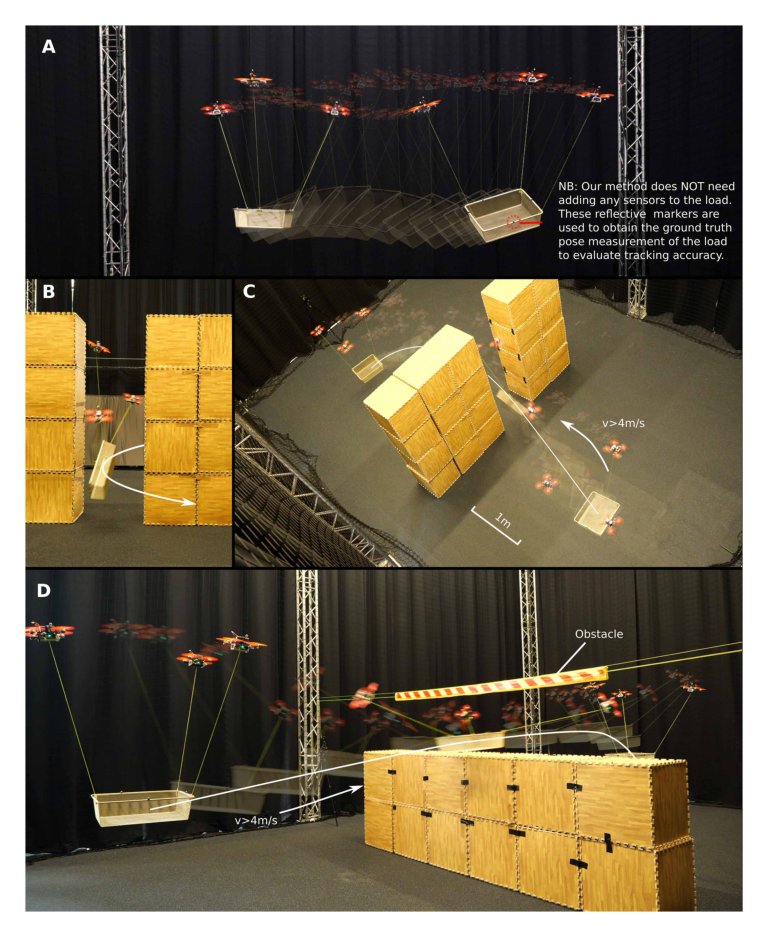
Underwater maneuvering of robotic sheets through buoyancy-mediated active flutter Figure 1
Science Robotics2021-04-28

Underwater maneuvering of robotic sheets through buoyancy-mediated active flutter

Junghwan Byun, Minjo Park, Sang-Min Baek, Jaeyoung Yoon, Woongbae Kim, Byeongmoon Lee, Yongtaek Hong, Kyu-Jin Cho

Soft Robotics Research Center, Seoul National University, Seoul, Republic of Korea, Biorobotics Lab, Department of Mechanical Engineering, Institute of Advanced Machines and Design, Institute of Engineering Research, Seoul National University, Seoul, Republic of Korea, Physical Intelligence Department, Max Planck Institute for Intelligent Systems, Stuttgart, Germany, Department of Electrical and Computer Engineering, Inter-university Semiconductor Research Center, Seoul National University, Seoul, Republic of Korea

水下机器人软体机器人机器人

针对薄片状水下机器人难以在保持轻薄柔顺的同时实现可控机动的问题,论文借鉴落叶在流体中的被动扑振,提出通过局部浮力/密度分布改变质心与浮心偏置,以微小体内力矩重定向扑振主轴并产生推进。作者实现了含液弹性“浮力皮肤”和游泳叶片,展示方向控制、折叠展开,以及黏附片和撇油片的水下操纵应用;但效率较低,湍流与无缆供能仍是限制。
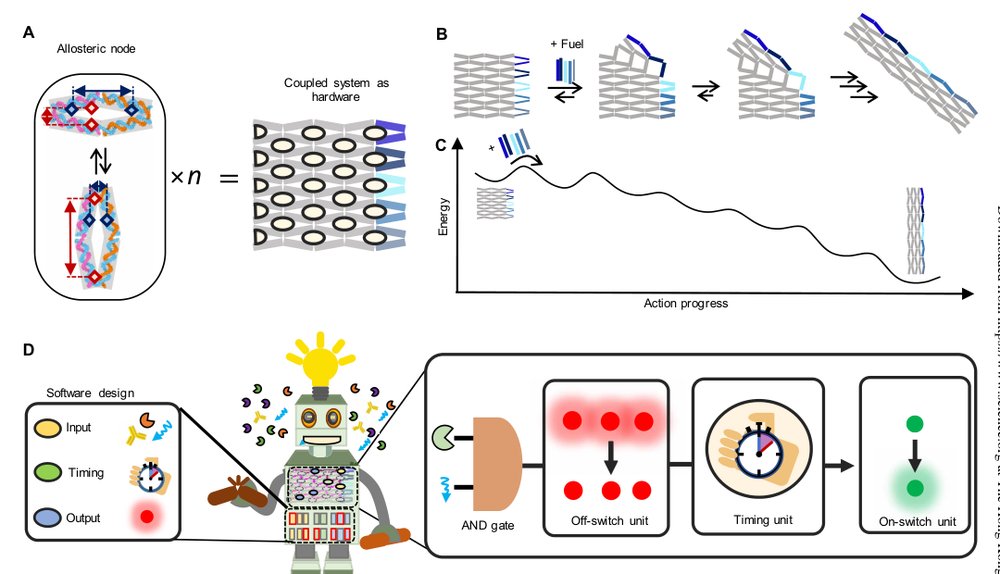
Somatosensory actuator based on stretchable conductive photothermally responsive hydrogel Figure 1
Science Robotics2021-04-28

Somatosensory actuator based on stretchable conductive photothermally responsive hydrogel

Yusen Zhao, Chiao-Yueh Lo, Lecheng Ruan, Chen-Huan Pi, Cheolgyu Kim, Yousif Alsaid, Imri Frenkel, Rossana Rico, Tsu-Chin Tsao, Ximin He

Department of Material Science and Engineering, University of California, Los Angeles, Los Angeles, CA 90095, USA, Department of Mechanical and Aerospace Engineering, University of California, Los Angeles, Los Angeles, CA 90095., USA, Califonia Nanosystems Institute, Los Angeles, CA 90095, USA

软体机器人强化学习机器人

为让软体机器人像生物肌肉一样边运动边感知自身与环境,本文将压阻式应变/压力传感与光热驱动整合进单一导电响应水凝胶。其冰模板紫外-低温聚合形成均匀导电网络和多孔结构,避免传统传感器/执行器层叠界面问题。材料实现36.8 mS/cm导电率、170%拉伸、49%体积收缩和约30倍响应加速,并展示光驱弯曲、抓取、搬运及闭环步进控制。

Self-propelled hydrogels that glide on water Figure 1
Science Robotics2021-04-28

Self-propelled hydrogels that glide on water

Jinlong Song, Yang Chen

Key Laboratory for Precision and Non-traditional Machining Technology of the Ministry of Education, Dalian University of Technology, Dalian 116024, P. R. China, Key Laboratory for Micro/Nano Technology and System of Liaoning Province, Dalian University of Technology, Dalian, Liaoning 116024, P. R. China

机器人机器人学习

面向无需燃料/电力的水面微型搬运与环境清理,文中介绍受水黾启发的自推进水凝胶。核心洞察是利用水凝胶遇水后的动态、非均匀润湿与溶胀,在周围产生表面张力梯度和非对称接触角,从而以马兰戈尼效应驱动滑行,而非依赖表面活性剂或外部光热刺激。结果显示其运动路径可通过几何、材料和边界润湿性调控,并能收集特定润湿性的漂浮塑料球;但循环使用仍需脱水,无遮挡时方向控制受限。

Self-powered locomotion of a hydrogel water strider Figure 1
Science Robotics2021-04-28

Self-powered locomotion of a hydrogel water strider

Hong Zhu, Borui Xu, Yang Wang, Xiaoxia Pan, Zehua Qu, Yongfeng Mei

Department of Materials Science, State Key Laboratory of ASIC and Systems, Fudan University, 200433 Shanghai, P. R. China, Department of Macromolecular Science, State Key Laboratory of Molecular Engineering of Polymers, Fudan University, 200433 Shanghai, P. R. China

移动机器人机器人

针对传统水凝胶水面机器人依赖外部周期刺激和供能的问题,论文设计了含亲/疏水基团的 p(HEMA-co-AA) 活性水凝胶,利用吸水膨胀中的动态润湿持续制造表面张力不对称,实现类似水黾的自驱运动。实验显示其无需外部能量可在水面运动约210分钟,初速约4.86 cm/s,并可借助亲疏水边界完成导向、避障和物体收集等任务。

Robotic surfaces with reversible, spatiotemporal control for shape morphing and object manipulation Figure 1
Science Robotics2021-04-28

Robotic surfaces with reversible, spatiotemporal control for shape morphing and object manipulation

Ke Liu, Felix Hacker, Chiara Daraio

Division of Engineering and Applied Science, California Institute of Technology, 1200 E California Blvd, Pasadena, CA 91105, USA, Department of Mechanical and Process Engineering, ETH-Zürich, Rämistrasse 101, 8092 Zürich, Switzerland

操作软体机器人机器人

针对软体变形表面常难以重编程、可达几何受限且刚度不足的问题,本文提出由上下两层液晶弹性体主动网格、Kapton 被动骨架和鳞片皮肤组成的机器人表面,通过独立电加热控制 LCE 收缩,同步/差动驱动分别调节面内与面外曲率。实验展示其可在多种平滑 3D 形状间可逆变形,并以仅 33 g 自重搬运超过 6 倍自重的物体,说明具备一定操作稳定性。

Programmable and reprocessable multifunctional elastomeric sheets for soft origami robots Figure 1
Science Robotics2021-04-28

Programmable and reprocessable multifunctional elastomeric sheets for soft origami robots

Shuo Zhang, Xingxing Ke, Qin Jiang, Han Ding, Zhigang Wu

State Key Laboratory of Digital Manufacturing Equipment and Technology, School of Mechanical Science and Engineering, Huazhong University of Science and Technology, Wuhan 430074, China

软体机器人机器人

针对软体机器人中多材料功能集成复杂、易分层且难以重构的问题,本文提出用紫外激光选择性调控 cPDMS 薄片表面形貌,再渗入含磁性、发光或热变色颗粒的溶剂,通过非均匀溶胀实现可编程折叠并可用溶剂擦除重加工。实验展示了花形弯折、低摩擦游泳、带刚度梯度抓爪的多模态搬运以及可变色仿蛙机器人,说明该方法能在二维弹性片上较快速地集成驱动、传感与外观响应功能。
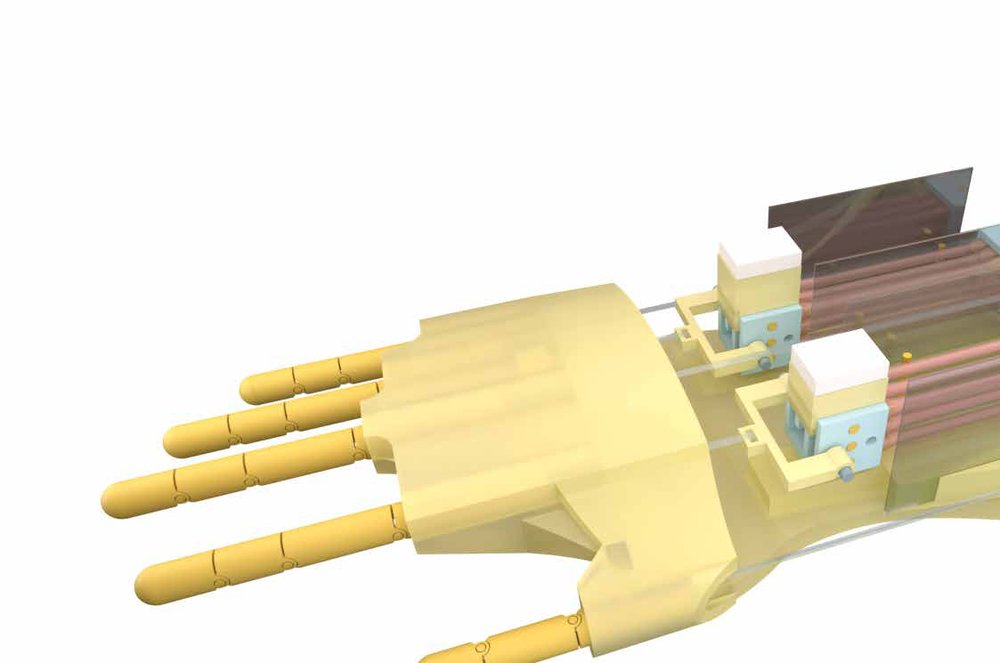
High–load capacity origami transformable wheel Figure 1
Science Robotics2021-04-28

High–load capacity origami transformable wheel

Dae-Young Lee, Jae-Kyeong Kim, Chang-Young Sohn, Jeong-Mu Heo, Kyu-Jin Cho

Biorobotics Lab, Soft Robotics Research Center, School of Mechanical Engineering/IAMD, Institute of Engineering Research, Seoul National University, Seoul, Republic of Korea, School of Engineering and Applied Sciences, Harvard University, Cambridge, MA, USA, R&D Center, Hankook Tire and Technology Co. Ltd., Daejeon, Republic of Korea

软体机器人机器人

针对传统膜折纸机构承载能力不足、难以用于车辆轮胎的问题,论文将水炸弹折纸轮扩展为厚复合膜结构,并提出兼顾几何干涉与应变能的线框设计规则来容纳厚膜。原型轮可在小直径平滑轮和大直径凸起轮间切换,直径约0.46–0.8 m,在变形状态下承受低于11 kN载荷,并装上单人车辆完成场地验证。

Electrically programmable adhesive hydrogels for climbing robots Figure 1
Science Robotics2021-04-28

Electrically programmable adhesive hydrogels for climbing robots

Junwen Huang, Yu Liu, Yuxin Yang, Zhijun Zhou, Jie Mao, Tong Wu, Jun Liu, Qipeng Cai, Chaohua Peng, Yiting Xu, Birong Zeng, Weiang Luo, Guorong Chen, Conghui Yuan, Lizong Dai

College of Materials, Xiamen University, Xiamen 361005, People’s Republic of China, Fujian Provincial Key Laboratory of Fire Retardant Materials, Xiamen University, Xiamen 361005, People’s Republic of China, School of Aerospace Engineering, Xiamen University, Xiamen 361005, People’s Republic of China

机器人机器人学习

面向爬壁机器人可编程贴附/脱附难、传统方案常依赖复杂微结构或高压/特定基底的问题,本文设计硼酸酯-PVA儿茶酚水凝胶,通过低电压水电解调控局部 pH,使儿茶酚基团可逆暴露/屏蔽,实现约 1 秒级、3.0–4.5 V 的粘附切换。将其直接贴作机器人足端或轮面后,步行和轮式机器人可在不锈钢、铜等导电竖直及倒置表面爬行,但粘附强度和速度仍未超过成熟爬壁技术。

Dual high-stroke and high–work capacity artificial muscles inspired by DNA supercoiling Figure 1
Science Robotics2021-04-28

Dual high-stroke and high–work capacity artificial muscles inspired by DNA supercoiling

Geoffrey M. Spinks, Nicolas D. Martino, Sina Naficy, David J. Shepherd, Javad Foroughi

Australian Institute for Innovative Materials, University of Wollongong, Wollongong, NSW 2522, Australia, School of Chemical and Biomolecular Engineering, University of Sydney, Sydney, NSW 2006, Australia

机器人机器人学习

面向微型机器人中传统传动难以缩小且性能下降的问题,论文从 DNA 超螺旋压缩获得启发,提出将预扭转复合双螺旋纤维在溶胀/去溶胀中可逆地由直线态转为 plectoneme 或 solenoid 超螺旋,把扭转能转为拉伸收缩。模型优化后纤维收缩行程最高约 90%,质量比做功能力可达骨骼肌的 36 倍,并演示了微型剪刀、镊子等工具驱动。

Climbing robots in a sticky situation Figure 1
Science Robotics2021-04-28

Climbing robots in a sticky situation

Bruce P. Lee

Department of Biomedical Engineering, Michigan Technological University, Houghton, MI 49931, USA

机器人机器人学习

面向爬壁机器人在潮湿或复杂表面上需要强而可快速解除的附着这一难题,文中介绍了将贻贝启发的儿茶酚/硼酸保护水凝胶集成到机器人足端或轮端,通过3–5 V电刺激调控pH并切换粘附状态。水凝胶粘附强度约8–12 kPa,关闭后降至<1 kPa,5秒内可切换,使约50 g机器人爬上导电金属竖壁并倒挂移动,速度接近8 cm/min;但仍受限于导电表面、循环衰减和水下稳定性。

Cavatappi artificial muscles from drawing, twisting, and coiling polymer tubes Figure 1
Science Robotics2021-04-28

Cavatappi artificial muscles from drawing, twisting, and coiling polymer tubes

Diego R. Higueras-Ruiz, Michael W. Shafer, Heidi P. Feigenbaum

Department of Mechanical Engineering, Northern Arizona University, 2112 S. Huffer Lane., Flagstaff, AZ 86011, USA

飞行机器人机器人

面向仿生与柔顺机器人中兼具高功率、效率和可控性的人工肌肉需求,本文将廉价聚合物管经拉伸、加捻和螺旋卷绕制成 cavatappi 执行器,利用材料各向异性在气/液压下局部解捻并转化为轴向收缩。实验显示其收缩超过初始长度 50%,机械收缩效率约 45%,最大比功 0.38 kJ/kg、比功率 1.42 kW/kg,并通过负载提升、机器人手指和万次循环验证可用性。

Biohybrid soft robots with self-stimulating skeletons Figure 1
Science Robotics2021-04-28

Biohybrid soft robots with self-stimulating skeletons

Maria Guix, Rafael Mestre, Tania Patiño, Marco De Corato, Judith Fuentes, Giulia Zarpellon, Samuel Sánchez

Institute for Bioengineering of Catalonia (IBEC), Barcelona Institute of Science and Technology (BIST), Baldiri-Reixac 10-12, 08028 Barcelona, Spain, Chemistry Department, University of Rome, Tor Vergata, Via della Ricerca Scientifica, 00133 Rome, Italy

移动机器人水下机器人软体机器人机器人

针对骨骼肌生物混合机器人多停留在爬行或低速游动、肌肉成熟需外部训练的问题,论文将3D打印PDMS蛇形弹簧骨架嵌入肌肉水凝胶,利用自发收缩产生的回复力实现机械自刺激,并通过非对称刚度产生定向运动。实验显示其可在气液界面游泳、近底面滑行,5 Hz下速度约800 μm/s(3体长/s),显著快于既有骨骼肌游泳机器人。

Swarming behavior and in vivo monitoring of enzymatic nanomotors within the bladder Figure 1
Science Robotics2021-03-17

Swarming behavior and in vivo monitoring of enzymatic nanomotors within the bladder

Ana C. Hortelao, Cristina Simó, Maria Guix, Sandra Guallar-Garrido, Esther Julián, Diana Vilela, Luka Rejc, Pedro Ramos-Cabrer, Unai Cossío, Vanessa Gómez-Vallejo, Tania Patiño, Jordi Llop, Samuel Sánchez

Institute for Bioengineering of Catalonia (IBEC), Barcelona Institute of Science and Technology (BIST), Baldiri i Reixac 10-12, 08028 Barcelona Spain, Chemistry Department, University of Rome, Tor Vergata, Via della Ricerca Scientifica, 00133 Rome, Italy

群体机器人机器人

针对纳米药物在体内递送效率低、运动纳米马达群体行为难以定量观察的问题,本文构建脲酶驱动的介孔二氧化硅纳米马达,并用18F/124I放射标记结合PET/CT追踪。实验显示其在体外增强流体混合和复杂通道迁移;在小鼠膀胱内有尿素燃料时可维持更均匀分布,而无燃料或无脲酶对照出现相分离,说明自推进能在活体腔室中促进对流混合。

Reinforcement learning with artificial microswimmers Figure 1
Science Robotics2021-03-17

Reinforcement learning with artificial microswimmers

S. Muiños-Landin, A. Fischer, V. Holubec, F. Cichos

Molecular Nanophotonics Group, Peter Debye Institute for Soft Matter Physics, Universität Leipzig, 04103 Leipzig, Germany, AIMEN Technology Centre, Smart Systems and Smart Manufacturing–Artificial Intelligence and Data Analytics Laboratory, PI. Cataboi, 36418 Pontevedra, Spain, Institute for Theoretical Physics, Universität Leipzig, 04103 Leipzig, Germany, Department of Macromolecular Physics, Faculty of Mathematics and Physics, Charles University, 18000 Prague, Czech Republic

强化学习机器人

这篇论文针对人工微游泳体缺乏像生物那样在噪声环境中自适应决策的问题,将实时光控自热泳微粒与模型无关 Q-learning 闭环结合,在真实水溶液的布朗运动扰动下求解 5×5 gridworld 导航任务。结果显示,外部控制可实现单体与集体学习;噪声会降低学习速度、改变最优策略并强化动作选择,而反馈延迟还导致存在最优游泳速度。

Micrometer-sized electrically programmable shape-memory actuators for low-power microrobotics Figure 1
Science Robotics2021-03-17

Micrometer-sized electrically programmable shape-memory actuators for low-power microrobotics

Qingkun Liu, Wei Wang, Michael F. Reynolds, Michael C. Cao, Marc Z. Miskin, Tomas A. Arias, David A. Muller, Paul L. McEuen, Itai Cohen

Laboratory of Atomic and Solid-State Physics, Cornell University, Ithaca, NY 14853, USA, Sibley School of Mechanical and Aerospace Engineering, Cornell University, Ithaca, NY 14853, USA, School of Applied and Engineering Physics, Cornell University, Ithaca, NY 14853, USA, Department of Electrical and Systems Engineering, University of Pennsylvania, Philadelphia, PA, USA, Kavli Institute at Cornell for Nanoscale Science, Cornell University, Ithaca, NY 14853, USA

软体机器人微型机器人机器人

面向功率受限、需断电保持形态的微型机器人,论文提出基于纳米铂薄膜表面电化学氧化/还原的微米级形状记忆执行器,并用常规光刻与ALD制备可集成结构。器件在水系环境约1 V驱动、约100 ms响应,可达约500 nm弯曲半径,断电保持数小时并循环数百次,展示了微夹爪、折纸三维结构、可变形超材料和机械存储单元。

Endoscopy-assisted magnetic navigation of biohybrid soft microrobots with rapid endoluminal delivery and imaging Figure 1
Science Robotics2021-03-17

Endoscopy-assisted magnetic navigation of biohybrid soft microrobots with rapid endoluminal delivery and imaging

Ben Wang, Kai Fung Chan, Ke Yuan, Qianqian Wang, Xianfeng Xia, Lidong Yang, Ho Ko, Yi-Xiang J. Wang, Joseph Jao Yiu Sung, Philip Wai Yan Chiu, Li Zhang

Department of Mechanical and Automation Engineering, Chinese University of Hong Kong, Hong Kong, China, Chow Yuk Ho Technology Centre for Innovative Medicine, Chinese University of Hong Kong, Hong Kong, China, Department of Biomedical Engineering, Chinese University of Hong Kong, Hong Kong, China, Department of Surgery, Chinese University of Hong Kong, Hong Kong, China, Department of Medicine and Therapeutics and School of Biomedical Sciences, Faculty of Medicine, Chinese University of Hong Kong, Hong Kong, China, Li Ka Shing Institute of Health Sciences, Faculty of Medicine, Chinese University of Hong Kong, Hong Kong, China, Department of Imaging and Interventional Radiology, Chinese University of Hong Kong, Prince of Wales Hospital, Shatin, New Territories, Hong Kong, China, Institute of Digestive Disease, Faculty of Medicine, Chinese University of Hong Kong, China, T Stone Robotics Institute, Chinese University of Hong Kong, Hong Kong, China

移动机器人微型机器人机器人

针对磁驱微机器人难以在体内长距离、狭窄弯曲腔道中实现可视化精准递送的问题,论文提出将内镜“快速通道”、磁场精细导航与内镜/超声双成像结合的 EMADIS,并构建高生物相容的磁性干细胞球形软微机器人。系统可经自然腔道跨越约100 cm 将微机器人递送至胆管,约8分钟完成,并在大鼠胃溃疡模型中显示促进愈合效果。

Dual-responsive biohybrid neutrobots for active target delivery Figure 1
Science Robotics2021-03-17

Dual-responsive biohybrid neutrobots for active target delivery

Hongyue Zhang, Zesheng Li, Changyong Gao, Xinjian Fan, Yuxin Pang, Tianlong Li, Zhiguang Wu, Hui Xie, Qiang He

Key Laboratory of Microsystems and Microstructures Manufacturing (Ministry of Education), Harbin Institute of Technology, Harbin 150001, China, State Key Laboratory of Robotics and System, Harbin Institute of Technology, Harbin 150001, China, Department of Pathology, First Affiliated Hospital of Harbin Medical University, Harbin 150001, China

微型机器人机器人

针对传统微型机器人入体后易被免疫清除、难以跨越血脑屏障并主动富集病灶的问题,本文构建中性粒细胞吞噬大肠杆菌膜包覆的载药磁性纳米凝胶形成“neutrobot”,结合旋转磁场驱动和炎症因子趋化。实验显示其可在血液中受控运动、在体外BBB模型中加速富集并穿越屏障,在术后胶质瘤小鼠中提升靶向递送并更有效抑制肿瘤增殖。

A microrobotic platform actuated by thermocapillary flows for manipulation at the air-water interface Figure 1
Science Robotics2021-03-17

A microrobotic platform actuated by thermocapillary flows for manipulation at the air-water interface

Franco N. Piñan Basualdo, A. Bolopion, M. Gauthier, P. Lambert

FEMTO-ST Institute, CNRS, Univ. Bourgogne Franche-Comté, 24 rue Savary, F-25000 Besançon, France

操作群体机器人微型机器人机器人

面向空气—水界面微制造中低阻力、无干摩擦但缺少通用可控操纵工具的问题,论文提出 ThermoBot:用红外激光在界面产生温度梯度和 Marangoni 热毛细流,以移动光斑非接触推动任意可漂浮物体。实验实现最高约 12 mm/s(24 倍体长/s)、最多四球独立控制、复杂物体位置/姿态控制,并引导毛细自组装进入目标或亚稳结构。

A cellular platform for the development of synthetic living machines Figure 1
Science Robotics2021-03-17

A cellular platform for the development of synthetic living machines

Douglas Blackiston, Emma Lederer, Sam Kriegman, Simon Garnier, Joshua Bongard, Michael Levin

Allen Discovery Center at Tufts University, Medford, MA 02155, USA, Department of Computer Science, University of Vermont, Burlington, VT 05405, USA, Federated Department of Biological Sciences, New Jersey Institute of Technology, Newark, NJ 07102, USA, Wyss Institute for Biologically Inspired Engineering, Harvard University, Boston, MA 02115, USA

机器人机器人学习

针对微尺度机器人群体制造与控制困难,本文提出不依赖支架、微打印或基因编辑的“异种机器人”平台:从非洲爪蟾胚胎外植体出发,让细胞自组织成具纤毛驱动的活体机器。实验显示其可在水环境中自主游动、损伤后愈合,并产生群体行为;作者还用计算模型预测群体效应,并以光转换蛋白演示可写入的分子记忆。

Soft magnetic skin for super-resolution tactile sensing with force self-decoupling Figure 1
Science Robotics2021-02-24

Soft magnetic skin for super-resolution tactile sensing with force self-decoupling

Youcan Yan, Zhe Hu, Zhengbao Yang, Wenzhen Yuan, Chaoyang Song, Jia Pan, Yajing Shen

Department of Biomedical Engineering, City University of Hong Kong, Hong Kong SAR, China, Department of Computer Science, University of Hong Kong, Hong Kong SAR, China, Department of Mechanical Engineering, City University of Hong Kong, Hong Kong SAR, China, Robotics Institute, Carnegie Mellon University, Pittsburgh, PA, USA, Department of Mechanical and Energy Engineering, Southern University of Science and Technology, Shenzhen, China, City University of Hong Kong Shenzhen Research Institute, Shenzhen 518057, China

触觉机器人

机器人灵巧操作受限于触觉传感器难以同时具备高空间分辨率与法向/剪切力解耦。本文用正弦磁化柔性磁膜、硅胶层和霍尔传感器构成软磁皮肤,使磁场变化天然分离法向与一维剪切变形,并结合深度学习实现约60倍超分辨定位。装到夹爪指尖后,系统完成抗扰动抓取易碎物和遥操作穿针等任务。

Electrostatic bellow muscle actuators and energy harvesters that stack up Figure 1
Science Robotics2021-02-24

Electrostatic bellow muscle actuators and energy harvesters that stack up

I. D. Sîrbu, G. Moretti, G. Bortolotti, M. Bolignari, S. Diré, L. Fambri, R. Vertechy, M. Fontana

Department of Industrial Engineering, University of Trento, Trento, Italy, TeCIP Institute, Scuola Superiore Sant’Anna, Pisa, Italy, Department of Industrial Engineering, University of Bologna, Bologna, Italy

机器人机器人学习

面向软体机器人对轻量、安全且高效驱动/供能的需求,论文提出电静力波纹肌肉 EBM:用柔性介电薄膜、液体介质和刚性环形成可堆叠圆形单元,可在同一结构中作为收缩人工肌肉、流体泵或能量采集器。实验显示,20–40 mm 单元可输出最高 6 N、收缩超过 40%、应变率超 1200%/s、带宽超 10 Hz;泵模式流量达 0.63 L/min、压头 6 kPa,发电效率接近 20%。

Electronics-free pneumatic circuits for controlling soft-legged robots Figure 1
Science Robotics2021-02-24

Electronics-free pneumatic circuits for controlling soft-legged robots

Dylan Drotman, Saurabh Jadhav, David Sharp, Christian Chan, Michael T. Tolley

Department of Mechanical Engineering, University of California, San Diego, La Jolla, CA 92093, USA, Materials Science and Engineering Program, University of California, San Diego, La Jolla, CA 92093, USA

移动机器人机器人

针对软体气动腿式机器人依赖电控阀、泵和微控制器而体积大、成本高且不适合易燃等环境的问题,论文用由软阀构成的纯气动环形振荡器和逻辑/记忆元件模拟 CPG 产生步态,并由传感输入切换步态。四足软机器人实验中,3 个气动记忆元件即可实现基础行走;两个振荡电路、7 个阀使速度提升 270%,还展示了全向运动与传感响应。

Electro-pneumatic pumps for soft robotics Figure 1
Science Robotics2021-02-24

Electro-pneumatic pumps for soft robotics

R. S. Diteesawat, T. Helps, M. Taghavi, J. Rossiter

Department of Engineering Mathematics, University of Bristol, Bristol BS8 1BU, UK, Bristol Robotics Laboratory, Bristol BS16 1QY, UK

软体机器人机器人

软体机器人常受笨重、噪声大的气源限制,难以便携集成。本文提出柔性电-气泵 EPP,用介电液体放大的静电拉链效应压缩气囊并输送空气,可低成本弯曲成型。原型厚 1.1 mm、重 5.3 g,在低于 0.5 W 下实现 2.34 kPa 压力和 161 ml/min 流量,并驱动软体执行器达到 32.40% 收缩变化,展示于对抗机构、手臂可穿戴装置和连续泵送系统。

Microrobotic laser steering for minimally invasive surgery Figure 1
Science Robotics2021-01-20

Microrobotic laser steering for minimally invasive surgery

Peter A. York, Rut Peña, Daniel Kent, Robert J. Wood

John A. Paulson School of Engineering and Applied Sciences, Harvard University, 150 Western Ave., Boston, MA, USA, Wyss Institute for Biologically Inspired Engineering, 3 Blackfan Circle, Boston, MA, USA, Beth Israel Deaconess Medical Center, 110 Francis St., Boston, MA, USA

操作医疗机器人微型机器人机器人

面向微创手术中能量器械缺少远端灵巧调控、激光切割质量又强依赖光斑速度的问题,本文提出可集成到内镜/手术工具末端的毫米级激光转向器。核心洞察是三镜光路反而比双镜更利于小型化,并结合模块化装配、层压/PC-MEMS柔顺机构与压电驱动实现高带宽光学转向。样机直径6 mm、长16 mm,可在双轴超过±10°范围内聚焦并转向光纤激光,机械带宽约1.2 kHz,静态重复性200 μm,标定工作区18×18 mm,高速轨迹达3900 mm/s且偏差约5%,并在结肠镜模拟息肉切除中演示集成与遥操作/自动轨迹控制。

Implicit coordination for 3D underwater collective behaviors in a fish-inspired robot swarm Figure 1
Science Robotics2021-01-20

Implicit coordination for 3D underwater collective behaviors in a fish-inspired robot swarm

Florian Berlinger, Melvin Gauci, Radhika Nagpal

Harvard University, John A. Paulson School of Engineering and Applied Sciences, Cambridge, MA 02138, USA, Wyss Institute for Biologically Inspired Engineering, Harvard University, Cambridge, MA 02138, USA

水下机器人群体机器人机器人

针对水下环境中无线通信差、GPS不可用导致群体机器人难以三维自组织的问题,论文提出仿鱼 Bluebot/Blueswarm:机器人仅用蓝光 LED 与双广角相机感知邻居方位和距离,以局部隐式视觉交互替代显式通信和中心控制。7 台机器人在水槽实验中实现了闪光同步、分散/聚集、动态环游以及搜索-捕获等三维集体行为,验证了简单局部感知可产生较复杂水下群体协调。

A system of coordinated autonomous robots for Lagrangian studies of microbes in the oceanic deep chlorophyll maximum Figure 1
Science Robotics2021-01-20

A system of coordinated autonomous robots for Lagrangian studies of microbes in the oceanic deep chlorophyll maximum

Yanwu Zhang, John P. Ryan, Brett W. Hobson, Brian Kieft, Anna Romano, Benedetto Barone, Christina M. Preston, Brent Roman, Ben-Yair Raanan, Douglas Pargett, Mathilde Dugenne, Angelicque E. White, Fernanda Henderikx Freitas, Steve Poulos, Samuel T. Wilson, Edward F. DeLong, David M. Karl, James M. Birch, James G. Bellingham, Christopher A. Scholin

Monterey Bay Aquarium Research Institute, Moss Landing, CA, USA, University of Hawai’i at Mānoa, Honolulu, HI, USA

移动机器人机器人

针对深叶绿素最大层无法由卫星观测、且微生物群落随海流漂移导致定点采样失真的问题,论文构建了由采样AUV、环境剖面/声学跟踪AUV和具卫星中继能力的自主水面艇组成的协同拉格朗日观测系统。核心创新是让搭载3G-ESP的AUV在DCM内随流漂移并主动跟踪垂向位移,同时由其他平台提供环境背景和通信。北太平洋气旋涡实验证明,该系统能自主获取此前难以获得的DCM微生物原位时间序列样本与环境特征。

A resonant squid-inspired robot unlocks biological propulsive efficiency Figure 1
Science Robotics2021-01-20

A resonant squid-inspired robot unlocks biological propulsive efficiency

Thierry Bujard, Francesco Giorgio-Serchi, Gabriel D. Weymouth

Engineering and Physical Sciences, University of Southampton, Southampton, UK, School of Engineering, University of Edinburgh, Edinburgh, UK, Data-Centric Engineering Programme, Alan Turing Institute, London, UK

机器人机器人学习

针对水下仿生喷射机器人多依赖直接驱动、尚未利用动物可能存在的弹性能量回收问题,论文将鱿鱼/水母式脉冲喷射抽象为流体—柔性腔体耦合的质量-弹簧-质量振子,并据此设计柔性自推进机器人。实验表明,在接近固有频率时机器人速度与能效显著提升,最优运输成本约0.087,接近高效水母水平,并呈现稳定的高效 Strouhal 数。

A controllable dual-catapult system inspired by the biomechanics of the dragonfly larvae’s predatory strike Figure 1
Science Robotics2021-01-20

A controllable dual-catapult system inspired by the biomechanics of the dragonfly larvae’s predatory strike

Sebastian Büsse, Alexander Koehnsen, Hamed Rajabi, Stanislav N. Gorb

Department of Functional Morphology and Biomechanics, Institute of Zoology, Kiel University, Am Botanischen Garten 9, 24118 Kiel, Germany

仿生机器人机器人

本文针对蜻蜓幼虫捕食时可伸出口器的高速驱动机制,重新检验传统“液压驱动”解释。作者结合操纵实验、运动学、μCT/CLSM 形态分析与机器人原型,提出两个关节由独立预加载弹性结构储能、单一触发同步释放的双弹射机制。结果显示所需功率超过肌肉直接输出,液压假说难以成立;3D 打印模型证明调节两弹射器预加载可改变伸展轨迹与推力方向,为可控跳跃/弹射机器人提供设计思路。

Skin-inspired quadruple tactile sensors integrated on a robot hand enable object recognition Figure 1
Science Robotics2020-12-16

Skin-inspired quadruple tactile sensors integrated on a robot hand enable object recognition

Guozhen Li, Shiqiang Liu, Liangqi Wang, Rong Zhu

State Key Laboratory of Precision Measurement Technology and Instruments, Department of Precision Instrument, Tsinghua University, Beijing 100084, China

触觉机器人

针对仅靠压力/力觉难以区分软硬相近但材料不同物体的问题,论文提出仿皮肤多层四模态触觉传感器,用统一热敏结构同时、低串扰地感知材料热导率、接触压力、物体温度和环境温度,并集成到机器人手。结合多层感知图和机器学习,系统可识别物体尺寸、形状和材料;在七类垃圾分类任务中达到94%准确率,显示热属性与机械信息融合能显著提升触觉识别。

Reflections on the future of swarm robotics Figure 1
Science Robotics2020-12-16

Reflections on the future of swarm robotics

Marco Dorigo, Guy Theraulaz, Vito Trianni

Centre de Recherches sur la Cognition Animale (CRCA), Centre de Biologie Intégrative (CBI), Université de Toulouse, CNRS, UPS, Toulouse, France, Centre for Ecological Sciences, Indian Institute of Science, Bengaluru, India, Institute of Cognitive Sciences and Technologies (ISTC), National Research Council (CNR), Rome, Italy

群体机器人强化学习机器人

本文针对群体机器人长期停留在小规模实验室演示、难以进入真实任务的问题,提出未来工程化应围绕自动化设计、硬件与角色异构、以及由自组织产生的层级控制展开。文章的主要贡献是梳理跨尺度设计原则和应用路线图,而非报告新实验;其判断认为率先落地场景将是精准农业、基础设施巡检维护和非战斗防务,随后扩展到海洋、城市服务、太空与医疗微纳机器人。

Multi-expert learning of adaptive legged locomotion Figure 1
Science Robotics2020-12-16

Multi-expert learning of adaptive legged locomotion

Chuanyu Yang, Kai Yuan, Qiuguo Zhu, Wanming Yu, Zhibin Li

School of Informatics, University of Edinburgh, Edinburgh, UK, Institute of Cyber-Systems and Control, Zhejiang University, Hangzhou, China

移动机器人强化学习机器人

针对四足机器人在未知接触、跌倒等突发场景中难以及时切换和组合运动技能的问题,论文提出多专家学习架构 MELA:先训练多个具备不同运动能力的专家网络,再由门控网络在线融合其网络参数,生成自适应控制策略。该方法在真实四足机器人上实现了小跑、转向与自主跌倒恢复,并在仿真极端扰动中展示了比单一专家更广的适应性。

Heterogeneous sensing in a multifunctional soft sensor for human-robot interfaces Figure 1
Science Robotics2020-12-16

Heterogeneous sensing in a multifunctional soft sensor for human-robot interfaces

Taekyoung Kim, Sudong Lee, Taehwa Hong, Gyowook Shin, Taehwan Kim, Yong-Lae Park

Department of Mechanical Engineering, Seoul National University, Seoul 08826, Korea, Institute of Advanced Machines and Design (IAMD), Seoul National University, Seoul 08826, Korea, Institute of Engineering Research, Seoul National University, Seoul 08826, Korea

机器人机器人学习

针对软体机器人中单一软传感器难以在紧凑形态下区分拉伸、弯曲、压缩及其耦合变形的问题,论文将光波导、离子液体微流道和压阻导电织物三种异构机制封装在同一弹性体中,并用阈值与ANN解析输出模式。实验显示其可识别8类变形模式,准确率超过95%,并展示了作为人机交互接口的应用。

Fast and programmable locomotion of hydrogel-metal hybrids under light and magnetic fields Figure 1
Science Robotics2020-12-16

Fast and programmable locomotion of hydrogel-metal hybrids under light and magnetic fields

Chuang Li, Garrett C. Lau, Hang Yuan, Aaveg Aggarwal, Victor Lopez Dominguez, Shuangping Liu, Hiroaki Sai, Liam C. Palmer, Nicholas A. Sather, Tyler J. Pearson, Danna E. Freedman, Pedram Khalili Amiri, Monica Olvera de la Cruz, Samuel I. Stupp

Center for Bio-inspired Energy Science, Northwestern University, 2145 Sheridan Road, Evanston, IL 60208, USA, Department of Materials Science and Engineering, Northwestern University, 2220 Campus Drive, Evanston, IL 60208, USA, Graduate Program in Applied Physics, Northwestern University, 2145 Sheridan Road, Evanston, IL 60208, USA, Department of Electrical and Computer Engineering, Northwestern University, 2145 Sheridan Road, Evanston, IL 60208, USA, Department of Chemistry, Northwestern University, 2145 Sheridan Road, Evanston, IL 60208, USA, Simpson Querrey Institute, Northwestern University, Chicago, IL 60611, USA, Department of Chemical and Biological Engineering, Northwestern University, 2145 Sheridan Road, Evanston, IL 60208, USA, Department of Physics and Astronomy, Northwestern University, 2145 Sheridan Road, Evanston, IL 60208, USA, Department of Biomedical Engineering, Northwestern University, 2145 Sheridan Road, Evanston, IL 60208, USA, Department of Medicine, Northwestern University, 676 N St. Clair Street, Chicago, IL 60611, USA

移动机器人机器人

针对水环境中软体机器人响应慢、磁化模式制备后难以重构的问题,论文将高长径比镍纳米线定向嵌入含螺吡喃光响应水凝胶,使光致弯曲与磁各向异性通过弹性变形耦合。低含量纳米线和≤16 mT磁场即可实现水下快速行走、转向、爬坡、滚动运载,并可用光照强度、时间和分子结构在线调节步态与轨迹。

Revealing ocean-scale biochemical structure with a deep-diving vertical profiling autonomous vehicle Figure 1
Science Robotics2020-11-18

Revealing ocean-scale biochemical structure with a deep-diving vertical profiling autonomous vehicle

John A. Breier, Michael V. Jakuba, Mak A. Saito, Gregory J. Dick, Sharon L. Grim, Eric W. Chan, Matthew R. McIlvin, Dawn M. Moran, Brianna A. Alanis, Andrew E. Allen, Chris L. Dupont, Rod Johnson

School of Earth, Environmental, and Marine Sciences, The University of Texas Rio Grande Valley, Edinburg, TX 78539, USA, Department of Earth and Environmental Sciences, University of Michigan, Ann Arbor, MI 48109, USA, Center for Computational Medicine and Bioinformatics, University of Michigan, Ann Arbor, MI 48109, USA, Department of Ecology and Evolutionary Biology, University of Michigan, Ann Arbor, MI 48109, USA, Microbial and Environmental Genomics, J. Craig Venter Institute, San Diego, CA 92121, USA, Integrative Oceanography Division, Scripps Institution of Oceanography, University of California, San Diego, La Jolla, CA 92093, USA, Bermuda Institute of Ocean Sciences, St. George’s, GE 01, Bermuda

移动机器人机器人

为弥合海洋微生物基因/蛋白质等生化过程难以在盆地尺度高分辨率观测的缺口,论文提出深潜垂直剖面自主机器人 Clio:放弃横向推进,依托船只转场,专注无缆自主下潜、精确定深漂移并处理数百升海水回收样品。实验显示其可完成高分辨率传感与样品返回,在马尾藻海绘制 1144 km、至 1000 m 的剖面,并获得原位传感无法提供的基因组和蛋白质组数据。

Mobile robotic platforms for the acoustic tracking of deep-sea demersal fishery resources Figure 1
Science Robotics2020-11-18

Mobile robotic platforms for the acoustic tracking of deep-sea demersal fishery resources

I. Masmitja, J. Navarro, S. Gomariz, J. Aguzzi, B. Kieft, T. O’Reilly, K. Katija, P. J. Bouvet, C. Fannjiang, M. Vigo, P. Puig, A. Alcocer, G. Vallicrosa, N. Palomeras, M. Carreras, J. del Rio, J. B. Company

SARTI Research Group, Electronics Department, Universitat Politècnica de Catalunya, Barcelona, Spain, Research and Development, Monterey Bay Aquarium Research Institute, Moss Landing, CA, USA, Department of Electrical Engineering and Computer Sciences, UC Berkeley, Berkeley, CA, USA, Department of Mechanical, Electronics and Chemical Engineering, and AI lab, Oslo Metropolitan University, Oslo, Norway, Computer Vision and Robotics Institute (VICOROB), Universitat de Girona, Girona, Spain

机器人机器人学习

深海底栖渔业资源难以用 GPS 或固定声学阵列长期精确跟踪,限制了保护区尺度评估。本文将海底固定接收器与 ROV/AUV 结合,针对商用声学标签改造 TDOA 定位并提出仅依赖检测 ping 的 AOTT 主动跟踪流程。实地在约 400 米深处连续 3 个多月跟踪 33 只挪威海螯虾,仿真显示阵列内可达米级误差,并揭示粒子滤波、WLS 等算法在噪声和离群点下的适用差异。

Deep learning can accelerate grasp-optimized motion planning Figure 1
Science Robotics2020-11-18

Deep learning can accelerate grasp-optimized motion planning

Jeffrey Ichnowski, Yahav Avigal, Vishal Satish, Ken Goldberg

Department of Electrical Engineering and Computer Sciences, University of California at Berkeley, Berkeley, CA 94720, USA

操作强化学习机器人

面向电商仓储抓取,传统抓取优化运动规划虽能生成快而平滑的轨迹,但加入速度、加速度和 jerk 约束后求解需数十秒,难以在线使用。论文提出 DJ-GOMP:先用 SQP 生成带 jerk 限制的训练轨迹,再用深度网络预测近似轨迹作为优化热启动,从而保留可行性约束并减少迭代。在仿真和 UR5 实验中,中位规划时间由约 29 秒降至 80 毫秒,约 300 倍加速,并优于 PRM*、TrajOpt 等基线。

An agglutinate magnetic spray transforms inanimate objects into millirobots for biomedical applications Figure 1
Science Robotics2020-11-18

An agglutinate magnetic spray transforms inanimate objects into millirobots for biomedical applications

Xiong Yang, Wanfeng Shang, Haojian Lu, Yanting Liu, Liu Yang, Rong Tan, Xinyu Wu, Yajing Shen

Department of Biomedical Engineering, City University of Hong Kong, Hong Kong SAR 999017, China, CAS Key Laboratory of Human-Machine Intelligence-Synergy Systems, Shenzhen Institutes of Advanced Technology, Chinese Academy of Sciences, Shenzhen 518055, China, Guangdong Provincial Key Laboratory of Robotics and Intelligent System, Shenzhen Institutes of Advanced Technology, Chinese Academy of Sciences, Shenzhen 518055, China, SIAT Branch, Shenzhen Institute of Artificial Intelligence and Robotics for Society, Shenzhen 518129, China, City University of Hong Kong Shenzhen Research Institute, Shenzhen 518057, China

机器人机器人学习

面向狭窄、非结构化生物医学场景中小尺度机器人难以适配任意物体且会显著增大目标尺寸的问题,论文提出由 PVA、面筋和铁颗粒组成的黏附磁喷雾,将普通 1D/2D/3D 物体表面转化为约 100–250 μm 的可磁驱“皮肤”。该薄膜保留原形态,可重编程和按需解体,实现爬行、行走、滚动,并展示导管导航与兔胃内定点释药等应用。

Multidrone aerial surveys of penguin colonies in Antarctica Figure 1
Science Robotics2020-10-21

Multidrone aerial surveys of penguin colonies in Antarctica

Kunal Shah, Grant Ballard, Annie Schmidt, Mac Schwager

Department of Mechanical Engineering, Stanford University, Stanford, CA, USA, Department of Aeronautics and Astronautics, Stanford University, Stanford, CA, USA

移动机器人飞行机器人机器人

面向南极企鹅种群航拍中天气窗口短、动物移动和无人机电池受限的问题,论文将多机覆盖建模为带约束的路径规划,提出基于 SMT 迭代求解的 POPCORN,可生成满足覆盖、航程和同点起降约束的 anytime 循环路径。实地用于罗斯岛阿德利企鹅群调查,在约 3 小时覆盖 2 平方公里、30 万巢规模区域,较以往单机人工飞行的 2 天显著缩短,并较扫掠式路径平均减少 17.3% 路径长度。

Learning quadrupedal locomotion over challenging terrain Figure 1
Science Robotics2020-10-21

Learning quadrupedal locomotion over challenging terrain

Joonho Lee, Jemin Hwangbo, Lorenz Wellhausen, Vladlen Koltun, Marco Hutter

Robotic Systems Lab, ETH-Zürich, Zürich, Switzerland, Robotics & Artificial Intelligence Lab, KAIST, Deajeon, Korea, Intelligent Systems Lab, Intel, Santa Clara, CA, USA

移动机器人强化学习机器人

针对传统四足越野控制依赖复杂状态机、接触/打滑估计且难以适应泥雪植被等未知地形的问题,本文用仿真强化学习训练仅依赖本体感知的 ANYmal 控制器,引入时序卷积策略、特权教师到学生学习和自适应地形课程,使策略从简单刚性仿真零样本迁移到真实自然环境;实验显示其可穿越泥地、雪地、碎石、水流和密集植被,并在苔藓、泥地、植被场景中较基线更快且更省能。
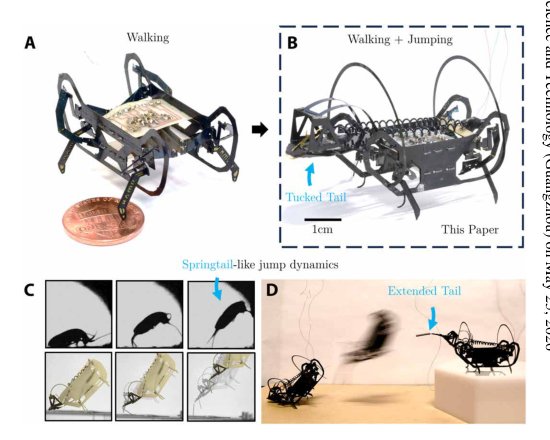
Bioinspired wing and tail morphing extends drone flight capabilities Figure 1
Science Robotics2020-10-21

Bioinspired wing and tail morphing extends drone flight capabilities

Enrico Ajanic, Mir Feroskhan, Stefano Mintchev, Flavio Noca, Dario Floreano

School of Engineering, Swiss Federal Institute of Technology Lausanne, Lausanne, Switzerland, School of Mechanical and Aerospace Engineering, Nanyang Technological University, Singapore, Singapore, Department of Environmental Systems Science, Swiss Federal Institute of Technology Zurich, Zurich, Switzerland, Swiss Federal Institute for Forest, Snow and Landscape Research, Birmensdorf, Switzerland, HES-SO University of Applied Sciences and Arts Western Switzerland, Geneva, Switzerland

飞行机器人软体机器人仿生机器人机器人

固定翼无人机在高速巡航与低速急转之间受固定气动外形限制,难以兼顾航程、稳定性和机动性。本文仿苍鹰设计 LisHawk,用人工羽毛构成可折展机翼与可变形尾翼,并强调翼尾协同而非单独变翼。风洞、形态优化和户外飞行表明:收拢形态在9.6 m/s时需功率降低55.4%,同功率下速度提升31.4%;展开翼尾使最大升力增70.8%、俯仰力矩增169.7%,拉起机动中线加速度和俯仰加速度分别提升270%和445%。
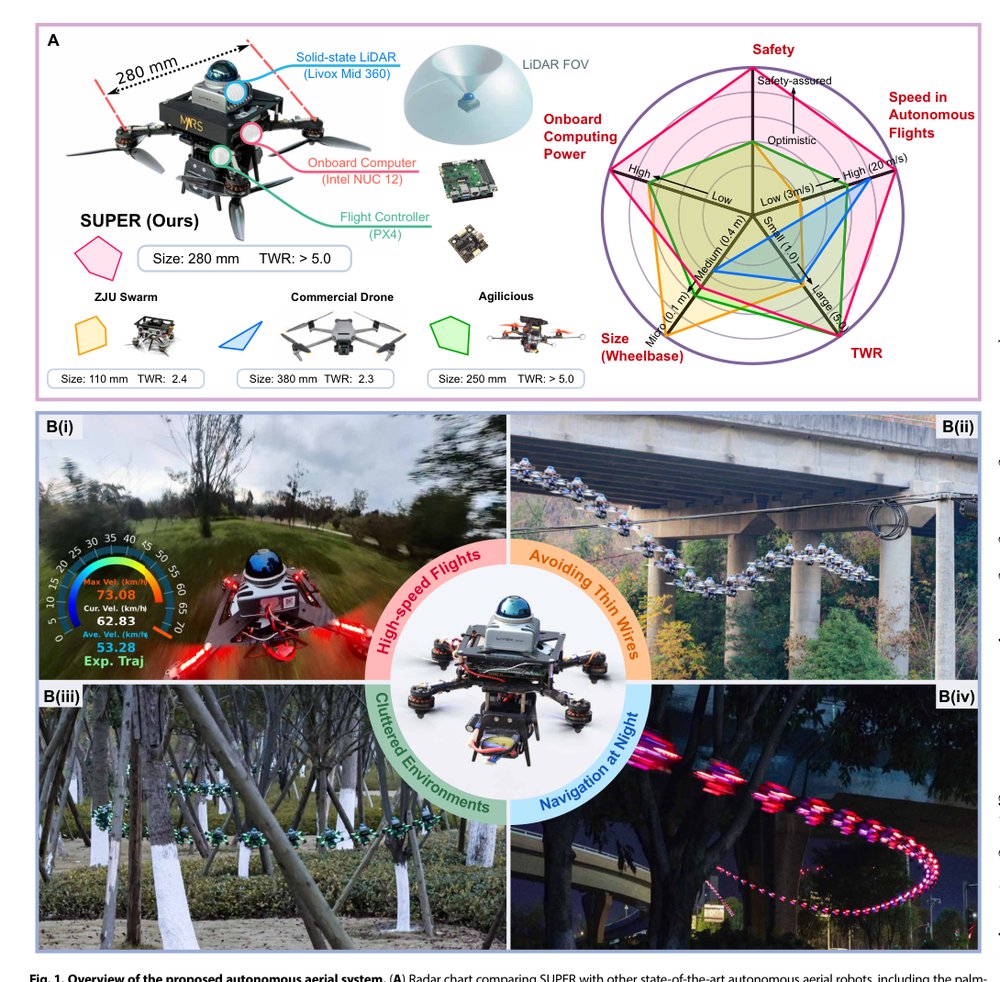
A memristor-based hybrid analog-digital computing platform for mobile robotics Figure 1
Science Robotics2020-10-21

A memristor-based hybrid analog-digital computing platform for mobile robotics

Buyun Chen, Hao Yang, Boxiang Song, Deming Meng, Xiaodong Yan, Yuanrui Li, Yunxiang Wang, Pan Hu, Tse-Hsien Ou, Mark Barnell, Qing Wu, Han Wang, Wei Wu

Ming Hsieh Department of Electrical and Computer Engineering, University of Southern California, Los Angeles, CA 90089, USA, Air Force Research Laboratory, Information Directorate, Rome, NY 13441, USA

机器人机器人学习

针对移动机器人在纯数字平台上进行传感融合与运动控制时延高、能耗大的问题,论文将忆阻器可调电导用于模拟计算,把连续时间 Kalman 滤波和 PD 控制下沉到“类小脑”模拟端,数字端保留高层算法;在一自由度倒立摆机器人上实现自适应调参,计算周期降至 6 微秒,速度和能效较传统数字平台提升一个数量级以上,并带来更短稳定时间和更好稳定性。

Vibrational control: A hidden stabilization mechanism in insect flight Figure 1
Science Robotics2020-09-30

Vibrational control: A hidden stabilization mechanism in insect flight

Haithem E. Taha, Mohammadali Kiani, Tyson L. Hedrick, Jeremy S. M. Greeter

Department of Mechanical and Aerospace Engineering, University of California, Irvine, Irvine, CA 92617, USA, Department of Biology, University of North Carolina at Chapel Hill, Chapel Hill, NC 27599, USA, Technology Deployment and Outreach, Pacific Northwest National Laboratory, Richland, WA 99352, USA

飞行机器人仿生机器人机器人

论文针对传统直接平均法得出昆虫悬停俯仰不稳定、需强反馈控制的结论,指出该方法会漏掉拍翼高频时变载荷的高阶效应。作者用 chronological calculus/完全平均揭示“振动稳定”机制:自然拍翼可产生等效俯仰刚度,并通过天蛾受扰实验支持,从而降低仿生飞行机器人对主动反馈控制的需求。

The human brain reveals resting state activity patterns that are predictive of biases in attitudes toward robots Figure 1
Science Robotics2020-09-30

The human brain reveals resting state activity patterns that are predictive of biases in attitudes toward robots

Francesco Bossi, Cesco Willemse, Jacopo Cavazza, Serena Marchesi, Vittorio Murino, Agnieszka Wykowska

IMT School for Advanced Studies Lucca, Lucca, Italy, Department of Computer Science, University of Verona, Strada Le Grazie 15, 37134 Verona, Italy, Huawei Technologies Ltd., Ireland Research Center, Georges Court, Townsend Street, Dublin 2, Ireland, Luleå University of Technology, Luleå, Sweden

仿生机器人机器人

随着服务与陪伴机器人进入日常生活,理解人们为何把机器人视为“有意图的主体”或“机械制品”变得重要。本文将 InStance 行为测验与静息态/任务态 EEG 结合,尝试从默认脑活动预测这种态度偏向。52 名被试在接触机器人场景前的静息态 beta 活动已能区分后续偏向设计立场或意图立场的人群,任务决策前 gamma 活动差异还指向心理理论加工与机器人意图归因的联系。

The Hannes hand prosthesis replicates the key biological properties of the human hand Figure 1
Science Robotics2020-09-30

The Hannes hand prosthesis replicates the key biological properties of the human hand

M. Laffranchi, N. Boccardo, S. Traverso, L. Lombardi, M. Canepa, A. Lince, M. Semprini, J. A. Saglia, A. Naceri, R. Sacchetti, E. Gruppioni, L. De Michieli

Laffranchi1*, N. Boccardo1, S. Traverso1, L. Lombardi1, M. Canepa1, A. Lince1, M. Semprini1,, hand called Hannes that incorporates key biomimetic properties that make this prosthesis uniquely similar to a, for this implementation were due to technological limiting factors, that did not permit the restoration of the full functionalities of a, are as follows: (i) anthropomorphic-related features, which include, In addition, the digits should be controllable with suit-, permitting embodiment (10, 15, 19, 20), good engineering practice (21), including excellent similarity with, Principal components analysis (PCA) was used for explor-, variables into a smaller set of principal components (PCs) represent-, With respect to this method, it, of a human hand, trying to satisfy the increasing need for function

操作触觉医疗机器人机器人

针对现有上肢假手在拟人外形、抓握力/速度与自适应协同之间难以兼顾、导致日常使用和具身感不足的问题,Hannes 采用整体仿生设计,将接近人手的尺寸/运动学、欠驱动柔顺机构和类人抓握协同结合。实验显示其抓握稳定性、可用性和多项日常任务表现优于参照假手及多种现有装置;但临床仅 3 名受试者、训练约 2 周,长期增益仍需验证。

An adaptive deep reinforcement learning framework enables curling robots with human-like performance in real-world conditions Figure 1
Science Robotics2020-09-30

An adaptive deep reinforcement learning framework enables curling robots with human-like performance in real-world conditions

Dong-Ok Won, Klaus-Robert Müller, Seong-Whan Lee

Department of Brain and Cognitive Engineering, Korea University, Seoul, Republic of Korea, Machine Learning Group, Department of Computer Science, Berlin Institute of Technology, Berlin, Germany, Max Planck Institute for Informatics, Saarbrücken, Germany, Department of Artificial Intelligence, Korea University, Seoul, Republic of Korea

强化学习机器人

面向真实机器人中仿真到现实落差与环境持续变化问题,论文以冰壶为高不确定、非平稳测试场景:冰面摩擦随时间和投掷改变,比赛中又无法重新学习。作者在深度强化学习中引入时间特征进行在线适应,用于补偿未建模扰动并调整投掷目标。机器人 Curly 在与高水平人类队伍的4场正式比赛中赢下3场,显示该框架可将物理仿真策略较有效迁移到真实条件。

Integrating chemical fuels and artificial muscles for untethered microrobots Figure 1
Science Robotics2020-08-26

Integrating chemical fuels and artificial muscles for untethered microrobots

Ryan L. Truby, Shuguang Li

Computer Science and Artificial Intelligence Laboratory, Massachusetts Institute of Technology, Cambridge, MA, USA, John A. Paulson School of Engineering and Applied Sciences, Harvard University, Cambridge, MA, USA

仿生机器人微型机器人机器人

面向昆虫尺度微型机器人难以同时携带能源、驱动与控制的问题,文章以 RoBeetle 为例强调动力—驱动协同设计:用甲醇燃烧加热铂涂层形状记忆合金人工肌肉,并以机械形态控制调节燃料暴露。该 88 mg 机器人实现无 tether 自主爬行,燃料比能量约为微型电池的 10 倍,但速度仅 0.76 mm/s,转向、多自由度与通信控制仍受限。

Biomorphic structural batteries for robotics Figure 1
Science Robotics2020-08-26

Biomorphic structural batteries for robotics

Mingqiang Wang, Drew Vecchio, Chunyan Wang, Ahmet Emre, Xiongye Xiao, Zaixing Jiang, Paul Bogdan, Yudong Huang, Nicholas A. Kotov

School of Chemistry and Chemical Engineering, MIIT Key Laboratory of Critical Materials Technology for New Energy Conversion and Storage, State Key Laboratory of Urban Water Resource and Environment, Harbin Institute of Technology, Harbin 150001, P. R. China, Department of Chemical Engineering, University of Michigan, Ann Arbor, MI 48109, USA, Department of Biomedical Engineering, University of Michigan, Ann Arbor, MI 48109, USA, Department of Materials Science and Engineering, University of Michigan, Ann Arbor, MI 48109, USA, Biointerfaces Institute, University of Michigan, Ann Arbor, MI 48109, USA, Ming Hsieh Department of Electrical and Computer Engineering, University of Southern California, Los Angeles, CA 90089, USA, Michigan Institute of Transnational Nanotechnology (MITRAN), Ypsilanti, MI, USA

机器人机器人学习

针对传统独立电池占用体积、增加重量并限制机器人形态的问题,论文提出仿生结构锌空气电池:用芳纶纳米纤维/QUPA 构建类似软骨的固态离子导体,并以图论刻画其贯通网络对力学与离子传输的贡献。该电池可作为机器人柔性防护外壳和承载结构,循环超过 100 小时,在同体积下总容量达独立锂电池的 72 倍,展示了分布式机身储能的可行性。

An 88-milligram insect-scale autonomous crawling robot driven by a catalytic artificial muscle Figure 1
Science Robotics2020-08-26

An 88-milligram insect-scale autonomous crawling robot driven by a catalytic artificial muscle

Xiufeng Yang, Longlong Chang, Néstor O. Pérez-Arancibia

Department of Aerospace and Mechanical Engineering, University of Southern California, Los Angeles, CA 90089-1453, USA

移动机器人仿生机器人机器人

针对亚克级微型机器人受微电池能量密度和外部供能束缚、难以持续自主运动的问题,论文提出 RoBeetle:用甲醇催化燃烧加热 NiTi-Pt 形状记忆合金人工肌肉,并以嵌入式无电子机械控制机构调节燃料阀,实现周期驱动。88 mg 机器人完成自主爬行,并在不同气氛、粗糙表面、斜坡、负载运输和户外条件下进行了运动验证。

3D-printed programmable tensegrity for soft robotics Figure 1
Science Robotics2020-08-26

3D-printed programmable tensegrity for soft robotics

Hajun Lee, Yeonwoo Jang, Jun Kyu Choe, Suwoo Lee, Hyeonseo Song, Jin Pyo Lee, Nasreena Lone, Jiyun Kim

School of Material Science and Engineering, Ulsan National Institute of Science and Technology, Ulsan 44919, South Korea, Center for Multidimensional Programmable Matter, Ulsan National Institute of Science and Technology, Ulsan 44919, South Korea

软体机器人机器人

针对软体机器人中智能材料难以与复杂三维张拉整体结构一体制造、传统装配限制结构复杂度的问题,论文提出将3D打印与牺牲模具结合,直接形成由刚性撑杆支撑的单体智能肌腱网络,并通过几何、拓扑、密度等参数编程系统级力学。结果展示了具磁响应肌腱的多种张拉整体致动器,以及可向任意方向行走的张拉整体机器人。

Wireless steerable vision for live insects and insect-scale robots Figure 1
Science Robotics2020-07-15

Wireless steerable vision for live insects and insect-scale robots

Vikram Iyer, Ali Najafi, Johannes James, Sawyer Fuller, Shyamnath Gollakota

Paul G. Allen School of Computer Science and Engineering, University of Washington, Seattle, WA, USA, Department of Electrical and Computer Engineering, University of Washington, Seattle, WA, USA, Department of Mechanical Engineering, University of Washington, Seattle, WA, USA

仿生机器人机器人

面向昆虫级机器人难以承载传统视觉系统的功耗、重量与计算负担,论文借鉴昆虫以头部转动弥补小视场的策略,设计248 mg全无线可转向相机,用压电执行器实现60°视线扫描并可由手机控制。系统在活甲虫和1.6×2 cm地面机器人上验证,支持120 m蓝牙视频传输、最长6小时昆虫搭载运行,并显示转向视觉比转动整机节能约26至84倍。

Powered knee and ankle prosthesis with indirect volitional swing control enables level-ground walking and crossing over obstacles Figure 1
Science Robotics2020-07-15

Powered knee and ankle prosthesis with indirect volitional swing control enables level-ground walking and crossing over obstacles

Joel Mendez, Sarah Hood, Andy Gunnel, Tommaso Lenzi

Department of Mechanical Engineering and Utah Robotics Center, University of Utah, Salt Lake City, UT, USA

移动机器人飞行机器人触觉医疗机器人机器人

针对传统被动/预编程动力膝踝假肢难以在真实环境中跨越障碍、且分类式控制依赖高精度意图识别的问题,论文提出一种由残肢运动间接调制的随意摆动控制:高层连续调整最大膝屈曲和摆动时长,低层用最小跃度规划生成平滑轨迹。3名大腿截肢者实验显示,该方法可在不同步速和障碍高度下主动改变足尖离地间隙,减少对显式环境分类的依赖。

Ionic spiderwebs Figure 1
Science Robotics2020-07-15

Ionic spiderwebs

Younghoon Lee, Won Jun Song, Yeonsu Jung, Hyunjae Yoo, Man-Yong Kim, Ho-Young Kim, Jeong-Yun Sun

Department of Materials Science and Engineering, Seoul National University, 1 Gwanak-ro, Gwanak-gu, Seoul 08826, South Korea, Department of Mechanical and Aerospace Engineering, Seoul National University, 1 Gwanak-ro, Gwanak-gu, Seoul 08826, South Korea, Eumam Middle School, 147 Chilgeori-ro, Eumam-myeon, Seosan-si, Chungcheongnam-do 31936, South Korea, Research Institute of Advanced Materials (RIAM), Seoul National University 1 Gwanak-ro, Gwanak-gu, Seoul 08826, South Korea

机器人机器人学习

面向软机器人中感知、执行与自维护难以在简单结构内协同的问题,论文仿照蜘蛛网捕食策略,提出由离子导电有机凝胶和硅橡胶封装成的一对“离子蛛丝”,用统一的静电机制实现目标接近感知、静电黏附捕获、释放与振动清洁。实验显示其可抓取多类材料,最大抓取质量约为自身相关尺度的68倍;感知触发可使抗污染后的黏附保持提高32.5倍,表面改性结合振动清洁可恢复98.7%黏附力。

Efficient flapping wing drone arrests high-speed flight using post-stall soaring Figure 1
Science Robotics2020-07-15

Efficient flapping wing drone arrests high-speed flight using post-stall soaring

Yao-Wei Chin, Jia Ming Kok, Yong-Qiang Zhu, Woei-Leong Chan, Javaan S. Chahl, Boo Cheong Khoo, Gih-Keong Lau

School of Mechanical and Aerospace Engineering, Nanyang Technological University, Singapore, Singapore, Department of Mechanical Engineering, National University of Singapore, Singapore 117575, Singapore, School of Mechanical and Automotive Engineering, Qingdao University of Technology, Shandong, China, School of Engineering, University of South Australia, Mawson Lakes, SA 5095, Australia, Department of Mechanical Engineering, National Chiao Tung University, Hsinchu 30010, Taiwan

飞行机器人机器人

面向微型飞行机器人在狭窄环境中快速避障、栖停所需的急停与转弯能力,论文提出26克带尾翼X形扑翼机,并将低损耗防轴摆传动、尼龙弹性铰链与柔性翼结合,以提高过剩推力和尾翼控制权威。实验显示其可悬停、快速前飞、俯冲拉起,并通过尾翼抬升诱发翼动态失速实现后失速滑翔制动,在约32毫米半径内完成急转,最大减速度31.4 m/s²,且同推力下电功率较螺旋桨直驱低约40%。

A bug’s-eye view Figure 1
Science Robotics2020-07-15

A bug’s-eye view

Yiannis Aloimonos, Cornelia Fermüller

Computer Vision Laboratory, Institute for Advanced Computer Studies, Department of Computer Science, Institute for Systems Research, University of Maryland, College Park, MD, USA

仿生机器人机器人

面向昆虫尺度机器人在尺寸、重量与功耗受限下难以感知和运动的问题,本文借 Iyer 等人的无线可转向微型视觉系统讨论主动视觉的回归:248 mg 相机利用低漏电压电执行器保持视角、按运动触发采集。系统装在自由行走甲虫上可工作约 6 小时,也可装上微机器人以 1 fps 成像,显示小型机器人可通过任务驱动的主动感知替代传统 SLAM 思路。

Repurposing factories with robotics in the face of COVID-19 Figure 1
Science Robotics2020-06-10

Repurposing factories with robotics in the face of COVID-19

Ali Ahmad Malik, Tariq Masood, Rehana Kousar

Mads Clausen Institute, University of Southern Denmark, Sønderborg, Denmark, Institute for Manufacturing, Department of Engineering, University of Cambridge, 17 Charles Babbage Road, Cambridge CB3 0FS, UK, Engineering Design Centre, Department of Engineering, University of Cambridge, Trumpington Street, Cambridge CB2 1PZ, UK, Cambridge Global Challenges Strategic Research Initiative, University of Cambridge, JJ Thompson Road, Cambridge CB3 0FS, UK, Biomakespace, Cambridge University Biomedical Innovation Hub, Clifford Allbutt Building, Biomedical Campus, Hills Road, Cambridge CB2 0AH, UK

机器人机器人学习

面对 COVID-19 造成的呼吸机短缺与传统产线难以快速改造的问题,文章提出以协作机器人支撑工厂转产和扩产:通过人机协作、模块化即插即用硬件、可复用程序模板与数字孪生,加快装配线重构和安全验证。文中估计协作机器人可自动化约 40–50% 的呼吸机装配任务、将人工作业时长减半,并帮助维持车间社交距离;但这些结果主要为论证性分析,缺少实际产线实验验证。

Field performance of sterile male mosquitoes released from an uncrewed aerial vehicle Figure 1
Science Robotics2020-06-10

Field performance of sterile male mosquitoes released from an uncrewed aerial vehicle

J. Bouyer, N. J. Culbert, A. H. Dicko, M. Gomez Pacheco, J. Virginio, M. C. Pedrosa, L. Garziera, A. T. Macedo Pinto, A. Klaptocz, J. Germann, T. Wallner, G. Salvador-Herranz, R. Argiles Herrero, H. Yamada, F. Balestrino, M. J. B. Vreysen

Insect Pest Control Laboratory, Joint FAO/IAEA Programme of Nuclear Techniques in Food and Agriculture, A-1400 Vienna, Austria, Institute of Integrative Biology and the Centre for Genomic Research, University of Liverpool, Liverpool, Merseyside, UK

飞行机器人机器人

针对杀虫剂抗性和大面积蚊媒控制中人工定点释放覆盖不均、成本高的问题,本文将无菌雄性埃及伊蚊释放装置集成到无人机上,重点解决成蚊易受挤压、低温和输送损伤的工程约束,并用保温储存、圆筒释放机构和自主飞行软件控制流量。巴西田间试验显示,该系统能较均匀扩散无菌雄蚊且不显著降低飞行和交配竞争力,可提高无菌/野生雄蚊比例均匀性并诱导野外雌蚊不育。

Enzyme-powered Janus platelet cell robots for active and targeted drug delivery Figure 1
Science Robotics2020-06-10

Enzyme-powered Janus platelet cell robots for active and targeted drug delivery

Songsong Tang, Fangyu Zhang, Hua Gong, Fanan Wei, Jia Zhuang, Emil Karshalev, Berta Esteban-Fernández de Ávila, Chuying Huang, Zhidong Zhou, Zhengxing Li, Lu Yin, Haifeng Dong, Ronnie H. Fang, Xueji Zhang, Liangfang Zhang, Joseph Wang

Department of NanoEngineering and Chemical Engineering Program, University of California San Diego, La Jolla, CA 92093, USA, Research Center for Bioengineering and Sensing Technology, University of Science and Technology Beijing, Beijing 100083, China

机器人机器人学习

针对血小板等天然细胞作为药物载体只能依赖血流和扩散、靶向结合效率受限的问题,论文将脲酶以 Janus 方式非对称固定在血小板表面,利用体液中尿素分解产生化学泳自推进,同时尽量保留血小板表面功能蛋白。实验显示该微机器人在尿素存在下运动显著强于全覆盖改性血小板,并提高对癌细胞和细菌的结合及载药后的体外治疗效果。

Elucidating the interaction dynamics between microswimmer body and immune system for medical microrobots Figure 1
Science Robotics2020-06-10

Elucidating the interaction dynamics between microswimmer body and immune system for medical microrobots

Immihan Ceren Yasa, Hakan Ceylan, Ugur Bozuyuk, Anna-Maria Wild, Metin Sitti

Physical Intelligence Department, Max Planck Institute for Intelligent Systems, 70569 Stuttgart, Germany, School of Medicine and School of Engineering, Koç University, 34450 Istanbul, Turkey

移动机器人微型机器人机器人

面向体内医疗微机器人,论文关注以往偏重游动性能而忽视免疫清除的问题;作者用同尺寸、同表面化学但螺旋圈数不同的磁驱双螺旋微游泳器,解耦形貌对运动与免疫识别的影响。结果显示5圈低频游动较优、2圈高频更快且滚动更小,但巨噬细胞和脾细胞会按圈数产生差异吞噬与免疫反应,说明结构优化需在推进效率和低免疫原性之间折中,并可进一步构建吞噬微游泳器的免疫机器人。

Automatic tracking of free-flying insects using a cable-driven robot Figure 1
Science Robotics2020-06-10

Automatic tracking of free-flying insects using a cable-driven robot

Rémi Pannequin, Mélanie Jouaiti, Mohamed Boutayeb, Philippe Lucas, Dominique Martinez

Université de Lorraine, CNRS, CRAN, 54000 Nancy, France, Université de Lorraine, CNRS, LORIA, 54000 Nancy, France, Institute of Ecology and Environmental Sciences of Paris, INRAE, 78000 Versailles, France

飞行机器人仿生机器人机器人

针对昆虫自由飞行研究长期受限于系留、悬停或狭小风洞的问题,本文提出“lab-on-cables”六自由度缆驱移动实验平台,将红外双目视觉与预测式反应控制结合,使相机框架随昆虫运动。系统在6×4×3米空间内验证,可跟踪最高约3米/秒飞行的夜蛾,并用果蝇、蚊子等预录轨迹展示跨物种跟踪潜力。

Multifunctional surface microrollers for targeted cargo delivery in physiological blood flow Figure 1
Science Robotics2020-05-13

Multifunctional surface microrollers for targeted cargo delivery in physiological blood flow

Yunus Alapan, Ugur Bozuyuk, Pelin Erkoc, Alp Can Karacakol, Metin Sitti

Physical Intelligence Department, Max Planck Institute for Intelligent Systems, 70569 Stuttgart, Germany, Faculty of Engineering and Natural Sciences, Bahcesehir University, Istanbul 34353, Turkey, Department of Mechanical Engineering, Carnegie Mellon University, Pittsburgh, PA 15213, USA, School of Medicine and School of Engineering, Koç University, Istanbul 34450, Turkey

移动机器人机器人

面向血流环境中微机器人难以逆流推进、靶向识别和滞留的问题,论文仿白细胞沿血管壁滚动,设计了3.0/7.8微米Janus磁响应微滚轮:一侧Ni/Au用于磁驱滚动转向,另一侧负载抗HER2抗体和光裂解阿霉素。实验显示其速度最高600微米/秒,可在异质细胞中识别癌细胞,并在最高2.5 dyn/cm²的生理相关血流、内皮化通道和倾斜3D表面上实现受控逆流运动。

Material remodeling and unconventional gaits facilitate locomotion of a robophysical rover over granular terrain Figure 1
Science Robotics2020-05-13

Material remodeling and unconventional gaits facilitate locomotion of a robophysical rover over granular terrain

Siddharth Shrivastava, Andras Karsai, Yasemin Ozkan Aydin, Ross Pettinger, William Bluethmann, Robert O. Ambrose, Daniel I. Goldman

School of Mechanical Engineering, Georgia Institute of Technology, Atlanta, GA 30332, USA, School of Physics, Georgia Institute of Technology, Atlanta, GA 30332, USA, NASA Johnson Space Center, Software Robotics and Simulation Division, Houston, TX 77058, USA

移动机器人机器人

针对月球/火星车在松散颗粒坡面易打滑下陷、甚至被困的问题,论文用缩比 Mini Rover 对 NASA RP15 的轮-腿复合运动做物理实验与阻力模型分析。核心洞察是:轮子自旋配合周期性抬腿、扫掠并非避免扰动,而是主动重塑局部颗粒,使其形成可“划行”的摩擦流体。结果显示,单纯轮转在平地和坡面均会陷车,而 RS 步态可脱困并爬上约15°松散坡面,改进 RRP 步态可在更陡约25°坡面持续前进;RP15 与缩比车在湿砂中也表现出更高牵引力。

Inflatable soft jumper inspired by shell snapping Figure 1
Science Robotics2020-05-13

Inflatable soft jumper inspired by shell snapping

Benjamin Gorissen, David Melancon, Nikolaos Vasios, Mehdi Torbati, Katia Bertoldi

J.A. Paulson School of Engineering and Applied Sciences, Harvard University, Cambridge, MA 02138, USA, Wyss Institute for Biologically Inspired Engineering, Harvard University, Cambridge, MA 02138, USA, Kavli Institute for Bionano Science and Technology, Harvard University, Cambridge, MA 02138, USA

软体机器人机器人

针对流体软体执行器受管路黏性限制、充气动作慢的问题,论文借鉴贝壳/球壳翻 snap-through 失稳,设计由两个弹性球冠组成的可充气软跳跃器,使慢速充气在等容跳变时瞬时释放弹性能。有限元与实验表明,几何、边界和内外材料刚度可调控能量释放、内冠位移与跳高;优化厘米级样机可反复复位并在慢充气下实现快速起跳。

Bioinspired underwater legged robot for seabed exploration with low environmental disturbance Figure 1
Science Robotics2020-05-13

Bioinspired underwater legged robot for seabed exploration with low environmental disturbance

G. Picardi, M. Chellapurath, S. Iacoponi, S. Stefanni, C. Laschi, M. Calisti

The BioRobotics Institute, Scuola Superiore Sant’Anna, Pisa, Italy, Department of Excellence in Robotics & AI, Scuola Superiore Sant’Anna, Pisa, Italy

水下机器人仿生机器人机器人

针对螺旋桨式水下机器人近海底作业易扰动沉积物、定位与取样交互困难的问题,论文提出仿底栖动物的六足水下机器人 SILVER2,将浮力减重、顺应腿与 U-SLIP 弹跳/步行等运动模式结合。实海 0.5–12 米任务表明其能越过不平海底、低扰动接近目标、被动静默驻位并完成沉积物采样。

Ladybird beetle–inspired compliant origami Figure 1
Science Robotics2020-04-15

Ladybird beetle–inspired compliant origami

Sang-Min Baek, Sojung Yim, Soo-Hwan Chae, Dae-Young Lee, Kyu-Jin Cho

Soft Robotics Research Center, Seoul National University, Seoul, Republic of Korea, Department of Mechanical and Aerospace Engineering, Institute of Advanced Machines and Design, Seoul National University, Seoul, Republic of Korea, School of Engineering and Applied Sciences, Harvard University, Cambridge, MA, USA, Wyss Institute for Biologically Inspired Engineering, Harvard University, Cambridge, MA, USA

软体机器人机器人

传统折纸将面板视为刚体,难以在轻薄可折结构中同时实现高能量存储与可靠锁定。本文借鉴瓢虫翅脉的带簧状曲率与可变形特性,把具有横向曲率的柔顺面板引入折纸关节,使折叠时面板展平储能、展开后由几何刚度自锁。实验显示该结构可约116 ms快速自展开,并承受约150倍自重;作者还将其用于多模态机器人滑翔翼和跳跃机构,验证了部署与储能能力。

Electronic skins and machine learning for intelligent soft robots Figure 1
Science Robotics2020-04-15

Electronic skins and machine learning for intelligent soft robots

Benjamin Shih, Dylan Shah, Jinxing Li, Thomas G. Thuruthel, Yong-Lae Park, Fumiya Iida, Zhenan Bao, Rebecca Kramer-Bottiglio, Michael T. Tolley

Department of Mechanical and Aerospace Engineering, University of California, San Diego, CA, USA, Department of Mechanical Engineering and Materials Science, Yale University, CT, USA, Departments of Chemical Engineering and Material Science and Engineering, Stanford University, CA, USA, Department of Engineering, University of Cambridge, UK, Department of Mechanical and Aerospace Engineering, Seoul National University, South Korea

移动机器人软体机器人触觉强化学习机器人

软体机器人要走出结构化环境,关键瓶颈在于可拉伸、多模态、高密度触觉/本体感知及其海量数据融合。本文作为综述,将电子皮肤的材料与阵列制造、主动矩阵和多层传感设计,同监督学习、时序模型、强化学习等感知到控制方法串联起来,归纳其在形状感知、触觉探索、操作与全身反应中的进展。主要结论是,智能软体机器人需硬件传感与学习控制协同设计,但高分辨率集成、标定、仿真到实机迁移和闭环策略仍是未解决挑战。

Biofuel-powered soft electronic skin with multiplexed and wireless sensing for human-machine interfaces Figure 1
Science Robotics2020-04-15

Biofuel-powered soft electronic skin with multiplexed and wireless sensing for human-machine interfaces

You Yu, Joanna Nassar, Changhao Xu, Jihong Min, Yiran Yang, Adam Dai, Rohan Doshi, Adrian Huang, Yu Song, Rachel Gehlhar, Aaron D. Ames, Wei Gao

Andrew and Peggy Cherng Department of Medical Engineering, California Institute of Technology, Pasadena, CA 91125, USA, Department of Electrical Engineering, California Institute of Technology, Pasadena, CA 91125, USA, Division of Chemistry and Chemical Engineering, California Institute of Technology, Pasadena, CA 91125, USA, Department of Mechanical and Civil Engineering, California Institute of Technology, Pasadena, CA 91125, USA

机器人机器人学习

针对电子皮肤依赖电池或近场供电、难以长期无线运行的问题,本文提出完全由汗液乳酸生物燃料电池供能的柔性电子皮肤PPES,并将微流控采汗、多模态代谢/物理传感、低功耗处理与BLE通信集成。0D-3D纳米材料电极在人体汗液中实现最高3.5 mW/cm²功率密度和60小时稳定运行,可连续检测尿素、铵、葡萄糖、pH与温度,并通过应变信号演示假肢步行控制。

Actuation of untethered pneumatic artificial muscles and soft robots using magnetically induced liquid-to-gas phase transitions Figure 1
Science Robotics2020-04-15

Actuation of untethered pneumatic artificial muscles and soft robots using magnetically induced liquid-to-gas phase transitions

Seyed M. Mirvakili, Douglas Sim, Ian W. Hunter, Robert Langer

Koch Institute, Massachusetts Institute of Technology, Cambridge, MA 02139, USA, Department of Electrical and Computer Engineering, Advanced Materials and Process Engineering Laboratory, University of British Columbia, Vancouver, BC V6T 1Z4, Canada, BioInstrumentation Lab, Mechanical Engineering Department, Massachusetts Institute of Technology, Cambridge, MA 02139, USA, Department of Chemical Engineering, Massachusetts Institute of Technology, Cambridge, MA 02139, USA, Division of Health Science and Technology, Massachusetts Institute of Technology, Cambridge, MA 02139, USA, Institute for Medical Engineering and Science, Massachusetts Institute of Technology, Cambridge, MA 02139, USA

软体机器人机器人

针对气动人工肌肉和软体机器人依赖压缩机、阀和气罐而难以便携的问题,本文提出用交变磁场感应加热液体中的铁磁/磁性颗粒,触发液-气相变并在封闭腔内产生驱动压力。该机制集成到 McKibben 肌肉和软体夹爪中,实现约20%收缩应变、40 kJ/m³功密度,并可用两节锂电池驱动夹爪举物。

Improving the energy economy of human running with powered and unpowered ankle exoskeleton assistance Figure 1
Science Robotics2020-03-25

Improving the energy economy of human running with powered and unpowered ankle exoskeleton assistance

Kirby A. Witte, Pieter Fiers, Alison L. Sheets-Singer, Steven H. Collins

Department of Mechanical Engineering, Carnegie Mellon University, Pittsburgh, PA 15213, USA, Department of Movement and Sports Sciences, Ghent University, Ghent, Belgium, Sport Research Lab, Nike Inc., Beaverton, OR 97006, USA, Department of Mechanical Engineering, Stanford University, Stanford, CA 94305, USA

机器人机器人学习

为降低跑步代谢消耗、提升速度或耐力,本文用系留踝关节外骨骼模拟器结合人在环优化,公平比较个体化动力辅助与无动力弹簧式辅助。结果显示,优化动力踝辅助相对零力矩节能24.7%、相对普通跑鞋节能14.6%,峰值力矩多出现在支撑晚期;弹簧式辅助几乎无效,甚至较普通跑鞋增加代谢成本,提示跑步踝辅助需要主动做正功而非简单储能回弹。

Dynamic obstacle avoidance for quadrotors with event cameras Figure 1
Science Robotics2020-03-25

Dynamic obstacle avoidance for quadrotors with event cameras

Davide Falanga, Kevin Kleber, Davide Scaramuzza

Department of Informatics, University of Zurich, Zurich, Switzerland

移动机器人飞行机器人机器人

面向四旋翼在鸟类、投掷物等高速动态障碍前反应时间不足的问题,论文用事件相机替代传统帧相机,利用事件流的微秒级时间信息并补偿自运动,从稀疏事件中区分静态背景与运动物体,再以障碍物位置/速度和改进势场生成避障指令。系统总延迟约3.5 ms,仅依赖机载感知与计算,在室内外可避开多种形状、尺寸的多个障碍,最高相对速度达10 m/s。

An untethered isoperimetric soft robot Figure 1
Science Robotics2020-03-25

An untethered isoperimetric soft robot

Nathan S. Usevitch, Zachary M. Hammond, Mac Schwager, Allison M. Okamura, Elliot W. Hawkes, Sean Follmer

Department of Mechanical Engineering, Stanford University, Stanford, CA, USA, Department of Aeronautics and Astronautics, Stanford University, Stanford, CA, USA, Department of Mechanical Engineering, University of California, Santa Barbara, Santa Barbara, CA, USA

操作软体机器人机器人

针对软体机器人难以在人尺度下脱离外部气源/系缆、而桁架机器人又常笨重脆弱的问题,论文提出由恒长充气管和可移动滚轮关节组成的等周长软体桁架:滚轮沿管移动来重新分配边长,总体长度和体积近似恒定。作者用相同模块构建多种2D形变机器人,并展示人尺度3D机器人可无缆进行间歇滚动运动和简单操作。

Sustainable manufacturing of sensors onto soft systems using self-coagulating conductive Pickering emulsions Figure 1
Science Robotics2020-02-26

Sustainable manufacturing of sensors onto soft systems using self-coagulating conductive Pickering emulsions

Sang Yup Kim, Youngwoo Choo, R. Adam Bilodeau, Michelle C. Yuen, Gilad Kaufman, Dylan S. Shah, Chinedum O. Osuji, Rebecca Kramer-Bottiglio

Mechanical Engineering and Material Science, School of Engineering and Applied Science, Yale University, 9 Hillhouse Ave., New Haven, CT 06511, USA, Chemical and Environmental Engineering, School of Engineering and Applied Science, Yale University, 9 Hillhouse Ave., New Haven, CT 06511, USA, School of Mechanical Engineering, Purdue University, 585 Purdue Mall, West Lafayette, IN 47907, USA

机器人机器人学习

软体机器人和可穿戴设备需要可拉伸传感器,但传统导电复合物依赖甲苯、环己烷等溶剂,易损伤聚合物基底且不安全。论文提出乙醇基自凝导电 Pickering 乳液,以炭黑稳定 PDMS 前驱体,打印后随乙醇挥发自发形成导电复合层。该方法可直接用于充气软执行器和织物,传感器表现出高应变灵敏度、低滞后,并实现 McKibben 执行器闭环控制,状态估计误差低于 3%。

Modeling engagement in long-term, in-home socially assistive robot interventions for children with autism spectrum disorders Figure 1
Science Robotics2020-02-26

Modeling engagement in long-term, in-home socially assistive robot interventions for children with autism spectrum disorders

Shomik Jain, Balasubramanian Thiagarajan, Zhonghao Shi, Caitlyn Clabaugh, Maja J. Matarić

Interaction Lab, University of Southern California, Los Angeles, CA 90089, USA

医疗机器人强化学习机器人

面向自闭症儿童居家长期社交辅助机器人干预,论文关注机器人如何在真实、个体差异大的环境中识别走神并及时回应。作者用月级家庭数据训练跨用户通用模型与早期数据个性化模型,融合视觉、音频和任务表现特征;两类模型事后参与度二分类约达90% AUROC,并可通过时间窗口触发再参与动作,但脱离状态召回仍有限。

A ferrobotic system for automated microfluidic logistics Figure 1
Science Robotics2020-02-26

A ferrobotic system for automated microfluidic logistics

Wenzhuo Yu, Haisong Lin, Yilian Wang, Xu He, Nathan Chen, Kevin Sun, Darren Lo, Brian Cheng, Christopher Yeung, Jiawei Tan, Dino Di Carlo, Sam Emaminejad

Interconnected & Integrated Bioelectronics Lab (I2BL), Department of Electrical and Computer Engineering, University of California, Los Angeles, CA, USA, Department of Bioengineering, University of California, Los Angeles, CA, USA

机器人机器人学习

针对传统连续流微流控路径固定、EWOD耐久性和兼容性受限的问题,论文提出受AGV启发的ferrobotic系统:用32×32可寻址电磁线圈驱动毫米级永磁体,放大磁场并无接触操控含磁纳米颗粒液滴。系统实现约10 cm/s运输、超过1万次/24小时稳定运行,并集成液滴分配、生成、过滤、合并等模块,最终协同完成了人血浆中活性MMP的全自动定量检测。

Soft biohybrid morphing wings with feathers underactuated by wrist and finger motion Figure 1
Science Robotics2020-01-22

Soft biohybrid morphing wings with feathers underactuated by wrist and finger motion

Eric Chang, Laura Y. Matloff, Amanda K. Stowers, David Lentink

Department of Mechanical Engineering, Stanford University, Stanford, CA, USA

飞行机器人软体机器人机器人

针对传统变形翼需逐自由度控制、难以兼顾鸟类般连续变形与鲁棒性的难题,论文通过鸽翼运动捕捉发现飞羽角度可由腕部和手指运动近似线性耦合,并据此构建仅用4个伺服关节欠驱动40根真实羽毛的PigeonBot。风洞与飞行测试表明,该软体生物混合翼在气动载荷下可快速稳定变形,非对称腕/指动作能触发转弯,并提升抗撞与可修复性。

Human adipose–derived mesenchymal stem cell–based medical microrobot system for knee cartilage regeneration in vivo Figure 1
Science Robotics2020-01-22

Human adipose–derived mesenchymal stem cell–based medical microrobot system for knee cartilage regeneration in vivo

Gwangjun Go, Sin-Gu Jeong, Ami Yoo, Jiwon Han, Byungjeon Kang, Seokjae Kim, Kim Tien Nguyen, Zhen Jin, Chang-Sei Kim, Yu Ri Seo, Ju Yeon Kang, Ju Yong Na, Eun Kyoo Song, Yongyeon Jeong, Jong Keun Seon, Jong-Oh Park, Eunpyo Choi

Korea Institute of Medical Microrobotics (KIMIRo), 43-26 Cheomdangwagi-ro, Buk-gu, Gwangju 61011, Korea, School of Mechanical Engineering, Chonnam National University, 77 Yongbong-ro, Buk-gu, Gwangju 61186, Korea, Biot Korea Inc., 43-26 Chemdangwagi-ro 208 Beon-gil, Gwangju 61001, Korea, School of Biomedical Engineering, Xinxiang Medical University, Xinxiang, Henan 453003, China, Center for Joint Disease, Chonnam National University Hwasun Hospital, 160 Ilsim-ri, Hwasun-eup, Hwasun 58128, Korea, Department of Radiology, Chonnam National University Hwasun Hospital, 322 Hwasun-eup, Seoyang-ro, Hwasun 58128, Korea

微型机器人机器人

针对间充质干细胞关节腔注射靶向效率低、既有微机器人材料和体内验证不足的问题,论文构建了由可降解PLGA/ferumoxytol-壳聚糖磁性多孔载体、三维电磁驱动系统和外部固定磁体组成的hADMSC递送系统。兔膝软骨缺损实验显示,微机器人可被靶向并固定于病灶,约3周降解,细胞存活且未见明显炎症,相比对照促进COLII表达和软骨再生。

Autonomic perspiration in 3D-printed hydrogel actuators Figure 1
Science Robotics2020-01-22

Autonomic perspiration in 3D-printed hydrogel actuators

Anand K. Mishra, Thomas J. Wallin, Wenyang Pan, Artemis Xu, Kaiyang Wang, Emmanuel P. Giannelis, Barbara Mazzolai, Robert F. Shepherd

Department of Mechanical and Aerospace Engineering, Cornell University, Ithaca, NY 14850, USA, Facebook Reality Labs, Redmond, WA 98052, USA, Department of Materials Science and Engineering, Cornell University, Ithaca, NY 14850, USA, Center for Micro-Biorobotics, Istituto Italiano di Technologia, Pontedera, PI 56025 Pisa, Italy

机器人机器人学习

软体机器人在高功率或高温环境中易因散热不足导致形变、刚度和控制精度漂移。本文用多材料SLA打印PNIPAm/PAAm水凝胶手指,在约30°C以上让微孔自主张开并利用液压工质“出汗”蒸发冷却。实验显示其冷却速率较非出汗结构提升约600%,热调节能力约107 W/kg,但代价是暂时降低驱动效率并消耗水分。

An organosynthetic dynamic heart model with enhanced biomimicry guided by cardiac diffusion tensor imaging Figure 1
Science Robotics2020-01-22

An organosynthetic dynamic heart model with enhanced biomimicry guided by cardiac diffusion tensor imaging

Clara Park, Yiling Fan, Gregor Hager, Hyunwoo Yuk, Manisha Singh, Allison Rojas, Aamir Hameed, Mossab Saeed, Nikolay V. Vasilyev, Terry W. J. Steele, Xuanhe Zhao, Christopher T. Nguyen, Ellen T. Roche

Department of Mechanical Engineering, Massachusetts Institute of Technology, Cambridge, MA, USA, Harvard Medical School, Boston, MA, USA, Institute for Medical Engineering and Science, Massachusetts Institute of Technology, Cambridge, MA, USA, Department of Mechanical Engineering, Technical University of Munich, Munich, Germany, NTU-Northwestern Institute for Nanomedicine, Interdisciplinary Graduate School, Nanyang Technological University, Singapore, Singapore, Tissue Engineering Research Group, Department of Anatomy, Royal College of Surgeons in Ireland, Dublin, Ireland, Trinity Centre for Biomedical Engineering, Trinity College Dublin, Dublin, Ireland, Department of Cardiac Surgery, Boston Children’s Hospital, Boston, MA, USA, School of Materials Science and Engineering, Nanyang Technological University, Singapore, Singapore, Department of Civil and Environmental Engineering, Massachusetts Institute of Technology, Cambridge, MA, USA, Martinos Center for Biomedical Imaging, Massachusetts General Hospital, Charlestown, MA, USA, Cardiovascular Research Center, Massachusetts General Hospital, Charlestown, MA, USA

软体机器人机器人

针对现有体外心脏模型难以同时保留精细心内结构和真实搏动的问题,论文提出猪心内膜组织与软体机器人合成心肌结合的生物混合心脏。其核心是用DT-MRI/纤维追踪指导螺旋心肌带式气动执行器布局,并开发组织-硅胶软粘接界面。实验显示该模型可在湿环境下稳定耦合有机与合成部分,较好复现左室收缩运动和心内解剖,有望用于心内器械台架测试。

A vision for future bioinspired and biohybrid robots Figure 1
Science Robotics2020-01-22

A vision for future bioinspired and biohybrid robots

Barbara Mazzolai, Cecilia Laschi

Istituto Italiano di Tecnologia, Center for Micro-BioRobotics, Viale Rinaldo Piaggio, 34, 56025 Pontedera (Pisa), Italy, Scuola Superiore Sant’Anna, The BioRobotics Institute and Department of Excellence in Robotics & AI, Viale Rinaldo Piaggio, 34, 56025 Pontedera (Pisa), Italy

仿生机器人机器人

针对现有机器人能耗高、寿命末端产生电子废弃物且难以适应真实复杂环境的问题,本文提出以生物“全生命周期”为核心的仿生/生物混合机器人愿景。关键洞察是仿生不应停留在外形复制,而应提取生长、重塑、形态发生、能量获取与降解等原则,将机器人作为身体、智能与环境共同演化的整体系统。文章未给出实验验证,主要结果是梳理未来方向:可生长、自修复、变形、环境取能、可降解并具学习与社会智能的机器人。

A bioinspired Separated Flow wing provides turbulence resilience and aerodynamic efficiency for miniature drones Figure 1
Science Robotics2020-01-22

A bioinspired Separated Flow wing provides turbulence resilience and aerodynamic efficiency for miniature drones

Matteo Di Luca, Stefano Mintchev, Yunxing Su, Eric Shaw, Kenneth Breuer

School of Engineering, Brown University, 182 Hope Street, Providence, RI 02912, USA, Institute of Microengineering, School of Engineering, École Polytechnique Fédérale de Lausanne, 1015 Lausanne, Switzerland

飞行机器人仿生机器人微型机器人机器人

面向微型固定翼无人机在低雷诺数下续航短、对阵风和自由来流湍流敏感的问题,论文借鉴昆虫和小鸟翼前缘,提出“Separated Flow”翼型:用尖锐前缘强制分离、快速转捩,并在后部圆弧襟翼再附着。水洞/风洞结果显示其升力对湍流变化远小于 Eppler E423,最大升力变化小于13%对比超过85%;104克样机估计续航可达150–170分钟,主要来自高展弦比厚翼与电池翼内集成。

An autonomous untethered fast soft robotic insect driven by low-voltage dielectric elastomer actuators Figure 1
Science Robotics2019-12-18

An autonomous untethered fast soft robotic insect driven by low-voltage dielectric elastomer actuators

Xiaobin Ji, Xinchang Liu, Vito Cacucciolo, Matthias Imboden, Yoan Civet, Alae El Haitami, Sophie Cantin, Yves Perriard, Herbert Shea

Soft Transducers Laboratory (LMTS), École Polytechnique Fédérale de Lausanne (EPFL), Rue de la Maladière 71B, Neuchâtel 2000, Switzerland, Integrated Actuators Laboratory (LAI), École Polytechnique Fédérale de Lausanne (EPFL), Rue de la Maladière 71B, Neuchâtel 2000, Switzerland, Laboratoire de Physicochimie des Polymères et des Interfaces (LPPI, EA2528), Institut des Matériaux, Université de Cergy-Pontoise, 5 Mail Gay Lussac, 95031 Cergy-Pontoise, France

移动机器人软体机器人仿生机器人机器人

针对厘米级软体机器人难以同时携带电源、控制与传感且保持高速自主运动的问题,本文将低压堆叠介电弹性体驱动器降至450 V以下,并与柔性机身、三足差动驱动和轻量高压电子集成。DEAnsect本体约190 mg,可承载约5倍自重;完整约1 g系统实现无绳自主循迹,空载速度30 mm/s、无绳约12 mm/s,并在受压后仍可工作。

A tale of two explanations: Enhancing human trust by explaining robot behavior Figure 1
Science Robotics2019-12-18

A tale of two explanations: Enhancing human trust by explaining robot behavior

Mark Edmonds, Feng Gao, Hangxin Liu, Xu Xie, Siyuan Qi, Brandon Rothrock, Yixin Zhu, Ying Nian Wu, Hongjing Lu, Song-Chun Zhu

Department of Computer Science, UCLA, Los Angeles, CA 90095, USA, Department of Statistics, UCLA, Los Angeles, CA 90095, USA, Jet Propulsion Laboratory, Caltech, Los Angeles, CA 91109, USA, Department of Psychology, UCLA, Los Angeles, CA 90095, USA

机器人机器人学习

针对机器人在复杂操作中“会做但说不清”而难以获得人类信任的问题,本文在开药瓶任务中结合触觉预测模型、随机语法规划器与改进 Earley 解析,同时区分功能性与机制性解释。结果显示,融合模型提升了未见瓶子的操作成功率;但最能提升信任的是实时可视化符号规划过程,而非事后文本或低层触觉解释,说明性能贡献与信任贡献并不一致。

A formal methods approach to interpretable reinforcement learning for robotic planning Figure 1
Science Robotics2019-12-18

A formal methods approach to interpretable reinforcement learning for robotic planning

Xiao Li, Zachary Serlin, Guang Yang, Calin Belta

Department of Mechanical Engineering, Boston University, Boston, MA, USA, Division of Systems Engineering, Boston University, Boston, MA, USA

强化学习安全机器人

针对复杂机器人任务中强化学习奖励难设计、策略难解释且安全难保证的问题,本文把任务规范和先验知识写成可读的谓词时序逻辑,并转为自动机生成稠密奖励,同时用控制屏障函数对危险行为加“安全盾”。在双机械臂做热狗的仿真训练与实机执行中,该框架能按高层配方完成烹饪和服务,并在探索与部署时保持关键安全约束。

Using the fringe field of a clinical MRI scanner enables robotic navigation of tethered instruments in deeper vascular regions Figure 1
Science Robotics2019-11-27

Using the fringe field of a clinical MRI scanner enables robotic navigation of tethered instruments in deeper vascular regions

Arash Azizi, Charles C. Tremblay, Kévin Gagné, Sylvain Martel

Nanorobotics Laboratory, Department of Computer and Software Engineering, Institute of Biomedical Engineering, Polytechnique Montréal, Montréal, QC, Canada

移动机器人机器人

该文针对更细微导丝在狭窄、迂曲血管中因刚度不足、仅靠近端推送难以深入的问题,提出利用临床 MRI 扫描仪外部边缘场梯度,在机器人定位患者时对导丝磁性尖端施加定向拉力的 FFN 方法。实验表明,该方法可在体外多分叉小血管和猪体内窄血管中导航微导丝,突破手动操作和既有磁平台的深入限制,并支持更小、可变形磁性尖端设计。

Bioinspired dual-morphing stretchable origami Figure 1
Science Robotics2019-11-27

Bioinspired dual-morphing stretchable origami

Woongbae Kim, Junghwan Byun, Jae-Kyeong Kim, Woo-Young Choi, Kirsten Jakobsen, Joachim Jakobsen, Dae-Young Lee, Kyu-Jin Cho

Soft Robotics Research Center, Seoul National University, Seoul, Republic of Korea, Department of Mechanical and Aerospace Engineering, Institute of Advanced Machines and Design, Seoul National University, Seoul, Republic of Korea, School of Engineering and Applied Sciences and Wyss Institute for Biologically Inspired Engineering, Harvard University, Cambridge, MA, USA

软体机器人仿生机器人机器人

针对传统仿生变形多依赖单一机制、难以复现鹈鹕鳗“先展开后膨胀”的双模态形变,本文提出全弹性可拉伸折纸单元与内嵌流体通道设计,使气/液压先驱动几何展开再诱发皮肤拉伸。作者复现了鹈鹕鳗式大幅变形,并将单元组合到 Miura、Yoshimura 等折纸结构中,实现自适应抓取、爬行和大范围水下运动。

A robotic Intelligent Towing Tank for learning complex fluid-structure dynamics Figure 1
Science Robotics2019-11-27

A robotic Intelligent Towing Tank for learning complex fluid-structure dynamics

D. Fan, G. Jodin, T. R. Consi, L. Bonfiglio, Y. Ma, L. R. Keyes, G. E. Karniadakis, M. S. Triantafyllou

Department of Mechanical Engineering, Massachusetts Institute of Technology, Cambridge, MA 02139, USA, MIT Sea Grant College Program, Massachusetts Institute of Technology, Cambridge, MA 02139, USA, Laboratory of Systems & Applications of Information & Energy Technologies, École Normale Supérieure de Rennes, 35170 Bruz, France, Division of Applied Mathematics, Brown University, Providence, RI 02912, USA

飞行机器人强化学习机器人

针对涡激振动等流固耦合实验参数维度高、传统逐点扫参几乎不可行的问题,论文构建了机器人智能拖曳水池 ITT,用高斯过程回归与采集函数主动选择下一组速度、振幅、频率等实验条件。系统可昼夜自动运行,首年完成约10万次实验,并将原本可能需数十亿次的高维映射压缩到数千次量级,展示了机器人、计算机与人协同加速复杂物理发现的路径。

Teaching robots social autonomy from in situ human guidance Figure 1
Science Robotics2019-10-30

Teaching robots social autonomy from in situ human guidance

Emmanuel Senft, Séverin Lemaignan, Paul E. Baxter, Madeleine Bartlett, Tony Belpaeme

Centre for Robotics and Neural Systems, University of Plymouth, Plymouth, UK, Bristol Robotics Laboratory, University of the West of England, Bristol, UK, L-CAS, University of Lincoln, Lincoln, UK, ID Lab—imec, Ghent University, Ghent, Belgium

移动机器人机器人

论文针对教育、治疗等敏感场景中机器人既需自主又需由人类保持监督与问责的矛盾,提出 SPARC:让教师在现场示范、确认或覆盖机器人建议,机器人用在线学习逐步接管社交与任务策略。儿童食物网辅导实验显示,该方法在210维输入、655个动作的复杂互动中,仅凭有限示范即可学到可理解且一致的支持行为,并在需要时保留人工干预。

Minimal navigation solution for a swarm of tiny flying robots to explore an unknown environment Figure 1
Science Robotics2019-10-30

Minimal navigation solution for a swarm of tiny flying robots to explore an unknown environment

K. N. McGuire, C. De Wagter, K. Tuyls, H. J. Kappen, G. C. H. E. de Croon

Faculty of Aerospace Engineering, Delft University of Technology, Delft, Netherlands, Department of Computer Science, University of Liverpool, Liverpool, UK, Faculty of Science, Radboud University, Nijmegen, Netherlands

移动机器人飞行机器人群体机器人机器人

针对微型飞行机器人在未知、无 GPS 室内环境中难以承载 SLAM 与全局定位的问题,论文提出 SGBA:用视觉里程计、沿墙避障、机器人间局部通信和返航信标梯度搜索实现“最小”群体导航。实验表明,33 g Crazyflie 可在真实办公室中自主探索并返航,多机提升覆盖率,并完成搜救找人概念验证。

Magnetic quadrupole assemblies with arbitrary shapes and magnetizations Figure 1
Science Robotics2019-10-30

Magnetic quadrupole assemblies with arbitrary shapes and magnetizations

Hongri Gu, Quentin Boehler, Daniel Ahmed, Bradley J. Nelson

Institute of Robotics and Intelligent Systems, ETH Zürich, Zürich CH-8092, Switzerland

机器人机器人学习

传统磁偶极颗粒因局部排斥和几何挫折,往往只能稳定形成链/环等近一维结构,且整体形状与磁化强耦合。本文设计由两块磁体组成的四极模块,用主导四极矩提供四重对称近场连接、用可调小偶极矩编码磁化,并给出无挫折组合设计规则。实验与模拟显示模块可在二维方格中稳定拼接成任意形状并独立设定磁化,结合软段后实现可编程磁致驱动,指向软机器人和电磁超表面应用。

Dynamic locomotion synchronization of bipedal robot and human operator via bilateral feedback teleoperation Figure 1
Science Robotics2019-10-30

Dynamic locomotion synchronization of bipedal robot and human operator via bilateral feedback teleoperation

Joao Ramos, Sangbae Kim

Department of Mechanical Science and Engineering, University of Illinois at Urbana-Champaign, Champaign, IL, USA, Department of Mechanical Engineering, Massachusetts Institute of Technology, Cambridge, MA, USA

移动机器人触觉机器人

面向灾害救援等场景中自主人形机器人尚难达到人类运动适应性的瓶颈,本文提出双边反馈遥操作:实时将人体步态核心量按机器人尺度重定向,并把人机相对速度转化为作用在操作者腰部的力反馈,使人被加速或阻尼以同步机器人。实验显示小型双足机器人可与操作者同步踏步、跳跃和行走;但研究主要限于额状面,矢状面稳定依赖外部龙门架。

Tuna robotics: A high-frequency experimental platform exploring the performance space of swimming fishes Figure 1
Science Robotics2019-09-11

Tuna robotics: A high-frequency experimental platform exploring the performance space of swimming fishes

J. Zhu, C. White, D. K. Wainwright, V. Di Santo, G. V. Lauder, H. Bart-Smith

Bio-Inspired Engineering Research Laboratory (BIERL), Department of Mechanical and Aerospace Engineering, University of Virginia, 122 Engineer’s Way, Charlottesville, VA 22903, USA, Museum of Comparative Zoology, Harvard University, 26 Oxford Street, Cambridge, MA 02138, USA

移动机器人水下机器人机器人

针对多数仿鱼机器人频率低、难进入金枪鱼等高速游动性能区间的问题,论文构建了255 mm长的Tunabot,以黄鳍金枪鱼和鲭鱼形态/运动学为参照,系统测量频率、速度、功耗与尾流。结果显示其尾拍可达15 Hz、速度4.0 BL/s,中线运动与鱼类总体吻合,运输成本呈鱼类U形曲线,最低约在1.6 BL/s;主要差异来自刚性尾鳍,续航估计在10 Wh下约4.2–9.1 km。

Optical lace for synthetic afferent neural networks Figure 1
Science Robotics2019-09-11

Optical lace for synthetic afferent neural networks

Artemis Xu, A. K. Mishra, H. Bai, C. A. Aubin, L. Zullo, R. F. Shepherd

Sibley School of Mechanical and Aerospace Engineering, Cornell University, Ithaca, NY 14850, USA, Center for Synaptic Neuroscience and Technology, Istituto Italiano di Tecnologia, Genova, Italy, Department of Materials Science and Engineering, Cornell University, Ithaca, NY 14850, USA

仿生机器人机器人

针对软体机器人缺少类似动物传入神经的分布式体感网络、难以感知体内三维形变的问题,本文提出“optical lace”:将可拉伸光导纤维编织并嵌入3D打印弹性骨架,利用相邻光导接触导致的受抑全内反射耦合来定位形变。系统可同时感知多点按压和体积结构变形,实现约0.71 mm位置误差与约0.3 N力分辨率。

Floating magnetic microrobots for fiber functionalization Figure 1
Science Robotics2019-09-11

Floating magnetic microrobots for fiber functionalization

Antoine Barbot, Haijie Tan, Maura Power, Florent Seichepine, Guang-Zhong Yang

Hamlyn Centre, Imperial College London, London, UK, Institute of Medical Robotics, Shanghai Jiao Tong University, Shanghai, China

微型机器人机器人

面向微创手术中光纤/微工具表面集成传感与电路的需求,论文针对曲面湿法转移定位差的问题,提出一对漂浮磁性微机器人:在PDMS中固化取向铁粉以赋予不同优选磁化方向,并用单个永磁体调节夹持、对准与释放。系统可在140–830微米直径光纤上实现约5微米图案精度、低于0.4°方向误差,并演示金电极、石墨烯器件、应变计及3D光纤端结构功能化。

Consecutive aquatic jump-gliding with water-reactive fuel Figure 1
Science Robotics2019-09-11

Consecutive aquatic jump-gliding with water-reactive fuel

R. Zufferey, A. Ortega Ancel, A. Farinha, R. Siddall, S. F. Armanini, M. Nasr, R. V. Brahmal, G. Kennedy, M. Kovac

Aerial Robotics Lab, Imperial College of London, London, UK, Materials and Technology Centre of Robotics, Swiss Federal Laboratories for Materials Science and Technology, Dübendorf, Switzerland

飞行机器人机器人

面向洪水、海洋监测等场景,小型空水两栖机器人从水面起飞受功率密度、阻力和波浪浸没限制。论文提出用环境水与电石粉反应生成乙炔,在无阀燃烧腔中爆燃排水形成高推力水射流,并接续滑翔,实现可重复水面跃出。160 克样机用 0.2 克电石可飞行 26 米,推力最高约 43 N,实验还记录了燃烧压力、惯性和轨迹数据并与模型对比。

A robot made of robots: Emergent transport and control of a smarticle ensemble Figure 1
Science Robotics2019-09-11

A robot made of robots: Emergent transport and control of a smarticle ensemble

William Savoie, Thomas A. Berrueta, Zachary Jackson, Ana Pervan, Ross Warkentin, Shengkai Li, Todd D. Murphey, Kurt Wiesenfeld, Daniel I. Goldman

School of Physics, Georgia Institute of Technology, Atlanta, GA 30332, USA, Department of Mechanical Engineering, Northwestern University, Evanston, IL 60208, USA

移动机器人群体机器人机器人

论文针对传统机器人依赖明确部件分工和确定性控制、难以处理大量随机交互单元的问题,构建由多个自身不能移动的 smarticle 组成并受环约束的“supersmarticle”。核心洞察是通过选择性停用个体可把内部随机碰撞偏置为整体漂移,并用动力学模型与少量数据学习实现控制。实验展示了持续扩散、自主趋光、质量比导致漂移方向反转,以及可在平面内闭环引导轨迹。

Untethered soft robotic matter with passive control of shape morphing and propulsion Figure 1
Science Robotics2019-08-21

Untethered soft robotic matter with passive control of shape morphing and propulsion

Arda Kotikian, Connor McMahan, Emily C. Davidson, Jalilah M. Muhammad, Robert D. Weeks, Chiara Daraio, Jennifer A. Lewis

John A. Paulson School of Engineering and Applied Sciences, Wyss Institute of Biologically Inspired Engineering, Cambridge, MA 02138, USA, Division of Engineering and Applied Science, California Institute of Technology, Pasadena, CA 91125, USA

软体机器人机器人

针对软体机器人常依赖外接气动、电源和控制系统、难以实现可预测的无缆变形与运动的问题,本文用直写打印将不同相变温度的液晶弹性体双层主动铰链与聚合物结构片集成,通过材料本构响应被动编码折叠顺序和方向。实验展示了可重复热驱动折叠、三稳态自扭转折纸结构,以及能自组装成五棱柱并在热表面滚动的 rollbot。

Ultragentle manipulation of delicate structures using a soft robotic gripper Figure 1
Science Robotics2019-08-21

Ultragentle manipulation of delicate structures using a soft robotic gripper

Nina R. Sinatra, Clark B. Teeple, Daniel M. Vogt, Kevin Kit Parker, David F. Gruber, Robert J. Wood

John A. Paulson School of Engineering and Applied Sciences and the Wyss Institute for Biologically Inspired Engineering, Harvard University, 29 Oxford Street, Cambridge, MA 02138, USA, Department of Natural Sciences, Baruch College, City University of New York, 55 Lexington Ave., New York, NY 10010, USA, PhD Program in Biology, Graduate Center, City University of New York, 365 5th Ave., New York, NY 10016, USA

操作软体机器人机器人

针对水母等高含水、低刚度海洋生物易被网具、吸管或刚性夹爪损伤的问题,论文提出由纳米纤维增强硅胶软执行器和3D打印模块化掌部组成的六指水下夹爪,以低压液压驱动形成包络式抓取。实验表明单指接触压力约0.0455 kPa,低于既有软海洋夹爪,并通过获取区域、抗外力测试及手持原型验证了对三种活体水母的温和抓取。

Soft phototactic swimmer based on self-sustained hydrogel oscillator Figure 1
Science Robotics2019-08-21

Soft phototactic swimmer based on self-sustained hydrogel oscillator

Yusen Zhao, Chen Xuan, Xiaoshi Qian, Yousif Alsaid, Mutian Hua, Lihua Jin, Ximin He

Department of Materials Science and Engineering, University of California, Los Angeles, Los Angeles, CA 90095, USA, Department of Mechanical and Aerospace Engineering, University of California, Los Angeles, Los Angeles, CA 90095, USA, California NanoSystems Institute, Los Angeles, CA 90095, USA

移动机器人机器人

这篇论文针对人工光趋性难以同时实现“恒定环境供能”和“按光方向运动”的问题,提出将含光热吸收剂的 PNIPAAm 水凝胶柱作为自维持振荡器:光照引发局部收缩,自遮光形成负反馈,把连续可见光转为周期弯曲。作者建立模型解释频率调控,并将其做成全软游泳机器人 OsciBot,在水中实现可控负光趋性,速度超过 1.15 个体长/分钟。

Multifunctional metallic backbones for origami robotics with strain sensing and wireless communication capabilities Figure 1
Science Robotics2019-08-21

Multifunctional metallic backbones for origami robotics with strain sensing and wireless communication capabilities

Haitao Yang, Bok Seng Yeow, Zhipeng Li, Kerui Li, Ting-Hsiang Chang, Lin Jing, Yang Li, John S. Ho, Hongliang Ren, Po-Yen Chen

Department of Chemical and Biomolecular Engineering, National University of Singapore, Singapore 117585, Singapore, Department of Biomedical Engineering, National University of Singapore, Singapore 117583, Singapore, Department of Electrical and Computer Engineering, National University of Singapore, Singapore 117583, Singapore, Department of Chemical and Biomolecular Engineering, University of Maryland, College Park, MD 20742, USA

软体机器人机器人

传统纸/塑料折纸机器人难以在不增重的情况下集成传感与通信。本文用氧化石墨烯模板将纸折纸复制为贵金属结构,并以薄弹性体稳定形成可重构 Pt 骨架,使骨架同时承担导电、支撑、应变感知和天线功能。实验展示其较纸/塑料更可变形、阻燃且省能,可按需电阻加热融冰脱困、实时记录运动,并实现机器人间无线通信。

MXene artificial muscles based on ionically cross-linked Ti <sub>3</sub> C <sub>2</sub> T <sub> <i>x</i> </sub> electrode for kinetic soft robotics Figure 1
Science Robotics2019-08-21

MXene artificial muscles based on ionically cross-linked Ti <sub>3</sub> C <sub>2</sub> T <sub> <i>x</i> </sub> electrode for kinetic soft robotics

Sima Umrao, Rassoul Tabassian, Jaehwan Kim, Van Hiep Nguyen, Qitao Zhou, Sanghee Nam, Il-Kwon Oh

Creative Research Initiative Center for Functionally Antagonistic Nano-Engineering, Department of Mechanical Engineering, Korea Advanced Institute of Science and Technology (KAIST), 291 Daehak-ro, Yuseong-gu, Daejeon 34141, Republic of Korea

软体机器人机器人

针对空气中工作的离子软执行器响应慢、弯曲应变和耐久性不足的问题,本文将Ti3C2Tx MXene与PEDOT:PSS离子交联,形成兼具导电、层间离子传输和粘附性的电极结构。该人工肌肉在0.1–1 V低电压下实现最高约1.37%弯曲应变、1秒内响应、20 Hz带宽,并在1.8万次循环后保持约97%性能,进一步用于胸针花朵、蝴蝶和树叶等软体机器人演示。

Ferromagnetic soft continuum robots Figure 1
Science Robotics2019-08-21

Ferromagnetic soft continuum robots

Yoonho Kim, German A. Parada, Shengduo Liu, Xuanhe Zhao

Department of Mechanical Engineering, Massachusetts Institute of Technology, Cambridge, MA 02139, USA, Department of Chemical Engineering, Massachusetts Institute of Technology, Cambridge, MA 02139, USA, Department of Civil and Environmental Engineering, Massachusetts Institute of Technology, Cambridge, MA 02139, USA

机器人机器人学习

针对现有连续体医疗机器人难以缩小到亚毫米尺度、线缆/气动驱动笨重且血管内摩擦大的问题,本文将NdFeB硬磁微粒均匀分散进软聚合物,编程磁畴实现远程全向转向,并在表面生长10–25微米水凝胶皮肤自润滑、降摩擦超过10倍。机器人可通过打印或注塑制造,在复杂狭窄环境和含多发 aneurysm 的脑血管模型中导航,并展示了集成功能芯的可转向激光递送。

An actuatable soft reservoir modulates host foreign body response Figure 1
Science Robotics2019-08-21

An actuatable soft reservoir modulates host foreign body response

E. B. Dolan, C. E. Varela, K. Mendez, W. Whyte, R. E. Levey, S. T. Robinson, E. Maye, J. O’Dwyer, R. Beatty, A. Rothman, Y. Fan, J. Hochstein, S. E. Rothenbucher, R. Wylie, J. R. Starr, M. Monaghan, P. Dockery, G. P. Duffy, E. T. Roche

Institute for Medical Engineering and Science, Massachusetts Institute of Technology, Cambridge, MA, USA, Biomedical Engineering, College of Engineering and Informatics, National University of Ireland Galway, Galway, Ireland, Anatomy and Regenerative Medicine Institute (REMEDI), School of Medicine, College of Medicine Nursing and Health Sciences, National University of Ireland Galway, Galway, Ireland, Harvard-MIT Program in Health Sciences and Technology, Cambridge, MA, USA, Trinity Centre for Bioengineering, Trinity Biomedical Sciences Institute, Trinity College Dublin, Dublin 2, Ireland, Advanced Materials and BioEngineering Research Centre (AMBER), Trinity College Dublin, Dublin, Ireland, Royal College of Surgeons in Ireland, Dublin, Ireland, Department of Mechanical Engineering, Massachusetts Institute of Technology, Cambridge, MA, USA, Epidemiology and Biostatistics Core, The Forsyth Institute, 245 First Street, Cambridge, MA, USA, CÚRAM, Centre for Research in Medical Devices, National University of Ireland Galway, Galway, Ireland

机器人机器人学习

植入式传感、给药和假体常因异物反应形成纤维包囊而失效。本文提出毫米级可气动驱动的软储液囊,通过周期性膜形变改变植入界面的应变与流体流动,以机械方式调控细胞活动。大鼠实验中,驱动组纤维包囊厚度约减半,并显著降低肌成纤维细胞;加入多孔膜和药物腔后,还提升了模型药物传输及肾上腺素起效效率。

A soft matter computer for soft robots Figure 1
Science Robotics2019-08-21

A soft matter computer for soft robots

M. Garrad, G. Soter, A. T. Conn, H. Hauser, J. Rossiter

Department of Engineering Mathematics, University of Bristol, UK, SoftLab, Bristol Robotics Laboratory, Bristol, UK, FARSCOPE Centre for Doctoral Training, Bristol Robotics Laboratory, Bristol, UK, Department of Mechanical Engineering, University of Bristol, Bristol, UK

软体机器人机器人

针对软体机器人仍依赖刚性电子控制器、难以把计算嵌入柔性本体的问题,论文提出以导电流体受体为基本单元的软物质计算机,用导电/绝缘流体图案编码输入,并通过软管内电极几何将其映射为电流输出,可实现模拟与数字计算。作者将其集成到软虫、软夹爪和二维弯曲执行器中,分别产生多种步态、可编程反射和单参数行为切换,展示了向全软自主机器人迈进的可行路径。

Microwheels on microroads: Enhanced translation on topographic surfaces Figure 1
Science Robotics2019-07-17

Microwheels on microroads: Enhanced translation on topographic surfaces

Tao Yang, Andrew Tomaka, Tonguc O. Tasci, Keith B. Neeves, Ning Wu, David W. M. Marr

Department of Chemical and Biological Engineering, Colorado School of Mines, Golden, CO 80401, USA, Departments of Bioengineering and Pediatrics, University of Colorado Denver, Anschutz Medical Campus, Aurora, CO 80045, USA

机器人机器人学习

微尺度低雷诺数下磁驱微轮在平面滚动会严重打滑,限制推进效率。本文借鉴“轮—路”匹配思想,在表面制备周期性微凸起,使微轮结构与地形发生流体动力耦合,交替产生打滑与无滑移翻转。实验和模型显示,纹理路面可将平移速度最高提升约4倍,并利用不同对称性微轮在地形上的速度和单向势垒差异实现异构体分离。

Long-term implant of intramuscular sensors and nerve transfers for wireless control of robotic arms in above-elbow amputees Figure 1
Science Robotics2019-07-17

Long-term implant of intramuscular sensors and nerve transfers for wireless control of robotic arms in above-elbow amputees

S. Salminger, A. Sturma, C. Hofer, M. Evangelista, M. Perrin, K. D. Bergmeister, A. D. Roche, T. Hasenoehrl, H. Dietl, D. Farina, O. C. Aszmann

Division of Plastic and Reconstructive Surgery, Department of Surgery, Medical University of Vienna, Waehringer Guertel 18-20, A-1090 Vienna, Austria, Christian Doppler Laboratory for Restoration of Extremity Function, Medical University of Vienna, Waehringer Guertel 18-20, A-1090 Vienna, Austria, Department of Bioengineering, Royal School of Mines, Imperial College London, South Kensington Campus, Kensington, London SW7 2AZ, UK, Otto Bock Healthcare Products GmbH, Brehmstraße 16, A-1110 Vienna, Austria, Deanery of Clinical Sciences, The University of Edinburgh, Scotland, UK, Department of Plastic & Reconstructive Surgery, NHS Lothian, Scotland, UK, Department of Physical Medicine and Rehabilitation, Medical University of Vienna, Waehringer Guertel 18-20, A-1090 Vienna, Austria

机器人机器人学习

针对上臂截肢者假肢控制中表面肌电信号不稳定、串扰和易导致弃用的问题,论文将靶向肌肉再神经化与长期植入式无线肌电传感器结合,在3名患者残肢肌肉内植入5至6个IMES并用于日常机器人臂控制。超过2.5年的随访显示,植入传感器位置稳定,可更早检测到再神经化信号,并较表面电极带来明显功能提升。

Insect-scale fast moving and ultrarobust soft robot Figure 1
Science Robotics2019-07-17

Insect-scale fast moving and ultrarobust soft robot

Yichuan Wu, Justin K. Yim, Jiaming Liang, Zhichun Shao, Mingjing Qi, Junwen Zhong, Zihao Luo, Xiaojun Yan, Min Zhang, Xiaohao Wang, Ronald S. Fearing, Robert J. Full, Liwei Lin

Tsinghua-Berkeley Shenzhen Institute, Tsinghua University, Shenzhen 518055, China, Berkeley Sensor and Actuator Center, University of California at Berkeley, Berkeley, CA 94720, USA, Department of Mechanical Engineering, University of California at Berkeley, Berkeley, CA 94720, USA, Department of Electrical Engineering and Computer Science, University of California at Berkeley, Berkeley, CA 94720, USA, School of Energy and Power Engineering, Beihang University, Beijing 100191, China, Graduate School at Shenzhen, Tsinghua University, Shenzhen 518055, China, Department of Integrative Biology, University of California at Berkeley, Berkeley, CA 94720, USA

软体机器人仿生机器人机器人

针对昆虫尺度软体机器人常因驱动功率小而速度慢、易损且负载能力弱的问题,本文提出弯曲 PVDF 压电单晶片结构,利用接近共振的高频大振幅振动和仿动物弹跳/波状步态实现运动。10 mm、0.024 g 原型速度达 20 身长/秒,可承载约 6 倍自重、爬坡,并在承受约百万倍自重踩踏后仍能继续移动。

Biomimetic sensory feedback through peripheral nerve stimulation improves dexterous use of a bionic hand Figure 1
Science Robotics2019-07-17

Biomimetic sensory feedback through peripheral nerve stimulation improves dexterous use of a bionic hand

J. A. George, D. T. Kluger, T. S. Davis, S. M. Wendelken, E. V. Okorokova, Q. He, C. C. Duncan, D. T. Hutchinson, Z. C. Thumser, D. T. Beckler, P. D. Marasco, S. J. Bensmaia, G. A. Clark

Department of Biomedical Engineering, University of Utah, Salt Lake City, UT 84112, USA, Department of Neurosurgery, University of Utah, Salt Lake City, UT 84112, USA, Department of Organismal Biology and Anatomy, University of Chicago, Chicago, IL 60637, USA, Department of Physical Medicine and Rehabilitation, University of Utah, Salt Lake City, UT 84112, USA, Department of Orthopaedics, University of Utah, Salt Lake City, UT 84112, USA, Department of Biomedical Engineering, Lerner Research Institute, Cleveland Clinic, Cleveland, OH 44195, USA

操作触觉机器人

针对上肢假手运动能力提升但触觉反馈仍粗糙、依赖视觉的问题,本文将肌电解码的六自由度 LUKE 手与植入周围神经的 USEA 微刺激闭环结合,并把刺激设计成类似自然触觉的接触起止爆发模式。单名经桡截肢者在14个月实验中可产生局部幻肢触感;开启反馈后抓握力更精确、易碎物体搬运成功率和速度提高,并能主动区分大小与软硬,仿生编码较传统强度编码使识别更快。

A neuro-inspired artificial peripheral nervous system for scalable electronic skins Figure 1
Science Robotics2019-07-17

A neuro-inspired artificial peripheral nervous system for scalable electronic skins

Wang Wei Lee, Yu Jun Tan, Haicheng Yao, Si Li, Hian Hian See, Matthew Hon, Kian Ann Ng, Betty Xiong, John S. Ho, Benjamin C. K. Tee

Department of Materials Science and Engineering, National University of Singapore, Singapore 117575, Singapore, Institute for Health Innovation and Technology, National University of Singapore, Singapore 117599, Singapore, Graduate School of Integrative Sciences and Engineering, National University of Singapore, Singapore 117456, Singapore, N.1 Institute for Health, National University of Singapore, Singapore 117456, Singapore, Department of Electrical and Computer Engineering, National University of Singapore, Singapore 117583, Singapore

触觉机器人

针对大面积电子皮肤在传感器增多时串行读出延迟上升、布线复杂且易受损的问题,本文提出仿外周神经的 ACES 架构:每个触觉/温度受体用唯一脉冲时序异步发事件,并通过单根公共导体扩频复用到解码端。原型含 240 个机械受体,事件延迟保持约 1 ms、时间分辨率低于 60 ns;仿真显示可扩展到万级传感器,并具备动态重构和抗损伤能力。

A microrobotic system guided by photoacoustic computed tomography for targeted navigation in intestines in vivo Figure 1
Science Robotics2019-07-17

A microrobotic system guided by photoacoustic computed tomography for targeted navigation in intestines in vivo

Zhiguang Wu, Lei Li, Yiran Yang, Peng Hu, Yang Li, So-Yoon Yang, Lihong V. Wang, Wei Gao

Andrew and Peggy Cherng Department of Medical Engineering, California Institute of Technology, Pasadena, CA, USA, Department of Electrical Engineering, California Institute of Technology, Pasadena, CA, USA, Department of Biomedical Engineering, Washington University in St. Louis, St. Louis, MO, USA

移动机器人微型机器人机器人

针对体内微/纳机器人难以在深部组织实时成像和精确控制的问题,论文将可吞服镁基微马达封装入肠溶微胶囊,并用光声计算断层成像(PACT)进行小鼠肠道内导航;金层同时增强光声对比和推进反应,近红外触发胶囊解体释放载药微马达。实验显示胶囊可耐受胃液、在肠道被实时定位,到达目标区域后推进并显著延长肠壁滞留,为靶向给药提供了体内验证。

Noninvasive neuroimaging enhances continuous neural tracking for robotic device control Figure 1
Science Robotics2019-06-26

Noninvasive neuroimaging enhances continuous neural tracking for robotic device control

B. J. Edelman, J. Meng, D. Suma, C. Zurn, E. Nagarajan, B. S. Baxter, C. C. Cline, B. He

Department of Biomedical Engineering, University of Minnesota, Minneapolis, MN 55455, USA, Department of Biomedical Engineering, Carnegie Mellon University, Pittsburgh, PA 15213, USA, Department of Neuroscience, University of Minnesota, Minneapolis, MN 55455, USA

仿生机器人机器人

针对侵入式脑机接口难以临床与家庭普及、而EEG控制机器人手臂精度不足的问题,论文将连续追踪随机目标的训练范式与实时EEG源成像结合,同时提升用户参与度和非侵入信号空间分辨率。实验显示,该框架使传统离散任务学习提升近60%、连续追踪学习提升超500%,在线源成像再带来约10%控制增益,并可从虚拟光标较平滑迁移到实体机械臂二维实时控制。

Intelligent magnetic manipulation for gastrointestinal ultrasound Figure 1
Science Robotics2019-06-26

Intelligent magnetic manipulation for gastrointestinal ultrasound

Joseph C. Norton, Piotr R. Slawinski, Holly S. Lay, James W. Martin, Benjamin F. Cox, Gerard Cummins, Marc P.Y. Desmulliez, Richard E. Clutton, Keith L. Obstein, Sandy Cochran, Pietro Valdastri

STORM Lab UK, University of Leeds, Leeds, UK, STORM Lab USA, Vanderbilt University, Nashville, TN, USA, FUJIFILM VisualSonics Inc., Toronto, ON, Canada, University of Dundee, School of Medicine, Dundee, UK, Heriot-Watt University, Edinburgh, UK, University of Edinburgh, Roslin Institute, Edinburgh, UK, Vanderbilt University Medical Center, Nashville, TN, USA, University of Glasgow, School of Mechanical Engineering, Glasgow, UK

操作移动机器人触觉机器人

针对传统胃肠内镜只能观察表面、胶囊内镜又依赖被动蠕动且难以保证超声耦合的问题,本文提出磁驱动 tethered 胶囊结合微超声回波反馈的闭环伺服控制,使探头能自主调节接触力和姿态以获取肠壁层状图像。系统在台架和猪体内验证了自主成像;琼脂模型中融合定位与超声信息可约 1.0±0.9 mm 定位标记,体内自主回波检测成功率达 100%。

Effortless creation of safe robots from modules through self-programming and self-verification Figure 1
Science Robotics2019-06-26

Effortless creation of safe robots from modules through self-programming and self-verification

M. Althoff, A. Giusti, S. B. Liu, A. Pereira

Cyber-Physical Systems Group, Technical University of Munich, 85748 Garching, Germany, Institute of Robotics and Mechatronics, German Aerospace Center (DLR), 82234 Wessling, Germany

安全机器人

面向小批量定制制造中工业机器人重构成本高、需专家重编程且人机共处常依赖围栏的问题,论文提出 IMPROV 模块化机器人:各模块携带标准化信息,装配后自动生成运动学/动力学/几何模型并合成控制器,同时用可达性分析对人的未来占据区域做自验证,并优化模块组合。实验显示其控制性能接近非模块机器人;用户研究中在不降低安全性的前提下,机器人空闲时间较现行安全标准减少 36%。

A soft ring oscillator Figure 1
Science Robotics2019-06-26

A soft ring oscillator

Daniel J. Preston, Haihui Joy Jiang, Vanessa Sanchez, Philipp Rothemund, Jeff Rawson, Markus P. Nemitz, Won-Kyu Lee, Zhigang Suo, Conor J. Walsh, George M. Whitesides

Department of Chemistry and Chemical Biology, Harvard University, 12 Oxford St., Cambridge, MA 02138, USA, Wyss Institute for Biologically Inspired Engineering, 3 Blackfan Circle, Boston, MA 02115, USA, School of Chemistry and Sydney Nano Institute, University of Sydney, Sydney, NSW 2006, Australia, John A. Paulson School of Engineering and Applied Sciences, Harvard University, 29 Oxford St., Cambridge, MA 02138, USA, Kavli Institute for Bionano Science and Technology, Harvard University, 29 Oxford St., Cambridge, MA 02138, USA

软体机器人机器人

针对软体气动机器人多执行器周期协同通常依赖硬阀和电子控制的问题,论文提出由奇数个全软气动反相施密特触发器构成的环形振荡器,利用管道屈曲、半球膜 snap-through 与环路系统不稳定性,将单一恒压输入转为多路相位错开的压力输出。作者建立频率模型并验证其受供压、气阻和气容影响,展示了起伏输送、滚动软机器人、颗粒分选、气动理疗和流体定量等全软应用,最高频率接近 1 Hz。

A myoelectric prosthetic hand with muscle synergy–based motion determination and impedance model–based biomimetic control Figure 1
Science Robotics2019-06-26

A myoelectric prosthetic hand with muscle synergy–based motion determination and impedance model–based biomimetic control

Akira Furui, Shintaro Eto, Kosuke Nakagaki, Kyohei Shimada, Go Nakamura, Akito Masuda, Takaaki Chin, Toshio Tsuji

Graduate School of Engineering, Hiroshima University, Hiroshima, Japan, Robot Rehabilitation Center in The Hyogo Institute of Assistive Technology, Kobe, Japan, Kinki Gishi Corporation, Kobe, Japan, Hyogo Rehabilitation Center, Kobe, Japan, Department of Rehabilitation Science, Kobe University Graduate School of Medicine in Hyogo Rehabilitation Center, Kobe, Japan

机器人机器人学习

针对肌电假手价格高、训练动作多且难以自然控制的问题,本文提出一款3D打印五指独立驱动假手,将基础手指动作视为肌肉协同,用RNN与动作生成模型由少量单动作推断未训练组合动作,并用阻抗模型实现仿生平滑控制。6名健全者和1名截肢者实验显示,单动作与组合动作均可高准确分类,健全者无反馈条件平均准确率也超过90%,截肢者完成了实际操作任务。

A biosensing soft robot: Autonomous parsing of chemical signals through integrated organic and inorganic interfaces Figure 1
Science Robotics2019-06-26

A biosensing soft robot: Autonomous parsing of chemical signals through integrated organic and inorganic interfaces

Kyle B. Justus, Tess Hellebrekers, Daniel D. Lewis, Adam Wood, Christian Ingham, Carmel Majidi, Philip R. LeDuc, Cheemeng Tan

Department of Mechanical Engineering, Carnegie Mellon University, Pittsburgh, PA 15213, USA, Robotics Institute, Carnegie Mellon University, Pittsburgh, PA 15213, USA, Department of Biomedical Engineering, University of California, Davis, Davis, CA 95616, USA, Departments of Biological Sciences, Computational Biology, and Biomedical Engineering, Carnegie Mellon University, Pittsburgh, PA 15213, USA

移动机器人软体机器人机器人

针对软体机器人难以把环境化学信号、活细胞响应、电子控制与柔顺执行器可靠耦合的问题,本文将工程化大肠杆菌封装在带微孔膜的PDMS流体腔中,并用柔性LED/光电检测电路读取荧光响应、驱动气动软夹爪。实验显示膜结构可限制细菌外泄并允许IPTG扩散,机器人能在水浴中识别化学诱导信号,并据此完成抓取、放置和分拣决策。

Toward principled regularization of deep networks—From weight decay to feature contraction Figure 1
Science Robotics2019-05-22

Toward principled regularization of deep networks—From weight decay to feature contraction

Atsuto Maki

KTH Royal Institute of Technology, Stockholm, Sweden

机器人机器人学习

本文针对深度分类网络在机器人感知中常用 one-hot 交叉熵忽略类别相似性、易产生过度自信与过拟合的问题,提出从“权重衰减”转向利用数据内在类别关系的正则化视角。核心洞察是可通过标签平滑,或在预测端加入置信度惩罚与特征收缩,使输出保持较高熵并保留有用梯度;文中引用已有结果显示可提升基准与迁移学习表现,但本文主要是观点综述,缺少直接实验验证。

Shared control–based bimanual robot manipulation Figure 1
Science Robotics2019-05-22

Shared control–based bimanual robot manipulation

Daniel Rakita, Bilge Mutlu, Michael Gleicher, Laura M. Hiatt

Department of Computer Sciences, University of Wisconsin–Madison, Madison, WI, USA, Naval Research Laboratory, Washington, DC, USA

操作机器人

面向家庭护理等人类环境中常见的双手操作,论文指出仅把双臂当作两个单臂或固定功能机制难以处理动态协同。作者从人类双手动作中构建“双手动作词汇”,用序列到序列 RNN 在线识别操作者意图,并在共享控制中切换相应辅助模式。两项新手用户实验显示,该方法相较无辅助双臂和单臂界面能提升复杂操作成功率与用户感知,但当前主要基于运动学,动力学交互仍未充分覆盖。

Magnetically actuated microrobots as a platform for stem cell transplantation Figure 1
Science Robotics2019-05-22

Magnetically actuated microrobots as a platform for stem cell transplantation

Sungwoong Jeon, Sangwon Kim, Shinwon Ha, Seungmin Lee, Eunhee Kim, So Yeun Kim, Sun Hwa Park, Jung Ho Jeon, Sung Won Kim, Cheil Moon, Bradley J. Nelson, Jin-young Kim, Seong-Woon Yu, Hongsoo Choi

Department of Robotics Engineering, Daegu Gyeongbuk Institute of Science & Technology (DGIST), Daegu 42988, South Korea, DGIST-ETH Microrobotics Research Center, DGIST, Daegu 42988, South Korea, Institute of Robotic and Intelligent System (IRIS), ETH, Zurich 8092, Switzerland, Department of Brain and Cognitive Sciences, DGIST, Daegu 42988, South Korea, Postech-Catholic Biomedical Engineering Institute, College of Medicine, The Catholic University of Korea, Seoul, South Korea, Department of Otolaryngology-Head and Neck Surgery, Seoul St. Mary’s Hospital, The Catholic University of Korea, Seoul 06591, South Korea

微型机器人机器人

面向干细胞治疗中细胞难以在体液环境内精准递送的问题,本文提出可磁驱的多孔3D支架微机器人,通过旋转磁场实现球形滚动和螺旋推进,并兼作细胞三维培养载体。实验显示神经干细胞可在其上黏附、增殖并分化;机器人还能在体外芯片、离体脑组织/血管及裸鼠腹腔中被操控,验证了靶向细胞移植的可行性。

Learning sensorimotor control with neuromorphic sensors: Toward hyperdimensional active perception Figure 1
Science Robotics2019-05-22

Learning sensorimotor control with neuromorphic sensors: Toward hyperdimensional active perception

A. Mitrokhin, P. Sutor, C. Fermüller, Y. Aloimonos

Department of Computer Science, University of Maryland, College Park, MD 20742, USA

强化学习机器人

论文针对机器人主动感知中视觉与动作长期分离、传统帧相机难以表达连续运动的问题,提出用超维二值向量将DVS事件视觉、速度/动作及其历史绑定到同一表示空间,形成可检索“记忆”并供学习控制使用。在四旋翼自运动估计和MVSEC数据集上,HBV能从事件数据预测速度/位姿并保持较强噪声容忍,但相对CNN等传统视觉学习的优势边界仍需进一步验证。

Emergence of exploratory look-around behaviors through active observation completion Figure 1
Science Robotics2019-05-22

Emergence of exploratory look-around behaviors through active observation completion

Santhosh K. Ramakrishnan, Dinesh Jayaraman, Kristen Grauman

Department of Computer Science, University of Texas at Austin, Austin, TX, USA, Department of Electrical Engineering and Computer Science, University of California, Berkeley, Berkeley, CA, USA

机器人机器人学习

论文针对机器人视觉常默认“已有好视角”、却缺少自主取景能力的问题,提出主动观察补全:让智能体用少量相机转动或物体操作来最小化未观察视角的像素重建误差,并用利用训练/测试可见性差异的 sidekick policy 缓解稀疏奖励。结果显示,学到的环视策略不仅提升补全任务,也能迁移到识别、光源定位和姿态估计等主动感知任务。

Efficient nonparametric belief propagation for pose estimation and manipulation of articulated objects Figure 1
Science Robotics2019-05-22

Efficient nonparametric belief propagation for pose estimation and manipulation of articulated objects

Karthik Desingh, Shiyang Lu, Anthony Opipari, Odest Chadwicke Jenkins

Department of Computer Science and Engineering, University of Michigan, Ann Arbor, MI 48105, USA, Robotics Institute, University of Michigan, Ann Arbor, MI 48105, USA

操作机器人

面向柜子、工具等铰接物体,机器人在遮挡和多模态不确定下需估计连续高维姿态以完成操作。本文将部件姿态因子化为带关节约束的成对 MRF,提出“pull”式非参数信念传播,用接收节点样本重加权以降低消息更新复杂度。实验显示其在2D模式、3D柜体及机器人操作中比粒子滤波/PAMPAS收敛更稳,能在部分观测下给出可操作的姿态信念。

Does computer vision matter for action? Figure 1
Science Robotics2019-05-22

Does computer vision matter for action?

Brady Zhou, Philipp Krähenbühl, Vladlen Koltun

Intel Labs, Santa Clara, CA, USA, University of Texas at Austin, Austin, TX, USA

机器人机器人学习

这篇 Focus 文章回应端到端“像素到动作”是否会取代显式视觉的问题,在 GTA V 与 ViZDoom 的驾驶、越野和战斗任务中控制比较原始图像策略与加入语义分割、深度、光流等中间表征的策略。核心洞察是,显式视觉表征为行动提供有用抽象,尤其深度和语义分割贡献较大;即使表征由轻量网络在线预测,智能体仍训练更快、性能更高,并在未见环境中泛化更好。

Computer vision and machine learning in science fiction Figure 1
Science Robotics2019-05-22

Computer vision and machine learning in science fiction

Robin R. Murphy

Texas A&M University, College Station, TX 77843, USA

强化学习机器人

本文并非提出机器人算法,而是借科幻作品梳理计算机视觉与机器学习的社会想象:动机在于理解公众如何预见机器人视觉的用途与风险。核心洞察是,科幻长期忽略视觉从信号到语义的机制,却很早抓住了营销、娱乐和监控中的滥用倾向,以及物体识别与场景理解的鸿沟。主要结果是作者指出这些警示正部分成为现实,但科幻较少呈现手术、制造、自动驾驶、救援和养老等正向应用。

Millimeter-scale flexible robots with programmable three-dimensional magnetization and motions Figure 1
Science Robotics2019-04-10

Millimeter-scale flexible robots with programmable three-dimensional magnetization and motions

Tianqi Xu, Jiachen Zhang, Mohammad Salehizadeh, Onaizah Onaizah, Eric Diller

Department of Mechanical and Industrial Engineering, Microrobotics Laboratory, University of Toronto, 5 King’s College Rd., Toronto, Ontario M5S 3G8, Canada

微型机器人机器人

针对传统刚性磁控微机器人缺乏内部形变、难以实现抓取和爬行等复杂动作的问题,本文提出基于UV光刻的硬磁微粒三维离散磁化编程方法,可在平面柔性材料中精确固定任意局部磁化方向。该工艺实现100微米几何特征和250微米磁化特征,并制备出能多轴弯曲、大角度弯曲、弯扭耦合的毫米级机器人,展示多臂抓取和多腿桨式爬行等新运动机制。

Ergodicity reveals assistance and learning from physical human-robot interaction Figure 1
Science Robotics2019-04-10

Ergodicity reveals assistance and learning from physical human-robot interaction

Kathleen Fitzsimons, Ana Maria Acosta, Julius P. A. Dewald, Todd D. Murphey

Mechanical Engineering, Northwestern University, Evanston, IL 60208, USA, Physical Therapy and Human Movement Sciences, Northwestern University, Chicago, IL 60611, USA, Physical Medicine and Rehabilitation, Northwestern University, Chicago, IL 60611, USA, Biomedical Engineering, Northwestern University, Evanston, IL 60208, USA

强化学习机器人

针对物理人机交互中“该用什么指标评估辅助与训练效果”的问题,本文把身体运动视为信息信号,用遍历性衡量轨迹对任务分布的编码程度,而非依赖固定参考轨迹误差。实验显示,该指标能预测减轻缺陷或加入机器人辅助带来的变化,并更有统计力地捕捉辅助训练后的学习效果;误差、能量或任务特定指标至少漏掉其中一类效应。

Dynamic DNA material with emergent locomotion behavior powered by artificial metabolism Figure 1
Science Robotics2019-04-10

Dynamic DNA material with emergent locomotion behavior powered by artificial metabolism

Shogo Hamada, Kenneth Gene Yancey, Yehudah Pardo, Mingzhe Gan, Max Vanatta, Duo An, Yue Hu, Thomas L. Derrien, Roanna Ruiz, Peifeng Liu, Jenny Sabin, Dan Luo

Department of Biological and Environmental Engineering, Cornell University, Ithaca, NY 14853, USA, Meinig School of Biomedical Engineering, Cornell University, Ithaca, NY 14853, USA, CAS Key Laboratory of Nano-Bio Interface, Suzhou Institute of Nano-Tech and Nano-Bionics, Chinese Academy of Sciences, Suzhou 215123, China, Department of Architecture, Cornell University, Ithaca, NY 14853, USA, State Key Laboratory of Oncogenes and Related Genes, Shanghai Cancer Institute, Renji Hospital, School of Medicine, Shanghai Jiao Tong University, Shanghai 200032, China, Micro-Nano Research and Diagnosis Center, Renji Hospital, School of Medicine, Shanghai Jiao Tong University, Shanghai 200127, China, Kavli Institute at Cornell for Nanoscale Science, Cornell University, Ithaca, NY 14853, USA

移动机器人机器人

论文针对现有动态生物材料依赖细胞或天然代谢、难以自底向上编程的问题,提出 DASH:将滚环扩增的 DNA 生化合成与微流控耗散组装、降解/再生耦合,形成“人工代谢”材料。该材料可按有限状态机思路生成预编码图案,并通过极化连续再生实现逆流沿轨道运动及双体竞赛,还展示了病原检测和纳米混合材料模板等用途。

Catalytic antimicrobial robots for biofilm eradication Figure 1
Science Robotics2019-04-10

Catalytic antimicrobial robots for biofilm eradication

Geelsu Hwang, Amauri J. Paula, Elizabeth E. Hunter, Yuan Liu, Alaa Babeer, Bekir Karabucak, Kathleen Stebe, Vijay Kumar, Edward Steager, Hyun Koo

Biofilm Research Labs, Levy Center for Oral Health, Department of Orthodontics, School of Dental Medicine, University of Pennsylvania, Philadelphia, PA, USA, Solid-Biological Interface Group (SolBIN), Department of Physics, Universidade Federal do Ceará, Fortaleza, CE, Brazil, GRASP Laboratory, School of Engineering and Applied Science, University of Pennsylvania, Philadelphia, PA, USA, Department of Endodontics, School of Dental Medicine, University of Pennsylvania, Philadelphia, PA, USA, Department of Chemical and Biomolecular Engineering, University of Pennsylvania, Philadelphia, PA, USA

机器人机器人学习

针对生物膜抗药、结构稳固且残留碎片易导致复发的问题,本文提出催化抗菌机器人 CARs,将具过氧化物酶样活性和磁响应的氧化铁纳米颗粒用于“杀菌—降解基质—磁驱移除”。作者实现了可在表面定向清扫的生物混合 CAR,以及面向管壁和堵塞物的 3D 成型软机器人;实验显示其能精确去除生物膜、抑制再生,并可进入人牙根管峡部等狭窄解剖区域。

Autonomous robotic intracardiac catheter navigation using haptic vision Figure 1
Science Robotics2019-04-10

Autonomous robotic intracardiac catheter navigation using haptic vision

G. Fagogenis, M. Mencattelli, Z. Machaidze, B. Rosa, K. Price, F. Wu, V. Weixler, M. Saeed, J. E. Mayer, P. E. Dupont

Boston Children’s Hospital, Harvard Medical School, Boston, MA 02115, USA, ICube, Université de Strasbourg, CNRS, Strasbourg, France, Taipei Veterans General Hospital, Taipei, Taiwan

移动机器人触觉机器人

面向跳动、充满血液且视觉受限的心内导管导航难题,论文提出“触觉视觉”:在导管尖端结合心内内窥成像、机器学习与图像处理,同时识别接触对象并估计接触力。系统借鉴趋触动物的贴壁导航,以连续/间歇接触控制限制组织受力。在猪体内主动脉瓣周漏闭合实验中,仅依赖该传感实现自主导航,表现接近有经验临床医生。

Robots mediating interactions between animals for interspecies collective behaviors Figure 1
Science Robotics2019-03-13

Robots mediating interactions between animals for interspecies collective behaviors

Frank Bonnet, Rob Mills, Martina Szopek, Sarah Schönwetter-Fuchs, José Halloy, Stjepan Bogdan, Luís Correia, Francesco Mondada, Thomas Schmickl

Robotic Systems Laboratory, École Polytechnique Fédérale de Lausanne, EPFL STI IMT LSRO, ME B3 30 (Bâtiment ME), Station 9 1015 Lausanne, Switzerland, Artificial Life Laboratory of the Institute of Biology, Karl-Franzens University Graz, Universitätsplatz 2, 8010 Graz, Austria, Laboratory for Robotics and Intelligent Control Systems, Faculty of Electrical Engineering and Computing, University of Zagreb, Unska 3, 10000 Zagreb, Croatia

飞行机器人群体机器人机器人

这项研究针对既有动物—机器人系统通常只服务单一物种、难以研究跨物种集体决策的问题,设计了分别融入蜜蜂和斑马鱼群体的机器人,并用远程通信把两套生物混合系统连接起来。机器人将蜂群聚集选择与鱼群游动方向相互转换,实验显示在单向或双向连接下两物种的集体选择出现显著协调和信息流,证明机器人可介导自然中不直接互动的物种形成跨生态环境的共识行为。

Reconfigurable magnetic microrobot swarm: Multimode transformation, locomotion, and manipulation Figure 1
Science Robotics2019-03-13

Reconfigurable magnetic microrobot swarm: Multimode transformation, locomotion, and manipulation

Hui Xie, Mengmeng Sun, Xinjian Fan, Zhihua Lin, Weinan Chen, Lei Wang, Lixin Dong, Qiang He

State Key Laboratory of Robotics and Systems, Harbin Institute of Technology, 2 Yikuang, Harbin 150001, China, Electrical and Computer Engineering, Michigan State University, East Lansing, MI 48824, USA, Beijing Advanced Innovation Center for Intelligent Robots and Systems, Beijing Institute of Technology, Beijing 100081, China

操作移动机器人群体机器人微型机器人机器人

针对单个微纳机器人能力有限、同一群体难以适应复杂受限环境的问题,论文用交变磁场编程花生形赤铁矿胶体,使同一磁性微机器人群在液态、链状、涡旋和带状模式间快速可逆切换,并结合离散粒子仿真解释形成机制。实验显示链状可通过窄通道,涡旋可协同搬运重载,带状可进行大面积同步操控,体现了面向多任务微操作的可重构群体能力。

Perching and resting—A paradigm for UAV maneuvering with modularized landing gears Figure 1
Science Robotics2019-03-13

Perching and resting—A paradigm for UAV maneuvering with modularized landing gears

Kaiyu Hang, Ximin Lyu, Haoran Song, Johannes A. Stork, Aaron M. Dollar, Danica Kragic, Fu Zhang

Department of Mechanical Engineering and Material Science, Yale University, New Haven, CT, USA, Hong Kong University of Science and Technology, Hong Kong, China, RPL, KTH Royal Institute of Technology, Stockholm, Sweden, Centre for Applied Autonomous Sensor Systems (AASS), Örebro University, Örebro, Sweden, The University of Hong Kong, Hong Kong, China

群体机器人机器人

针对小型无人机长时悬停耗能高、既有栖停方案依赖特定表面且易中断任务的问题,论文提出“resting”概念,并设计可快速更换接触模块、带驱动抓握机构的模块化起落架,使商用四旋翼可在路灯、杆件、建筑边角等结构上抓附或借力支撑。实验显示该框架能降低功耗、提升姿态稳定性,并在高处保持较大视野范围。

Neural network vehicle models for high-performance automated driving Figure 1
Science Robotics2019-03-13

Neural network vehicle models for high-performance automated driving

Nathan A. Spielberg, Matthew Brown, Nitin R. Kapania, John C. Kegelman, J. Christian Gerdes

Department of Mechanical Engineering, Stanford University, Building 530, 440 Escondido Mall, Stanford, CA 94305, USA

触觉仿生机器人机器人

面向自动驾驶在避障或低附着路面等极限工况下仍需厘米级跟踪的问题,论文将物理自行车模型启发的历史状态/输入序列用于前馈神经网络,并嵌入同一前馈-反馈控制框架。实车 Audi TTS 测试显示,物理模型控制已能以低于40 cm均值误差接近业余冠军车手的摩擦利用水平;神经网络进一步优于物理模型,并可在干路与雪地混合训练后无需显式摩擦估计适配路面。

Intracellular manipulation and measurement with multipole magnetic tweezers Figure 1
Science Robotics2019-03-13

Intracellular manipulation and measurement with multipole magnetic tweezers

X. Wang, C. Ho, Y. Tsatskis, J. Law, Z. Zhang, M. Zhu, C. Dai, F. Wang, M. Tan, S. Hopyan, H. McNeill, Y. Sun

Department of Mechanical and Industrial Engineering, University of Toronto, Toronto, Ontario M5S 3G8, Canada, Institute of Biomaterials and Biomedical Engineering, Toronto, Ontario M5S 3G9, Canada, Lunenfeld-Tanenbaum Research Institute, Mt. Sinai Hospital, Toronto, Ontario M5G 1X5, Canada, Program in Developmental and Stem Cell Biology, The Hospital for Sick Children, Toronto, Ontario M5G 1X8, Canada, HRG Central Institute of Robotics, HIT Robot Group, Harbin, Heilongjiang 150001, China, Institute of Automation, Chinese Academy of Sciences, Beijing 100190, China, Division of Orthopaedic Surgery, Hospital for Sick Children and University of Toronto, Toronto, Ontario M5G 1X8, Canada, Department of Developmental Biology, Washington University School of Medicine, St. Louis, MO 63108, USA, Department of Electrical and Computer Engineering, University of Toronto, Toronto, Ontario M5S 3G4, Canada

操作移动机器人机器人

针对细胞内细胞器力学测量缺少长期、三维、可控工具的问题,论文将多极磁镊与共聚焦成像和广义预测控制结合,操纵亚微米磁珠在单细胞内定位并施加皮牛级力。系统实现约0.4微米定位误差、最高60 pN且4 pN分辨率的力控制,发现细胞核长轴刚度更高,并在受力后发生硬化,可能与肌动蛋白和lamin A/C响应有关。

AADS: Augmented autonomous driving simulation using data-driven algorithms Figure 1
Science Robotics2019-03-13

AADS: Augmented autonomous driving simulation using data-driven algorithms

W. Li, C. W. Pan, R. Zhang, J. P. Ren, Y. X. Ma, J. Fang, F. L. Yan, Q. C. Geng, X. Y. Huang, H. J. Gong, W. W. Xu, G. P. Wang, D. Manocha, R. G. Yang

National Engineering Laboratory of Deep Learning Technology and Application, Beijing, China, Nanjing University of Aeronautics and Astronautics, Nanjing, China, Beijing Engineering Technology Research Center of Virtual Simulation and Visualization, Peking University, Beijing, China, Deepwise AI Lab, Beijing, China, Zhejiang University, Hangzhou, China, University of Hong Kong, Hong Kong, China, Beihang University, Beijing, China, University of Maryland, College Park, MD, USA

移动机器人机器人

针对自动驾驶真实路测成本高、纯CG仿真建模昂贵且域差明显的问题,AADS用相机/LiDAR扫描的真实街景作背景,结合真实轨迹驱动的车辆与行人流、视角合成和传感器仿真,生成带标注的照片级数据。论文在检测、分割和轨迹预测等任务上验证其可用于训练与评测,效果提升可能主要来自更真实且可规模化的数据。

When a robot teaches humans: Automated feedback selection accelerates motor learning Figure 1
Science Robotics2019-02-20

When a robot teaches humans: Automated feedback selection accelerates motor learning

Georg Rauter, Nicolas Gerig, Roland Sigrist, Robert Riener, Peter Wolf

Sensory-Motor Systems Lab, Department of Health Sciences and Technology, ETH Zurich, Zurich, Switzerland, BIROMED-Lab, Department of Biomedical Engineering, University of Basel, Basel, Switzerland, Medical Faculty, University of Zurich, Zurich, Switzerland

飞行机器人触觉强化学习机器人

这篇论文针对机器人辅助运动训练中反馈类型仍依赖人工教练选择的问题,在划船模拟器中用闭环规则自动识别当前最大的归一化空间或速度误差,并切换对应的视觉、听觉或触觉增强反馈。实验组获得个体化反馈序列,对照组复用他人序列;两组均降低误差,但实验组在目标速度曲线学习率上显著更高,说明简单专家规则也能加速复杂动作学习。

Toward adaptive robotic sampling of phytoplankton in the coastal ocean Figure 1
Science Robotics2019-02-20

Toward adaptive robotic sampling of phytoplankton in the coastal ocean

Trygve O. Fossum, Glaucia M. Fragoso, Emlyn J. Davies, Jenny E. Ullgren, Renato Mendes, Geir Johnsen, Ingrid Ellingsen, Jo Eidsvik, Martin Ludvigsen, Kanna Rajan

Department of Marine Technology, Norwegian University of Science and Technology (NTNU), Trondheim, Norway, Centre for Autonomous Marine Operations and Systems (AMOS), Trondheim, Norway, Department of Biology, NTNU, Trondheim, Norway, Runde Environmental Centre, Runde, Norway, Underwater Systems and Technology Laboratory, Faculty of Engineering, University of Porto, Porto, Portugal, CIIMAR, University of Porto, Porto, Portugal, CESAM, Department of Physics, University of Aveiro, Aveiro, Portugal, University Centre in Svalbard (UNIS), Longyearbyen, Norway, Department of Mathematical Sciences, NTNU, Trondheim, Norway, Department of Engineering Cybernetics, NTNU, Trondheim, Norway

移动机器人水下机器人机器人

面向近岸海域浮游植物斑块性强、三维时空变化难以用固定航线或遥感解析的问题,论文将高斯过程模型嵌入AUV自主控制,把采样分为边界探索与体内利用两阶段,在线聚焦叶绿素a最大层。挪威Runde多次海试表明,该方法能三维估计、绘制并跟踪次表层叶绿素最大值,结果还由浮标、船载FRRf、成像和水样数据交叉验证。

Restoring tactile sensations via neural interfaces for real-time force-and-slippage closed-loop control of bionic hands Figure 1
Science Robotics2019-02-20

Restoring tactile sensations via neural interfaces for real-time force-and-slippage closed-loop control of bionic hands

Loredana Zollo, Giovanni Di Pino, Anna L. Ciancio, Federico Ranieri, Francesca Cordella, Cosimo Gentile, Emiliano Noce, Rocco A. Romeo, Alberto Dellacasa Bellingegni, Gianluca Vadalà, Sandra Miccinilli, Alessandro Mioli, Lorenzo Diaz-Balzani, Marco Bravi, Klaus-P. Hoffmann, Andreas Schneider, Luca Denaro, Angelo Davalli, Emanuele Gruppioni, Rinaldo Sacchetti, Simona Castellano, Vincenzo Di Lazzaro, Silvia Sterzi, Vincenzo Denaro, Eugenio Guglielmelli

Department of Neurosciences, University of Padova, Padova, Italy, INAIL Prosthetic Center, Vigorso di Budrio, Italy

操作触觉仿生机器人强化学习机器人

针对现有假手缺乏自然触觉反馈、难以完成精细闭环操作的问题,论文将袖套与神经内电极植入截肢者外周神经,并用仿生滑移检测与 stick-slip 模型把力和滑移编码为实时电刺激。11 周实验显示,受试者能依据触觉调节握力、抑制物体滑落,在精细抓取和操作任务中相较无反馈表现更好,且操作能力随训练提升,并伴随运动皮层可塑性变化。

On the choice of grasp type and location when handing over an object Figure 1
Science Robotics2019-02-20

On the choice of grasp type and location when handing over an object

F. Cini, V. Ortenzi, P. Corke, M. Controzzi

The Biorobotics Institute, Scuola Superiore Sant’Anna, Viale Rinaldo Piaggio 34, 56025 Pisa, Italy, ARC Centre of Excellence for Robotic Vision, Queensland University of Technology, Brisbane, QLD 4001, Australia

操作机器人

面向人机协作中的物体交接,论文关注机器人应如何选择抓取类型与位置,而不只追求稳定拾取。作者通过17对受试者、17类物体的交接与非交互使用对比,揭示交接会显著改变抓取策略:传递者更偏好精细抓取,并会占用物体功能端、让把手等可供接收者执行后续任务的区域空出。结果强调任务约束和对象功能应进入机器人交接抓取规划。

Developable mechanisms on developable surfaces Figure 1
Science Robotics2019-02-20

Developable mechanisms on developable surfaces

Todd G. Nelson, Trent K. Zimmerman, Spencer P. Magleby, Robert J. Lang, Larry L. Howell

Department of Engineering, University of Southern Indiana, 8600 University Blvd, Evansville, IN 47712, USA, Department of Mechanical Engineering, Brigham Young University, 435 CTB, Provo, UT 84602, USA

机器人机器人学习

为在微创器械、飞行器蒙皮等受限空间中兼顾小体积与复杂运动,论文提出“可展机构”:将转动副轴线与可展曲面的母线对齐,使连杆可贴合圆柱、圆锥、切线可展面或混合曲面而仍保持运动自由度。作者给出分类、DH 参数映射与多个金属/PET 原型,包括可从圆柱面伸出的电机驱动行走机构,展示了平面制造后成形的紧凑机构设计路径。

AntBot: A six-legged walking robot able to home like desert ants in outdoor environments Figure 1
Science Robotics2019-02-20

AntBot: A six-legged walking robot able to home like desert ants in outdoor environments

Julien Dupeyroux, Julien R. Serres, Stéphane Viollet

Aix Marseille Univ, CNRS, ISM, Marseille, France

移动机器人机器人

针对户外自主导航中 GPS、SLAM、IMU 易受遮挡、光照或漂移影响且成本较高的问题,本文仿照沙漠蚂蚁路径积分机制,构建六足 AntBot,用仅 14 像素的紫外偏振天空罗盘与腹侧光流/步态计数融合估计航向和距离。户外归巢实验显示,在 5–14 m 路径上平均误差约 6.5 cm,完整模式误差低至 0.67%,表明低维仿生感知可作为传统定位的稳健补充。

A closed-loop hand prosthesis with simultaneous intraneural tactile and position feedback Figure 1
Science Robotics2019-02-20

A closed-loop hand prosthesis with simultaneous intraneural tactile and position feedback

Edoardo D’Anna, Giacomo Valle, Alberto Mazzoni, Ivo Strauss, Francesco Iberite, Jérémy Patton, Francesco M. Petrini, Stanisa Raspopovic, Giuseppe Granata, Riccardo Di Iorio, Marco Controzzi, Christian Cipriani, Thomas Stieglitz, Paolo M. Rossini, Silvestro Micera

Bertarelli Foundation Chair in Translational Neuroengineering, Centre for Neuroprosthetics and Institute of Bioengineering, School of Engineering, École Polytechnique Fédérale de Lausanne (EPFL), Lausanne, Switzerland, The Biorobotics Institute, Scuola Superiore Sant’Anna, Pisa, Italy, Laboratory for Neuroengineering, Department of Health Sciences and Technology, Institute for Robotics and Intelligent Systems, ETH Zürich, 8092 Zürich, Switzerland, Institute of Neurology, Catholic University of The Sacred Heart, Policlinic A. Gemelli Foundation, Roma, Italy, Laboratory for Biomedical Microtechnology, Department of Microsystems Engineering–IMTEK, University of Freiburg, Freiburg D-79110, Germany, Brain Connectivity Laboratory, IRCCS San Raffaele Pisana, Roma, Italy

触觉医疗机器人仿生机器人机器人

针对肌电假手缺乏本体与触觉反馈、使用者过度依赖视觉的问题,论文在两名经桡截肢者的正中/尺神经植入 TIME 电极,将手指位置以神经内感觉替代编码,同时保留体感定位触觉反馈。结果显示被试获得接近自然的重映射本体觉精度,关节角复现中位误差 9.1°、被动运动检测阈值 9.5°,并在无视觉条件下以 75.5% 准确率区分物体大小与柔顺性。

Vision-based grasp learning of an anthropomorphic hand-arm system in a synergy-based control framework Figure 1
Science Robotics2019-01-30

Vision-based grasp learning of an anthropomorphic hand-arm system in a synergy-based control framework

F. Ficuciello, A. Migliozzi, G. Laudante, P. Falco, B. Siciliano

Prisma Lab, University of Naples Federico II (DIETI), Naples, Italy

操作强化学习机器人

面向高自由度仿人手臂抓取未知物体时感知、规划与控制维度过高的问题,论文将RGB-D视觉提取的物体形状、尺寸和位姿接入由人类示教训练的神经网络,并在PCA姿态协同子空间中用PI2强化学习微调手部协同和手臂参数。实验表明,该模块化框架能在真实系统上学习并改进稳定抓取,对感知不确定性保持一定鲁棒性,同时协同控制减少了试错次数。

Task-agnostic self-modeling machines Figure 1
Science Robotics2019-01-30

Task-agnostic self-modeling machines

Robert Kwiatkowski, Hod Lipson

Department of Computer Science, Columbia University, New York, NY 10027, USA, Department of Mechanical Engineering, Columbia University, New York, NY 10027, USA, Data Science Institute, Columbia University, New York, NY 10027, USA

机器人机器人学习

这篇论文针对机器人依赖人工建模仿真器或任务专用端到端学习、难以迁移和持续适应的问题,提出让机器人通过随机“试动”采集动作—感觉序列,并用深度网络学习与任务分离的自模型,再将其复用于内部规划。四自由度机械臂在抓取放置和书写中验证了该模型:闭环末端误差约0.6 cm,抓放精度接近解析运动学;在模拟形变损伤后,仅用10%新增数据即可重训并基本恢复任务执行。

Soft robot perception using embedded soft sensors and recurrent neural networks Figure 1
Science Robotics2019-01-30

Soft robot perception using embedded soft sensors and recurrent neural networks

Thomas George Thuruthel, Benjamin Shih, Cecilia Laschi, Michael Thomas Tolley

The BioRobotics Institute, Scuola Superiore Sant'Anna, Pisa, Italy, Department of Mechanical and Aerospace Engineering, University of California, San Diego, San Diego, CA, USA

软体机器人仿生机器人机器人

软体机器人难以用传统刚性传感器感知高维形变,且软传感器存在非线性、漂移和布置依赖。论文将随机冗余嵌入的 cPDMS 软应变传感器与视觉/力传感真值训练的 LSTM 结合,无需精确解析模型即可学习软连续手指的本体感知与接触力估计。实验显示其可实时预测指尖运动,并在接触场景下估计外力;冗余传感还提升了对噪声和部分传感器失效的鲁棒性。

See, feel, act: Hierarchical learning for complex manipulation skills with multisensory fusion Figure 1
Science Robotics2019-01-30

See, feel, act: Hierarchical learning for complex manipulation skills with multisensory fusion

N. Fazeli, M. Oller, J. Wu, Z. Wu, J. B. Tenenbaum, A. Rodriguez

Department of Mechanical Engineering, Massachusetts Institute of Technology, Cambridge, MA 02139, USA, Computer Science and Artificial Intelligence Laboratory, Massachusetts Institute of Technology, Cambridge, MA 02139, USA

操作强化学习机器人

针对接触丰富操作中仅靠视觉难以判断物体受力与可动性的瓶颈,本文以叠叠乐为任务,提出融合触觉/视觉的时间层级贝叶斯表示:先学习“可动、卡住、阻力大”等宏观行为抽象,再用概率动力学模型进行推断、控制与策略调整。仿真中优于三类基线,并在真实机器人上完成连续抽取;实验还显示模型能捕捉摩擦锥和随塔高变化的阻力等物理结构。

Robot learning—Beyond imitation Figure 1
Science Robotics2019-01-30

Robot learning—Beyond imitation

Guang-Zhong Yang

imitation, gence of new learning methods and the maturity, tary behavioral imitation from human demonstra-, In this issue, we have included a collection, to failures are a major limiting factor, robot could use their proposed method to interpret novel, With increasing popularity of soft robotics, how to, In this issue, we have also included four, detection method by using an egocentric (first-, Hamlyn Centre, Imperial, College London,, ples provided here encourage much tighter collaboration between the

强化学习机器人

这篇编辑文章指出,机器人学习的瓶颈已从简单模仿转向在真实硬件成本高、数据稀缺和任务泛化困难下获得可迁移能力。核心洞察是结合仿真到现实迁移、深度抓取策略、示教与强化学习、概念式零样本迁移、多模态感知和自建模等路径,推动机器人超越运动规划与行为复制。文中综述的结果显示,相关工作已在四足动态运动、通用抓取、软体机器人建模、叠叠乐操作、意图检测和损伤感知等任务上取得进展,但定量增益与统一评测文中未充分说明。

Learning ambidextrous robot grasping policies Figure 1
Science Robotics2019-01-30

Learning ambidextrous robot grasping policies

Jeffrey Mahler, Matthew Matl, Vishal Satish, Michael Danielczuk, Bill DeRose, Stephen McKinley, Ken Goldberg

Department of Electrical Engineering and Computer Sciences, UC Berkeley, Berkeley, CA 94720, USA, Department of Industrial Engineering and Operations Research, UC Berkeley, Berkeley, CA 94720, USA

操作强化学习机器人

面向电商拣选等场景中未知杂物堆的通用抓取难题,论文指出单一夹爪难覆盖物体差异,提出“左右手”式多末端策略 Dex-Net 4.0:用统一的鲁棒力扳手阻抗指标,在合成深度图、物理/几何模型与域随机化上分别训练吸盘和平行夹爪 GQ-CNN,再联合选择抓取。实机 ABB YuMi 在最多 25 个新物体料箱中达到超过 95% 成功率和 300+ MPPH,显示多夹爪学习优于手写选择策略。

Learning agile and dynamic motor skills for legged robots Figure 1
Science Robotics2019-01-30

Learning agile and dynamic motor skills for legged robots

Jemin Hwangbo, Joonho Lee, Alexey Dosovitskiy, Dario Bellicoso, Vassilios Tsounis, Vladlen Koltun, Marco Hutter

Robotic Systems Lab, ETH Zurich, Zurich, Switzerland, Intelligent Systems Lab, Intel, Munich, Germany, Intelligent Systems Lab, Intel, Santa Clara, CA, USA

强化学习机器人

针对腿足机器人控制依赖人工模块化设计、调参成本高且难以处理接触和执行器不确定性的问题,本文将强化学习策略主要放在仿真中训练,并通过学习执行器模型等手段实现到 ANYmal 的迁移。结果显示,真实四足机器人可精确且较省能地跟踪速度指令、达到更高奔跑速度,并能从复杂跌倒姿态中快速恢复。

Beyond imitation: Zero-shot task transfer on robots by learning concepts as cognitive programs Figure 1
Science Robotics2019-01-30

Beyond imitation: Zero-shot task transfer on robots by learning concepts as cognitive programs

Miguel Lázaro-Gredilla, Dianhuan Lin, J. Swaroop Guntupalli, Dileep George

Beyond imitation: Zero-shot task transfer on robots, cations and poses or by imitation learning where the robot mimics the, response mapping from image frames to actions, the imitation-learning, might include changes in size, shape, and/or appearance of objects, it would greatly increase their adaptability to new situations and to un-, include a vision hierarchy (VH) (24), a dynamics model for interactions, a limb controller, a set of primitives, and program induction, ideas,whichexistpurelyasdescriptivetheories,intoaconcreteframework, to imitation learning where a robot mimics a demonstration in the same, of succinctness and completeness in program induction (17, 27), Figure 2A shows the architecture of VCC that includes the em-, either in the real world or in imagination and an eye whose center

强化学习机器人

针对模仿学习易停留在表面动作、难以跨外观和环境泛化的问题,论文将视觉空间概念表示为可归纳的“认知程序”,运行在含视觉解析、注意、想象工作记忆和动作控制的 VCC 架构上。机器人可从输入-输出示意图学习任务概念,并在无显式示范下迁移到差异很大的桌面场景和真实 Baxter 机器人,展示了从示意到现实的零样本任务迁移。

Soft wall-climbing robots Figure 1
Science Robotics2018-12-19

Soft wall-climbing robots

Guoying Gu, Jiang Zou, Ruike Zhao, Xuanhe Zhao, Xiangyang Zhu

Robotics Institute, School of Mechanical Engineering, Shanghai Jiao Tong University, Shanghai 200240, China, State Key Laboratory of Mechanical System and Vibration, Shanghai Jiao Tong University, Shanghai 200240, China, Soft Active Materials Laboratory, Department of Mechanical Engineering, Massachusetts Institute of Technology, Cambridge, MA 02139, USA, Department of Mechanical and Aerospace Engineering, Ohio State University, Columbus, OH 43210, USA, Department of Civil and Environmental Engineering, Massachusetts Institute of Technology, Cambridge, MA 02139, USA

软体机器人机器人

针对传统爬壁机器人依赖刚性电机与传动、机体笨重且适应性差的问题,本文将介电弹性体人工肌肉与可独立控制的电黏附足集成,并用电压时序同步身体伸缩和足端附着。样机可在木材、纸和玻璃等90°墙面上爬行,最高达0.75体长/秒,还能负载相机、水平爬行、原地转向、穿越低矮通道并跟踪迷宫轨迹。

Morphogenesis in robot swarms Figure 1
Science Robotics2018-12-19

Morphogenesis in robot swarms

I. Slavkov, D. Carrillo-Zapata, N. Carranza, X. Diego, F. Jansson, J. Kaandorp, S. Hauert, J. Sharpe

Centre for Genomic Regulation (CRG), Barcelona Institute of Science and Technology, Barcelona, Spain, University of Bristol, Bristol, UK, University of the West of England, Bristol, UK, Bristol Robotics Laboratory, Bristol, UK, Centrum Wiskunde & Informatica (CWI), Amsterdam, Netherlands, University of Amsterdam, Amsterdam, Netherlands

飞行机器人群体机器人机器人

论文面向群体机器人如何像生物组织一样在无中心控制下形成可用形态的问题,提出把发育生物学中的反应-扩散/Turing 图案和基因调控网络映射到 kilobot 个体,仅依赖邻域通信与迁移反馈而不做自定位。实验在约 300 个真实、噪声较大的机器人上实现了有机形状的自构建、环境适应与受损后的形态恢复,说明纯局部自组织可跨越仿真到实体规模化的部分现实鸿沟。

Inverted and vertical climbing of a quadrupedal microrobot using electroadhesion Figure 1
Science Robotics2018-12-19

Inverted and vertical climbing of a quadrupedal microrobot using electroadhesion

Sébastien D. de Rivaz, Benjamin Goldberg, Neel Doshi, Kaushik Jayaram, Jack Zhou, Robert J. Wood

John A. Paulson School of Engineering and Applied Sciences and Wyss Institute for Biologically Inspired Engineering, Harvard University, Cambridge, MA 02138, USA

微型机器人机器人

面向狭小复杂环境中的三维巡检,论文提出 1.48 g、4.5 cm 的四足微型机器人 HAMR-E,将低电压可开关电黏附足垫、被动折纸踝关节与参数化三足爬行步态集成,使其在导电表面保持可控附着与脱附。实验显示其可在垂直和倒置表面行走,在 250 V 下速度最高约 1.2/4.6 mm/s,并能倒置进入商用喷气发动机曲面段,同时保留水平高速运动能力。

Electro-ribbon actuators and electro-origami robots Figure 1
Science Robotics2018-12-19

Electro-ribbon actuators and electro-origami robots

Majid Taghavi, Tim Helps, Jonathan Rossiter

Department of Engineering Mathematics, University of Bristol, Bristol BS8 1QU, UK, Bristol Robotics Laboratory, Bristol BS16 1QY, UK

软体机器人机器人

针对现有主动折纸驱动器力量弱、速度慢、应变小或难以保持薄片结构的问题,论文提出基于介电泳液体拉链效应的电折纸/电带驱动:少量高介电液体在折痕处放大并维持静电闭合力。实验中电带可举起自身重量约1000倍、收缩99.8%,比能量和比功率接近肌肉,并展示抓手、纤毛、移动机器人和自展开结构等形态。

An anthropomorphic soft skeleton hand exploiting conditional models for piano playing Figure 1
Science Robotics2018-12-19

An anthropomorphic soft skeleton hand exploiting conditional models for piano playing

J. A. E. Hughes, P. Maiolino, F. Iida

Bio-Inspired Robotics Lab, Department of Engineering, University of Cambridge, Trumpington Street, Cambridge CB2 1PZ, UK

机器人机器人学习

针对机器人手难以兼具灵巧性、适应性与行为多样性的问题,论文提出利用多材料3D打印的软硬混合仿人骨骼手,并以“条件模型”框架把身体构型、环境约束和腕部驱动耦合起来,借各向异性刚度产生被动动态交互。实验中,同一只被动骨骼手通过改变构型和驱动方式演奏三段不同风格钢琴乐句,并表现出优于刚性末端执行器的按键动态与拇指跳跃等动作。

Soft optoelectronic sensory foams with proprioception Figure 1
Science Robotics2018-11-21

Soft optoelectronic sensory foams with proprioception

I. M. Van Meerbeek, C. M. De Sa, R. F. Shepherd

Department of Mechanical and Aerospace Engineering, Cornell University, Ithaca, NY 14853, USA, Department of Computer Science, Cornell University, Ithaca, NY 14853, USA, Department of Materials Science and Engineering, Cornell University, Ithaca, NY 14853, USA

软体机器人强化学习机器人

针对软体机器人难以仅靠表面或单轴传感器获得自身三维形变的问题,本文将光纤嵌入内部发光的弹性泡沫,利用漫反射光强与机器学习直接映射弯曲、扭转状态,而非建立复杂解析模型。实验中 kNN/SVM 对四类形变分类达到 100% 准确率,kNN 单输出回归角度误差 0.06°,多输出同时估计弯曲与扭转误差 0.01°,显示该材料可作为软体机器人本体感知模块。

A hierarchically patterned, bioinspired e-skin able to detect the direction of applied pressure for robotics Figure 1
Science Robotics2018-11-21

A hierarchically patterned, bioinspired e-skin able to detect the direction of applied pressure for robotics

Clementine M. Boutry, Marc Negre, Mikael Jorda, Orestis Vardoulis, Alex Chortos, Oussama Khatib, Zhenan Bao

Department of Chemical Engineering, Shriram Center Chemical Engineering, Stanford University, 443 Via Ortega, Stanford, CA, USA, Artificial Intelligence Laboratory, Computer Science Department, Stanford University, Gates Building 1A, 353 Serra Mall, Stanford, CA, USA

仿生机器人机器人

面向机器人灵巧抓取中法向/切向力难以实时区分的问题,论文仿照人皮肤棘层的互锁丘状结构,构建CNT/PU电容阵列,并叠加金字塔微结构与仿生螺旋排布,使不同位置像素对受力方向产生空间差异响应。结果显示该电子皮肤可实时判别法向、剪切和倾斜压力,具备较高灵敏度、低迟滞、毫秒级响应和循环稳定性,并用于机器人臂触觉反馈控制。

Robotic ecology: Tracking small dynamic animals with an autonomous aerial vehicle Figure 1
Science Robotics2018-10-17

Robotic ecology: Tracking small dynamic animals with an autonomous aerial vehicle

Oliver M. Cliff, Debra L. Saunders, Robert Fitch

Australian Centre for Field Robotics, University of Sydney, Sydney, New South Wales, Australia, Fenner School, Australian National University, Canberra, Australian Capital Territory, Australia, Centre for Autonomous Systems, University of Technology Sydney, Sydney, New South Wales, Australia

移动机器人飞行机器人机器人

针对小型野生动物难以使用 GPS 标签、人工 VHF 追踪耗时且受地形限制的问题,论文构建了搭载微型定向天线的自主多旋翼系统,并用带不确定性的距离—方位观测、贝叶斯融合和信息增益规划主动选择视点。在野外追踪极危 swift parrot 的实验中,定位平均约距真值 50 米,足以支持再捕获或观察,且在可探测信号位置上速度达到或超过熟练人工追踪者。

Forceful manipulation with micro air vehicles Figure 1
Science Robotics2018-10-17

Forceful manipulation with micro air vehicles

Matthew A. Estrada, Stefano Mintchev, David L. Christensen, Mark R. Cutkosky, Dario Floreano

Department of Mechanical Engineering, Stanford University, 450 Serra Mall, Stanford, CA 94305, USA, Department of Microengineering, Ecole Polytechnique Federale de Lausanne, Route Cantonale, 1015 Lausanne, Switzerland

操作机器人

微型飞行器虽适合在狭窄杂乱环境中快速到达目标,但受推力尺度限制,难以执行开门、拖拽等人类尺度操作。本文受黄蜂搬运猎物启发,提出 FlyCroTug:先飞行部署并连接目标,再利用微刺或仿壁虎可控黏附锚定表面,通过绞盘牵引放大可施加力。约 100 g 机器人可产生最高约 40 N、约自身 40 倍的牵引力,并展示了在坍塌建筑中悬挂传感器及双机协同转动门把手、打开重门。

Elastomeric passive transmission for autonomous force-velocity adaptation applied to 3D-printed prosthetics Figure 1
Science Robotics2018-10-17

Elastomeric passive transmission for autonomous force-velocity adaptation applied to 3D-printed prosthetics

Kevin W. O’Brien, Artemis Xu, David J. Levine, Cameron A. Aubin, Ho-Jung Yang, Michael F. Xiao, Lennard W. Wiesner, Robert F. Shepherd

Department of Mechanical and Aerospace Engineering, Cornell University, Ithaca, NY 14850, USA, Department of Electrical and Computer Engineering, Cornell University, Ithaca, NY 14850, USA, Department of Chemical Engineering, Cornell University, Ithaca, NY 14850, USA, Department of Materials Science and Engineering, Cornell University, Ithaca, NY 14850, USA

移动机器人软体机器人机器人

针对假手在小体积、低成本下难以兼顾抓握速度与力量的问题,论文提出可3D打印的弹性被动变速器EPT:腱绳张力增大时弹性轮半径自动减小,从而被动提高机械优势。集成到六自由度软体假手ADEPT后,在不牺牲约0.5秒闭合速度的情况下,抓力约提升3倍,单指最大指尖力约32 N,整手约399 g、材料成本低于500美元。

An integrated system for perception-driven autonomy with modular robots Figure 1
Science Robotics2018-10-17

An integrated system for perception-driven autonomy with modular robots

Jonathan Daudelin, Gangyuan Jing, Tarik Tosun, Mark Yim, Hadas Kress-Gazit, Mark Campbell

Department of Mechanical and Aerospace Engineering, Cornell University, Ithaca, NY, USA, Department of Mechanical Engineering and Applied Mechanics, University of Pennsylvania, Philadelphia, PA, USA

移动机器人群体机器人机器人

模块化自重构机器人长期被期待能在未知环境中按任务改变形态,但既有系统多依赖人工决策或只展示局部能力。本文将 SMORES-EP 模块硬件与集中式感知、SLAM、环境分类和高层规划结合,使机器人能按任务需求自动选择行为并触发重构。三组硬件实验中,系统自主探索、识别约束,在取物、狭缝够取、爬楼梯或高处投放等场景完成任务,但鲁棒性仍受底层硬件与感知失败限制。

Rotorigami: A rotary origami protective system for robotic rotorcraft Figure 1
Science Robotics2018-09-19

Rotorigami: A rotary origami protective system for robotic rotorcraft

Pooya Sareh, Pisak Chermprayong, Marc Emmanuelli, Haris Nadeem, Mirko Kovac

Aerial Robotics Laboratory, Department of Aeronautics, Imperial College London, South Kensington Campus, SW7 2AZ London, UK, Division of Industrial Design, School of Engineering, University of Liverpool, London Campus, EC2A 1AG London, UK

软体机器人机器人

面向无人机在狭窄、杂乱环境中难以完全依赖感知避障且传统护圈笨重或不能缓冲的问题,论文提出 Rotorigami:可自由旋转的环形保护器用于解耦碰撞产生的偏航力矩,周期折纸结构用于降低峰值冲击力。作者在带传感器微型四旋翼上测试多种正碰和斜碰场景,结果显示其相比刚性桨保护方案能更好保持碰撞后的飞行稳定性与抗坠毁能力。

OmniSkins: Robotic skins that turn inanimate objects into multifunctional robots Figure 1
Science Robotics2018-09-19

OmniSkins: Robotic skins that turn inanimate objects into multifunctional robots

Joran W. Booth, Dylan Shah, Jennifer C. Case, Edward L. White, Michelle C. Yuen, Olivier Cyr-Choiniere, Rebecca Kramer-Bottiglio

School of Engineering and Applied Science, Yale University,10 Hillhouse Avenue, New Haven, CT 06520, USA, School of Mechanical Engineering, Purdue University, 585 Purdue Mall, West Lafayette, IN 47907, USA

机器人机器人学习

针对传统机器人面向固定任务、难以适应未知环境的问题,论文提出可贴附、移除并重构的二维“机器人皮肤”,将驱动与传感集成在柔性基底上,通过改变贴附方向、宿主软体形状或组合多张皮肤生成不同运动。实验展示了气动与SMA等实现、传感闭环控制,以及尺蠖运动、连续体机械臂抓取、可穿戴姿态反馈和张拉整体驱动等应用。

Linear and rotational microhydraulic actuators driven by electrowetting Figure 1
Science Robotics2018-09-19

Linear and rotational microhydraulic actuators driven by electrowetting

Jakub Kedzierski, Eric Holihan

Massachusetts Institute of Technology Lincoln Laboratory, Lexington, MA 02420, USA

机器人机器人学习

面向微型机器人、软体与可穿戴设备中电机小型化后效率低、刚硬且难集成的问题,本文用电润湿调控大量微液滴表面张力,构成线性与旋转微液压执行器,并验证液滴间距缩小带来的二次功率密度 scaling。实验显示其力重比达5500、循环频率4 kHz、位移精度小于1微米,最高功率密度0.93 kW/kg、效率60%(低功率最高83%),旋转型扭矩密度79 N·m/kg。

A skin-inspired tactile sensor for smart prosthetics Figure 1
Science Robotics2018-09-19

A skin-inspired tactile sensor for smart prosthetics

Yuanzhao Wu, Yiwei Liu, Youlin Zhou, Qikui Man, Chao Hu, Waqas Asghar, Fali Li, Zhe Yu, Jie Shang, Gang Liu, Meiyong Liao, Run-Wei Li

CAS Key Laboratory of Magnetic Materials and Devices, Ningbo Institute of Materials Technology and Engineering, Chinese Academy of Sciences, Ningbo 315201, P. R. China, Zhejiang Province Key Laboratory of Magnetic Materials and Application Technology, Ningbo Institute of Materials Technology and Engineering, Chinese Academy of Sciences, Ningbo 315201, P. R. China, University of Chinese Academy of Sciences, Beijing 100049, P. R. China, National Institute for Materials Science, 1-1 Namiki, Tsukuba, Ibaraki 305-0044, Japan

触觉机器人

面向假肢触觉反馈中“传感器输出多为模拟信号、难与神经脉冲兼容”的问题,本文设计了带空气隙的 GMI 磁阻抗触觉传感器,并接入 LC 振荡电路,将微小压力直接编码为频率脉冲。器件在低压区实现 4.4 kPa⁻¹ 灵敏度、0.3 Pa 检测限,50 μN 载荷也可被频率响应区分,显示出用于智能假肢仿生触觉反馈的潜力。

Reading socially: Transforming the in-home reading experience with a learning-companion robot Figure 1
Science Robotics2018-08-22

Reading socially: Transforming the in-home reading experience with a learning-companion robot

Joseph E. Michaelis, Bilge Mutlu

Department of Educational Psychology, University of Wisconsin–Madison, Madison, WI 53706, USA, Department of Computer Sciences, University of Wisconsin–Madison, Madison, WI 53706, USA

强化学习机器人

该研究针对家庭阅读缺少同伴互动、儿童阅读兴趣易下降的问题,设计了学习陪伴机器人 Minnie,将朗读、目标设定、书籍推荐、记忆上次进度和自然 gaze/语音反馈嵌入两周家庭场景。与纸质导读相比,机器人未显著提高阅读天数或时长,但保持了同等参与度,并让更多儿童报告理解受支持、阅读动机增强,且逐渐把机器人视作有情感的同伴。

Improving social skills in children with ASD using a long-term, in-home social robot Figure 1
Science Robotics2018-08-22

Improving social skills in children with ASD using a long-term, in-home social robot

Brian Scassellati, Laura Boccanfuso, Chien-Ming Huang, Marilena Mademtzi, Meiying Qin, Nicole Salomons, Pamela Ventola, Frederick Shic

Department of Computer Science, Yale University, New Haven, CT 06520, USA, Child Study Center, Yale School of Medicine, New Haven, CT 06520, USA

移动机器人机器人

针对ASD儿童社交训练高度依赖临床资源、既有机器人研究多停留在短时实验室互动且难以证明泛化的问题,本文将全自主社会辅助机器人部署到12个家庭中连续1个月每日训练,并按儿童表现自适应调节情绪叙事、换位思考等游戏难度。结果显示系统能长期维持参与度,儿童在无机器人场景下的成人共同注意能力提升,照护者也报告提示减少和沟通增加。

Children conform, adults resist: A robot group induced peer pressure on normative social conformity Figure 1
Science Robotics2018-08-22

Children conform, adults resist: A robot group induced peer pressure on normative social conformity

Anna-Lisa Vollmer, Robin Read, Dries Trippas, Tony Belpaeme

Cluster of Excellence Cognitive Interaction Technology, Bielefeld University, 33619 Bielefeld, Germany, Centre for Robotics and Neural Systems, Plymouth University, Plymouth PL4 8AA, UK, Center for Adaptive Rationality, Max Planck Institute for Human Development, 14195 Berlin, Germany, IDLab—imec, Ghent University, B-9052 Ghent, Belgium

机器人机器人学习

这篇论文关注社交机器人进入儿童教育、照护等场景后是否会像同伴一样施加规范性社会压力。作者将经典 Asch 从众范式引入人机互动实验,用小型人形机器人作为错误多数派,并对成人与7至9岁儿童比较。结果显示,成人会受人类同伴影响但基本抵抗机器人压力;儿童在关键试次中显著跟随机器人错误答案,提示机器人对脆弱年龄群体的社会影响需被谨慎设计与监管。

Rotary-actuated folding polyhedrons for midwater investigation of delicate marine organisms Figure 1
Science Robotics2018-07-25

Rotary-actuated folding polyhedrons for midwater investigation of delicate marine organisms

Zhi Ern Teoh, Brennan T. Phillips, Kaitlyn P. Becker, Griffin Whittredge, James C. Weaver, Chuck Hoberman, David F. Gruber, Robert J. Wood

School of Engineering and Applied Sciences, Harvard University, Cambridge, MA 02138, USA, Wyss Institute for Biologically Inspired Engineering, Boston, MA 02115, USA, Department of Ocean Engineering, University of Rhode Island, Narragansett, RI 02881, USA, Graduate School of Design, Harvard University, Cambridge, MA 02138, USA, Baruch College and The Graduate Center, PhD Program in Biology, City University of New York, New York, NY 10010, USA, Radcliffe Institute for Advanced Study, Harvard University, Cambridge, MA 02138, USA

机器人机器人学习

面向深海中层水域中水母、栉水母等易损生物难以被拖网或吸取装置无损采集的问题,论文提出RAD旋转驱动十二面体:用轴对称多面体展开网、外部连杆和柔性边缘,将多自由度折叠机械编程为单旋转执行器驱动。原型经水族箱和ROV海试验证,可在约700米测试环境中快速包围多类脆弱生物,并按设计面向全海深压力。

Optimized flocking of autonomous drones in confined environments Figure 1
Science Robotics2018-07-25

Optimized flocking of autonomous drones in confined environments

Gábor Vásárhelyi, Csaba Virágh, Gergő Somorjai, Tamás Nepusz, Agoston E. Eiben, Tamás Vicsek

Statistical and Biological Physics Research Group of the Hungarian Academy of Sciences, Pázmány Péter sétány 1/A, 1117 Budapest, Hungary, Department of Biological Physics, Eötvös Loránd University, Pázmány Péter sétány 1/A, 1117 Budapest, Hungary, Molde University College, Britvegen 2, 6410 Molde, Norway, Department of Computer Science, Vrije Universiteit Amsterdam, de Boelelaan 1081a, 1181HV Amsterdam, Netherlands

移动机器人群体机器人机器人

论文针对真实无人机集群在有限空间中易受运动约束、通信延迟、定位噪声和障碍物影响而失稳的问题,提出带11个可调参数的分布式 flocking 模型,并用CMA-ES结合有序参数与适应度函数自动优化。仿真显示30至1000架、4至32 m/s下可保持稳定集群;实飞验证30架无人机在4至8 m/s中实现无中心控制的避碰与绕障。

Bioinspired dual-stiffness origami Figure 1
Science Robotics2018-07-25

Bioinspired dual-stiffness origami

Stefano Mintchev, Jun Shintake, Dario Floreano

Institute of Microengineering, School of Engineering, École Polytechnique Fédérale de Lausanne, 1015 Lausanne, Switzerland, Department of Mechanical and Intelligent Systems Engineering, School of Informatics and Engineering, University of Electro-Communications, Tokyo 182-8585, Japan

飞行机器人软体机器人仿生机器人机器人

针对传统刚性折纸承载强但易撕裂、弹性折纸抗冲击却承载不足的问题,论文借鉴昆虫翅膀的硬质角质层与软性 resilin 关节,将预拉伸弹性膜夹在刚性片之间,形成超过载荷阈值才软化/屈曲的双刚度折纸。实验表明其阈值可由预拉伸和未粘接膜长调节,并在可折叠四旋翼机架与夹爪中实现飞行承载、碰撞防损、自展开储能及过载保护。

BMI control of a third arm for multitasking Figure 1
Science Robotics2018-07-25

BMI control of a third arm for multitasking

Christian I. Penaloza, Shuichi Nishio

Hiroshi Ishiguro Laboratory, Advanced Telecommunications Research Institute International, 2-2-2 Hikaridai Seika-cho, Sorakugun, Kyoto, Japan

机器人机器人学习

该研究针对以往脑机接口多用于替代/恢复运动功能、附加机械肢多依赖身体动作控制的问题,探索健康人能否直接用非侵入式 BMI 控制“第三只手”实现真正多任务。核心做法是让受试者以运动想象驱动类人机械臂抓取瓶子,同时用双手完成平衡球任务。15 名受试者中超过一半能完成该并行控制,单任务与多任务机械臂表现中位数相近,但多任务表现分化明显,增益来源及个体差异机制仍未充分说明。

Autonomous task sequencing in a robot swarm Figure 1
Science Robotics2018-07-25

Autonomous task sequencing in a robot swarm

Lorenzo Garattoni, Mauro Birattari

comprises a large number of robots with limited capabilities, inspired by mechanisms of division of labor observed in insect so-, Nonetheless, in these previous studies, the correct order of, Parameters of the scalability and robustness studies, The scalability study was performed using the default number of robots in each setting, robots with limited capabilities to accomplish a complex mission, a limited range of perception, are unaware of the position of the areas,, and Methods), A TAM is equipped with red-green-blue (RGB) light-emitting, soon as it performs a task in an incorrect order and positive feedback, forming a task, it becomes immediately aware of whether the task, Methods)

移动机器人群体机器人机器人

本文针对群体机器人中任务执行顺序在设计时未知的问题,提出 TS-Swarm:个体机器人只采用反应式规则,却通过形成兼具导航路标和任务顺序编码功能的链,在群体层面涌现出类似规划的能力。作者用 e-puck 与任务抽象模块验证了 3/4 任务、即时/延迟反馈等变体,并通过仿真考察扩展性与机器人数量扰动,显示系统能反复完成正确序列且具一定鲁棒性。

A highly sensitive, self-powered triboelectric auditory sensor for social robotics and hearing aids Figure 1
Science Robotics2018-07-25

A highly sensitive, self-powered triboelectric auditory sensor for social robotics and hearing aids

Hengyu Guo, Xianjie Pu, Jie Chen, Yan Meng, Min-Hsin Yeh, Guanlin Liu, Qian Tang, Baodong Chen, Di Liu, Song Qi, Changsheng Wu, Chenguo Hu, Jie Wang, Zhong Lin Wang

Department of Applied Physics, State Key Laboratory of Power Transmission Equipment and System Security and New Technology, Chongqing University, Chongqing 400044, P. R. China, Beijing Institute of Nanoenergy and Nanosystems, Chinese Academy of Sciences, Beijing 100083, P. R. China, School of Materials Science and Engineering, Georgia Institute of Technology, Atlanta, GA 30332, USA, Department of Chemical Engineering, National Taiwan University of Science and Technology, Taipei 10607, Taiwan

机器人机器人学习

面向社交机器人中语音交互的高能耗、低灵敏听觉传感问题,论文提出基于摩擦纳米发电机的自供能摩擦电听觉传感器,通过圆形单通道薄膜及环形/扇形内边界调控共振,实现高灵敏声-电转换与频率选择。实验显示其灵敏度约110 mV/dB,响应覆盖100–5000 Hz,可用于音乐记录、语音识别,并可针对特定频段自然放大以简化助听器电路。

No Figure
Science Robotics2018-06-20

Simultaneous control of multiple functions of bionic hand prostheses: Performance and robustness in end users

Janne M. Hahne, Meike A. Schweisfurth, Mario Koppe, Dario Farina

Applied Surgical and Rehabilitation Technology Lab, Department of Trauma Surgery, Orthopedic Surgery and Hand Surgery, University Medical Center Göttingen, Göttingen, Germany, Faculty of Life Sciences, University of Applied Sciences (HAW) Hamburg, Hamburg, Germany, Department of Translational Research and Knowledge Management, Otto Bock HealthCare GmbH, Duderstadt, Germany, Department of Bioengineering, Imperial College London, London, UK

触觉医疗机器人机器人

传统肌电假手通常一次只能控制一个自由度,难以发挥多功能假手在日常操作中的价值,且机器学习控制常受姿态、日期等现实因素影响。本文在5名终端用户上评估线性回归式同步、比例控制两个自由度的假手,并用真实任务检验鲁棒性。结果显示,该方法在夹衣夹等需双自由度任务中多数条件优于共收缩和斜率控制,跨天表现稳定,受手臂姿态变化影响较小。

Prosthesis with neuromorphic multilayered e-dermis perceives touch and pain Figure 1
Science Robotics2018-06-20

Prosthesis with neuromorphic multilayered e-dermis perceives touch and pain

Luke E. Osborn, Andrei Dragomir, Joseph L. Betthauser, Christopher L. Hunt, Harrison H. Nguyen, Rahul R. Kaliki, Nitish V. Thakor

Department of Biomedical Engineering, Johns Hopkins School of Medicine, 720 Rutland Avenue, Baltimore, MD 21205, USA, Singapore Institute for Neurotechnology, National University of Singapore, 28 Medical Drive, #05-02, Singapore 117456, Singapore, Department of Electrical and Computer Engineering, Johns Hopkins University, 3400 North Charles Street, Baltimore, MD 21218, USA, Infinite Biomedical Technologies, Johns Hopkins University Eastern Campus, 1101 East 33rd Street, Suite E305, Baltimore, MD 21218, USA, Department of Neurology, Johns Hopkins University, 600 North Wolfe, Baltimore, MD 21205, USA

触觉医疗机器人机器人

针对现有假手多缺少有意义触觉反馈、尤其无法感知可能损伤手指或外覆皮肤的“疼痛”刺激,本文设计仿机械感受器与伤害感受器的多层电子皮肤,并用神经形态脉冲编码结合经皮电神经刺激,把安全触碰到有害压力映射为截肢者幻肢感觉。实验显示,调节刺激脉宽和频率可诱发非痛/痛觉,EEG支持躯体感觉区被激活;在疼痛检测任务中,假手能区分尖锐物体并触发自动释放反射,也帮助用户辨别物体曲率与锐度。

Personalized machine learning for robot perception of affect and engagement in autism therapy Figure 1
Science Robotics2018-06-20

Personalized machine learning for robot perception of affect and engagement in autism therapy

Ognjen Rudovic, Jaeryoung Lee, Miles Dai, Björn Schuller, Rosalind W. Picard

MIT Media Lab, Cambridge, MA 02139, USA, Department of Robotic Science and Technology, Chubu University, Kasugai, Aichi 487-8501, Japan, Department of Computing, Imperial College London, London SW7 2AZ, UK, Chair of Embedded Intelligence for Health Care and Wellbeing, University of Augsburg, 86159 Augsburg, Germany

强化学习机器人

面向自闭症儿童机器人辅助治疗中“巫师控制”难以让机器人自主理解儿童情绪与参与度的问题,论文提出个性化深度学习框架 PPA-net,融合音视频与腕部生理信号,并利用文化、性别、评估量表和个体信息适配模型。在35名日塞儿童数据上,其对效价、唤醒和参与度的估计与专家平均 ICC 约59%~60%,优于非个性化模型,显示个性化感知可行。

Development of a magnetic microrobot for carrying and delivering targeted cells Figure 1
Science Robotics2018-06-20

Development of a magnetic microrobot for carrying and delivering targeted cells

Junyang Li, Xiaojian Li, Tao Luo, Ran Wang, Chichi Liu, Shuxun Chen, Dongfang Li, Jianbo Yue, Shuk-han Cheng, D. Sun

Department of Mechanical and Biomedical Engineering, City University of Hong Kong, Hong Kong SAR, China, Centre for Robotics and Automation, Shenzhen Research Institute of City University of Hong Kong, Shenzhen 518057, China, Department of Biomedical Sciences, City University of Hong Kong, Hong Kong SAR, China

微型机器人机器人

面向细胞治疗和组织再生中难以微创、精准递送活细胞的问题,本文设计了由磁梯度驱动的毛刺状多孔球形微机器人,并用3D激光光刻制备、Ni/Ti镀层兼顾磁响应与生物相容性。该结构提升磁驱动与载细胞能力,支持MC3T3-E1和MSC培养;实验实现斑马鱼胚胎内导航、体外/微流道释放及裸鼠体内细胞释放验证。

Light-stimulated actuators based on nickel hydroxide-oxyhydroxide Figure 1
Science Robotics2018-05-30

Light-stimulated actuators based on nickel hydroxide-oxyhydroxide

K. W. Kwan, S. J. Li, N. Y. Hau, Wen-Di Li, S. P. Feng, Alfonso H. W. Ngan

Department of Mechanical Engineering, the University of Hong Kong, Hong Kong

机器人机器人学习

面向微机器人对无线、紧凑人工肌肉的需求,论文提出湍层状 Ni(OH)2-NiOOH 光致驱动材料:低强度可见光促使层间水快速可逆脱附,引发体积变化而无需电接触。电镀薄膜可实现可逆弯曲/卷曲,响应达数十至数百度每秒、应力约5–65 MPa,并展示举起自身约100倍重物、阳光驱动、仿含羞草叶片和行走机器人。

Hybrid biomembrane–functionalized nanorobots for concurrent removal of pathogenic bacteria and toxins Figure 1
Science Robotics2018-05-30

Hybrid biomembrane–functionalized nanorobots for concurrent removal of pathogenic bacteria and toxins

Berta Esteban-Fernández de Ávila, Pavimol Angsantikul, Doris E. Ramírez-Herrera, Fernando Soto, Hazhir Teymourian, Diana Dehaini, Yijie Chen, Liangfang Zhang, Joseph Wang

Department of NanoEngineering, University of California San Diego, La Jolla, CA 92093, USA

机器人机器人学习

针对细菌感染中病原体与孔形成毒素靶标不同、需同步清除的难题,论文将红细胞膜与血小板膜混合包覆在超声驱动金纳米线机器人上,使其同时继承毒素吸附和细菌黏附能力。实验显示该燃料自由纳米机器人可在全血中长时间推进且抗污染,并在数分钟内加速结合MRSA、 neutralize α毒素及其他PFT,实现同一样本中细菌与毒素的并行去除。

Electronic skins for soft, compact, reversible assembly of wirelessly activated fully soft robots Figure 1
Science Robotics2018-05-30

Electronic skins for soft, compact, reversible assembly of wirelessly activated fully soft robots

Junghwan Byun, Yoontaek Lee, Jaeyoung Yoon, Byeongmoon Lee, Eunho Oh, Seungjun Chung, Takhee Lee, Kyu-Jin Cho, Jaeha Kim, Yongtaek Hong

Department of Electrical and Computer Engineering, Inter-University Semiconductor Research Center, Seoul National University, Seoul, Republic of Korea, Department of Mechanical and Aerospace Engineering, Institute of Advanced Machines and Design, Seoul National University, Seoul, Republic of Korea, Soft Robotics Research Center, Seoul National University, Seoul, Republic of Korea, Photoelectronic Hybrids Research Center, Korea Institute of Science and Technology, Seoul, Republic of Korea, Department of Physics and Astronomy, Seoul National University, Seoul, Republic of Korea

软体机器人机器人

软体机器人虽有柔顺机体,但驱动、电路和通信模块常仍是刚性部件,限制连续变形与紧凑集成。本文提出成对电子皮肤,将微型芯片分散嵌入薄于1 mm、约0.8 g的柔性基底,通过“皮肤间”无线通信传递四态控制信号,实现驱动能力的可逆装配。实验展示其在弯折、拉伸、折叠和噪声下仍可工作,并驱动紧凑软体手在狭小空间中变形与操作。

Biohybrid robot powered by an antagonistic pair of skeletal muscle tissues Figure 1
Science Robotics2018-05-30

Biohybrid robot powered by an antagonistic pair of skeletal muscle tissues

Yuya Morimoto, Hiroaki Onoe, Shoji Takeuchi

Center for International Research on Integrative Biomedical Systems, Institute of Industrial Science, University of Tokyo, Tokyo 153-8505, Japan, Department of Mechanical Engineering, Keio University, Yokohama, Kanagawa 223-8522, Japan, International Research Center for Neurointelligence, University of Tokyo Institutes for Advanced Study, University of Tokyo, Tokyo 153-8505, Japan

机器人机器人学习

针对传统骨骼肌驱动生物混合机器人在柔性基底上易自发收缩、难以同时实现大位移和长寿命的问题,论文借鉴生物拮抗肌结构,将一对工程化骨骼肌组织通过柔性带连接到关节,并用独立电刺激选择性收缩。该设计通过张力平衡抑制培养过程中的缩短,实现约90°关节旋转、约1周稳定工作,并演示了物体抓取与放置操作。

Translucent soft robots driven by frameless fluid electrode dielectric elastomer actuators Figure 1
Science Robotics2018-04-25

Translucent soft robots driven by frameless fluid electrode dielectric elastomer actuators

Caleb Christianson, Nathaniel N. Goldberg, Dimitri D. Deheyn, Shengqiang Cai, Michael T. Tolley

Department of NanoEngineering, University of California, San Diego, 9500 Gilman Drive, La Jolla, CA 92093, USA, Department of Mechanical Engineering, University of California, Berkeley, 6141 Etcheverry Hall, Berkeley, CA 94720, USA, Department of Mechanical and Aerospace Engineering, University of California, San Diego, 9500 Gilman Drive, La Jolla, CA 92093, USA, Materials Science and Engineering Program, University of California, San Diego, 9500 Gilman Drive, La Jolla, CA 92093, USA

移动机器人水下机器人软体机器人机器人

针对水下软体机器人中传统介电弹性体电极不透明、需封装且常依赖刚性预拉伸框架的问题,本文提出无框架流体电极 DEA:以内腔离子液体和外部水环境分别作为电极,构成透明双晶片驱动段。原型仿鳗鲡幼体实现波动游动,最高速度 1.9 mm/s、Froude 效率 52%,可见光平均透过率约 94%,并展示低噪声、被动伪装和体内显示潜力。

Soft erythrocyte-based bacterial microswimmers for cargo delivery Figure 1
Science Robotics2018-04-25

Soft erythrocyte-based bacterial microswimmers for cargo delivery

Yunus Alapan, Oncay Yasa, Oliver Schauer, Joshua Giltinan, Ahmet F. Tabak, Victor Sourjik, Metin Sitti

Physical Intelligence Department, Max Planck Institute for Intelligent Systems, 70569 Stuttgart, Germany, Systems and Synthetic Microbiology Department, Max Planck Institute for Terrestrial Microbiology, 35043 Marburg, Germany

机器人机器人学习

针对细菌驱动微游泳器中合成载体载药效率、相容性和变形能力不足的问题,本文将载有阿霉素和超顺磁氧化铁纳米粒的红细胞,通过生物素-亲和素连接到工程化大肠杆菌上,实现细菌自主推进与磁场导向。实验显示红细胞可高效封装药物并呈 pH 依赖释放,在窄微通道挤压后仍保持连接稳定和运动能力,并加入近红外热疗终止开关以控制细菌群体。

Geometric constraints and optimization in externally driven propulsion Figure 1
Science Robotics2018-04-25

Geometric constraints and optimization in externally driven propulsion

Yoni Mirzae, Oles Dubrovski, Oded Kenneth, Konstantin I. Morozov, Alexander M. Leshansky

Department of Mathematics, Technion—Israel Institute of Technology, Haifa 32000, Israel, Department of Chemical Engineering, Technion—Israel Institute of Technology, Haifa 32000, Israel, Department of Physics, Technion—Israel Institute of Technology, Haifa 32000, Israel

机器人机器人学习

针对磁场驱动微/纳推进器是否必须采用仿生螺旋、以及如何定义“最高效”这一问题,论文从低雷诺数流体动力学出发,推导了由几何手性矩阵最大特征值给出的推进效率紧上界,并提出更关注最高同步速度的补充指标 d*。结合珠模型与遗传算法,作者发现最优形状并非细长螺旋,而是偏胖的斜对称扭曲弧形;预编程优化结构明显优于随机磁聚集体,平面无手性结构也可接近最优。

Controlling sensation intensity for electrotactile stimulation in human-machine interfaces Figure 1
Science Robotics2018-04-25

Controlling sensation intensity for electrotactile stimulation in human-machine interfaces

Aadeel Akhtar, Joseph Sombeck, Brandon Boyce, Timothy Bretl

Neuroscience Program and Medical Scholars Program, University of Illinois, Urbana-Champaign, Urbana, IL 61801, USA, Department of Bioengineering, University of Illinois, Urbana-Champaign, Urbana, IL 61801, USA, Department of Aerospace Engineering, University of Illinois, Urbana-Champaign, Urbana, IL 61801, USA

触觉机器人

该文针对电触觉反馈在假肢等人机接口中因电极—皮肤阻抗变化导致感觉强度波动、甚至电击或失感的问题,提出用实时阻抗估计调节电流幅值和脉宽。核心洞察是恒定感觉强度下峰值脉冲能量与相位电荷随阻抗近似线性变化,并据此构建控制器。实验显示模型和控制器预测参与者调参均达平均 r²>0.9,并在两名截肢者的日常活动原型中缓解大幅阻抗变化。

Exploration of underwater life with an acoustically controlled soft robotic fish Figure 1
Science Robotics2018-03-28

Exploration of underwater life with an acoustically controlled soft robotic fish

Robert K. Katzschmann, Joseph DelPreto, Robert MacCurdy, Daniela Rus

Distributed Robotics Laboratory, Computer Science and Artificial Intelligence Laboratory, Massachusetts Institute of Technology, Cambridge, MA 02139, USA

水下机器人软体机器人机器人

为减少传统螺旋桨式/系缆水下机器人对海洋生物的扰动并支持近距离观察,论文提出软体机器鱼 SoFi:用液压软驱动尾鳍实现仿生摆动,结合浮力调节、潜翼、机载相机与声学通信,让潜水员可远程下达速度、转向和下潜命令。太平洋珊瑚礁实验证明其可在0至18米深度无缆三维游动,连续约40分钟、数百米,并在复杂噪声环境中10米内接收控制指令。

Bioinspired living structural color hydrogels Figure 1
Science Robotics2018-03-28

Bioinspired living structural color hydrogels

Fanfan Fu, Luoran Shang, Zhuoyue Chen, Yunru Yu, Yuanjin Zhao

State Key Laboratory of Bioelectronics, School of Biological Science and Medical Engineering, Southeast University, Nanjing 210096, China

移动机器人仿生机器人机器人

针对传统响应型结构色材料依赖外部刺激、难以自主调节的问题,论文借鉴变色龙机制,将工程化心肌细胞组装到反蛋白石 GelMA 水凝胶薄膜上,使细胞自发搏动驱动光子带隙和颜色同步变化。实验展示了可自主闪色的二维图案、三维动态蝴蝶结构,并集成微流控形成可视化 heart-on-a-chip,为生物混合软机器人和智能执行器提供内在颜色反馈思路。

An origami-inspired, self-locking robotic arm that can be folded flat Figure 1
Science Robotics2018-03-28

An origami-inspired, self-locking robotic arm that can be folded flat

Suk-Jun Kim, Dae-Young Lee, Gwang-Pil Jung, Kyu-Jin Cho

Biorobotics Laboratory, Department of Mechanical and Aerospace Engineering, Seoul National University, Seoul 08826, Korea, Soft Robotics Research Center, Seoul National University, Seoul 08826, Korea, Institute of Advanced Machines and Design, Seoul National University, Seoul 08826, Korea, Bio-Inspired Design Laboratory, Department of Mechanical and Automotive Engineering, Seoul National University of Science and Technology, Seoul 01811, Korea

软体机器人机器人

针对折纸式可展开机械臂轻便紧凑但展开后刚度不足、难用于无人机狭窄空间操作的问题,论文提出基于 Sarrus 模块的自锁折叠臂,利用垂直折线产生的约束奇异性实现可逆机械锁定,并用单电机腱驱同时完成展开与解锁。七模块样机重 258.6 g,可由 40 mm 展至 700 mm;带锁模块抗弯约提升 5 倍、抗压约提升 200 倍,并在无人机取物和查看狭窄空间任务中验证。

A soft, bistable valve for autonomous control of soft actuators Figure 1
Science Robotics2018-03-28

A soft, bistable valve for autonomous control of soft actuators

Philipp Rothemund, Alar Ainla, Lee Belding, Daniel J. Preston, Sarah Kurihara, Zhigang Suo, George M. Whitesides

John A. Paulson School of Engineering and Applied Sciences, Harvard University, 29 Oxford Street, Cambridge, MA 02138, USA, Department of Chemistry and Chemical Biology, Harvard University, 12 Oxford Street, Cambridge, MA 02138, USA, Kavli Institute for Bionano Science and Technology, Harvard University, 29 Oxford Street, Cambridge, MA 02138, USA, Wyss Institute of Biologically Inspired Engineering, 60 Oxford Street, Cambridge, MA 02138, USA

移动机器人机器人

软体气动机器人通常仍依赖硬阀和外部电子控制,限制了整体柔顺性与自主性。本文提出全软双稳态阀,利用弹性半球膜的 snap-through 迟滞与软管折 kink,将压力差转化为开/关切换,并可通过几何和材料调节阈值。实验展示其可作为锁存开关、气动振荡器,用恒压源驱动自动抓取和蚯蚓式周期运动。

Kirigami skins make a simple soft actuator crawl Figure 1
Science Robotics2018-02-28

Kirigami skins make a simple soft actuator crawl

Ahmad Rafsanjani, Yuerou Zhang, Bangyuan Liu, Shmuel M. Rubinstein, Katia Bertoldi

John A. Paulson School of Engineering Applied Sciences, Harvard University, Cambridge, MA 02138, USA

机器人机器人学习

针对软体爬行机器人通常依赖多个独立驱动器、普通柔性外皮缺乏方向摩擦的问题,论文借鉴蛇腹鳞片,用激光切割的 kirigami 薄片包覆单个气动伸长执行器,使拉伸诱发屈曲并弹出三维纹理,从而把表面摩擦由近各向同性变为前后差异显著。实验比较多种切口形状,发现三角、圆形、梯形切口在超过屈曲阈值后可提高后向摩擦并产生前进爬行,还展示了集成供能与控制的无系绳样机可在不同地形移动。

Human-in-the-loop optimization of hip assistance with a soft exosuit during walking Figure 1
Science Robotics2018-02-28

Human-in-the-loop optimization of hip assistance with a soft exosuit during walking

Ye Ding, Myunghee Kim, Scott Kuindersma, Conor J. Walsh

John A. Paulson School of Engineering and Applied Sciences, Harvard University, Cambridge, MA 02138, USA, Wyss Institute for Biologically Inspired Engineering, Harvard University, Cambridge, MA 02115, USA

移动机器人机器人

针对固定外骨骼控制策略个体差异大、传统代谢评估耗时的问题,本文将人在环贝叶斯优化用于软质髋部外骨骼,在行走中依据呼吸估计的代谢率在线调整髋伸展辅助的峰值与结束时序。8名受试者平均约21.4分钟收敛,验证条件下净代谢成本较无装备行走降低17.4%,且不同个体的最优时序和代谢景观差异明显,支持个性化控制优于统一参数。

The milliDelta: A high-bandwidth, high-precision, millimeter-scale Delta robot Figure 1
Science Robotics2018-01-31

The milliDelta: A high-bandwidth, high-precision, millimeter-scale Delta robot

Hayley McClintock, Fatma Zeynep Temel, Neel Doshi, Je-sung Koh, Robert J. Wood

John A. Paulson School of Engineering and Applied Sciences and Wyss Institute for Biologically Inspired Engineering, Harvard University, Cambridge, MA 02138, USA, Department of Mechanical Engineering, Ajou University, Suwon, South Korea

机器人机器人学习

为将Delta并联机器人的高速、高精度优势用于微装配、显微操作和手术末端,论文提出毫米级milliDelta:用PC-MEMS层合制造、柔性转动关节近似万向节,并由三片压电弯曲执行器驱动。原型尺寸15×15×20毫米、重430毫克,工作空间7.01立方毫米,负载1.31克,轨迹重复精度约5微米,最高可跟踪75赫兹周期运动,并展示了81%的手震补偿效果。

Peano-HASEL actuators: Muscle-mimetic, electrohydraulic transducers that linearly contract on activation Figure 1
Science Robotics2018-01-31

Peano-HASEL actuators: Muscle-mimetic, electrohydraulic transducers that linearly contract on activation

Nicholas Kellaris, Vidyacharan Gopaluni Venkata, Garrett M. Smith, Shane K. Mitchell, Christoph Keplinger

Department of Mechanical Engineering, University of Colorado Boulder, Boulder, CO 80309, USA, Materials Science and Engineering Program, University of Colorado Boulder, Boulder, CO 80309, USA

强化学习机器人

软体机器人受限于气动、形状记忆合金和传统介电弹性体执行器在效率、速度、便携性及预拉伸框架上的折中。本文提出 Peano-HASEL 电液耦合人工肌肉,用柔性不可伸长液囊、液体介质和电极“拉链”效应实现通电线性收缩,无需刚性框架或堆叠。原型可控收缩约10%,应变率达900%/s,50 Hz驱动,并可举起自重200倍以上,同时具备透明和电容自感知潜力。

Mobile nanotweezers for active colloidal manipulation Figure 1
Science Robotics2018-01-31

Mobile nanotweezers for active colloidal manipulation

Souvik Ghosh, Ambarish Ghosh

Centre for Nano Science and Engineering, Indian Institute of Science, Bangalore 560012, India, Department of Electrical Communication Engineering, Indian Institute of Science, Bangalore 560012, India, Department of Physics, Indian Institute of Science, Bangalore 560012, India

操作微型机器人机器人

针对传统等离激元镊子需等待颗粒扩散入局域陷阱、且依赖大面积纳米图案基底的问题,论文将银等离激元结构集成到磁驱动螺旋微机器人上,形成可在流体中远程导航的移动纳米镊。实验显示其可在标准微流控腔内选择性捕获、运输、释放并定位亚微米胶体,操纵低至150 nm颗粒,并适用于细菌和荧光纳米金刚石等材料。

In vivo tissue regeneration with robotic implants Figure 1
Science Robotics2018-01-31

In vivo tissue regeneration with robotic implants

Dana D. Damian, Karl Price, Slava Arabagi, Ignacio Berra, Zurab Machaidze, Sunil Manjila, Shogo Shimada, Assunta Fabozzo, Gustavo Arnal, David Van Story, Jeffrey D. Goldsmith, Agoston T. Agoston, Chunwoo Kim, Russell W. Jennings, Peter D. Ngo, Michael Manfredi, Pierre E. Dupont

Boston Children’s Hospital, Harvard Medical School, Boston, MA 02115, USA, University of Sheffield, Sheffield S13JD, UK, National Pediatric Hospital J.P. Garrahan, Buenos Aires 01712, Argentina, University of Tokyo Hospital, Tokyo 1138655, Japan, Hospital of Padua, Padua 35128, Italy, Brigham and Women’s Hospital, Harvard Medical School, Boston, MA 02115, USA, Korea Institute of Science and Technology, Seoul 02792, Republic of Korea

机器人机器人学习

针对食管闭锁、短肠等管状器官再生中传统牵引需镇静固定且易影响通道功能的问题,本文提出可长期植入体内的机器人牵引装置,通过外置开环夹持、力/位移传感与无线控制,对组织施加可调机械刺激而不阻塞管腔。猪食管实验显示,动物清醒进食和活动时仍可诱导食管延长并保持直径,组织学表明增长主要伴随细胞增殖和纤维化而非单纯拉伸。

Hygrobot: A self-locomotive ratcheted actuator powered by environmental humidity Figure 1
Science Robotics2018-01-31

Hygrobot: A self-locomotive ratcheted actuator powered by environmental humidity

Beomjune Shin, Jonghyun Ha, Minhee Lee, Keunhwan Park, Gee Ho Park, Tae Hyun Choi, Kyu-Jin Cho, Ho-Young Kim

Department of Mechanical and Aerospace Engineering, Seoul National University, Seoul 08826, Korea, Interdisciplinary Program in Stem Cell Biology, College of Medicine, Seoul National University, Seoul 03080, Korea, Department of Plastic and Reconstructive Surgery, Institute of Human-Environment Interface Biology, College of Medicine, Seoul National University, Seoul 03080, Korea, Institute of Advanced Machines and Design, Seoul National University, Seoul 08826, Korea

机器人机器人学习

针对微型机器人难以在无外部供能下持续、定向运动的问题,论文借鉴植物种子芒的湿响应纤维结构,用定向静电纺丝制备对齐 PEO 纳米纤维/惰性层双层执行器,并用非对称摩擦棘爪把湿度驱动的往复弯曲整流为爬行。实验显示其响应比旋涂膜更快、弯曲更大,可利用潮湿表面的自然湿度梯度自主运动,并在琼脂板上无人工能量供给完成抗生素轨迹灭菌;模型还用于预测和优化速度。

Design principles of a human mimetic humanoid: Humanoid platform to study human intelligence and internal body system Figure 1
Science Robotics2017-12-20

Design principles of a human mimetic humanoid: Humanoid platform to study human intelligence and internal body system

Yuki Asano, Kei Okada, Masayuki Inaba

Department of Mechano-Informatics, Graduate School of Information Science and Technology, University of Tokyo, Hongo 7-3-1, Bunkyo-ku, Tokyo 113-8656, Japan

人形机器人机器人

为研究人体肌肉控制、感觉神经与行走等仍难解析的内部机制,论文提出以“人体机制”而非常规工程刚性设计为出发点的人体拟态人形机器人。核心在于按身体比例、骨骼结构、肌肉布置和关节性能四原则构建 Kenshiro/Kengoro。评估显示其连杆长度接近人体,质量分布约为人体的115%/116%,Kengoro 具114个全身自由度、肌肉拟合度显著高于既有平台,并能完成多种典型全身动作。

A whole-body support pose taxonomy for multi-contact humanoid robot motions Figure 1
Science Robotics2017-12-20

A whole-body support pose taxonomy for multi-contact humanoid robot motions

Júlia Borràs, Christian Mandery, Tamim Asfour

Institute for Anthropomatics and Robotics, Karlsruhe Institute of Technology, Karlsruhe, Germany

人形机器人机器人

针对人形机器人多接触运动规划中支撑接触组合维度高、难以表示和生成的问题,论文借鉴抓取分类学,提出包含脚、手、膝、臂及抓握等接触的全身支撑姿态分类。作者用 388 段人体多接触动作捕捉数据验证非抓握部分,发现单手支撑行走存在可学习的接触序列策略,同一支撑姿态在跪起动作中也会对应显著不同的身体构型,为机器人学习和生成多接触运动提供结构化基准。

Soft robotic ventricular assist device with septal bracing for therapy of heart failure Figure 1
Science Robotics2017-11-22

Soft robotic ventricular assist device with septal bracing for therapy of heart failure

Christopher J. Payne, Isaac Wamala, Daniel Bautista-Salinas, Mossab Saeed, David Van Story, Thomas Thalhofer, Markus A. Horvath, Colette Abah, Pedro J. del Nido, Conor J. Walsh, Nikolay V. Vasilyev

Wyss Institute for Biologically Inspired Engineering, 3 Blackfan Circle, Longwood, Boston, MA 02115, USA, Harvard John A. Paulson School of Engineering and Applied Sciences, Harvard University, 29 Oxford Street, Cambridge, MA 02138, USA, Department of Cardiac Surgery, Boston Children’s Hospital, 300 Longwood Avenue, Boston, MA 02115, USA, Department of Cardiovascular Surgery, Deutsches Herzzentrum Berlin, Berlin, Germany, Department of Mechanical Engineering, Technical University of Munich, Munich, Germany, Harvard-MIT Health Sciences and Technology, Massachusetts Institute of Technology, 77 Massachusetts Avenue, Cambridge, MA 02139, USA

软体机器人机器人

针对传统心室辅助装置接触血液易致血栓、且难以利用室间隔参与射血的问题,本文提出带室间隔支撑的植入式软体机器人VAD,通过软执行器在收缩期拉近心室游离壁与室间隔、舒张期辅助回弹,并用心内压力实现闭环同步控制。猪急性左/右心衰模型显示,该装置可恢复血流和压力、降低舒张末期充盈压,提示其能同时改善射血与充盈功能。

Multifunctional biohybrid magnetite microrobots for imaging-guided therapy Figure 1
Science Robotics2017-11-22

Multifunctional biohybrid magnetite microrobots for imaging-guided therapy

Xiaohui Yan, Qi Zhou, Melissa Vincent, Yan Deng, Jiangfan Yu, Jianbin Xu, Tiantian Xu, Tao Tang, Liming Bian, Yi-Xiang J. Wang, Kostas Kostarelos, Li Zhang

Department of Mechanical and Automation Engineering, Chinese University of Hong Kong, Shatin, New Territories, Hong Kong SAR, China, School of Engineering, University of Edinburgh, Edinburgh EH9 3FB, UK, Nanomedicine Laboratory, Faculty of Biology, Medicine and Health, University of Manchester, AV Hill Building, Manchester M13 9PT, UK, Department of Obstetrics and Gynaecology, Chinese University of Hong Kong, Shatin, New Territories, Hong Kong SAR, China, Department of Biomedical Engineering, Chinese University of Hong Kong, Shatin, New Territories, Hong Kong SAR, China, Department of Imaging and Interventional Radiology, Chinese University of Hong Kong, Prince of Wales Hospital, Shatin, New Territories, Hong Kong SAR, China

微型机器人机器人

面向微纳机器人在体内导航时难以兼顾可追踪、生物相容/降解和治疗功能的问题,论文用螺旋藻等微藻作生物模板,通过一步浸涂Fe3O4纳米颗粒制备超顺磁生物混合微机器人,保留自发荧光并引入磁驱动和MR对比。实验显示其可在多种生物流体中磁控运动,在鼠胃等深部器官由MRI追踪,且涂层厚度可调控降解与对癌细胞的选择性细胞毒性。

Biohybrid actuators for robotics: A review of devices actuated by living cells Figure 1
Science Robotics2017-11-22

Biohybrid actuators for robotics: A review of devices actuated by living cells

Leonardo Ricotti, Barry Trimmer, Adam W. Feinberg, Ritu Raman, Kevin K. Parker, Rashid Bashir, Metin Sitti, Sylvain Martel, Paolo Dario, Arianna Menciassi

The BioRobotics Institute, Scuola Superiore Sant’Anna, Pontedera, Pisa, Italy, Department of Biology, Tufts University, Medford, MA 02153, USA, Department of Biomedical Engineering and Department of Materials Science and Engineering, Carnegie Mellon University, Pittsburgh, PA 15213, USA, Koch Institute for Integrative Cancer Research, Massachusetts Institute of Technology, Cambridge, MA 02139, USA, Disease Biophysics Group, Wyss Institute for Biologically Inspired Engineering, John A. Paulson School of Engineering and Applied Sciences, Harvard University, Cambridge, MA 02138, USA, Department of Bioengineering, University of Illinois at Urbana-Champaign, Urbana, IL 61801, USA, Max-Planck Institute for Intelligent Systems, Stuttgart, Germany, NanoRobotics Laboratory, Department of Computer and Software Engineering, Institute of Biomedical Engineering, Polytechnique Montréal, Montréal, Quebec, Canada

机器人机器人学习

传统电磁、气动和智能材料执行器在微小尺度的能量密度、行程、供能与可控性受限,促使机器人转向活细胞/组织驱动。本文综述并量化比较生物混合执行器,提出“应用导向不可扩展”和“通用可扩展”两类框架,覆盖细菌、精子、外植肌肉、心肌/骨骼肌细胞等方案。主要结果显示该方向2012年后快速增长,高影响论文占比高,但长期存活、尺度放大、控制接口和安全性仍是落地瓶颈。

A biologically inspired, flapping-wing, hybrid aerial-aquatic microrobot Figure 1
Science Robotics2017-10-25

A biologically inspired, flapping-wing, hybrid aerial-aquatic microrobot

Yufeng Chen, Hongqiang Wang, E. Farrell Helbling, Noah T. Jafferis, Raphael Zufferey, Aaron Ong, Kevin Ma, Nicholas Gravish, Pakpong Chirarattananon, Mirko Kovac, Robert J. Wood

John A. Paulson School of Engineering and Applied Sciences, Harvard University, Cambridge, MA 02138, USA, Wyss Institute for Biologically Inspired Engineering, Harvard University, Cambridge, MA 02138, USA, Aerial Robotics Laboratory, Department of Aeronautics, Imperial College London, London, UK, Department of Mechanical and Aerospace Engineering, University of California, San Diego, San Diego, CA 92093, USA, Department of Mechanical and Biomedical Engineering, City University of Hong Kong, Hong Kong SAR, China

移动机器人飞行机器人水下机器人仿生机器人微型机器人

面向微型机器人在空中与水下复杂环境中连续运动的需求,论文指出关键瓶颈在于同一推进器适配两种流体以及克服尺度下占优的表面张力。作者用压电扑翼实现空水两栖推进,并发现合适低频扑动可使原本空中不稳定的机器人在水中被动稳定;同时集成约40 mg电解/点火装置,利用产气浮力与氢氧燃烧完成出水。175 mg样机展示了悬停、入水、9 Hz游动、水面弹射起飞和着陆,典型起飞速度约2.5 m/s、跃升约37 cm。

Robotic metamorphosis by origami exoskeletons Figure 1
Science Robotics2017-09-27

Robotic metamorphosis by origami exoskeletons

Shuhei Miyashita, Steven Guitron, Shuguang Li, Daniela Rus

Computer Science and Artificial Intelligence Laboratory, Massachusetts Institute of Technology, 32 Vassar Street, Cambridge, MA 02139, USA, Department of Electronic Engineering, University of York, Heslington, York YO10 5DD, UK

软体机器人机器人

针对传统机器人形态固定、自重构模块体积大且控制复杂导致现场扩展能力受限的问题,论文提出让一个磁控立方体 Primer 通过可热触发自折叠、可水触发脱除的折纸“外骨骼”循环换装。不同外骨骼赋予其步行、放大步幅、滚动、水面航行和滑翔等能力;实验展示端到端换装/脱壳流程,放大步行体速度提升约51.9%,轮式形态约为步行速度2.3倍,船形可承载自身1.86倍载荷。

Control of molecular shuttles by designing electrical and mechanical properties of microtubules Figure 1
Science Robotics2017-09-27

Control of molecular shuttles by designing electrical and mechanical properties of microtubules

Naoto Isozaki, Hirofumi Shintaku, Hidetoshi Kotera, Taviare L. Hawkins, Jennifer L. Ross, Ryuji Yokokawa

Department of Micro Engineering, Kyoto University, Kyoto-Daigaku Katsura, Nishikyo-ku, Kyoto 615-8540, Japan, Department of Physics, University of Wisconsin–La Crosse, 1725 State Street, La Crosse, WI 54601, USA, Department of Physics, University of Massachusetts Amherst, 666 North Pleasant Street, Amherst, MA 01003, USA

移动机器人机器人

针对驱动微管作为分子穿梭器时运动方向随机、难以实现多目的地分选的问题,论文将微管表面电荷密度与机械刚度的分子级调控,和按轨迹曲率设计的微流控器件结合起来。作者通过聚合条件、核苷酸与DNA标记获得不同刚度和电性的微管,使其在同一电场下产生不同滑行方向,并实现刚性微管与带负电软微管约80%效率的分离。

A biorobotic adhesive disc for underwater hitchhiking inspired by the remora suckerfish Figure 1
Science Robotics2017-09-27

A biorobotic adhesive disc for underwater hitchhiking inspired by the remora suckerfish

Yueping Wang, Xingbang Yang, Yufeng Chen, Dylan K. Wainwright, Christopher P. Kenaley, Zheyuan Gong, Zemin Liu, Huan Liu, Juan Guan, Tianmiao Wang, James C. Weaver, Robert J. Wood, Li Wen

School of Mechanical Engineering and Automation, Beihang University, Beijing, China, School of Biological Science and Medical Engineering, Beihang University, Beijing, China, John A. Paulson School of Engineering and Applied Sciences and Wyss Institute for Biologically Inspired Engineering, Harvard University, Cambridge, MA 02138, USA, Museum of Comparative Zoology, Harvard University, Cambridge, MA 02138, USA, Department of Biology, Boston College, Boston, MA 02215, USA, School of Chemical Science and Engineering, Beihang University, Beijing, China, School of Material Science and Engineering, Beihang University, Beijing, China

水下机器人机器人

针对水下环境中传统仿生黏附机制适用性有限、机器人难以低能耗搭载移动的问题,论文仿照鮣鱼吸盘形态与运动学,结合多材料3D打印、激光加工碳纤维微刺和软气动驱动,构建可旋转层板的复合黏附盘。实验显示其可在光滑、粗糙、柔顺表面及鲨鱼皮上附着,最大脱附力达原型自重约340倍,并使水下机器人实现类似“搭便车”的附着转换。

Self-healing soft pneumatic robots Figure 1
Science Robotics2017-08-16

Self-healing soft pneumatic robots

Seppe Terryn, Joost Brancart, Dirk Lefeber, Guy Van Assche, Bram Vanderborght

material, making them suitable for applications in uncertain, dynamic task environments, including safe human-­, The manufacturing method, Inc.), which has a modulus of 105 to 106 Pa, dynamic task environments, including humans, (SH) soft materials (15) that permit healing microscopic and macro-, Since then, a wide variety of SH materials, has been developed, relying on different physical and chemical princi-, years, including SH coatings (22) for cars and mobile phone covers that, a commercial breakthrough (23), permit the healing of realistic, macroscopic damage caused by sharp, too, but these will not be further elaborated here, such as metal edges, shattered glass, sharp plastics, or just the edge

软体机器人机器人

软体气动机器人虽适合安全人机交互和非结构环境,但易被尖物割裂、刺穿并漏气。论文将热可逆 Diels-Alder 自修复弹性体用于软手、夹爪和褶皱气动人工肌肉,并利用“折叠—自愈合”制造气密结构。实验显示,宏观切割损伤经约80°C温和加热和冷却后可愈合,疤痕处不形成明显弱点,执行器性能在多轮损伤—修复后几乎完全恢复。

New soft robots really suck: Vacuum-powered systems empower diverse capabilities Figure 1
Science Robotics2017-08-16

New soft robots really suck: Vacuum-powered systems empower diverse capabilities

Matthew A. Robertson, Jamie Paik

Reconfigurable Robotics Laboratory, École Polytechnique Fédérale de Lausanne, 1015 Lausanne, Switzerland

软体机器人机器人

针对正压软体气动系统在多自由度集成中管线、供能与子系统复杂的问题,论文提出以商用泡沫片和硅胶快速制备的真空软体气动执行器 V-SPA,并用单一负压源同时支持驱动、吸附、颗粒堵塞变刚度与抓取。实验表征了 3 自由度模块,并在连续体机器人上组合演示波动/滚动/爬墙运动、物体操控和刚度调节,显示真空可作为软体机器人统一动力架构而非附属功能。

Robot-driven downward pelvic pull to improve crouch gait in children with cerebral palsy Figure 1
Science Robotics2017-07-19

Robot-driven downward pelvic pull to improve crouch gait in children with cerebral palsy

J. Kang, D. Martelli, V. Vashista, I. Martinez-Hernandez, H. Kim, S. K. Agrawal

Department of Mechanical Engineering, Columbia University, New York, NY 10027, USA, Department of Mechanical Engineering, Indian Institute of Technology Gandhinagar, Gujarat 382355, India, Department of Rehabilitation and Regenerative Medicine, Columbia University, New York, NY 10032, USA

移动机器人机器人

针对脑瘫儿童蹲伏步态中比目鱼肌等伸肌无力、常规减重跑台或单纯力量训练难以迁移到行走的问题,论文反向采用缆驱TPAD在跑台行走时向骨盆施加约10%体重的向下拉力,把负载线索嵌入步态训练。实验显示训练可增强站立期伸展与跖屈、改善腓肠肌/比目鱼肌时序,并提升步长、速度、对称性、足尖离地和足跟着地模式。

Addressable wireless actuation for multijoint folding robots and devices Figure 1
Science Robotics2017-07-19

Addressable wireless actuation for multijoint folding robots and devices

Mustafa Boyvat, Je-Sung Koh, Robert J. Wood

School of Engineering and Applied Sciences, Harvard University, Cambridge, MA 02138, USA, Wyss Institute for Biologically Inspired Engineering, Cambridge, MA 02138, USA, Department of Mechanical Engineering, Ajou University, Suwon 16499, Korea

软体机器人机器人

面向折纸/打印式小型机器人,多关节无线驱动通常依赖电池和控制器,限制了尺度、寿命与封闭环境应用。本文用外部电磁供能结合LC谐振频率选择性,在仅含被动元件的接收电路中按址加热SMA线圈,实现单关节或多关节折叠;并在厘米级与0.8 g毫米级折叠装置上验证了无需接触、无需视线的选择性无线驱动。

A soft robot that navigates its environment through growth Figure 1
Science Robotics2017-07-19

A soft robot that navigates its environment through growth

Elliot W. Hawkes, Laura H. Blumenschein, Joseph D. Greer, Allison M. Okamura

Department of Mechanical Engineering, University of California, Santa Barbara, CA 93106, USA, Department of Mechanical Engineering, Stanford University, Stanford, CA 94305, USA

软体机器人机器人

论文针对传统机器人依靠整体位移在狭窄环境中易受摩擦和空间限制的问题,借鉴菌丝、神经元等“从尖端生长”导航机制,提出充气薄壁软体结构通过外翻实现快速大幅伸长,并用尖端两侧非对称伸长完成转向。实验显示机器人可从28厘米延展到72米,短距离最高约10米/秒,能借助尖端摄像头闭环朝光源导航,并穿越受限通道、沿路径形成三维结构。

AEGIS autonomous targeting for ChemCam on Mars Science Laboratory: Deployment and results of initial science team use Figure 1
Science Robotics2017-06-28

AEGIS autonomous targeting for ChemCam on Mars Science Laboratory: Deployment and results of initial science team use

R. Francis, T. Estlin, G. Doran, S. Johnstone, D. Gaines, V. Verma, M. Burl, J. Frydenvang, S. Montaño, R. C. Wiens, S. Schaffer, O. Gasnault, L. DeFlores, D. Blaney, B. Bornstein

Jet Propulsion Laboratory, California Institute of Technology, Pasadena, CA 91109, USA, Los Alamos National Laboratory, Los Alamos, NM 87545, USA, University of Copenhagen, Copenhagen, Denmark

移动机器人机器人

针对火星车受星际通信延迟限制、窄视场 ChemCam 难以及时精确选靶的问题,论文介绍已部署在 Curiosity 上的 AEGIS 科学自主系统:它可用导航相机图像按科学家设定偏好自主识别地质目标并立即测量,也可修正毫弧度级指向误差。实地使用中,系统在有限算力下数十到数百秒完成场景解析,目标材料选择命中率超过 93%,所有观测均获得有效地球化学数据,减少等待并提升数据采集节奏。

A robotic device using gecko-inspired adhesives can grasp and manipulate large objects in microgravity Figure 1
Science Robotics2017-06-28

A robotic device using gecko-inspired adhesives can grasp and manipulate large objects in microgravity

Hao Jiang, Elliot. W. Hawkes, Christine Fuller, Matthew A. Estrada, Srinivasan A. Suresh, Neil Abcouwer, Amy K. Han, Shiquan Wang, Christopher J. Ploch, Aaron Parness, Mark R. Cutkosky

Department of Mechanical Engineering, Stanford University, Stanford, CA 94305, USA, NASA Jet Propulsion Laboratory, Pasadena, CA 91011, USA

操作机器人

面向太空碎片清理和在轨维护中无法依赖吸盘、磁吸或专用对接口的非合作目标抓取问题,论文提出采用壁虎启发干黏附材料、滑轮腱驱动载荷均分机构和非线性被动腕部的集成夹持器,可在低预载下黏附并可控释放平面与曲面大物体。实验建立并验证了力/力矩极限模型,并在NASA微重力平台、抛物线飞行和ISS演示中表明该方案能轻柔抓取、操纵米级目标,适合低地轨道碎片处理与空间机器人任务。

To integrate and to empower: Robots for rehabilitation and assistance Figure 1
Science Robotics2017-05-31

To integrate and to empower: Robots for rehabilitation and assistance

Guang-Zhong Yang, Robert Riener, Paolo Dario

whether disabled athletes would ever out-, onstrated represents years of incremental advances in, One big hurdle is whether research, enhancements, beyond what is permitted by Paralympic, the aid of advanced assistive devices, including robotic, Centre for Robotic, College London,, the Department of, Lab, Institute of, Systems, ETH Zurich,, University of Zurich,, BioRobotics Institute

医疗机器人机器人

面对老龄化、伤病致残与独居人群增加,文章讨论康复与辅助机器人如何从“补偿缺失功能”走向“融入并增强人体能力”。核心洞察是将外骨骼、假肢、软体机器人、肌神经接口、按需辅助控制与VR训练结合,需同时优化安全、轻量、舒适、可接受性和生物/感知融合。文中未给出新实验结果,而是总结该领域进展,并指出未来技术可能提升人类能力,同时引发社会、伦理与经济议题。

Robot-induced perturbations of human walking reveal a selective generation of motor adaptation Figure 1
Science Robotics2017-05-31

Robot-induced perturbations of human walking reveal a selective generation of motor adaptation

Iahn Cajigas, Alexander Koenig, Giacomo Severini, Maurice Smith, Paolo Bonato

Department of Physical Medicine and Rehabilitation, Harvard Medical School, 300 First Avenue, Charlestown, MA 02129, USA, School of Electrical and Electronic Engineering, University College Dublin, Belfield, Dublin 4, Ireland, School of Engineering and Applied Science, Harvard University, 29 Oxford Street, Cambridge, MA 02138, USA, Wyss Institute for Biologically Inspired Engineering, Harvard University, 3 Blackfan Circle, Boston, MA 02115, USA

移动机器人机器人

为澄清人在机器人步态康复扰动下究竟按“保持原步态、降低能耗还是维持稳定性”来适应,作者用 Lokomat 外骨骼分别扰动步长、步高及其组合。核心洞察是下肢运动适应具有选择性:受试者几乎不适应步高扰动,却强烈补偿步长扰动,即使代价是机械功/能耗上升,表明行走适应优先服务于运动稳定性。

On prosthetic control: A regenerative agonist-antagonist myoneural interface Figure 1
Science Robotics2017-05-31

On prosthetic control: A regenerative agonist-antagonist myoneural interface

S. S. Srinivasan, M. J. Carty, P. W. Calvaresi, T. R. Clites, B. E. Maimon, C. R. Taylor, A. N. Zorzos, H. Herr

Harvard-MIT Division of Health Sciences and Technology, Massachusetts Institute of Technology, Cambridge, MA 02139, USA, Center for Extreme Bionics, MIT Media Lab, Massachusetts Institute of Technology, Cambridge, MA 02139, USA, Department of Plastic and Reconstructive Surgery, Brigham and Women’s Hospital, Boston, MA 02115, USA, Department of Media Arts and Sciences, Massachusetts Institute of Technology, Cambridge, MA 02139, USA

仿生机器人机器人

针对传统截肢切断神经与拮抗肌关系、导致假肢控制信号弱且缺乏本体感觉的问题,论文提出再生性主动-拮抗肌神经接口(AMI):将受截断神经支配的游离肌肉移植物成对机械连接,模拟完整肢体肌肉动力学。生物力学、电生理和组织学结果显示,该结构可产生稳健肌电输出,并在拮抗肌牵张中形成传入反馈,且观察到再生与肌梭纤维,为双向假肢控制和感觉恢复提供依据。

Toward site-specific and self-sufficient robotic fabrication on architectural scales Figure 1
Science Robotics2017-04-26

Toward site-specific and self-sufficient robotic fabrication on architectural scales

Steven J. Keating, Julian C. Leland, Levi Cai, Neri Oxman

Mediated Matter Group, MIT Media Lab, Massachusetts Institute of Technology, Cambridge, MA 02139, USA

移动机器人机器人

面向传统建筑施工缓慢、危险且难以适应现场条件的问题,论文提出履带移动底盘上的复合机械臂数字建造平台,将液压大臂与电动小臂结合,并用实时环境数据控制现场增材制造和可梯度混合的保温模板材料。系统在户外自主打印了直径14.6米、高3.7米的开放穹顶模板,用时少于13.5小时,并讨论了相对传统施工在安全、定制化、速度和潜在自给性上的收益。

Micrometer-sized molecular robot changes its shape in response to signal molecules Figure 1
Science Robotics2017-03-01

Micrometer-sized molecular robot changes its shape in response to signal molecules

Yusuke Sato, Yuichi Hiratsuka, Ibuki Kawamata, Satoshi Murata, Shin-ichiro M. Nomura

Department of Robotics, Graduate School of Engineering, Tohoku University, Sendai 980-8579, Japan, School of Materials Science, Japan Advanced Institute of Science and Technology, Ishikawa 932-1292, Japan

机器人机器人学习

为克服单分子尺度布朗运动强、难以协同控制的问题,本文将脂质体、微管-驱动蛋白执行器与可编程 DNA“离合器”集成成微米级变形分子机器人。其核心创新是用序列设计 DNA 信号调控马达与膜的力传递,并通过光触发信号实现启停。实验显示机器人可在球形/非球形状态间切换并持续变形,但尚不能可逆循环或完成定向运动。

Instrument flight to the inner ear Figure 1
Science Robotics2017-03-01

Instrument flight to the inner ear

Stefan Weber, Kate Gavaghan, Wilhelm Wimmer, Tom Williamson, Nicolas Gerber, Juan Anso, Brett Bell, Arne Feldmann, Christoph Rathgeb, Marco Matulic, Manuel Stebinger, Daniel Schneider, Georgios Mantokoudis, Olivier Scheidegger, Franca Wagner, Martin Kompis, Marco Caversaccio

ARTORG Center for Biomedical Engineering Research, University of Bern, Bern, Switzerland, Department of Otorhinolaryngology, Head and Neck Surgery, Inselspital, Bern University Hospital, University of Bern, Bern, Switzerland, Institute for Surgical Technologies and Biomechanics, University of Bern, Bern, Switzerland, Department Neurology, Inselspital, Bern University Hospital, University of Bern, Bern, Switzerland, Institute of Diagnostic and Interventional Neuroradiology, Inselspital, Bern University Hospital, University of Bern, Bern, Switzerland

操作飞行机器人医疗机器人机器人

人工耳蜗植入需在亚毫米尺度避开面神经等关键结构,传统手术受视觉、触觉和操作者差异限制,残余听力保留不稳定。本文提出面向中耳通路的图像引导机器人流程,将术前规划、立体定向钻孔、低热钻削、骨密度—钻削力位置校验、多极神经监测和术中成像组合成冗余安全闭环。研究报告了首例人体机器人辅助人工耳蜗植入成功完成,证明该模式可行,并提示其可扩展到耳蜗开窗、电极插入及其他侧颅底显微手术。

Spatially selective remote magnetic actuation of identical helical micromachines Figure 1
Science Robotics2017-02-15

Spatially selective remote magnetic actuation of identical helical micromachines

Jürgen Rahmer, Christian Stehning, Bernhard Gleich

Philips GmbH Innovative Technologies, Research Laboratories, Röntgenstraße 24-26, 22335 Hamburg, Germany, Philips GmbH Market DACH, Röntgenstraße 22, 22335 Hamburg, Germany

机器人机器人学习

针对均匀磁场只能同步驱动一群相同螺旋微机器、难以实现个体控制的问题,本文提出用静态强磁场梯度形成可移动的场自由点,仅让该小体积内的机器响应旋转磁场,其余被锁定。实验在三维空间验证了毫米级空间选择性,并在具有临床尺度工作空间的场发生器上演示了多个螺旋微机器的逐个驱动,为局部给药、可调植入物和近距离放疗开关提供了实现路径。

Biomimetic temperature-sensing layer for artificial skins Figure 1
Science Robotics2017-02-15

Biomimetic temperature-sensing layer for artificial skins

Raffaele Di Giacomo, Luca Bonanomi, Vincenzo Costanza, Bruno Maresca, Chiara Daraio

Department of Mechanical and Process Engineering (D-MAVT), Swiss Federal Institute of Technology (ETH), Zurich, Switzerland, Division of Engineering and Applied Science, California Institute of Technology, Pasadena, CA 91125, USA, Department of Pharmacy, Division of Biomedicine, University of Salerno, Fisciano, Italy

机器人机器人学习

面向机器人皮肤和假肢对柔性、高灵敏温度感知的需求,论文借鉴蝮蛇颊窝膜的钙离子电流调制机制,将植物果胶与Ca2+交联制成透明可弯曲薄膜。该层在10–55°C的45 K范围内实现至少10 mK分辨率,响应约高于既有柔性温度膜两个数量级,性能接近蛇颊窝膜,并在循环、弯折和像素化温度成像中保持可用。

Beyond imaging: Macro- and microscale medical robots actuated by clinical MRI scanners Figure 1
Science Robotics2017-02-15

Beyond imaging: Macro- and microscale medical robots actuated by clinical MRI scanners

Sylvain Martel

NanoRobotics Laboratory, Department of Computer and Software Engineering, Institute of Biomedical Engineering, Polytechnique Montréal, Montréal, Québec H3T 1J4, Canada

机器人机器人学习

面向深部介入治疗中有线器械受限、微尺度药物递送难追踪的问题,本文梳理了用临床 MRI 扫描仪同时成像与磁共振驱动医疗机器人的思路:利用 B0 场叠加梯度场在体内任意深度产生方向力,并扩展到 MRN/MRT、MPI 选择性驱动和偶极场导航。已有结果包括活体猪颈动脉磁珠导航、肝动脉靶向递送验证以及宏尺度 MRI 驱动执行器;但实时闭环、微血管尺度分辨率和设备开放性仍是主要瓶颈。

A biomimetic robotic platform to study flight specializations of bats Figure 1
Science Robotics2017-02-15

A biomimetic robotic platform to study flight specializations of bats

Alireza Ramezani, Soon-Jo Chung, Seth Hutchinson

Coordinated Science Laboratory, University of Illinois at Urbana-Champaign, Urbana, IL 61801, USA, Graduate Aerospace Laboratories, California Institute of Technology, Pasadena, CA 91125, USA

飞行机器人机器人

为理解蝙蝠依靠柔性多关节翼实现高机动飞行、并探索更安全的室内飞行机器人,论文构建了93克自包含 Bat Bot。其核心是用PCA启发的机械约束保留关键翼/腿自由度,并以56微米硅胶膜形成可变形连续气动表面,再用虚拟约束控制拍翼。实验实现了自主飞行、转弯、俯冲和腹部着陆,证明少量主导关节即可复现部分蝙蝠式翼形变化。

Robotically controlled microprey to resolve initial attack modes preceding phagocytosis Figure 1
Science Robotics2017-01-18

Robotically controlled microprey to resolve initial attack modes preceding phagocytosis

Simone Schuerle, Ima Avalos Vizcarra, Jens Moeller, Mahmut Selman Sakar, Berna Özkale, André Machado Lindo, Fajer Mushtaq, Ingmar Schoen, Salvador Pané, Viola Vogel, Bradley J. Nelson

Koch Institute for Integrative Cancer Research, Massachusetts Institute of Technology, Cambridge, MA 02139, USA, Harvard-MIT Division of Health Sciences and Technology, Institute for Medical Engineering and Science, Massachusetts Institute of Technology, Cambridge, MA 02139, USA, Laboratory of Applied Mechanobiology, Department of Health Sciences and Technology Zürich (ETH Zurich), CH-8092 Zurich, Switzerland, Institute of Mechanical Engineering, École Polytechnique Fédérale de Lausanne, Station 9, CH-1015 Lausanne, Switzerland, Institute of Robotics and Intelligent Systems, ETH Zurich, CH-8092 Zurich, Switzerland

机器人机器人学习

为理解吞噬细胞在真正吞噬前如何“捕猎”并克服猎物黏附阻力,论文用5自由度磁镊操控3D制备的微磁“猎物”,可独立调节平移与旋转阻尼。结果显示,平移受阻会诱发巨噬细胞推拉式攻击;杆状自由猎物会被细胞主动对齐以利摄取,而旋转刚度升至约10^5 pN·nm·rad^-1时,对齐失败并抑制吞噬。

Bioinspired photocontrollable microstructured transport device Figure 1
Science Robotics2017-01-18

Bioinspired photocontrollable microstructured transport device

Emre Kizilkan, Jan Strueben, Anne Staubitz, Stanislav N. Gorb

Department of Functional Morphology and Biomechanics, Zoological Institute, Kiel University, Am Botanischen Garten 1-9, 24118 Kiel, Germany, Otto Diels Institute for Organic Chemistry, Kiel University, Otto-Hahn-Platz 4, 24118 Kiel, Germany, Institute for Organic and Analytical Chemistry, University of Bremen, Leobener Straße NW 2 C, 28359 Bremen, Germany, MAPEX Center for Materials and Processes, University of Bremen, Bibliothekstraße 1, 28359 Bremen, Germany

软体机器人仿生机器人机器人

针对仿壁虎干黏附在“牢固抓取”和“快速释放”之间难以无接触调控的问题,论文提出三层仿生微结构运输器:PDMS蘑菇状黏附阵列与多孔含偶氮苯液晶弹性体结合,利用紫外光诱导形变减少接触面积。实验显示黏附力由0.73降至0.27 mN,约降低2.7倍,关光后可自恢复,并演示了平面与三维物体的拾取释放。

Assistance magnitude versus metabolic cost reductions for a tethered multiarticular soft exosuit Figure 1
Science Robotics2017-01-18

Assistance magnitude versus metabolic cost reductions for a tethered multiarticular soft exosuit

B. T. Quinlivan, S. Lee, P. Malcolm, D. M. Rossi, M. Grimmer, C. Siviy, N. Karavas, D. Wagner, A. Asbeck, I. Galiana, C. J. Walsh

John A. Paulson School of Engineering and Applied Sciences, Harvard University, Cambridge, MA 02138, USA, Wyss Institute for Biologically Inspired Engineering, Harvard University, Cambridge, MA 02138, USA, Ribeirão Preto Medical School, University of São Paulo, Ribeirão Preto, São Paulo, Brazil, Department of Mechanical Engineering, Virginia Tech, Blacksburg, VA 24061, USA

移动机器人机器人

为在步行外骨骼中权衡助力收益与随身质量代价,论文用离板驱动的多关节软外衣隔离研究助力幅值影响:通过纺织受力路径直接辅助踝跖屈、间接辅助髋屈曲,并让踝力矩近似生物力矩。7名受试者在不同助力下行走,净代谢率随助力持续下降,最大助力相对断电条件降低22.83±3.17%,且踝、髋生物力矩和功率需求同步下降。

Additive manufacturing of hydrogel-based materials for next-generation implantable medical devices Figure 1
Science Robotics2017-01-18

Additive manufacturing of hydrogel-based materials for next-generation implantable medical devices

Sau Yin Chin, Yukkee Cheung Poh, Anne-Céline Kohler, Jocelyn T. Compton, Lauren L. Hsu, Kathryn M. Lau, Sohyun Kim, Benjamin W. Lee, Francis Y. Lee, Samuel K. Sia

Department of Biomedical Engineering, Columbia University, 351 Engineering Terrace, 1210 Amsterdam Avenue, New York, NY 10027, USA, Department of Orthopedic Surgery, Columbia University Medical Center, 622 West 168th Street, New York, NY 10032, USA

机器人机器人学习

针对传统植入式微器件难以兼具可动机构、无线控制与生物相容性的问题,论文提出基于PEG水凝胶的层状增材制造iMEMS平台,将可调力学/扩散性质的水凝胶与氧化铁掺杂部件集成,实现阀、歧管、转子、泵等磁控运动结构。实验展示了十微米级特征、多层复杂机构及小鼠体内按需释药,骨肉瘤模型中以约1/10系统化疗剂量获得较高疗效和较低毒性。

Robotic vertical jumping agility via series-elastic power modulation Figure 1
Science Robotics2016-12-06

Robotic vertical jumping agility via series-elastic power modulation

Duncan W. Haldane, M. M. Plecnik, J. K. Yim, R. S. Fearing

Department of Mechanical Engineering, University of California at Berkeley, CA 94720, USA, Department of Electrical Engineering and Computer Science, University of California at Berkeley, CA 94720, USA

机器人机器人学习

针对机器人垂直跳跃高度与重复频率仍落后树栖动物的问题,论文提出“垂直跳跃敏捷性”指标,并借鉴婴猴等动物的肌腱储能机制,设计串联弹性加可变机械优势的功率调制腿部机构。原型机器人 Salto 将机器人垂直跳跃敏捷性提升到 1.75 m/s,约为婴猴的 78%,并完成地面起跳后蹬墙再增高的壁跳实验,显示该驱动策略能在较低电机功率密度下支持高功率、可控的连续跳跃。

Optoelectronically innervated soft prosthetic hand via stretchable optical waveguides Figure 1
Science Robotics2016-12-06

Optoelectronically innervated soft prosthetic hand via stretchable optical waveguides

Huichan Zhao, Kevin O’Brien, Shuo Li, Robert F. Shepherd

Sibley School of Mechanical and Aerospace Engineering, Cornell University, Ithaca, NY 14853, USA, Department of Materials Science and Engineering, Cornell University, Ithaca, NY 14853, USA

机器人机器人学习

针对软体假手虽运动自然但缺少可大形变集成传感的问题,论文将有意损耗的可拉伸弹性光波导嵌入流体驱动手指,用光功率衰减测量弯曲、伸长和接触力。该传感器易制备、化学稳定、低滞后,实验中实现本体与触觉感知,并通过形状和软硬度判断在三枚番茄中选出成熟者。

Motor learning affects car-to-driver handover in automated vehicles Figure 1
Science Robotics2016-12-06

Motor learning affects car-to-driver handover in automated vehicles

Holly E. B. Russell, Lene K. Harbott, Ilana Nisky, Selina Pan, Allison M. Okamura, J. Christian Gerdes

Department of Mechanical Engineering, Stanford University, Stanford, CA 94305, USA, Department of Biomedical Engineering and Zlotowski Center for Neuroscience, Ben-Gurion University of the Negev, Beer Sheva 8410501, Israel

移动机器人强化学习机器人

面向自动驾驶向人工接管时驾驶员需重新掌握车辆控制的问题,论文把运动学习理论带入真实线控电动车换道实验,分别扰动转向传动比与转向力矩。结果显示,转向比突变会引发明显振荡和超过一分钟的适应期,回到基线后还出现洗脱效应;而单纯增大转向力矩影响很小,说明接管设计应重点避免车辆运动映射的突变,可考虑共享控制缓冲。

Hybrid EEG/EOG-based brain/neural hand exoskeleton restores fully independent daily living activities after quadriplegia Figure 1
Science Robotics2016-12-06

Hybrid EEG/EOG-based brain/neural hand exoskeleton restores fully independent daily living activities after quadriplegia

S. R. Soekadar, M. Witkowski, C. Gómez, E. Opisso, J. Medina, M. Cortese, M. Cempini, M. C. Carrozza, L. G. Cohen, N. Birbaumer, N. Vitiello

Applied Neurotechnology Laboratory, Department of Psychiatry and Psychotherapy, University Hospital Tübingen, Tübingen, Germany, Institute of Medical Psychology and Behavioral Neurobiology, University of Tübingen, Tübingen, Germany, Hospital de Neurorehabilitació Institut Guttmann, Barcelona, Spain, BioRobotics Institute, Scuola Superiore Sant’Anna, Pisa, Italy, Human Cortical Physiology and Stroke Neurorehabilitation Section, National Institutes of Neurological Disorders and Stroke, National Institutes of Health, Bethesda, MD 20892, USA

操作仿生机器人机器人

针对四肢瘫痪者最迫切的手功能恢复需求,以及非侵入式 BMI 在日常环境中易受噪声和非平稳性限制的问题,论文提出便携式 EEG/EOG 混合脑/神经手外骨骼:用 EEG 感知抓握意图驱动闭合,用水平眼动 EOG 控制张开和复位。6 名颈髓损伤患者经数分钟校准后可在餐厅、户外等场景自主进食、饮水和签字,TRI-HFT 手功能提升至接近正常的 84.96%。