IEEE Transactions on Robotics2024
Kamak Ebadi, Lukas Bernreiter, Harel Biggie, Gavin Catt, Yun Chang, Arghya Chatterjee, Christopher E. Denniston, Simon-Pierre Deschênes, Kyle Harlow, Shehryar Khattak, Lucas Nogueira, Matteo Palieri, Pavel Petráček, Matěj Petrlík, Andrzej Reinke, Vít Krátký, Shibo Zhao, Ali-akbar Agha-mohammadi, Kostas Alexis, Christoffer Heckman, Kasra Khosoussi, Navinda Kottege, Benjamin Morrell, Marco Hutter, Fred Pauling, François Pomerleau, Martin Saska, Sebastian Scherer, Roland Siegwart, Jason L. Williams, Luca Carlone
Department of Mobility and Robotic Systems, NASA Jet Propulsion Laboratory, Pasadena, CA, USA; Department of Mechanical Engineering, ETH Zürich, Autonomous Systems Lab, Zürich, Switzerland; Department of Computer Science, University of Colorado Boulder, Boulder, CO, USA; Robotics and Autonomous Systems Group, CSIRO, Pullenvale, QLD, Australia; Department of Aeronautics and Astronautics, MIT, Cambridge, MA, USA; Department of Mechanical Engineering, Bangladesh University of Engineering and Technology, Dhaka, Bangladesh; Robotics Embedded Systems Lab, University of Southern California, Los Angeles, CA, USA; Department of Computer Science and Software Engineering, Laval University, Québec, QC, Canada; Department of Mechanical and Process Engineering, ETH Zürich, Zürich, Switzerland; Carnegie Mellon University, Pittsburgh, PA, USA; 347J, NASA Jet Propulsion Laboratory, Pasadena, CA, USA; Faculty of Electrical Engineering, Department of Cybernetics, Multi-Robot Systems Group, Czech Technical University in Prague, Prague, Czech Republic; Department of Cybernetics, Czech Technical University in Prague, Ceske Budejovice, Czech Republic; Faculty of Electrical Engineering, Czech Technical University in Prague, Ceske Budejovice, Czech Republic; Agricultural Faculty, University of Bonn, Bonn, Germany; Department of Cybernetics, Czech Technical University in Prague, Prague, Czech Republic; Robotics Institute, Carnegie Mellon University, Pittsburgh, PA, USA; Robotics NASA-JPL, Caltech, Pasadena, CA, USA; Department of Engineering Cybernetics, NTNU - Norwegian University of Science and Technology, Trondheim, Norway; Data61, Commonwealth Scientific and Industrial Research, Pullenvale, QLD, Australia; Department of Mobility and Robotic Systems, Jet Propulsion Laboratory, California Institute of Technology, Pasadena, CA, USA; Institute of Robotics and Intelligent Systems, ETH Zurich, Zurich, Switzerland; Department of Robotics, CSIRO Robotics and Autonomous Systems, Pullenvale, QLD, Australia; Department of Computer Science and Software Engineering, Université Laval, Quebec City, Canada; Department of Cybernetics, Czech Technical University in Prague, Prague 6, Czech Republic; Autonomous Systems Lab, ETH Zürich, Zürich, Switzerland; Robotics and Autonomous Systems Group, CSIRO, Kenmore, QLD, Australia; Laboratory for Information and Decision Systems, Massachusetts Institute of Technology, Cambridge, MA, USA
运动规划多机器人传感器飞行机器人定位建图
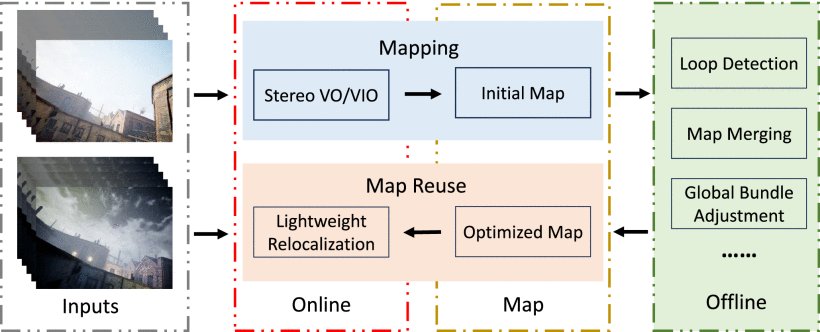
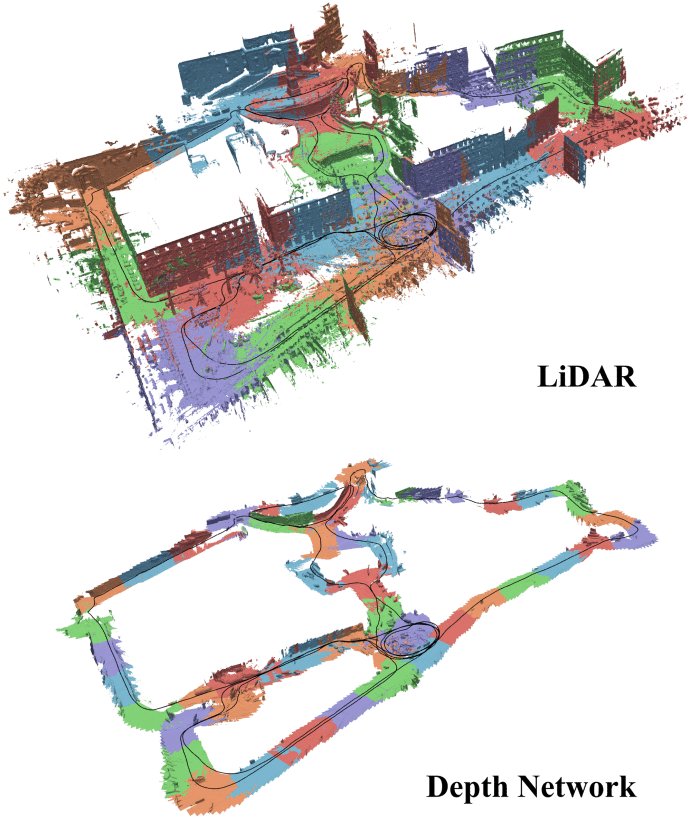
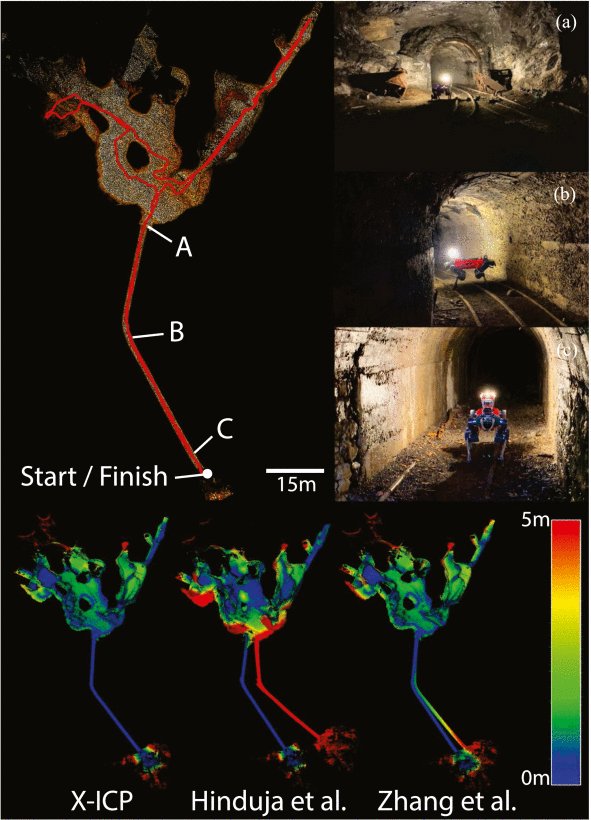
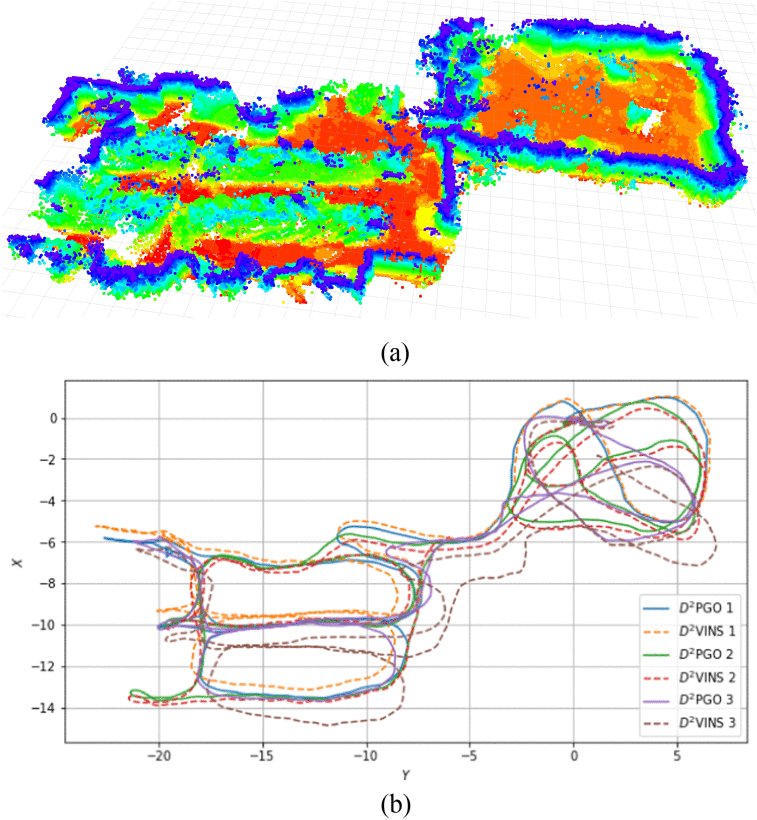
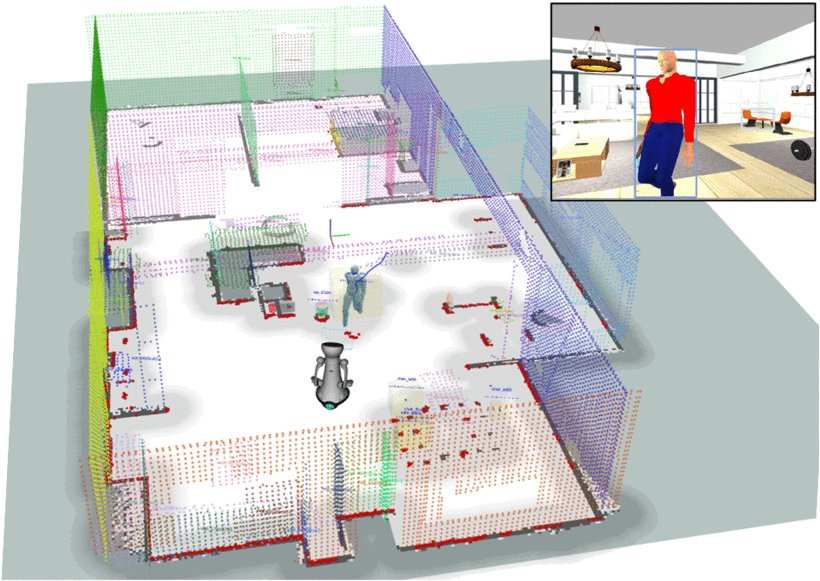
面向地下、洞穴等无 GNSS、弱光且通信受限的极端环境,本文借 DARPA SubT 挑战梳理六支队伍的实战 SLAM 系统,核心洞察是当前可靠方案主要依赖 LiDAR 中心、多传感器融合与异构多机器人架构,成败常由参数调优、算力、通信和故障恢复等工程细节决定。文中对照 DARPA 人工真值图评估各系统,显示中等规模团队已能实现较准确实时建图,但在遮挡退化、感知混淆、超大规模分布式协同和韧性自适应方面仍未充分解决。